Written by: Matthew Timmins, Founder and Managing Director, Leva Sleep
Key Takeaways for Hot Sleepers and Couples
- Effective mattress cooling relies on steady heat release through pocket-coil airflow, phase-change materials (PCM), and ventilated covers, not just an initially cool surface.
- Hot sleepers often face frequent awakenings, poor sleep quality, and heavier caffeine use, while couples risk sleep divorce when only one partner overheats.
- Gel infusions and copper particles cool briefly before saturating, while pocketed coil hybrids with latex or PCM covers support more consistent, all-night temperature balance.
- Traditional flat beds, basic adjustable bases, and single-sided toppers rarely solve deep heat retention, firmness differences, or per-side temperature needs.
- Leva Sleep’s split adjustable bases paired with hybrid pocket-coil mattresses provide independent elevation, firmness, and active temperature control, helping end nightly overheating and sleep compromise. Explore Leva Sleep’s adjustable bed packages.
The Problem: Night Sweats, Disrupted Sleep, and Sleep Divorce
Overheating during sleep affects more than comfort. Amerisleep’s 2026 survey of 1,008 adults found that 52% identify as hot sleepers, and 94% of those hot sleepers reported waking from heat at least once per night. Hot sleepers wake more often from heat than cold sleepers. Gen Z adults showed the highest sleep disruption rate in the Amerisleep survey on financial stress.
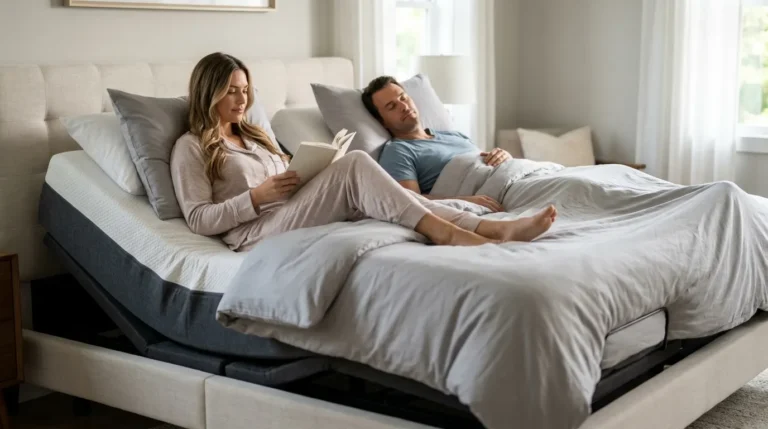
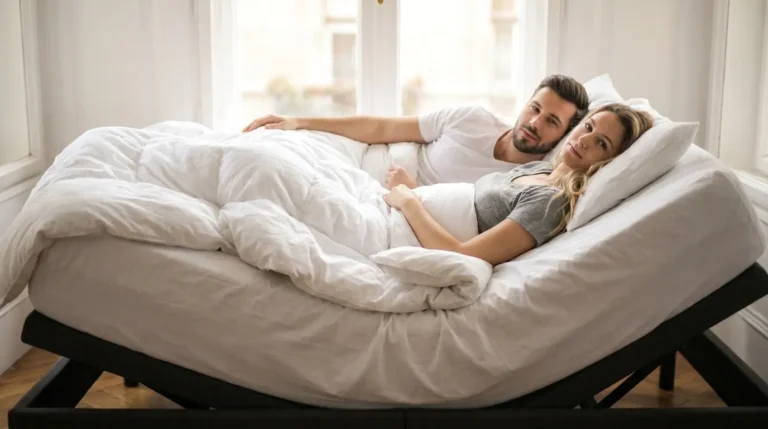
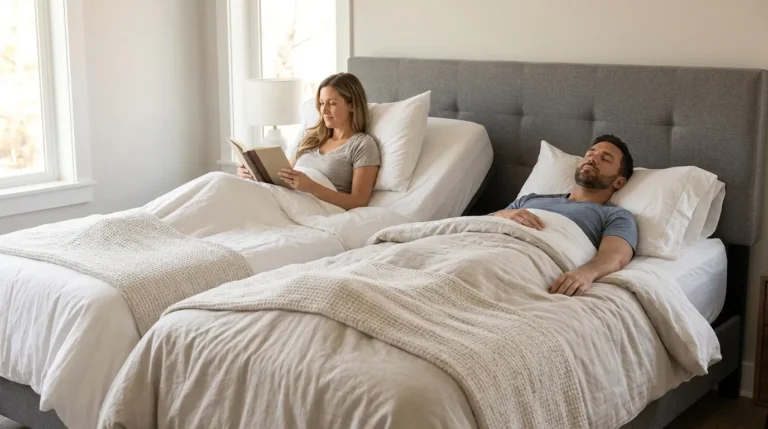
The downstream effects build quickly. Hot sleepers are more likely than cold sleepers to report poor sleep quality, wake less rested, rely on caffeine, and take daytime naps. For couples, the stakes rise further. When one partner sleeps hot and the other does not, a single flat mattress with no per-side control forces a compromise that satisfies neither person. Many couples eventually move to separate rooms, a pattern commonly called sleep divorce.
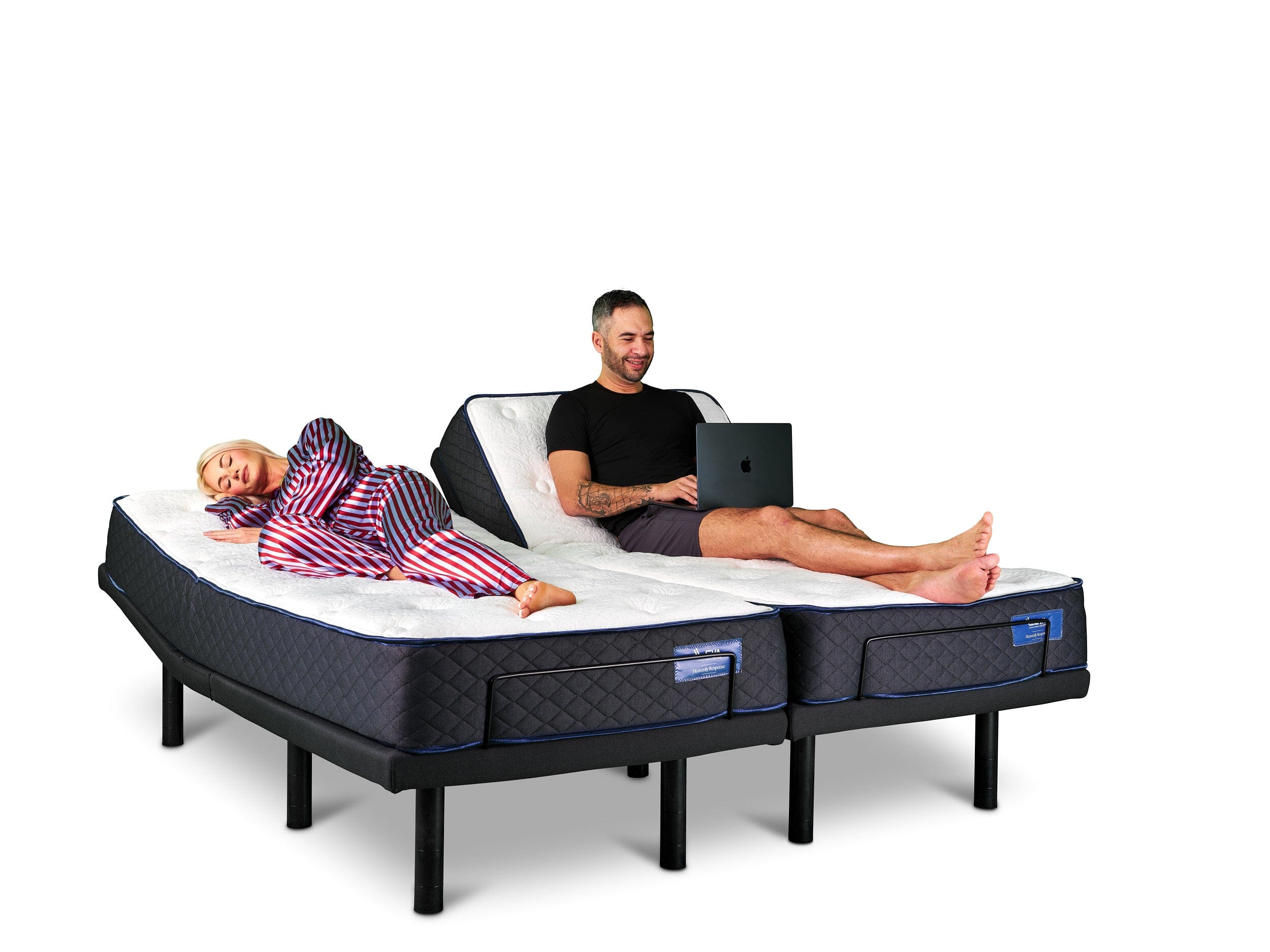
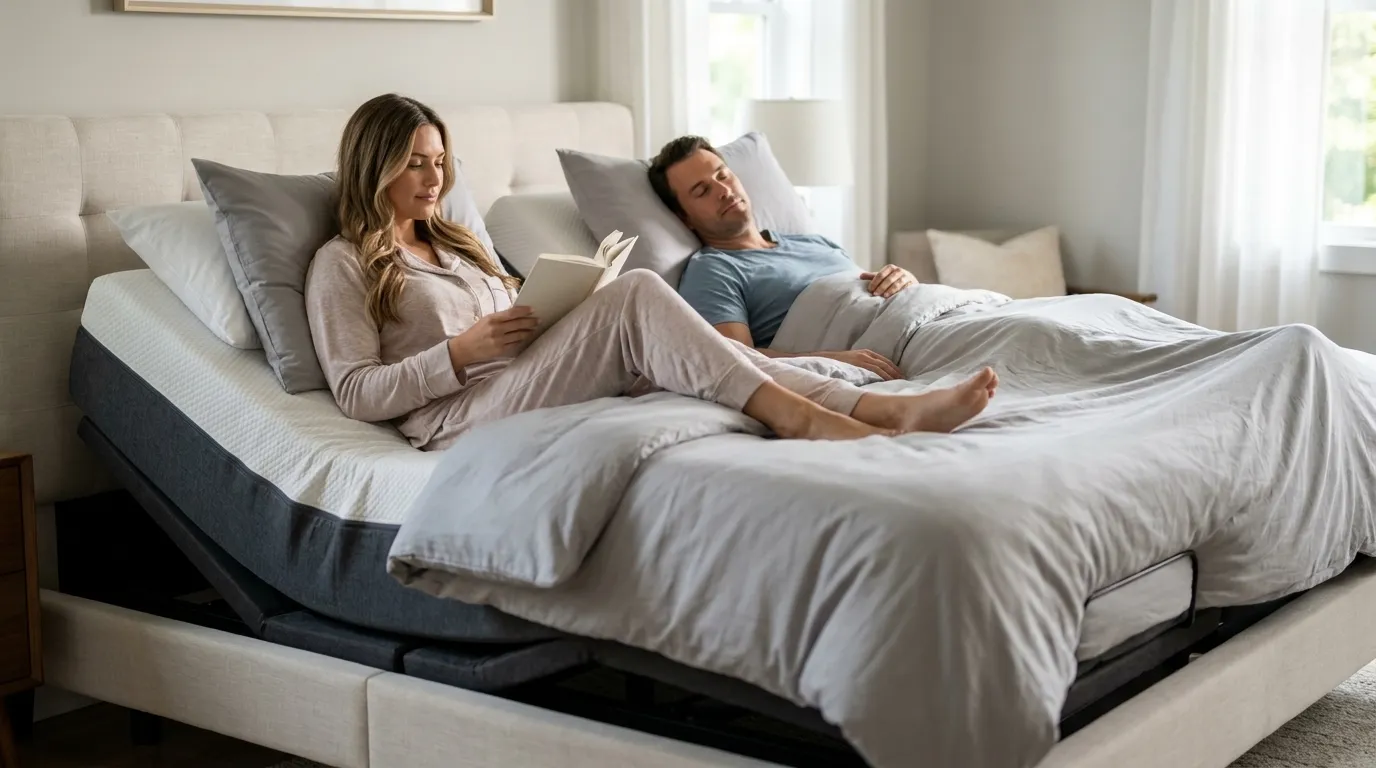
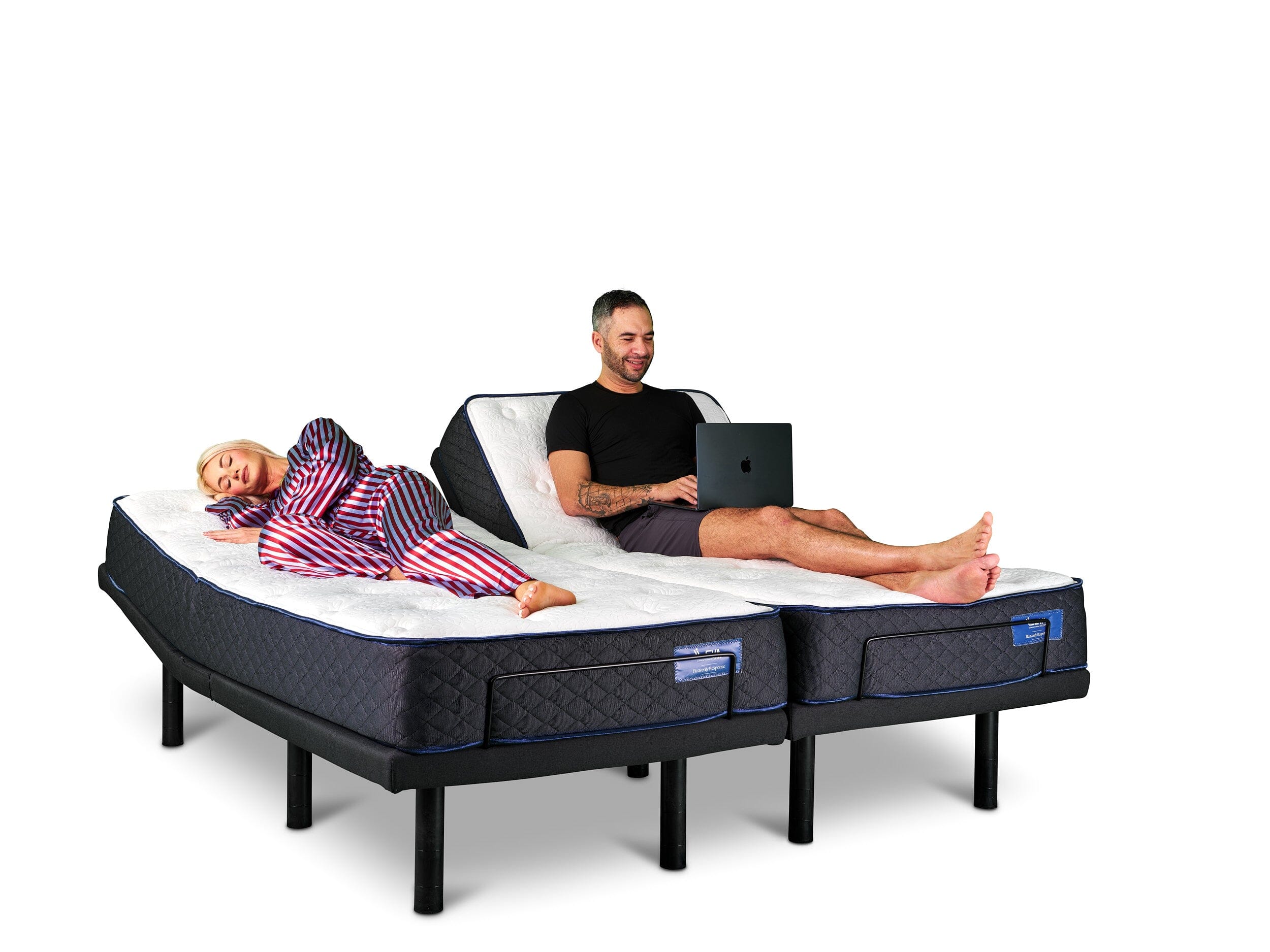
Leva Sleep’s split adjustable bases aim to end that compromise. Each side of the bed operates independently, with separate elevation, firmness, and temperature controls managed through the Leva Sleep app.
End nightly overheating with Leva Sleep’s split adjustable beds
Does Temperature Regulating Work Long-Term?
Cooling performance depends entirely on the underlying mechanism. Gel infusions, copper particles, and phase-change covers all reduce surface temperature at first contact, but they do not solve the core problem of heat trapped in dense foam.
Traditional memory foam is viscoelastic polyurethane that softens with body heat and slowly returns to shape. The same temperature-reactive behaviour that improves contouring also reduces airflow, turning the foam into a heat sink that absorbs and retains warmth throughout the night. Higher-density foam layers slow air movement and can hold warmth longer than lower-density layers.
Gel-infused memory foam sleeps cooler than traditional memory foam for the first 30 minutes to 4 hours, after which the gel saturates and the cooling advantage diminishes. Phase-change materials perform better because they offer greater thermal conductivity and heat capacity than conventional memory foam in the target temperature range. However, PCM is a passive technology with no moving parts and is limited by the amount of material present before saturation.
Sustained regulation across a full eight-hour night requires structural airflow. Pocketed coil systems in hybrid mattresses create open air channels that support passive convection. Warm air rises and exits while cooler ambient air moves in to replace it. This process runs continuously through the night, does not saturate, and never needs recharging.
Why Flat Beds, Basic Bases, and Single-Sided Toppers Fall Short
A cooling topper on a Serta memory foam mattress treats only the surface. Phase-change covers reduce surface temperature on foam mattresses at first contact but do not address core heat retention in dense polyurethane or memory foam underneath. Heat still builds in the foam below, and the topper often reaches saturation within the first hour or two of sleep.
Single-sided toppers also fail to solve firmness differences between partners. One partner may need a firmer surface for back support, while the other needs more cushioning for hip or shoulder relief. A topper on one side of a shared mattress creates an uneven surface and leaves the other partner’s temperature and comfort needs unresolved.
Basic adjustable bases sold as add-ons at general mattress retailers usually provide head and foot elevation only. They often lack independent per-side controls, integrated temperature management, and mattresses engineered to flex without comfort layer separation. Older motor systems can also create noise that disrupts sleep during position changes.
The Solution: Hybrid Mattresses with Coils, PCM, Latex, and Copper
Natural latex hybrid mattresses with pocketed coils rank high for cooling performance because the open-cell latex structure combined with coil airflow supports continuous passive cooling through both comfort layers and support core. This combination outperforms traditional hybrids and all-foam models.
PCM covers add a helpful buffer during sleep onset. Leading PCM formulations in bedding can maintain a temperature-buffering effect across repeated heat cycles. Alexium International’s BioCool® PCM achieved a latent heat of fusion exceeding 200 J/g in independent testing and accelerates recrystallization, which helps the material recharge faster between heat cycles.
Copper-infused layers improve thermal conductivity at the surface. Copper has a thermal conductivity of approximately 401 W/mK, compared to steel at 50 W/mK, so copper particles embedded in foam or latex absorb and transfer body heat away from the sleep surface faster than surrounding materials. This effect feels strongest in the first 20–30 minutes. Copper works best when paired with structural airflow from coils, which then carries that transferred heat away from the body instead of letting it accumulate in the comfort layers.
Leva Sleep combines these hybrid constructions with independently controlled split adjustable bases. This integrated system is currently the only Canadian option that delivers per-side elevation, firmness micro-adjustment, and active temperature regulation through the Leva Sleep Heating & Cooling Pad, at 30–50% lower cost than comparable luxury competitors. White-glove delivery and setup are available across Ontario and Alberta.
Explore Leva Sleep’s hybrid mattress and adjustable base packages
How to Judge Mattresses for Hot Sleepers in Canada (2026)
Use the following criteria when comparing temperature-regulating mattresses.
- Coil count and gauge: Higher coil counts in the support core create more air channels, which improves passive convection throughout the night. Within that coil count, individually wrapped pocket coils outperform open Bonnell coils because each coil moves independently, providing motion isolation between partners while still allowing airflow through the support core.
- Cover technology: Prioritize fabric-integrated PCM yarns over surface-applied coatings. PCM efficacy in bedding degrades somewhat with repeated washing if the microcapsules are surface-applied, which makes fabric-integrated PCM yarns the premium standard.
- Comfort layer material: Latex (Talalay or Dunlop) supports passive temperature regulation through natural pin-core ventilation and inherent breathability that does not trap heat, and it performs better than standard foam when used in hybrid constructions with pocketed coils.
- Thickness and sink differential: Thicker all-foam comfort layers increase heat retention. Choose thinner foam layers over a coil base, or latex comfort layers, to keep airflow close to the sleep surface.
- Adjustable-base compatibility: Confirm that the mattress is engineered to flex repeatedly without comfort layer separation or cover damage. Leva Sleep designs its mattresses specifically for adjustable base use.
- Certifications: Look for CertiPUR-US foam certification and OEKO-TEX Standard 100 for cover materials to confirm the absence of harmful chemical off-gassing.
Benefits of Leva Sleep Systems for Uninterrupted Couple Sleep
An integrated hybrid mattress plus split adjustable base tackles three main causes of couple sleep disruption at once. These include overheating, differing firmness preferences, and medical conditions such as sleep apnea or acid reflux that benefit from elevated sleeping positions.
One 2024 study published in Sensors reported that temperature-controlled mattress surfaces improved deep sleep by up to 22% compared to standard mattresses. Independent per-side controls let one partner elevate their head to reduce snoring while the other remains flat, without disturbing each other’s position or temperature setting.
Leva Sleep’s Split Queen and Split King configurations, including the unique Split Queen not widely available elsewhere in Canada, give couples in smaller rooms full independent control without requiring a King-sized footprint. Whisper-quiet German motors help ensure position adjustments do not wake a sleeping partner.
Shop Leva Sleep’s independent temperature control systems
Neutral Comparison: Temperature-Regulating Mattress Options in Canada 2026
To see how Leva Sleep’s integrated system compares with standalone mattress options in Canada, review how each construction handles cooling, price, and split-base compatibility. These three factors determine whether a setup can realistically solve the couple sleep challenges described earlier. The table below compares mattress constructions relevant to hot sleepers in Canada. CAD price ranges reflect publicly available retail pricing as of mid-2026. Leva Sleep pricing reflects direct-to-consumer positioning, while competitor pricing reflects standard retail channels.
| Model / Category | Construction & Cooling Technology | Approx. CAD Price (Queen) | Split Adjustable-Base Compatible |
|---|---|---|---|
| Leva Sleep Hybrid (Pocket Coil + Latex/PCM Cover) | Pocketed coil core, latex or foam comfort layer, PCM-integrated cover, pairs with Leva split adjustable base with active Heating & Cooling Pad | $1,800–$3,200 (mattress + base package) | Yes, Split Queen and Split King available, independent per-side controls |
| Serta iComfort Memory Foam | High-density viscoelastic foam with gel infusion, gel cooling diminishes after 1–2 hours as layers reach thermal equilibrium | $1,500–$3,500 | Compatible with third-party bases, no integrated split system |
| Brooklyn Bedding Aurora Luxe Cooling (Hybrid) | Pocket coils with cooling gel- and mineral-infused comfort layers plus a cooling-fibre cover | $2,200–$3,800 (USD converted, import pricing applies) | Compatible, no Canadian split-base integration |
| Helix Midnight Luxe (Hybrid) | Copper-infused foam, airflow-friendly coils, optional GlacioTex cover | $2,500–$4,000 (USD converted, import pricing applies) | Compatible, no Canadian white-glove split-base delivery |
| Restonic ComfortCare Hybrid | 1,222 individually wrapped coils that support airflow beyond what stacked-foam constructions can provide, foam comfort layers | $1,400–$2,600 | Compatible, split availability varies by retailer |
| Standard All-Foam (Generic) | Dense closed-cell structure maximises skin-to-foam contact and traps heat, typically the warmest type for hot sleepers | $600–$1,800 | Compatible with bases, no airflow benefit |
Frequently Asked Questions
How do I set up and maintain a hybrid mattress on an adjustable base?
Hybrid mattresses designed for adjustable bases use flexible comfort layers and reinforced covers that bend repeatedly without separating or cracking. Setup involves placing the mattress directly on the adjustable base platform, and no box spring is required or recommended. Leva Sleep’s white-glove delivery service handles full setup in the bedroom, including leg height adjustment, app pairing, and a product tutorial.
Maintenance stays simple. Rotate the mattress every three to six months if the manufacturer recommends it, use a mattress protector rated for adjustable bases, and choose fitted sheets with deep pockets and reinforced elastic to prevent slippage during elevation changes. Leva Sleep designs its own bedding accessories specifically for this purpose.
Is a Leva Sleep adjustable bed suitable for sleep apnea?
Elevating the head of the bed between 7 and 30 degrees can help open the upper airway and reduce the frequency of apnea events for mild to moderate obstructive sleep apnea. Leva Sleep’s adjustable bases allow precise head elevation in small increments, and the anti-snore mode (available spring 2026) detects snoring and makes automatic micro-adjustments to the head position.
Sleep apnea clinics have referred patients to Leva Sleep as a complementary or alternative approach to CPAP therapy for mild cases. Anyone with diagnosed sleep apnea should consult their physician before changing their treatment plan.
Does Leva Sleep deliver to my area in Ontario or Alberta?
Leva Sleep offers in-house white-glove delivery across Ontario and Alberta. This service includes delivery to the bedroom, full assembly, old bed removal (donated or recycled where possible), leg height adjustment, app setup, and a product walkthrough. Trained Leva Sleep staff, not third-party couriers, handle delivery and setup to meet the company’s quality standards. Customers outside Ontario and Alberta should contact Leva Sleep directly to confirm availability.
Which 2026 Leva Sleep models work best for hot sleepers?
Leva Sleep’s 2026 lineup includes hybrid pocket-coil mattresses with PCM-integrated covers and latex or foam comfort layers, paired with split adjustable bases featuring the integrated Heating & Cooling Pad for active per-side temperature control. The Split Queen and Split King configurations are both available.
Leva Sleep carries 15–20 adjustable base models compared to the 3–5 typically found at general mattress retailers, which allows more precise matching of base features to each couple’s specific needs. Current model availability and pricing can be confirmed through the Leva Sleep website or by contacting the sales team.
Do temperature-regulating mattresses keep cooling over time?
Cooling longevity depends on the technology in use. As explained earlier, gel infusions reach thermal equilibrium within the first few hours of sleep and offer diminishing returns after that initial cooling period. Phase-change materials provide a more sustained buffering effect but remain finite and must recrystallize before the next heat cycle.
As discussed earlier, structural airflow through a pocketed coil core is the only cooling mechanism that operates continuously throughout the night without saturation. Natural latex comfort layers maintain their breathability across the life of the mattress because the open-cell structure is inherent to the material, not a coating or additive. A hybrid mattress that combines pocketed coils with a latex comfort layer and a PCM cover delivers layered, sustained cooling that outperforms any single-technology approach over a full night’s sleep.
Conclusion: Choosing a Temperature-Regulating Sleep System That Lasts
Evidence from lab testing and field use points to the same conclusion. Sustained temperature regulation for hot sleepers requires structural airflow, not surface treatments alone. Pocketed coil hybrids with latex or PCM comfort layers outperform all-foam constructions, including Serta’s gel memory foam lines, across a full night of sleep. For couples with different firmness or temperature needs, a single mattress without per-side control cannot resolve the underlying mismatch.
The criteria that matter most include coil-based airflow, cover technology rated for sustained rather than initial cooling, adjustable-base compatibility, and the availability of independent per-side controls. Leva Sleep’s integrated hybrid-plus-split-adjustable-base packages meet all of these criteria and are available with white-glove delivery across Ontario and Alberta at 30–50% below comparable luxury competitors.