
Written by: Matthew Timmins, Founder and Managing Director, Leva Sleep
Key Takeaways
- Split-zone adjustable bases let each partner set their own position, which reduces conflicts over comfort and sleep posture.
- Anti-snore modes, quiet motors, and zero gravity positioning support better breathing, less pain, and fewer night-time disruptions.
- Smart app controls, massage features, and climate options add practical comfort, as long as they match your tech comfort level and budget.
- Couples get the best results by prioritizing medical needs, noise levels, and temperature differences when choosing features.
- Canadian couples can explore Leva Sleep adjustable bed packages to compare split bases, anti-snore features, and smart controls in one place through this Leva Sleep adjustable bed collection.
1. Split-zone independent controls for two-sided comfort
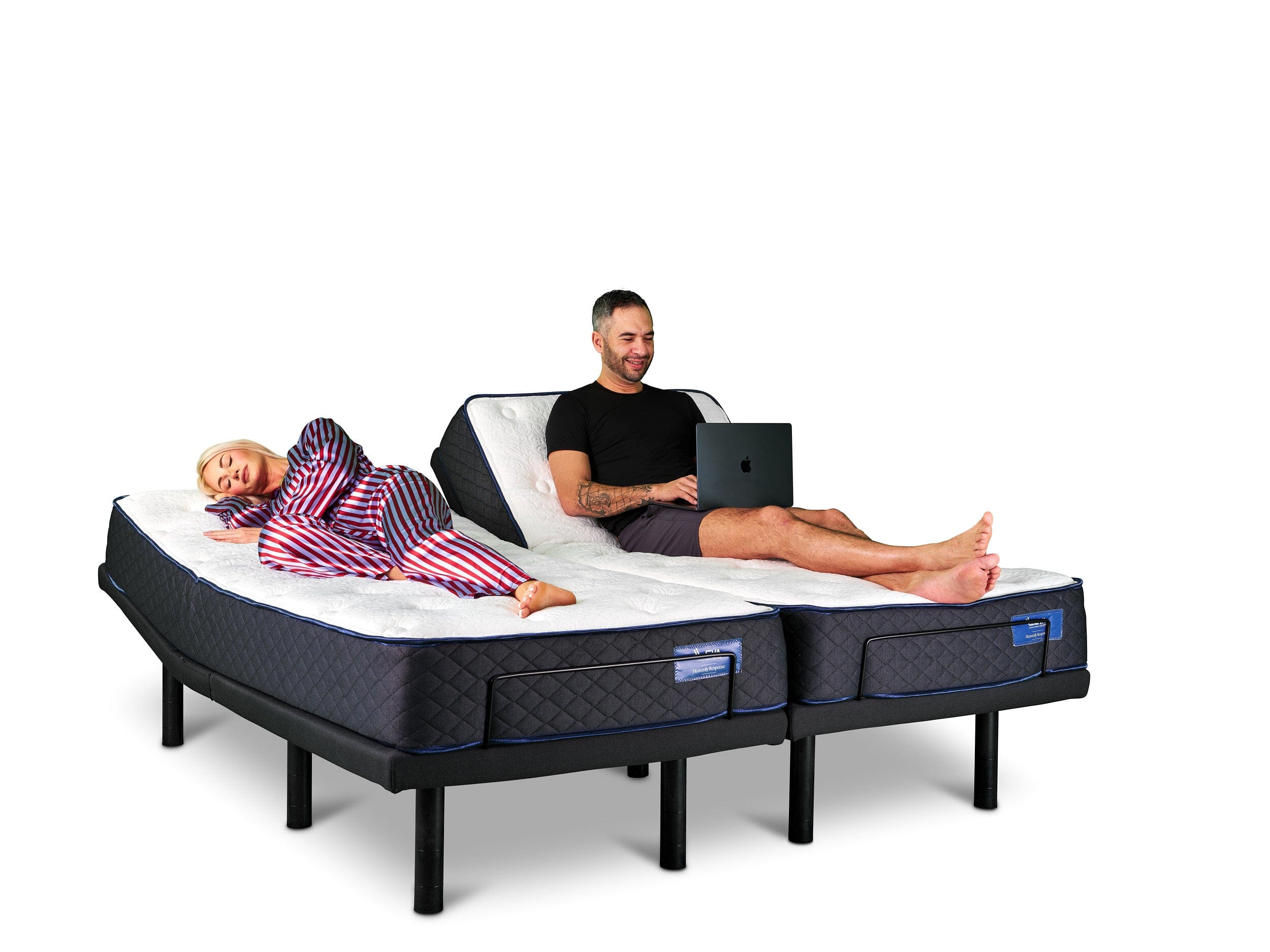
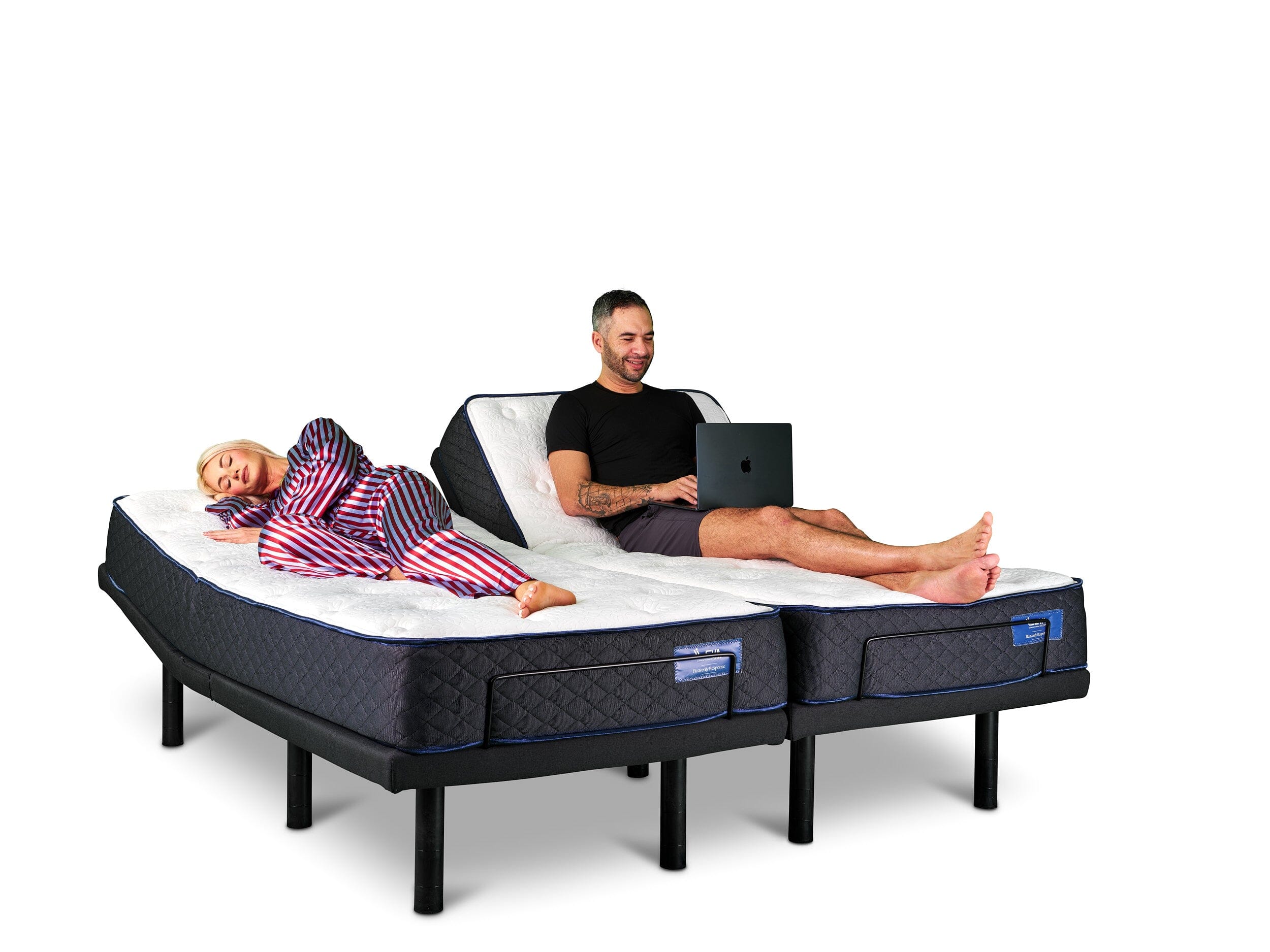
Split adjustable bases with independent controls let each partner set a different head and foot position without affecting the other side. This reduces conflict over reading angles, leg elevation, and support needs.
Couples with very different sleep or health needs usually benefit most from fully independent controls instead of a single shared base. Split Queen and Split King setups keep the feeling of one bed while still allowing personalized support for snoring, reflux, or back pain.
Shop Leva Sleep adjustable bed packages to compare split options designed for couples who share a room but need separate control.
2. Anti-snore technology to ease night-time disruption
Roughly one in five adults snores regularly, and modern adjustable bases now include automated anti-snore settings that gently lift the upper body. This small change can improve airflow and reduce vibration that disturbs a partner.
Anti-snore modes often raise the head by about 7 to 12 degrees, which helps open the airway without forcing an awkward angle. Systems with adjustable sensitivity let you tune how quickly and how far the bed reacts to snoring.
Couples who regularly argue about snoring usually gain the most from an adjustable base that pairs anti-snore presets with split controls.
3. Whisper-quiet motors that protect light sleepers
Quiet, reliable motors rank near the top of buyer priorities for adjustable bases. Noise from cheaper systems can interrupt light sleepers every time a partner changes position.
Better-quality bases use precision motor engineering that keeps sound levels near a whisper, often below 45 decibels. Higher-end designs also spread the work across several motors, which reduces strain and helps the system stay quiet over time.
Motor warranty terms, noise ratings, and real-world reviews together provide a useful picture of how quietly a base will operate in a shared bedroom.
4. Zero gravity and lumbar support for pain relief
Zero gravity positioning elevates the head and legs to reduce pressure on the lower back and improve circulation. Many Canadians with back pain, swelling, or reflux find this preset more comfortable than lying flat.
Adjustable bases also support other health-focused positions, such as upper-body elevation for reflux or leg elevation to ease pressure and improve blood flow.
Bases with dedicated lumbar adjustment add targeted support below the lower back. Memory buttons that save favourite pain-relief positions make it easier to return to a comfortable setup with one touch.
5. Smart app control for simple, precise adjustments
Many newer adjustable bases now include Bluetooth control through a mobile app. These apps often store custom positions, offer extra presets, and provide an alternative if the remote is misplaced.
Some systems also track sleep patterns, light, and movement and then suggest small changes to positioning or routine. Smart features can include gentle vibrating alarms, under-bed lighting, and links to home automation so the bed fits into a broader sleep setup.
Couples who enjoy technology usually appreciate these tools, while those who prefer simplicity may focus on dependable remotes and a few well-chosen presets.
6. Massage and vibration for relaxation before sleep
Many shoppers look for adjustable bases with massage options in the head and foot areas. These features can help loosen tight muscles and promote relaxation before sleep.
Better systems offer multiple intensities and patterns, such as wave or pulse modes, plus independent control for upper and lower body. Timers help ensure massage shuts off automatically, which prevents overstimulation during the night.
Massage features that adjust subtly when the head or feet move feel smoother and more natural, especially when shifting from reading or TV time into a sleep position.
7. Temperature control for partners with different needs
Many couples struggle with thermal comfort, where one partner runs hot and the other prefers warmth. Some adjustable bases pair well with heating and cooling pad systems that allow different temperatures on each side of the bed.
These setups can cool to the equivalent of about 55°F or warm to roughly 110°F, and they work independently of the room thermostat. Dual-zone control lets each person choose a temperature that matches their comfort and season.
Higher-end systems may include schedules that warm the bed before bedtime, cool slightly during deep sleep, and then warm again toward morning for a more comfortable wake-up.
Shop Leva Sleep adjustable bed packages to explore bases and compatible setups that support temperature comfort for both partners.
Choosing adjustable base features that fit your life
Most modern mattresses work with adjustable bases, although extreme thickness or very rigid designs may limit motion. Checking compatibility before purchase avoids frustration later.
Split designs help many couples stay in the same room while reducing conflicts over firmness, elevation, and movement. Health priorities such as reflux, back pain, or snoring often justify features like zero gravity, lumbar support, and anti-snore modes.
Couples who prefer simple setups may focus on quiet motors, core presets, and split controls. Those comfortable with technology might value app control, sleep tracking, and integration with lighting or climate tools.
Frequently Asked Questions
What features help most when partners have different sleep preferences?
Split-zone independent controls usually matter most. Each partner can adjust head and foot height separately, which reduces arguments about position. Anti-snore modes, dual temperature options, and quiet motors also help both people stay asleep when one person moves or needs extra support.
How do anti-snore functions work on adjustable bases?
Anti-snore systems use sensors or preset buttons to shift the upper body into a slight incline, usually 7 to 12 degrees. This position encourages better airflow through the throat and nose. Many bases let you fine-tune the level of lift and how quickly it activates.
Are smart technology features worth the extra cost?
Smart features add value for people who like detailed control or data. App control, saved positions, and sleep tracking can make it easier to adjust and repeat what feels best. Couples who mainly want elevation for comfort might stay with simpler, lower-cost remotes and presets.
What should couples look for in motor systems?
Motor quality affects noise, smoothness, and durability. German-engineered or similarly rated motors that run under about 45 decibels help protect light sleepers. Multiple-motor designs spread the workload and often last longer. A strong motor warranty adds extra peace of mind.
Couples who want one solution for snoring, comfort, and independent control can review complete packages instead of mixing separate components. Visit Leva Sleep adjustable bed packages to compare feature sets and choose a base that supports both partners’ sleep.