Written by: Matthew Timmins, Founder and Managing Director, Leva Sleep
Finding the right adjustable bed for back pain relief or to meet the unique sleep needs of couples can feel overwhelming. This article breaks down the adjustability range and positions of various options, with a focus on how Leva Sleep stands out with practical solutions. Learn how an adjustable bed can improve your sleep through customized comfort and targeted support.
Why Adjustability Range and Positions Improve Your Sleep
Custom Comfort for Back Pain and Snoring Issues
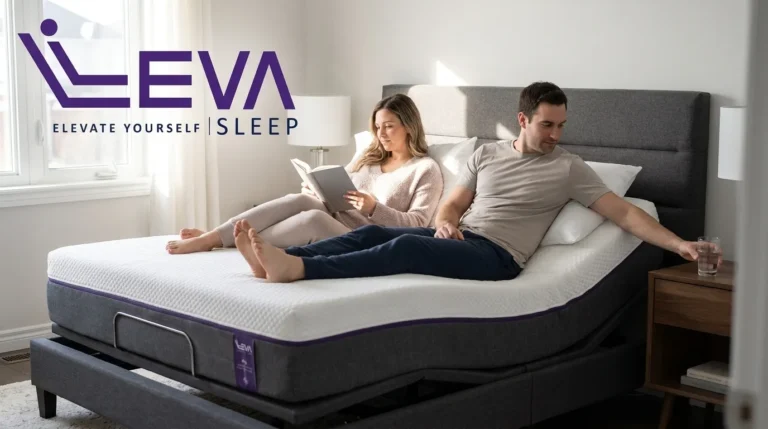
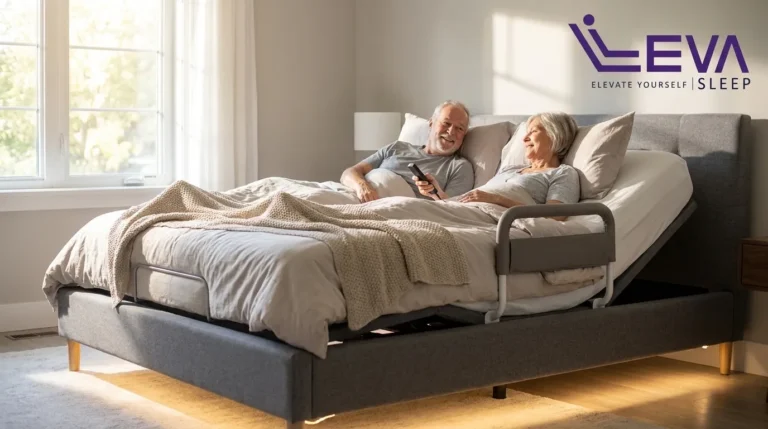
Many Canadians, especially couples aged 35 to 70, face sleep challenges due to differing needs. One partner might need elevation to ease lower back pain, while the other requires a specific angle to manage snoring or sleep apnea. Flat beds often force uncomfortable trade-offs, sometimes pushing couples to sleep apart.
Elevating the head between 6 and 30 degrees can open airways, cutting down on snoring. This same position helps those with acid reflux by keeping stomach acid from rising during sleep. Raising the feet improves circulation, which is useful for managing swelling in the legs, especially for people with diabetes or poor blood flow.
For back pain, the Zero Gravity position offers relief by lifting both the head and feet to evenly spread body weight, reducing spinal pressure. This position, paired with fine-tuned adjustments, supports therapeutic comfort and recovery. Such customization helps address specific pain points effectively.
Additional features like lumbar support align the lower spine, easing discomfort for those with chronic issues. Pillow tilt adjusts the headrest to maintain neck alignment, reducing stiffness for side sleepers who struggle on flat beds.
How Precision Affects Comfort and Partner Disturbance
The smoothness and sound of an adjustable bed’s motor play a big role in the sleep experience, especially for couples. Sudden, noisy adjustments can wake a partner, undoing the benefits of personalized settings. High-quality beds use motors that move gradually and quietly, preserving a calm environment.
Basic models often operate at 40 to 50 decibels, about as loud as a hushed conversation. In contrast, advanced options run below 30 decibels, closer to the sound of rustling leaves. This quiet operation matters during late-night adjustments for snoring or discomfort.
Mattress fit is another factor to consider. Foam and latex mattresses adapt well to adjustable bases, maintaining comfort across positions. Innerspring mattresses, with their stiff coils, often wear out faster or lose support when bent, leading to uneven sleep surfaces.
A well-matched base and mattress ensure lasting comfort. The right pairing supports durability while allowing smooth, quiet adjustments that enhance sleep rather than interrupt it.
Leva Sleep Adjustability Features for Couples and Pain Relief
Leva Sleep, a Canadian company specializing in adjustable beds, designs solutions that help couples sleep better together while addressing personal health needs. Every component, from the base to the bedding, is built with adjustability in mind for a tailored experience.
Key adjustability features from Leva Sleep include:
- Head and Foot Elevation with Fine Control: Adjust both sections for therapeutic positions that aid back pain relief and spinal alignment, with precise settings for optimal comfort.
- Targeted Therapeutic Modes: Anti-Snore Mode adjusts head elevation to reduce snoring. Lumbar Control supports the lower back, and Pillow Tilt ensures proper head and neck alignment, helping with issues like sleep apnea.
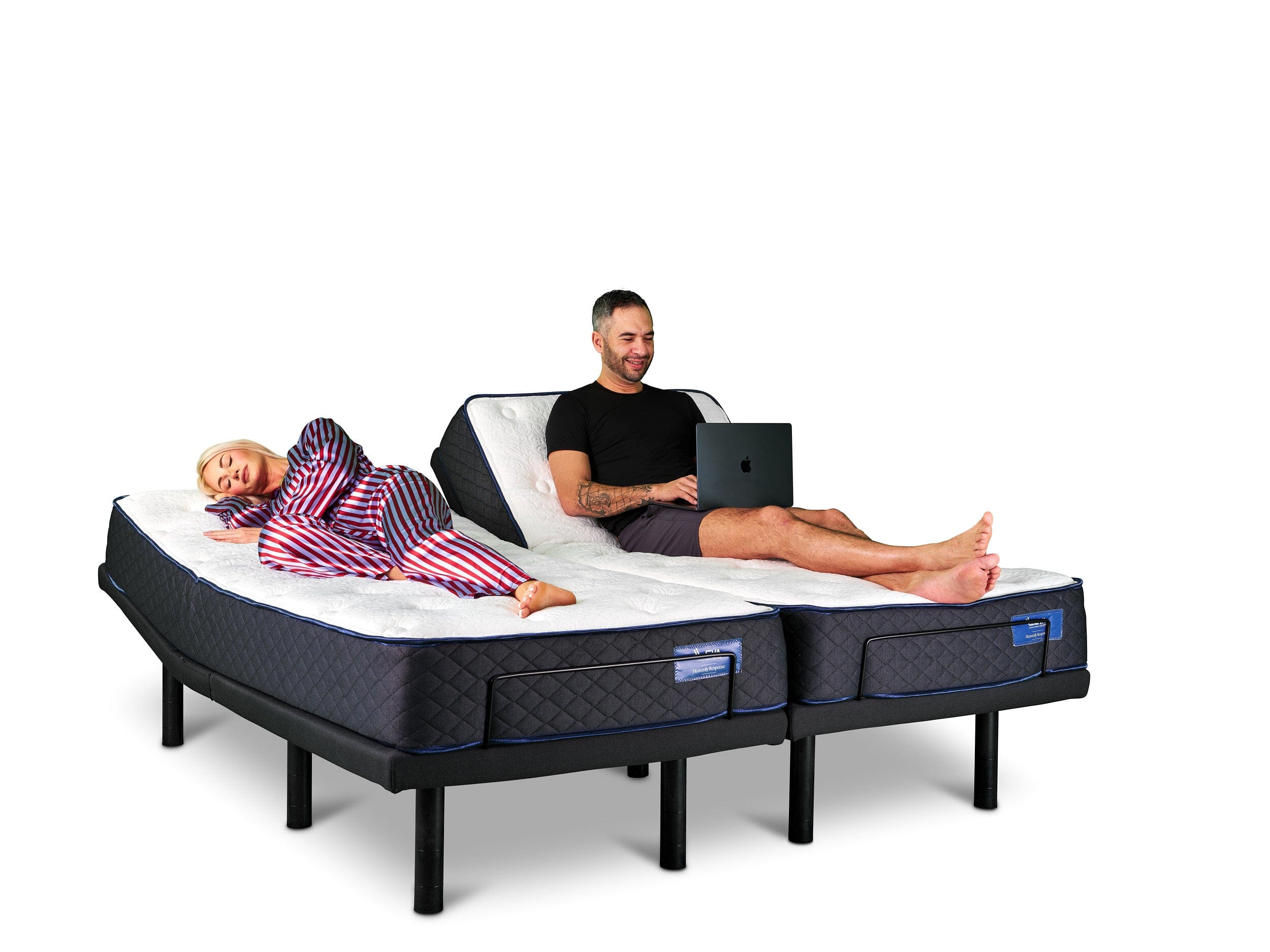
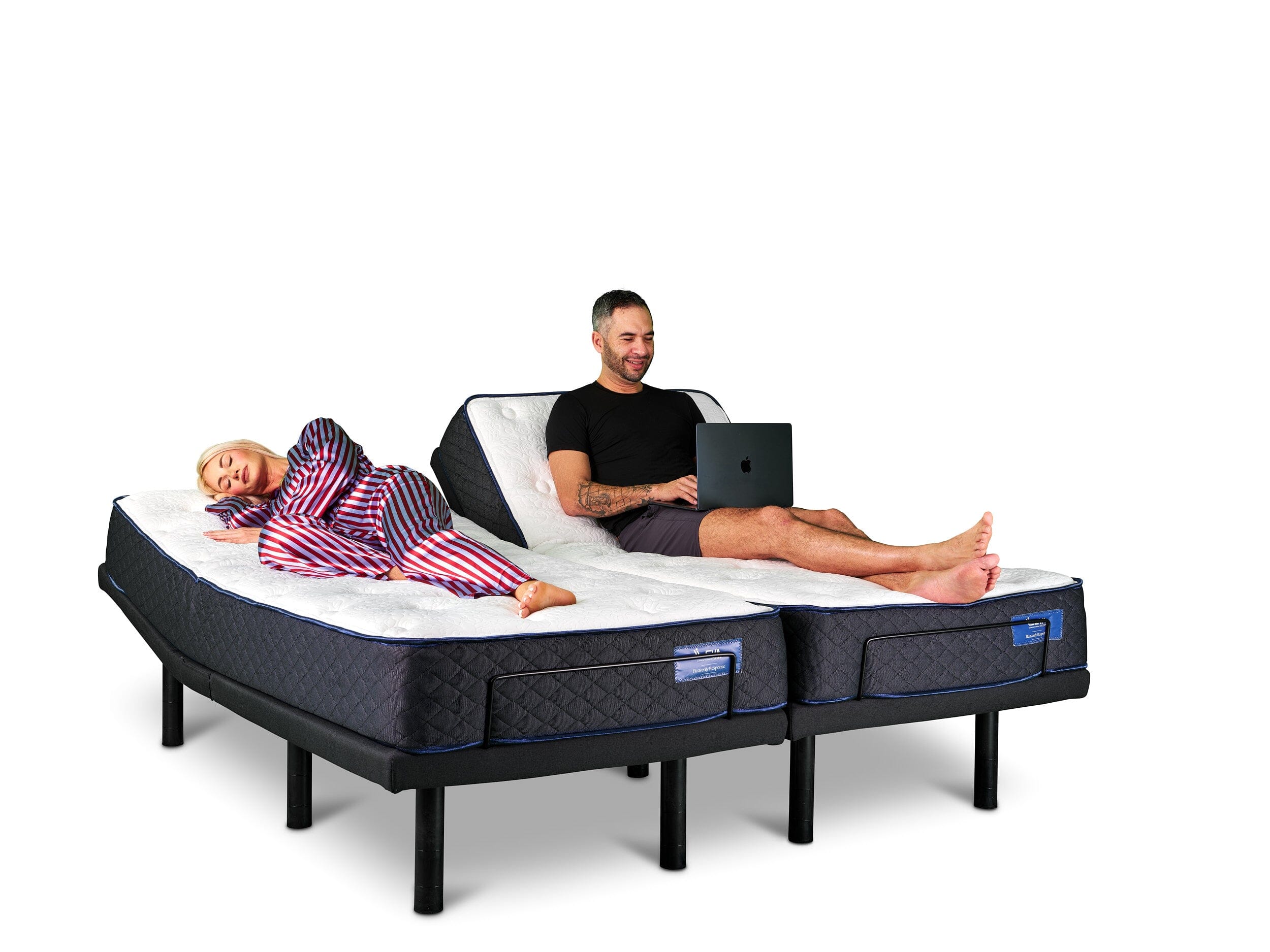
- Split Configurations for Independence: Split King and Split Queen options let each partner customize their side, with the Split Queen fitting smaller spaces without sacrificing personal control.
- Quiet German Motors: Adjustments operate below 30 decibels, ensuring minimal disturbance during nighttime changes for a restful sleep environment.
- App-Based Programmable Settings: Save custom positions and create personalized sleep profiles using the Leva Sleep app for easy access to preferred configurations.
Explore adjustable beds at Leva Sleep for customized comfort!
Comparing Adjustability Features Across Brands
Elevation Range and Motor Precision: Leva Sleep vs. Others
An adjustable bed’s core value lies in its elevation options and how smoothly the motor operates. Most beds allow for a range of inclines to meet basic comfort needs, but performance differs widely between brands.
Entry-level beds often provide head elevation up to 60 degrees and foot elevation up to 45 degrees, covering standard requirements. Leva Sleep offers a comparable range, designed to address specific needs like better circulation or snoring reduction with reliable positioning.
Precision matters in higher-end models. Basic beds adjust in larger steps, which can miss the ideal angle for comfort. Leva Sleep prioritizes fine control, letting users dial in exact positions for maximum benefit.
Motor quality affects both experience and durability. Quiet, smooth operation often ties to advanced motor design, especially important for shared beds. Leva Sleep’s German motors run below 30 decibels, making adjustments subtle compared to noisier competitor systems.
Preset and Custom Settings: What’s Available
Preset positions offer quick access to common angles, while custom memory settings cater to individual preferences. Silk & Snow, for instance, includes three customizable positions alongside presets like Zero Gravity and Anti-Snore, reflecting typical offerings.
Many brands provide 4 to 6 presets, such as Flat, Zero Gravity, Anti-Snore, and TV/Reading modes. These cover basic activities but may not fully match personal needs. Customizable settings add flexibility by saving user-specific configurations.
Leva Sleep stands out with app-based programmable positions, allowing users to store tailored settings for different scenarios. This adaptability ensures comfort adjustments are simple and precise.
The Anti-Snore Mode in Leva Sleep beds goes beyond static angles. It detects snoring and adjusts head elevation dynamically to minimize disruption while keeping comfort in focus.
Targeted Support Features: Lumbar and Pillow Adjustments
Advanced adjustable beds address specific body needs beyond simple elevation. Silk & Snow offers standard head and foot adjustments, which is common among many brands at a basic level.
Lumbar support focuses on the lower spine’s natural curve, separate from overall bed angle. This is vital for those needing targeted relief in that area. Standard beds often lack this feature, relying solely on general elevation.
Leva Sleep includes a Lumbar Control system to adjust lower back support, helping maintain spinal alignment in any position. This customization offers focused relief for chronic discomfort.
Pillow tilt is another useful feature often missing in basic models. When the head elevates, standard pillows can fail to support the neck. Leva Sleep’s Pillow Tilt Motor adjusts the headrest for proper alignment, reducing strain without extra pillows.
These targeted adjustments help side sleepers, those with neck pain, or anyone needing precise positioning for better rest.
Couple-Friendly Design: Split Beds and Motion Isolation
Split adjustable beds cater to couples by allowing independent settings for each side. Split King setups are common for providing personal control without disturbance, meeting the needs of many shared beds.
Typical split options include Split King, which combines two Twin XL bases. While effective, this setup may not fit smaller spaces, a concern in many Canadian homes.
Leva Sleep tackles this with a Split Queen option, delivering independent adjustments in a more compact size. Couples in tighter bedrooms can still enjoy personalized settings without sacrificing space.
Motion isolation ensures one partner’s adjustments don’t affect the other. Leva Sleep designs its beds to minimize transfer between sides, reducing disturbances during position changes.
App controls further enhance usability for couples. Each partner can manage their settings and save preferences separately, maintaining ease and individuality in a shared bed.
Comparison Table: Adjustable Bed Features at a Glance
|
Feature / Brand |
Leva Sleep |
Ghostbed |
Silk & Snow |
|
Head & Foot Elevation Range |
Extensive Range |
Standard (up to 60°/45°) |
Standard (up to 60°/45°) |
|
Preset Positions |
Zero Gravity, Anti-Snore, Flat, Custom |
Zero Gravity, Flat |
Zero Gravity, Anti-Snore, Lounge, TV |
|
Customizable Memory Positions |
Extensive via App |
Limited via remote and app |
3 via app/remote |
|
Specialized Lumbar Support |
Yes (Dedicated Lumbar Control) |
No |
No |
|
Pillow Tilt |
Yes (Dedicated Pillow Tilt Motor) |
No |
No |
|
Split Configuration for Couples |
Split King & Split Queen |
Multiple configurations including Split King |
Multiple configurations including Split King |
|
Motor Noise Level |
Whisper Quiet German Motors |
Moderate |
Quiet |
|
App Control |
Yes (Advanced features) |
Yes (Recent models) |
Yes (Basic) |
Mattress Fit and Integration with Adjustable Bases
Pairing the right mattress with an adjustable base is often overlooked but critical for comfort. The mattress type affects overall height, feel, and how well it adjusts with the base, shaping the sleep experience.
Innerspring mattresses with rigid coils can warp or lose support under frequent bending. Memory foam and latex options hold up better, maintaining shape and comfort across various angles.
Leva Sleep designs its all-foam and hybrid pocket coil mattresses specifically for adjustable bases. The hybrid coils move independently, adapting smoothly to elevation changes for consistent support.
Bed height also matters, especially for those with mobility needs. Adjustable leg heights accommodate storage or accessibility preferences. Leva Sleep’s white-glove delivery includes setup with customized height options for ease of use.
Bedding accessories complete the setup. Standard sheets often slip off during adjustments, but Leva Sleep’s deep-pocket sheets stay secure. Duvet clips and remote pockets add practical touches to keep everything in place and accessible.
Find a complete adjustable bed setup at Leva Sleep!
Common Questions About Adjustable Bed Features
Can Adjustability Help with Back Pain?
Leva Sleep beds provide head and foot elevation, lumbar control, and pillow tilt to support spinal alignment and ease pressure points. Many users experience relief by fine-tuning positions to target lower back discomfort, with lumbar adjustments focusing on the spine’s natural curve.
How Do Split Beds Support Couples with Different Needs?
With Split King and Split Queen options, Leva Sleep lets each partner adjust their side independently using app controls. Features like Anti-Snore Mode and quiet German motors, operating below 30 decibels, minimize disturbance, allowing personalized settings without affecting the other person.
What Makes Leva Sleep Motors Less Noisy?
Leva Sleep uses German-engineered motors for smooth, quiet adjustments at under 30 decibels, unlike louder systems from other brands. These gradual movements avoid sudden disruptions, ideal for couples adjusting positions at night.
Do Adjustable Beds Help with Snoring or Sleep Apnea?
Leva Sleep includes an Anti-Snore Mode that detects snoring and adjusts head elevation to open airways, reducing disturbances. This positioning can assist with mild to moderate sleep apnea, though severe cases need professional medical advice.
Will My Existing Mattress Work with an Adjustable Base?
Memory foam and latex mattresses adapt best to adjustable bases due to their flexibility. Innerspring models may not hold up under repeated bending. Leva Sleep offers compatible all-foam and hybrid mattresses for consistent comfort, though older mattresses can sometimes work depending on their condition and build.
Conclusion: Better Sleep with Leva Sleep’s Adjustable Features
Understanding adjustability range and positions is the first step to better sleep, especially for couples with varying needs or individuals managing back pain and snoring. Adjustable bed features differ widely across brands, impacting comfort and usability.
Leva Sleep brings focused engineering to the Canadian market. Quiet German motors, app-controlled custom settings, and therapeutic options like lumbar support address real sleep challenges effectively.
The Split Queen design suits smaller Canadian bedrooms while preserving individual control. Features like Anti-Snore detection add practical value for shared sleep spaces.
Through a direct-to-consumer approach, Leva Sleep keeps costs 30 to 50% lower than similar offerings, making quality sleep more affordable. White-glove delivery and setup ensure everything is tailored to your needs.
For couples seeking harmony in sleep or individuals needing targeted relief, Leva Sleep provides adjustable beds built for Canadian homes.
Check out adjustable beds at Leva Sleep for your best rest yet!