
Written by: Matthew Timmins, Founder and Managing Director, Leva Sleep | Last updated: July 27, 2026
Key Takeaways for Knee Replacement Recovery
- Adjustable beds with independent foot elevation, hi-low height control, and zero-gravity presets support swelling control, safer transfers, and comfortable positioning after knee replacement surgery.
- Independent foot elevation raises the leg above heart level without forcing head elevation, which supports consistent swelling drainage throughout recovery.
- Hi-low height adjustment raises the bed surface for safer sit-to-stand transfers and lowers it to reduce fall risk when you are unattended.
- Zero-gravity presets distribute body weight evenly while keeping the leg elevated, easing pressure on the surgical site during the first 12 weeks.
- Leva Sleep offers split Queen and King configurations with these recovery features, and you can browse Leva Sleep’s adjustable bed packages to match your recovery needs.
Essential Adjustable Bed Features for Knee Recovery
For knee replacement recovery, focus on features that improve elevation, transfer safety, and ease of use.
- Independent foot elevation: Raises the leg above heart level without raising the head, which supports steady swelling drainage through the night.
- Hi-low height control: Moves the entire sleep surface up or down so the seated knee stays at or slightly above hip level, which supports safer sit-to-stand transfers.
- Zero-gravity preset: Spreads body weight evenly and keeps the leg elevated, easing pressure on the surgical site during the early recovery period.
- Whisper-quiet motors: Allow position changes during the night without waking a partner or disturbing already-fragile sleep.
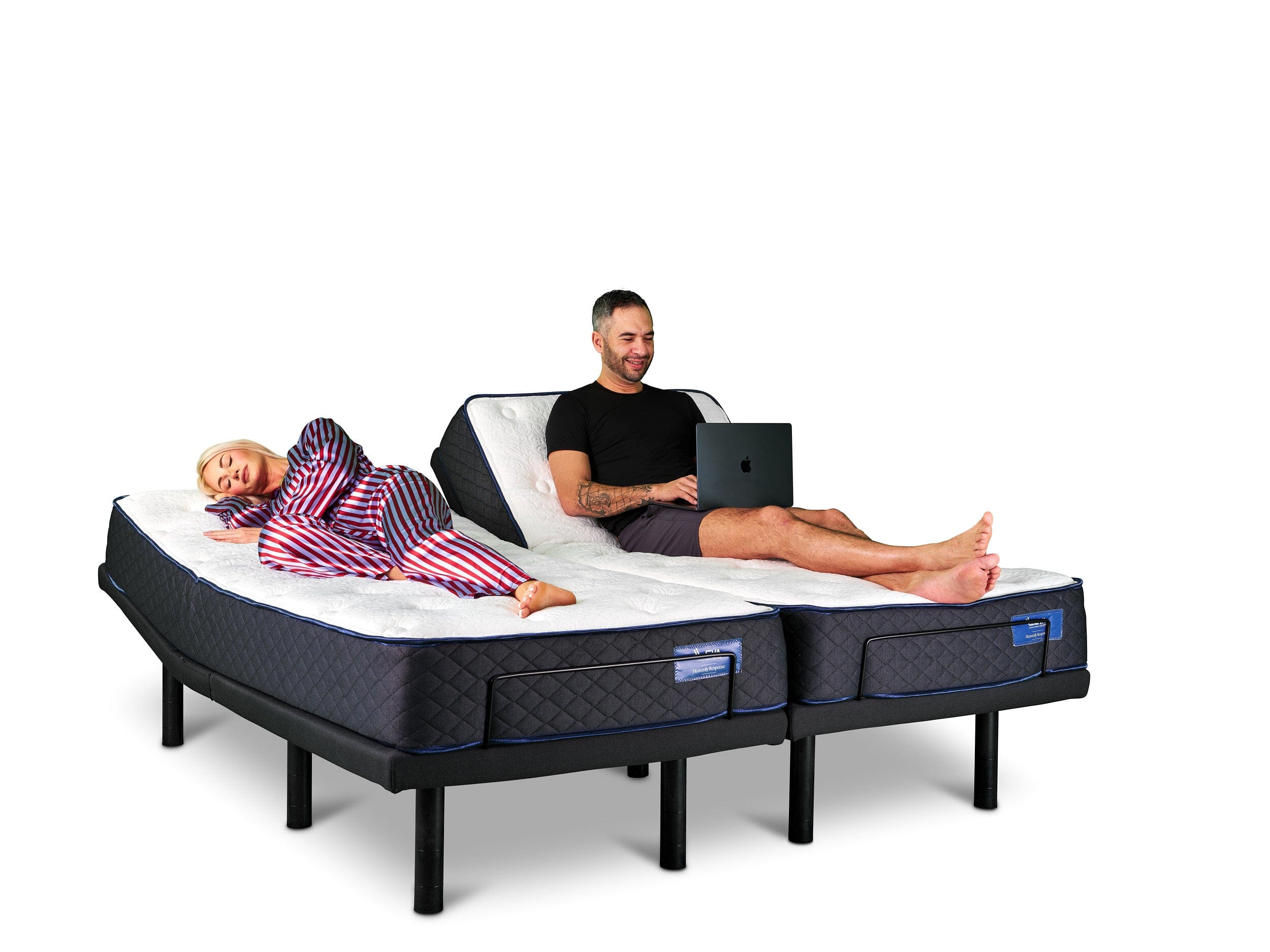
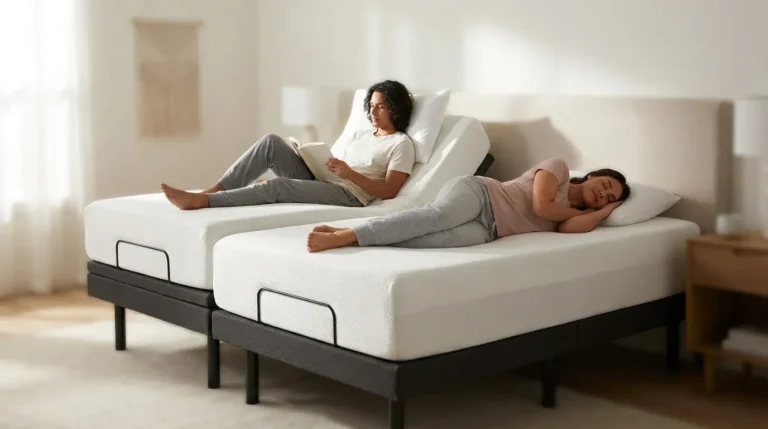
- Split Queen or Split King configuration: Gives the recovering partner full independent control while the other side stays flat, so couples can keep sharing a bed.
- Programmable presets: Store surgeon-recommended elevation angles for one-button recall, which helps when pain medication affects fine motor control.
- Wireless remote with large buttons: Works with one hand when the other is busy with a walker or cane.
Explore Leva’s adjustable bases with programmable presets and one-hand wireless controls.
How Adjustable Beds Support Knee Replacement Recovery
Consistent leg elevation and safer transfers are central to a smoother knee replacement recovery at home. Post-knee-replacement swelling peaks in the first few weeks and then improves over several months, so steady elevation remains important throughout the first 12 weeks. Gravity pulls surgical fluid down the leg, which causes swelling in the calf, ankle, and toes, and raising the leg above heart level helps that fluid drain back toward the core.
An adjustable base with independent knee elevation lifts the foot section above heart level without lifting the head. This creates repeatable positioning that improves venous and lymphatic drainage more reliably than restacking pillows a few times each night.
Night pain that disrupts sleep is common after total knee replacement, and very few people sleep through the night at six weeks, according to Advanced Practice Physiotherapist Ryan Pope at the Royal Orthopaedic Hospital. Frequent nighttime repositioning on a fixed-height bed raises fall risk. An adjustable base with hi-low control lowers that risk by allowing the surface to rise for assisted transfers and drop closer to the floor when you are resting alone.
A significant portion of post-discharge complications, including falls and wound re-injury, occur within the first two weeks at home when proper equipment like adjustable beds is missing, according to Canadian patient safety data. One of the most important equipment decisions is bed height, which directly affects transfer safety and fall risk.
Best Bed Height After Knee Surgery
Practical recovery guidance recommends a combined bed height of 22 to 26 inches from the floor for many adults after knee replacement. Measure from the floor to the top of the mattress, including any topper or protector. At this height, the knee sits at or slightly above hip level when you sit at the edge with feet flat on the floor. That position creates a knee angle of 90 degrees or more, which makes standing easier.
Research indicates that aligning the bed surface with knee height reduces the muscular effort needed for sit-to-stand compared with a surface that sits too low. Many orthopaedic surgeons recommend this range for the first 6 to 12 weeks after hip or knee replacement surgery.
A hi-low adjustable base solves the height challenge by treating bed height as a setting instead of a fixed measurement. Raise the bed for caregiver-assisted tasks and lower it afterward to reduce fall risk when you are unattended. Fixed-height frames set during assembly cannot match this flexibility.
Independent Foot Elevation for Safer Knee Positioning
Dr. Matthew Harb advises knee replacement patients to avoid placing a pillow directly under the knee for elevation, because it can cause stiffness or a flexion contracture that limits full leg straightening. Instead, he recommends placing support under the ankle so the leg sits higher than the heart while the knee stays fully extended.
An adjustable base with an independent foot section recreates this geometry automatically. Programmable presets let TKR patients save surgeon-recommended elevation angles and return to them with one button press. This removes the need to rebuild pillow stacks during the night and eliminates the flexion-contracture risk that both Dr. Harb and physiotherapist Ryan Pope warn against.
Zero Gravity Preset During the 12-Week Swelling Window
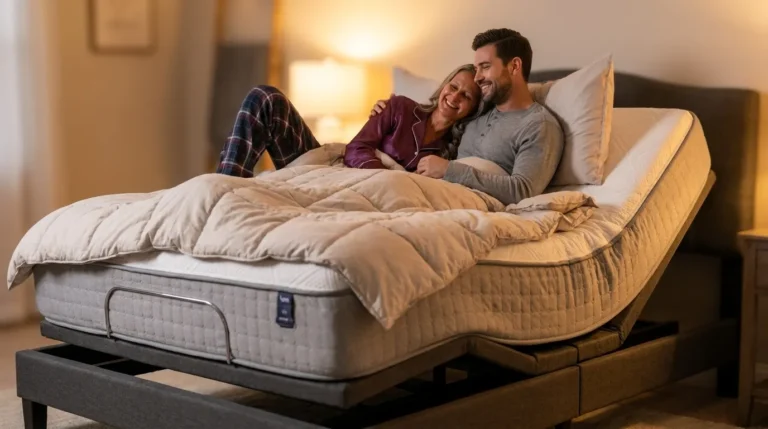
Zero-gravity positioning supports circulation and reduces pressure on the new joint. Raising the legs above heart level improves venous return, which lowers overnight fluid pooling and inflammatory cytokine concentration. The zero-gravity preset on an adjustable base achieves this by lifting both the head and foot sections to a reclined angle that spreads body weight across the surface.
Surgeons sometimes recommend zero-gravity positioning after joint replacements because even weight distribution reduces pressure on the affected area while leg elevation limits post-surgical swelling. Faster fluid drainage from this position can reduce pain and stiffness around the surgical site and support a quicker return to mobility.
Occupational therapist Annie Schlecht notes that people often notice less tossing and turning and deeper comfort in the short term, while long-term use supports spinal alignment, reduces inflammation, and helps the nervous system shift into true rest and repair. During the critical 12-week swelling window, a one-touch zero-gravity preset offers reliable, repeatable positioning without physical effort from the patient.
Choosing Between Medical-Grade and Consumer Adjustable Bases
Medical-grade hospital beds function as medical devices. They include overall height adjustment for safe transfers, integrated side rails for fall prevention, locking wheels, Trendelenburg and reverse Trendelenburg positioning, emergency CPR release, and higher weight capacities up to 1,000 lbs or more. Typical costs range from $2,000 to over $8,000 CAD, and they have a clinical appearance.
Consumer-grade adjustable beds are residential furniture. They focus on comfort features such as head elevation up to 60 to 70 degrees, foot elevation for leg circulation, zero-gravity positioning, and wall-hugging design. They usually cost between $1,000 and $3,000 CAD and blend into a normal bedroom.
For post-surgical recovery at home in Canada, hospital beds suit users with major mobility limits, high fall risk, or a need for caregiver height adjustment and medical equipment attachment. Consumer adjustable beds work well when the main needs are independent leg elevation above heart level, zero-gravity positioning, and a non-clinical bedroom look.
An adjustable base remains useful after recovery because it serves as a regular bed, while a hospital bed is more specialized for acute care and lacks long-term comfort benefits. For most knee replacement patients recovering at home with a partner, a quality consumer adjustable base in a split configuration delivers the needed clinical function at a lower cost than medical-grade options.
Top Adjustable Bed Options in Canada for Knee Recovery
When you compare adjustable bases for knee replacement recovery, follow a simple evaluation sequence. Start by testing the hi-low height range at your target transfer height to confirm safe sit-to-stand movement. Next, verify that the base offers independent foot elevation, since this feature drives swelling control. If you share the bed, confirm split configuration availability so your partner’s sleep remains comfortable. Finally, review delivery and setup services, because proper installation and a clear tutorial help you use presets and zero-gravity modes confidently.
| Model | Hi-Low Height Range | Split Options | CAD Price Range (Queen) |
|---|---|---|---|
| Orthex Sophia 4 | 10–24 inches (hi-low) | Not emphasized; clinical single-user focus | $3,500–$4,300 |
| Harmony Hi-Low | Hi-low range; clinical grade | Offers split options including Split King | ~$3,000–$5,000+ |
| Saatva (consumer) | Head and foot elevation only | Multiple sizes including Split King | ~$1,045–$2,090 USD |
| DreamCloud (consumer) | Adjustable height with included leg options, head and foot elevation | Includes Split King | From ~ $750 USD |
| Leva Sleep Split Queen / Split King | Hi-low capable models available, head and foot elevation with zero-gravity preset | Split Queen and Split King with independent controls per side | Competitive Canadian pricing with multiple models |
Leva Sleep offers a Split Queen configuration with independent foot elevation, whisper-quiet German motors, and in-house white-glove delivery in Ontario and Alberta, including assembly, bed-height adjustment, a product tutorial, and old-bed removal.
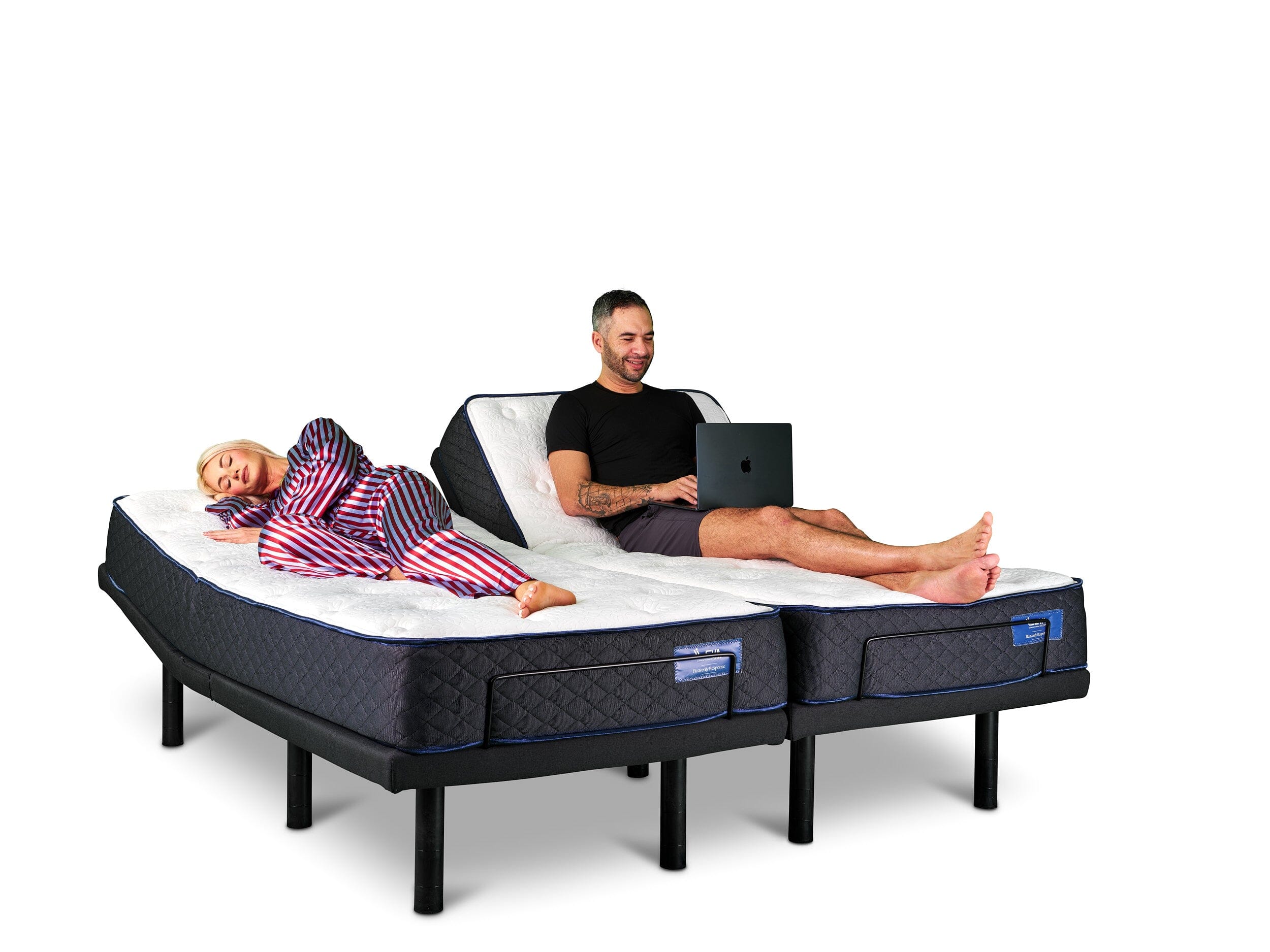
See Leva’s white-glove delivery options and split configurations for Ontario and Alberta.
Common Adjustable Bed Mistakes After Knee Replacement
- Pillow stacking under the knee: Placing a pillow directly under the knee risks the flexion contracture Dr. Harb warns about. Use ankle support or an adjustable foot section instead.
- Wrong bed height: A bed that sits too low makes standing harder because you must bend the knee more deeply to rise. Confirm this measurement before surgery.
- Noisy motors: Basic adjustable bases with loud actuators disturb the light, fragmented sleep that already occurs in early recovery. Whisper-quiet motors allow nighttime position changes without waking a partner.
- Non-split bases for couples: A single-zone base forces the non-recovering partner to sleep elevated or flat in a shared position that suits neither person. A split Queen or King gives each side full independent control.
- Ignoring transfer height variability: Bed height should rise for caregiver-assisted tasks and drop afterward to reduce fall risk when the person is unattended. A fixed-height base cannot adapt to these changes.
- Skipping a product tutorial at setup: Programmable presets and zero-gravity modes only help if the patient knows how to use them. In-house white-glove delivery with a hands-on tutorial removes this barrier.
Pairing Your Adjustable Base With the Right Mattress
The right mattress lets the adjustable base do its job. A medium-firm all-foam or hybrid pocket-coil mattress flexes with the base and maintains consistent support through repeated elevation changes. Thick, rigid innerspring mattresses resist articulation and can reduce the effective range of foot elevation, which directly limits swelling control during recovery.
Leva Sleep designs its mattresses to work with adjustable bases and pairs them with bedding accessories such as fitted sheets with deep pockets and extra elastic to prevent slippage during elevation. This integrated setup helps preserve the full clinical benefit of the base instead of losing it to incompatible bedding.
Frequently Asked Questions
How long should I use an adjustable bed after knee replacement surgery?
Most orthopaedic surgeons recommend focusing on elevation and safe transfer height for the first 6 to 12 weeks after total knee replacement, since swelling is most active and fall risk is highest during this period. An adjustable base remains useful long after recovery ends. Features such as zero-gravity positioning, independent elevation, and anti-snore modes support long-term sleep quality for both partners, which turns the base into a permanent sleep upgrade rather than a short-term medical aid.
What is the difference between a hi-low adjustable bed and a standard adjustable base for knee replacement recovery?
A standard adjustable base changes the angle of the head and foot sections but keeps the overall bed at one height. A hi-low adjustable bed also raises or lowers the entire sleep surface electronically, which becomes the key safety feature for post-surgical transfers. Lowering the bed close to the floor reduces fall risk during nighttime movement. Raising it to standing height makes sit-to-stand transfers easier and reduces strain on the recovering knee.
For patients with significant mobility limitations or regular caregiver support, hi-low capability usually matters most. For patients whose main needs are swelling control and comfortable overnight positioning, a quality consumer adjustable base with independent foot elevation and a zero-gravity preset is typically enough.
Can both partners use a split adjustable bed independently during knee replacement recovery?
Yes. A Split Queen or Split King adjustable base gives each side of the bed its own motor, remote, and preset system. The recovering partner can maintain foot elevation and zero-gravity positioning through the night while the other partner sleeps flat or at any preferred angle. This setup avoids separate sleeping arrangements, which often happen when one partner needs medical positioning on a single-zone base. Leva Sleep’s split configurations include independent controls for elevation, massage, and programmable presets on each side.
Does a consumer adjustable bed qualify for any Canadian tax credits or health coverage after knee replacement?
The Canada Revenue Agency allows the Medical Expense Tax Credit for adjustable beds prescribed by a licensed physician for diagnosed medical conditions, which provides a 14% non-refundable tax credit on eligible expenses above 3% of net income or $2,890 (2026 threshold), whichever is lower. Ontario’s Assistive Devices Program may cover up to 75% of the cost of a hospital bed for eligible residents with a documented long-term physical disability, when purchased from an ADP-approved vendor. Standard consumer adjustable bases usually do not qualify for ADP funding unless prescribed as medically necessary.
Consult your physician and an occupational therapist before purchasing to confirm whether a prescription and ADP application make sense for your situation.
What mattress firmness is best after knee replacement surgery?
A medium-firm mattress usually works best after knee replacement. It offers enough surface support to keep the leg in a neutral position during elevation without creating pressure points around the surgical site. Very soft mattresses let the leg sink unevenly, which can weaken the elevation angle created by the base. Very firm mattresses can create pressure on the heel and calf during extended elevation.
An all-foam or hybrid pocket-coil construction that flexes with the base is preferable to a rigid innerspring mattress, which resists articulation and reduces the effective range of foot elevation.
Conclusion: Matching Leva Adjustable Bases to Canadian Knee Recovery
For Canadian adults recovering from knee replacement surgery in 2026, the right adjustable base should deliver three core benefits. It should keep the leg elevated above heart level for swelling control, provide hi-low height adjustment for safer transfers, and offer a zero-gravity preset for overnight pressure relief. Medical-grade options such as the Orthex Sophia 4 deliver full clinical capability, but most home recovery patients do not need Trendelenburg positioning or bariatric weight capacity. Basic consumer bases from general retailers improve comfort but often lack split configurations, reliable Canadian delivery, and the specialist guidance needed to configure a base for recovery.
Leva Sleep focuses directly on this gap. With more than eight years of adjustable bed experience, $50M in lifetime sales, and over 25,000 Canadian customers, Leva offers a range of adjustable models including Split Queen options. Whisper-quiet German motors, programmable zero-gravity presets, independent foot elevation, and in-house white-glove delivery in Ontario and Alberta position Leva as a specialist provider for post-knee-replacement sleep in Canada.
Start your recovery with a Leva adjustable base designed for Canadian post-surgical needs.