Written by: Matthew Timmins, Founder and Managing Director, Leva Sleep | Last updated: July 27, 2026
Key takeaways for post‑hip‑replacement beds
- After hip replacement, a split adjustable base with independent head and foot elevation plus a medium-firm hybrid mattress supports safe transfers and respects surgeon precautions.
- Choose a mattress-to-floor height of 55–65 cm to keep hip flexion within safe limits during sit-to-stand movements.
- Hi-low medical frames suit the first 6 weeks, while lifestyle adjustable bases become the practical long-term solution once precautions ease.
- Reinforced edge support and a lockable flat foot section are essential features for transfer safety and posterior-approach compliance.
- Leva Sleep offers white-glove delivery and leg-height adjustment on split adjustable bed packages to match your surgeon’s specifications, so you can explore Leva’s adjustable-bed packages before surgery day.
How an adjustable bed supports hip replacement recovery
An adjustable base supports hip replacement recovery in three measurable ways. First, raising the head section 20–30 degrees reduces the hip flexion required to move from lying to sitting from 90 degrees down to 60–70 degrees. This keeps transfers within safe post-surgical limits during the first 6–12 weeks.
Second, slight knee elevation in the zero-gravity position distributes body weight more evenly and reduces concentrated pressure through the hip joint during early post-operative swelling. Third, adjustable bases support power-lift features that assist transitions from lying to sitting without twisting the operated joint.
One important caveat applies for some patients. Posterior-approach patients face stricter dislocation precautions, and raising the head section too high can push the torso into a hip flexion angle that violates those limits. Always confirm any elevation preset with your care team before use.
Explore Leva’s split adjustable bases, designed for independent elevation and white-glove setup across Ontario and Alberta.
Recliner vs adjustable bed after hip replacement
A recliner can work as a short-term tool. In week 1 after hip replacement, transfers from a recliner are often easier than from a standard bed, provided the hip angle stays above 90 degrees for posterior-approach patients. However, a fully flat recliner-like zero-gravity position can push the hip into unsafe flexion below 90 degrees, increasing dislocation risk for posterior-approach patients.
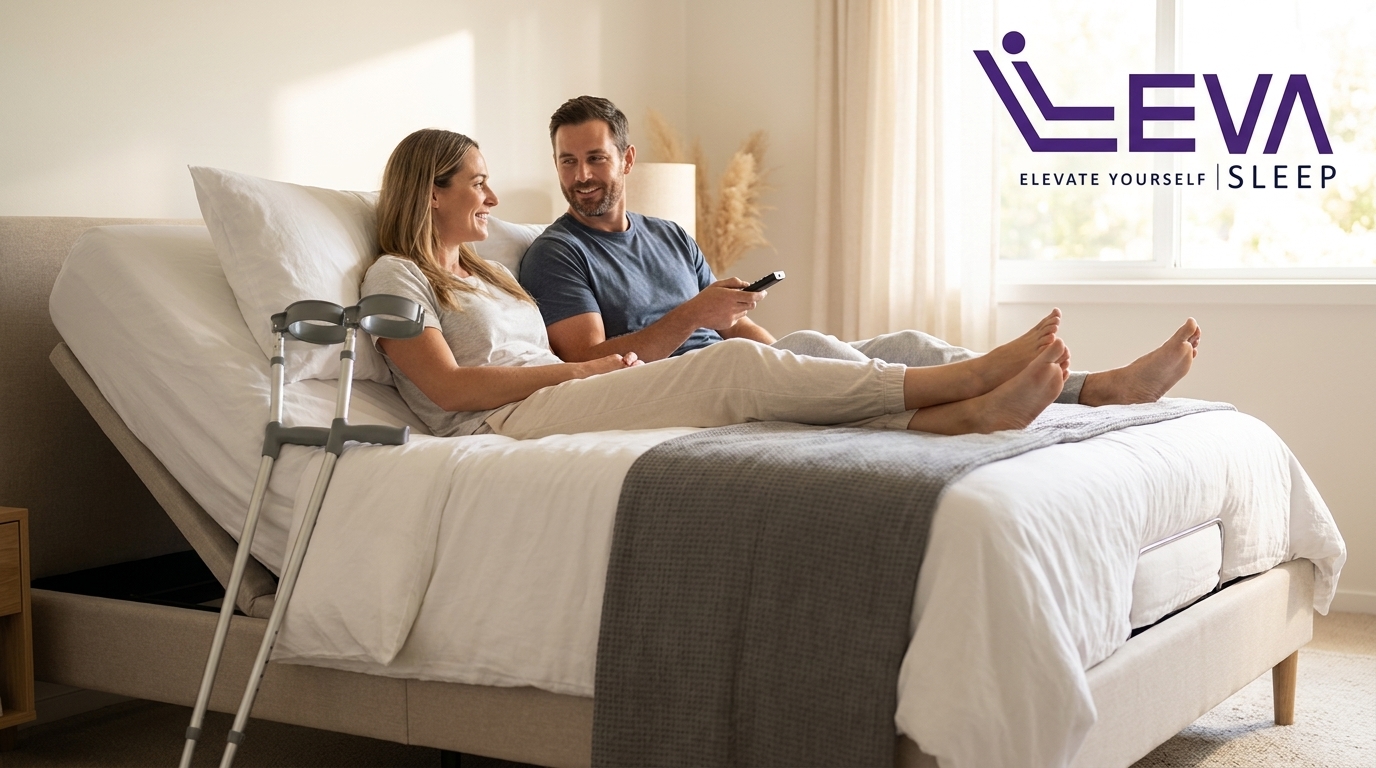
A split adjustable base usually replaces the recliner from week 2 onward. It offers the same partial-recline benefit, maintains the correct mattress-to-floor height for safe transfers, and allows a partner to sleep alongside without disruption, which a recliner cannot provide.
Best bed setup after hip replacement surgery
The combination that best satisfies surgical precautions is a medium-firm hybrid mattress paired with an adjustable base set to the correct floor height. The top surface of the mattress should sit 55–65 cm from the floor so that when sitting on the edge the knee is at or below hip level. A bed that is too low forces hip flexion beyond 90 degrees during transfers.
Kovacs et al. (2003) in The Lancet demonstrated that medium-firm mattresses produce better outcomes than firm ones for patients with chronic non-specific low-back pain, including reduced pain and improved function.
Traditional bonded innerspring mattresses will not flex safely on an adjustable base and can shift unexpectedly during adjustment, creating an instability hazard for post-hip-surgery patients. A purpose-built hybrid with pocket coils and high-density foam encasement is the correct pairing.
Hi-low medical frames vs lifestyle bases in Canada
Canadian buyers choose between two main product categories.
Hi-low medical frames raise and lower the entire sleeping platform vertically. The low position places the mattress top near floor level so falls result in inches rather than feet of drop, and the high position raises the deck to roughly waist height for caregivers. Medical hi-low frames adjust deck height to support both fall safety and caregiver access. They are clinically appropriate for weeks 1–6 when a caregiver is present and full vertical adjustment is required.
Lifestyle adjustable bases articulate the head and foot sections but remain at a fixed height set by leg inserts. Medical hi-low frames differ from lifestyle adjustable bases because the latter only articulate the head and foot sections while remaining at a fixed height, making conventional adjustable beds cheaper and more furniture-like when only head lift for comfort is required. From week 6 onward, when most surgeons lift hip precautions, a lifestyle base at the correct leg height delivers elevation, zero-gravity, and couple-comfort benefits at a fraction of the rental cost.
Leva Sleep’s white-glove team adjusts leg height on delivery to match your surgeon’s prescribed mattress-to-floor measurement, which bridges the gap between clinical requirement and residential comfort.
Transfer safety: height, edge support, and fall risk
Three physical parameters determine transfer safety on any adjustable bed.
- Floor-to-mattress height: The ideal bed surface height after hip replacement is 22–26 inches (55–65 cm) from the floor to allow safe entry and exit without bending the hip past 90 degrees.
- Edge support: A mattress that compresses 8–10 cm at the edge under body weight reduces the functional seat height below the optimal 45–55 cm transfer range; reinforced perimeter coils (13–14 gauge) combined with high-density foam encasement (minimum 1.8 lb/ft³) provide the strongest edge support.
- Fall risk context: Falls account for 85% of injury hospitalizations among Canadian older adults aged over 65 years, and the sit-to-stand transfer from a mattress edge is one of the higher-risk movements for this demographic.
Mapping hip precautions to adjustable-base features
| Precaution | Posterior Rule | Anterior Rule | Required Base Feature |
|---|---|---|---|
| Hip flexion limit | No flexion beyond 90° | Avoid extreme extension; slight flexion preferred when supine | Head elevation capped, leg height set to 55–65 cm |
| Foot section use | Foot of bed locked flat | Foot section may be flexed to maintain slight hip flexion while supine | Independent foot articulation with lockable flat position |
| Rotation / adduction | No internal rotation or adduction beyond neutral | No external rotation beyond neutral; no prone lying | Split base prevents partner movement from rotating operative side |
| Duration | Typically 6 weeks; up to 12 weeks for ~10% of surgeons | 2–6 weeks; some surgeons impose minimal restrictions | Adjustable base used long-term, precaution settings temporary |
Mattress choice for hip replacement recovery in Canada
A medium-firm hybrid (firmness 6–7 on a 10-point scale) with pocket coils and high-density foam encasement satisfies three requirements at once. It flexes safely on an adjustable base, maintains edge stability for transfers, and prevents the hip from sinking into unsafe flexion during side sleeping. A very soft mattress can allow the hip to sink deeply enough in side-lying to exceed 90 degrees of flexion, violating posterior precautions.
Leva Sleep’s hybrid mattresses are engineered specifically for adjustable bases, with reinforced perimeter coils and deep-pocket fitted sheets that stay anchored through full head and foot elevation. Standard mattresses from general retailers often lose sheet grip or lack edge support under these conditions.
Hospital bed rental vs buying an adjustable base
A hospital bed is typically required for 4–8 weeks after hip replacement surgery, after which it can be discontinued once the surgeon lifts hip precautions. Rental of a basic electric hi-low hospital bed frame in Ontario typically runs $150–$250 per month, with delivery, setup, and pickup often included. This places a 6–8 week rental at $225–$500 CAD with no residual asset.
A Leva Sleep split adjustable base purchased at 30–50% below comparable competitors starts the household with a long-term sleep asset. The white-glove team sets leg height to your surgeon’s specification on delivery day, which replicates the primary clinical benefit of a hi-low rental from week 2 onward. For couples, the split configuration also avoids a second hidden cost: the non-recovering partner’s disrupted sleep on a separate surface.
Compare Leva’s split-system packages and see how direct-to-consumer pricing makes clinical-grade adjustability accessible.
Zero-gravity positioning for swelling and safety
NHS Lothian guidance on elevation after an operation states that lifting the affected area above heart level allows gravity to assist with swelling drainage and reduce fluid build-up. The zero-gravity position on an adjustable base, with head and knees both slightly elevated, approximates this effect during sleep.
The precaution for posterior-approach patients remains specific. A fully flat recliner-like zero-gravity position can push the hip into unsafe flexion, so a semi-reclined position with the footrest slightly elevated and the back partially reclined typically keeps the hip angle above 90 degrees and is safer. Evening leg elevation while awake, with the ankle above hip level for 30–60 minutes, offers a lower-risk complement to overnight positioning.
Recovery stages: weeks 1–4, 5–12, and long term
Weeks 1–2:
- Walker or crutch use, prescribed home exercises two to three times daily, swelling management with ice and elevation, and the start of outpatient physiotherapy.
- Bed height set to 55–65 cm to keep hip flexion within safe limits during sit-to-stand transfers. Head elevation reduces the flexion angle required to move from lying to sitting. The foot section stays locked flat for posterior-approach patients to prevent excessive hip flexion, or slightly flexed for anterior-approach patients to maintain preferred slight hip flexion while supine.
- Back sleeping with a pillow between the knees, with no side sleeping on the operated side.
Weeks 3–12:
- Transition from walker to cane, progressive range-of-motion gains targeting hip flexion beyond 90 degrees, and gradual resumption of light household activities.
- Zero-gravity position introduced for swelling management as the surgeon permits.
- Side sleeping on the non-operated side often allowed after 4–6 weeks with a pillow between the knees.
Long-term (3–12 months):
- Full mobility and pain-free function typically achieved within 6–12 months.
- Adjustable base continues to deliver anti-snore, lumbar support, and temperature regulation benefits beyond the recovery window.
Split-bed benefits for couples during recovery
Hip and knee replacement volumes in Canada reached 175,242 procedures in 2024–2025, exceeding pre-pandemic levels. Many of these patients are part of a couple, and the non-recovering partner’s sleep is a frequently overlooked clinical variable. Disrupted sleep slows recovery for both people.
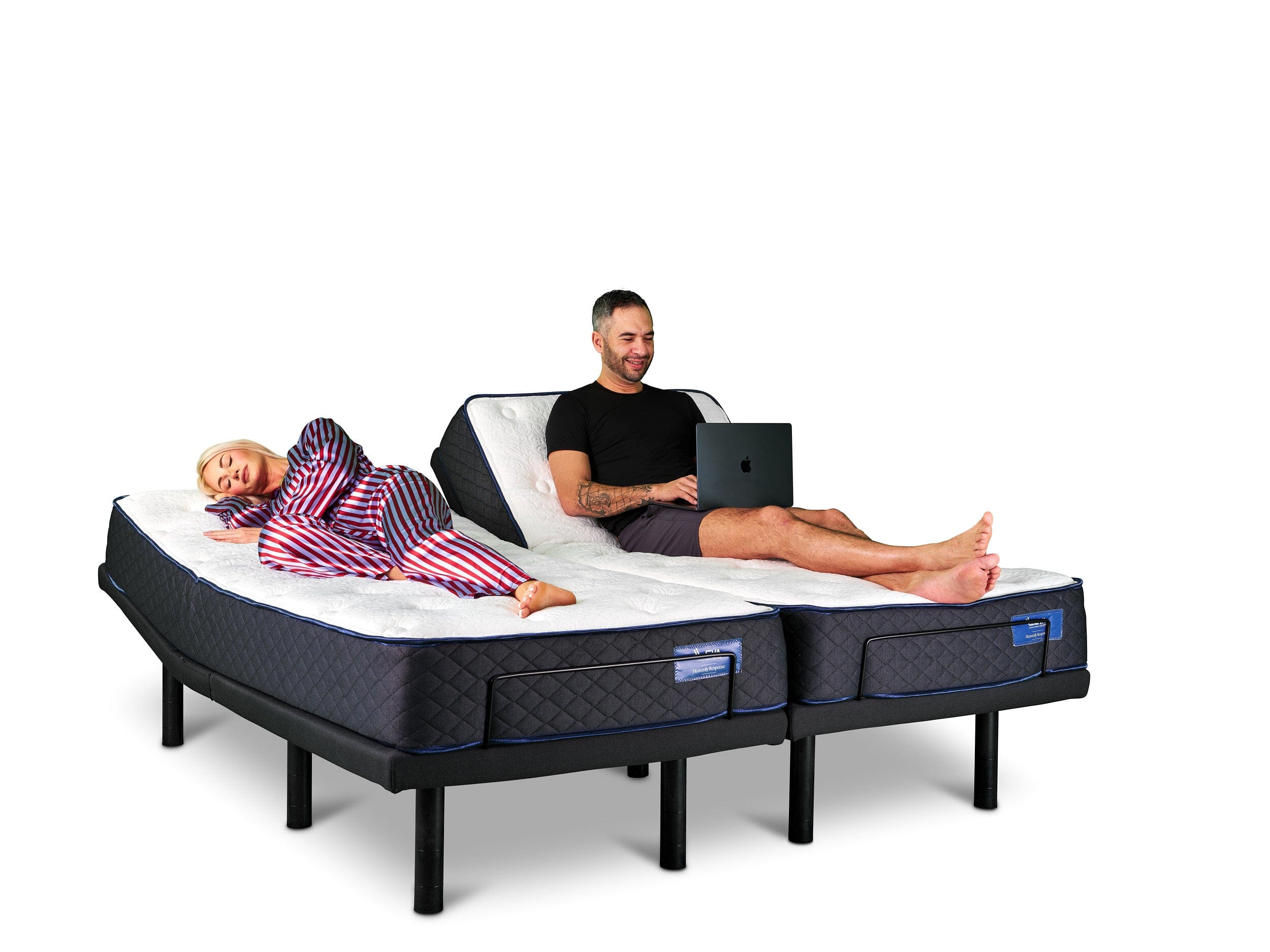
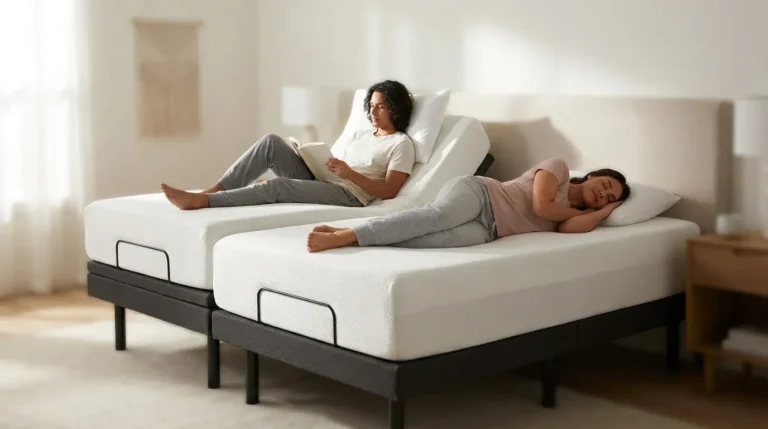
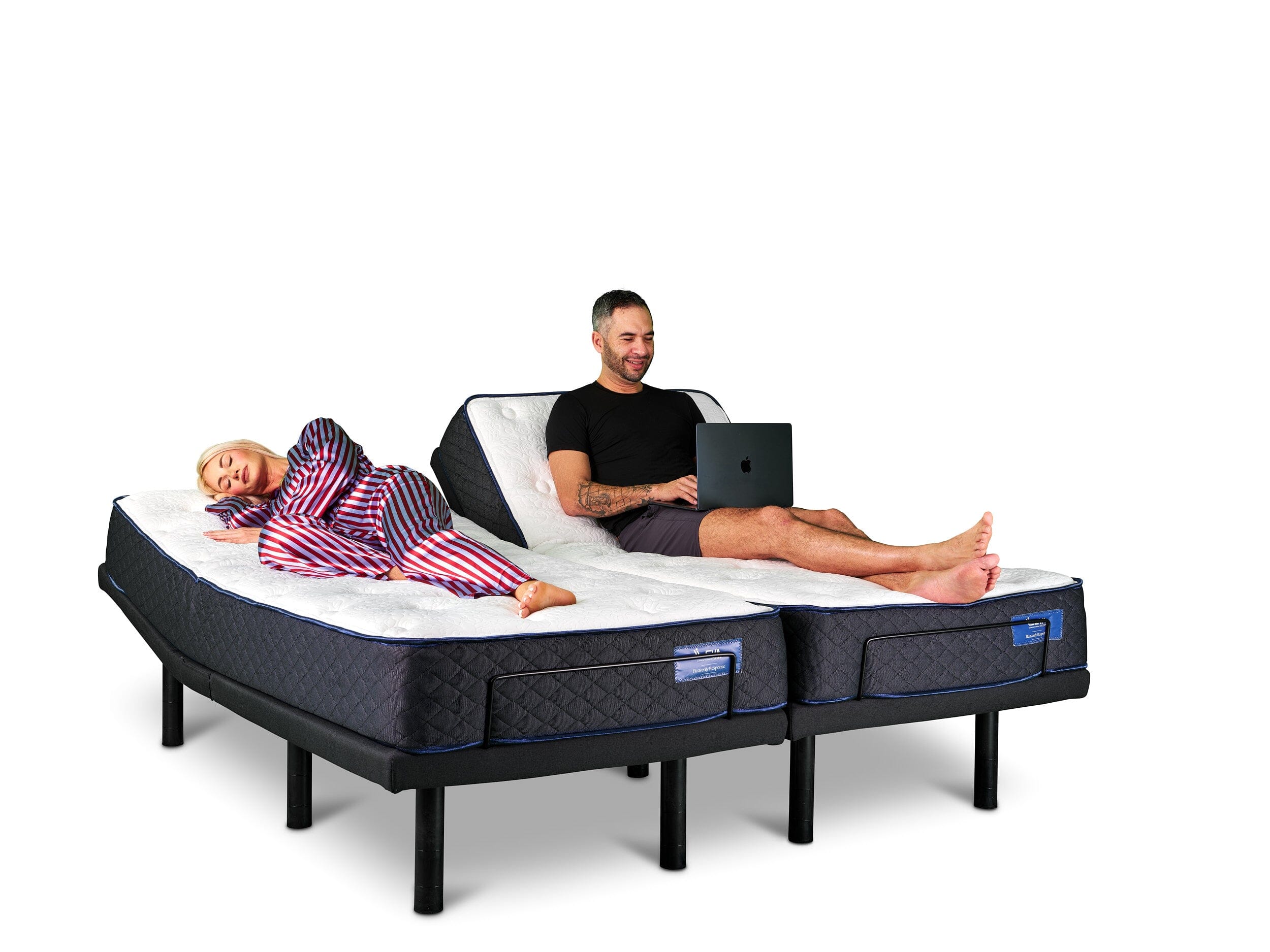
Leva Sleep’s split queen and split king bases give each side independent head elevation, foot articulation, massage, and temperature control. The recovering partner maintains surgical precaution angles, while the non-recovering partner adjusts freely without transmitting motion. This configuration satisfies both clinical and couple-comfort requirements, and Leva is one of the few Canadian suppliers offering a split queen for smaller rooms.
2026 CAD pricing: Leva split packages vs competitors
| Model | Base Price CAD (approx.) | White-Glove + Removal | Total (approx.) |
|---|---|---|---|
| Leva Sleep Split Queen Adjustable Package | Contact Leva for current pricing | Included (white-glove fee applies; see site) | View current pricing |
| Tempur-Pedic TEMPUR-Ergo Split King (comparable tier) | ~$4,000–$6,000+ (base only) | Varies by retailer; often not included | ~$4,500–$7,000+ |
| GhostBed Adjustable Base (Queen) | ~$1,200–$1,800 | Standard shipping; white-glove extra | ~$1,400–$2,200 |
| SonderCare Aura Hospital-Style (Queen) | ~$3,500–$5,000 | Delivery fee varies | ~$4,000–$5,500 |
Note: Competitor prices are approximate market estimates based on publicly listed CAD pricing as of July 2026 and are subject to change. Verify current pricing directly with each retailer.
Decision guide: when Leva’s solution fits
Use the following criteria to determine the right configuration.
- Weeks 1–6, caregiver present, full vertical height adjustment needed: Discuss a hi-low medical rental with your occupational therapist for the acute phase.
- Week 2 onward, independent transfers, couple in same room: A Leva Sleep split adjustable base set to the correct leg height by the white-glove team usually serves as the appropriate long-term solution.
- Posterior precautions active: Select a base with a lockable flat foot section and a head elevation cap confirmed with your surgeon.
- Anterior precautions active: Select a base with independent foot articulation to maintain slight hip flexion while supine.
- Budget priority: Leva’s direct-to-consumer model delivers the same clinical elevation features as luxury brands at 30–50% less, with white-glove setup included for a transparent fee.
Next steps: check Leva pricing and delivery in your province
A growing number of hip replacements in Canada are performed as day surgeries, so patients return home the same day and need their recovery environment ready immediately. Leva Sleep delivers and assembles in Ontario and Alberta, adjusts leg height to your surgeon’s specification, provides a full product tutorial, and removes your old bed. This means the clinical setup is complete before your first night home.
View Leva’s 2026 split queen and split king packages to confirm delivery availability in your province and speak with a sleep specialist about matching your surgical precautions to the right base configuration.
Frequently Asked Questions
How long do I need a special bed after hip replacement surgery?
Most patients require modified sleep arrangements for 6 to 12 weeks after hip replacement. Basic mobility typically returns within 2 to 6 weeks, but sleeping-position restrictions to prevent dislocation commonly last the full 6 to 12 weeks depending on surgical approach and your surgeon’s specific protocol. Posterior-approach patients generally face stricter and longer precautions than anterior-approach patients. An adjustable base remains useful well beyond the recovery window for swelling management, anti-snore positioning, and general comfort, which makes it a long-term investment rather than a temporary aid.
Can my partner sleep in the same adjustable bed while I recover from hip replacement?
Yes, provided the bed is a split configuration. A split queen or split king adjustable base gives each side fully independent head elevation, foot articulation, and massage settings. The recovering partner can maintain the precise angles required by their surgical precautions while the non-recovering partner adjusts freely. A standard non-split adjustable base forces both partners to use the same elevation setting, which either compromises the recovering partner’s precautions or prevents the non-recovering partner from sleeping comfortably. Leva Sleep specializes in split queen and split king systems and is one of the few Canadian suppliers offering a split queen for smaller bedrooms.
What is the difference between a hi-low hospital bed and a lifestyle adjustable base for hip replacement recovery?
A hi-low medical frame raises and lowers the entire sleeping platform vertically, which is most useful in weeks 1 to 6 when a caregiver needs to assist with transfers and the bed must be positioned at different heights for patient egress versus caregiver access. A lifestyle adjustable base articulates only the head and foot sections at a fixed height set by leg inserts. From approximately week 6 onward, when most surgeons lift hip precautions, a lifestyle base set to the correct floor height delivers elevation and zero-gravity benefits at a fraction of the ongoing rental cost, and it integrates into the bedroom as permanent furniture. Leva Sleep’s white-glove delivery team adjusts leg height on installation day to match your surgeon’s prescribed mattress-to-floor measurement.
Does the zero-gravity position on an adjustable bed help with post-hip-replacement swelling?
Elevating the legs above heart level assists gravity in draining fluid away from the surgical site, which can reduce swelling and morning stiffness. The zero-gravity position on an adjustable base, with head and knees both slightly elevated, approximates this effect during sleep. Posterior-approach patients need to verify that the specific head and foot angles used do not push the hip into flexion beyond 90 degrees. A semi-reclined position with only slight foot elevation is generally safer than a fully flat zero-gravity preset for this group. Evening leg elevation while awake for 30 to 60 minutes is a lower-risk complement to overnight positioning. Always confirm the exact angles with your surgeon or physiotherapist before using any preset.
Is Leva Sleep available across Canada, and what does white-glove delivery include?
Leva Sleep currently delivers in Ontario and Alberta. White-glove delivery includes in-home setup to the bedroom, leg-height adjustment to your specified mattress-to-floor measurement, a full product tutorial covering all base functions and app controls, and removal of your old bed through donation or recycling. For hip replacement patients, the leg-height adjustment on delivery day is particularly important because it replicates the primary clinical benefit of a hi-low rental without the ongoing rental cost. The white-glove fee appears transparently at checkout, with no hidden charges for setup or old-bed removal.