Written by: Matthew Timmins, Founder and Managing Director, Leva Sleep | Last updated: June 20, 2026
Key Takeaways for Canadian Side-Sleeping Couples
- Side sleepers often feel better with 10–15° of head elevation and gentle lumbar support that keeps the spine aligned and eases pressure on hips and shoulders.
- Traditional flat beds and single adjustable bases rarely match both partners’ needs, which can increase pain, snoring, and night-time wakeups.
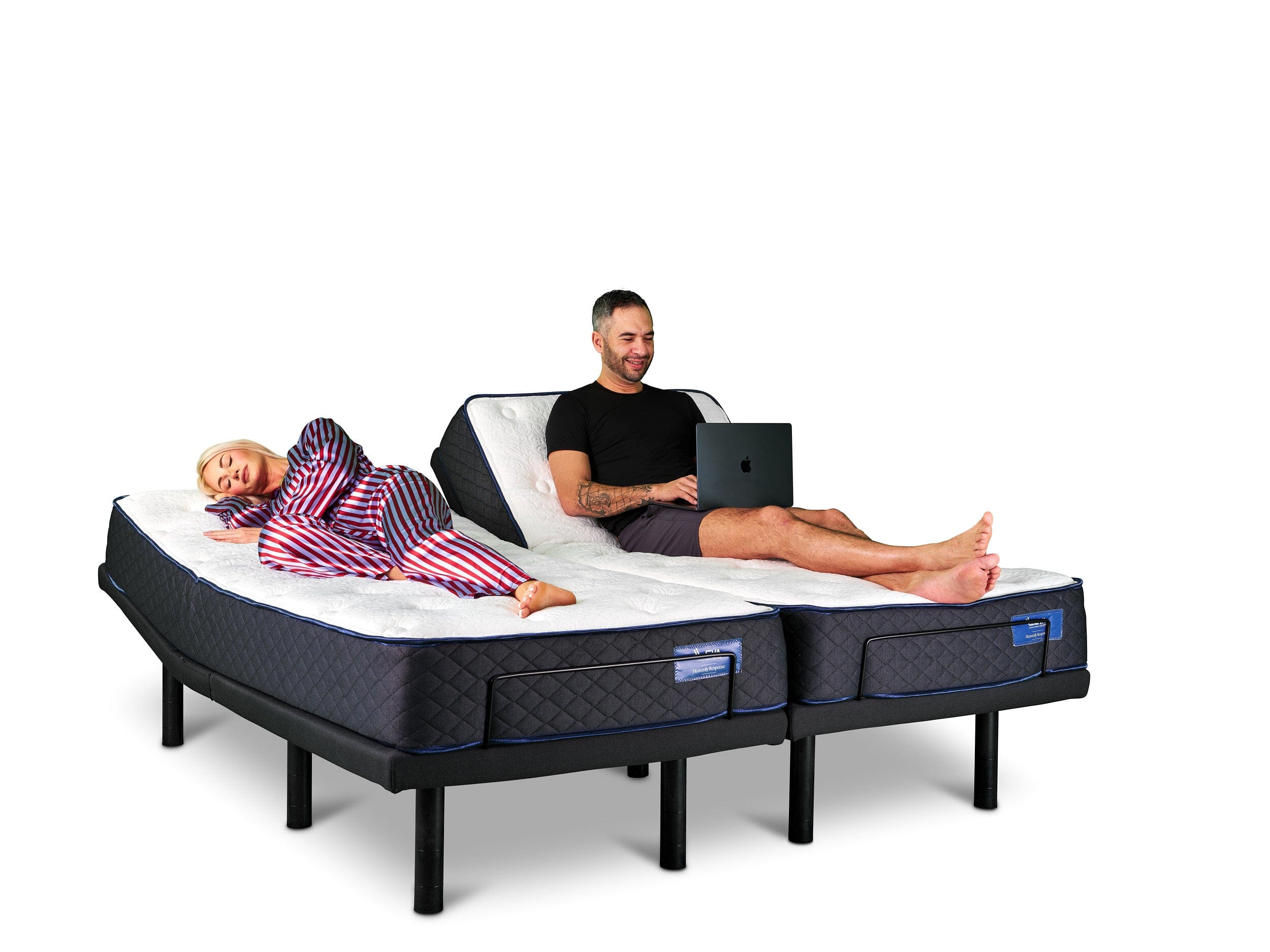
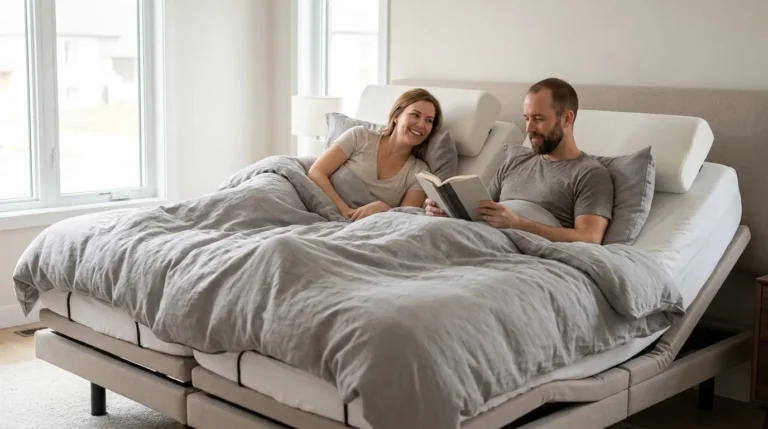
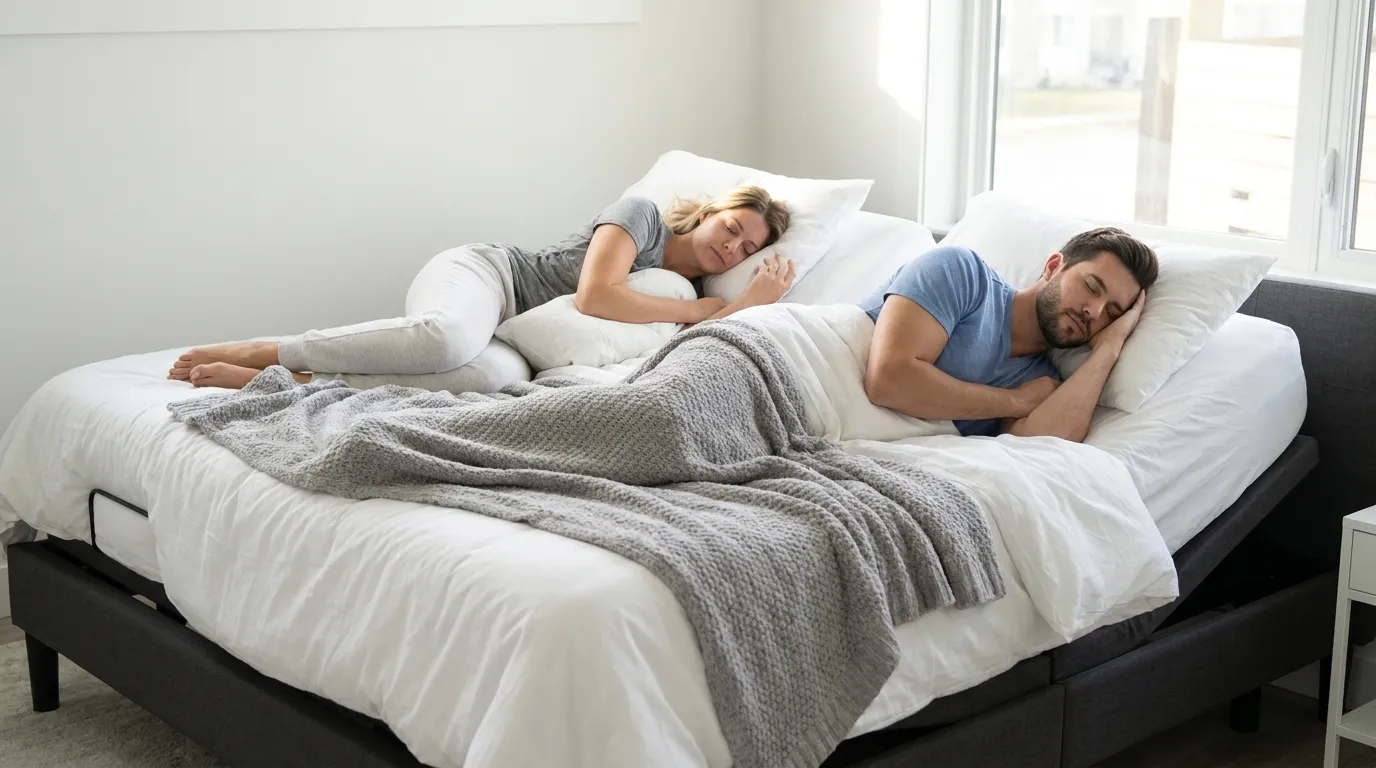
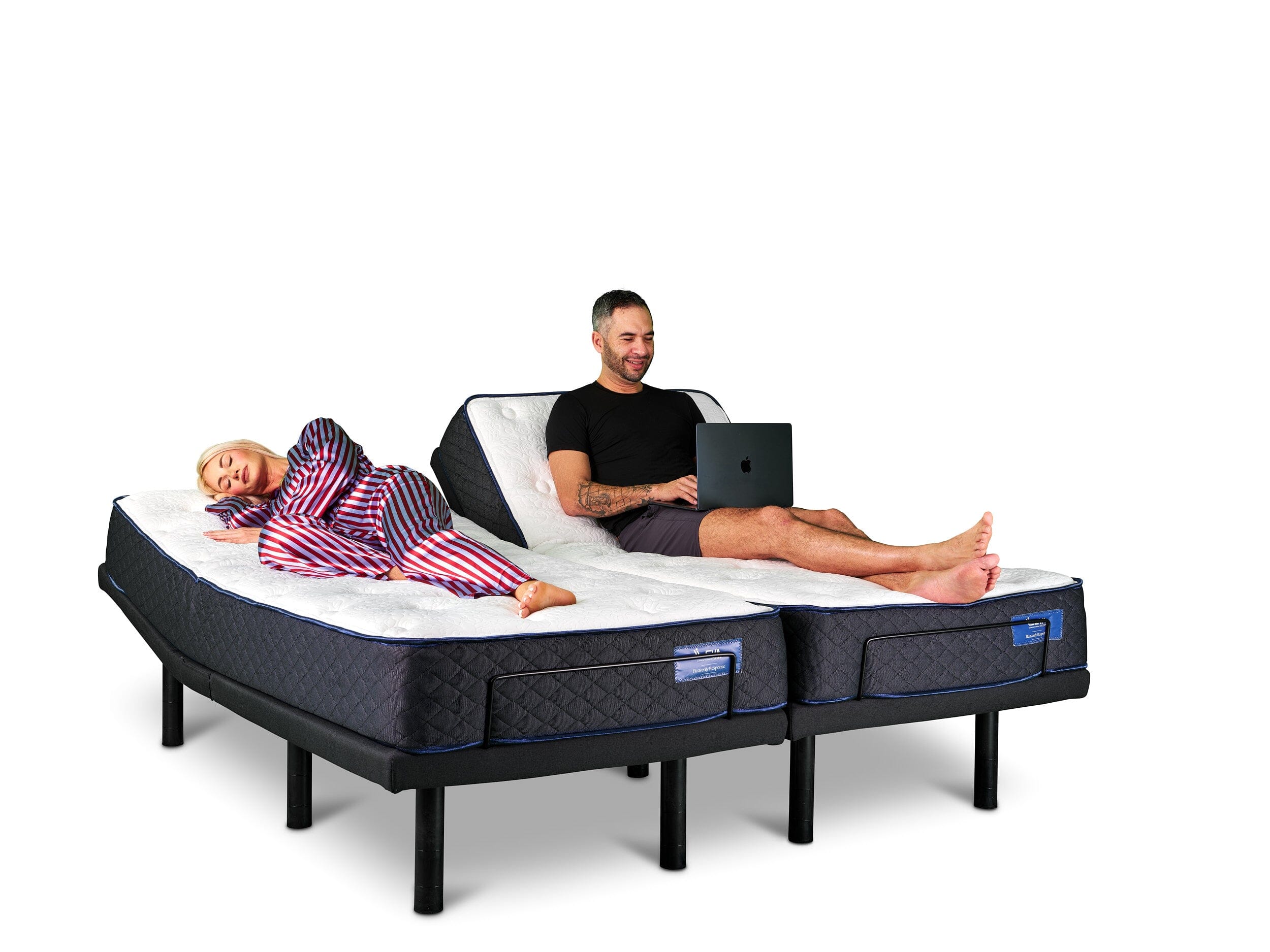
- Split adjustable systems such as Split Queen and Split King let each partner control elevation, temperature, and anti-snore settings on their own side.
- Smart shopping criteria include quiet motors, mattresses built to bend comfortably, bedding that stays in place, and professional white-glove delivery.
- Leva Sleep offers premium split adjustable bed packages designed for Canadian couples—explore split bed configurations to find your ideal sleep solution.
The Problem: Waking Up in Pain While Your Partner Snores
Adults often spend a significant portion of the night in the lateral position, and this preference increases with age and BMI. Surveys place that figure even higher, with many respondents identifying as side sleepers. Side sleeping concentrates body weight on the greater trochanter and the shoulder’s subacromial space, two narrow contact points that need generous cushioning to prevent tissue compression.
The Arthritis Foundation reports that more than one-third of adults experience hip, knee, or foot pain that keeps them awake at night. A study of 58 subjects with rotator cuff tears found that many of them were side sleepers, and prolonged lateral pressure can increase subacromial pressure on the rotator cuff tendons, potentially accelerating degenerative changes.
Hip pain adds another layer of discomfort for side sleepers. Greater trochanteric pain syndrome is a common cause of hip-pain presentations in primary care. A 2019 study in the journal Medicine examined sleep quality and nocturnal pain in patients with hip osteoarthritis using the Pittsburgh Sleep Quality Index.
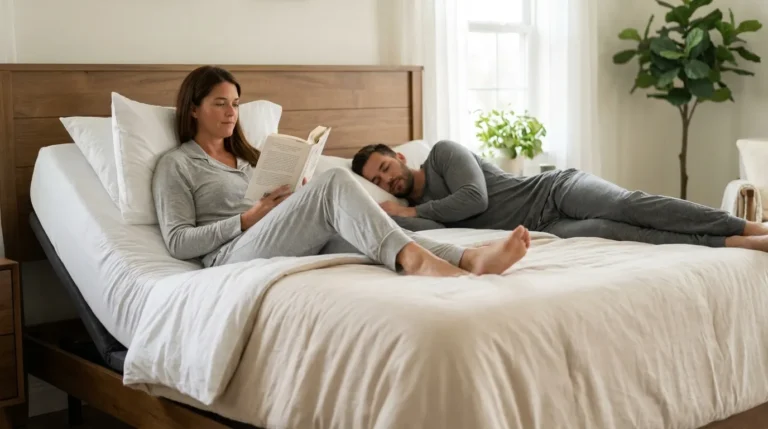
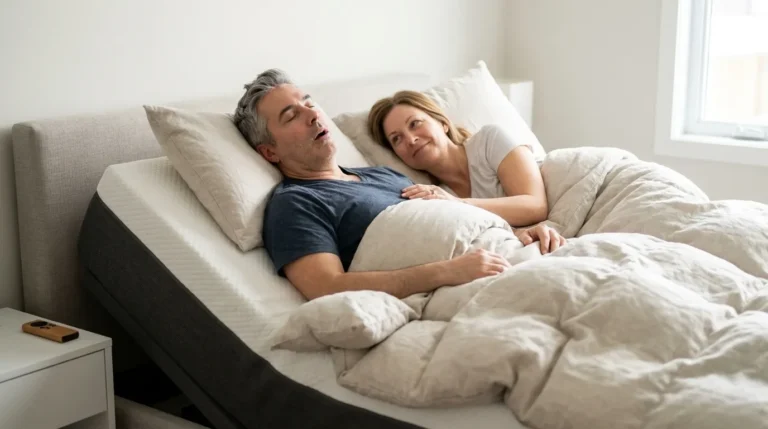
These individual pain issues become even more disruptive when two people share a bed. For couples, the problem doubles. One partner’s shoulder or hip pain causes frequent repositioning, and the other partner’s snoring, often linked to airway collapse in a flat position, interrupts sleep on its own. A U.S. National Library of Medicine study found that many adults with lower back pain experience sleep disturbances. When both issues occur in the same bed, couples often face chronic sleep deprivation or what sleep clinicians call “sleep divorce,” where partners retreat to separate rooms.
Explore split adjustable bed solutions designed for Canadian couples
Why Flat Beds and Single Adjustable Bases Fail Side-Sleeping Couples
A flat mattress, regardless of firmness, cannot change shape to match your body. Too-firm beds create pressure at the hips and shoulders, while too-soft beds let the hips sink and twist the spine, so side sleepers end up in a narrow comfort window where one setting rarely satisfies both partners.
Basic single adjustable bases improve elevation but create a new conflict because one motor controls the entire sleeping surface. When one partner needs head elevation for acid reflux or snoring and the other prefers a flat position, the base cannot support both. Entry-level motors are often noisy, and mechanical sounds during position changes wake light sleepers. Many “bed in a box” brands also ship mattresses never engineered to bend at a hinge point, which creates discomfort at the shoulders and hips, exactly where side sleepers need steady support.
Split Adjustable Sleep Systems That Resolve Couple Conflicts
A Split King adjustable bed uses two Twin XL mattresses, each 38″ × 80″, to create a full king-size footprint of 76″ × 80″ with independent control on each side. Split Queen configurations follow the same idea in a smaller footprint, so couples in modestly sized rooms can still enjoy independent elevation. The global adjustable bed frames market was estimated at USD 4,376.4 million in 2024 and is projected to reach USD 8,614.4 million by 2033, which reflects growing recognition that single-surface sleep systems do not meet the needs of many couples.
Leva Sleep offers a Split Queen configuration built to customer specifications, which stands out in a market where many competitors stock only Split King or single-base options.
Seven Criteria Side Sleepers Should Use When Choosing an Adjustable Bed
Independent elevation. Each side needs to articulate separately for true comfort. Side sleepers with lower back pain often benefit from head elevation of 15–20° and foot elevation of 10–15°. These angles create a gentle contour that mirrors the spine’s natural S-curve and reduce pressure on hips and shoulders. Without independent control, a single-base system forces one partner to accept the other’s elevation setting, which removes the therapeutic benefit for at least one person.
Whisper-quiet motors. Motor noise during position changes is a primary complaint with entry-level bases. Leva Sleep uses whisper-quiet German motors engineered for minimal acoustic output. This design allows micro-adjustments, including anti-snore corrections, without waking a sleeping partner.
Mattress compatibility for pressure relief. A power base paired with a mattress never built to articulate often causes discomfort at hinge points and under the shoulders or hips. To avoid this, look for hybrid mattresses that use pocketed coil innersprings without border rods, which bend easily on adjustable bases. Avoid continuous coil, offset coil, or Bonnell coil designs, which resist bending and feel rigid. Beyond articulation, side sleepers need materials that contour to pressure points. Gel-infused memory foam or hybrid coil constructions with a plush top layer adapt to shoulder curves without letting the hips sink too deeply, which helps preserve spinal alignment when the base elevates. Leva Sleep designs its all-foam and hybrid pocket-coil mattresses to articulate with its bases and also pairs its bases with Tempur-Pedic, Simmons, Beautyrest, Serta, and Kingsdown mattresses.
Specialized bedding that stays put. Standard fitted sheets often pull free when the head or foot section rises. Leva Sleep designs its bedding accessories, including deep-pocket fitted sheets with extra elastic, duvet clips, and mattress protectors, specifically for adjustable bases. This approach prevents sheet slippage that can disturb sleep on generic bedding.
Temperature regulation. Side sleeping concentrates body heat at the main contact points. Leva Sleep’s higher-end systems include a heating and cooling pad for individual temperature control, so each partner can set a separate thermal environment.
Anti-snore mode. Leva Sleep’s anti-snore mode detects snoring and makes subtle head-elevation micro-adjustments to open the airway. This feature addresses one of the most common causes of partner sleep disruption without requiring a CPAP mask.
White-glove delivery and setup. Adjustable bases work best when assembled and calibrated correctly. Leva Sleep’s in-house white-glove delivery service, available in Ontario and Alberta, includes bedroom delivery, full setup, product tutorials, old-bed removal, and real-time height adjustments. This service removes the setup burden that many “bed in a box” brands leave to the customer.
Find adjustable beds that meet these criteria
Neutral Comparison of Single, Basic Split, and Premium Split Systems
| Feature | Single Adjustable Base | Basic Split Base | Premium Split System (e.g., Leva Sleep) |
|---|---|---|---|
| Noise level | Audible motors common in entry-level models, varies by brand | Audible motors common, two motors increase noise exposure | Whisper-quiet German motors engineered for minimal acoustic output |
| Lumbar / pillow-tilt features | Head and foot elevation only on most entry-level units, lumbar rare | Independent head and foot per side, lumbar and pillow-tilt uncommon at entry price | Independent lumbar control and pillow-tilt motor per side, anti-snore mode, app-controlled micro-adjustments |
| Mattress options | Compatible with all-foam and pocketed-coil hybrids without border rods, incompatible with traditional innersprings | Same articulation constraints as single base, two separate mattresses required for split configuration | Matched all-foam and hybrid pocket-coil mattresses designed to articulate, compatible with Tempur-Pedic, Beautyrest, Serta, Simmons, Kingsdown |
| Canadian delivery | Varies, many brands use third-party couriers with threshold or curbside delivery only | Varies, assembly complexity increases without professional setup | In-house white-glove delivery in Ontario and Alberta, includes bedroom setup, leg-height adjustment, tutorial, and old-bed removal |
When an Adjustable Bed May Not Be the Right Choice
Adjustable beds do not suit every situation. Individuals recovering from certain spinal surgeries should confirm safe elevation angles with their surgeon, because some post-operative protocols require a strictly flat position. People with severe osteoporosis that affects the vertebral column should consult a physician before using foot-elevation features, which can increase compressive load on the lumbar spine. Adjustable bases also do not work with platform beds and most traditional box-spring frames, so the base must rest on a flat, weight-rated surface or a compatible bed frame.
Frequently Asked Questions
Are adjustable beds actually good for side sleepers in Canada?
Yes, for most side sleepers. A flat mattress cannot change shape to support the shoulder and hip pressure points that lateral sleeping creates. An adjustable base lets you raise the head section by about 10–15°, which reduces shoulder compression and helps keep the airway open, and raise the foot section slightly, which bridges the gap under the hips and reduces lumbar sag. Canadian couples benefit in particular from Split Queen and Split King configurations, because each partner can set an independent elevation without disturbing the other. Leva Sleep offers both configurations with in-house white-glove delivery in Ontario and Alberta, a service level that many general mattress retailers in Canada do not provide.
What is the best position for a side sleeper on an adjustable bed?
The most commonly recommended starting point is 10–15° of head elevation with modest foot elevation, angles that create the spinal contour described in the evaluation criteria. This position reduces pressure on the greater trochanter and shoulder and keeps the airway partially open to reduce snoring. The Canadian Chiropractic Association also recommends placing a pillow between the knees along with adjustable base use to reduce pelvic tilt. Individual anatomy varies, so you can adjust the angle in small steps, and most users find a preferred position within the first week.
Can a split adjustable bed help couples avoid sleep divorce?
Split adjustable systems directly address this problem. When one partner needs head elevation for snoring or acid reflux and the other prefers a flat position, a single base forces a compromise that leaves one person uncomfortable. A Split King or Split Queen gives each side independent control of elevation, lumbar support, massage, and temperature. Leva Sleep’s app-controlled bases also include an anti-snore mode that detects snoring and makes automatic micro-adjustments to the head section, which tackles the most common cause of partner sleep disruption without requiring the snoring partner to wake up and adjust the bed manually. Couples who have already tried flat beds and basic single bases often identify independent control as the feature that lets them return to sharing a bed.
What type of mattress should a side sleeper use on an adjustable base?
All-foam mattresses and hybrid mattresses using pocketed coil innersprings without border rods usually work best. As noted in the evaluation criteria, pocketed coil innersprings without border rods are essential for proper articulation, while traditional coil designs tend to resist bending. For side sleepers, a medium to medium-firm mattress with a gel-infused memory foam or plush hybrid top layer provides the shoulder contouring and hip cushioning needed to reduce pressure-point pain. Leva Sleep designs its own all-foam and hybrid pocket-coil mattresses to articulate with its bases and also carries options from the major brands mentioned earlier, all evaluated for adjustable-base compatibility.
How much does a split adjustable bed cost in Canada, and is it worth it?
Premium split adjustable systems from brands such as Tempur-Pedic sit at the top of the market. Leva Sleep’s direct-to-consumer, vertically integrated model, which covers design, assembly, and delivery in-house, removes retail markup and positions its Split Queen and Split King packages at roughly 30–50% less than comparable luxury competitors. For couples dealing with chronic shoulder or hip pain, partner snoring, or differing firmness preferences that already affect sleep quality and daytime function, the cost of a split adjustable system is often lower than the long-term cost of sleep aids, physiotherapy, or the relationship strain of extended sleep divorce. Leva Sleep’s white-glove delivery service, described earlier, keeps the total system cost clear instead of requiring separate purchases and third-party setup.
Conclusion: A Practical Path to Better Sleep for Side-Sleeping Couples
Side sleeping remains the dominant adult sleep position and creates predictable pressure at the shoulder and hip that a flat mattress cannot fully resolve. For Canadian couples already dealing with differing elevation needs, snoring, or pain, a split adjustable system with independent controls, quiet motors, compatible mattresses, and purpose-built bedding offers a direct and practical solution. Leva Sleep’s Split Queen and Split King packages address each of these variables in a single, vertically integrated system that in-house professionals deliver and set up in Ontario and Alberta, at a price point about 30–50% below comparable luxury competitors.