Written by: Matthew Timmins, Founder and Managing Director, Leva Sleep | Last updated: July 13, 2026
Key Sleep Upgrades Couples Can Expect
- Many Canadian couples face nightly sleep conflicts from snoring, temperature differences, and firmness mismatches that flat beds cannot solve.
- Split adjustable systems let each partner independently adjust head and foot elevation, firmness, and temperature without disturbing the other side.
- Key evaluation criteria include a true split configuration, at least 30 degrees of head elevation, compatible mattresses, low motor noise, and white-glove delivery options.
- Adjustable beds provide clinically supported relief for positional sleep apnea, acid reflux, and back pain but do not replace CPAP therapy in moderate-to-severe cases.
- Leva Sleep offers couples specialized split adjustable bed packages with independent controls, whisper-quiet motors, and white-glove delivery in Ontario and Alberta, so you can explore configurations for your needs.
Why Flat Beds and Basic Adjustable Bases Fall Short for Couples
Flat beds offer no positional customization. A partner who needs head elevation for acid reflux or snoring must stack pillows, which shift throughout the night and provide inconsistent support. Basic adjustable bases improve on this but typically move both sides of the bed simultaneously. Standard King adjustable bases cannot accommodate couples with differing incline preferences, so both partners end up compromising and sleeping worse.
Motor noise often becomes another complaint. Even whisper-quiet DC motors create a low hum during adjustment that may disturb a sleeping partner, and older or budget models are considerably louder. Mattress compatibility also limits results. Traditional innerspring mattresses with Bonnell or offset coils are incompatible with adjustable bases, and forcing them to bend can permanently damage the mattress and void the warranty.
Delivery and setup at most general retailers feel impersonal. Bed-in-a-box models leave couples to assemble a 150–200 lb base themselves, with no guidance on optimal leg height or position programming.
How Split Adjustable Systems Solve Common Couple Sleep Conflicts
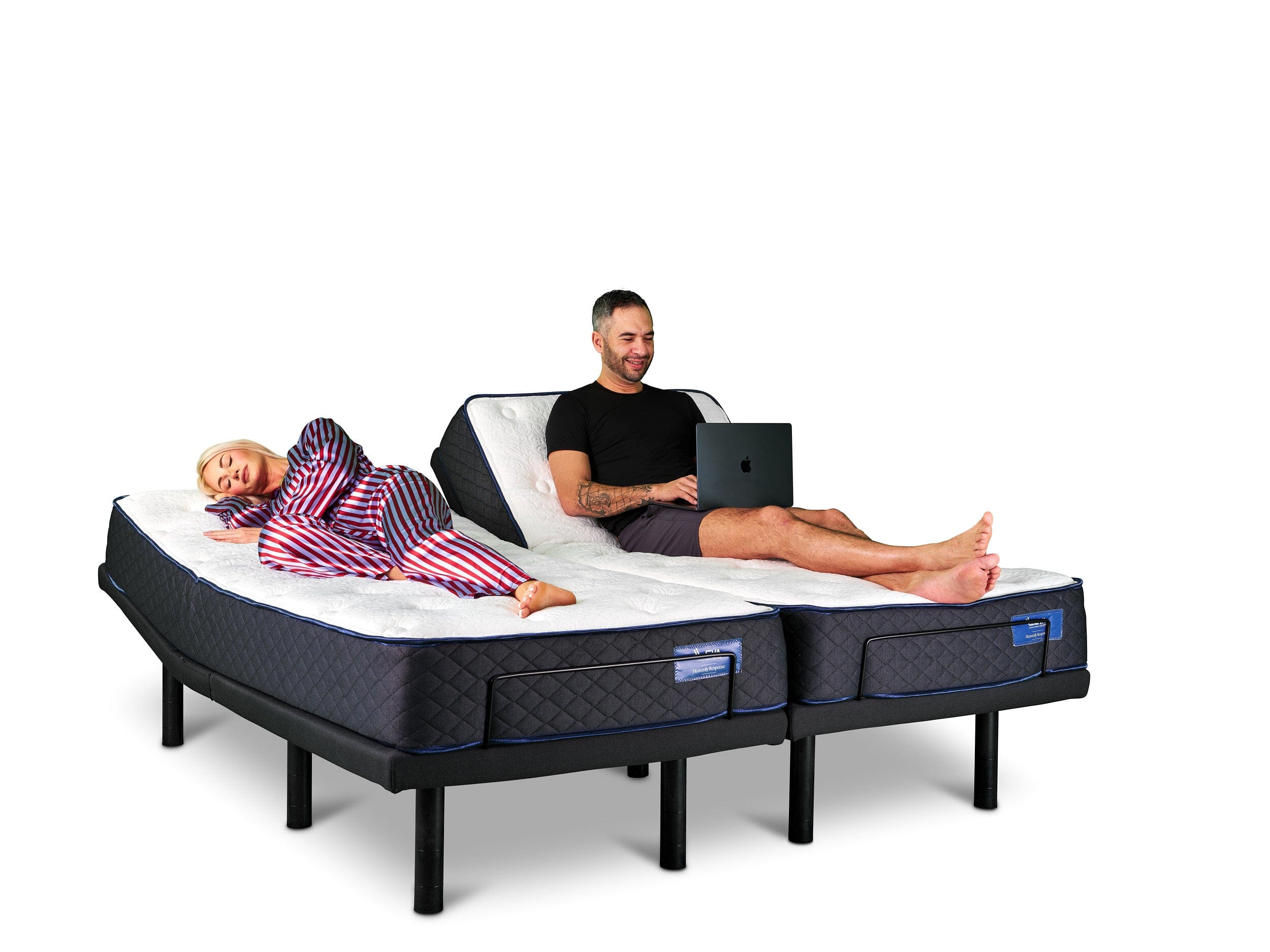
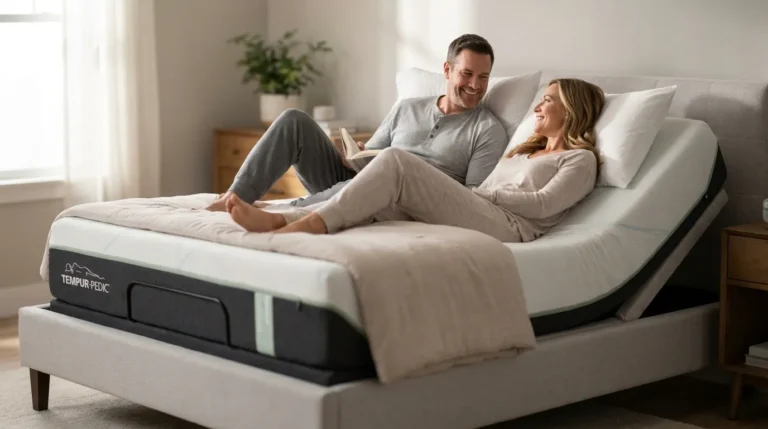
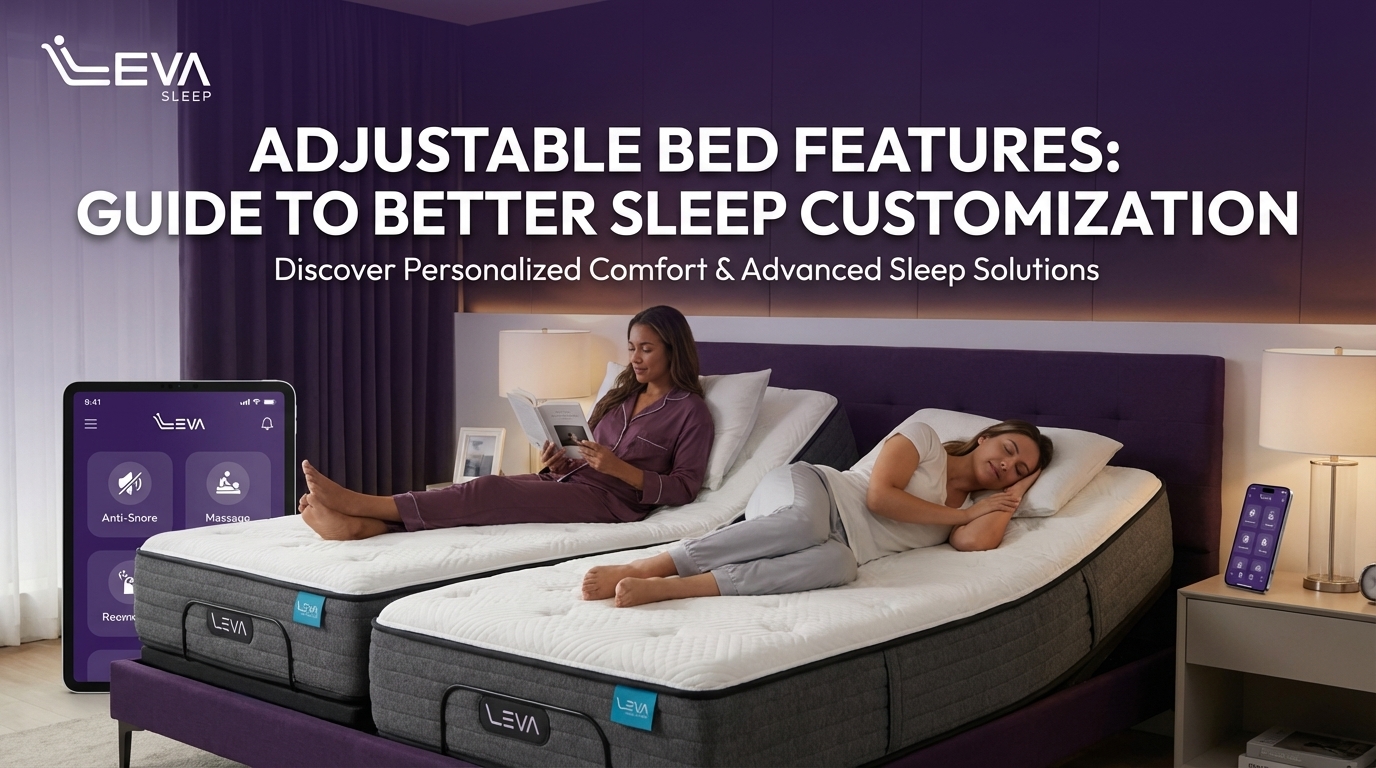
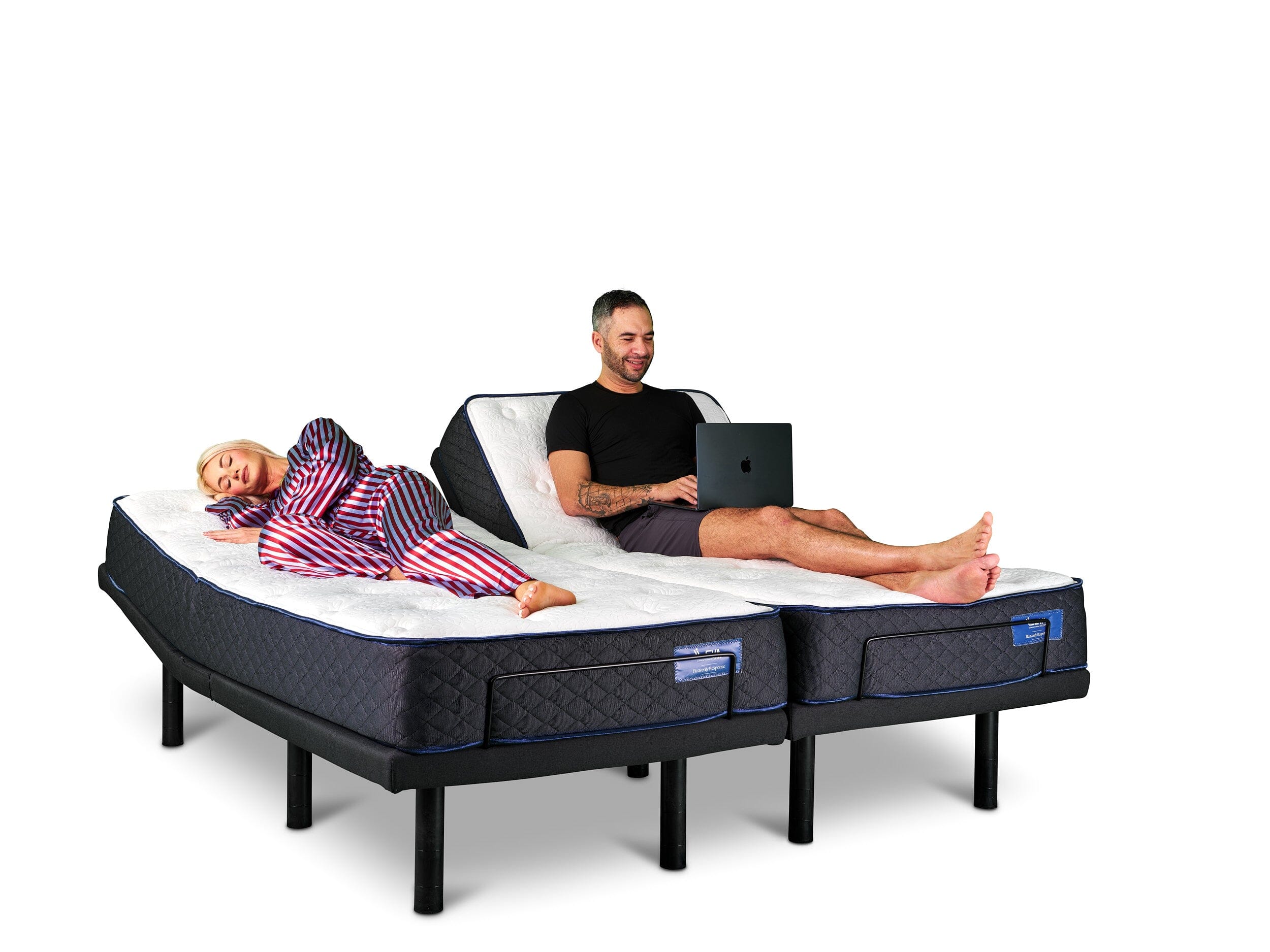
Split adjustable systems divide the bed into two independently controlled halves. Each partner can raise or lower the head and foot sections to their preferred angle without affecting the other side. Targeted lumbar support zones provide focused lower-back relief. App-based controls let users save custom positions, set vibrating alarms, and make subtle overnight adjustments without turning on a light or waking a partner.
Anti-snore technology adds another layer of support. Sensor-equipped bases detect snoring acoustically and automatically raise the head section by a few degrees, which opens the airway without waking the snoring partner. Leva Sleep’s anti-snore mode, arriving in 2026, follows this same principle.
Temperature regulation pads, integrated into the mattress surface, let each partner set an independent sleep temperature. Combined with split firmness options, these features address almost every common source of couple sleep incompatibility within a single shared bed.
How Couples Should Evaluate Adjustable Bed Options
Couples make better decisions when they use clear criteria before purchasing an adjustable bed system.
- Independent adjustability: Confirm the base is a true split configuration, not a shared-movement system marketed as adjustable.
- Elevation range for snoring and apnea: Look for head elevation of at least 30 degrees to meet clinical thresholds for airway support.
- Mattress compatibility: Verify the mattress is all-foam or a flexible hybrid pocket coil and avoid thick innersprings. Mattresses over 14 inches thick may cause bridging on adjustable bases and create an uneven surface.
- Motor noise rating: Request decibel specifications or read verified owner reviews that describe overnight adjustment noise.
- Temperature control: Check whether heating and cooling are integrated into the base or require a separate pad purchase.
- Delivery and setup: Confirm whether white-glove delivery is available in your province, including old bed removal and product tutorials, so the system feels usable from day one.
What Doctors Say About Adjustable Beds
Sleep physicians and respiratory specialists share a working consensus on positional therapy for obstructive sleep apnea. Elevating the head with an adjustable bed can help reduce sleep apnea episodes in positional apnea cases by keeping airways more open. The NCOA sleep apnea mattress resource does not state that adjustable base bundles reduce AHI scores by any specific percentage.
For couples specifically, many clinicians recommend a split base rather than a shared one. This configuration matters because it allows one side to feel firmer and the other softer, so each partner can customize firmness independently. That flexibility becomes especially important when one partner has a diagnosed condition requiring elevation and the other does not.
Adjustable beds are not a replacement for CPAP therapy in moderate-to-severe sleep apnea cases, though they may provide supplementary airway support via elevation. Because of this complementary role, couples where one partner has a confirmed diagnosis should consult their sleep physician before modifying or substituting prescribed treatment.
How Side Sleepers Experience Adjustable Beds
A study published in Nature and Science of Sleep found that individuals spend roughly 54% of the night in a side-lying position. The same study showed that maintaining natural spinal curvature during lateral sleep requires different support zones for the shoulders, waist, and hips.
Adjustable beds can help side sleepers when used at moderate angles. Raising the head section to about 15 to 20 degrees and the foot section to roughly 10 to 15 degrees creates a subtle curve that mirrors the natural S-shape of the spine. This position keeps the hips and shoulders in better alignment. Raising the foot section also creates a cradle for the hips that prevents the top leg from sliding forward and twisting the lower spine, a common cause of morning hip and back pain.
Side sleepers still face some limitations. Sleeping with the head elevated can cause neck pain if the angle is too steep or the pillow is too thick, because this pushes the chin toward the chest and disrupts alignment between the ears and shoulders. The Canadian Chiropractic Association recommends placing a pillow between the knees with an adjustable base to reduce pelvic tilt during side sleeping. Most side sleepers find their comfort range between 10 and 20 degrees of elevation on each end, not the steeper angles often used for snoring or reflux.
Real Drawbacks of Adjustable Beds for Couples
Couples benefit from an honest look at the category’s drawbacks before committing.
- Weight and immobility: Adjustable bases are extremely heavy. Given the weight discussed earlier, typically 150–200 lbs for a Queen and about 210 lbs for a Split King, they are difficult to move once set up.
- Motor hum: The adjustment noise mentioned earlier remains a consideration even with quality motors, especially for very light sleepers.
- Return policy restrictions: Adjustable bases often have stricter return policies than mattresses because of their weight, which limits options for couples testing long-term suitability.
- Mattress incompatibility: As noted earlier, traditional innerspring constructions cannot flex properly with adjustable bases and risk damage if forced.
- Higher upfront cost: Quality Queen setups range from $800 to $2,500, and larger split configurations cost more. Leva Sleep’s vertical integration brings this cost 30–50% below comparable luxury competitors.
- Mechanical longevity: Mechanical components such as motors may eventually fail and require repair. Quality warranties should cover electrical components for 2–3 years and frames for 10 or more years.
Benefits Backed by Outcomes and Studies
The National Council on Aging states that pressure relief is the primary goal for seniors with back pain. Adjustable beds support this goal for side sleepers by distributing weight more evenly across the heels, sacrum, and shoulder blades through leg and head elevation.
Research in Sleep Health by Radwan and colleagues found that mattress support and pressure distribution measurably affect spinal alignment and reported back pain. For couples where one or both partners experience musculoskeletal pain, the ability to independently dial in head and foot elevation, instead of sharing a single flat surface, often translates into fewer morning pain complaints and fewer overnight awakenings.
Relationship benefits also matter. Couples who resolve snoring, firmness mismatches, and temperature conflicts through a split adjustable system often stay in the same bed instead of moving to a guest room. Leva Sleep’s customer base includes many couples referred by sleep apnea clinics who had previously considered permanent separate sleeping arrangements.
Browse Split Queen and Split King systems with independent controls, whisper-quiet motors, and in-house white-glove delivery across Ontario and Alberta.
Who Should Skip Adjustable Beds and Consider Alternatives
Adjustable beds do not suit every couple. These systems work best for specific conditions such as spinal stenosis, sciatica, and herniated discs, rather than providing structural correction for all back pain types. Couples whose sleep issues come mainly from mattress firmness mismatch may find that a split mattress on a static base solves the problem.
Couples in smaller spaces need to consider footprint. A larger split configuration requires two Twin XL mattresses side by side, which may not fit comfortably in rooms under approximately 12 feet wide. Leva Sleep’s Split Queen option addresses this directly by offering independent adjustability in a more space-conscious footprint, a configuration rarely available from general mattress retailers.
Budget also plays a real role. While Leva Sleep’s pricing sits 30–50% below many luxury competitors, the upfront investment still exceeds the cost of a standard flat bed. Couples who feel uncertain about long-term use should review return and trial policies carefully before purchasing.
Decision Framework: Matching Customization, Budget, and Space
Canadian couples can use a simple four-part framework to decide whether an adjustable bed system makes sense.
- Clarify medical drivers. Diagnosed sleep apnea, acid reflux, post-surgical recovery, or chronic back pain provide the clearest justification for the investment. Elevation-based relief is clinically supported for positional apnea cases.
- Compare how each partner is affected. When one partner needs elevation and the other does not, a split system becomes essential. A shared adjustable base forces the same compromise as a flat bed.
- Define space and budget limits. Choose a more compact split configuration for rooms under about 12 feet wide and larger formats for bigger rooms. Leva Sleep’s direct-to-consumer model reduces cost while maintaining specification.
- Assess delivery and setup needs. For couples in Ontario and Alberta, Leva Sleep’s in-house white-glove delivery removes the assembly burden entirely and includes old bed removal and position programming on the day of delivery.
Leva Sleep’s 2026 anti-snore mode, app-controlled micro-adjustments, integrated heating and cooling, and 15–20 model selection create a focused offering for Canadian couples at this price point. Eight years of operation, $50M in lifetime sales, and more than 25,000 customers across Ontario and Alberta provide a track record that general furniture retailers and bed-in-a-box brands rarely match.
Find your ideal Split Queen or Split King setup based on your space, budget, and sleep requirements.
Frequently Asked Questions
How long does setup take, and what does white-glove delivery actually include?
Leva Sleep’s white-glove delivery is performed by trained in-house professionals, not third-party couriers. The service includes delivery to the bedroom, full assembly of the adjustable base and mattress, adjustment of leg heights to the couple’s preferred bed height, a complete product tutorial covering app setup and position programming, and removal of the old bed through donation or recycling. Setup typically takes one to two hours depending on configuration. This service is available for a fee in Ontario and Alberta.
Can both partners truly use independent controls without disturbing each other?
Yes, provided the system is a true split configuration, which means two separate bases placed side by side rather than a single shared base. Each partner controls their own side via the Leva Sleep app or a remote. Whisper-quiet DC motors minimize audible hum during adjustment. The 2026 anti-snore mode operates automatically and makes micro-adjustments of only a few degrees, which are generally imperceptible to a sleeping partner. Couples should confirm at purchase that the model selected is a split base, not a shared-movement base marketed with adjustable features.
Is an adjustable bed a medical substitute for a CPAP machine?
No. As discussed earlier, these beds complement but do not replace CPAP therapy in moderate-to-severe obstructive sleep apnea. Head elevation at 20–30 degrees provides clinically supported supplementary airway support and can reduce the apnea-hypopnea index meaningfully in positional apnea cases, but it does not deliver the continuous positive airway pressure that a CPAP machine provides. Couples where one partner has a confirmed sleep apnea diagnosis should consult their sleep physician before modifying or discontinuing prescribed CPAP treatment. Leva Sleep’s adjustable beds are best understood as a complement to medical management, not a replacement for it. Some sleep apnea clinics do refer patients to Leva Sleep for positional support alongside their primary treatment.
How durable are adjustable beds for long-term use by adults aged 35–70?
Durability depends primarily on motor quality, frame construction, and warranty coverage. Quality adjustable bases should carry electrical component warranties of at least two to three years and frame warranties of ten or more years. Leva Sleep designs and assembles its systems locally with precision-fabricated components and whisper-quiet German motors rated for long-term use. For the 35–70 age group, the more relevant durability question often becomes whether the system can accommodate changing health needs over time, such as a new diagnosis requiring greater elevation range or the addition of a temperature regulation pad. Leva Sleep’s modular approach and specialist expertise make it easier to upgrade components without replacing the entire system.