Written by: Matthew Timmins, Founder and Managing Director, Leva Sleep | Last updated: July 23, 2026
Key Takeaways for Canadian Couples
- Adjustable beds can ease nocturnal GERD, positional sleep apnea, and lumbar pressure through specific head and leg elevation settings.
- Zero-gravity positioning (head 30–45°, foot 15–25°) reduces spinal nerve compression and often helps chronic back pain and post-surgical recovery.
- Head elevation of 10–30° can reduce snoring intensity and support mild obstructive sleep apnea when paired with treatments such as CPAP.
- Leg elevation of 10–20° supports circulation and reduces lower-limb swelling, which helps pregnant women, shift workers, and people with circulatory issues.
- Canadian couples who want independent adjustability can explore Leva Sleep’s split adjustable bed packages to stay in the same room without sleep divorce.
Back Pain Relief on Adjustable Beds
Flat sleeping keeps the lumbar spine in sustained extension, which compresses discs and increases pressure at the lumbar-hip junction all night. Two elevation strategies directly reduce that strain.
Elevating the head 20–30 degrees reduces lumbar pressure by shifting body weight away from the lower spine. Adding slight leg elevation creates the zero-gravity position, which further unloads the lumbar-hip junction by opening the spinal canal and easing nerve compression. This mechanism is especially relevant for spinal stenosis and herniated disc patients. These combined benefits explain why back pain and post-surgical recovery from knee or hip procedures are the most common reasons people buy adjustable beds.
Stomach sleepers are a key exception. Dr. Joe Tedesco, DPT, OCS, ATC, CSCS, notes that strict stomach sleepers generally do not benefit from an adjustable base because elevation increases spinal extension and can cause misalignment.
This information is educational only. Anyone with diagnosed spinal conditions should confirm safe elevation angles with a physician or physiotherapist before use.
Explore split adjustable bases designed for independent lumbar support
Adjustable Bases for Sleep Apnea in Shared Beds
Many couples first look at adjustable beds for back pain, then realize respiratory issues like sleep apnea often affect the same household. During supine sleep, the tongue and soft palate fall toward the back of the throat and narrow or block the airway. Head elevation counters this gravitational effect.
A 10–30 degree head elevation serves as a supplementary intervention for mild obstructive sleep apnea alongside prescribed treatments such as CPAP, not as a replacement. Research suggests head-of-bed elevation can reduce the apnea-hypopnea index and improve oxygenation in patients with positional obstructive sleep apnea.
Leva Sleep’s adjustable bases work with CPAP setups, so users can maintain prescribed therapy while gaining positional support. For moderate to severe obstructive sleep apnea, elevation does not replace CPAP or any physician-directed treatment.
This information is educational only and never replaces a sleep study or clinical diagnosis.
View CPAP-compatible adjustable bed options
Snoring Relief and Split Beds for Couples
Snoring often drives sleep incompatibility for couples who would prefer to stay in the same bed. An American Academy of Sleep Medicine survey found that 31 percent of U.S. adults have chosen sleep divorce, sleeping separately to cope with a partner’s disruptions, with snoring as a leading cause.
Head elevation of 10–30 degrees keeps the airway more open and can meaningfully reduce snoring frequency and intensity by limiting the pull of the tongue and soft tissues toward the back of the throat. Leva Sleep’s upcoming anti-snore detection mode, arriving spring 2026, detects snoring and makes micro-adjustments to the head of the bed.
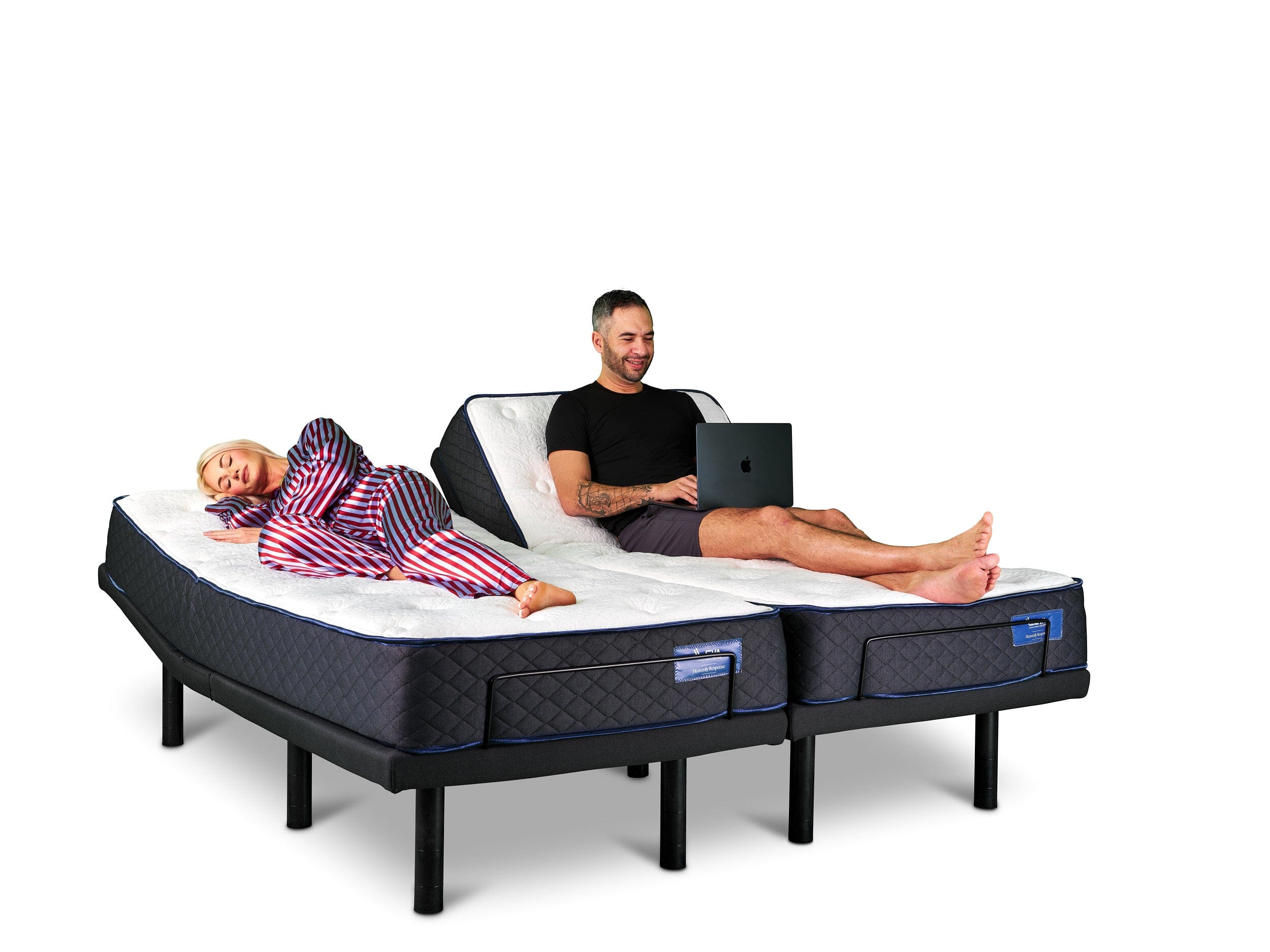
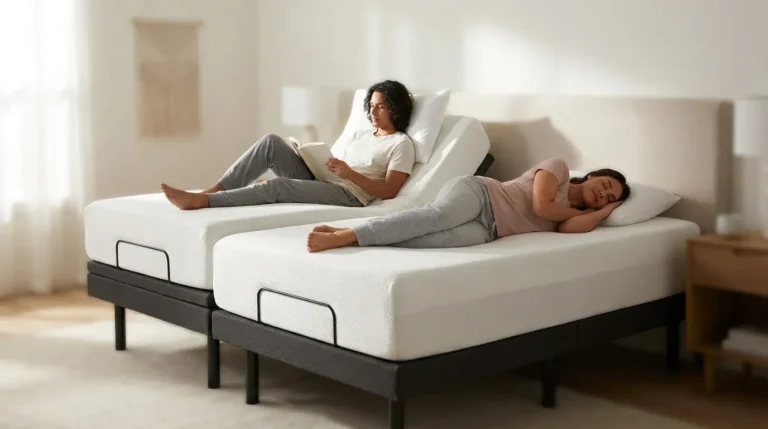
Independent control matters for couples. A Split King adjustable bed uses two Twin XL mattresses to create a king footprint, so each partner can adjust head and foot angles without disturbing the other. Leva Sleep also offers a Split Queen configuration, a rare option in Canada, for couples who want independent adjustability in a smaller footprint.
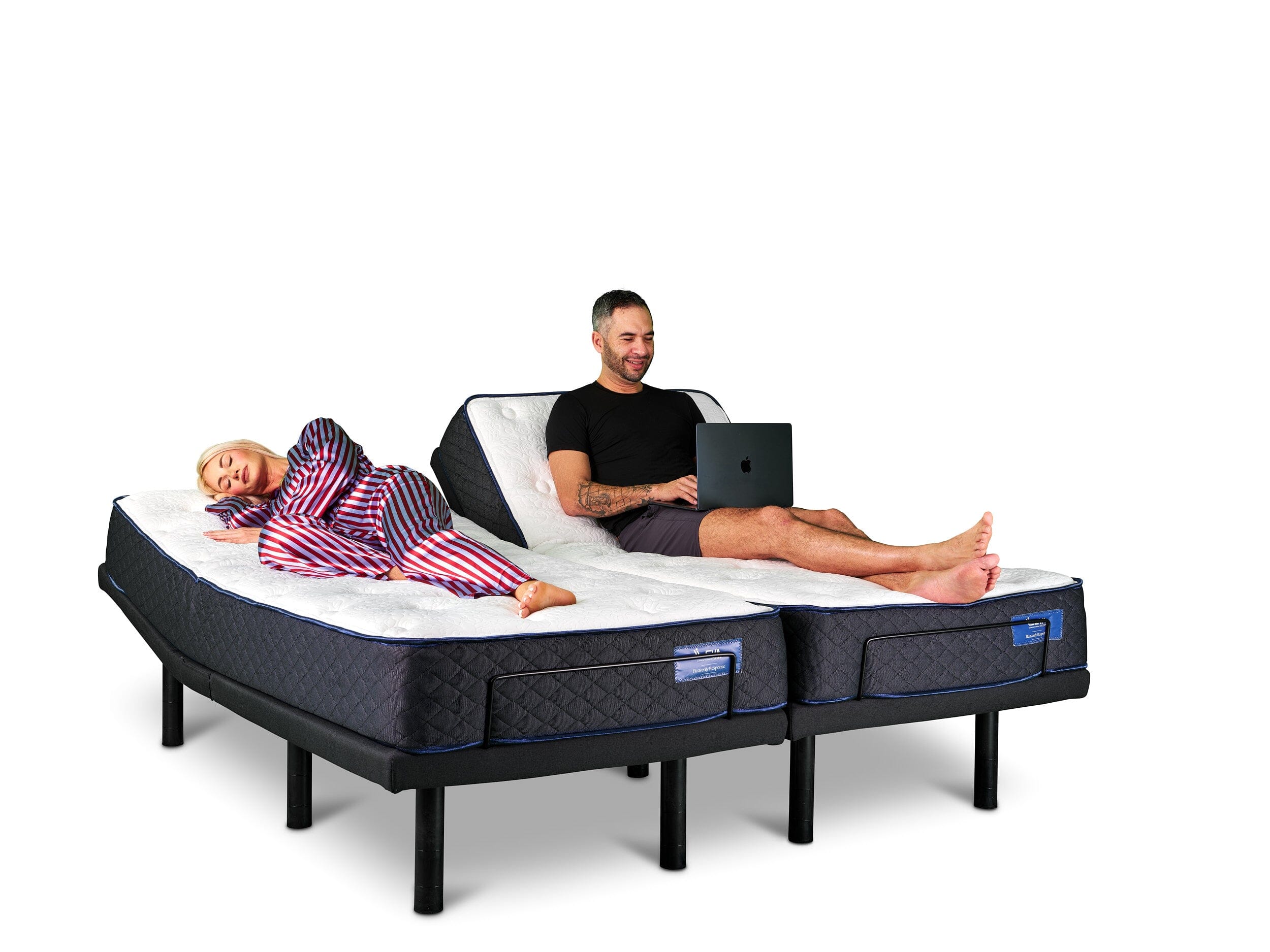
Snoring can signal underlying obstructive sleep apnea. Positional changes do not diagnose or rule out medical conditions. Persistent or severe snoring requires assessment by a sleep medicine physician.
Compare split configurations that let partners adjust independently
Heart and Lung Conditions on Adjustable Beds
For people with congestive heart failure or chronic obstructive pulmonary disease, sleep position affects breathing comfort and cardiac load. Cardiologists commonly recommend sleeping at 30 to 45 degrees for congestive heart failure patients to reduce venous return to the heart and improve breathing comfort. The same elevation is often advised for chronic obstructive pulmonary disease to improve functional residual capacity and reduce nighttime shortness of breath.
Leg elevation of 10–20 degrees supports lower-leg circulation and reduces edema for people who stand long hours, pregnant women, and those with circulatory conditions. Orthopedic physical therapist Karena Wu, P.T., D.P.T., notes that adjustable beds can help with circulatory issues.
Anyone with diagnosed cardiac or respiratory conditions must consult a cardiologist or respirologist before changing sleep positioning. This section is informational only.
People Who Should Avoid Adjustable Beds
Karena Wu, P.T., D.P.T., advises that people with spinal fusion or osteoporosis avoid adjustable beds because improper positioning can worsen these conditions, and anyone with heart or respiratory issues should speak with a doctor first. Post-surgical patients should follow their surgeon’s exact positioning instructions, which may differ from general elevation advice.
Additional practical contraindications include:
- Mattresses incompatible with articulation: traditional innerspring mattresses with open coil systems do not work on adjustable bases, since bending damages coil connections and voids warranties.
- Users who must remain flat under physician orders after certain abdominal or spinal surgeries.
- Individuals in home care settings using third-party accessories: third-party accessories on home care adjustable beds can create entrapment risks that may cause serious injury.
Physician guidance is essential before buying an adjustable base for any diagnosed medical condition.
How Doctors View Adjustable Beds
Clinical recommendations depend on the condition. Head-of-bed elevation often appears as a lifestyle change for GERD, especially when symptoms worsen at night.
For sleep apnea and snoring, Dr. Raj Dasgupta, a quadruple board-certified physician in pulmonary, sleep, internal, and critical care medicine, notes that an adjustable base can align the spine, reduce joint pressure, keep airways open by elevating the upper body, and may reduce snoring and ease mild sleep apnea symptoms. For musculoskeletal issues, orthopedic spine surgeon Nitin Bhatia, M.D., recommends zero-gravity positioning for lower back pain and leg elevation for swelling and pain.
The Canadian Sleep Society has highlighted adjustable bases as a meaningful option for people with positional sleep disorders, GERD, and lower limb edema.
No professional body promotes adjustable beds as a standalone treatment. Clinicians use them as add-ons to prescribed therapy or as first-line lifestyle changes for mild, positional symptoms. If you plan to include an adjustable bed in your treatment plan, Leva Sleep’s product brochures list technical specifications and elevation ranges that help physicians or physiotherapists assess fit for your condition.
Request a brochure with technical specs for your care team
Practical Downsides of Adjustable Beds
A realistic view of adjustable beds includes known drawbacks along with benefits.
- Motor noise: Many customers report quiet operation during adjustments, while some notice squeaks when users move at night. When you compare bases, ask for the motor’s decibel rating and whether the frame uses anti-squeak hardware. Leva Sleep uses whisper-quiet German motors designed to limit operational noise.
- Mattress compatibility: Thick, stiff mattresses with dense materials or rigid edge support may not bend well on adjustable bases, which can cause awkward sloping or strain the motor over time. Confirm that your mattress is certified for adjustable base use before buying.
- Setup weight and complexity: Adjustable bases are heavy and usually need professional assembly. Leva Sleep’s in-house white-glove delivery team handles bedroom delivery, full setup, leg height adjustment, product tutorials, and old bed removal, which removes most of the usual hassle.
- Return restrictions: Many retailers treat adjustable bases as non-returnable or final sale because of electrical parts and hygiene concerns. Always review return policies and warranty terms before purchase.
- Split-configuration gap: Industry professionals describe the 2–4 inch gap in split king setups as the most common complaint, with 60 percent of couples finding it challenging for physical closeness. A fitted bridge connector or purpose-designed bedding can reduce this gap. Leva Sleep designs bedding accessories specifically for split setups.
- Cost: Entry adjustable bases in 2026 typically start in the lower mid-hundreds and rise into premium ranges with features such as massage, lumbar support, and smart automation. Leva Sleep’s vertically integrated, direct-to-consumer model offers similar features at roughly 30–50 percent less than many top-tier competitors.
Quick Reference: Conditions, Elevation Angles, and Evidence
The table below brings together the elevation protocols mentioned above. Couples can use it as a quick reference when talking with physicians or comparing each partner’s needs before choosing a split configuration.
| Condition | Recommended Elevation | Sleep Position | Supporting Source |
|---|---|---|---|
| GERD / Nocturnal Reflux | 15–30° head elevation | Left lateral decubitus or back | Pre/post pH-monitoring study showing 67% improvement in esophageal acid clearance time |
| Obstructive Sleep Apnea (mild, positional) | 10–30° head elevation | Back or side | Studies showing reduction in apnea-hypopnea index with head elevation in positional OSA |
| Chronic Lower Back Pain | Zero-gravity position | Back | Zero-gravity opens spinal canal, reduces nerve compression |
| Circulation / Lower-Limb Edema | Leg elevation 10–20° | Back | Canadian Sleep Society; Mattress Miracle Canada guide |
Frequently Asked Questions
How long does setup take, and what does white-glove delivery include?
Leva Sleep’s in-house white-glove delivery service is available in Ontario and Alberta. A trained delivery team brings the base and mattress to the bedroom, assembles the full system, adjusts leg heights to the customer’s preference, provides a product tutorial covering app controls and preset positions, and removes the old bed through donation or recycling. Setup is completed during the same visit as part of the white-glove service. White-glove delivery is available for a fee at checkout.
Is Leva Sleep’s adjustable base compatible with a CPAP machine?
Leva Sleep’s adjustable bases work with CPAP machines. Head elevation can complement prescribed CPAP therapy by reducing airway resistance through positional support, which some users feel improves mask seal and comfort. CPAP therapy should never be stopped or changed without physician guidance.
Can a Leva Sleep adjustable base be used with any mattress?
Leva Sleep’s adjustable bases work with a range of mattresses. Traditional innerspring mattresses with open or Bonnell coil systems are not compatible because articulation damages coil connections and usually voids the mattress warranty. Leva Sleep designs and sells its own all-foam and hybrid pocket-coil mattresses specifically for adjustable bases and also pairs its bases with compatible mattresses from brands including Tempur-Pedic, Beautyrest, Serta, Simmons, and Kingsdown.
Does Leva Sleep deliver across all Canadian provinces?
Leva Sleep’s in-house white-glove delivery currently serves Ontario and Alberta. Customers outside these provinces can contact Leva Sleep directly to review delivery options for their region.
Conclusion: Matching Split Adjustable Beds to Real-World Couple Needs
Traditional flat beds cannot handle the independent elevation needs that arise when two people with different medical profiles share one sleep surface. Evidence for adjustable mattress health benefits is strongest for nocturnal GERD, positional sleep apnea, lumbar pressure relief, and lower-limb circulation, all situations where gravity-assisted positioning creates measurable physiological change. For Canadian couples facing one or more of these issues, split adjustable systems with independent left and right controls address the core problem without sleep divorce or costly compromises.
Leva Sleep is a vertically integrated Canadian specialist with over eight years of experience, $50M in lifetime sales, and 25,000 customers. Its Split Queen and Split King adjustable bases, whisper-quiet German motors, purpose-designed bedding, upcoming anti-snore detection (spring 2026), and in-house white-glove delivery in Ontario and Alberta provide a premium sleep system at roughly 30–50 percent less than many comparable competitors.
All health-related decisions about adjustable bed use should be made with a licensed physician.