Written by: Matthew Timmins, Founder and Managing Director, Leva Sleep | Last updated: July 25, 2026
How Long Split King Adjustable Beds Really Last
Before you compare brands or prices, get clear on how long a quality split king system should last and what affects that lifespan.
- Quality adjustable bases last 8–15 years, while hybrid mattresses typically endure 7–10 years with proper care.
- Motors and actuators are usually the first components to show fatigue, and German motors plus proper weight management extend life significantly.
- Split king setups see uneven wear when partners differ in weight or sleep preferences, so independent motor control on each side matters.
- Regular maintenance, including surge protection, mattress rotation, hinge lubrication, and compatible bedding, can add five or more years to base and mattress life.
- Leva Sleep offers 10–25 year frame warranties, local Ontario and Alberta service, and purpose-built adjustable packages; shop Leva Sleep’s adjustable beds to invest in a system designed for Canadian couples.
Do Adjustable Bases Wear Out?
Adjustable bases do wear over time, but different parts age at different speeds. The steel frame and deck of an adjustable base typically last 8–15 years, because the frame mainly supports weight instead of doing active mechanical work. Motors and actuators usually show fatigue first.
Common failure points in adjustable beds include the motor connector or control box. Budget motors may show wear sooner, while quality motors from reputable brands can run smoothly for many years with normal use.
This quality gap makes motor origin and duty-cycle ratings important when you compare systems. Leva Sleep’s whisper-quiet German motors are selected specifically for their duty-cycle ratings. With over 8 years in business and 25,000+ customers, Leva’s track record reflects real-world motor durability rather than spec-sheet promises.
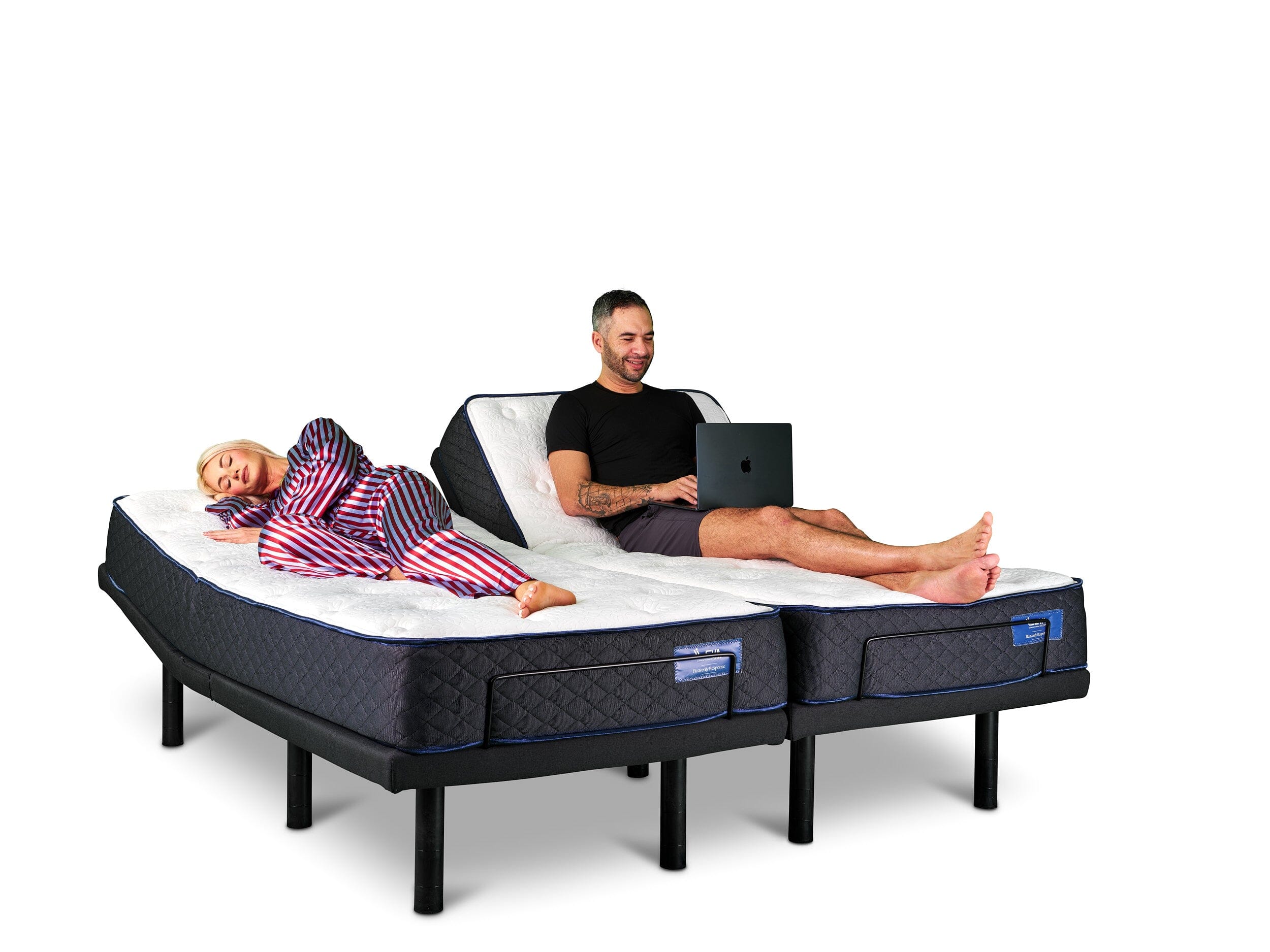
What Is the Life Expectancy of an Adjustable Bed?
With proper care, a quality adjustable base should last 8 to 15 years. That range breaks down by component, with frames at the top end, motors in the middle, and control electronics at the lower end.
Where a specific unit lands in that range depends on motor quality, frame construction, usage habits, and mattress compatibility, with higher-quality bases often exceeding 15 years.
Weight limits influence lifespan more than most buyers realize. Quality adjustable bed frames are designed to support the combined weight of sleepers and mattress for King or Split King sizes. Running actuators near the bed’s maximum weight rating night after night is the single biggest driver of early motor failure.
Reddit communities that discuss adjustable beds often mention two recurring complaints, which are noise during adjustment and jerky, uneven movement. Both symptoms usually indicate actuator fatigue or a mismatched mattress. Premium German motors and purpose-built foam or hybrid mattresses are engineered to avoid those problems from day one.
Common Problems with Split King Adjustable Beds
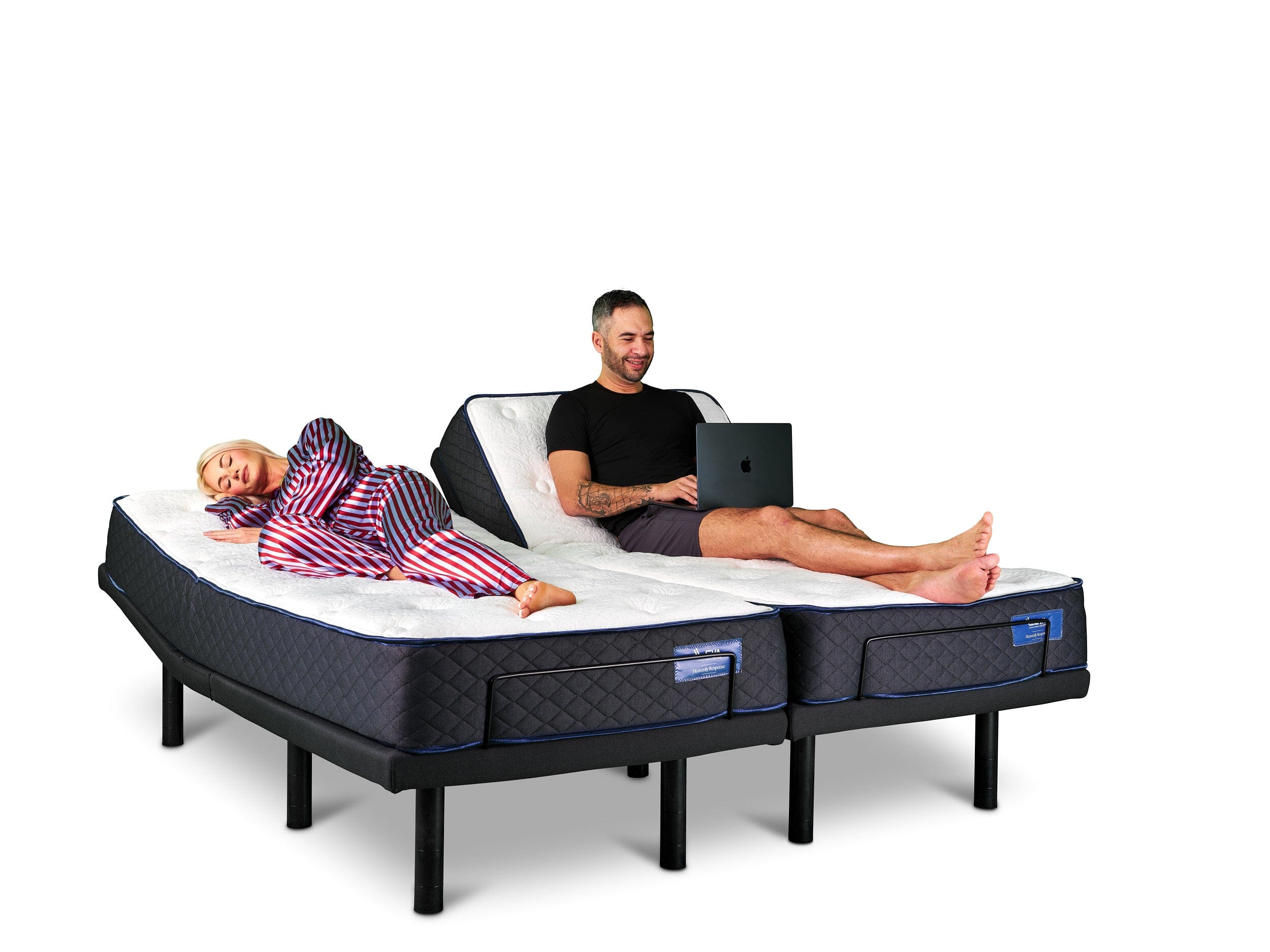
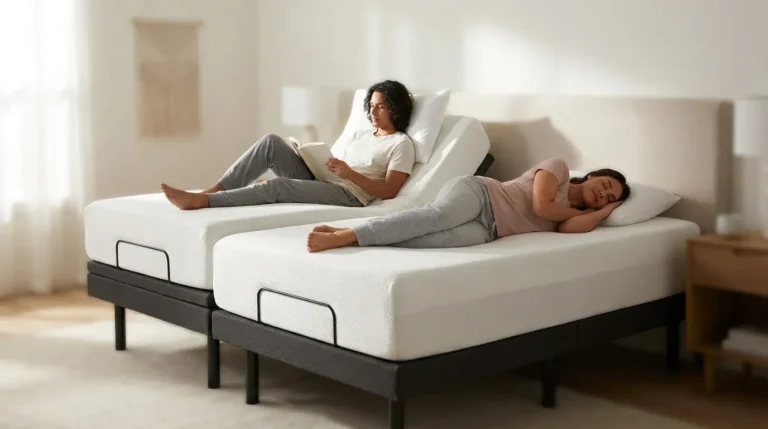
Split configurations create couple-specific wear patterns that single-base owners never see. When two people use independent sides with different elevation preferences and different body weights, each motor operates under a distinct load profile every night. Over years, the heavier side’s actuator accumulates more stress cycles, which creates asymmetric wear that stays hidden until one side slows or stalls.
Sheet slippage is the most reported daily frustration. Standard fitted sheets cannot handle significant head or foot elevation without pulling free. Using deep-pocket sheets or sheets with grip technology on an adjustable bed prevents bedding from popping off when the head is raised. Leva Sleep designs its own fitted sheets with extra elastic and deep pockets for this exact reason.
Beyond bedding compatibility, the mattress itself can create problems. Motor strain from incompatible mattresses is another documented issue. A mattress that is too rigid or heavy for an adjustable base forces the actuators to work harder on every adjustment cycle, accelerating motor wear. Dense innerspring mattresses not rated for adjustable use are a frequent culprit. Leva’s split configurations pair each base with mattresses, either all-foam or hybrid pocket coil, engineered for flex and adjustable compatibility.
Motor Quality and Weight Limits
Quality adjustable beds use brushless DC motors or low-noise lift systems that operate nearly silently. A motor warranty of 5 years or longer on an adjustable base usually signals higher build quality, while shorter 2-year motor warranties often indicate budget components that fail earlier.
Leva Sleep’s German motors exceed this benchmark. The high combined capacity on Split King configurations keeps both partners’ weight plus the mattress weight well within operating limits under normal use. Staying within that margin is the single most effective way to protect motor longevity.
Steel frames with reinforced leg systems and centre supports are a good indicator of long-term durability for adjustable beds. Leva’s locally assembled frames follow this standard, and white-glove delivery teams adjust leg heights on-site to ensure even floor contact. That small setup detail prevents frame stress from the first night.
Maintenance Checklist That Adds 5+ Years
Consistent maintenance gives you the clearest path to reaching the upper end of any lifespan range. Using a waterproof mattress protector, rotating the mattress quarterly, and using a proper foundation together extend mattress life by an average of 4.7 years. The tasks below build a simple routine that protects both your base and your mattress.
- Rotate the mattress every 6 months. Most modern one-sided mattresses used on adjustable bases should be rotated 180 degrees every 6 months to ensure even wear.
- Use a surge protector. Using a surge protector instead of plugging directly into a wall outlet protects electrical components from power fluctuations that can fry the control box.
- Vacuum motor housings every few months. Vacuuming around motor housings every few months keeps dust and pet hair out of moving parts, reducing friction and heat that accelerate wear.
- Lubricate hinges monthly. Monthly lubrication of accessible hinges or joints using a light silicone-based lubricant is recommended, with WD-40 explicitly warned against on electronic components.
- Return the base to flat when not in use. Returning an adjustable bed to the flat position when not in use prevents actuator arms from remaining extended under load for long periods, which can affect long-term gear alignment.
- Check cables annually. Once a year, ensure power cables and motor connections under the base are secure and free of dust.
- Use adjustable-compatible bedding. Leva’s purpose-built fitted sheets prevent the friction and repeated pulling that degrades both the mattress surface and the base’s retainer bar over time.
- Limit massage motor use. Using massage or vibration motors only occasionally rather than for hours at a time extends the life of these typically lighter-duty components.
Warranty Reality Check
A baseline sign of build confidence for adjustable beds is a 10-year motor warranty and 5-year frame warranty. Many US-import brands sold into Canada carry shorter electronics coverage, sometimes as little as 2 years, which signals the component grade used.
Leva Sleep offers 10–25 year frame coverage depending on the model, backed by local service in Ontario and Alberta. This local presence eliminates a hidden cost that US imports carry, because when a component fails under warranty, cross-border shipping adds weeks of wait time and freight charges that can erase the savings from a lower sticker price.
White-glove delivery and in-room assembly by trained Leva technicians also protect warranty validity from day one. Improper setup, including uneven legs, pinched cables, or incompatible mattress placement, voids coverage on most brands before the first night’s sleep.
Total Cost of Ownership vs. Tempur-Pedic and Ghostbed
A $5,000 split king adjustable setup represents a reasonable investment when you consider its expected lifespan for two people. At that frame of reference, the 30–50% price advantage Leva Sleep carries over Tempur-Pedic and comparable luxury brands translates to $750–$1,500 in direct savings on a $3,000 base purchase. That savings can fund a decade of replacement sheets, a mattress protector, and surge protectors.
Ghostbed distributes through wholesale channels including Costco, which adds retail margin without adding local service, so you pay for the middleman but gain no local support advantage. Sleep Country Canada treats adjustable bases as an add-on category, stocking only 3–5 models, which limits both selection and staff expertise. In contrast, Leva Sleep stocks 15–20 adjustable models and specialises exclusively in adjustable systems, meaning product knowledge, parts availability, and post-sale support are concentrated rather than diluted across a general furniture catalogue.
Looking ahead, Leva’s product roadmap includes an anti-snore mode that detects snoring and makes micro-adjustments to head elevation, plus AI sleep tracking for real-time position optimisation. These features arrive within the existing ownership window for current buyers and extend functional value without requiring a new base purchase.
Summary: What to Look for When Buying
As established earlier, proper care can push both base and mattress to the upper end of their lifespan ranges. Maintenance, specifically surge protection, regular rotation, motor vacuuming, and compatible bedding, separates a system that reaches 15 years from one that stalls at 8.
Warranty length remains the most reliable pre-purchase signal of component quality. Local warranty service in Ontario and Alberta removes the cross-border friction that inflates the true cost of US-import ownership. Total cost per night, not sticker price, gives the clearest comparison when you evaluate a system expected to last a decade or more.
Couples evaluating split king systems in Canada should compare frame warranty length, motor grade, weight capacity relative to combined sleeper and mattress weight, and whether white-glove setup is included or treated as an afterthought. Those four criteria separate systems that reach 15 years from those that stall at 6.
Frequently Asked Questions
How long do the motors in a split king adjustable bed typically last?
Mid-range to premium motors in quality adjustable bases can last for many years of nightly use. Budget motors in entry-level bases often show slowdown or noise sooner, particularly when operated near maximum weight capacity. The single most effective way to extend motor life is to keep the combined sleeper and mattress weight well below the stated maximum, ideally at 70–80% of rated capacity. Leva Sleep’s German motors are rated for high combined loads on Split King configurations, which provides meaningful headroom for most couples.
What are the most common problems with split king adjustable beds for couples?
The three most frequently reported issues are asymmetric motor wear, sheet slippage, and mattress incompatibility. Asymmetric wear occurs when one partner is significantly heavier than the other, which causes that side’s actuator to accumulate more stress cycles over time. Sheet slippage happens because standard fitted sheets cannot accommodate significant head or foot elevation without pulling free, and purpose-built deep-pocket sheets with extra elastic solve this directly. Mattress incompatibility is the most damaging issue, because dense innerspring mattresses not rated for adjustable use force actuators to work harder on every cycle and accelerate failure. Leva Sleep addresses all three by offering independent motor controls per side, proprietary adjustable-specific bedding, and mattresses engineered for flex compatibility.
Does proper maintenance actually extend the life of an adjustable bed base?
Proper maintenance extends both mattress and base life in measurable ways. The maintenance habits outlined earlier, including protector, rotation, and compatible foundation, deliver a measurable 4.7-year extension according to International Sleep Products Association data. For the base itself, surge protection helps protect the control box. Vacuuming motor housings every few months reduces friction heat. Monthly hinge lubrication with silicone-based lubricant prevents squeaking and mechanical wear. Returning the base to flat when not in use prevents actuators from remaining extended under load, which affects long-term gear alignment. Collectively, these habits often mark the difference between a base that reaches 10 years and one that reaches 15.
Is buying a split king adjustable bed in Canada worth it compared to importing from the US?
For Ontario and Alberta buyers, Canadian-sourced systems offer meaningful advantages beyond price. Warranty claims on US imports typically require cross-border shipping, which adds weeks of wait time and freight costs that erode apparent savings. Local white-glove delivery and in-room assembly by trained technicians ensures proper setup, because uneven legs, pinched cables, or incompatible mattress placement can void coverage before the first night. Leva Sleep’s direct-to-consumer model eliminates retail markup, delivering 30–50% lower prices than comparable luxury brands while maintaining local service infrastructure. The total cost of a quality Canadian-sourced split king system remains competitive with any import option once service, warranty, and setup costs are factored in.
What mattress types last longest on an adjustable split king base?
High-density memory foam mattresses at 4 lb/ft³ and above last 8–10 years with proper care. Mid-range hybrid mattresses with individually wrapped pocket coils typically last 7–10 years on average, though quality construction can extend this to 8–12 years or more. Natural latex mattresses can remain functional for 12–15 years, which makes them the longest-lasting option, though they carry a higher upfront cost. Budget innerspring mattresses last only 5–7 years and are the worst match for adjustable bases because their rigidity forces actuators to work harder on every adjustment cycle. For split king configurations specifically, each Twin XL mattress should be selected for flex compatibility with the base. Leva Sleep pairs its bases with all-foam and hybrid options designed to articulate without stressing the motor or degrading the mattress comfort layers prematurely.