Written by: Matthew Timmins, Founder and Managing Director, Leva Sleep | Last updated: July 3, 2026
Key Takeaways
- Heavy meals too close to bedtime trigger reflux, snoring, and fragmented sleep for both partners in a shared bed.
- Finish dinner by 7:00 pm, take a short post-meal walk, and close the kitchen at 8:30 pm to create clear boundaries that reduce late-night grazing.
- Choose sleep-supporting snacks and drinks under 500 calories total, and avoid alcohol and screens after 9:00 pm to protect REM sleep and digestion.
- After two to three weeks of these habits, most couples fall asleep faster, wake less between 2–4 a.m., and stay in the same bed through the night.
- When reflux or snoring persists, consider an adjustable base that lets each partner control head elevation independently. Shop Leva Sleep adjustable bed packages to find the right configuration for your bedroom.
How Late Heavy Meals Disrupt Sleep for Both of You
Large meals eaten close to bedtime keep your body in active digestion during hours better suited to rest. The Mayo Clinic notes that lying down shortly after eating increases the likelihood of stomach acid moving into the esophagus, which produces reflux symptoms that fragment sleep. The Sleep Foundation reports that heavy or spicy meals eaten close to bedtime can contribute to poor sleep quality.
For couples, the impact often doubles. One partner’s reflux-related coughing or constant repositioning wakes the other. Snoring, which often worsens when a full stomach presses on the diaphragm, keeps both partners awake. Johns Hopkins Medicine connects disrupted sleep cycles to next-day fatigue, mood changes, and reduced cognitive function, and these outcomes affect both people in the bed, not just the one with reflux.
Your 6:30 pm–10 pm Shared Evening Routine
This sample schedule shows how to structure your evening as a couple so digestion, reflux, and snoring are less likely to disturb your sleep. Use it as a template and adjust the times to match your usual bedtime.
| Time | Action | Duration | Couple Consideration |
|---|---|---|---|
| 6:30 pm | Begin preparing dinner | 30 min | Divide prep tasks to decompress together |
| 7:00 pm | Sit down to eat, finish by 7:30 pm | 30 min | Eat at the table, not in front of screens |
| 7:30 pm | 10-minute post-dinner walk | 10–15 min | Walk together, keep conversation light |
| 8:30 pm | Close the kitchen | 0 min | Both partners agree on the cut-off |
| 8:30–9:00 pm | Light snack or herbal tea if needed | 0 min | Keep under 500 calories combined |
| 9:00 pm | No alcohol, no screens | 0 min | Dim lights, read or stretch instead |
| 10:00 pm | Lights out (or earlier if needed) | 0 min | Coordinate bedtimes where possible |
1. Finish Dinner by 7:00 pm for Easier Digestion
The Mayo Clinic recommends leaving about three hours between finishing dinner and lying down. For a 10 pm bedtime, dinner should be complete by 7:00 pm at the latest so your stomach has time to settle.
Canada’s Food Guide recommends filling half your plate with vegetables and fruit, a quarter with whole grains, and a quarter with protein. A practical evening plate for two might include a palm-sized portion of salmon or chicken, a half-cup of brown rice or quinoa, and a generous serving of roasted vegetables. This combination provides protein and fiber while staying light enough to digest before bedtime. In contrast, cream-heavy sauces, fried foods, and oversized portions of red meat slow digestion and increase reflux risk, so they work poorly for evening meals.
Expert Tip: Portion Control
Use a 9-inch plate instead of a 12-inch plate at dinner. Smaller plates naturally reduce portion size without calorie counting. Serve from the stove instead of placing serving dishes on the table to reduce the temptation to refill.
2. Take a 10-Minute Post-Dinner Walk Together
The Sleep Foundation recommends following a meal with a light walk or sun exposure to help counteract post-meal fatigue. A brisk 10-minute walk around the neighbourhood is enough, and no gym membership is required.
For couples, this walk also creates a shared transition between the workday and the evening. Conversation during a walk tends to feel lighter and less tied to screens, which helps both partners decompress before the wind-down phase. If weather in Ontario or Alberta makes outdoor walking difficult, a slow walk through the house or light stretching offers similar digestive benefits. The focus is gentle movement, not intensity.
3. Close the Kitchen at 8:30 pm as a Shared Boundary
A defined kitchen-closing time removes the constant decisions that lead to late-night grazing. When both partners agree on 8:30 pm as the cut-off, it becomes a shared boundary instead of one person policing the other.
Expert Tip: Kitchen-Closing Rituals
Wipe down the counters, put away any remaining food, and turn off the kitchen light at 8:30 pm. These physical actions signal to your brain that eating has finished for the night. Some couples brew a herbal tea at this point so the ritual of making tea replaces the habit of opening the fridge.
The Sleep Foundation notes that consistent meal timing is associated with healthier sleep. A fixed kitchen-closing time reinforces that pattern night after night.
Troubleshooting: Late-Night Cravings
If one partner experiences strong cravings after 8:30 pm, the dinner portion was likely too small or too low in protein. Increase the protein at dinner, such as adding an egg, more legumes, or a larger serving of fish, instead of relying on willpower alone after 9 pm.
4. Choose Sleep-Supporting Drinks and Snacks Under 500 Calories
If hunger feels genuine after 8:30 pm, a small snack is better than lying awake uncomfortable. Choose options that are easily digestible and low in fat, sugar, and spice so they are less likely to interfere with sleep. Good choices include plain oatmeal with banana, a handful of almonds, whole-grain toast with a thin layer of almond butter, or a small serving of low-fat yogurt.
For drinks, chamomile or valerian root tea, which are widely available at Canadian grocery chains like Loblaws and Sobeys, provide caffeine-free evening options with a long history of use as relaxants. Keep the total caloric intake of any post-dinner snack under 200–300 calories per person, and avoid rich, spicy, or sugary foods that can trigger reflux.
5. Wind Down Without Screens or Alcohol After 9:00 pm
Alcohol may cause early drowsiness, but it suppresses REM sleep and increases the chance of waking in the second half of the night. For anyone prone to reflux, alcohol also relaxes the lower esophageal sphincter, which makes nighttime acid episodes more likely.
Many sleep specialists recommend avoiding alcohol within a few hours of bedtime as part of good sleep hygiene. A practical cut-off for couples is 8:00 pm for alcohol and 9:00 pm for screens. Replace both with reading, light stretching, or a device-free conversation so your brain can wind down.
Troubleshooting: Alcohol Timing
If a glass of wine with dinner is a regular habit, keep it to one drink and finish it before 7:30 pm. This timing gives the body roughly two and a half hours to begin metabolizing the alcohol before a 10 pm bedtime, which reduces its impact on sleep architecture.
Troubleshooting: Different Partner Bedtimes
If one partner goes to bed at 9:30 pm and the other at 11 pm, the later partner should still close the kitchen at 8:30 pm and avoid screens in shared spaces after 9 pm. Use a reading light instead of overhead lighting to avoid disrupting the earlier sleeper’s melatonin production.
When Evening Habits Are Not Enough
Improved evening habits reduce the frequency and severity of reflux and snoring for many couples. For some, the underlying physiology still requires more than timing changes. Persistent reflux often responds well to sleeping with the head elevated, which uses gravity to keep stomach acid in the stomach. Snoring linked to airway positioning can also improve with head elevation.
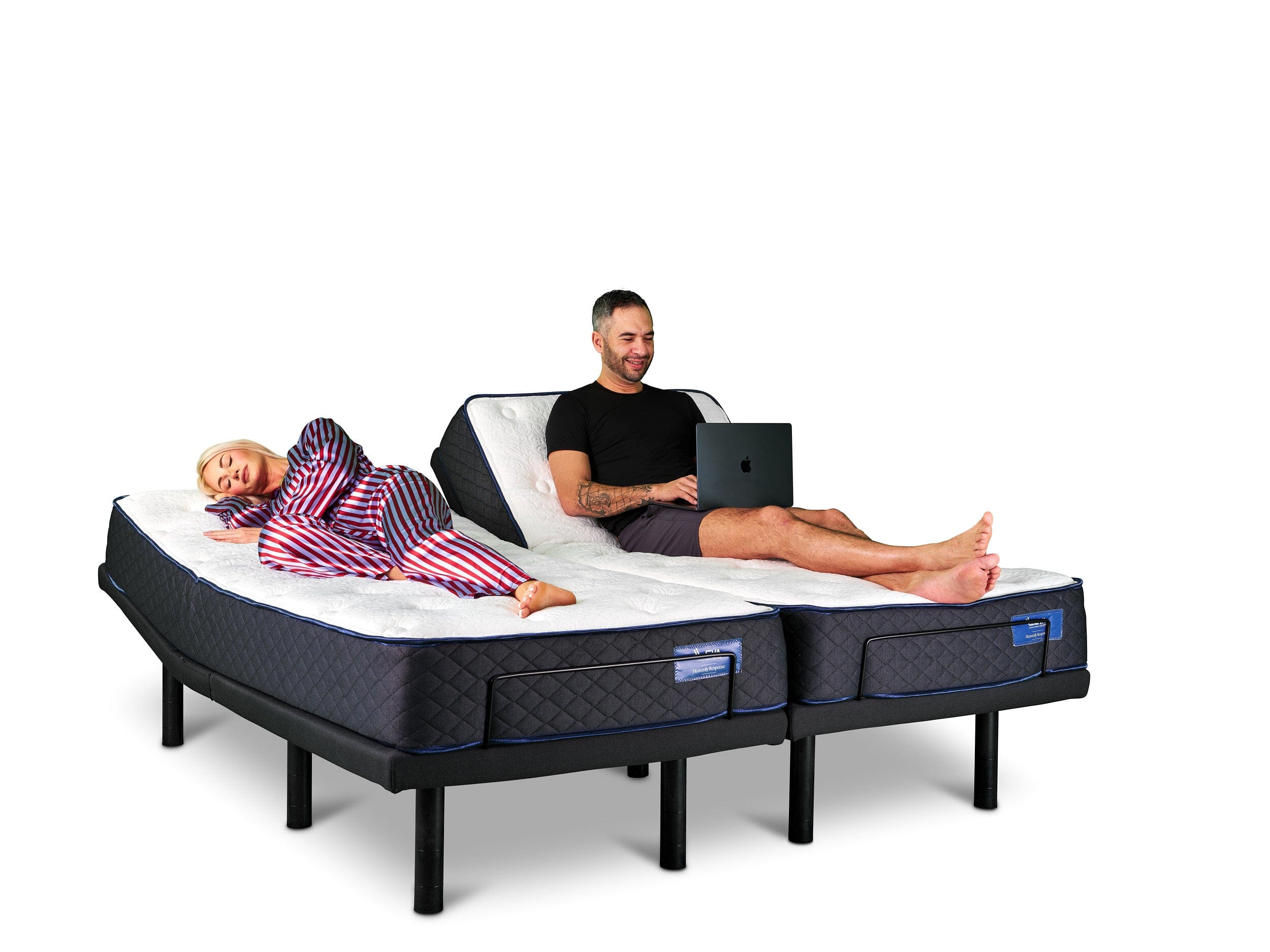
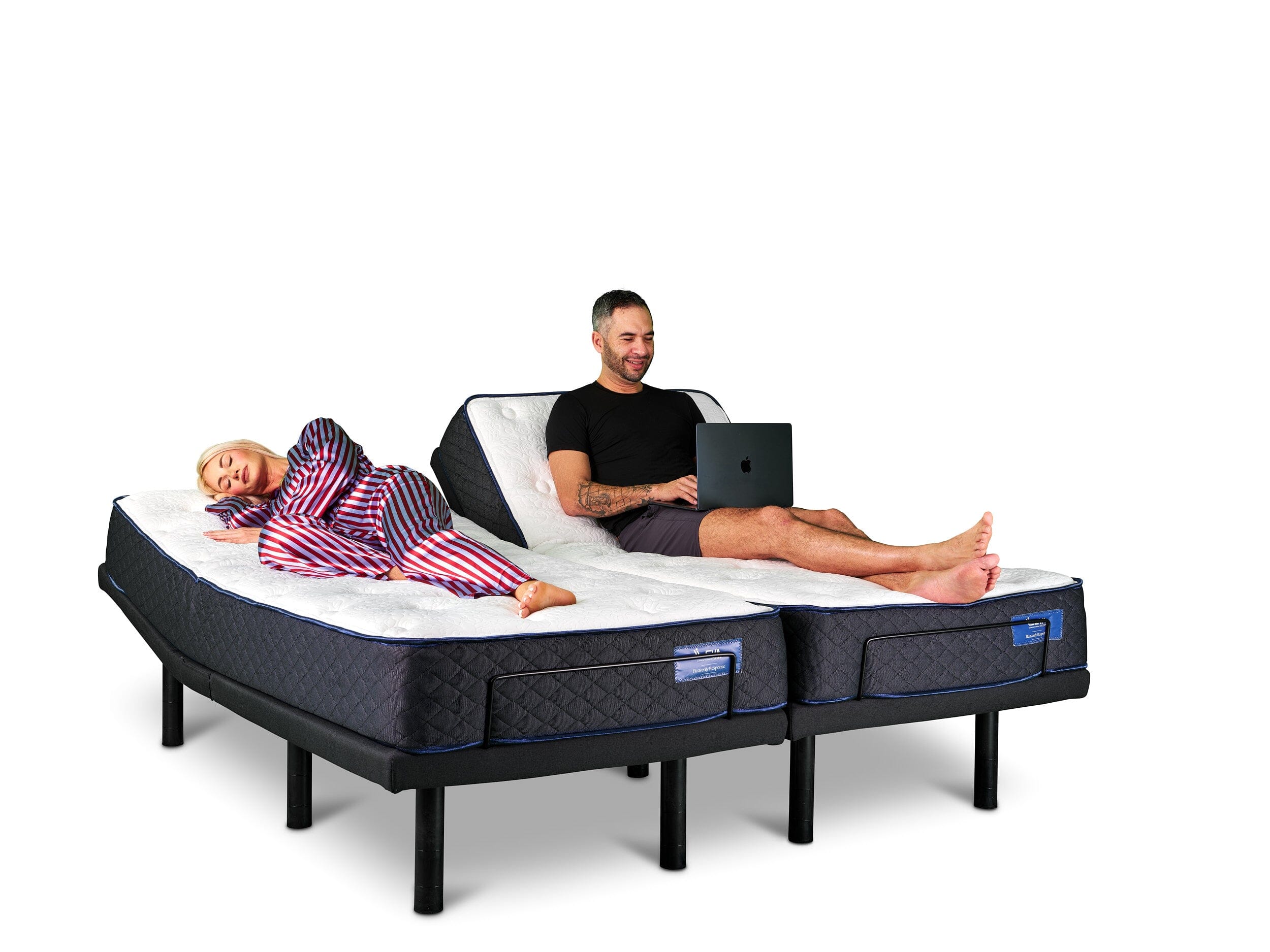
A standard flat mattress rarely maintains this position through the night. Leva Sleep’s adjustable bases allow each partner to elevate the head of their side of the bed independently, so the partner with reflux can sleep at an incline while the other remains flat. The anti-snore mode detects snoring and makes quiet micro-adjustments without waking either person. Shop Leva Sleep’s adjustable beds to find the configuration that fits your bedroom and your needs.
What Better Sleep Looks Like for Couples
After two to three weeks of consistent evening habits, most couples notice clear changes. Many fall asleep within about 20 minutes of lying down. Night waking between 2 am and 4 am with heartburn or hunger becomes less frequent. Both partners are more likely to remain in the same bed through the night.
The partner who previously snored may snore less often or at a lower intensity. Morning grogginess, especially the kind caused by fragmented sleep rather than too few hours, often eases noticeably. You can observe these changes without any tracking device. If they do not appear after three weeks of consistent habit changes, the next practical step is addressing sleep position with an adjustable base.
Frequently Asked Questions
How many hours before bed should I stop eating?
A gap of two to three hours between finishing dinner and lying down is the standard recommendation for reducing reflux risk and supporting digestion. For a 10 pm bedtime, aim to finish dinner by 7:00–7:30 pm. If your bedtime is earlier, shift dinner earlier as well. The goal is to avoid lying down while your stomach is still processing a large meal.
What counts as a sleep-supporting snack under 500 calories?
Use the snack guidelines in section 4 as your reference. Focus on small portions that are easy to digest and low in fat, sugar, and spice, and keep the total under 200–300 calories per person.
When should I cut off alcohol to protect my sleep?
Finish any alcohol consumption by 8:00 pm at the latest for a 10 pm bedtime. This timing allows roughly two hours for your body to begin metabolizing the alcohol before sleep. Even one drink consumed close to bedtime can suppress REM sleep and relax the muscles around the esophagus, which increases the risk of acid reflux during the night. If reflux is already a problem, consider eliminating evening alcohol entirely for two to three weeks and notice how your sleep changes.
How can couples with different bedtimes use this routine?
The kitchen-closing time and alcohol cut-off apply to both partners regardless of individual bedtimes. The later-to-bed partner should avoid bright overhead lights and loud screens after the earlier partner has gone to sleep. Use a small reading lamp and keep the volume low. If the earlier partner is frequently woken by the later partner’s arrival in bed, an adjustable base with independent controls allows each side to be set differently so the earlier sleeper can remain fully reclined while the later partner adjusts their side quietly.
When should a couple consider an adjustable bed instead of habit changes alone?
Consider an adjustable base when reflux or snoring persists despite three or more weeks of consistent evening habit changes, when a doctor has recommended sleeping in an elevated position, or when one partner’s sleep position regularly wakes the other. An adjustable base with independent head elevation addresses the mechanical side of reflux and airway positioning that habits alone cannot resolve. Leva Sleep’s split configurations allow each partner to control their own side independently, which is especially helpful when one person needs elevation and the other does not.
Ready to Protect Your Nights Together?
A structured evening routine with dinner by 7 pm, a short walk, a closed kitchen at 8:30 pm, and a screen-free wind-down addresses many common causes of fragmented couple sleep. When those habits are in place and disruption continues, the next step is a sleep surface built to support both partners independently. Leva Sleep’s adjustable bases are designed for Canadian couples who want to stay in the same bed and sleep better together, with independent controls, whisper-quiet motors, and anti-snore technology at 30–50% less than comparable luxury brands.
Shop Leva Sleep’s adjustable beds and find the configuration that fits your bedroom, your budget, and both of your sleep needs.