
Written by: Matthew Timmins, Founder and Managing Director, Leva Sleep | Last updated: June 24, 2026
Key Takeaways for Couples With Nighttime Reflux
- Bed wedges can reduce acid reflux by elevating the upper body, but they only work when you stay on the wedge all night.
- Standard wedge pillows often slide, create uneven surfaces for couples, and elevate only the head and shoulders instead of the full torso.
- Common drawbacks include neck strain, heat buildup, awkward bedding fit, no adjustability, and gradual loss of height as foam compresses.
- Adjustable bed bases provide consistent, full-torso elevation with independent control for each partner, which makes them a more reliable long-term option.
- Couples who want dependable reflux relief without nightly compromises can explore Leva Sleep’s adjustable bed packages at Leva Sleep.
The Problem: Why Basic Wedge Pillows Fall Short for Couples
Wedge pillows are easy to buy, simple to test, and relatively inexpensive. For a single sleeper who barely moves, they can offer short-term relief. Couples sharing a bed usually notice the limitations within a few nights.
The most common complaint on sleep and GERD forums is sliding. A foam wedge rests loosely on top of the mattress with no anchor. Normal movement during sleep shifts the sleeper off the incline, often within the first hour. By morning, the wedge has usually migrated to one side and the sleeper is flat again, which removes reflux relief for much of the night.
Beyond the sliding problem, elevation is also inconsistent. A standard wedge lifts only the shoulders and head. The torso below the ribcage stays flat, so the stomach does not sit fully below the oesophageal junction. Effective reflux management relies on a gradual, full-torso incline instead of a sharp bend at the shoulders.
Wedge pillows also work for only one person at a time. Placing a wedge on one side of a shared mattress creates an uneven surface. The partner without the wedge feels a tilt in the mattress, and the partner on the wedge often develops neck strain from the abrupt angle. Many couples describe this as a nightly negotiation that ends with one person sleeping poorly or moving to another room.
What Are the Negatives of a Wedge Pillow?
Beyond sliding and partner incompatibility, wedge pillows bring several practical drawbacks that build up over months of use.
Neck and shoulder strain. A wedge that is too steep forces the chin toward the chest. Users on sleep forums often report waking with neck stiffness after switching to a wedge. This is especially common with 10–12 inch models marketed for severe reflux.
Heat retention. Most wedge pillows use dense foam. Foam traps body heat, and lying on an inclined foam surface concentrates warmth around the upper back and shoulders. Couples who already struggle with temperature differences often find this makes the problem worse.
Incompatibility with standard bedding. A wedge placed under fitted sheets creates a lump that pulls the sheet loose. When the wedge sits on top of the sheet instead, the pillow shifts freely. Neither setup feels stable or comfortable over the long term.
Lack of adjustability. A wedge offers a single fixed angle. If a physician recommends more elevation, you must buy a taller wedge. There is no way to fine-tune the incline for comfort or to lower it on nights when reflux symptoms are mild.
Foam compression over time. Foam gradually compresses. A wedge that starts with 7 inches of elevation may provide only 5 inches after six months of nightly use. The wedge looks similar, but the reduced height can weaken its clinical benefit.
Practical Ways to Elevate Your Bed for Acid Reflux
Most people use one of four practical methods to elevate the head of the bed for acid reflux management.
Bed risers under the headboard legs lift the entire head end of the frame. This approach costs little but creates a fixed incline for both partners. You cannot adjust the angle without physically removing or changing the risers.
Wedge pillows are the most common starting point, as described above. They are accessible and do not require changes to the bed frame. They still carry the sliding, comfort, and partner issues already outlined.
Mattress wedge inserts slide under the mattress instead of on top. They create a more gradual incline across the full torso and reduce sliding. They remain a fixed angle and affect both sides of a shared bed equally.
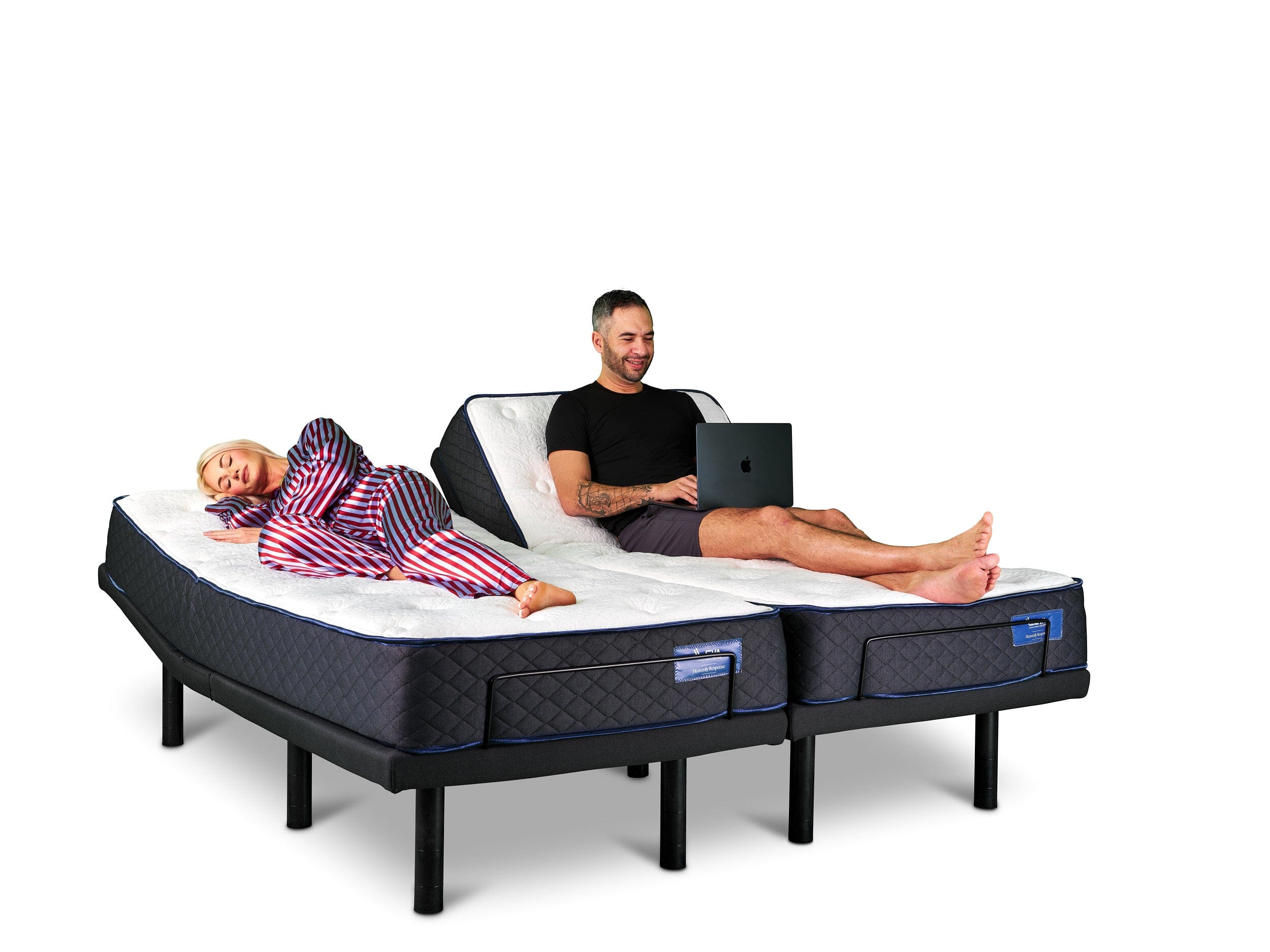
Adjustable bed bases use motors to raise the head section of the bed frame. This allows precise, repeatable elevation at the touch of a button. Split configurations let each partner choose an independent angle. This is the only method that combines adjustability, partner independence, and full-torso elevation.
Wedge Pillow vs Adjustable Bed for Nighttime Reflux
Both wedges and adjustable beds rely on the same basic principle. Gravity helps keep stomach acid from moving upward when the upper body is elevated. The difference lies in how reliably and comfortably each option maintains that elevation through a full night of sleep.
Where they diverge is in execution. A wedge pillow depends on the sleeper staying in one position on a foam surface. An adjustable base builds the incline into the bed frame itself, so elevation remains consistent even when you change positions. You stay on the incline because the incline is part of the bed.
For couples, this difference becomes even more important. A wedge supports one partner’s reflux needs while creating a new problem for the other partner. A split adjustable base lets the partner with reflux sleep at roughly 6–8 inches of head elevation while the other partner sleeps flat or at any angle they prefer. The two sides move independently and do not affect each other.
Why Leva Sleep Split Queen and Split King Bases Help Couples Sleep Better
Leva Sleep designs its adjustable bases specifically for couples, with independent head and foot elevation on each side. The partner managing acid reflux sets a preferred incline through the Leva Sleep app. The other partner’s side stays completely separate.
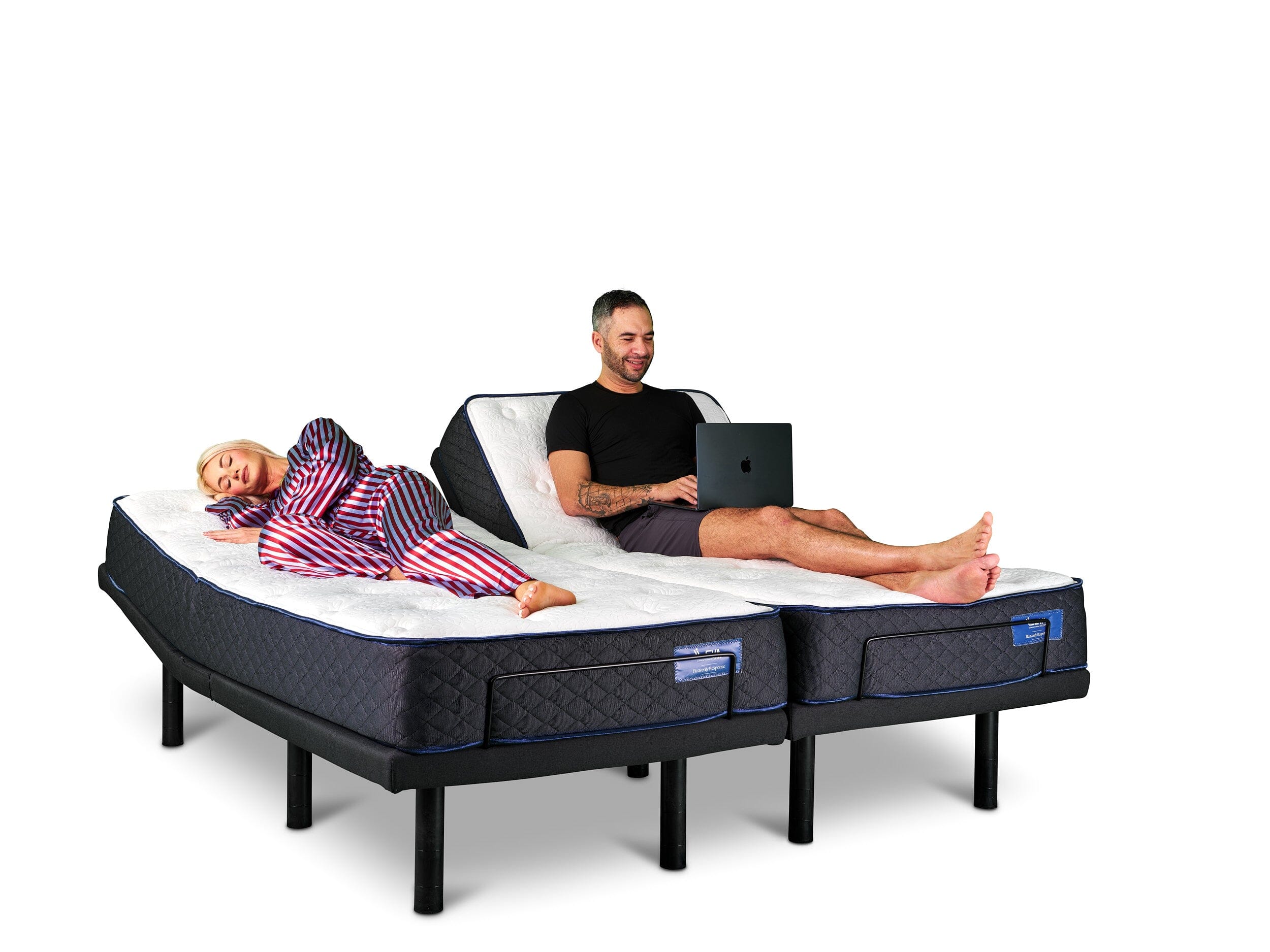
Key features that matter for reflux relief and shared sleep include:
- Independent head elevation: Each side adjusts from flat to a full incline. This supports the 6–8 inch elevation often recommended for reflux while leaving the partner’s surface unchanged.
- Lumbar support: A dedicated lumbar motor supports the lower back at elevation. This reduces the spinal discomfort that makes wedge pillows hard to tolerate for long periods.
- Pillow tilt motor: The head section angle can be fine-tuned separately from the main elevation. Users can find a position that eases reflux without putting strain on the neck.
- Whisper-quiet German motors: Position changes stay quiet enough that they rarely wake a sleeping partner. This contrasts with many basic adjustable bases that use louder motors.
- App control: Custom sleep positions can be saved and recalled instantly, including a preferred reflux-relief angle. There is no need to fumble with a remote in the dark.
- Specialized bedding: Leva designs fitted sheets with deep pockets and extra elastic for adjustable bases. Sheets stay in place at elevation, which standard bedding often fails to do.
Leva Sleep offers 15–20 adjustable base models, compared with the 3–5 models typically found at general mattress retailers. This depth of selection comes from more than eight years of specialization and over 25,000 Canadian customers, which gives Leva the feedback needed to refine options that general retailers rarely match.
Canadian Buying Guide: White-Glove Delivery in Ontario and Alberta
Leva Sleep currently delivers across Ontario and Alberta. The white-glove delivery service, available for a fee, includes in-home setup, old bed removal with donation or recycling where possible, leg height adjustment, and a full product walkthrough before the team leaves.
This level of support matters for adjustable bases. A split king or split queen base uses two independent frames that must be aligned, connected, and calibrated. Because this complexity often causes setup problems and calibration errors with standard freight delivery, Leva’s in-house delivery team manages the entire process. This approach reduces the risk of motor issues caused by incorrect installation.
On pricing, Leva’s direct-to-consumer model, with local design and assembly and no retail middle layer, positions its bases at 30–50% below comparable luxury competitors. Customers comparing brands such as Tempur-Pedic adjustable systems often find similar or stronger feature sets at a noticeably lower price through Leva.
Decision Framework: Wedge Pillow vs Adjustable Base
| Criteria | Wedge Pillow | Adjustable Base (Split) |
|---|---|---|
| Elevation consistency | Degrades as sleeper moves off wedge during the night | Maintained throughout the night, integrated into the frame |
| Partner compatibility | Single-user, disrupts shared sleep surface | Independent per side, no impact on partner’s surface |
| Long-term adjustability | Fixed angle, requires new purchase to change elevation | Fully adjustable at any time via app or remote |
| Setup effort | None, place on mattress | Professional white-glove setup available |
Benefits of Choosing an Integrated Adjustable Sleep System
An adjustable sleep system treats acid reflux as one part of a complete sleep environment instead of an isolated issue. Couples who move from wedge pillows to split adjustable bases often report that the change solves several problems at once. They describe better reflux control, less snoring from elevated airways, improved back comfort from lumbar support, and the end of nightly arguments over a single wedge.
Because elevation is precise and repeatable, users can find the angle that works and return to it every night without wrestling with a foam wedge. The system does not sag or flatten the way foam does over time. Each partner controls their own side, so neither person has to accept a sleep surface that feels wrong for their body.
For couples in Ontario and Alberta who rely on wedge pillows and still wake with reflux, a split adjustable base offers a long-term infrastructure upgrade instead of a temporary workaround.
Frequently Asked Questions
How high should the head of the bed be elevated for acid reflux?
Most gastroenterologists recommend raising the head of the bed between 6 and 8 inches for meaningful reflux relief, as described in the elevation methods section above. Leva Sleep’s adjustable bases allow precise elevation within and beyond this range, and you can save the angle as a preset in the app for consistent nightly use.
Can both partners use an adjustable base if only one has acid reflux?
Yes. Leva Sleep’s Split Queen and Split King bases operate independently on each side. The partner with acid reflux can sleep at their preferred elevation while the other partner sleeps flat or at any other angle. There is no mechanical link that transfers movement or elevation between sides. This independence is a main reason couples with one-sided reflux choose a split adjustable base instead of a wedge pillow.
Do adjustable bases require special mattresses?
Adjustable bases need mattresses that can flex without damage. Leva Sleep offers both all-foam and hybrid pocket coil mattresses designed for adjustable bases. Leva also carries mattresses from brands such as Tempur-Pedic, Simmons, Beautyrest, Serta, and Kingsdown, all chosen for compatibility with adjustable frames. Standard innerspring mattresses with rigid border wires do not suit adjustable bases.
Is an adjustable base difficult to maintain?
Adjustable bases require very little maintenance. The motors are sealed units that do not need lubrication or regular service. Leva Sleep’s whisper-quiet German motors are built for long-term durability. The main task is keeping the area under the frame clear of objects that could block movement. Leva’s white-glove delivery team provides a full tutorial on operation and care during setup.
When should someone with acid reflux consult a physician before changing their sleep setup?
Anyone who experiences frequent nighttime acid reflux, usually two or more episodes per week, should speak with a physician or gastroenterologist before relying only on positional changes. Persistent reflux can signal GERD or other conditions that need medical treatment. Head-of-bed elevation works best as a complement to medical care, not a replacement. A physician can also confirm an appropriate elevation height based on anatomy and symptom severity.