Visit One Of Our 6 Showrooms Located Across Canada!
No Payments, No Interest Until 2027
Free Delivery & In-Home Set Up
How to Adjust Your Bed for Arthritis Pain Relief in Canada
Content
Written by: Matthew Timmins, Founder and Managing Director, Leva Sleep | Last updated: July 28, 2026
Key Takeaways for Sleeping with Arthritis
More than 6 million Canadians live with arthritis, and adjustable beds with precise head and leg elevation can reduce joint pressure and morning stiffness.
Zero-gravity positioning at about 40° head elevation with knees above the heart distributes weight and lowers spinal disc pressure.
Target elevations vary by joint: 20–30° head for lower back and hip, 10–15° head and leg for knee, and 30° head for shoulder arthritis.
Consistent micro-adjustments tested for 10–15 minutes each night, plus proper pillow support, often reduce pain within a few weeks.
Leva Sleep’s Split Queen and Split King bases with independent controls let couples personalize settings; shop Leva Sleep adjustable bed packages for arthritis-friendly sleep setups.
Exact Elevation Ranges by Arthritis Location
The ranges below come from clinical sources and physical therapy guidance. Start at the lower end of each range. Increase by 2–3° only after testing for 10–15 minutes.
Arthritis Location
Head Elevation
Leg / Foot Elevation
Key Rationale
Lower Back (Lumbar OA)
20–30°
15–20°
Reduces intradiscal pressure at L4–L5 and L5–S1, and can lower lumbar paraspinal muscle firing in a zero-gravity style setup
Knee (Knee OA)
10–15°
10–15° (pillow no higher than 5–8 cm under knees)
Prevents prolonged knee flexion that compresses the posterior joint compartment
Hip (Hip OA)
20–30°
15–20°
Zero-gravity style positioning reduces spinal loading and hip joint pressure for lumbar and hip OA
Shoulder (Shoulder OA / Rotator Cuff)
30°
Flat or 5–10°
Limits internal rotation and helps prevent rotator cuff impingement, with the arm supported at about 30° elbow flexion
Zero-gravity positions the head and upper body at about 40° with the knees bent and raised slightly above the heart. This distributes weight evenly and reduces spinal pressure. On a Leva Sleep base, activate the zero-gravity preset from the app or remote.
This position lowers intradiscal pressure compared to standing and gives spinal discs time to recover height during sleep. Stay in this position for 10–15 minutes before you assess comfort or make changes.
What Not To Do: Over-elevation at the head strains the neck and can disrupt breathing. Do not exceed 45° at the head section as a nightly default. Keep leg elevations at or below 30° for regular use, because higher angles over long periods can cause lumbar hyperextension and hip flexor strain.
Step 2: Adjust Zero-Gravity for Your Specific Joint
Use zero-gravity as your baseline, then make micro-adjustments of 2–3° at a time based on your main pain area. The guidelines below show how to modify the baseline position for each joint type.
Lower back: From zero-gravity, reduce head elevation into the 20–30° range while keeping feet around 15–20°. This creates a gentle pocket for the hips and eases tension on the psoas muscles and lower lumbar discs.
Knee: From zero-gravity, lower both head and leg sections into the 10–15° range. This milder bend supports the knee while leg elevation above heart level can improve venous return and may lower overnight inflammatory cytokine concentration.
Hip: From zero-gravity, keep legs around 15–20° and adjust the head into the 20–30° range that matches the table. This combination supports the hip joint and can reduce inflammatory pooling around the joint overnight.
Shoulder: Increase head elevation from the baseline to 30° and keep the feet flat or only slightly raised. This reduces pull on the trapezius muscles and helps prevent the chin from tucking toward the chest.
What Not To Do: For knee OA, avoid high pillows or steep leg angles that hold the knee in a deep bend. Use the low pillow height described in Step 3 and keep the leg section low enough that you do not feel direct, sustained pressure behind the knee joint.
Step 3: Use Pillows to Support Painful Joints
Targeted pillow placement works with base elevation and protects joints during position changes overnight. Match your setup to the main arthritis location.
Lower back OA: A firm pillow 15–20 cm high under the knees flattens the lumbar curve and reduces facet joint loading.
Knee OA: A low pillow under the knees that matches the height described earlier prevents prolonged knee flexion while still supporting the joint.
Hip OA (side sleeping on unaffected side): A firm pillow 8–12 cm high between the knees maintains neutral hip abduction and prevents adduction that compresses the affected hip joint.
Shoulder OA: Place a small pillow or rolled towel under the forearm of the sore side so the elbow stays slightly bent at roughly 30° and the arm rests a few centimetres above the mattress.
What Not To Do: Avoid stacking head pillows so high that the chin pushes toward the chest and strains the neck. Do not sleep with the painful arm fully overhead, because that position can stretch the rotator cuff tendons and worsen impingement pain.
Step 4: Test One Micro-Adjustment at a Time
Change only one variable per night, such as head angle, leg angle, or pillow height. Hold that position for 10–15 minutes before you decide whether it feels better or worse.
Keep a simple log in a notes app with head angle, leg angle, pillow height, and a 1–5 pain rating on waking. Small angle changes work better than big jumps, because extreme elevation can create new discomfort. Test any comfortable preset for several nights in a row so you can see a clear pattern.
Morning stiffness often drops for many rheumatoid and osteoarthritis patients after a few weeks of consistent zero-gravity style sleep on an adjustable base.
What Not To Do: On a split base, do not assume both sides match after you adjust only one side. Check each side of the base in the Leva Sleep app and confirm that every zone sits at the intended angle.
Step 5: Save Your Pain-Relief Presets in the App
After a specific head angle, leg angle, and pillow setup reduces waking pain for three consecutive nights, save it as a named custom preset in the Leva Sleep app. Use clear names such as “Hip Relief” or “Knee Night” so you can find them quickly.
The app supports multiple saved positions that you can access with a single tap, which removes the need for manual fine-tuning every evening. The vibrating alarm wakes you without disturbing your partner, and anti-snore mode makes small automatic adjustments if snoring starts while still protecting your therapeutic position.
Split-Base Options for Couples with Different Needs
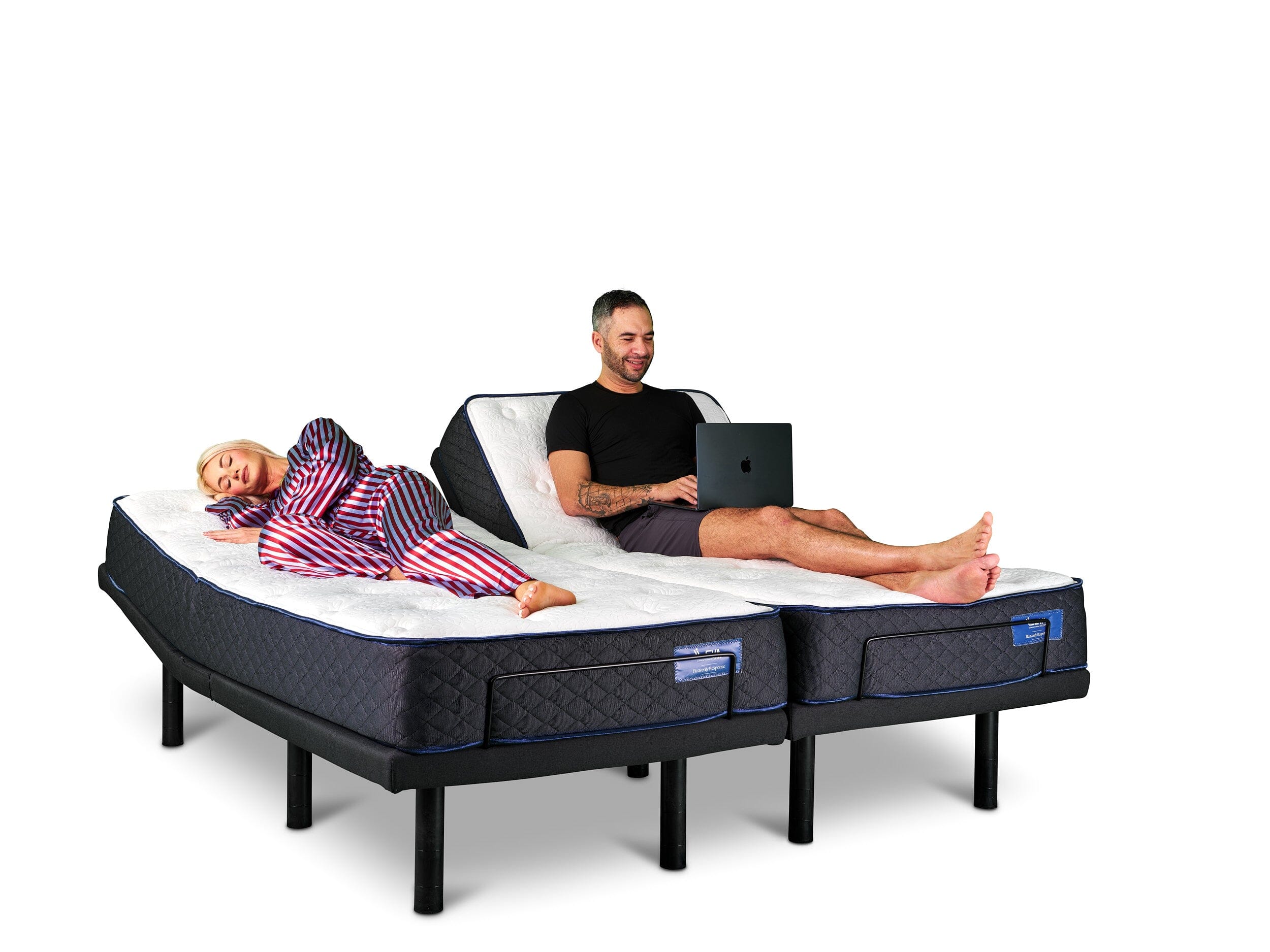
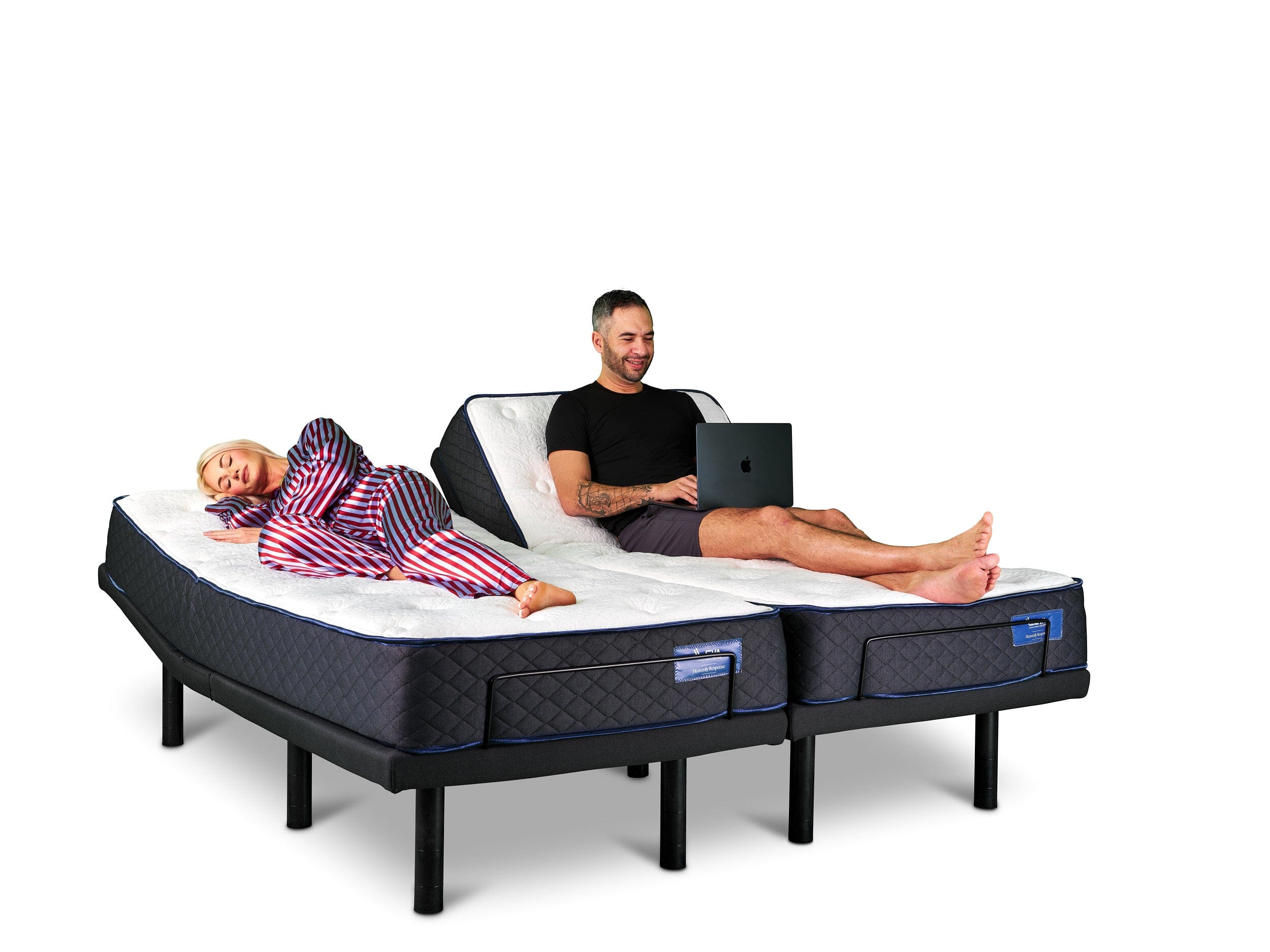
Split adjustable beds give couples flexibility when each person has different arthritis symptoms or firmness preferences. Leva Sleep’s Split Queen suits many Canadian bedrooms where a standard Split King feels too wide.
The Split Queen uses two narrower bases that match a standard Queen footprint. Each partner controls head and leg elevation, massage, and firmness independently without needing a larger room.
Leva Sleep Split Queen Bed
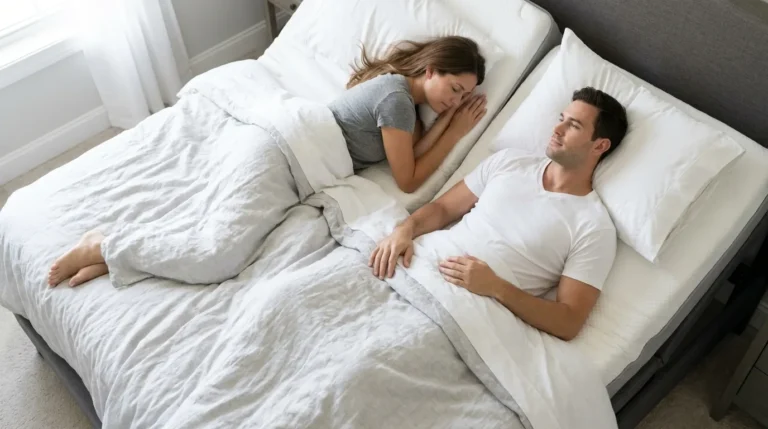
When one partner needs a 30° head elevation for shoulder arthritis and the other prefers a flat position, a split base removes the need for compromise. Each side saves its own custom presets in the Leva Sleep app, and whisper-quiet German motors allow 2 a.m. adjustments without waking the other partner.
Canada-Focused Checklist for Buying an Adjustable Base
Use this checklist when you compare adjustable bases for arthritis relief in Canada.
Split sizing: Confirm whether a Split Queen or Split King fits your bedroom. Leva Sleep is one of the few Canadian retailers offering a true Split Queen built to specification.
Independent controls: Ensure each side has its own remote or app profile so therapeutic positions do not affect your partner.
Motor noise: Choose whisper-quiet motors, because loud or jerky motors interrupt sleep during nightly micro-adjustments.
App-saved presets: Confirm the base supports multiple named custom positions so your nightly routine does not require manual re-entry.
White-glove delivery: Leva Sleep provides in-home delivery, assembly, leg-height adjustment, product tutorial, and old-bed removal in Ontario and Alberta, which removes the setup burden common with bed-in-a-box brands.
Price advantage: Leva Sleep’s direct-to-consumer, vertically integrated model prices its bases about 30–50% below comparable luxury competitors such as Tempur-Pedic adjustable systems.
Mattress compatibility: Confirm the mattress is designed to flex with an adjustable base. Leva’s all-foam and hybrid pocket-coil mattresses are built specifically for this purpose.
Accessories: Leva’s fitted sheets include deep pockets and extra elastic to prevent slippage at elevated angles, which is a common failure point with standard bedding.
After a few weeks of consistent use at the angles identified in your nightly log, you should see clear signs of progress. Reduced morning stiffness, fewer overnight position changes, and longer uninterrupted sleep blocks all signal an effective setup.
Zero-gravity style positioning can increase deep sleep compared to flat sleeping. For couples, another key sign of success is both partners sleeping through the night in the same bed, which is the outcome Leva Sleep’s split-base design aims to deliver.
Frequently Asked Questions
Is an adjustable bed good for arthritis?
An adjustable base is a practical tool for managing nighttime arthritis pain because it allows precise elevation of the head and legs. These positions reduce joint pressure, improve circulation, and limit inflammatory pooling in affected joints. The Arthritis Foundation reports that around 80% of people with arthritis have trouble sleeping, and elevation-based positions address many mechanical causes of that disruption.
An adjustable base does not treat the underlying disease. Consistent use of evidence-based positions, especially zero-gravity style setups, is associated with reduced morning stiffness and longer uninterrupted sleep for both osteoarthritis and rheumatoid arthritis. Most users notice changes within the timeframe described in Step 4 when they keep settings consistent each night.
What is the best position for knee arthritis on an adjustable bed?
For knee osteoarthritis, back sleeping with the head elevated 10–15° and the leg section raised to 10–15° is the recommended starting point. A low pillow under the knees that matches the guidance in Step 3 adds support without creating sustained pressure behind the joint.
The goal is mild flexion that offloads the knee without compressing the posterior joint compartment, which occurs when the knee bends beyond roughly 30°. Avoid elevating the leg section so high that the back of the knee presses directly against the base. Pressure should spread along the calf and thigh instead.
Should you sleep with knees bent or straight for arthritis?
A mild bend of about 10–20° of knee flexion usually works better than fully straight or deeply flexed positions for most arthritis types. Fully straight flat sleeping removes the natural lumbar curve and increases pressure on the lower back and hip joints.
Deeply bent knees compress the back of the knee and can worsen knee OA symptoms overnight. The adjustable bed leg section creates the ideal mild bend without pillow stacking, and you can save the angle as a preset so it repeats exactly each night. For hip arthritis, a gentle knee bend also reduces tension at the hip flexor and iliotibial band.
How high should the head be elevated for arthritis pain relief?
Head elevation depends on which joint hurts most. For lower back and hip arthritis, 20–30° is the standard therapeutic range and places the torso above the hip line in a way that widens lumbar disc spaces and reduces facet joint loading.
For shoulder arthritis, 30° is the target because it reduces internal rotation of the shoulder without forcing the chin toward the chest. For knee arthritis, 10–15° at the head is usually enough, with most of the therapeutic effect coming from the leg section.
In every case, the spine should feel long and neutral. If the chin tucks toward the chest or the neck feels strained, the head elevation is too high. Start at the lower end of the range and increase by 2–3° only after confirming comfort over several nights.