Written by: Matthew Timmins, Founder and Managing Director, Leva Sleep | Last updated: June 26, 2026
Key Takeaways
- Adjustable beds with 7°–30° head elevation can reduce snoring and mild obstructive sleep apnea by shifting soft tissue and the tongue forward to open the airway.
- Split-base designs let couples customize each side independently, so one partner can sleep elevated while the other stays flat.
- Leva Sleep’s app-based anti-snore presets and quiet motors allow quick, discreet adjustments that outperform many competing Canadian models.
- Leva Sleep’s direct-to-consumer pricing delivers 30–50% savings versus many premium brands while still offering Split Queen options and white-glove delivery in Ontario and Alberta.
- Explore Leva Sleep’s full range of adjustable bed packages to find a split configuration that matches your snoring or sleep-apnea needs.
How Head Elevation Between 7° and 30° Eases Snoring and Mild Sleep Apnea
Obstructive sleep apnea and snoring share a common mechanism. Soft tissue in the throat collapses partially or fully during sleep and restricts airflow. Gravity makes this worse when the body lies completely flat, so head elevation changes how the airway behaves.
At angles between 7° and 30°, a chain of changes in the airway can reduce obstruction and snoring intensity.
- The tongue and soft palate shift slightly forward and away from the back wall of the airway, which opens more space for airflow.
- Fluid redistribution from the legs toward the upper body decreases, so pressure on throat tissue drops and the airway stays more stable.
- Breathing effort often decreases, which can reduce how often snoring events occur and how loud they sound.
- Mild apnea episodes, which are brief pauses in breathing, may occur less frequently for some sleepers at these angles.
A 7° incline works as a comfortable starting point for most people and often reduces snoring in a noticeable way. Angles closer to 30° usually suit more pronounced symptoms or added issues such as acid reflux that disturb sleep further. Leva Sleep adjustable bases provide head and foot articulation with programmable presets, so each partner can save a preferred position and return to it with a single tap in the app.
Adjustable bed elevation does not replace a formal sleep study or medical treatment for moderate-to-severe obstructive sleep apnea. Canadians who experience significant daytime fatigue, witnessed apneas, or oxygen desaturation should speak with a physician. For mild snoring and mild apnea, positional therapy through head elevation remains a widely recognized first-line behavioural approach.
Find bases with programmable anti-snore presets that support this type of positional therapy.
How Split-Base Designs Help Couples Share a Bed Again
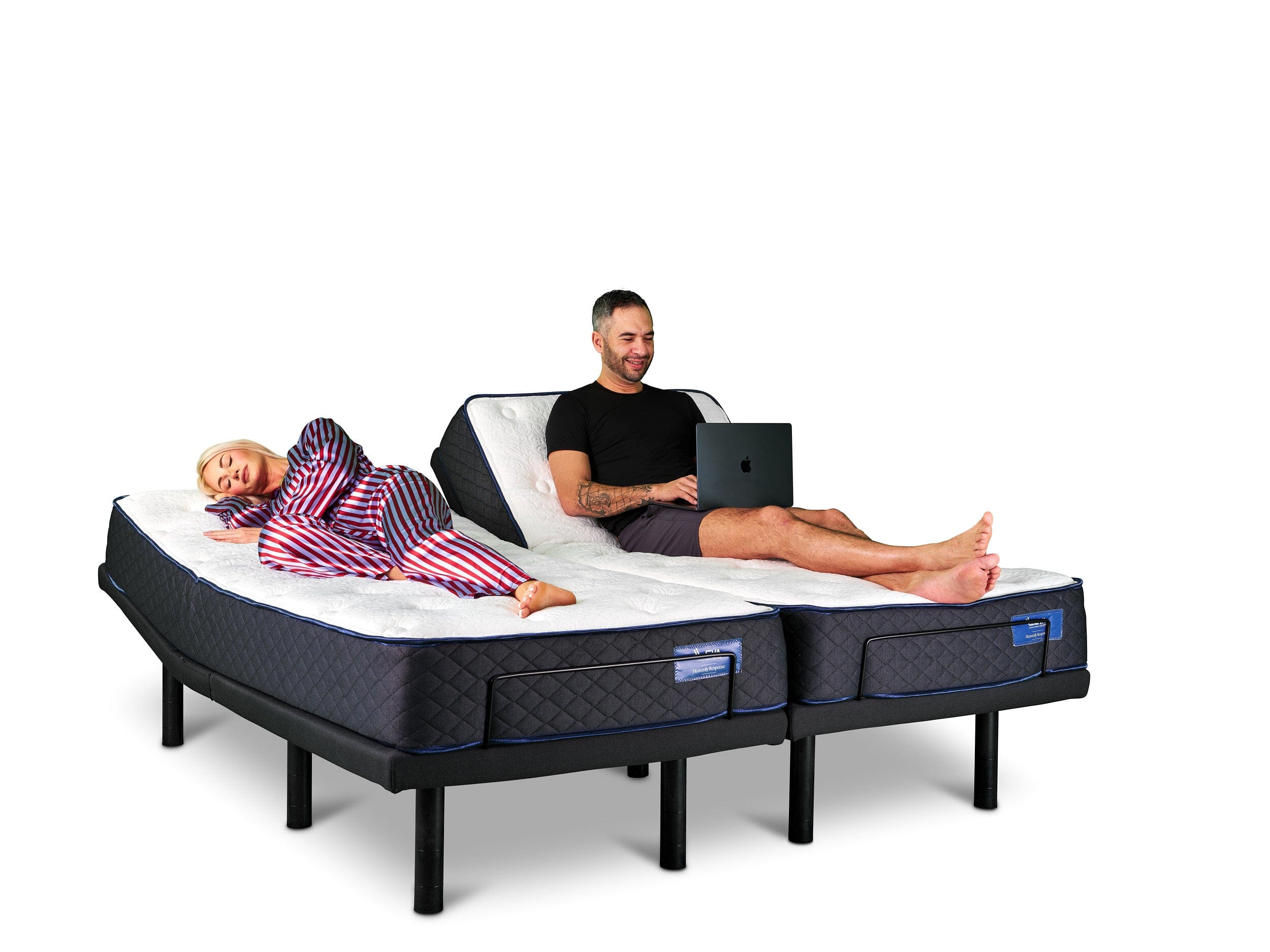
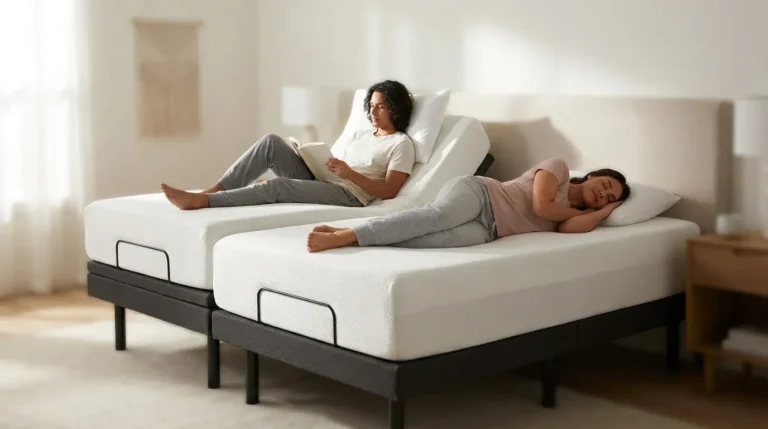
Split-base adjustable beds give couples independent control so both partners can stay in the same bed, even with different elevation needs. A standard one-piece base raises or lowers the entire surface, which forces both people into the same position and often sends one partner to a separate room.
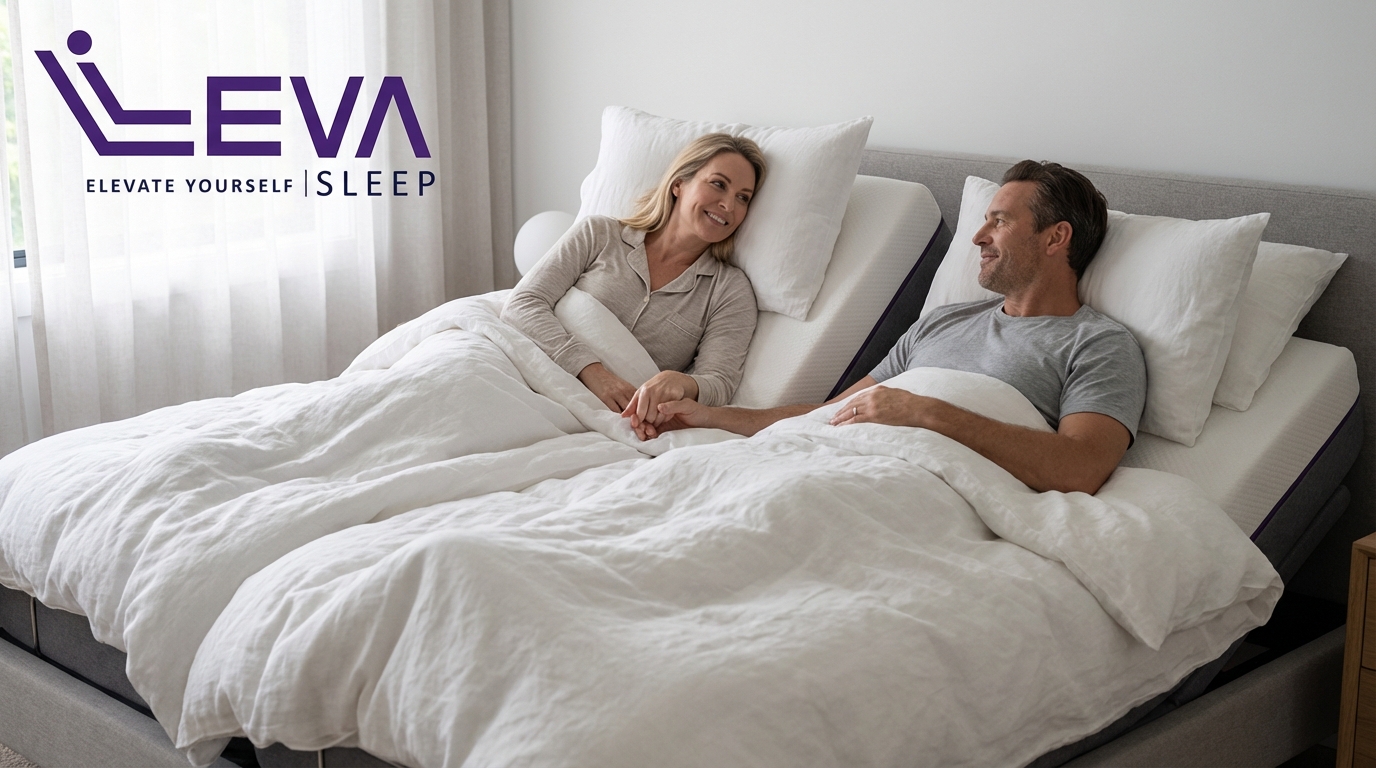
A Split Queen adjustable bed uses two narrow twin-long bases placed side by side inside a queen-sized frame. Each side operates independently, so one partner can sleep at 20° head elevation with a lumbar preset while the other stays completely flat. Controls run through the Leva Sleep app or a wireless remote, and the two sides move without mechanical interference.
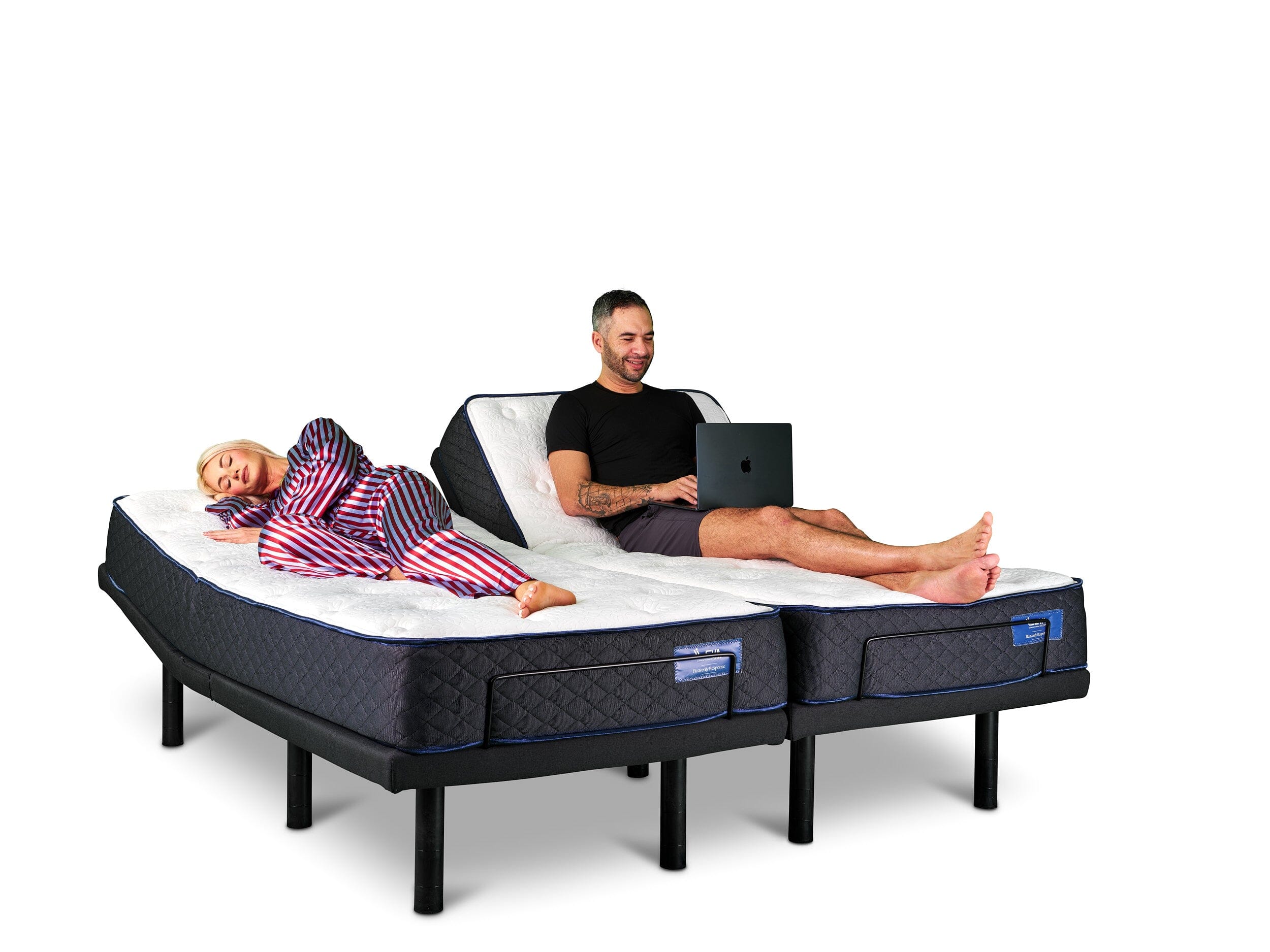
Split King configurations provide the same independence in a king footprint. Both formats are available from Leva Sleep, which matters because Split Queen remains rare in the Canadian market. Many competitors stock Split King only, so couples in smaller bedrooms often cannot fit a split configuration at all.
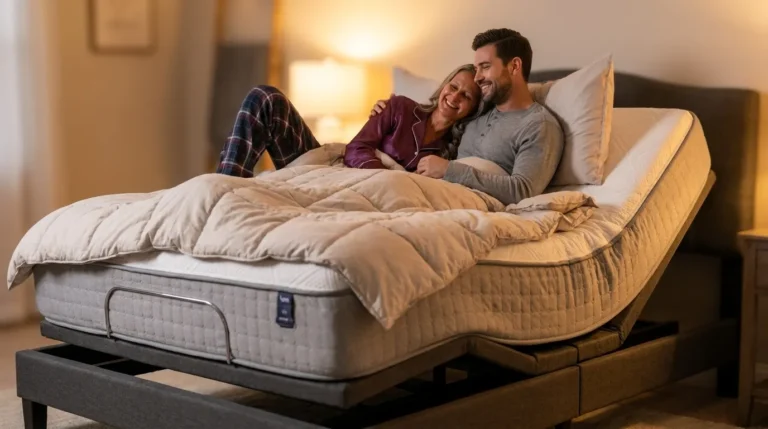
Independent elevation also targets snoring on just one side of the bed. If only one partner snores, only that side needs elevation while the other partner sleeps at a preferred angle. Couples who had moved to separate rooms due to snoring often return to a shared bed after switching to a split adjustable base, a pattern Leva Sleep reports across its 25,000+ Canadian customers.
Compare Leva Sleep’s Split Queen and Split King packages with independent app control for each side.
Feature Comparison: Leva Sleep vs. Leading Canadian Models for Snoring Relief
Four features matter most when you compare adjustable beds for snoring and sleep apnea relief: elevation range, anti-snore functionality, motor noise, and split-base availability. The table below highlights a key gap in the Canadian market. Most competitors offer Split King only and limited anti-snore automation, while Leva Sleep adds Split Queen availability and app-based anti-snore presets that many models do not include.
Note that competitor specifications come from publicly available product listings. Buyers should confirm current details directly with each retailer before purchasing.
| Model | Elevation Range | Anti-Snore Feature | Motor Noise | Split Queen Available |
|---|---|---|---|---|
| Leva Sleep Adjustable Base | Head & foot articulation | App-based anti-snore presets | Quiet German motors | Yes |
| Tempur-Pedic Ergo | Head & foot articulation | Snore response preset via app | Low | No (Split King only) |
| GhostBed Adjustable Base | 0°–70° (head) and 0°–60° (foot) | Anti-snore preset (manual) | Moderate | No (Split King only) |
| Endy Adjustable Base | Head & foot articulation | None listed | Low-moderate | No |
| Douglas Adjustable Base | Head & foot articulation | None listed | Low-moderate | No |
Leva Sleep’s anti-snore presets provide a fast way to raise the head to a position that can help reduce snoring. The app lets sleepers activate a preferred setting quickly instead of searching manually for a comfortable angle after snoring starts.
Compare Leva Sleep’s anti-snore models side by side to see which feature mix fits your bedroom and budget.
Value and Total-Cost Breakdown in 2026 Canadian Dollars
Cost becomes the next major factor once you know which features you need for snoring relief. Price often blocks Canadian couples from moving ahead with an adjustable bed, especially when they see premium brands positioned at the top of the market.
Premium brands such as Tempur-Pedic often price adjustable bases at $3,000–$5,000 CAD or more for the base alone, before adding a mattress, delivery, or accessories. GhostBed and similar mid-tier brands sit lower but still carry retail markups from wholesale distribution through partners like Costco.
Leva Sleep uses a direct-to-consumer model with local design and assembly, which removes the retail middle layer. Pricing typically runs 30–50% below many comparable premium competitors for similar or stronger feature sets. A Split Queen package with anti-snore detection, app control, quiet motors, and a compatible all-foam or hybrid mattress usually lands at a price point that competing brands struggle to match for any split configuration.
Several cost factors work together when you compare adjustable bed packages in Canada.
- Base price: This covers the adjustable frame itself and changes by size and feature tier, so it forms the starting point for your total spend.
- Mattress compatibility: Some brands require proprietary mattresses, which can raise costs. Leva Sleep works with its own mattresses and with brands including Tempur-Pedic, Simmons, Beautyrest, Serta, and Kingsdown, which gives buyers more price flexibility.
- Delivery and setup: White-glove delivery from Leva Sleep adds a fee but includes in-room setup, leg-height adjustment, a product tutorial, and old-bed removal. Many competitors charge separately for each service level or provide curbside delivery only, which shifts more work and potential extra costs to the buyer.
- Accessories: Leva Sleep designs fitted sheets with deep pockets and extra elastic, duvet clips, and mattress protectors for adjustable bases. Standard bedding retailers often do not stock items that stay secure when the bed moves, so buyers may need these purpose-built accessories.
Delivery and Mattress Compatibility for Ontario and Alberta Buyers
Leva Sleep currently serves Ontario and Alberta with delivery options tailored to adjustable bases. White-glove service sends a trained team to bring the base and mattress into the bedroom, assemble the system, set leg heights, walk through app setup and preset programming, and remove the old bed for donation or recycling where possible.
Mattress compatibility affects comfort, durability, and warranty coverage. Foam and latex mattresses flex well at all elevation angles and usually pair best with adjustable bases. Hybrid mattresses with individually wrapped pocket coils also perform well when the coil gauge and foam layers are built to articulate repeatedly.
Leva Sleep hybrid and all-foam mattresses are engineered specifically for use with its adjustable bases. For customers who prefer a brand-name mattress, Leva partnerships with Tempur-Pedic, Simmons, Beautyrest, Serta, and Kingsdown help confirm compatibility before purchase.
Innerspring mattresses with connected coil systems generally do not work with adjustable bases and should be replaced before installation to avoid damage and discomfort.
Common Concerns About Motor Noise and Snoring Relief
Many Canadian shoppers raise two recurring concerns when they research adjustable beds online. They worry that motor noise will wake a partner during position changes, and they feel unsure whether elevation will actually reduce snoring in real bedrooms.
On motor noise, Leva Sleep uses quiet German motors across its adjustable base lineup. Position changes feel smooth and sound low in volume, so one partner can adjust a side without jolting the other awake. Entry-level adjustable bases often rely on louder, less precise actuators, which can disturb light sleepers.
On effectiveness, head elevation works best for positional snoring that worsens when someone lies flat and for mild obstructive sleep apnea where gravity drives airway collapse. It tends to help less with snoring caused mainly by nasal blockage, alcohol intake, or anatomical issues unrelated to sleep position. Couples should notice whether the snoring partner sounds worse on the back than on the side or at a slight incline. If snoring clearly intensifies when flat, positional therapy through head elevation is likely to bring a meaningful improvement.
Conclusion: Matching Leva Sleep Features to Your Needs
Choosing an adjustable bed for snoring or sleep apnea relief involves five core criteria that work together. Elevation range in the 7°–30° window covers most therapeutic needs. Split-base availability supports couples with different preferences. Anti-snore technology simplifies finding and repeating helpful positions. Quiet motors protect shared sleep, and total cost, including delivery and accessories, determines whether the solution fits your budget.
For Canadian couples in Ontario and Alberta, Leva Sleep addresses these criteria with a direct-to-consumer model, Split Queen availability that many competitors lack, app-based anti-snore features, and white-glove delivery that removes setup stress.
Review your current sleep situation against these points, confirm mattress compatibility, and request a full package quote that includes delivery and accessories before you compare final prices across brands.
Configure a Leva Sleep split adjustable base package that fits your bedroom size and sleep needs.
Frequently Asked Questions
Do adjustable beds actually help with sleep apnea?
Adjustable beds can help with mild obstructive sleep apnea by elevating the head between 7° and 30°. This range reduces gravitational collapse of soft tissue in the throat and supports steadier airflow during sleep. Many people with mild apnea and positional snoring report fewer breathing disruptions and better sleep quality at these angles.
As explained earlier, head elevation in this therapeutic range does not replace CPAP therapy in moderate-to-severe cases. Anyone with significant apnea symptoms should consult a physician for a formal diagnosis before relying on positional therapy alone.
What is a Split Queen adjustable bed and why is it relevant for couples?
The main benefit of a Split Queen adjustable bed lies in the combination of independent control and a compact footprint. Split Queen beds, described in detail above, solve a specific problem for couples in smaller bedrooms. They provide separate elevation control within a queen frame at a time when most competitors offer only Split King models.
How does Leva Sleep’s anti-snore mode work?
Leva Sleep’s 2026 models will include anti-snore AI that adjusts bed position through the app to help reduce snoring. The system will detect snoring patterns and make small, targeted changes to head elevation so sleepers do not need to wake fully to reposition the bed.
What should I look for in a mattress to use with an adjustable base?
Mattresses for adjustable bases need to flex repeatedly without losing structure or comfort. All-foam and latex mattresses usually work best because they bend freely at any elevation angle. Hybrid mattresses with individually wrapped pocket coils also perform well when the coil and foam construction is designed to move with the base.
Innerspring mattresses with connected coil systems are not compatible with adjustable bases and will suffer damage from repeated flexing. Leva Sleep’s mattress lineup is engineered specifically for its adjustable bases, and the company also confirms compatibility for partner brands including Tempur-Pedic, Simmons, Beautyrest, Serta, and Kingsdown before pairing them with a base.
Is white-glove delivery worth the additional cost for an adjustable bed?
White-glove delivery usually makes sense for buyers who want a smooth setup and do not want to manage heavy lifting or wiring. A split configuration involves two bases, independent wiring, app pairing, leg-height calibration, and careful mattress positioning. These tasks take time and physical effort without help.
White-glove delivery from Leva Sleep includes in-room delivery, full assembly, leg-height adjustment, a product and app tutorial, and removal of the old bed. For most buyers, the time saved and the confidence that everything works correctly from the first night make the service fee a practical investment.