
Written by: Matthew Timmins, Founder and Managing Director, Leva Sleep | Last updated: July 17, 2026
Key Takeaways for Canadian Couples
- Habitual snoring affects up to 40% of Canadian men and 24% of women, which often means lost sleep and relationship strain for couples sharing a bed.
- Traditional anti-snoring devices like nasal strips and mandibular advancement devices usually focus on the snorer, not the couple, and often fail with throat-based snoring or long-term comfort.
- Positional therapy through head elevation is clinically proven to reduce snoring by preventing airway collapse when someone lies flat on their back.
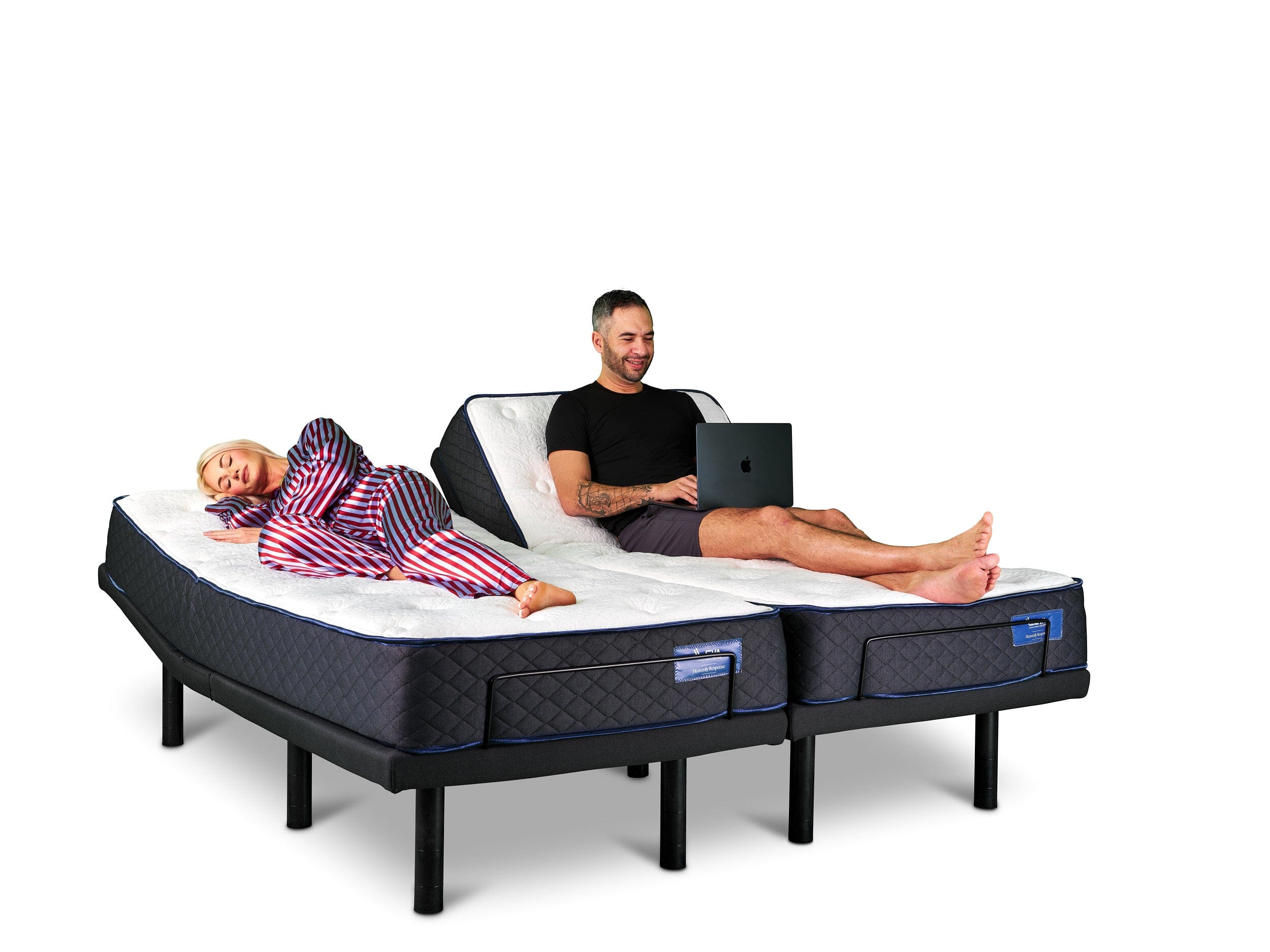
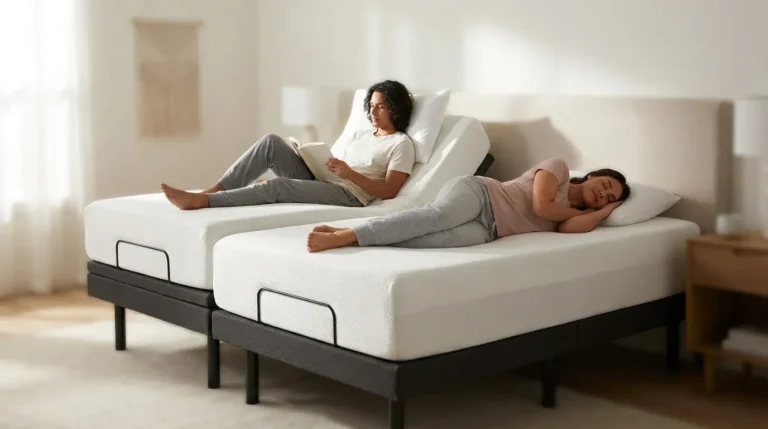
- Split adjustable beds give each partner independent control, run quietly, and offer a non-invasive solution that preserves shared sleep without wearables.
- Couples in Canada who want a lasting, shared-sleep solution can explore Leva Sleep’s adjustable bed packages designed specifically for two sleepers.
Why Traditional Devices Often Fail Couples
Most anti-snoring products on the Canadian market focus on the individual snorer, not the shared bedroom. Their limits become clear once you look at what both partners actually need to sleep well together.
Nasal Strips and Dilators: Limited Help for Throat Snoring
External nasal strips and internal dilators work by holding the nasal valve open mechanically. A 2016 meta-analysis found no meaningful change in apnea-hypopnea index (AHI) with nasal dilator use. Nasal strips also do not significantly reduce snoring loudness when snoring comes from palatal or pharyngeal collapse, which is the most common source of loud, partner-waking noise. For couples dealing with throat snoring, these devices rarely provide meaningful relief for the person trying to sleep beside the snorer.
Mandibular Advancement Devices: Effective but Hard to Live With
Mandibular advancement devices (MADs) such as SnoreRx and ZQuiet reposition the lower jaw to open the airway. A 2025 systematic review and meta-analysis found MADs reduced AHI by a mean of 15.75 events per hour, with clearer effects in primary snorers. Noncustom and custom mandibular advancement devices show equal or non-inferior effectiveness for treating obstructive sleep apnea, yet custom fitting often brings significant costs.
Common side effects include jaw discomfort, dry mouth, excessive salivation, and long-term dental and skeletal changes such as altered overjet and overbite. Many users stop wearing them over time because of this discomfort. Once the snorer stops using the device, any benefit for the couple disappears.
Chin Straps and Positional Pillows: Wearables With Drawbacks
Chin straps reduce mouth breathing but do not treat airway collapse in the throat. Smart positional pillows such as the Nitetronic Z6 use sensors to shift head position during the night. Head-elevation positional therapy via wedge systems is non-invasive and preserves shared bed use more reliably than wearable devices, which can shift, loosen, or disengage while you sleep.
None of these device categories offer independent adjustability for each partner, Canadian white-glove delivery, or a system designed from the ground up for couples who want to keep sharing a bed.
How Split Adjustable Beds Deliver Positional Therapy
Positional therapy tackles a core mechanical cause of snoring: gravity pulling the tongue and soft palate backward when someone lies flat. For positional snoring that worsens when lying flat on the back, elevating the head 20–45 degrees with an adjustable bed base helps prevent the soft palate and tongue from collapsing backward under gravity. Research shows that positional therapy can reduce AHI in responders with supine-predominant OSA, with adherence rates similar to CPAP.
A 2025 multicentre, randomised, double-blind, sham-controlled trial published in Thorax evaluated vibrotactile positional therapy versus sham for positional obstructive sleep apnoea, using AHI at 3 months as the primary endpoint. These findings support positional approaches as a credible clinical tool, not just a comfort upgrade.
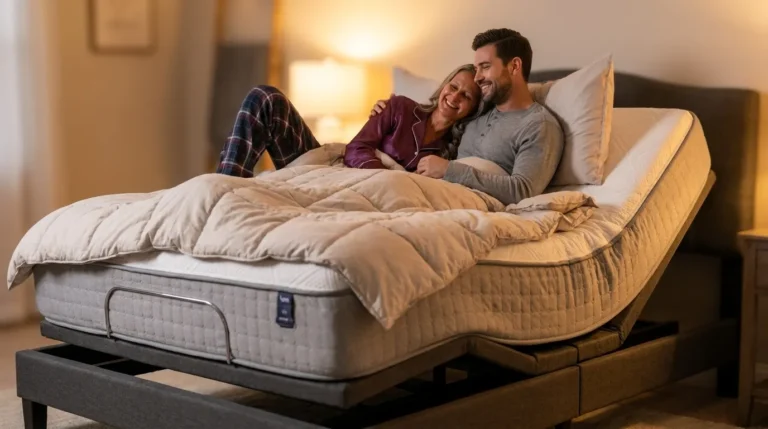
Split adjustable beds turn this clinical mechanism into a practical, couple-focused system. Each partner controls their own side independently, including elevation, massage, and temperature, without disturbing the other. Leva Sleep’s split Queen and split King adjustable bases use whisper-quiet German motors and app-based control, with custom sleep positions and an upcoming anti-snore mode that detects snoring and makes small head adjustments automatically. Couples get positional therapy without a mouthpiece, wearable device, or separate bedrooms.
Explore Leva Sleep’s split Queen and split King adjustable bases to see how independent controls can preserve shared sleep for Canadian couples.
Key Evaluation Criteria for Couples
Couples should assess any anti-snoring solution for shared sleep using a clear set of criteria, moving from core function to day-to-day practicality. This approach keeps both partners’ needs in view.
- Independent adjustability: Each partner must be able to set their own elevation, firmness, and temperature without affecting the other side. Without this foundation, one partner always ends up compromising.
- Noise level: Even with independent controls, motor or device noise that wakes the non-snoring partner defeats the purpose. Whisper-quiet engineering keeps adjustments from becoming a new source of disruption.
- Mattress compatibility: Once you confirm quiet, independent operation, check that your mattress works with the system or that a compatible one is included. Adjustable bases need mattresses that flex, such as all-foam or hybrid pocket-coil designs built for articulation.
- Bedding fit: After mattress fit, consider bedding. Standard fitted sheets often pop off elevated bases. Deep-pocket sheets with extra elastic, plus duvet clips, help keep everything in place through the night.
- Delivery and setup experience: Large adjustable systems are heavy and complex, so professional assembly matters. White-glove delivery that includes old bed removal, setup, and a tutorial removes a major barrier for many couples.
- Long-term value: Ongoing costs for nasal dilators, which run about $299 CAD annually per Rhinomed Mute usage data, and custom MADs add up quickly. A split adjustable base is a one-time investment in a durable system that supports both partners every night.
Real-World Outcomes for Couples Who Treat Snoring
A Mayo Clinic study found that treating a partner’s snoring improved bed-partner sleep efficiency by about one hour of sleep per night. Many couples who had moved to separate rooms returned to sleeping together, and both patients and partners reported better personal lives.
Head elevation also helps with acid reflux, which often appears alongside snoring, and supports mild sleep apnea management without a CPAP mask. Bed-sharing in couples is associated with increased and more stable REM sleep and sleep-stage synchronization. Nightly sleep-wake concordance between partners is also linked to better daily marital interactions. Preserving shared sleep supports both relationship quality and health.
How Devices Compare to Split Adjustable Beds
| Device Type | Addresses Throat Snoring | Allows Shared Bed | Canadian Couple Support |
|---|---|---|---|
| Mandibular Advancement Devices (e.g., SnoreRx, ZQuiet) | Yes, for tongue-base snoring; noncustom and custom devices demonstrate equal or non-inferior effectiveness | Yes, but jaw discomfort and long-term dental changes reduce long-term use | No couple-specific delivery or setup |
| Nasal Strips and Dilators (e.g., Breathe Right, Rhinomed Mute) | No, ineffective for palatal or pharyngeal collapse | Yes, but no reduction in snoring loudness for throat-origin snoring | No couple-specific guidance or Canadian support |
| Chin Straps | No, addresses mouth breathing only, not airway collapse | Yes, but discomfort limits nightly use | No couple-specific delivery or setup |
| Split Adjustable Beds (e.g., Leva Sleep Split Queen/King) | Yes, positional therapy can reduce AHI in supine-predominant OSA responders | Yes, independent controls for each partner with no shared disruption | Yes, Ontario and Alberta white-glove delivery, local assembly, in-house service |
Buying a Split Adjustable Bed in Canada
The global adjustable bed base market is projected to grow from USD 3.81 billion in 2024 to USD 7.5 billion by 2035, with Canadian demand driven by an aging population and chronic pain. Couples in Ontario and Alberta face different logistics and service options than buyers in the U.S., so local support matters.
Leva Sleep delivers and sets up adjustable systems in both provinces through an in-house white-glove team. Trained professionals bring the bed to the bedroom, assemble the base, adjust leg heights, walk you through the controls, and remove the old bed for donation or recycling. This service removes the heavy lifting and complex assembly that many bed-in-a-box brands leave to the customer.
Leva Sleep’s direct-to-consumer model, with local design and assembly, removes retail markup and delivers a clear pricing advantage over many luxury brands. Couples get engineering quality that supports independent sleep, along with whisper-quiet German motors, purpose-built mattresses, and accessories such as deep-pocket fitted sheets and duvet clips made for adjustable bases.
Leva Sleep also offers a split Queen configuration, which is rare in Canada. This format gives couples independent adjustability in a more space-conscious footprint than a split King, which suits many Canadian bedrooms.
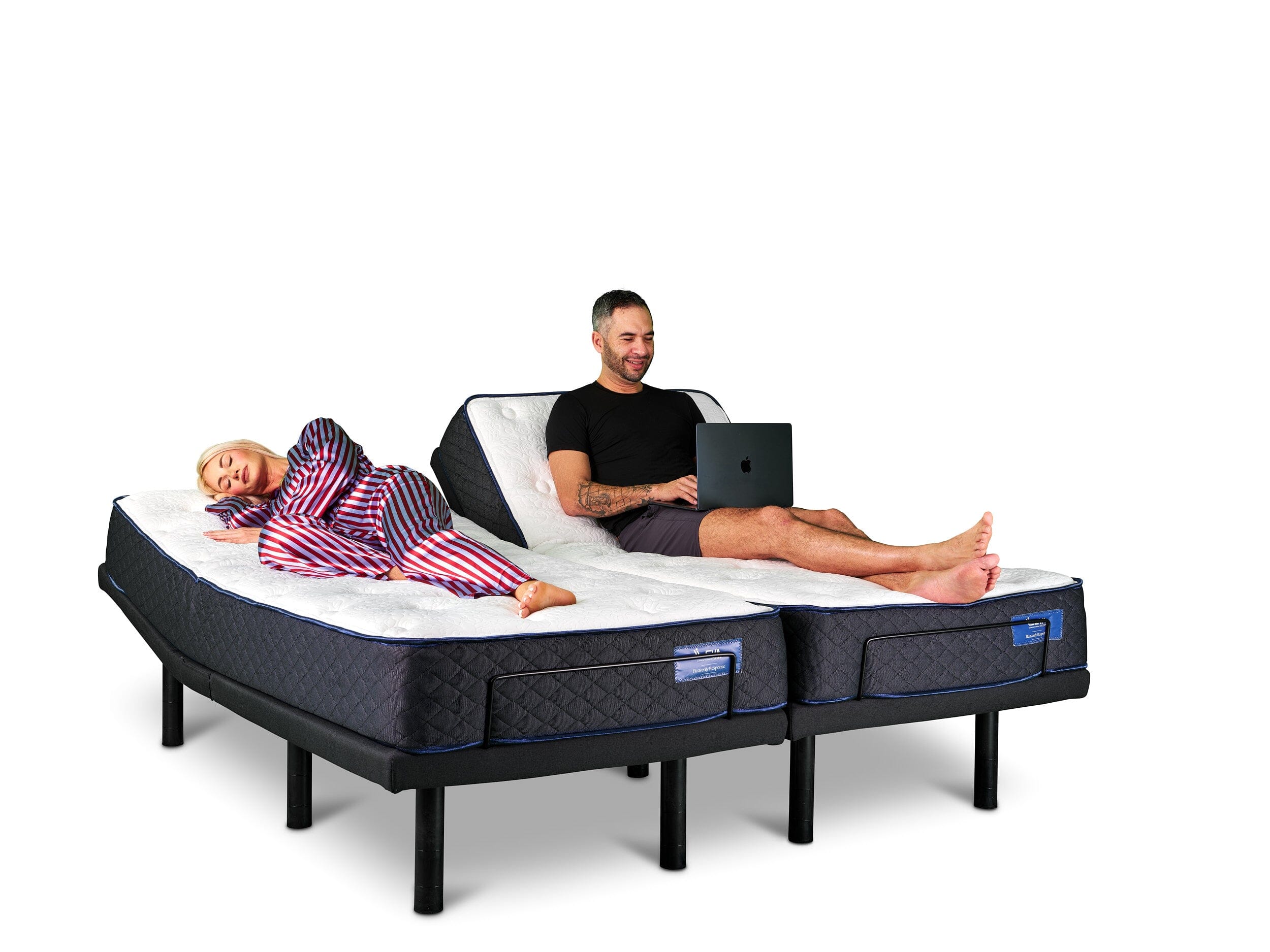
Browse Leva Sleep’s complete adjustable bed packages, including split Queen and split King systems with white-glove delivery and setup across Ontario and Alberta.
Frequently Asked Questions
How do married couples deal with snoring?
Couples usually try one of three paths: at-home devices such as nasal strips and mouthpieces, lifestyle changes such as side-sleeping and weight loss, or positional therapy. For couples who want to stay in the same bed, positional therapy with a split adjustable bed is often the most sustainable option. The snoring partner elevates their head independently while the other partner keeps a flat or custom position.
This approach avoids the discomfort of wearables and reduces pressure to sleep in separate rooms. Couples dealing with confirmed obstructive sleep apnea should also see a sleep physician, because positional therapy works best for mild-to-moderate, supine-predominant cases.
Is there an anti-snoring device that actually works?
Several device categories show clinical evidence, but results depend on where the snoring starts. Custom mandibular advancement devices reach success rates of 60–80% for mild-to-moderate OSA and work best for tongue-base snoring. Nasal dilators reduce snoring frequency when nasal obstruction drives the problem but do not help throat-origin snoring or AHI.
Positional therapy, including head elevation with adjustable beds, reduces AHI by about 50–60% in patients with supine-predominant OSA. No single device works for every snorer, so identifying whether snoring is nasal, tongue-base, or positional is essential before choosing a device. For couples, split adjustable beds target positional snoring without asking either partner to wear a device.
What can my husband use to stop snoring?
The right solution depends on what triggers the snoring. If snoring happens mainly when he lies on his back and improves on his side, positional therapy with a split adjustable bed is a strong first step. This option is non-invasive, needs no nightly fitting, and keeps the bed partner comfortable.
If snoring continues in every position, a custom mandibular advancement device fitted by a dental sleep medicine specialist is the best-supported wearable option. Nasal strips make sense only when snoring clearly tracks with nasal congestion or obstruction. Persistent loud snoring with gasping, choking, or daytime fatigue calls for a sleep physician visit to rule out obstructive sleep apnea before trying at-home devices.
Do anti-snoring mouthpieces really work for couples?
Custom-fitted mandibular advancement devices can work well, with studies showing 50–70% reductions in snoring frequency for primary snorers and 60–80% success rates for mild-to-moderate OSA. Over-the-counter boil-and-bite versions reach effectiveness rates of only 20–30%.
Side effects such as jaw discomfort, dry mouth, and potential long-term bite changes cause many users to stop wearing them, which removes any benefit for the partner. Mouthpieces also ignore the shared sleep environment. They treat the snorer’s airway but do not give the non-snoring partner control over their own position or comfort. Couples who prioritize shared sleep and long-term comfort often find that a split adjustable bed handles positional snoring without nightly compliance challenges.
Conclusion: Choosing the Right Solution for Your Shared Bed
The most effective anti-snoring solution for Canadian couples addresses the true source of snoring, supports long-term use, and keeps partners in the same bed. Nasal dilators suit nasal-obstruction snoring only. Custom MADs help with tongue-base snoring and mild-to-moderate OSA but bring side effects and higher costs. Positional therapy with split adjustable beds targets supine-predominant snoring, the most common positional pattern, without wearables, recurring costs, or separate rooms.
When you compare options, focus on independent adjustability, noise level, mattress and bedding compatibility, delivery experience, and long-term value. Split adjustable beds are the only category that meets all these criteria at once while also handling different firmness preferences, temperature needs, and medical conditions on each side of the bed.
Couples in Ontario and Alberta who are ready to move past nightly compromises can look to Leva Sleep’s split Queen and split King systems. These setups combine whisper-quiet motors, purpose-built mattresses, specialized bedding, and in-house white-glove delivery to create a complete couple-focused sleep solution at a clear pricing advantage over many luxury competitors.
Find your split adjustable bed at Leva Sleep and choose a system that keeps you and your partner in the same bed, comfortably.