
Written by: Matthew Timmins, Founder and Managing Director, Leva Sleep
Key Takeaways for Canadian Couples
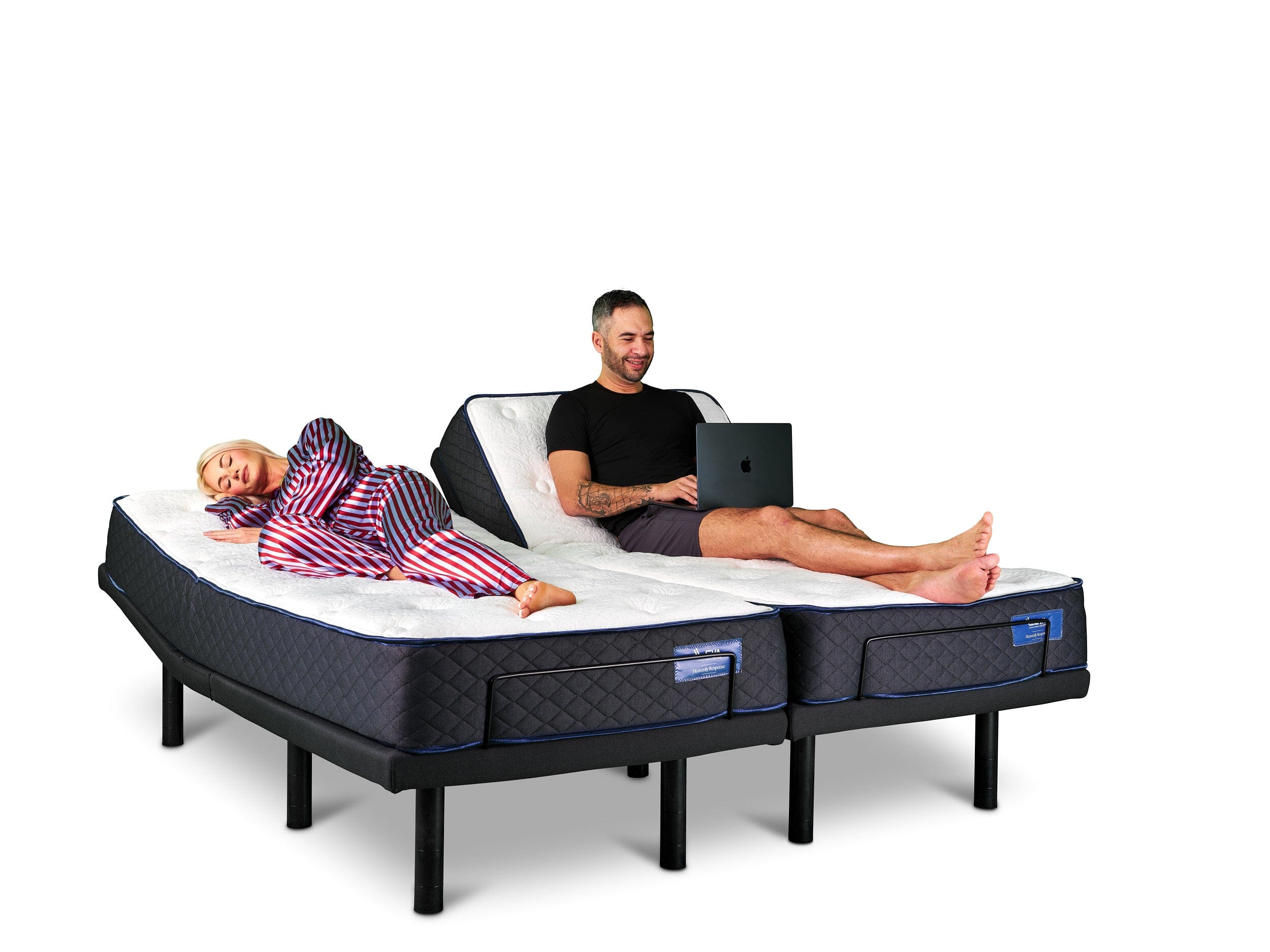
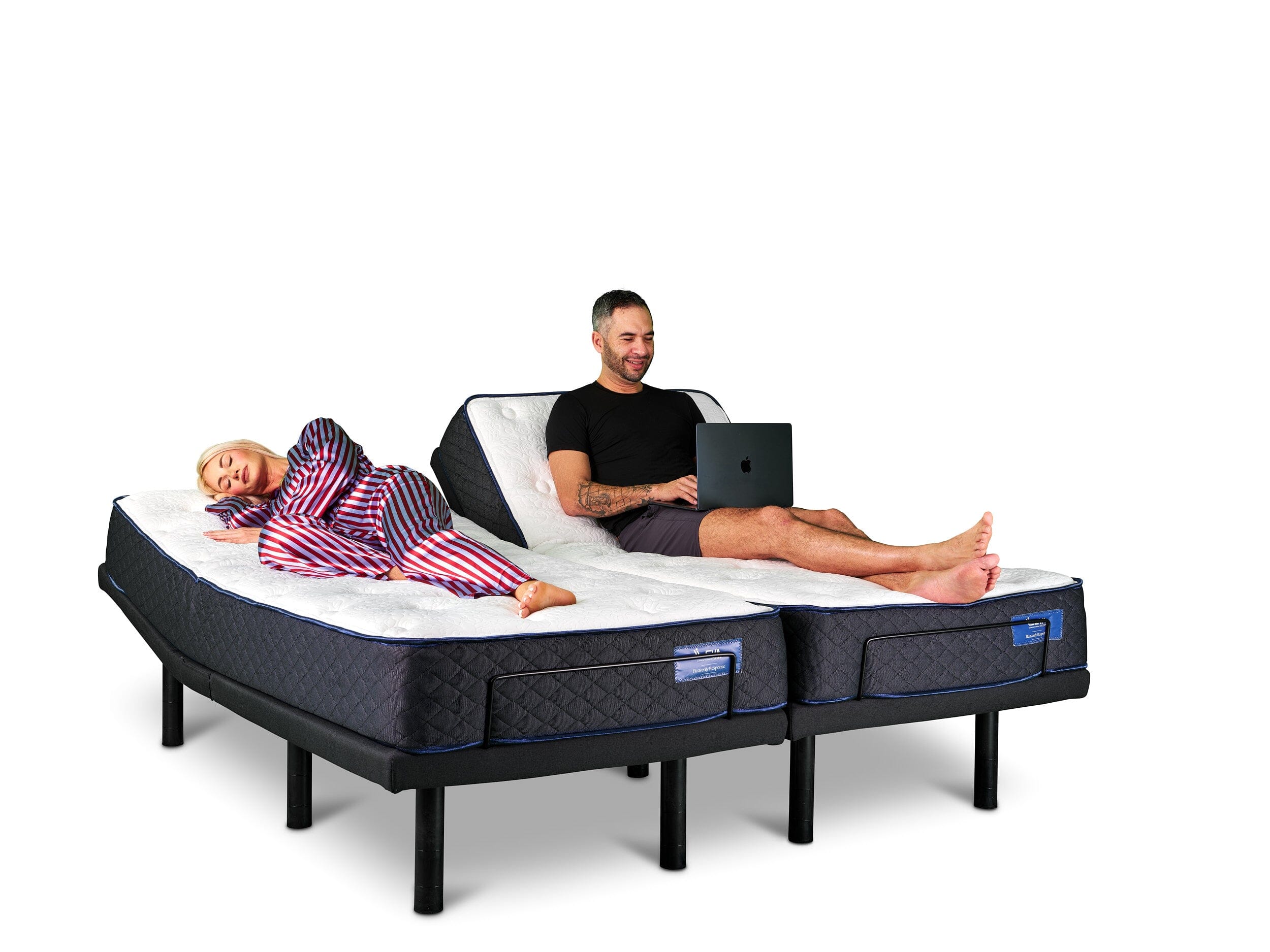
- Split Queen and Split King setups give each partner independent controls and strong motion isolation, so one person’s adjustments rarely disturb the other.
- Common drawbacks such as motor noise, sheet slippage, centre gaps, and mattress incompatibility become manageable when you choose quality components and purpose-built accessories.
- Mattresses 10–12 inches thick made of memory foam or hybrid pocket-coil construction usually perform best on adjustable bases, providing flexibility without overworking the motors.
- White-glove delivery and setup in Ontario and Alberta remove common installation headaches and leave the system ready to use the same day.
- Leva Sleep’s Split Queen and Split King packages include quiet motors, anti-snore mode, and local white-glove service while avoiding luxury-brand markups. Explore Leva Sleep’s adjustable bed packages to see which configuration fits your bedroom.
Real-world disadvantages couples notice with adjustable beds
Adjustable beds create meaningful benefits for couples, but they also introduce trade-offs that deserve careful review before you buy. The most commonly reported issues are motor noise, sheet slippage, a centre gap between split mattresses, and incompatible mattress construction.
Motor noise is often the first concern couples encounter. High-quality bases feature quiet motors that produce only a soft hum during adjustment, while budget units can activate loudly enough to wake a sleeping partner, which defeats the purpose of independent controls. Even with quiet motors, sheet slippage becomes a problem because standard fitted sheets lack the deep pockets and extra elastic needed to stay anchored when the head or foot section rises. For split configurations specifically, the centre gap between mattresses, typically two to four inches, is described by industry professionals as the biggest complaint, with 60% of couples finding it intolerable for maintaining physical closeness. Mattress incompatibility is another documented risk: a 2025 industry report attributes 34% of adjustable base warranty claims to mattresses that are too stiff for repeated articulation.
Each of these disadvantages has a practical solution when you choose the right system. Quiet, well-engineered motors reduce nighttime disturbance. Deep-pocket elastic sheets and stretch mattress protectors keep bedding in place. Connector straps, unified toppers, and careful base design reduce the impact of the centre gap. Choosing foam or hybrid pocket-coil mattresses that are explicitly rated as adjustable-compatible prevents damage and warranty issues.
These solutions matter because the sleep disruptions adjustable beds address are significant for many couples. The Canadian Lung Association reports that snoring affects roughly 40% of adult men and 24% of adult women in Canada. A 2024 OnePoll survey found that 82% of people in relationships say their partner’s sleeping habits consistently wake them, with 25% specifically citing tossing and turning. Weighing these nightly disruptions against the manageable trade-offs of a split system gives couples a clear starting point.
Mattress thickness guidelines for adjustable bases
Mattress thickness between 10 and 12 inches is the sweet spot for most adjustable bases, with a usable range of 10–14 inches. Mattresses thinner than 10 inches can dent at articulation points, while models thicker than 14 inches can strain the base motor and reduce the range of motion. A mattress for an adjustable base should bend to roughly 45 degrees without damage.
Thickness alone does not guarantee compatibility. Material construction matters just as much because the internal structure determines whether a mattress can flex repeatedly without damage. Foam mattresses are the most flexible option for adjustable bases and allow maximum head and foot elevation. Memory foam mattresses are the most consistently compatible because single-pour or multi-layer constructions contain no rigid internal components that can crack or separate. For hybrid mattresses, individually pocketed coils are the dividing line for adjustable-base compatibility, since each coil moves independently, while Bonnell or continuous coil designs resist bending and can deform or puncture comfort layers.
For motion isolation, memory foam often outperforms springs in independent testing. Memory foam mattresses for adjustable bases should use a comfort layer density of at least 3.5 pounds per cubic foot and base foam density of at least 2 pounds per cubic foot to reduce premature sagging at bend points. When you evaluate a mattress for an adjustable base, confirm manufacturer certification for articulation compatibility and check that the construction uses foam-encased rather than steel-rod edge support.
Split King vs Split Queen: matching configuration to your space
A Split Queen uses two independent 30″ × 80″ halves that form a standard 60″ × 80″ queen footprint. A Split King uses two Twin XL mattresses, each 38″ × 80″, for a 76″ × 80″ surface. The comparison below focuses on how each option affects bedroom fit, per-person comfort, and budget so you can decide whether the extra width of a Split King justifies the added cost for your space.
| Factor | Split Queen | Split King | Notes |
|---|---|---|---|
| Footprint | 60″ × 80″ (standard queen) | 76″ × 80″ (standard king) | Split Queen fits existing queen frames, while Split King requires a king frame |
| Per-partner width | 30 inches | 38 inches | Each person on a king has 38 inches versus 30 inches on a queen |
| Motion isolation | Strong, with physically separate mattresses | Strongest, with 74–82% better isolation than single kings per Sleep Foundation lab tests | Both configurations eliminate most cross-partner motion transfer |
| CAD pricing tier | Lower entry cost and more space-efficient | Split King setups often range from $4,800–$14,000+ USD for two mattresses plus two bases | Leva Sleep’s direct-to-consumer model avoids typical luxury-brand markups |
Split configurations are especially useful for medical conditions such as sleep apnea, acid reflux, back pain, or post-surgical recovery that require specific positioning or elevation without forcing the partner into the same posture. Couples in smaller Ontario or Alberta bedrooms where a king footprint feels tight often find the Split Queen a space-conscious way to keep full independent control. Room dimensions, medical requirements, and how much you value physical closeness should guide your choice between the two.
All-foam vs hybrid pocket-coil: which mattress suits your sleep style?
The choice between all-foam and hybrid pocket-coil mattresses on an adjustable base affects flexibility, temperature, motion isolation, and how easily you can change positions.
All-foam mattresses conform closely to the articulating surface, and many memory foam models score well for low motion transfer. They flex easily for elevation and zero-gravity positioning, which helps when one partner needs a specific angle for comfort. The trade-off is heat retention and slower response, since memory foam can trap warmth and feel less bouncy when you reposition.
Hybrid pocket-coil mattresses pair individually wrapped coils with foam comfort layers to balance contouring and support. This design maintains compatibility with adjustable bases while adding stronger edge support and a cooler sleep surface than most all-foam models. The more responsive feel suits partners who change positions frequently. Pocketed-coil hybrids for adjustable bases typically use 800–1,500 coils per queen and must be clearly rated as adjustable-compatible by the manufacturer.
Leva Sleep’s anti-snore mode, which detects snoring and makes small head-elevation adjustments, works with both all-foam and hybrid pocket-coil mattresses in its lineup when the mattress meets the 10–12 inch thickness and flexibility criteria. Couples who sleep hot or move often usually prefer a hybrid, while couples who prioritize maximum motion isolation and deep contouring often choose all-foam.
Compare Leva Sleep’s all-foam and hybrid mattress options paired with Split Queen and Split King bases to see which feel matches your habits.
Sheet slippage fixes: bedding accessories that actually work
Standard bedding is not built for the repeated articulation of an adjustable base. When the head or foot section rises, a conventional fitted sheet often loses its grip and bunches, which disrupts sleep and looks messy. Accessories designed specifically for adjustable bases prevent these problems and keep the bed feeling stable.
- Extra-elastic fitted sheets with deep pockets: Leva Sleep designs its fitted sheets with reinforced elastic that maintains grip through full elevation cycles and keeps corners from popping off.
- Duvet clips: When partners use different elevation settings, a shared duvet tends to slide toward the lower side. Duvet clips anchor the cover at the centre seam so both sides stay covered.
- Remote pockets: Side pockets attached to the base or mattress keep wireless remotes and charging cables within reach, which helps when the head section is elevated and a nightstand is harder to access.
- Mattress protectors: Protectors for adjustable bases use four-way stretch fabric that moves with the mattress through articulation without bunching or limiting elevation.
For split configurations, practical solutions include a mattress connector strap, two separate fitted sheets with a shared top sheet or duvet, or a mattress topper to unify the surface. Choose the combination of accessories that matches your elevation habits and whether you prefer a shared or separate duvet.
Delivery and setup realities in Ontario and Alberta
Adjustable bed delivery in Canada involves logistics that standard mattress deliveries rarely face. A queen adjustable bed base typically weighs between 110 and 140 pounds when shipped in its box, which makes curbside or threshold delivery a two-person job in most homes. Ontario residential staircases are typically at least 34 inches wide per building code, while a queen mattress is 60 inches wide and 80 inches long, so experienced teams must tilt and manoeuvre around landings without damaging walls or the product.
White-glove delivery removes these challenges and saves time. Professional white-glove setup of an adjustable bed base typically takes 45 to 90 minutes, including frame assembly, motor connections, remote pairing, function testing, and mattress placement, while split king configurations require extra time for synchronizing two bases. Common DIY errors, such as reversed motor connections, loose wire harnesses, legs installed at inconsistent heights, and improperly positioned retainer bars, are avoided when a trained team handles setup.
Leva Sleep provides in-house white-glove delivery in Ontario and Alberta that covers bedroom placement, full assembly, motor and remote testing, leg height adjustment, a product tutorial, and old bed removal. This experience differs meaningfully from bed-in-a-box delivery, which leaves all assembly and troubleshooting to the customer. Adjustable bed bases sold in Canada typically require measurement of all entry points, including front doors, hallways, stairwells, and bedroom doorways, before purchase to avoid delivery issues in homes and condos. Leva Sleep’s delivery team handles this assessment as part of the service, which is especially helpful in tight urban spaces or older homes.
Budget considerations for adjustable beds in Canada
Adjustable bed pricing in Canada spans a wide range, and understanding where different options sit helps you decide whether you are paying for meaningful features or retail markup. The table below outlines approximate CAD investment tiers for complete adjustable bed packages so you can compare what you get at each price point and decide which tier aligns with your needs.
| Tier | Typical Configuration | Approximate CAD Range | Key Consideration |
|---|---|---|---|
| Entry-level / bed-in-a-box | Single base, basic remote, no split | $1,000–$2,500 | Limited features, no white-glove delivery, and no independent split control |
| Leva Sleep (Split Queen or Split King) | Split base, app control, anti-snore mode, quiet motors, white-glove delivery | Contact Leva Sleep for current pricing | Direct-to-consumer pricing, local assembly, and 25,000+ Canadian customers |
| Luxury brand (e.g., Tempur-Pedic Ergo Smart Base) | Split King, AI sleep tracking, anti-snore, temperature regulation | Upgrading to the AI-enabled Tempur-Ergo Smart Base adds at least $300 USD over the standard Power Base; full Split King packages often exceed $5,000 USD | Premium pricing through generalist retailers with less adjustable-base specialization |
Leva Sleep’s vertical integration, which includes designing, assembling, and delivering its systems in-house, removes much of the retail markup that inflates competitor pricing. With over 8 years in business, $50M in lifetime sales, and 25,000+ Canadian customers, the brand’s track record supports its value-focused positioning. When you compare Leva Sleep against luxury brands, the key question becomes whether the extra cost of a Tempur-Pedic or Sleep Number system delivers features you will actually use, or whether Leva Sleep’s specialist configuration and local service provide better value for your situation.
Review current pricing for Leva Sleep’s Split Queen and Split King packages with white-glove delivery in Ontario and Alberta.
Frequently Asked Questions
What is the best mattress for couples in Canada?
The best mattress for couples in Canada depends on whether both partners share similar sleep preferences or have very different needs. When firmness preferences, body weights, or medical conditions differ, a split configuration with two separate mattresses on independent adjustable bases usually works best. Each partner can choose a mattress that suits their own support and comfort needs without forcing compromise.
For material, memory foam and hybrid pocket-coil mattresses both perform well for couples on adjustable bases. Memory foam delivers strong motion isolation and excellent flexibility for elevation, while hybrid pocket-coil models sleep cooler and respond more quickly when you change positions. A thickness of 10–12 inches suits most adjustable bases, while mattresses above 14 inches can strain the motor and limit articulation. Always confirm that a mattress is certified as adjustable-base compatible before you buy.
What are the disadvantages of an adjustable bed?
The primary disadvantages of adjustable beds for couples, including motor noise, sheet slippage, centre gaps, and mattress compatibility concerns, are covered in detail earlier in this guide. The most commonly cited issue is the centre gap in split configurations, which many couples find disruptive to physical closeness.
Mattress connector straps and unified mattress toppers reduce the practical impact of the gap, although they do not remove it completely. The real trade-off is how much you value physical closeness compared with independent sleep customization. Quality components and purpose-built accessories from a specialist retailer address most complaints and make the remaining compromises easier to live with.
What is the most comfortable mattress for an adjustable bed?
Comfort on an adjustable bed is personal, but high-density memory foam, hybrid pocket-coil models, and natural latex consistently perform well in independent testing. Memory foam contours closely to the body in zero-gravity and elevated positions, which relieves pressure at the shoulders and hips. Hybrid pocket-coil mattresses add bounce and edge support while staying flexible enough for articulation, and they usually sleep cooler than all-foam options. Natural latex offers long lifespan, although single-pour latex cores thicker than 12 inches can resist bending at the hinge point.
For couples, the most comfortable setup is often a split system where each partner chooses the mattress material and firmness that matches their body weight, sleep position, and medical needs. A heavier partner and a lighter partner rarely share the same ideal firmness. Leva Sleep offers both all-foam and hybrid pocket-coil mattresses that are designed and tested for use with its adjustable bases, which removes guesswork about compatibility.
Conclusion: matching adjustable beds to your sleep challenges
The decision to invest in a split adjustable bed system starts with a simple question about your nightly experience. If snoring, mismatched firmness, temperature differences, or medical positioning needs regularly disturb your sleep, a traditional flat bed may no longer be enough. For many Canadian couples in this situation, independent controls, strong motion isolation, anti-snore automation, and purpose-built bedding accessories address the root causes of disruption instead of just masking symptoms.
Leva Sleep’s Split Queen and Split King systems are built for these scenarios, with quiet German motors, app-controlled elevation, 2026 anti-snore mode, and in-house white-glove delivery across Ontario and Alberta. With more than 8 years of specialist experience and tens of thousands of Canadian customers, Leva Sleep brings focused expertise that general mattress retailers often lack.
Find the Leva Sleep Split Queen or Split King configuration that fits your bedroom, budget, and sleep needs.