Written by: Matthew Timmins, Founder and Managing Director, Leva Sleep
Key Takeaways for Hot-Sleeping Couples
- Passive cooling mattresses using gel or phase-change materials typically lose effectiveness after 60–90 minutes once saturated, leaving hot sleepers uncomfortable for the rest of the night.
- Couples face compounded challenges because two bodies generate more heat than one, and a single flat mattress cannot accommodate differing temperature or elevation preferences.
- Active water-circulation cooling systems paired with split adjustable bases provide continuous, independent temperature control on each side of the bed, eliminating the saturation problem of passive materials.
- Clinical studies show active regulation can increase total sleep time, improve sleep efficiency, and enhance slow-wave sleep compared with constant-temperature or passive setups.
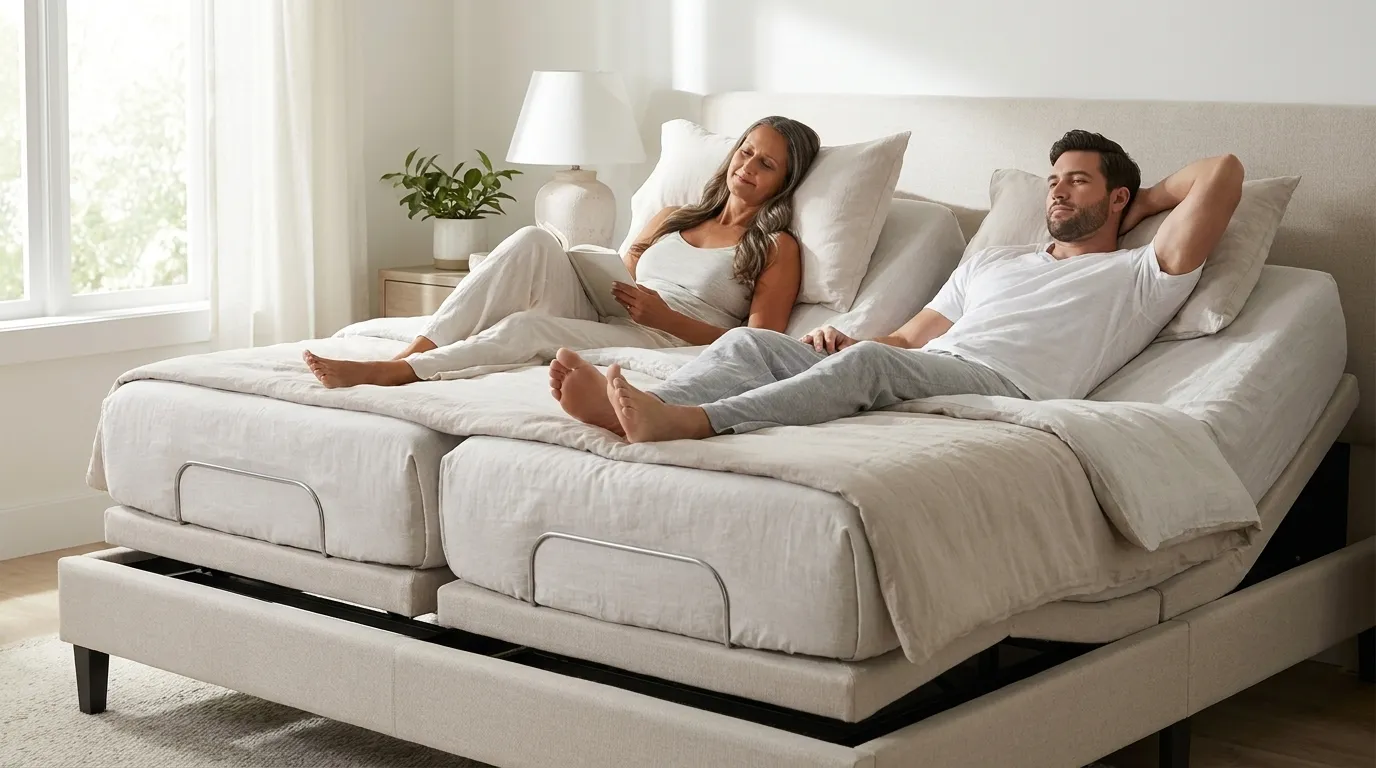
- Leva Sleep offers adjustable bed packages designed for couples seeking independent comfort; explore split-base packages for couples to find a solution tailored to Canadian sleepers.
The Problem: Passive Cooling Mattresses Fade Overnight
Passive cooling technologies, including gel-infused foam, phase-change materials (PCM), and breathable open-cell constructions, all work by absorbing or dissipating body heat on contact. This absorption has a hard ceiling. Passive gel or foam pads typically stop providing meaningful cooling after 60–90 minutes once the material saturates with body heat.
Clinical evidence confirms this limit. Studies have shown gel surfaces can produce smaller increases in skin temperature than foam. A 2025 Frontiers in Sleep systematic review concluded that passive bedding produces no significant impact on sleep architecture. A 2024 systematic review and meta-analysis in the Journal of Thermal Biology found that cooling bedding could lower core body temperature in the short term but did not consistently improve sleep onset, total sleep time, sleep efficiency, or sleep stages. These limitations become even more pronounced when two people share the same sleep surface.
For couples, the saturation problem intensifies. Two bodies generate more heat than one, which accelerates the point at which passive materials stop working. For couples, this saturation timeline shortens further, because two bodies accelerate heat buildup and often cut the effective cooling window in half. When one partner is a hot sleeper and the other is not, a single passive system cannot serve both at the same time, regardless of how it is marketed.
The broader Canadian context raises the stakes. Health Canada guidance recommends maintaining indoor temperatures no higher than 26°C to protect adults aged 60 and over from heat-related illness, and advises avoiding sustained overnight exposure between 26°C and 31°C whenever possible. Yet Statistics Canada’s 2006 thermostat survey found that 53% of Canadian households with a thermostat lowered their home temperature while asleep. Nearly half of Canadians therefore sleep at their daytime temperature of 20–22°C or warmer, which already sits near the upper edge of the recommended sleep range.
See how active cooling systems address these limitations
Why Flat Beds and Basic Adjustable Bases Limit Couples
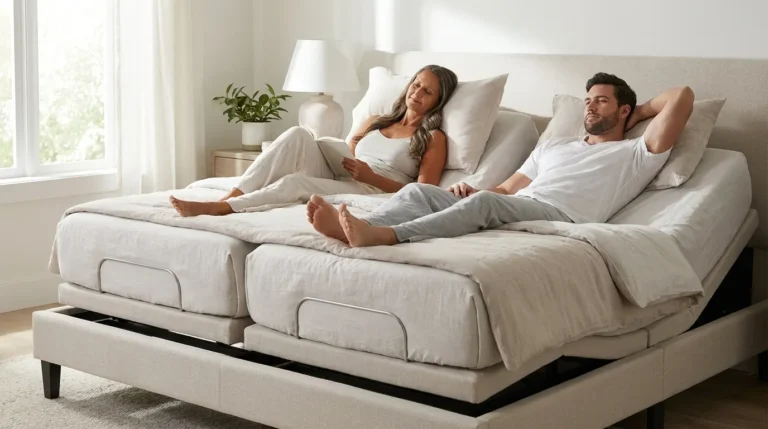
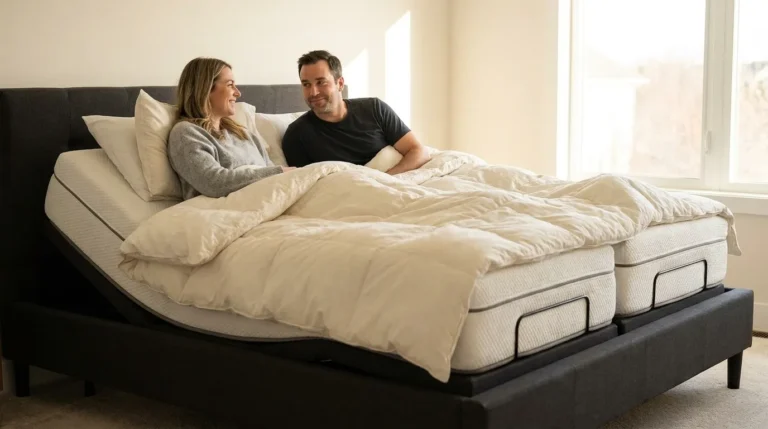
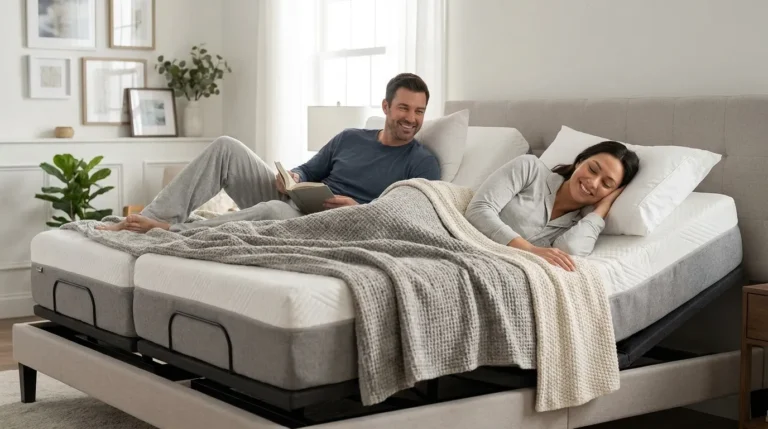
A flat mattress, even a premium one, applies one surface condition to both partners. The surface cannot create independent temperature zones, independent elevation, or independent firmness. When one partner needs head elevation for acid reflux and the other does not, or when one runs hot and the other runs cold, a flat bed forces a compromise that satisfies neither.
Adjustable bases might seem like the natural next step, but most do not solve the full comfort problem for couples. Basic adjustable bases address elevation but not temperature. Most entry-level adjustable frames move as a single unit or, in split configurations, offer independent elevation without any thermal management. For adjustable bed owners, not all active cooling pad models include compatible adapters, which makes compatibility checks essential before purchase. This detail matters when evaluating whether a base and a cooling system can work together.
The table below outlines how passive hybrid mattresses compare to active split-base systems across four criteria relevant to couples. Every data point is drawn from published research or verified product category characteristics.
| Criterion | Passive Hybrid Mattresses | Active Split-Base Systems |
|---|---|---|
| Temperature duration | Cooling effect lasts 60–90 minutes before saturation | Stable surface temperature reduction that persists all night via continuous water circulation |
| Independent zones for couples | Single surface temperature applied to both partners, with no per-side control | Each side independently regulated for temperature and elevation, so couples with different preferences set their own zone |
| Noise | No noise, because passive materials require no motor or pump | Water-circulation pumps and air-based fans produce operational sound, so buyers should verify decibel ratings before purchase, as levels vary by model |
| Bedding retention | Standard fitted sheets remain compatible, and no special bedding is required | Elevation changes require deep-pocket fitted sheets with reinforced elastic, and purpose-built bedding is recommended to prevent sheet slippage during position changes |
The Solution: Active Temperature-Regulating Split-Base Systems
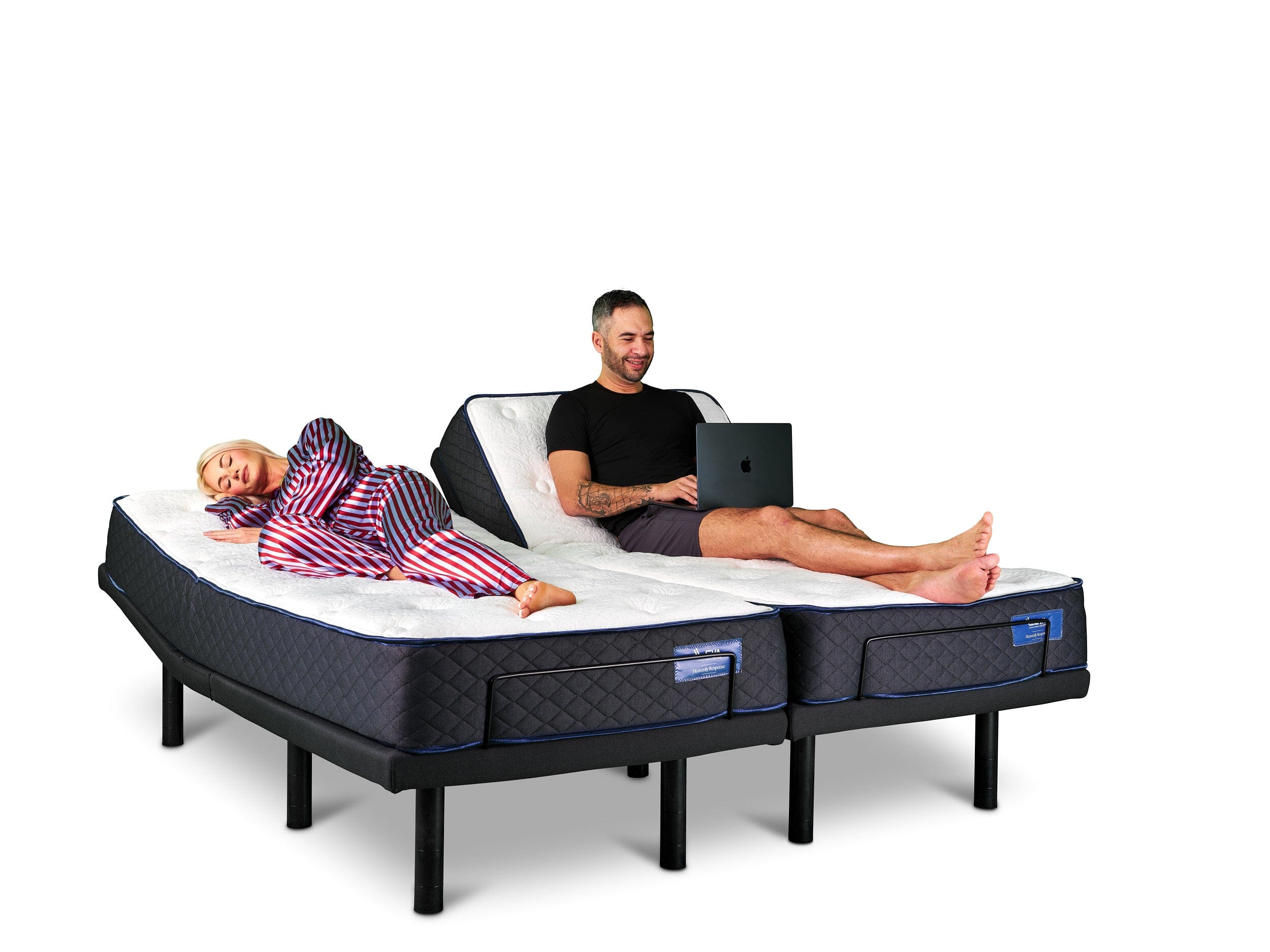
Active water-circulation cooling pads use a pump and tubing to circulate temperature-controlled water through a thin hydrolayer, which continuously pulls heat away from the body throughout the night. When paired with a split adjustable base, each side of the bed functions as an independent sleep environment. One partner can set their pad to 19°C while the other sets theirs to 23°C, and each can raise or lower their head and foot elevation independently.
The clinical case for active regulation continues to grow. A 2025 polysomnography study (Kim et al., Healthcare) found that real-time adaptive thermal regulation increased total sleep time by 27 minutes, improved sleep efficiency by 4.5 percentage points, reduced REM latency by 31 minutes, and increased REM percentage by 3.1 points versus constant-temperature or standard conditions. A randomized crossover trial reported that conductive body cooling via a high-heat-capacity mattress increased slow-wave sleep (N3) by a mean of 7.5 minutes per 7.5-hour night.
Canadian couples in Ontario and Alberta also need to consider delivery logistics. White-glove delivery services that include in-room setup, old-bed removal, and product tutorials remove the assembly burden that usually comes with large adjustable base purchases. Mattress compatibility, whether the mattress is all-foam or a hybrid pocket-coil, also affects how well an active pad integrates with the sleep surface, so buyers should verify compatibility before purchasing.
Find an active cooling system with white-glove delivery in your area
How to Evaluate Active Cooling Systems
Independent Temperature Zones for Each Partner
Start by confirming that the system offers per-side temperature control rather than a single setting for the whole mattress. Couples with different temperature preferences need independent temperature zones instead of a system that applies one setting to the entire mattress. After confirming that independent zones exist, check the temperature range each zone can reach and how precisely it can be adjusted. Then verify whether the system can both cool and heat, because Canadian winters create the opposite problem from summer nights and a cooling-only system may sit unused for part of the year.
Mattress Compatibility with Cooling Pads
Active cooling pads sit on top of or integrate with the mattress surface, so mattress construction affects performance. Thick memory foam can insulate against the pad’s effect. Dense memory foam mattresses exhibit high heat retention, which can reduce the efficiency of an active pad placed above them. Hybrid pocket-coil mattresses allow better airflow and generally pair more effectively with active thermal layers. Always confirm the manufacturer’s compatibility list before purchasing.
Noise Levels and Nighttime Comfort
Water-circulation pumps and air-based fans produce operational sound, which matters because noise tolerance varies significantly between individuals and between partners. One person may perceive the sound as white noise, while the other finds it disruptive. To evaluate whether a specific system will work for your household, request decibel specifications from the manufacturer and compare those numbers with verified owner reviews that describe noise during light sleep. Some systems allow pump speed adjustment, which changes both noise and cooling intensity and can help couples fine-tune comfort.
Bedding Retention on Moving Bases
Split adjustable bases change shape during use, and this movement can cause standard fitted sheets to slip off. Purpose-built sheets with deep pockets and reinforced elastic provide more reliable performance on moving bases. Duvet clips or separate per-side duvets prevent the shared blanket from pulling when one partner adjusts their position. Before purchasing, verify that the system supplier offers compatible bedding or that third-party options exist in Canadian sizing.
Delivery and Setup for Heavy Bases
Adjustable bases are heavy, multi-component systems that can be difficult to assemble without help. Curbside delivery leaves all assembly and setup to the buyer. White-glove delivery services that include in-room placement, frame assembly, leg-height adjustment, and a product tutorial create a very different ownership experience. Confirm whether white-glove service is available in your specific Ontario or Alberta postal code before completing a purchase.
Long-Term Maintenance and Support
Water-circulation systems need periodic reservoir cleaning to prevent mineral buildup and bacterial growth. Check the recommended maintenance schedule, the availability of replacement parts in Canada, and the warranty terms. Pay particular attention to whether the pump and electronics receive separate coverage from the pad itself, since these components often have different lifespans.
Practical Benefits for Couples Sharing a Bed
A functioning active split-base system delivers uninterrupted shared sleep rather than just a list of technical features. Beyond the objective sleep architecture improvements documented earlier, subjective sleep quality also improves: a 2025 La Trobe University crossover RCT (n=34) found that participants reported significantly better sleep quality (effect size d=0.92, p=0.001) when the active cooling system was on. When each partner controls their own thermal environment, the nightly negotiation over thermostat settings and blanket sharing that disrupts many couples’ sleep largely disappears.
A 2026 study published in SLEEP using wearable and under-mattress sensor data found that the hottest conditions were associated with roughly 15 to 17 minutes of lost sleep per night and about a 40% higher chance of a short night overall. Active regulation targets the source of that loss instead of masking it temporarily. Couples who have considered or already moved to separate rooms can often return to a shared bed when they gain independent thermal zones on a shared split base, because neither partner needs to compromise on comfort.
Explore solutions for shared sleep without compromise
Frequently Asked Questions
How long does active cooling maintain temperature compared with passive materials?
Passive materials such as gel-infused foam and phase-change materials provide a cooling effect only during the initial period of contact, typically 60 to 90 minutes, before they saturate with body heat and stop regulating temperature. After saturation, the sleep surface returns to ambient or body temperature and provides no further thermal benefit through the night.
Active water-circulation systems work differently. A pump continuously moves temperature-controlled water through channels in the pad and physically draws heat away from the body throughout the entire sleep period. The surface temperature therefore remains stable from the moment you fall asleep to the moment you wake up, instead of declining in effectiveness after the first hour. For hot sleepers, this difference often determines whether they stay asleep through the night or wake up around 2 a.m. from accumulated body heat.
Are split Queen configurations available with active cooling pads in Canada?
Split Queen adjustable bases are available in Canada, although they are less common than Split King configurations. A Split Queen divides a standard Queen mattress into two independently adjustable halves, which allows each partner to control their own elevation and, when paired with compatible active cooling pads, their own temperature zone. This configuration suits couples who want independent comfort settings but have a bedroom that cannot accommodate a King-sized footprint.
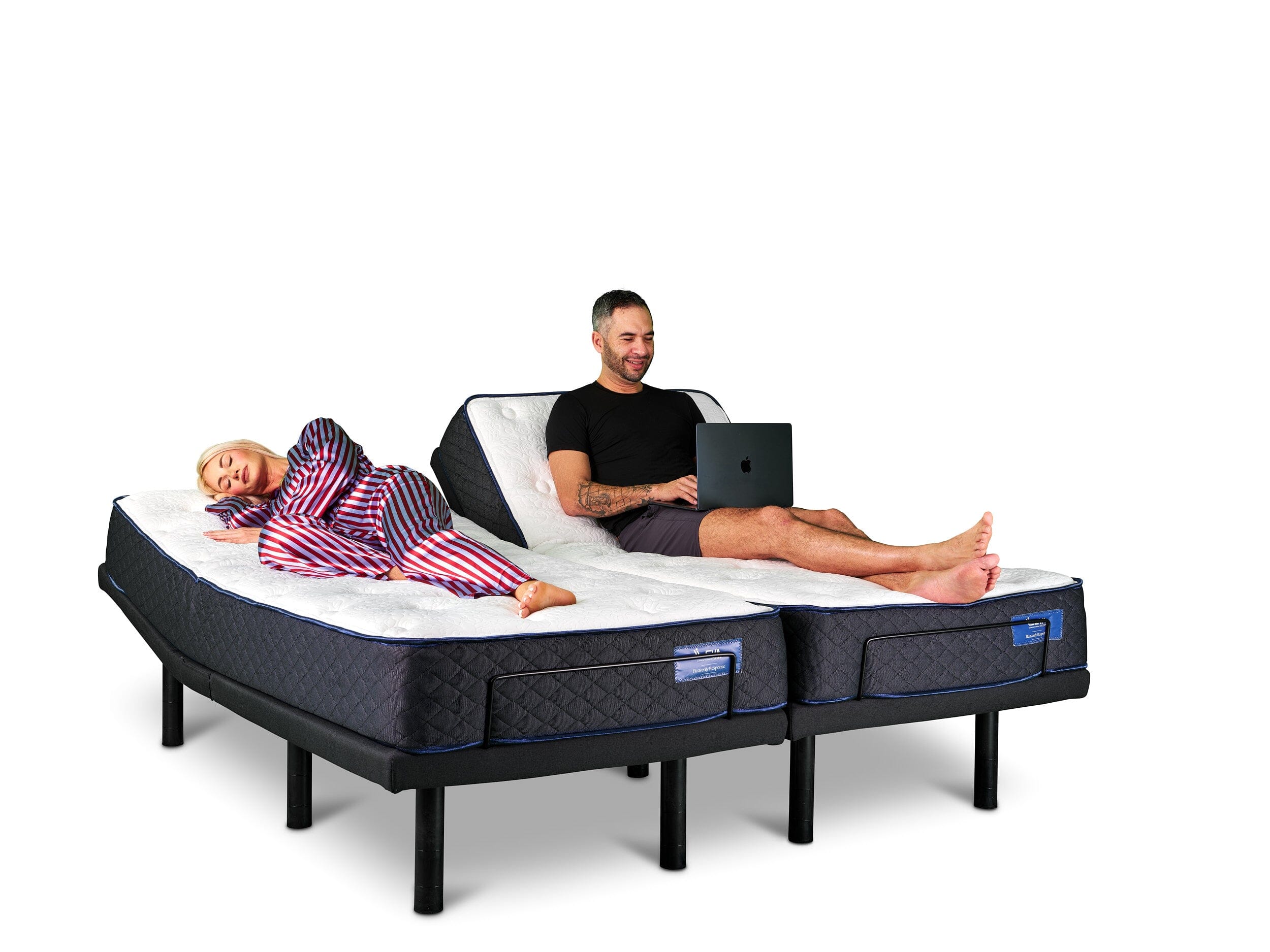
When evaluating a Split Queen with active cooling, confirm two details. First, check that the active cooling pad manufacturer offers a Queen-split configuration with two narrower pads rather than one full-width pad. Second, verify that the adjustable base and the cooling pad are mechanically compatible, meaning the pad can flex with the base during elevation changes without damaging the tubing or hydrolayer. Leva Sleep specializes in Split Queen adjustable bases and can advise on compatible thermal accessories for Canadian delivery addresses in Ontario and Alberta.
What noise levels should couples expect from integrated systems?
Noise output varies by system type and model. Water-circulation systems produce sound from the pump unit, which typically sits on a nightstand or the floor beside the bed. Pump noise in well-engineered systems is usually comparable to a quiet white-noise machine, although this varies by brand and pump speed setting. Air-based systems that use fans to move air through the pad tend to produce more audible airflow noise, similar to a small desktop fan.
For light sleepers or couples where one partner is more noise-sensitive, pump placement matters as much as the decibel rating. A pump positioned on the floor and away from the head of the bed is less intrusive than one placed on a nightstand at ear level. Before purchasing, request the manufacturer’s decibel specification at standard operating speed and look for verified owner reviews that specifically address noise during sleep rather than daytime testing.
How does white-glove delivery work for adjustable bases in Ontario and Alberta?
White-glove delivery for adjustable bases covers far more than dropping a box at the door. A trained delivery team brings the components directly to the bedroom, assembles the frame, sets the leg height to the customer’s preference, installs the mattress, and walks the customer through the controls and app setup before leaving. Old beds and packaging are removed from the home and then donated, recycled, or disposed of depending on condition.
Leva Sleep offers in-house white-glove delivery as a fee-based service for customers in Ontario and Alberta. Because Leva designs and assembles its systems locally, the delivery team has direct product knowledge rather than relying on a third-party logistics contractor unfamiliar with the specific base model. Customers should confirm that their postal code falls within the delivery zone when placing an order and should ask about scheduling windows and what the service includes at their address.
Conclusion: Choosing All-Night Cooling for Two People
The decision between a passive cooling mattress and an active temperature-regulating split-base system hinges on whether cooling must last all night for two people, independently. When that requirement exists, passive materials cannot reliably deliver the outcome. Their saturation ceiling reflects a physical constraint rather than a quality failure, because even high-end gel or PCM hybrids stop regulating temperature within the first hour or two.
Active split-base systems address that constraint directly. They maintain a stable surface temperature throughout the night, allow each partner to set their own thermal zone, and combine temperature control with independent elevation. These features remove two of the most common sources of couples’ sleep incompatibility in a single integrated system. Canadian couples in Ontario and Alberta should verify independent zone control, mattress compatibility, noise levels, bedding requirements, and white-glove delivery availability at their address before deciding.
Compare adjustable bed packages for Ontario and Alberta delivery