Written by: Matthew Timmins, Founder and Managing Director, Leva Sleep | Last updated: June 22, 2026
Key Takeaways
- Lower back pain often stems from poor spinal alignment on static mattresses that cannot adapt as sleep positions change.
- Medium-firm mattresses alone frequently fail to provide targeted lumbar support, especially for those with existing back conditions or asymmetrical weight distribution.
- Basic adjustable bases lack independent lumbar motors and true split configurations, which limits relief for couples with differing needs.
- Adjustable sleep systems with independent lumbar control, quiet motors, and split options actively maintain neutral spine alignment and reduce morning stiffness.
- Discover lasting relief and shared sleep tailored for Canadian couples at Leva Sleep.
Why Medium-Firm Mattresses Often Fail Lower Back Pain Sufferers
The dominant recommendation in mattress retail has long been the medium-firm mattress. For a segment of sleepers, this firmness level does provide adequate lumbar support. For many others, particularly those with existing lower back conditions, sciatica, or asymmetrical body weight distribution, it does not. A flat surface, regardless of its firmness rating, applies uniform pressure across the entire body. The lumbar spine, which curves inward naturally, receives no targeted support on a flat surface. It either sinks into the mattress or is held rigidly away from it, and both outcomes compromise neutral alignment.
Static zoned coil systems attempt to improve this situation by varying spring tension across different mattress regions. Zoning improves passive support compared to uniform coil systems, yet it remains a fixed solution applied to a dynamic problem. A sleeper who shifts from their back to their side changes their pressure distribution entirely, and a static zone cannot respond to that shift. When pain severity requires active, position-specific support, particularly for the lumbar region, passive mattress construction reaches its functional limit.
Why Flat Beds, Basic Adjustable Bases, and Sleep Divorce Do Not Solve the Problem
Basic adjustable bases improve on flat beds, yet they introduce their own limitations. Many entry-level adjustable frames offer only head and foot elevation with no independent lumbar motor. The lower back receives no targeted lift, even though this region matters most for many back pain sufferers. Many basic bases also operate as a single unit, which requires both partners to share the same elevation settings. When one partner needs head elevation for mild sleep apnea and the other prefers a flat position, a single-sided base forces a compromise that satisfies neither.
Motor noise often becomes a persistent complaint with lower-quality adjustable bases. Loud, jerky adjustments during the night undermine a system designed to improve sleep. Poor delivery experiences, particularly “bed in a box” models that arrive unassembled, add setup burden and reduce confidence in the product. When none of these options work, couples sometimes resort to sleeping in separate rooms, a pattern often called sleep divorce. Sleeping apart may reduce immediate disturbance, yet it introduces relationship strain and removes the shared sleep environment that many couples value.
The Solution for Couples: Adjustable Sleep Systems with Independent Lumbar Control
A true adjustable sleep system addresses the limitations of both static mattresses and basic adjustable bases through motorized, position-specific control. Head elevation, foot elevation, and independent lumbar motors work together to position the spine in neutral alignment across different sleep positions. Zero-gravity positioning, which elevates both the head and legs slightly above the heart level, relieves pressure on the lower spine and is achievable only on a motorized adjustable base.
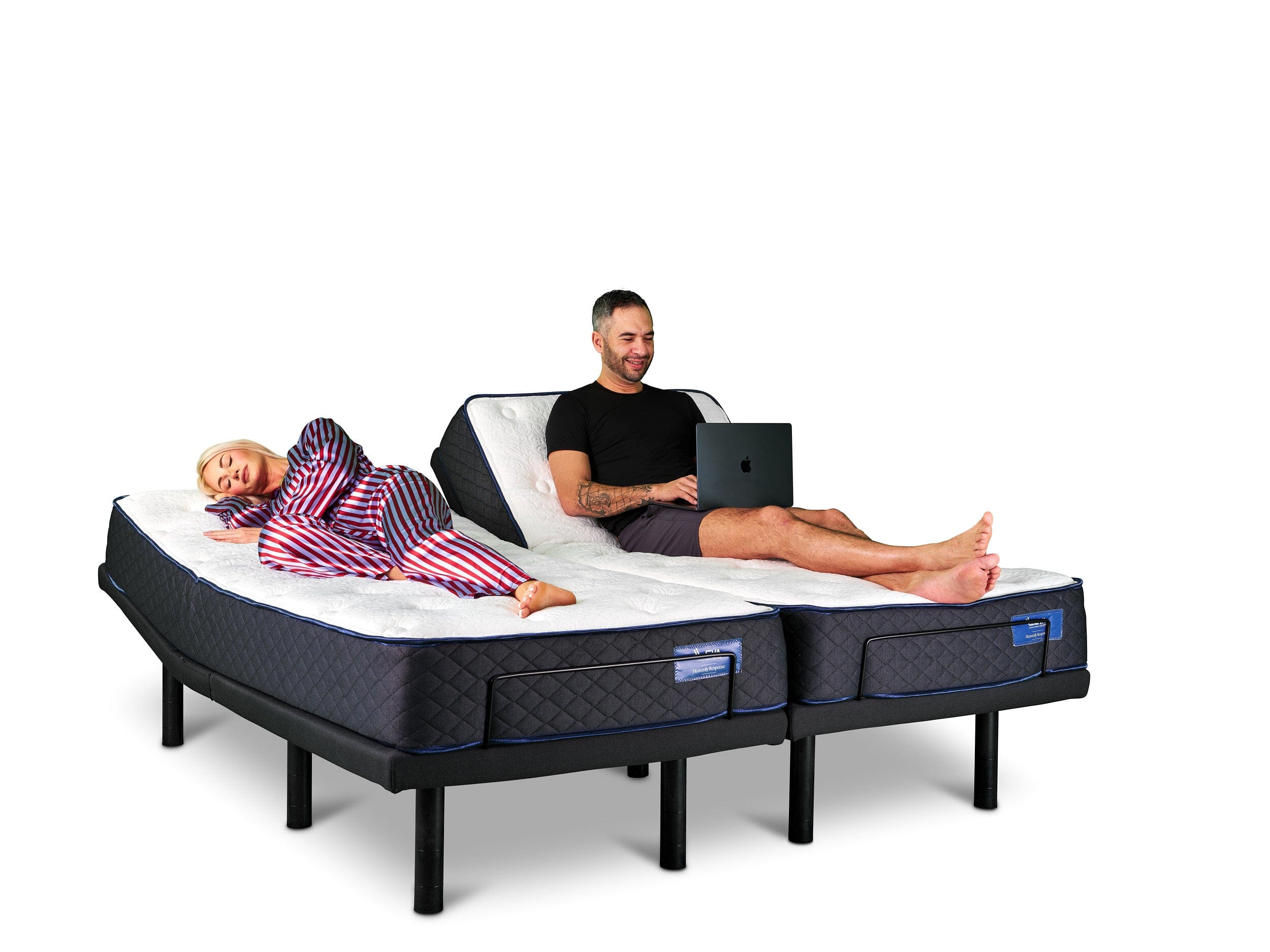
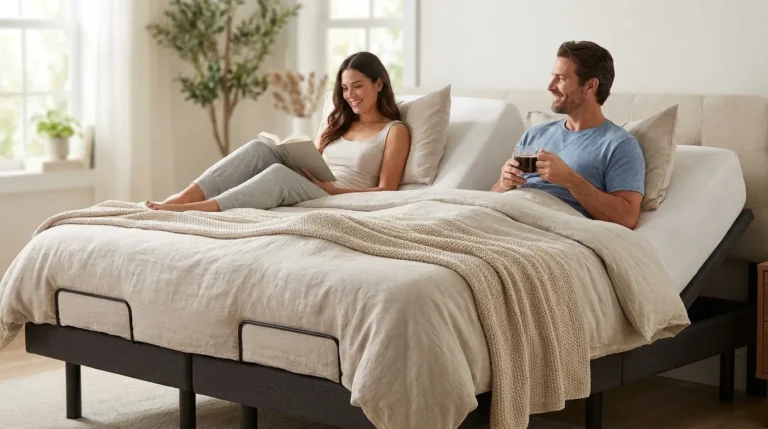
For couples, split configurations, Split King and Split Queen, consist of two independent motorized bases that allow each partner to control head, foot, and lumbar elevation on their side without affecting the other. This design directly accommodates mismatched sleep positions without requiring either partner to compromise. Leva Sleep offers both Split King and the less commonly available Split Queen, which is built to customer specifications for couples who want independent adjustability in a more space-conscious format.
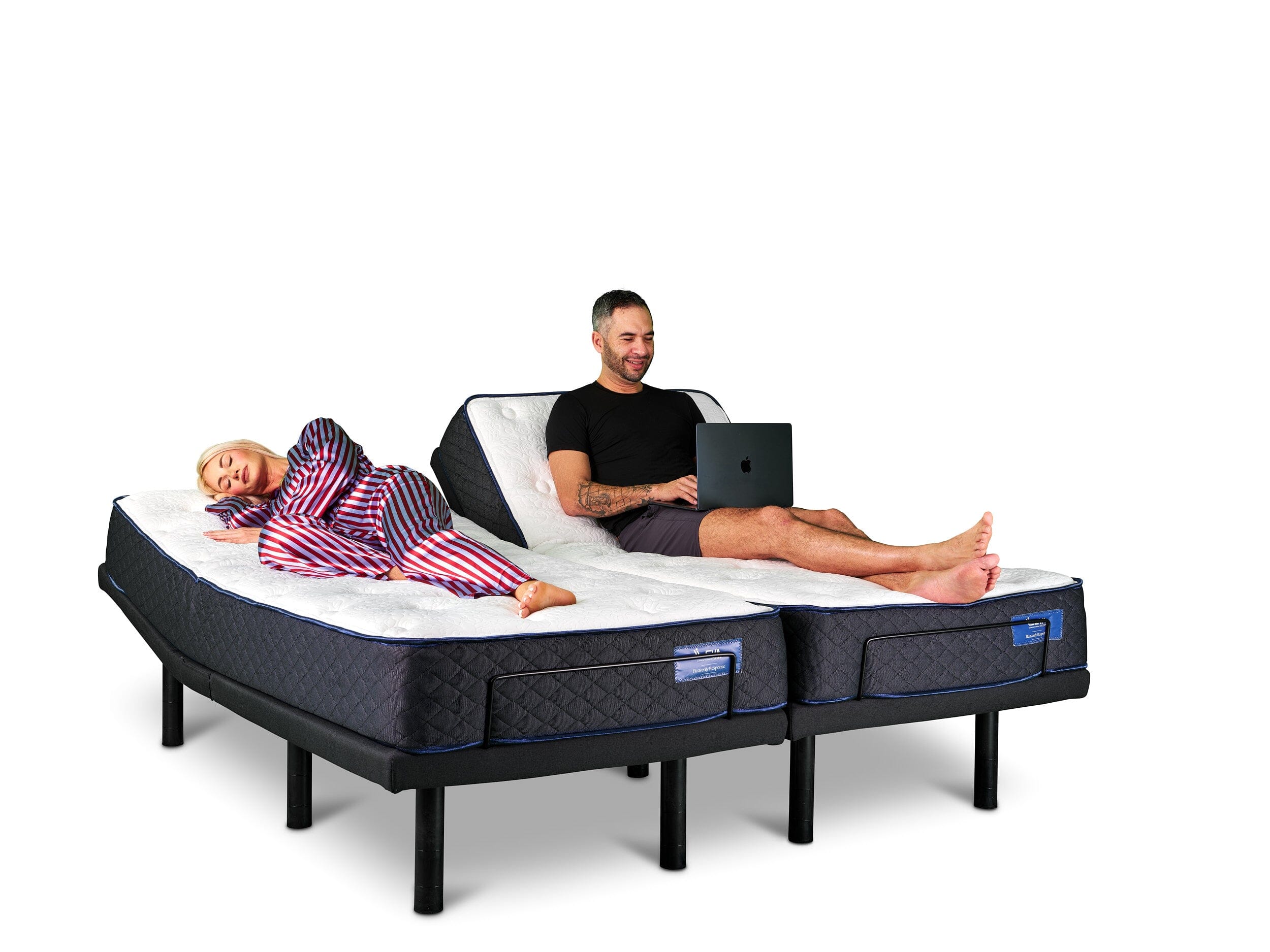
Shop Leva Sleep’s adjustable beds to compare Split King and Split Queen configurations with independent lumbar control.
How Independent Adjustability Supports Both Partners
When evaluating adjustable sleep systems for couple compatibility, start by confirming that the base offers genuinely independent controls for each side. A split configuration only helps when each side can move on its own. Each partner should be able to set head elevation, foot elevation, lumbar position, and massage settings without affecting the other side. App-based control via Bluetooth adds convenience and allows adjustments without disturbing a sleeping partner. Look for systems that support custom sleep position presets, vibrating alarms, and subtle anti-snore micro-adjustments, all operable from a smartphone instead of a shared remote.
Why Zoned Lumbar Motors Outperform Static Coils
The knee elevation that provides sciatic relief, discussed earlier in zero-gravity positioning, is an outcome that static coil zoning cannot replicate. The distinction between active motorized lumbar support and passive mattress zoning is fundamental. Static coils respond to weight and pressure; they do not initiate support. A lumbar motor raises the mid-section of the base to fill the natural inward curve of the lower back, which provides targeted lift that adjusts on demand. For back pain sufferers whose symptoms vary by night or by sleep position, this active capability separates a system that responds to their body from one that merely accommodates it.
Mattress Compatibility, Quiet Motors, and Temperature Control
Mattress compatibility determines how well an adjustable base can perform. Innerspring mattresses with rigid border wires resist flexion and can be damaged by repeated elevation. All-foam mattresses and hybrid pocket-coil mattresses with individually wrapped coils flex freely and suit adjustable systems. Check whether the mattress is designed specifically for use with adjustable bases so it remains supportive across the full range of elevation positions.
Motor quality directly affects sleep continuity. Quiet motors allow position adjustments during the night without the noise associated with lower-grade components. Temperature regulation also plays a role in comfort. An integrated heating and cooling pad allows each partner to set a preferred sleep temperature independently, which helps couples where one sleeps hot and the other sleeps cold.
Specialized Bedding and White-Glove Delivery Across Canada
Specialized bedding keeps an adjustable system comfortable and tidy. Standard fitted sheets are not designed for adjustable bases. As the base elevates, conventional sheets can pull free from the corners, bunch under the sleeper, and disrupt sleep. This is why fitted sheets need deep pockets and reinforced elastic to maintain a secure fit through significant elevation changes. For split configurations, duvet clips serve a similar function by preventing separation between split sides when partners use different positions simultaneously.
Delivery and setup also influence the overall experience. In-house white-glove delivery service, available in Ontario and Alberta, includes bedroom delivery, full assembly, leg height adjustment, a product tutorial, and removal of the existing bed. This service removes the assembly burden common with large-item purchases and helps ensure the system is correctly configured from the first night.
Real-World Benefits for Pain Relief and Shared Sleep
The practical outcomes of a well-configured adjustable sleep system appear in daily life. Reduced morning lower back stiffness is the most commonly reported benefit among users who move from static mattresses to motorized adjustable bases with lumbar support. Users also report that the ability to fine-tune lumbar elevation over time allows them to identify and maintain the position that works best for their specific condition, which supports sustained improvement rather than temporary relief.
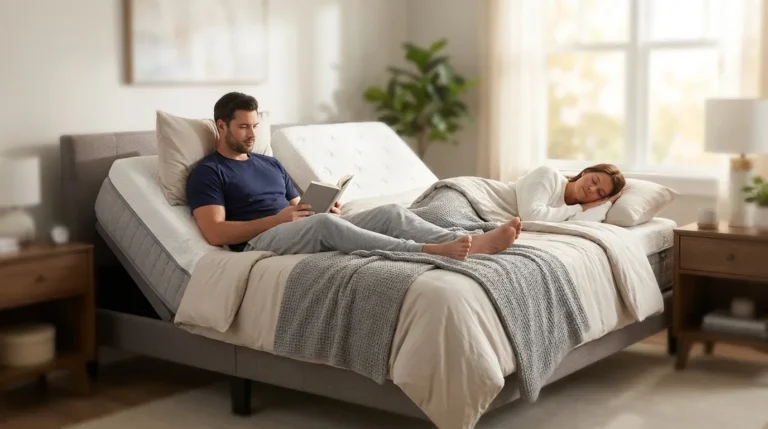
For couples, independent controls remove the nightly negotiation over position and firmness. Partners with mild sleep apnea benefit from gentle head elevation that opens the airway without requiring a CPAP mask. Post-surgical recovery, hip pain, and acid reflux often respond positively to targeted elevation. Sleep divorce, the decision to sleep in separate rooms, becomes unnecessary when each partner has full control over their side of the bed.
Shop Leva Sleep’s adjustable beds and find the configuration that fits both partners’ needs.
How to Compare Static Mattresses, Single-Sided Bases, and True Split Systems
When comparing sleep system options, consider the following criteria in sequence. First, determine whether the system provides active lumbar support or relies solely on passive mattress construction. Second, confirm whether it offers independent controls for each partner or whether one partner’s adjustment affects the other. Third, assess whether the motors are quiet enough to allow mid-night adjustments without waking either sleeper. Fourth, check whether the mattress and bedding are designed specifically for adjustable use or are standard products adapted after the fact. Fifth, review whether the purchase includes professional delivery and setup or whether the buyer must handle assembly.
A static medium-firm mattress addresses none of these criteria. A basic single-sided adjustable base addresses the first partially and fails the second entirely. A true split adjustable system with independent lumbar motors, purpose-built mattresses, and white-glove delivery addresses all five. Beyond meeting these criteria, consider how the provider delivers them. A vertically integrated model that designs, assembles, and delivers its systems in-house may allow for competitive pricing compared to luxury competitors while maintaining control over quality at each stage.
Frequently Asked Questions
What firmness do chiropractors typically recommend for lower back pain?
Chiropractors generally recommend a mattress firmness that maintains the natural curvature of the lumbar spine without allowing excessive sinkage or creating pressure points. Medium-firm often serves as a starting point, yet the appropriate firmness varies by body weight, sleep position, and the specific nature of the back condition. Side sleepers typically require a slightly softer surface to accommodate hip and shoulder width, while back sleepers often benefit from firmer support. Any static firmness recommendation has a limitation because it cannot account for position changes during the night. An adjustable base with lumbar motor support allows the sleeper to fine-tune their position actively, which is why many chiropractors and physiotherapists now recommend adjustable systems for patients with chronic lower back pain rather than prescribing a single firmness level.
How does an adjustable base help with sciatica or hip pain?
Sciatica involves compression or irritation of the sciatic nerve, which runs from the lower back through the hips and down each leg. Sleeping flat can increase pressure on the lumbar spine and the surrounding nerve tissue. An adjustable base allows the sleeper to slightly elevate the knees, which reduces tension on the lower back and takes pressure off the sciatic nerve. For hip pain, elevating the upper body and adjusting the lumbar position redistributes body weight away from the affected hip. These adjustments are not possible on a flat mattress and represent one of the primary clinical reasons adjustable bases are recommended for sleepers with these conditions.
What should I expect from a 60-night trial in Canada?
A 60-night trial gives sleepers time to adapt to a new sleep system and assess its impact on pain and sleep quality. The first two to four weeks usually form an adjustment period, particularly for those moving from a flat mattress to an adjustable base. During this time, experiment with different lumbar, head, and foot elevation settings to identify the optimal configuration. By nights 30 to 60, most sleepers have established a preferred position profile. Use the trial period to evaluate morning pain levels, sleep continuity, and partner compatibility. Leva Sleep offers a 60-night trial for customers in Ontario and Alberta so they have adequate time to make this assessment with the full system in place, including bedding and accessories.
Can split configurations really prevent sleep divorce?
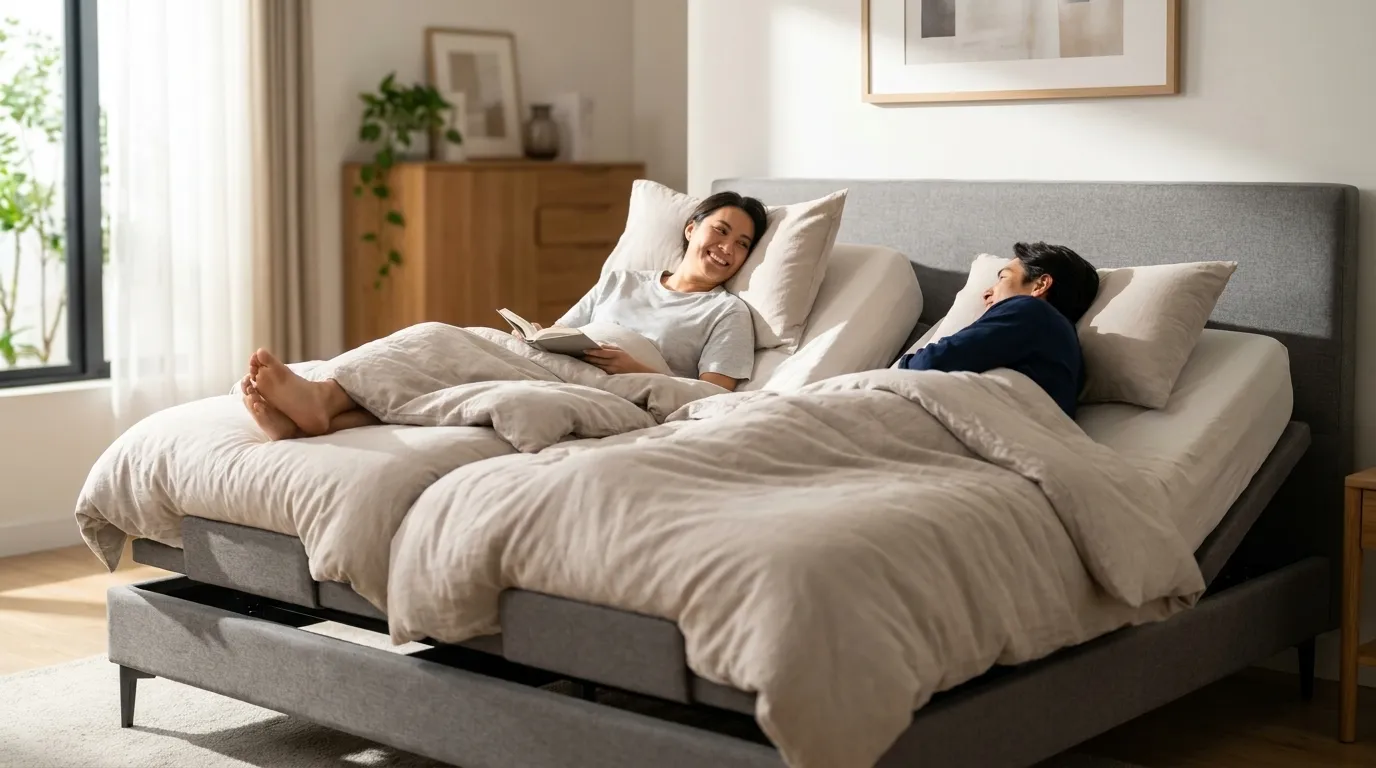
Sleep divorce, the decision to sleep in separate rooms due to snoring, movement, or incompatible comfort preferences, often occurs when couples cannot find a shared sleep solution. Split adjustable configurations address the root causes by giving each partner complete control over their side of the bed. One partner can elevate their head to reduce snoring while the other sleeps flat. One can activate lumbar support for back pain while the other uses zero-gravity positioning for recovery. Firmness preferences are addressed through mattress selection on each side. Split configurations can help couples who have been sleeping separately return to a shared bed after adopting a split adjustable system. The configuration does not require compromise and instead removes the need for it.
Conclusion: Choose Active Lumbar Support for Long-Term Relief
The best mattress for lower back pain is not defined by a single firmness rating. It is defined by a system’s ability to maintain neutral spinal alignment across different sleep positions, accommodate two partners with different needs, and do so quietly and reliably night after night. Static mattresses, regardless of their construction quality, cannot meet this standard. Basic adjustable bases come closer yet fall short on lumbar specificity and couple independence.
Evaluating a sleep system on the criteria that matter, including independent lumbar motors, split configurations, quiet engineering, purpose-built mattresses and bedding, and professional Canadian delivery, consistently points toward true adjustable sleep systems. Leva Sleep’s vertically integrated model, built on over eight years of adjustable bed specialisation and more than 25,000 Canadian customers, delivers this standard at a price point that makes the upgrade accessible.
Shop Leva Sleep’s adjustable beds and take the first step toward lasting lower back relief and shared sleep for you and your partner.