Written by: Matthew Timmins, Founder and Managing Director, Leva Sleep | Last updated: June 29, 2026
Key Takeaways
- Side sleepers sleep most comfortably on a medium or medium-soft hybrid mattress (firmness 4–6) with zoned lumbar support that eases shoulder and hip pressure while keeping the spine aligned.
- Firmness should match body weight. Lighter sleepers usually need softer surfaces, while heavier sleepers need firmer cores that prevent deep sinkage.
- Zoned pocket-coil hybrids with at least 5 cm of pressure-relieving foam give targeted contouring for hip and shoulder pain while still supporting the spine.
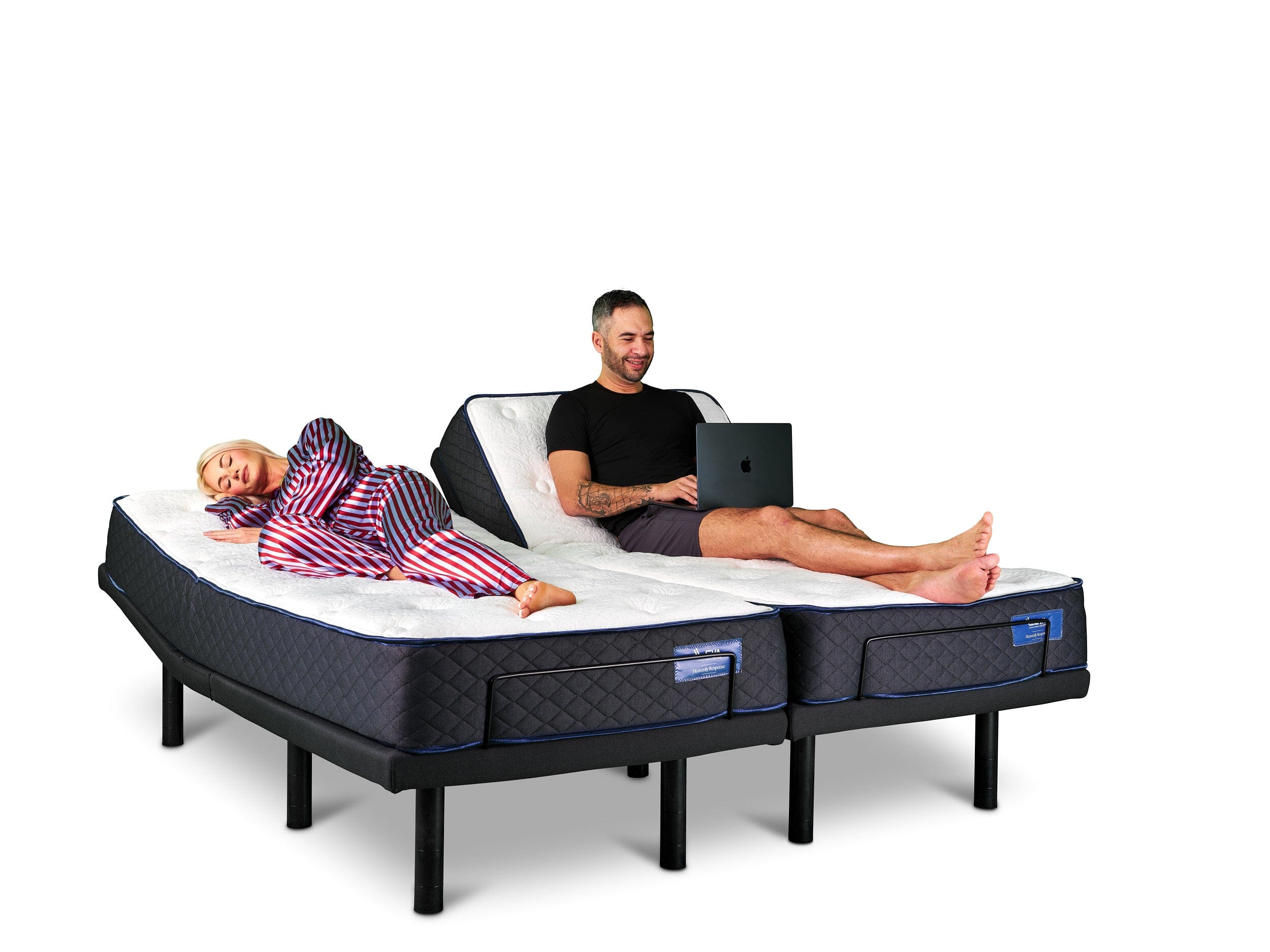
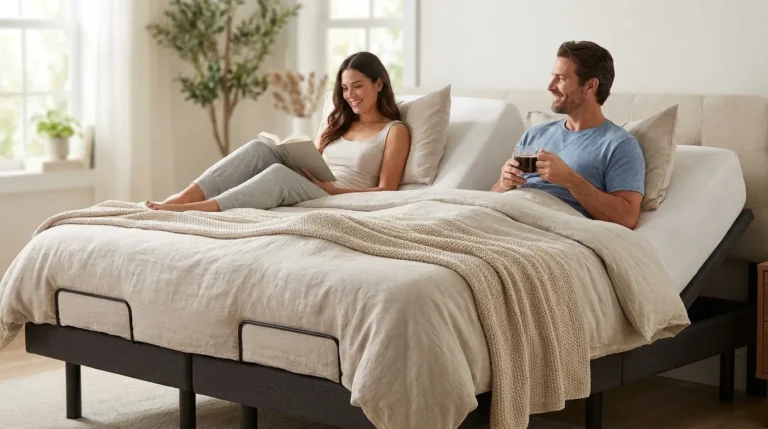
- Split adjustable bases let couples customize firmness, elevation, and temperature on each side of the bed for personal comfort.
- Leva Sleep offers premium hybrid mattresses and split adjustable packages at 30–50% less than luxury competitors. Explore Leva Sleep adjustable bed packages to find a setup that matches how you sleep.
Ideal Firmness and Support Profile for Side Sleepers
Side sleepers sleep best on a medium or medium-soft hybrid mattress, typically rated 4–6 on a 10-point firmness scale, with zoned lumbar support and pressure-relieving comfort foams. The softer comfort layer lets the shoulder and hip sink just enough to keep the spine in a neutral curve. A firmer zoned support core then stops the torso from collapsing into the mattress. Pocket-coil hybrid construction adds targeted rebound and airflow that all-foam mattresses alone usually cannot match.
What Firmness Do Side Sleepers Need?
Firmness preference for side sleepers varies by body weight. Body weight changes how deeply a sleeper compresses a mattress, which directly affects whether a given firmness relieves or creates pressure points. Lighter sleepers compress less material and need a softer surface to achieve adequate contouring. Heavier sleepers compress more and require a firmer support core to prevent excessive sinkage that misaligns the spine. The table below shows how to match your body weight to an appropriate firmness range.
| Body Weight | Recommended Firmness | Key Reason |
|---|---|---|
| Under 130 lb (59 kg) | Soft to Medium-Soft (3–5) | Less body mass means less compression, so a softer surface is needed to cradle shoulders and hips |
| 130–230 lb (59–104 kg) | Medium to Medium-Firm (5–6) | Balanced compression, with medium hybrids providing contouring without excessive sinkage |
| Over 230 lb (104 kg) | Medium-Firm (6–7) | Greater compression requires a firmer support core to maintain spinal alignment |
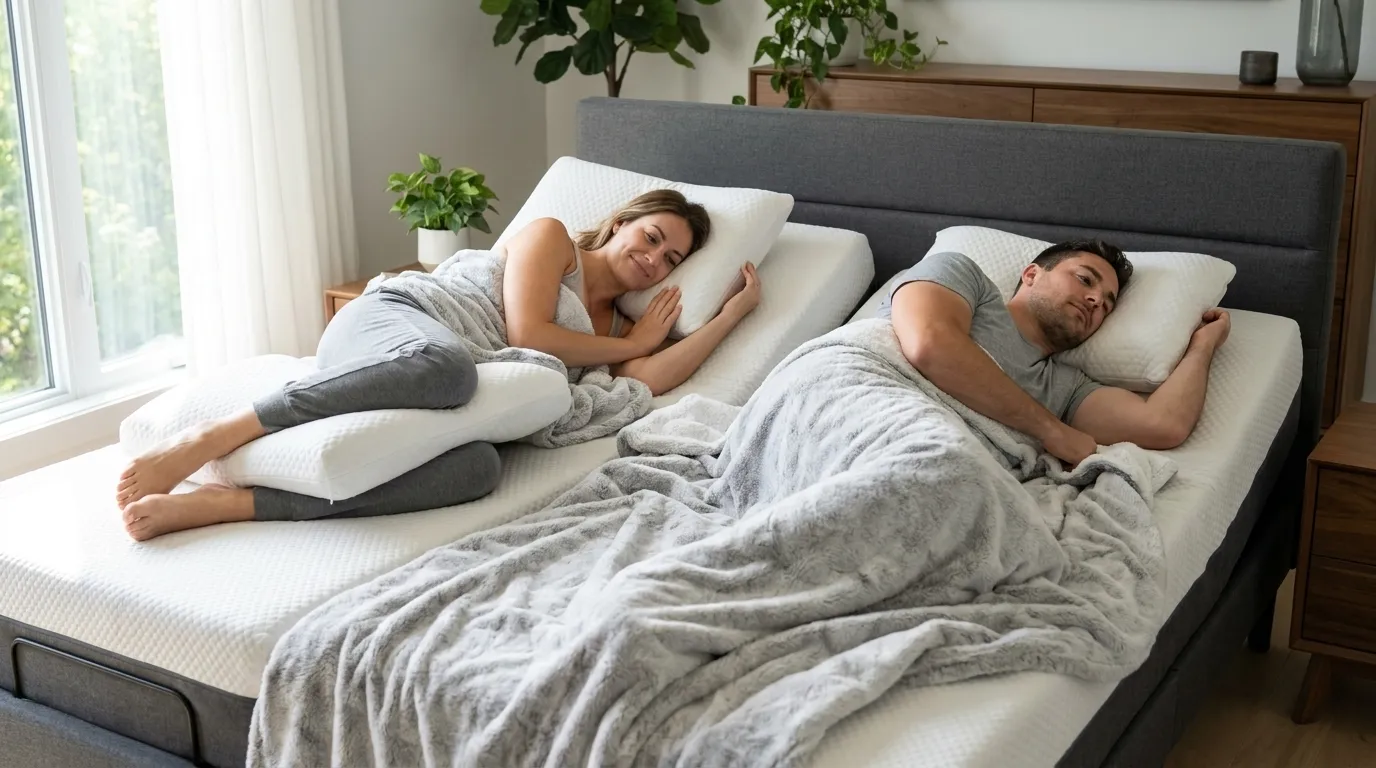
Couples frequently fall into different weight categories, which often explains why a single shared mattress fails both partners at once. A split adjustable configuration addresses this directly by letting each side pair its own firmness and elevation settings.
Best Mattresses for Hip Pain
Hip pain in side sleepers usually comes from insufficient pressure relief at the greater trochanter, the bony prominence of the outer hip. A mattress that feels too firm does not let the hip sink adequately, which creates a pressure point that restricts circulation and triggers pain. A mattress that feels too soft lets the hip sink so deeply that the lumbar spine curves sideways out of alignment.
Zoned support designs solve both problems. A softer zone beneath the hip allows controlled sinkage, while a firmer lumbar zone keeps the spine from drifting sideways. Hybrid mattresses with individually wrapped pocket coils deliver this zoning more precisely than uniform all-foam constructions, because manufacturers can vary coil gauge and count by zone.
When evaluating mattresses for hip pain, start with the comfort layer and look for at least 5 cm of pressure-relieving foam or latex to cushion the greater trochanter. That surface contouring then needs support from a zoned coil system with different firmness levels across hip, lumbar, and shoulder regions. Finally, confirm that the cover material stretches and flexes enough not to restrict the contouring of the layers beneath it.
Popular Canadian mattress brands such as Douglas and Endy offer hybrid options (and Douglas foam) with Queen prices ranging from C$799 to C$1,495. Leva Sleep’s hybrid mattresses, designed specifically to flex with adjustable bases, are positioned at 30–50% less than luxury competitors such as Tempur-Pedic while still incorporating the zoned construction that hip-pain sufferers need.
Best Mattresses for Shoulder Pain
While hip pain stems from insufficient pressure relief at the greater trochanter, shoulder pain in side sleepers comes from the same mechanical problem. The surface does not let the shoulder sink enough to keep the cervical and thoracic spine in a neutral line. The shoulder becomes the first contact point when you lie on your side and carries a large share of body weight relative to its surface area.
Mattresses that reduce shoulder pain share several construction features. They use a plush or medium-soft comfort layer that lets the shoulder compress into the mattress. Zoned hybrid designs often include a shoulder-specific softer zone. Beneath that zone, the mattress still needs enough overall support to stop the entire upper body from rolling forward.
Leva Sleep’s hybrid mattresses are built to work in tandem with adjustable bases, so the comfort layers keep performing even when the head of the bed is elevated. Standard mattresses that are not rated for adjustable bases often lose support or bunch at the hinge points. Leva’s systems make shoulder-specific pressure relief accessible without the price barrier of premium-tier competitors.
Pair a Leva Sleep hybrid mattress with an adjustable base to give each partner independent control over elevation and comfort.
What Mattress Do Doctors Recommend for Side Sleepers?
Clinical guidance on mattress selection for side sleepers consistently points toward medium-firmness hybrids with zoned lumbar support. Orthopaedic and physiotherapy recommendations focus on maintaining a neutral spinal curve throughout the night. That goal requires a mattress that contours at the shoulder and hip while resisting collapse at the waist.
Medium-soft to medium mattresses often work well for side sleepers because they balance pressure relief with spinal support. Clinicians who treat sleep apnea and acid reflux also recommend pairing any mattress with an adjustable base that can elevate the head of the bed. Head elevation reduces airway obstruction and gastric reflux without forcing the sleeper to stack multiple pillows that misalign the neck.
Mattress Firmness by Body Weight
The clinical guidance above reinforces the earlier weight-based analysis. Firmness must match body weight to keep the spine aligned. The table below consolidates this weight-based firmness guidance into a practical reference for Canadian buyers comparing mattress options. These ranges provide starting points. Individual anatomy, health conditions, and partner weight differences may shift the ideal firmness by one level in either direction.
| Body Weight | Firmness Range | Mattress Type | Primary Benefit for Side Sleepers |
|---|---|---|---|
| Under 130 lb | Soft – Medium-Soft (3–5) | All-foam or plush hybrid | Deep shoulder and hip contouring |
| 130–230 lb | Medium – Medium-Firm (5–6) | Zoned pocket-coil hybrid | Balanced pressure relief and lumbar support |
| Over 230 lb | Medium-Firm (6–7) | Reinforced hybrid with high-density base foam | Prevents excessive sinkage, maintains spinal alignment |
These weight-based firmness ranges explain why a single shared mattress often fails both partners. When partners fall into different weight categories, one person’s ideal firmness can become the other’s pressure point. A split adjustable system solves this by letting each side of the bed be configured independently, so each person gets a surface tailored to their body.
Pairing Mattresses with Split Adjustable Bases
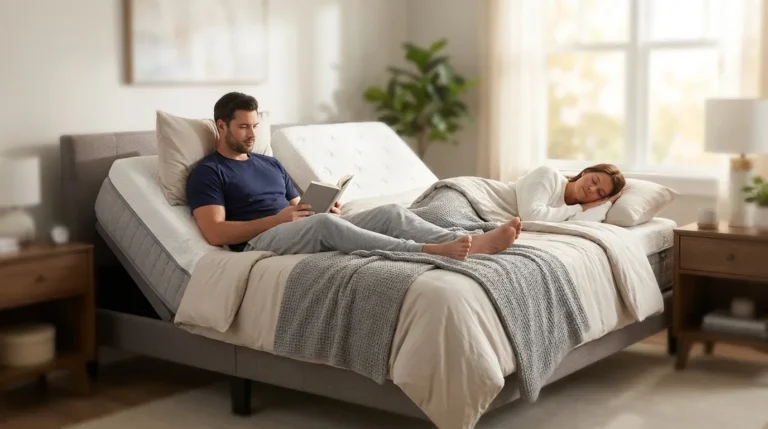
A pressure-relieving mattress handles the static part of side-sleeper comfort. An adjustable base handles the dynamic part by letting you change head and foot elevation, activate lumbar support, and make small adjustments during the night without waking your partner.
Leva Sleep’s Split Queen and Split King adjustable bases use whisper-quiet German motors and give each side independent head and foot elevation controls. A dedicated lumbar support zone can raise or lower to fill the gap between the mattress and the lower back, which matters for side sleepers who sometimes roll onto their back. Each side is controlled independently through the Leva Sleep app, which also stores custom positions and offers vibrating alarms and massage settings.
The app-controlled anti-snore mode, arriving in spring 2026, will detect snoring through the base’s sensors and make gentle head-elevation micro-adjustments to open the airway. These changes occur without waking the snoring partner or disturbing the other side of the bed. Optional temperature-regulation pads can be added to each side separately, which helps when one partner sleeps hot and the other sleeps cool.
Leva Sleep is one of the only Canadian retailers offering a Split Queen configuration, a meaningful option for couples in smaller bedrooms who want independent adjustability without the footprint of a Split King. All systems are assembled locally and delivered with in-house white-glove service to Ontario and Alberta, including setup, leg-height adjustment, a product tutorial, and removal of the old bed.
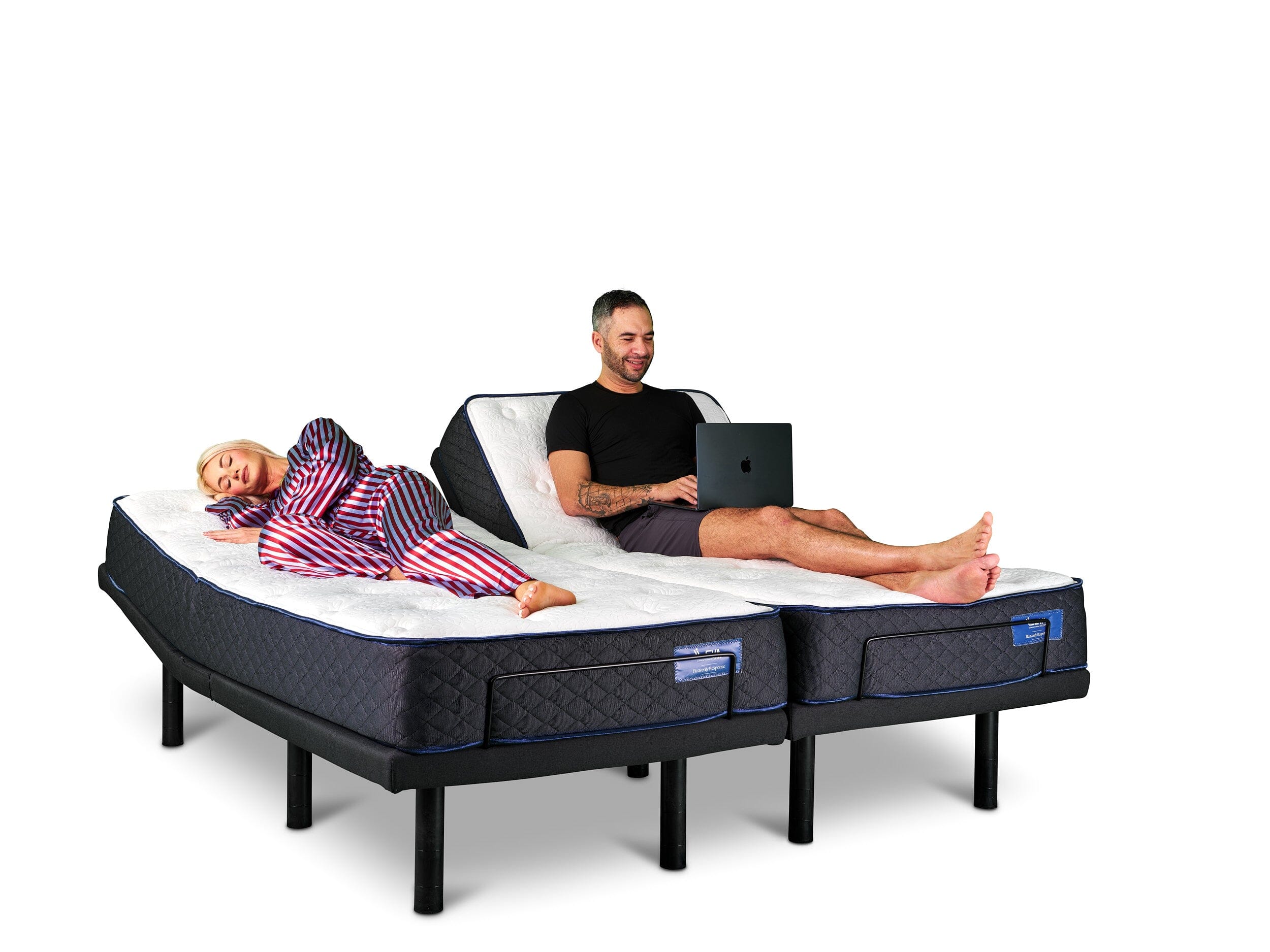
Leva’s adjustable packages deliver the full system, including adjustable base, compatible hybrid mattress, and purpose-built bedding accessories, without the Tempur-Pedic price tag.
Compare Leva Sleep Split Queen and Split King packages to see which configuration fits your room and your routine.
Frequently Asked Questions
Can side sleepers use adjustable beds?
Side sleepers can benefit significantly from adjustable beds. Slight head elevation reduces pressure on the shoulder by shifting some body weight toward the torso. Lumbar support features fill the natural gap between the waist and the mattress surface, which is more pronounced in side sleepers with a strong hip-to-waist curve. Side sleepers who also snore or experience acid reflux or mild sleep apnea gain extra relief from head elevation, which opens the airway and reduces gastric reflux without awkward pillow stacking that strains the neck.
What mattress works best with an adjustable base?
Mattresses rated for adjustable bases need enough flexibility to bend repeatedly at the head and foot sections without damaging internal components. Pocket-coil hybrids with individually wrapped coils flex more easily than continuous-coil or Bonnell-coil designs. All-foam mattresses also pair well with adjustable bases. Innerspring mattresses with connected coil systems usually do not work properly. Leva Sleep designs its hybrid and all-foam mattresses specifically for use with its adjustable bases, so the comfort layers keep performing and the cover does not buckle or crease during repeated elevation cycles.
How do I know if I need a split configuration?
A split configuration makes sense when partners have clearly different firmness preferences, elevation needs, temperature preferences, or schedules. One partner may snore or need head elevation while the other prefers a flat surface. A split setup also helps when one partner has a medical condition, such as sleep apnea, acid reflux, or post-surgical recovery, that requires a specific sleeping position. Leva Sleep’s Split Queen is the only split-adjustable option in a Queen footprint from a Canadian specialist, which makes it especially useful for couples in standard-sized bedrooms.
Does Leva Sleep deliver to Ontario and Alberta?
Leva Sleep offers in-house white-glove delivery to Ontario and Alberta. This service includes scheduled delivery to the bedroom, full assembly of the adjustable base and mattress, leg-height customization, a product tutorial that covers the app and all base features, and removal of the old bed, which is donated or recycled when possible. This service carries a separate fee and differs from standard freight delivery. Customers outside Ontario and Alberta can contact Leva Sleep directly to discuss available options.
Conclusion: Choosing the Right Mattress and Base for Pain-Free Sleep
Side sleepers managing shoulder or hip pain need two elements working together. A medium or medium-soft hybrid mattress with zoned lumbar support should contour to pressure points without letting the spine collapse. Couples with differing needs then benefit from an independently adjustable base that lets each partner fine-tune elevation, lumbar support, and temperature.
The decision framework stays simple. Start with body weight to select a firmness range. Confirm that the mattress is rated for adjustable-base use. Decide whether differences in partner needs, such as firmness, elevation, temperature, or snoring, make a split configuration worthwhile. Then compare total system cost, delivery quality, and post-purchase support.
Leva Sleep’s Split Queen and Split King packages address every step in that framework with compatible hybrid mattresses, whisper-quiet independent bases, app-controlled anti-snore mode (spring 2026), temperature-regulation pads, and white-glove delivery across Ontario and Alberta, while delivering luxury-tier features at mid-market pricing.
Find your Leva Sleep split adjustable package and match it to your bedroom, budget, and both partners’ sleep needs.