Written by: Matthew Timmins, Founder and Managing Director, Leva Sleep
More than 5.4 million Canadians deal with sleep apnea, a condition that disrupts breathing during sleep and affects both health and relationships. For couples, finding the right sleep setup is key to managing these challenges while maintaining closeness. Adjustable beds offer a practical way to address sleep apnea, helping both partners rest better together. This guide explores how specific sleep positions and adjustable bed technology can improve your nights.
What Is Sleep Apnea, and Why Does Sleep Position Matter?
Sleep apnea interrupts breathing during the night, impacting not just the person with the condition but also their partner. It’s more than snoring, it’s a health concern that can strain relationships due to poor sleep quality. The way you sleep plays a big role in managing these interruptions.
Why Sleeping on Your Back Worsens Apnea
Lying flat on your back, or the supine position, often makes sleep apnea worse. Gravity pulls the jaw and throat muscles down, narrowing the airway and increasing blockages. Many people roll onto their backs during deep sleep without realizing it, making symptoms more severe. This position disrupts sleep for both partners due to louder snoring and frequent breathing pauses. The airway is least stable when lying on your back, leading to more collapses.
How Side Sleeping Eases Apnea Symptoms
Sleeping on your side, known as the lateral position, can help reduce sleep apnea symptoms naturally. This position lessens the severity of both central and obstructive sleep apnea, particularly for those with milder cases or smaller neck sizes. Gravity works to keep the airway open instead of closing it. For couples, side sleeping also means less snoring and fewer disruptions, fostering a quieter shared space. Staying in this position all night, though, can be tough without support.
Benefits of Elevating Your Upper Body
Raising your head and upper body while you sleep is a proven way to manage sleep apnea. Elevating at a 30-degree angle, along with side sleeping, greatly improves airway stability in severe cases. This setup reduces the effort needed to breathe. Such positioning can cut airway pressure by about 50% compared to lying flat on your back. For couples, this means better sleep quality without needing separate beds. Explore Leva Sleep’s adjustable beds to see how precise elevation can improve your rest.
Why Couples with Apnea Need Adjustable Beds
Managing sleep apnea goes beyond just using a CPAP machine. Adjustable beds offer control over your sleep position, helping couples tackle apnea while still sharing a bed. Unlike flat beds, which limit positioning options and often force tough choices between health and togetherness, adjustable beds allow each partner to adjust their side for comfort and therapy.
Flat beds can push couples toward “sleep divorce,” or separate bedrooms, to address immediate comfort issues, but this can affect closeness. Adjustable beds remove that conflict by providing tailored support. Elevating the upper body can lower the CPAP pressure needed for effective treatment, potentially reducing reliance on medical devices while improving sleep.
How Leva Sleep Supports Couples Managing Apnea in Canada
Leva Sleep focuses on adjustable bed solutions designed for Canadian couples dealing with sleep apnea. Their products integrate every detail, from the frame to the bedding, to support better sleep positions and overall comfort.
Custom Comfort with Split King and Split Queen Beds
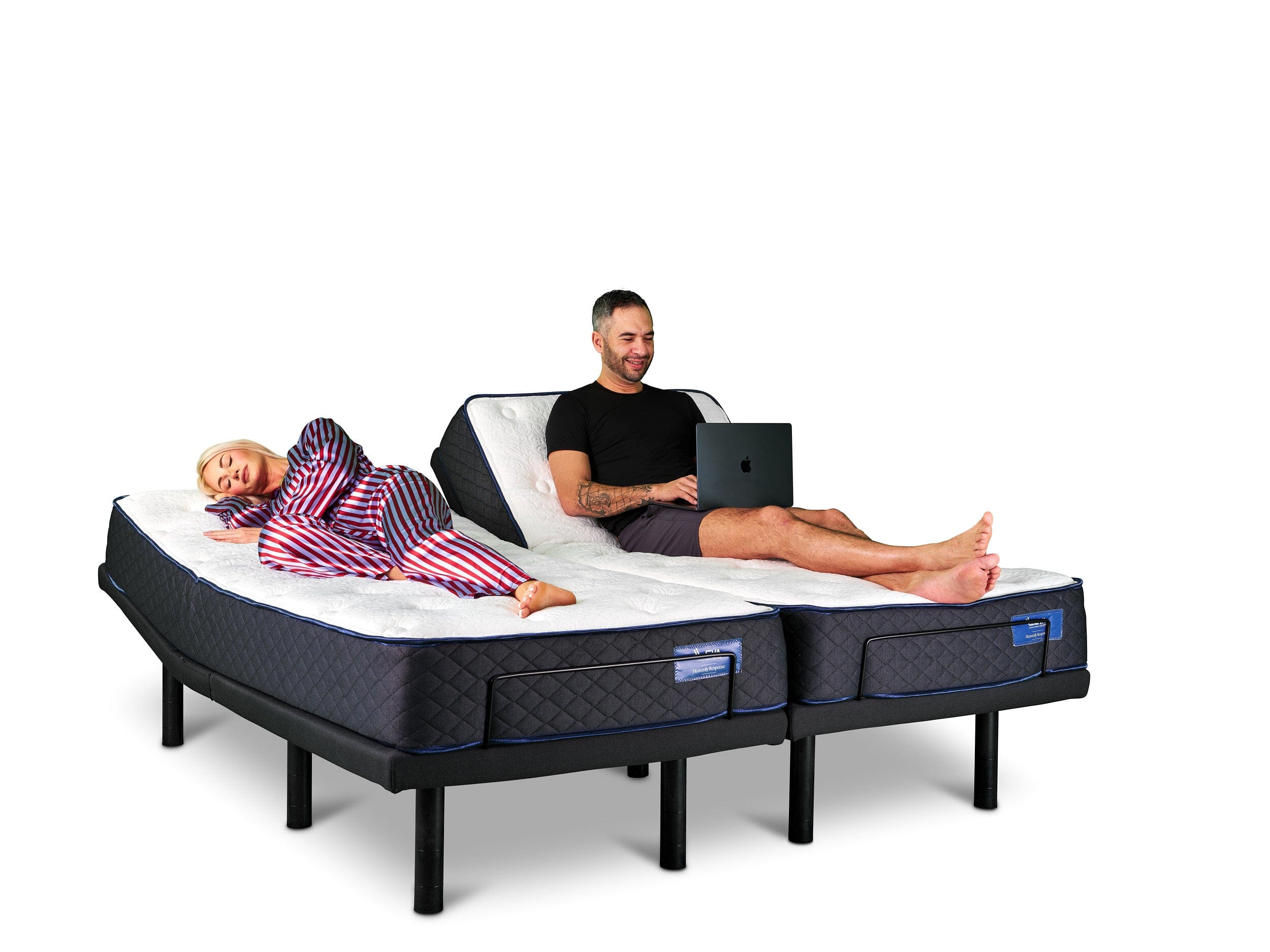
Leva Sleep’s Split King and Split Queen beds let each partner control their side independently. You can adjust elevation, firmness, or massage settings without affecting the other person. The Split Queen is ideal for smaller spaces, common in urban Canadian homes, offering the same benefits in a compact size. This setup ensures both partners get the support they need while sharing a bed.
Reduce Snoring Automatically with Anti-Snore Mode
Leva Sleep’s Anti-Snore Mode detects snoring and gently adjusts head elevation to ease breathing issues without waking either partner. This feature helps prevent snoring from becoming a major disturbance, supporting better sleep for both of you and maintaining a peaceful bedroom environment.
Quiet Adjustments with Precision Engineering
With German-engineered, whisper-quiet motors, Leva Sleep beds adjust positions smoothly without noise or jolts. The Pillow Tilt Motor fine-tunes head and neck alignment for better airway support, avoiding the disruptions common with less advanced adjustable beds. Check out Leva Sleep’s adjustable beds to experience this thoughtful design firsthand.
How to Optimize Sleep Positions for Apnea with Adjustable Beds
Using an adjustable bed effectively means understanding how different positions target sleep apnea symptoms. Fine-tuning your setup throughout the night can offer benefits that static beds simply can’t match.
Perfecting Side Sleeping for Better Breathing
Side sleeping often reduces apnea episodes, especially in mild cases. This position can lessen obstructions on its own for some people. Adjustable beds help by adding slight elevation and lumbar support to maintain spinal alignment and keep the airway open. Leva Sleep’s app lets you save your ideal side-sleeping setup, ensuring consistency even as you shift during the night.
Finding the Right Elevation for Back Sleeping
If you prefer sleeping on your back or end up there during sleep, elevating your upper body between 20 and 30 degrees can stabilize your airway. Leva Sleep beds allow small, precise adjustments to help you find the best angle for comfort and symptom relief, adapting to your needs over time.
Trying the Zero Gravity Position for Added Relief
The Zero Gravity position, inspired by NASA, raises both your head and legs to align your spine neutrally. This can improve circulation and ease breathing effort, offering a fresh option for apnea relief. Couples can adjust independently to this position, ensuring both find a comfortable setup without compromise.
More Than Positioning: Leva Sleep’s Complete Sleep Solution
Managing sleep apnea involves your entire sleep setup, not just position. Leva Sleep designs everything, from mattresses to accessories, to work with adjustable beds for consistent comfort.
Bedding Designed for Adjustable Beds
Regular bedding often slips or bunches on adjustable beds, causing frustration. Leva Sleep offers fitted sheets with deep pockets and extra elastic, plus duvet clips, to stay secure through position changes. These details make it easier to stick with therapeutic positions night after night.
Tech for a Personalized Sleep Environment
Leva Sleep integrates heating and cooling pads for individual temperature control, vital when partners have different preferences that affect sleep quality. Their app lets you manage positioning, temperature, and massage settings, saving profiles for quick, consistent adjustments.
Hassle-Free Setup with White-Glove Delivery
Leva Sleep’s white-glove delivery includes professional setup and training on using the bed’s features. They also remove your old bedding, smoothing the switch to adjustable technology so you can focus on better sleep from day one. Discover Leva Sleep’s adjustable beds for a full solution tailored to couples with apnea.
|
Sleep Position |
Apnea Impact |
Couple Compatibility |
Leva Sleep Solution |
|
Flat Back (Supine) |
Highest severity |
Snoring disrupts partner |
Anti-snore mode elevation |
|
Side (Lateral) |
Notable reduction |
Closer to partner naturally |
Supported side setup |
|
Elevated Back |
Lowers pressure by 50% |
Little impact on partner |
Precise 20-30° angle |
|
Zero Gravity |
Boosts circulation |
Comfortable for both |
NASA-inspired alignment |
Factors to Consider When Choosing Sleep Apnea Solutions
Deciding on adjustable bed technology for sleep apnea involves weighing several aspects for long-term success. It’s not just about buying a bed, it’s about investing in health and relationship well-being.
Some couples try cheaper fixes like wedge pillows or recliners, but these often fall short for proper apnea management. Adjustable beds provide comprehensive support that temporary solutions can’t match. Positional therapy works best for mild cases and specific types of obstructive apnea, meaning early use of adjustable beds may prevent worsening symptoms and costlier treatments later.
Think about how this fits into your household. Both partners should agree on the value of the technology and track improvements in sleep quality, health, and connection to see the full benefit of the investment.
Are You Ready for an Adjustable Bed?
Before getting an adjustable bed, couples should evaluate their needs, space, and comfort with new technology. Start by understanding how sleep apnea affects you and commit to sharing a bed with tailored support. Focus first on basic elevation to ease symptoms, then explore features like anti-snore mode over time. Success comes from both partners being open to adapting sleep habits for better rest.
Common Mistakes Couples Make with Adjustable Beds
Even experienced couples can run into issues when adopting adjustable bed technology. Prioritizing one person’s comfort over shared needs often leads to imbalance. Start with core positioning benefits before diving into advanced features, and keep communication open about preferences and goals. Acting early is key, as encouraging side or elevated sleep can be very effective for mild to moderate apnea, offering better results than waiting until symptoms worsen.
Answers to Your Questions About Adjustable Beds for Apnea
Do Adjustable Beds Replace CPAP Machines?
Adjustable beds complement CPAP therapy rather than replace it for most people. Positioning can ease apnea severity and lower CPAP pressure needs, but moderate to severe cases often require both approaches. Leva Sleep beds improve CPAP use by supporting better mask fit and comfort. Speak with your doctor to find the right mix for your situation.
How Do Split Beds Handle Different Needs?
Leva Sleep’s Split King and Split Queen beds allow each partner to adjust their side independently for elevation or comfort. Quiet motors prevent disturbances during changes, and the app saves personalized settings for easy access. Specialized bedding keeps the shared bed intact despite different positions.
Which Positions Work for Different Apnea Types?
For obstructive sleep apnea, side sleeping often prevents airway collapse, while 20-30 degree elevation reduces resistance. Central apnea may benefit more from elevation to aid breathing mechanics. Zero Gravity can help both types by improving circulation. Leva Sleep’s control lets you test positions to suit your specific needs.
How Long Until You Adjust to an Adjustable Bed?
Most couples notice comfort right away with Leva Sleep beds, but mastering all features takes about 2-4 weeks. Start with basic settings, get used to the app, and slowly add options like anti-snore mode. White-glove delivery includes guidance to speed up this process.
Do Adjustable Beds Fit All Bedrooms?
Leva Sleep offers sizes like Split Queen for smaller spaces, alongside standard options. Their bedding fits various setups, and custom sizing is available through Canadian manufacturing. Delivery teams ensure proper placement considering room layout and access points.
Take Control of Your Sleep with Leva Adjustable Beds
For Canadian couples, addressing sleep apnea with adjustable beds blends health needs with relationship goals. Leva Sleep stands out by combining quiet motors, tailored designs, and full support, from custom bedding to professional setup.
Positioning can cut airway resistance by up to 50%, potentially easing CPAP needs and supporting shared sleep. Leva Sleep turns these benefits into everyday results with options like Split beds and anti-snore technology, all backed by local expertise in Ontario and Alberta.
Investing in this technology improves health, connection, and overall well-being over time. Visit Leva Sleep’s adjustable beds collection to start enhancing your sleep and managing apnea with a solution built for couples.