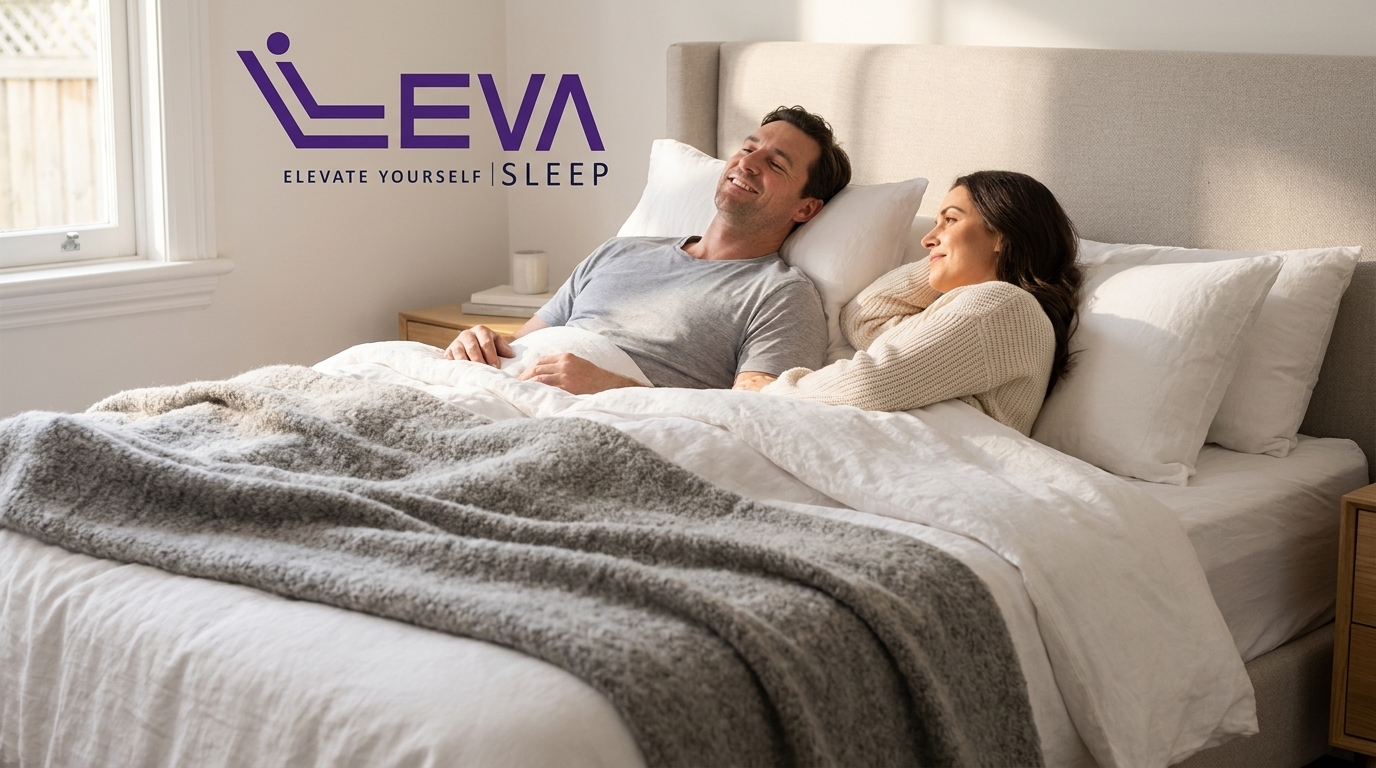
Written by: Matthew Timmins, Founder and Managing Director, Leva Sleep | Last updated: July 30, 2026
Key takeaways for snoring couples
- Split adjustable bases let one partner raise their head 7–12° to reduce snoring while the other stays flat, improving sleep for both.
- Independent head elevation and quiet brushless DC motors around 45 dB reduce disturbances during nighttime position changes.
- Leva Sleep’s 2026 anti-snore auto-adjust mode will detect snoring and make micro-adjustments automatically, so you do not have to wake up and adjust.
- White-glove delivery and professional setup remove common DIY assembly errors for split queen and split king configurations.
- Compare Leva Sleep’s Split Queen and Split King bundles with independent controls and whisper-quiet German motors.
How adjustable beds reduce snoring
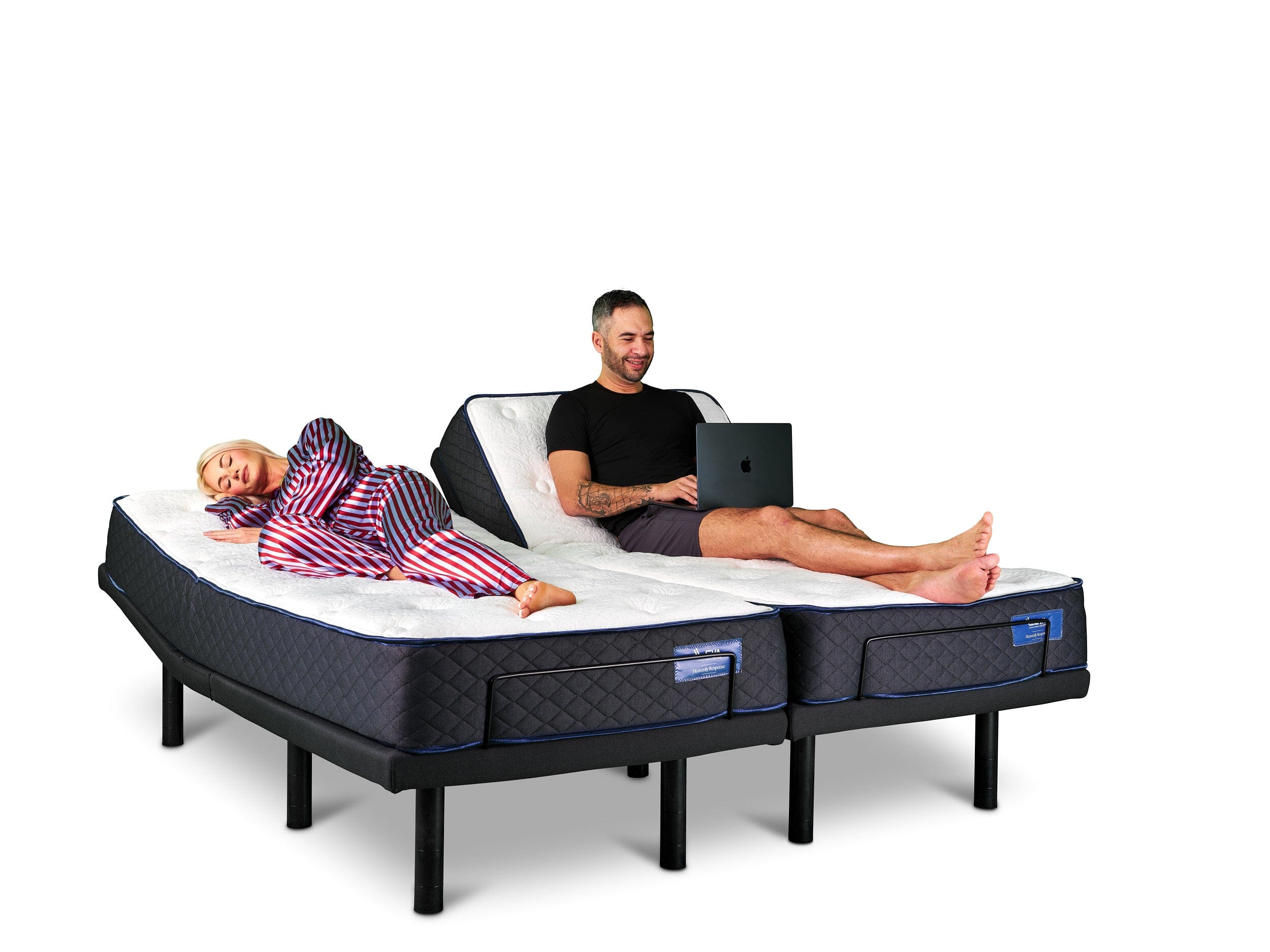
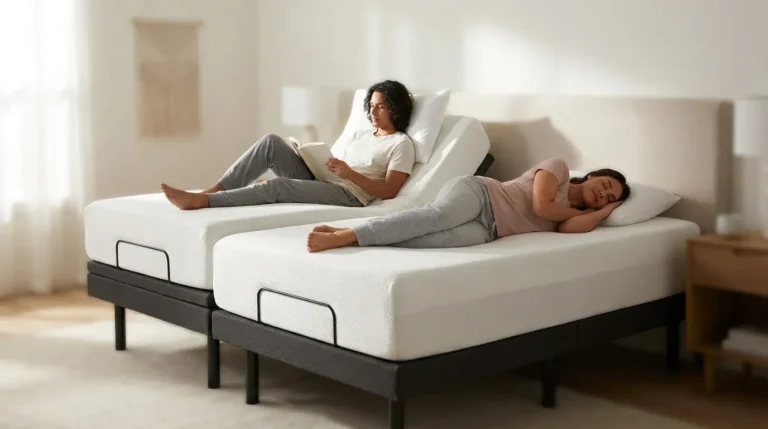
Adjustable beds reduce snoring by elevating the upper body so gravity pulls soft tissue away from the airway instead of into it. A study published in Sleep & Breathing found that 7.5° of head-of-bed elevation can reduce apnea and hypopnea events. Split configurations add a second benefit because the non-snoring partner’s side remains flat, so neither person compromises.
This approach aligns with broader sleep health guidance. The Sleep Foundation recommends raising the head of the bed to help with snoring. An adjustable base raises the mattress surface uniformly from the base, which helps maintain spinal alignment throughout the elevation.
Using an adjustable bed to cut down snoring
Elevating the torso can open the airway by allowing gravity to pull the soft palate away from the back of the throat, which can reduce snoring. The practical starting point is the lowest angle that provides relief. Building on the 7.5° elevation threshold noted earlier, a 2017 study found that this angle can reduce the severity of obstructive sleep apnea. Additional research links elevation with less snoring, fewer nightly awakenings, and longer periods of deep sleep.
To achieve these benefits reliably for couples, three features matter most when using an adjustable base to address snoring:
- Independent head elevation: Each side adjusts separately so the snoring partner can raise their head to 7–12° without disturbing the other side.
- Quiet motors: Brushless DC motors usually operate around 45 decibels, quieter than brushed motors at about 65 dB. This lower noise level makes nighttime adjustments less likely to wake a sleeping partner.
- Anti-snore automation: Leva Sleep’s upcoming 2026 anti-snore auto-adjust mode detects snoring and makes small automatic changes to the head of the bed, so couples do not need to manage manual adjustments during the night.
Explore Leva Sleep’s adjustable base configurations to find a mix of quiet motors and independent elevation that fits your bedroom and sleep habits.
Why adjustable beds suit frequent snorers
Habitual snoring is common among adults in Canada, and rates increase with age and BMI. For couples aged 40–60 in Ontario and Alberta, snoring often becomes both a medical concern and a nightly frustration.
The relationship impact can be significant. Bed partners of snorers lose about one hour of sleep per night according to Mayo Clinic research. Sleep Foundation 2024 research found that 75% of people with snoring partners report it affects their sleep quality and 77% say it affects their overall well-being. Over time, this sleep loss can contribute to relationship strain for some couples.
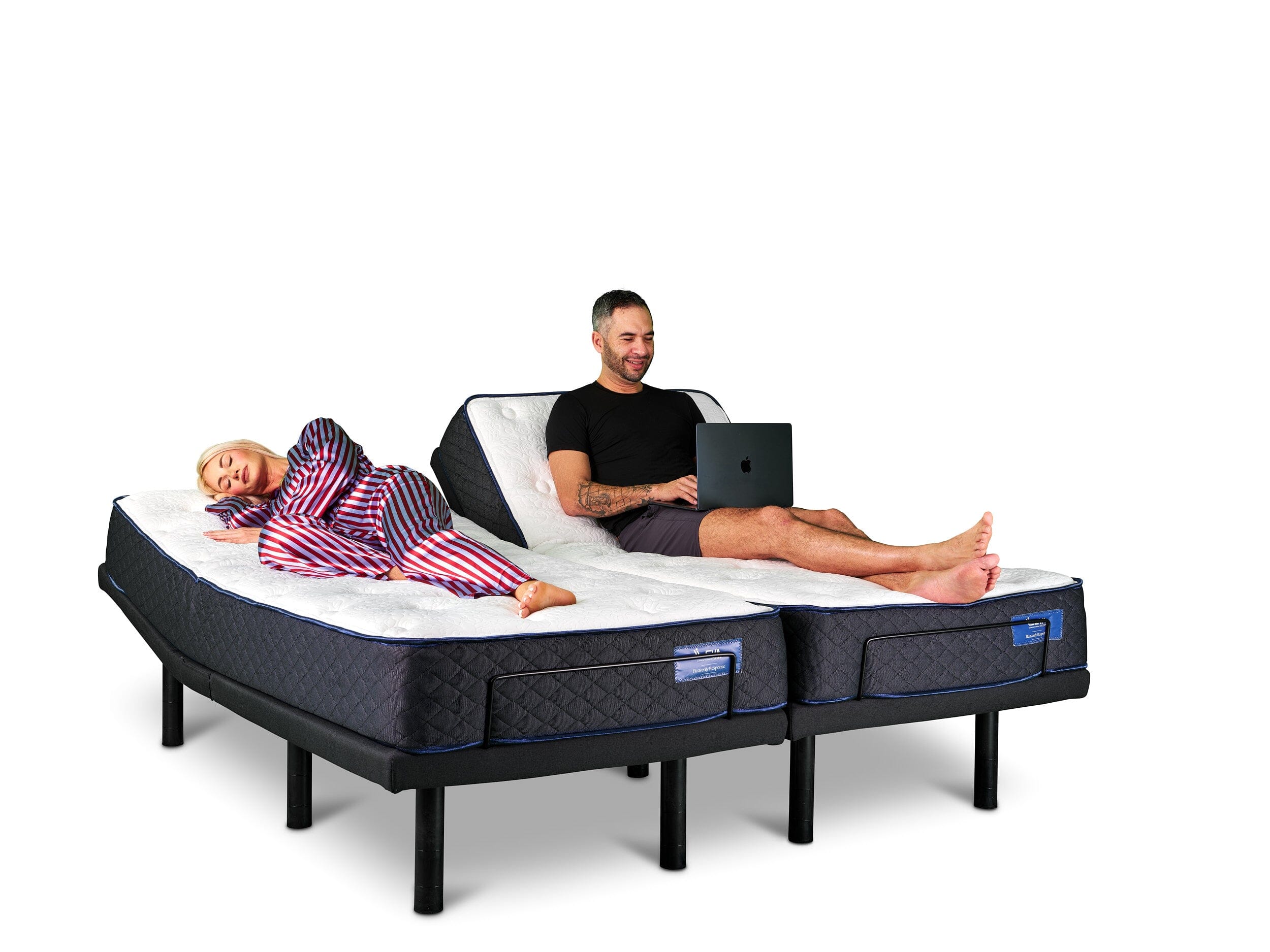
A split adjustable base directly addresses this problem without requiring separate rooms. Each side operates independently, so the snoring partner elevates their head to the therapeutic angle while the other partner remains flat. A split king base and mattress pairing enables customized head positioning on either side of the bed to address one partner’s snoring without affecting the other sleeper.
Practical trade-offs with split queen adjustable beds
Split queen adjustable beds solve snoring and independent-positioning challenges, but buyers should weigh three practical considerations before purchasing:
- Space trade-offs: A split queen uses two 30-inch-wide bases side by side in a 60-inch queen footprint. The centre gap between the two mattresses is typically 1–2 inches and feels most noticeable when sleeping near the middle. Purpose-built split queen mattresses and fitted sheets with deep pockets and extra elastic help reduce that gap sensation.
- Motor noise during adjustments: Sounds during movement can disturb light sleepers. Choosing a brushless DC motor around 45 dB helps keep position changes quiet enough that many partners sleep through them.
- Delivery and setup complexity: Common DIY assembly errors for adjustable bases include reversed motor connections, loose wire harnesses, legs at inconsistent heights, and improperly positioned retainer bars, all of which can affect safety and function. White-glove delivery by trained professionals eliminates these risks by ensuring correct assembly from the start.
Leva Sleep offers a Split Queen configuration with in-house white-glove delivery that includes bedroom setup, product tutorials, and optional old bed removal.
Top split king adjustable bed options in Canada for 2026
When comparing split king adjustable bases in Canada for 2026, four criteria matter most: therapeutic head elevation range, motor noise level, split configuration availability, and approximate CAD pricing. The table below summarizes leading options based on publicly available data.
| Brand / Model | Head Elevation Range | Motor Type / Noise | Split King CAD Price (2026) |
|---|---|---|---|
| Leva Sleep Split King | 0°–60° (7–12° therapeutic snoring range supported) | Quiet German brushless DC (around 45 dB) | 30–50% below comparable luxury competitors (direct-to-consumer) |
| Entry-level Canadian split king (e.g., SleepBeat Twin XL ×2) | Head articulation; angle not published | ~$2,784 for two bases + two mattresses | ~$2,784 bundle |
| Tier 3 Canadian adjustable bases (general) | Head and foot elevation; premium motors | Brushless DC; $1,500–$2,500 per base | $1,500–$2,500 per base |
| Entry-level Canadian adjustable bases (general) | Head and foot elevation | Basic motor; $895–$1,250 per base | $895–$1,250 per base |
This comparison highlights relative positioning. Leva Sleep’s exact per-unit pricing appears on the collections page, and the 30–50% savings figure reflects its direct-to-consumer, vertically integrated model versus comparable luxury-tier competitors.
Douglas vs Leva adjustable base comparison
The table below compares Leva Sleep against Douglas and other commonly searched Canadian adjustable base brands across four decision-focused criteria. When a competitor’s specification is not publicly verified, the table notes that clearly.
| Criteria | Leva Sleep | Douglas | Logan & Cove / Ghostbed |
|---|---|---|---|
| Motor type | Quiet German brushless DC (around 45 dB) | Not publicly specified | Not publicly specified |
| Split Queen availability | Yes | Not available | Not available |
| White-glove delivery (Ontario/Alberta) | In-house white-glove delivery for a fee, including bedroom setup, app tutorial, and optional old bed removal | Curbside or threshold delivery standard | Varies by retailer; not in-house |
| Anti-snore auto-adjust (2026) | Launching 2026, detects snoring and makes automatic micro-adjustments | Not available | Not available |
Leva Sleep designs, assembles, and delivers its systems locally in Ontario and Alberta, which removes the retail markup that applies to Douglas, Logan & Cove, and Ghostbed, which distribute through third-party channels. This structure supports a 30–50% lower price point for comparable or superior feature sets.
View current pricing for Leva Sleep’s Split Queen and Split King bundles after reviewing these feature differences.
Decision framework for couples choosing a base
This step-by-step framework helps couples match snoring severity and room size with the right adjustable base configuration:
- Confirm that snoring is the primary issue. If snoring drives the problem, independent head elevation becomes the non-negotiable feature. If differing firmness or temperature is the main concern, a split base still helps, but anti-snore automation can sit lower on the priority list.
- Measure the bedroom size. If the room accommodates a king footprint of 76 × 80 inches, a Split King provides the most personal space per person. If the room fits a queen footprint of 60 × 80 inches better, Leva Sleep’s Split Queen offers independent control in that smaller size.
- Assess sensitivity to motor noise. If one partner wakes easily, specify a brushless DC motor explicitly to preserve the approximate 20 dB noise advantage mentioned earlier. That quieter profile is clinically relevant for limiting sleep disturbance.
- Set a clear budget range. Leva Sleep’s direct-to-consumer pricing delivers luxury-tier features at 30–50% below comparable competitors, which means some split configurations may fit budgets that usually only cover entry-level single bases. If the budget ceiling is firm, compare Leva’s Split Queen bundle against entry-level single-base options before deciding a split setup is unaffordable.
- Decide on setup support. If neither partner wants to manage assembly, white-glove delivery is the safer choice. Professional white-glove setup of an adjustable base eliminates common DIY assembly errors and provides a smoother first-night experience.
Conclusion: Matching snoring relief with the right base
For Canadian couples aged 40–60 dealing with partner snoring, evidence consistently points to independent head elevation at 7–12° as an effective non-invasive intervention. The PMC9021938 study confirmed a 7% reduction in snoring duration, 4% fewer awakenings, and 5% more deep sleep at a 12° incline. A split adjustable base delivers that benefit to one partner without forcing the other to sleep elevated.
The decision process stays simple when you follow a few checks. Match the base size to the room, specify a brushless DC motor for quiet operation, confirm white-glove delivery in your province, and compare total bundle cost instead of base-only price. Leva Sleep’s vertically integrated model with whisper-quiet German motors, a proprietary Split Queen option, in-house white-glove delivery across Ontario and Alberta, and the 2026 anti-snore auto-adjust mode covers each of those criteria at a 30–50% lower price than many luxury-tier competitors.
See Leva Sleep’s 2026 Split Queen and Split King bundle pricing and configurations to align these features with your budget and bedroom size.
Frequently Asked Questions
What angle should an adjustable bed be set to for snoring?
The therapeutic range for snoring reduction is 7–12°, which peer-reviewed in-home studies describe as the sweet spot that balances airway-opening benefits with comfort. Starting at the lowest effective angle works best because higher elevations can introduce discomfort that causes people to stop using the feature. If 7–12° does not provide enough relief, elevation can increase gradually up to 20–30°, which sleep specialists associate with more significant airway support for mild obstructive sleep apnea. Leva Sleep’s adjustable bases allow precise, incremental angle changes via the app, so couples can dial in the exact position that works without disturbing the other side.
What is the difference between a Split Queen and a Split King adjustable base?
A Split Queen uses two 30-inch-wide adjustable bases placed side by side within a standard queen footprint of 60 × 80 inches. A Split King uses two Twin XL bases, each 38 inches wide, placed side by side within a king footprint of 76 × 80 inches. Both configurations provide fully independent head and foot elevation for each partner. The Split Queen suits couples who want independent control but have a bedroom that cannot accommodate a king-size footprint. Leva Sleep offers a Split Queen configuration, which helps couples in smaller bedrooms or condominiums access split functionality.
Will an adjustable base work with my existing mattress?
Most all-foam and hybrid pocket-coil mattresses work well with adjustable bases because these materials flex without damage during articulation. Traditional innerspring mattresses with interconnected coils generally do not suit adjustable bases because the coil structure resists bending and can be damaged by repeated elevation cycles. Memory foam, latex, and individually wrapped pocket-coil mattresses are the most commonly recommended types. Leva Sleep designs its own all-foam and hybrid mattresses to pair with its adjustable bases and also matches its bases with mattresses from Tempur-Pedic, Simmons, Beautyrest, Serta, and Kingsdown. If you plan to use a Leva base with an existing mattress, confirming the mattress type with Leva’s team before purchase provides the most reliable answer.
Is white-glove delivery worth the extra cost for an adjustable base?
For a split adjustable base, white-glove delivery usually provides strong value. A split king or split queen setup involves two separate motor units, independent wire harnesses, synchronized remote pairing, and precise leg-height calibration, which are all common sources of DIY assembly errors. The assembly errors mentioned earlier, including incorrect motor connections, uneven leg heights, and improperly positioned retainer bars, each create specific problems such as sections moving in the wrong direction, unstable sleeping surfaces, and mattresses that slide during articulation. Professional setup removes these risks. Leva Sleep’s in-house white-glove delivery service covers bedroom placement, full assembly, motor and app setup, a product tutorial, and optional removal of the old bed, making it a Canadian brand that provides end-to-end setup for adjustable bases.
When will Leva Sleep’s anti-snore auto-adjust mode be available?
Leva Sleep’s anti-snore auto-adjust mode is scheduled for release in 2026. The feature detects snoring through the base’s integrated sensors and makes automatic micro-adjustments to the head elevation on the snoring partner’s side without requiring manual input or waking either partner. This functionality differs from the current manual anti-snore positioning on Leva’s existing bases, where the user sets a preferred elevated angle through the app. The auto-adjust mode suits couples where the snoring partner is unaware of their snoring or prefers not to manage position changes manually. Availability and compatible models can be confirmed directly with Leva Sleep at the time of purchase.