Written by: Matthew Timmins, Founder and Managing Director, Leva Sleep | Last updated: August 6, 2026
Key Takeaways for Split-Queen Anti-Snore Beds
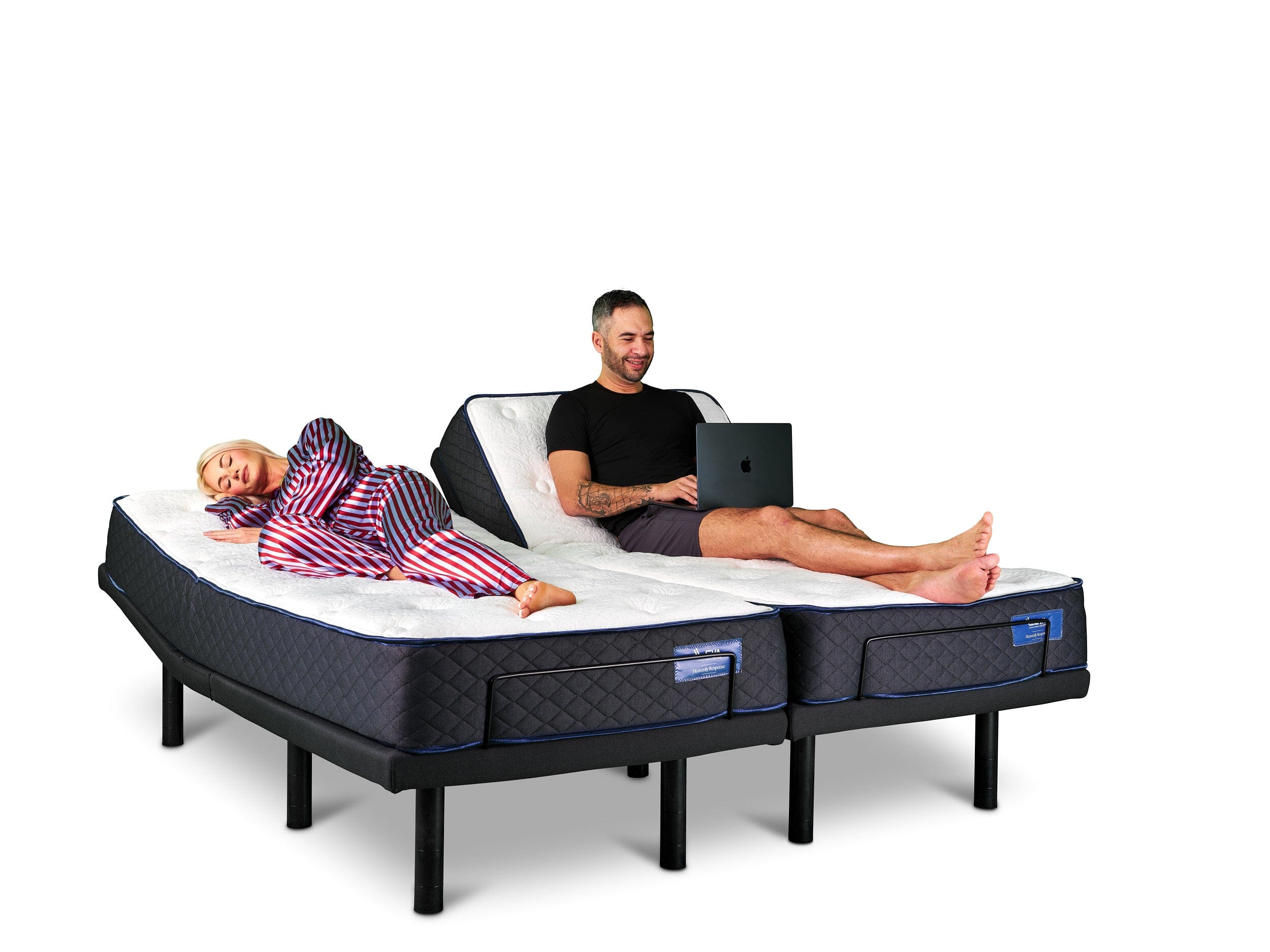
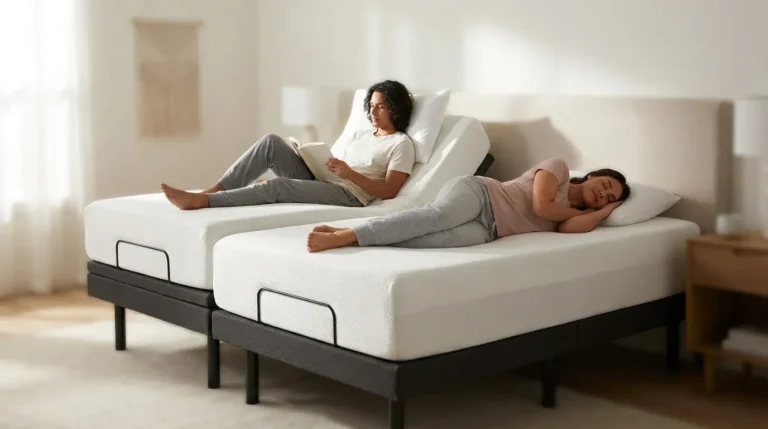
- Split-queen adjustable bases let each partner raise their head independently, which can reduce snoring without disturbing the other sleeper.
- Anti-snore presets and real-time snore-detection sensors automatically adjust head elevation to help keep airways open.
- Quiet German motors, mattress compatibility, and white-glove delivery are essential factors when comparing bases in Canada.
- Common issues like sheet slippage and mattress gaps are reduced by choosing flexible mattresses and deep-pocket sheets designed for adjustable beds.
- Leva Sleep offers complete split-queen packages with independent anti-snore presets and white-glove delivery, so you can shop Leva Sleep’s adjustable beds and find a setup that fits your room and sleep needs.
How a Split-Queen Base Reduces Snoring for Couples
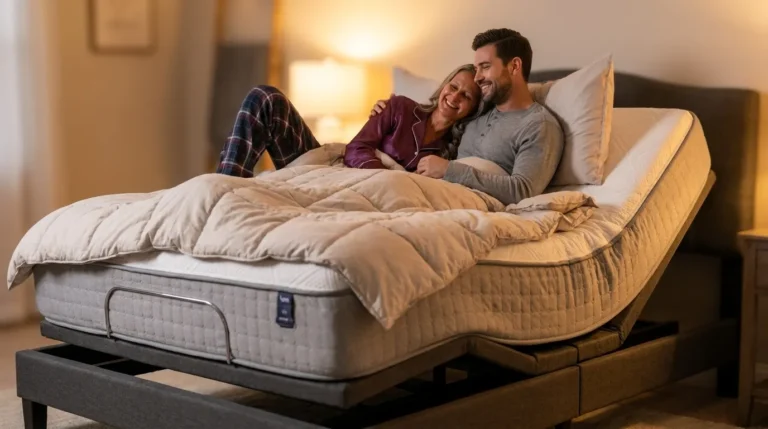
Snoring occurs when soft tissue in the upper airway relaxes and partially blocks airflow during sleep. Elevating the head of the bed shifts the jaw and tongue forward, which reduces that obstruction. The ideal elevation angle varies by person, so adjustable presets with several positions work better over time than a single fixed incline.
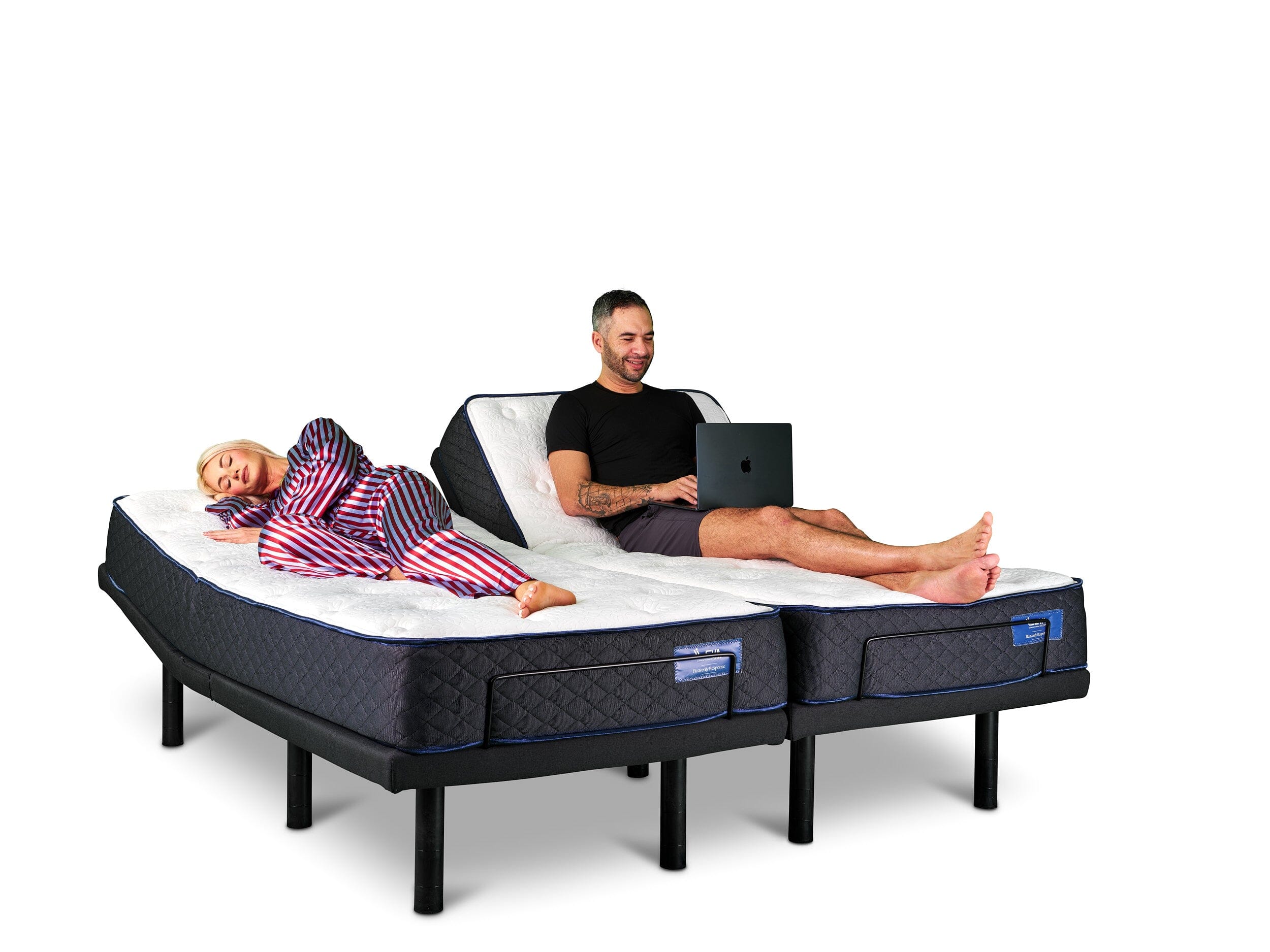
A split-queen configuration adds independence for each partner. Each side of the bed can hold a different elevation angle at the same time. In couples where only one partner snores, the snoring partner can maintain a therapeutic head angle while the other sleeps flat. Bases that include a dedicated anti-snore preset automate this process and remove the need to manually adjust the angle every night.
Newer bases can include snore-detection modes that use sensor data to detect snoring in real time. These modes trigger small head adjustments automatically and then return to the preferred position, often without waking either partner.
Key Comparison Factors for Split-Queen Bases in Canada
Several technical details determine whether a split-queen adjustable base will perform reliably in a shared bedroom over many years. The table below shows how Leva Sleep’s split-queen base addresses each factor compared to typical big-box competitors, so you can see which features matter most for couples managing snoring.
| Criterion | What to Look For | Leva Sleep Split Queen | Typical Big-Box Competitor |
|---|---|---|---|
| Independent dual-zone presets | Anti-snore, zero-gravity, and custom positions per side | Yes, app-controlled per-side presets | Varies, many offer zero-gravity only, no snore-detection |
| Motor noise | Whisper-quiet motors that do not wake a sleeping partner during adjustment | Whisper-quiet German motors | Motor noise levels vary widely by model and are rarely disclosed by retailers |
| Mattress compatibility (30×80 splits) | All-foam or flexible hybrid, 10–14 in. thickness, no rigid border wire | Compatible with all-foam and hybrid pocket-coil mattresses in 30×80 in. sizes | Often requires third-party split mattresses, compatibility not guaranteed |
| Canadian pricing and delivery | Transparent CAD pricing, white-glove delivery available in Ontario and Alberta | Competitive CAD pricing, white-glove delivery available for a fee | Pricing often in USD or marked up through retail channels, curbside delivery standard |
Motor noise is a critical but frequently undisclosed specification. When you compare bases, ask the retailer for the decibel rating of the motor during adjustment. A motor that operates quietly enough not to disturb a sleeping partner is a non-negotiable feature for shared bedrooms. Leva Sleep uses whisper-quiet German motors that are selected for low acoustic output during elevation changes.
How Anti-Snore Adjustable Bed Technology Has Evolved
Anti-snore technology has moved from simple presets to smart, app-connected systems. Early adjustable bases offered a single anti-snore preset, which was a fixed head elevation angle that the user activated manually. By 2024, app-integrated bases allowed users to save custom angles and trigger them remotely from a phone.
Newer generations add passive snore detection. Onboard sensors monitor breathing patterns and start small head elevations automatically when snoring appears. Once snoring settles, the base returns the head to the preferred resting angle. Snore-detection technology appears on select adjustable bases, often with mobile app control that does not require a wearable device.
Practical Issues with Split-Queen Beds and Simple Fixes
Split-queen bases solve many couple-sleep problems but also create new practical details to manage. Buyers can avoid most frustrations by planning for how the two mattresses move and how bedding behaves during elevation.
- Gap between mattress halves: Two 30×80-inch mattresses placed side by side create a centre seam that some couples notice. A mattress bridge or connector strap reduces this gap for sleepers who like to lie across the centre of the bed.
- Sheet slippage: Standard fitted sheets are not cut for split mattresses and often pull off during elevation. Sheets with deep pockets and reinforced elastic provide a more secure fit on adjustable bases.
- Duvet separation: When one side elevates and the other stays flat, a shared duvet can bunch or slide. Duvet clips that anchor each half independently keep the cover in place for both partners.
- Room clearance: A split-queen base needs enough clearance at the head of the bed for full elevation. Measure the distance from the headboard to the wall before delivery to confirm that the head section can rise freely.
- Mattress rigidity: Innerspring mattresses with a rigid border wire cannot flex around the articulation point and will limit the base’s function. Flexible all-foam or pocket-coil hybrid mattresses work better and protect the base investment.
Clinical Perspective on Anti-Snore Adjustable Beds
Head-of-bed elevation reduces snoring by repositioning the soft tissue of the upper airway. The clinical consensus is that positional therapy, which changes the angle of the head and neck during sleep, can reduce snoring frequency and intensity for positional snorers. These are people whose snoring worsens when lying flat.
Elevation does not replace medical treatment for moderate to severe obstructive sleep apnea. Individuals with a diagnosed sleep apnea condition should consult a physician before replacing CPAP therapy with positional adjustment alone. For couples where snoring is positional and mild to moderate, an adjustable base with an anti-snore preset offers a non-invasive, mask-free option that both partners can use without disrupting the shared sleep environment.
The independent control of a split-queen base keeps the snoring partner’s elevation separate from the other side. This separation lets one partner follow a positional therapy plan while the other maintains a preferred flat or low-incline position.
Issues Canadian Owners Report and How to Prevent Them
Canadian buyers of split adjustable bases often report a predictable set of post-purchase frustrations. Most of these problems disappear when you treat the base, mattresses, delivery, and app as one connected system instead of separate purchases.
- Incompatible mattresses purchased separately: Buying a split-queen base from one retailer and mattresses from another often creates thickness or flexibility mismatches. Purchasing the base and mattresses as a matched system, as Leva Sleep offers, removes this risk and keeps both halves aligned.
- Curbside delivery of heavy components: Split-queen bases arrive in multiple heavy cartons that are difficult to move alone. Curbside delivery leaves all lifting and assembly to the homeowner. White-glove delivery, available from Leva Sleep for a fee, includes in-room setup, leg-height adjustment, a product tutorial, and removal of the old bed.
- App connectivity issues: Bluetooth-dependent bases require the app to be installed and paired before first use. Confirm app compatibility with your device’s operating system before purchase and check that all household users can access the controls they need.
- Warranty gaps on split configurations: Some warranties cover the base but exclude the split-mattress pairing or accessories. Review the warranty terms for each component individually and confirm coverage for the split-queen setup you plan to use.
Doctor-Recommended Elevation Ranges for Snoring and GERD
Sleep medicine practitioners and ENT specialists often recommend head-of-bed elevation as a first-line positional step for snoring and mild obstructive sleep apnea. General guidance suggests elevating the head between 7 and 30 degrees, with the optimal angle depending on airway anatomy and snoring severity. Patients with gastroesophageal reflux disease (GERD) also receive advice to sleep with the head elevated, because incline reduces acid migration into the oesophagus during sleep.
Consult a physician or sleep specialist before you lock in a specific preset angle. A clinician can assess your airway anatomy and snoring pattern and then suggest a starting range. An adjustable base with multiple saved presets lets you test different angles and return to the one your clinician recommends without reprogramming the base each night.
Leva Sleep’s adjustable bases support custom angle presets saved per side through the app. This feature makes it straightforward to apply a physician-recommended elevation on one side of the bed without changing the other partner’s position.
Frequently Asked Questions About Split-Queen Adjustable Beds
What are the exact dimensions of a split-queen mattress?
A split-queen mattress consists of two separate pieces, each measuring 30 inches wide by 80 inches long. Together they occupy the same footprint as a standard queen mattress, which is 60 inches wide by 80 inches long. The split configuration allows each half to articulate independently on a split-queen adjustable base. When purchasing, confirm that both the base and the mattresses are cut to 30×80 inches, because some retailers sell split-queen bases designed for non-standard widths.
How do I stop fitted sheets from slipping off a split-queen adjustable bed?
Standard fitted sheets are not designed for the repeated flexing and elevation of an adjustable base. The most reliable solution is to use fitted sheets engineered for adjustable beds, with deep pockets and reinforced elastic. Sheet straps or suspenders can provide a temporary fix for standard sheets but often become less reliable over time.
What warranty should I expect on a split-queen adjustable base in Canada?
Warranty terms on adjustable bases in Canada vary significantly by brand and component. A reasonable benchmark for a quality base is a motor warranty of at least 10 years and a frame warranty of 20 years or more. Confirm whether the warranty covers in-home service or requires the owner to ship components, and whether it applies to the split-queen configuration specifically.
Some manufacturers offer different warranty tiers depending on the model. Always request the full written warranty document before purchase and verify that it covers both the base and any paired mattresses sold as part of a package.
Is a split-queen adjustable bed suitable for a standard bedroom in Ontario or Alberta?
A split-queen base fits any room that accommodates a standard queen bed, because the combined footprint is identical. The main spatial consideration is head clearance. The base requires unobstructed space above the head zone for full elevation, typically 12 to 18 inches between the top of the mattress and any headboard or wall.
Measure this clearance before delivery so the base can move freely. Leva Sleep’s white-glove delivery team adjusts leg height on-site to set the base at the correct height for the room and the customer’s comfort.
Selecting the right split-queen adjustable base starts with matching the base’s technical specifications, such as motor noise, preset range, mattress compatibility, and warranty terms, to your household’s sleep needs and room dimensions. Use the criteria in this guide to build a shortlist of bases that meet your technical requirements, then request written specifications from each retailer to verify the claims in their marketing materials.
Once you confirm that the specifications match your needs, review Canadian delivery terms before committing so the base arrives on time and is set up correctly. Couples in Ontario and Alberta who prioritize independent anti-snore elevation, quiet motor operation, and a complete matched system face a narrower set of options than the broader North American market. Evaluating those options against the factors above helps identify the base that fits both partners’ needs.