Written by: Matthew Timmins, Founder and Managing Director, Leva Sleep | Last updated: June 22, 2026
Key Takeaways for Hot-and-Cold Couples
- Temperature conflicts between partners are a leading cause of sleep disruption and can push couples toward separate beds.
- Standard cooling sheets and single-zone pads cannot provide independent temperature control for each side of the bed.
- Integrated adjustable bases with dual-zone heating and cooling pads solve both temperature and positional issues at the same time.
- Leva Sleep systems offer app-controlled, whisper-quiet operation with Split Queen and Split King configurations tailored for Canadian couples.
- Explore Leva Sleep’s dual-zone adjustable bed packages to find a setup that keeps both partners comfortable all night.
How Dual-Temperature Conflict Starts in a Shared Bed
Temperature preference in bed goes beyond habit and personal quirks. Hormonal changes, particularly those associated with perimenopause and menopause, can cause significant fluctuations in body temperature during sleep and leave one partner consistently warmer. Mattress materials often intensify this problem. Dense memory foam and hybrid constructions trap body heat and raise the sleep-surface temperature above the 60–67°F range the National Sleep Foundation identifies as optimal for most adults.
Room-wide climate control rarely satisfies both partners at once, so the conflict often escalates. Mark S. Aloia, PhD, associate professor at National Jewish Health, notes that couples commonly struggle with temperature disruptions from a partner at night, with many reporting that their partner sleeps too hot or too cold. When couples cannot resolve this mismatch, they frequently move toward separate rooms, which solves the temperature issue but introduces new relational strain.
Why Basic Cooling Products Rarely Work for Both Partners
Most off-the-shelf cooling products treat only part of the problem. Cooling sheets, single-zone pads, and standard flat beds help somewhat but leave key issues unresolved. Thermoregulating fabrics help the body maintain a stable temperature across changing conditions throughout the night and suit couples with different temperature preferences, yet they cannot cool one side while warming the other. Single-zone pads apply one temperature setting across the entire mattress surface and ignore individual needs. Neither option addresses elevation requirements for sleep apnea or acid reflux, so positional discomfort often remains.
| Cooling Method | Dual-Zone Control | Noise | Approximate Canadian Pricing |
|---|---|---|---|
| Cooling sheets / thermoregulating fabric | No, fabric regulates the full sleep surface | Silent | $100–$400 CAD per set (estimated retail) |
| BedJet 3 (air-based) | Requires second unit and Cloud Sheet accessory for dual-zone | Fan noise present during operation | $700–$1,400+ CAD per unit (estimated) |
| Chilipad 1.0 (water-circulating) | Separate control units available per side | Pump noise during operation | $800–$1,600+ CAD per side (estimated) |
| Integrated adjustable base plus dual-zone heating and cooling pad | Yes, independent per side | Whisper-quiet motors (for example, Leva Sleep German motors) | Varies; Leva Sleep priced 30–50% below comparable luxury competitors |
These comparisons highlight a clear next step. Couples who want true independence on each side of the bed need an integrated system that manages both temperature and position together.
Dual-Side Temperature Control With an Integrated Adjustable System
An integrated adjustable sleep system combines an independently controlled base, which lets each partner set their own head and foot elevation, with a dual-zone heating and cooling pad that manages sleep-surface temperature per side. The National Sleep Foundation recommends that people who share a bed consider bedding products that allow for dual-zone temperature control to accommodate differing partner preferences. An integrated system fulfils this recommendation and also solves positional needs that a standalone pad cannot address.
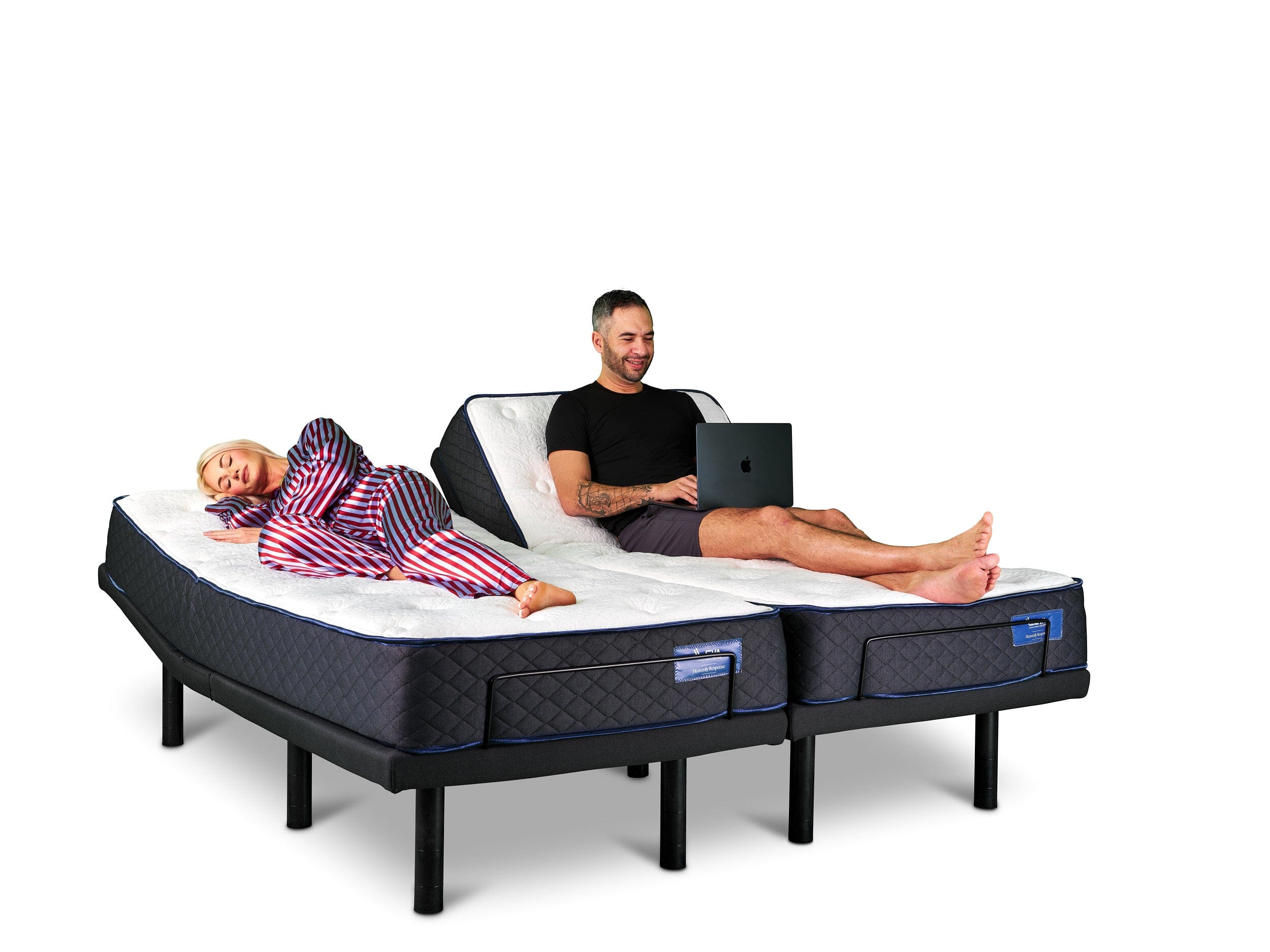
Leva Sleep’s adjustable bases come in Split Queen and Split King configurations, and each side is independently controlled through the Leva Sleep app. The integrated Heating and Cooling Pad lets each partner set a distinct temperature and removes the need for separate add-on units. Shared-bed temperature issues often require solutions beyond room-wide climate control, such as adjustable beds that enable independent dual-temperature settings for each partner. This configuration delivers that independence in a single, coordinated system.
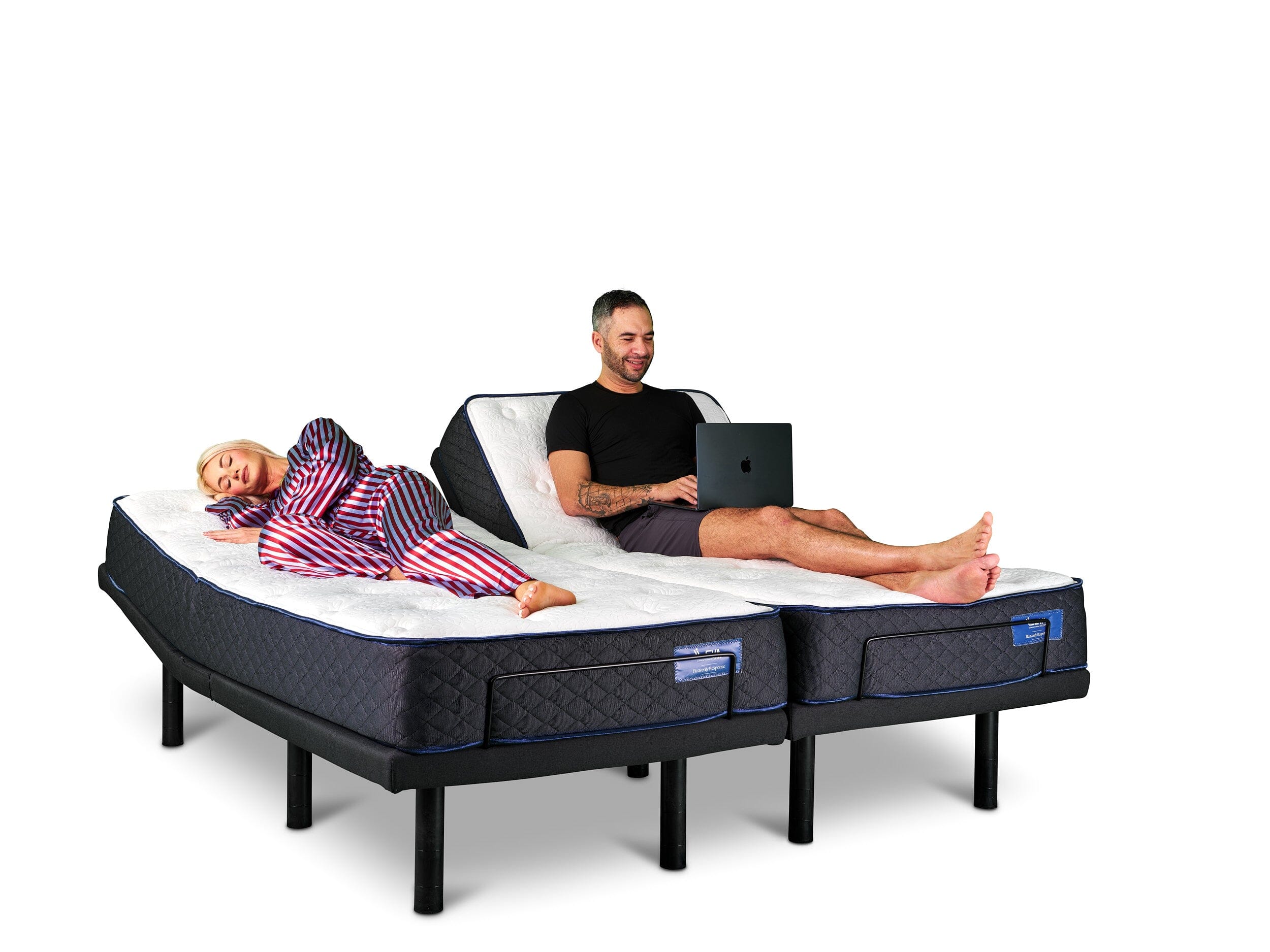
Review Split Queen and Split King dual-zone packages from Leva Sleep to see how independent temperature and position control work together.
Why Integrated Systems Outperform BedJet for Couples
The BedJet 3 requires a second unit plus a Cloud Sheet accessory to achieve independent dual-zone control for each partner. This setup adds hardware, raises total cost, and introduces more potential failure points while still offering no positional adjustment.
Active cooling systems that circulate water or air through a mattress pad represent the most technology-forward option for sleep-surface temperature regulation, fulfilling the dual-zone recommendation established earlier. When paired with an adjustable base, these systems address the full problem set and manage both temperature mismatch and positional needs at once. Leva Sleep’s system integrates both functions into a single app-controlled platform and uses whisper-quiet German motors so one partner can adjust position without waking the other. The upcoming anti-snore mode will detect snoring and make micro-adjustments to head elevation automatically, which no standalone cooling pad currently offers.
How to Evaluate a Dual-Zone Temperature-Regulating Sleep System
- Independent dual-zone capability: Start by confirming that each side can be set to a completely different temperature without affecting the other. Check whether the system achieves this with one integrated platform or requires separate hardware purchases for each partner.
- Cooling strength below ambient: After confirming true dual-zone control, look at cooling power. Determine whether the system cools the sleep surface below room temperature or only manages heat passively. The Eight Sleep Pod 5, for example, covers a range of 55–110°F with active water-based cooling.
- Noise during simultaneous use: Because both partners may adjust temperature or position at the same time, noise during concurrent use matters. The Eight Sleep Pod 5 operates quietly during active adjustment. Evaluate whether the base motors reach a similar standard when both sides move or change temperature.
- Mattress and bedding compatibility: Confirm whether the system requires a proprietary mattress or works with existing or preferred mattresses. Check for purpose-designed sheets and accessories that prevent slippage when the base elevates.
- Canadian-climate maintenance: Consider ongoing care, especially for water-circulating pads. These systems require periodic maintenance, so confirm that a Canadian retailer supports the product locally and avoids cross-border shipping for service.
- Delivery and setup experience: Factor in installation. White-glove delivery that includes old-bed removal and in-room assembly simplifies setup, particularly for Split Queen configurations that need precise alignment.
- Long-term value: Look at the full system cost, including base, pad, and compatible bedding. Identify whether major add-ons will be required later or whether the quoted price already reflects a complete solution.
Real-World Results Couples Commonly Experience
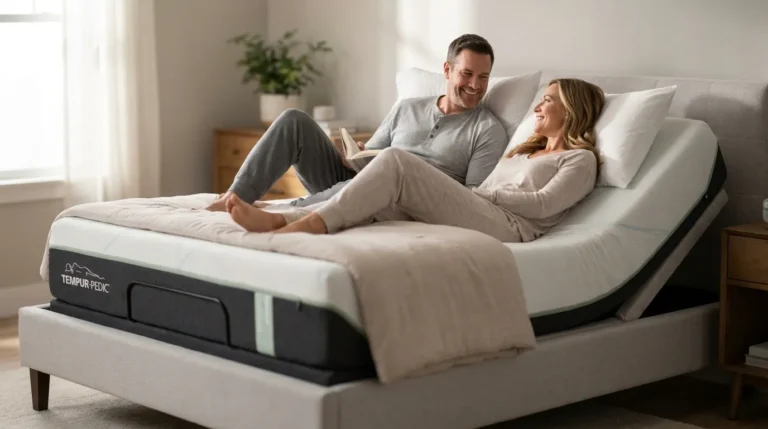
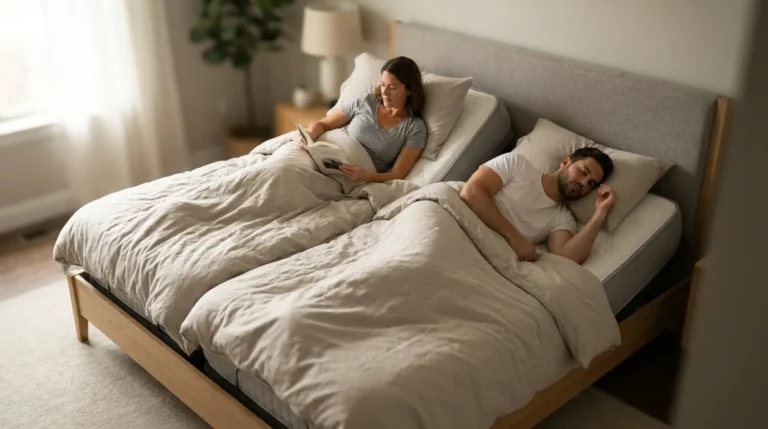
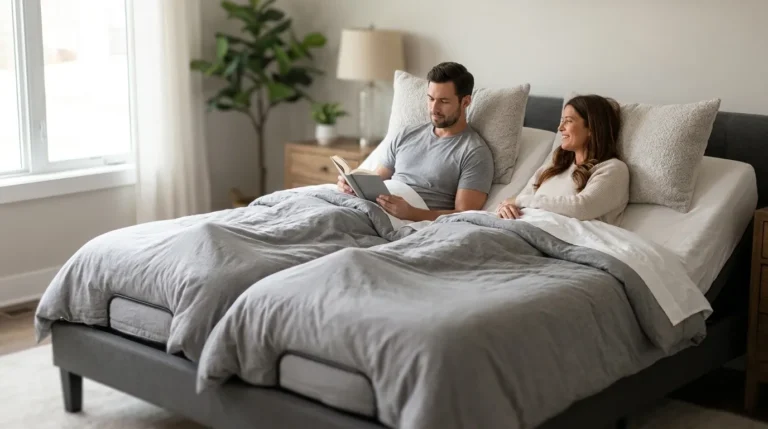
Couples who adopt a dual-zone integrated system typically report three main improvements. First, they enjoy more uninterrupted sleep because neither partner feels too hot or too cold, which removes a major cause of mid-night waking and cover-stealing. Second, they see a lower risk of “sleep divorce,” since a system that resolves both temperature and positional conflict removes common triggers that push partners into separate rooms. Third, they find it easier to manage sleep apnea and acid reflux. Independent head elevation lets the partner who needs an elevated position adjust without disturbing the other, and Leva Sleep’s adjustable bases already receive referrals from sleep apnea clinics for this purpose.
See how Leva Sleep’s dual-zone systems pair with white-glove delivery across Ontario and Alberta, including old-bed removal and local in-room assembly.
Side-by-Side Comparison of Key System Attributes
Use the following framework when evaluating any dual-zone temperature-regulating sleep system. Pricing figures below are directional estimates based on publicly available information and should be confirmed with each provider at time of purchase.
| System Type | Dual-Zone Temperature Control | Independent Position Control | Approximate Price Range (CAD, estimated) |
|---|---|---|---|
| BedJet 3 (dual-zone setup) | Yes, with second unit and Cloud Sheet | No, air-only pad with no base adjustment | $1,400–$2,200+ CAD (two units plus accessory, estimated) |
| Chilipad 1.0 (dual-zone setup) | Yes, with separate control units per side | No, water pad only with no base adjustment | $1,600–$3,200+ CAD (two sides, estimated) |
| Eight Sleep Pod 5 | Yes, independent per side with 55–110°F range | No, temperature pad only with no base adjustment | $3,000–$4,500+ CAD (estimated) |
| Leva Sleep integrated adjustable base plus Heating and Cooling Pad | Yes, independent per side via app | Yes, independent head and foot elevation per side with whisper-quiet German motors | Priced 30–50% below comparable luxury competitors; confirm at levasleep.com |
Frequently Asked Questions
How does setup work for a Split Queen or Split King adjustable system?
A Split Queen or Split King uses two separate bases placed side by side within a shared bed frame. Each base operates independently with its own motor, remote, and app connection. Leva Sleep offers in-house white-glove delivery for a fee, which includes delivery to the bedroom, full assembly, leg-height adjustment, a product tutorial, and removal of the old bed. This service removes the complexity that usually comes with large adjustable base installations.
Will a dual-zone heating and cooling pad work with my existing mattress?
Most active heating and cooling pads sit on top of the mattress surface and function independently of the mattress material. Very thick or dense mattresses may reduce temperature transfer and limit performance. Leva Sleep designs its mattresses, available in all-foam and hybrid pocket-coil configurations, to work with its adjustable bases and integrated accessories for consistent results. If you plan to use an existing mattress, confirm compatibility with the pad manufacturer before purchasing.
What maintenance does a water-circulating cooling pad require in a Canadian climate?
Water-circulating systems require periodic cleaning of the water reservoir to prevent mineral buildup, particularly in regions with hard water, which occur across parts of Ontario and Alberta. Distilled water is typically recommended because it extends the interval between cleanings. Since Leva Sleep operates as a Canadian retailer with local service infrastructure, support and replacement parts remain accessible without cross-border shipping delays, which offers a practical advantage over brands that ship only from the United States.
Is an adjustable base suitable for managing sleep apnea alongside temperature regulation?
Elevating the head of the bed can help open the airway and reduce the severity of mild obstructive sleep apnea, which explains why sleep apnea clinics refer patients to adjustable base providers including Leva Sleep. An integrated system that combines head elevation with dual-zone temperature control addresses two of the most common sleep disruptions at the same time. Leva Sleep’s upcoming anti-snore mode will also detect snoring and make automatic micro-adjustments to head elevation. For moderate to severe sleep apnea, consult a physician before reducing or replacing CPAP therapy.
Who benefits most from a dual-zone integrated adjustable sleep system?
Couples gain the greatest benefit when one or both partners have a consistent temperature preference that differs from the other. Couples also benefit when one partner requires elevated positioning for a medical condition or when sleep disruption has already begun affecting the relationship. Couples in the 35–70 age range are particularly likely to see improvements because hormonal changes and the onset of conditions like sleep apnea and joint pain often intensify sleep incompatibility during this life stage. The Split Queen configuration suits couples in smaller bedrooms who want independent control without the footprint of a Split King.
Conclusion: Choosing a Dual-Zone System That Actually Solves the Problem
Temperature mismatch in a shared bed is a documented, measurable problem with a clear, evidence-based solution. Standalone cooling pads address temperature but not position. Adjustable bases address position but not temperature. An integrated system that combines independent dual-zone heating and cooling with independent elevation control, delivered and assembled by a specialist with eight years of Canadian market experience, addresses the full problem without compromise.
Leva Sleep has served more than 25,000 customers across Ontario and Alberta, with over $50M in lifetime sales and a direct-to-consumer model that delivers the pricing advantage noted earlier. The Split Queen configuration remains a rare offering in the Canadian market and is built to customer specifications. Couples can use the criteria outlined above as a reliable framework to compare options and select a system that supports long-term comfort for both partners.
Find the dual-zone sleep system that keeps both partners comfortable every night.