Written by: Matthew Timmins, Founder and Managing Director, Leva Sleep | Last updated: December 26, 2025
Key Takeaways
- Sleep issues are common in Canada, and mismatched comfort needs often strain couples who share a bed.
- Adjustable beds with split configurations, quiet motors, and targeted positioning support can improve comfort for both partners.
- Personalized elevation and support can help with snoring, sleep apnea symptoms, back pain, and other common sleep disruptors.
- Integrated systems that combine an adjustable base, compatible mattress, and tailored accessories often provide better value than piecemeal solutions.
- Canadian couples can explore Leva Sleep adjustable bed packages to personalize each side of the bed while still sharing the same sleep space. Shop Leva Sleep adjustable bed packages
The Silent Crisis: Why Differing Sleep Needs Impact Canadian Couples
Sleep problems affect many couples in Canada. Nearly half of Canadians, 48 percent, report trouble sleeping, which represents a 42 percent rise in insomnia since 2007. These issues rarely affect only one person when partners share a bed.
The impact on health and relationships is significant. Sleep apnea affects about 3 percent of adults and 5 percent of adults over 45, often causing loud snoring and repeated awakenings for both partners. More than 40 percent of Canadian adults report less than seven hours of sleep and almost half report trouble sleeping, which increases the risk of poor health.
Traditional flat beds often cannot meet both partners’ needs at the same time. When one partner snores, lives with sleep apnea, or needs a specific position for pain relief, both people usually sleep worse. Some couples even choose separate beds or bedrooms, sometimes called sleep divorce, to protect their rest and their relationship.
Poor sleep also affects long-term health. Short sleep combined with trouble sleeping raises the odds of fair or poor self-rated health by almost three times. For many couples, purposeful sleep solutions have become a health priority rather than a luxury.
Personalized Comfort: How Leva Sleep Adjustable Beds Support Couples
Adjustable beds from Leva Sleep give each partner more control over comfort and support, while still sharing a bed. These systems focus on quiet operation, individualized positioning, and consistent support for common health concerns.
Split King and Split Queen for Independent Control
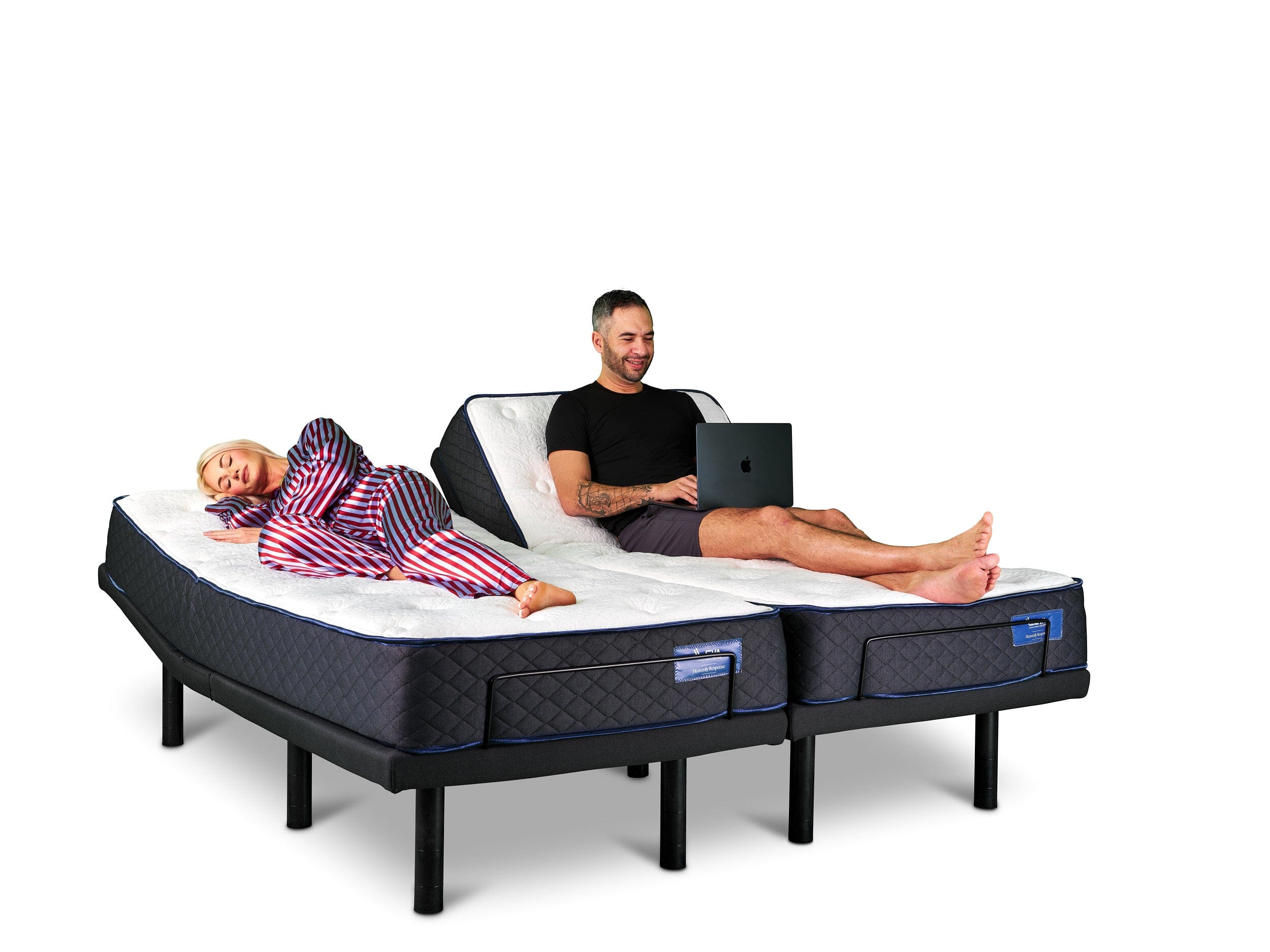
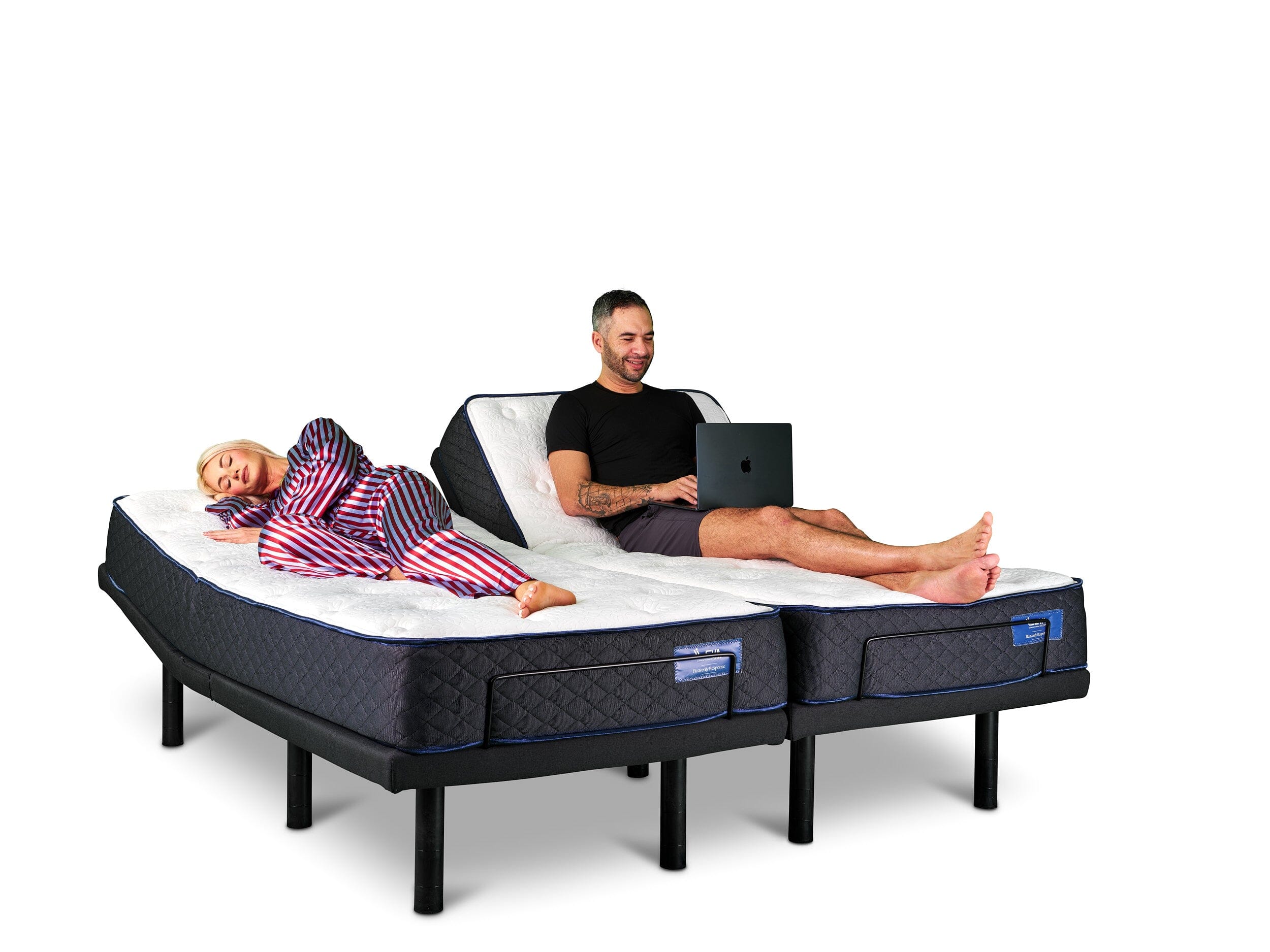
Split configurations allow each partner to raise or lower their side of the bed independently. One person can elevate the head to reduce snoring while the other remains flat, or one partner can raise their legs for back or hip relief while the other chooses a different position.
This setup helps couples who have different:
- Firmness preferences
- Preferred sleep positions
- Temperature and airflow preferences
- Medical needs such as reflux, sleep apnea, or chronic pain
Quiet Motors That Protect Light Sleepers
German-engineered motors in Leva Sleep bases are designed for smooth and quiet adjustments. Subtle position changes during the night are less likely to wake a light sleeper, which is a common concern with older or basic adjustable bases.
App Controls, Massage, and Anti-Snore Features
Smart app controls make it easy to store favourite positions and switch between them with a tap. Couples can save presets for reading, watching TV, working on a laptop, or sleeping.
The system also includes massage features and an anti-snore mode scheduled for launch in spring 2026. This head-elevating setting helps open the airway, which can reduce snoring and improve comfort for both partners.
Compatible accessories, including extra-secure fitted sheets and duvets designed for raised positions, help keep bedding in place as the bed moves.
Explore Leva Sleep adjustable bed packages for personalized comfort on each side of the bed
How Couples Can Match Sleep Setups to Individual Needs
Recognizing Each Partner’s Sleep Profile
Lasting improvements start when partners clearly understand each other’s needs. One person may wake from snoring or breathing pauses, while the other may struggle with back pain or hip pressure.
About one in seven Canadians report observed sleep apnea symptoms. Many also live with anxiety, depression, or chronic pain, which can worsen when sleep is poor. Adjustable positioning, especially gentle elevation of the head or legs, can help create a more supportive environment for both partners.
Moving From One-Size-Fits-All to Custom Support
Traditional flat mattresses often force couples into a compromise that suits neither person well. Adjustable systems add tools such as:
- Lumbar support for lower back comfort
- Pillow tilt for neck and shoulder alignment
- Leg elevation for circulation and pressure relief
- Gentle massage for muscle relaxation before sleep
These options allow each partner to fine-tune their side of the bed instead of relying on a single shared setting.
Why Adjustable Beds Can Be a Practical Investment
Cost is an important factor for many couples, yet ongoing poor sleep also carries a cost. Links between sleep problems and poorer health suggest that better sleep may reduce some long-term health risks and related expenses.
Leva Sleep follows a direct-to-consumer model, which keeps adjustable bed packages more affordable than many traditional retail options while still offering advanced features. For couples who struggle every night with pain, snoring, or frequent awakenings, this type of setup can feel less like a luxury and more like essential equipment.
Integrated Systems vs Separate Components
Choosing a complete system, where base, mattress, and accessories are designed to work together, often leads to a smoother experience than mixing separate pieces. The table below highlights some key differences.
|
Feature |
Leva Sleep Adjustable Bed |
Traditional Flat Bed |
Basic Adjustable Base |
|
Individual comfort customization |
Yes. Split King or Queen, app controls |
No |
Limited. Often shared controls and more noise |
|
Support for medical concerns |
Yes. Anti-snore settings and elevation options |
No |
Limited feature set |
|
Partner disturbance |
Low. Quiet motors and independent adjustment |
High. More motion transfer and unmanaged snoring |
Moderate. Noise and limited independent control |
|
Overall value |
Advanced features at competitive pricing |
Basic comfort only |
Entry-level adjustability |
Making Adjustable Beds Work in a Canadian Home
White-Glove Delivery and Setup
Leva Sleep offers in-house white-glove delivery in many areas, which can simplify the transition from a traditional bed. The service typically includes:
- Assembly and setup of the adjustable base and mattress
- Leg height adjustment to match your preferred bed height
- Removal of the old mattress and base where available
- A walkthrough of key features and controls
This type of service helps couples start using the new features from the first night, without worrying about heavy lifting or complex assembly.
Daily Habits That Help Couples Get the Most Value
Couples often see better results when they treat adjustability as a daily tool rather than a one-time setting. Helpful habits include:
- Saving separate presets for each partner’s favourite sleep positions
- Using a slightly raised head position for reading to reduce neck strain
- Trying leg elevation on evenings with more pain or swelling
- Adjusting the anti-snore setting when snoring increases during a cold or allergy flare
Many couples also create individual profiles in the app so each partner can quickly return to their ideal settings.
See Leva Sleep adjustable bed packages designed with couples in mind
Common Mistakes That Hold Couples Back From Better Sleep
Some choices can limit the benefits couples gain from a new bed setup. Key pitfalls include:
- Underestimating how much poor sleep affects mood, communication, and health over time
- Focusing only on price and choosing a basic option that does not address medical needs or comfort differences
- Skipping compatible accessories, which can cause slipping sheets or awkward duvet placement on a raised bed
Chronic back pain, mood symptoms, and sleep apnea signs affect many Canadians. For couples in this group, a more complete solution often delivers better and more reliable relief than a minimal change.
Frequently Asked Questions About Couples and Adjustable Beds
How adjustable beds can help with snoring
Adjustable beds with anti-snore or head-elevation settings can reduce or sometimes eliminate snoring for many people. Gentle elevation helps keep the airway more open, which supports quieter and more restful sleep for both partners.
How one bed can support very different comfort needs
Split King and Split Queen models give each partner independent control of their side of the bed. Each person can adjust head and foot elevation and massage settings without changing the other side, which reduces the need for compromise.
When an adjustable bed can support medical needs
Many people with sleep apnea, reflux, or chronic pain find that elevated or supported positions reduce symptoms at night. Healthcare providers often recommend head elevation or specific alignments for these conditions, and an adjustable bed can make it easier to maintain those positions through the night.
How much noise to expect from an adjustable bed
Modern adjustable beds that use high-quality, quiet motors produce minimal noise during movement. Smooth adjustments help protect light sleepers from being disturbed when a partner changes position.
Why specialized accessories matter on an adjustable base
Sheets with extra elastic, adjustable-friendly duvets, and pillows that suit raised positions can make a noticeable difference. These items stay in place better during movement and help maintain even coverage, which supports comfort for both partners.
Conclusion: A Shared Path to Better Sleep for Canadian Couples
Shared sleep comfort has become an important focus for many Canadian couples in 2026. With nearly half of Canadians reporting trouble sleeping, solutions that let both partners rest well in the same bed are increasingly valuable.
Leva Sleep adjustable systems give couples practical tools to manage snoring, pain, and different comfort preferences without resorting to separate bedrooms. Independent controls, quiet motors, and compatible accessories support a more peaceful and personalized sleep space.
Improvements in sleep quality often ripple into better health, stronger relationships, and more energy for daily life. For couples who want to prioritize their shared well-being, an adjustable bed can be a realistic next step.
Shop Leva Sleep adjustable bed packages to explore options that support both partners while keeping you in the same bed.