Written by: Matthew Timmins, Founder and Managing Director, Leva Sleep | Last updated: August 6, 2026
Key Takeaways for Couples Considering Sleep Divorce
- A complete sleep system for couples combines an adjustable base, motion-isolating mattress, dual-zone temperature control, and separate bedding to reduce motion transfer, snoring, and temperature mismatch.
- Partner disturbances like tossing, turning, and snoring are the leading causes of sleep divorce, with surveys showing 82% of couples experience nightly disruptions and 15% now sleep apart.
- Split adjustable bases with independent controls let each partner customize head and foot positions without disturbing the other, while smart anti-snore features automatically adjust elevation.
- Dual-zone temperature regulation, separate duvets, and a cool bedroom between 16°C and 19°C support thermal comfort and the core temperature drop required for deep, restorative sleep.
- Leva Sleep offers complete adjustable bed packages designed specifically for couples, so you can shop Leva Sleep’s adjustable beds and keep both partners in the same bed without compromise.
The Problem: Why Couples Face Sleep Divorce
The scale of the problem is significant. As noted earlier, the vast majority of couples experience nightly disruptions from their partner’s movements, with tossing and turning being the most commonly cited issue (25% of respondents in the OnePoll survey conducted for Avocado Green Mattress). Actigraphy research has shown that a partner’s movements can lead to wake transmissions at night, contributing to a portion of awakenings. Some studies suggest that motion transfer across a mattress can increase light sleep while decreasing time spent in deeper sleep stages.
Snoring compounds the problem. The YouGov survey commissioned by the National Bed Federation found that this rate has roughly doubled since 2009, with 89% of separated couples sleeping in entirely separate rooms and snoring cited as the leading driver. Research commissioned by healthcare company 32Co found that 47% of recently divorced Britons cited snoring or sleep disorders as contributing to the breakdown of their relationship.
Temperature mismatch adds another layer. For couples sharing a bed, two bodies generate more heat, pushing the sleeping environment above the optimal range and increasing fragmented sleep and night awakenings. Perimenopause-related temperature fluctuations further influence women's decisions to sleep separately, according to family dispute resolution practitioner Naomi Doyle of Relationships Australia NSW.
The relationship consequences are measurable. A meta-analysis of 62 studies covering 43,860 individuals found bidirectional ties between relationship quality and sleep quality with a correlation of 0.34. Poor sleep quality predicts increased anger and worsened perceptions of relationship quality, per Audigier et al. (2023). These compounding disruptions have led many couples to consider a drastic solution: sleeping apart entirely.
What Is a Sleep Divorce?
A 2023 American Academy of Sleep Medicine national survey of 2,005 American adults found that 35% sometimes or always sleep in a separate room from their partner. Sleep divorce refers to the practice of partners sleeping in separate rooms or beds on a regular basis to reduce mutual sleep disruption. It is not inherently a sign of relationship breakdown, but it does carry trade-offs. Co-sleeping is associated with approximately 10% more relative REM sleep, less fragmented REM sleep, and greater synchronization of sleep stages.
Is It Healthy for a Married Couple to Sleep Separately?
Sleep-quality benefits of sleeping apart are strongest when there is real partner disruption such as snoring and are modest when disruption is low. A SleepFoundation.org survey found that 53% of people who tried a sleep divorce reported improved sleep quality, sleeping an average of 37 minutes more per night. However, relationship-quality effects of separate sleeping are mixed across studies and depend heavily on context and communication. The more clinically sound approach is to resolve the underlying disruptions, such as motion, snoring, temperature, and firmness, so both partners can remain together.
Explore split adjustable base packages designed to keep Canadian couples in the same bed instead of sleeping apart.
The Solution: A Complete Sleep System Checklist
A complete sleep system for couples works best when each of the following components functions together.
- Motion-isolating mattress. All-foam or pocketed-coil hybrid mattresses provide strong motion isolation. Pocket coil hybrid mattresses with zoned support and a memory foam or latex comfort layer help, because individually wrapped coils move independently and the comfort layer dampens movement. Leva Sleep designs both all-foam and hybrid pocket-coil mattresses specifically to flex and recover at the hinge points of an adjustable base.
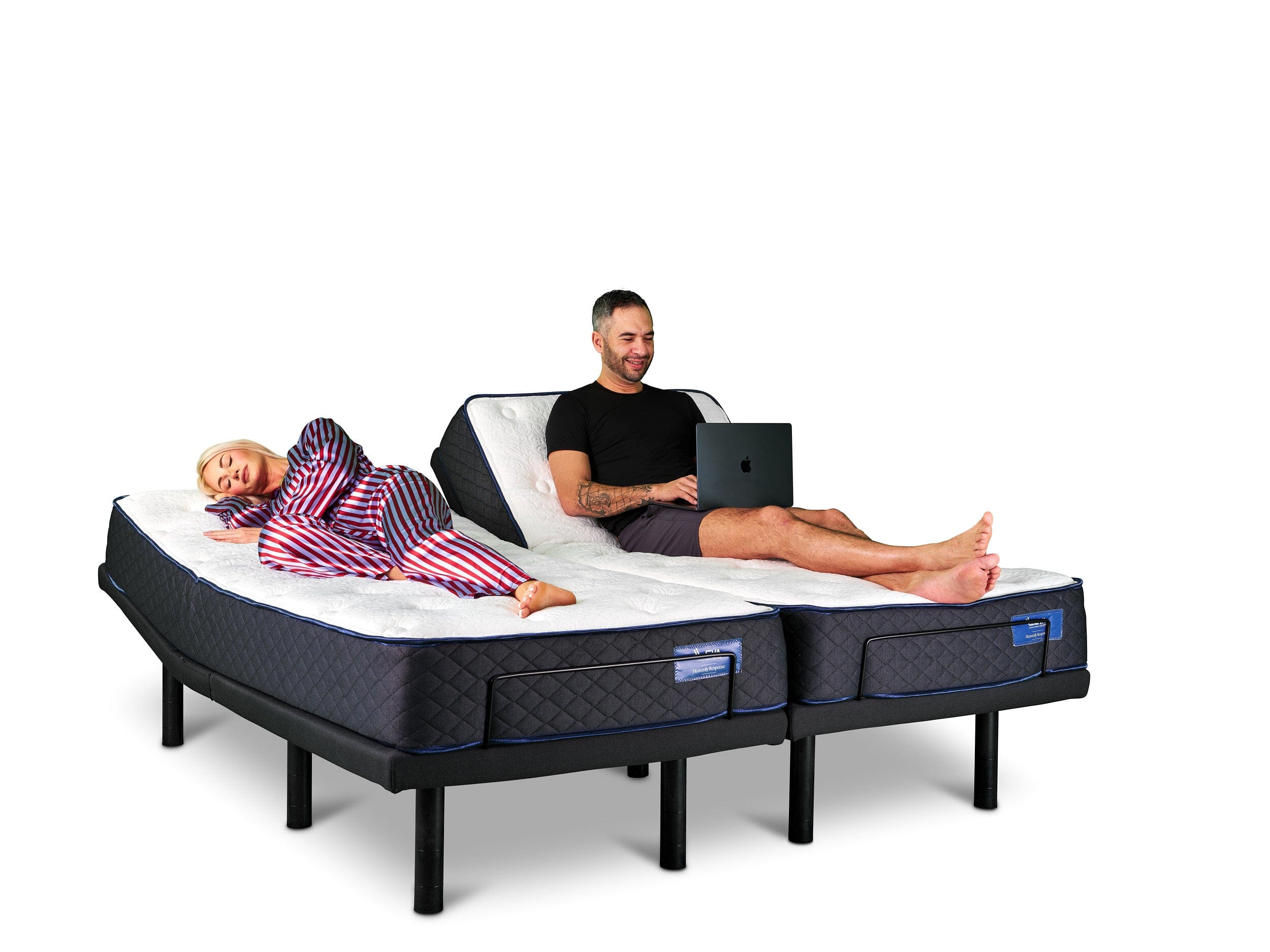
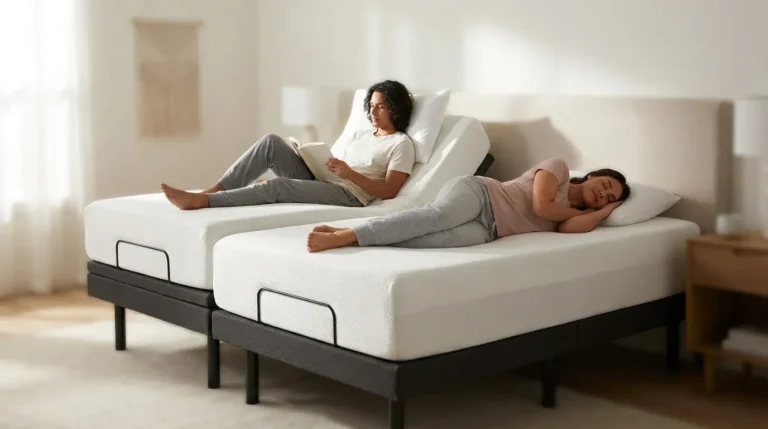
- Split adjustable base with independent controls. Split-king configurations use two Twin XL adjustable bases placed side by side, so each partner can adjust their own side independently without disturbing the other. Smart adjustable bases detect snoring vibrations and automatically raise the head section by a few degrees to open the airway without fully waking the user. Leva Sleep offers both Split King and the uniquely space-efficient Split Queen configuration, with whisper-quiet German motors and full app control.
- Dual-zone temperature control. For couples with different thermal preferences, a dual-zone heating and cooling pad, such as the system integrated into Leva Sleep's higher-end bases, allows each partner to set an independent temperature without adjusting the room thermostat.
- Dual duvets (the Scandinavian method). With separate duvets, each person can choose a fill weight suited to their warmth preference. A lighter summer duvet around 150–200 gsm fill works well for the warm sleeper, while a heavier winter duvet around 300–400 gsm fill suits the cooler partner. Leva Sleep's duvet clips maintain separation between individual duvets even when the base is elevated, preventing the covers from bunching at the hinge points.
- Individually chosen pillows and mattress protectors. Thicker pillows are recommended for side sleepers, medium-height pillows for back sleepers, and minimal support for stomach sleepers. Mattress protectors designed for adjustable bases use deep pockets and extra elastic to remain secure through repeated elevation cycles, a feature standard protectors do not provide.
- Bedroom environment of 16–19°C (60–67°F). The National Sleep Foundation recommends this range as optimal for most adults, because a cool room accelerates the body's natural core temperature drop that serves as a biological prerequisite for sleep onset and deep sleep maintenance. Research has shown that temperatures above this range can be associated with worse sleep efficiency, longer sleep onset latency, and more wake time after sleep onset.
- White-glove delivery and professional setup. A complete sleep system performs best when installed correctly. Leva Sleep's in-house white-glove delivery service brings trained professionals to the bedroom, assembles the base and mattress, adjusts leg heights, provides a full product tutorial, and removes the old bed. This approach removes the assembly burden that often undermines the experience of bed-in-a-box alternatives.
See Split Queen and Split King packages that include every component in this checklist.
Why Couples Choose Split Queen in Canada
Canadian couples increasingly look for split adjustable bed frames because they want dual customization without giving up shared sleep. For couples in Ontario and Alberta whose bedrooms cannot accommodate a full 76-inch king footprint, the Split Queen offers a practical alternative. Leva Sleep is a unique provider of Split Queen adjustable beds built to customer specifications.
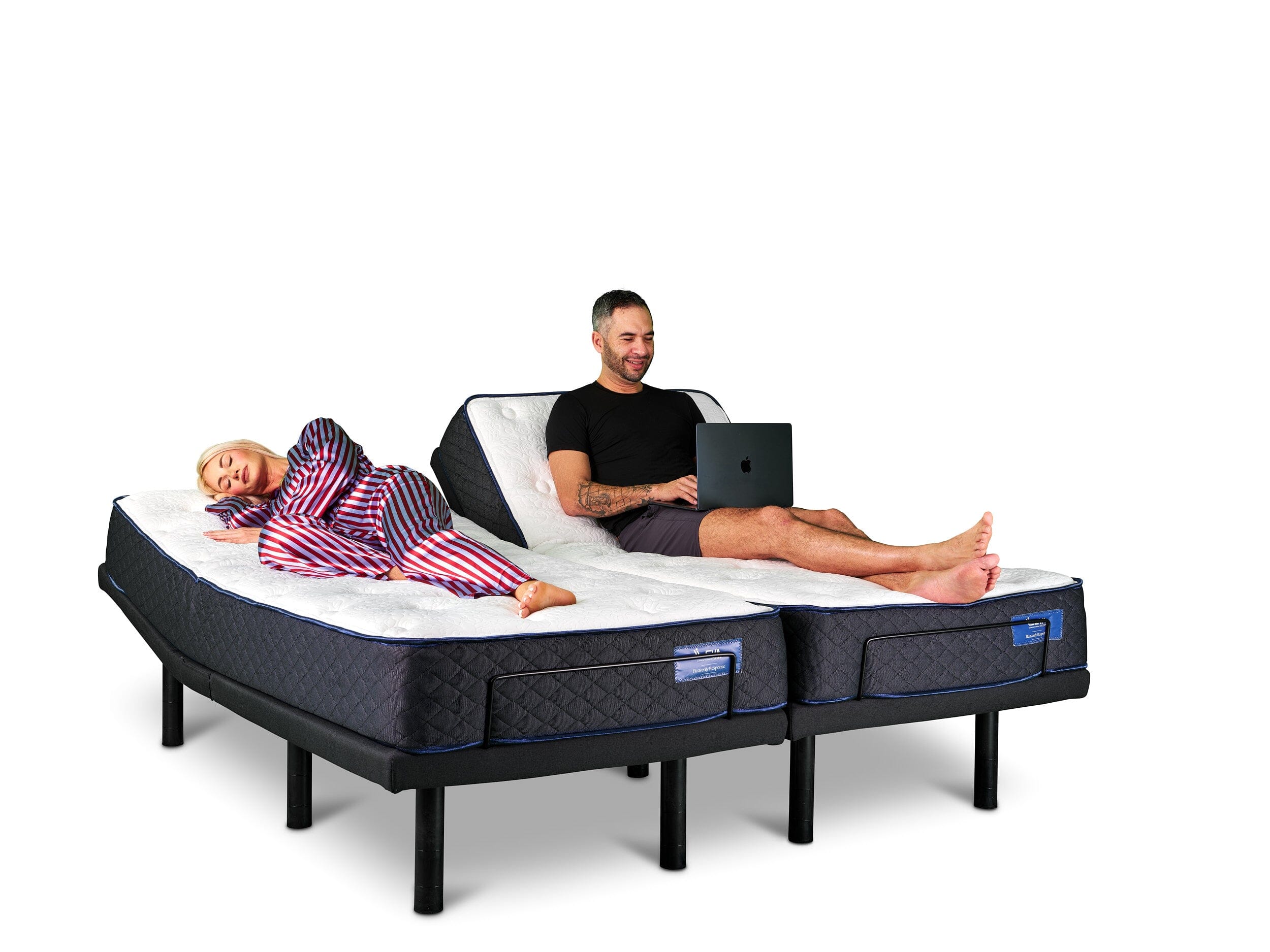
Leva Sleep's direct-to-consumer, vertically integrated model, which involves designing, assembling, and delivering locally without retail middlemen, makes this level of system accessible at 30–50% less than comparable luxury competitors. This pricing advantage does not come from cutting corners. Leva Sleep delivers the same independent-control functionality, whisper-quiet motors, and app-based personalization found in brands such as Tempur-Pedic, but without the wholesale markup. The direct model also enables greater selection depth, with 15–20 adjustable base models available versus the 3–5 found at a standard mattress retailer.
Over 25,000 Canadian customers and $50M in lifetime sales reflect a track record built on resolving exactly the problems described in this article. Many couples who had moved to separate rooms have returned to a shared bed after switching to a Leva Sleep split system.
Frequently Asked Questions
Can a split adjustable base work in a standard bedroom?
A Split Queen adjustable base fits within the same footprint as a standard queen bed frame, which makes it suitable for most Canadian bedrooms without a room reconfiguration. A Split King requires the same floor space as a standard king. Leva Sleep's white-glove delivery team assesses leg height and clearance during setup, so the final configuration fits the specific room rather than a generic specification.
Do both partners need to use the same mattress on a split base?
No. One of the primary advantages of a split adjustable base is that each side accommodates a different mattress. Partners with significantly different firmness preferences, such as one requiring a softer all-foam mattress for hip pressure relief and the other preferring a firmer hybrid for back support, can each select the surface that suits their body without compromise. Leva Sleep's sleep specialists guide couples through this selection process, and all mattresses in the Leva lineup are engineered to flex correctly at the base's hinge points.
Is an adjustable base medically appropriate for sleep apnea or post-surgery recovery?
Elevating the head of the bed 10–20 degrees opens the airway by allowing gravity to prevent the tongue and soft palate from collapsing backward, which can reduce positional snoring and mild obstructive sleep apnea symptoms. Leva Sleep's anti-snore mode detects snoring and makes micro-adjustments to the head elevation automatically. For post-surgery recovery, the zero-gravity preset distributes body weight to reduce spinal and joint pressure. Customers with diagnosed sleep apnea or specific post-surgical protocols should confirm the appropriate elevation angle with their physician, because adjustable bases complement but do not replace medical treatment for moderate to severe sleep apnea.
Will standard bedding work on an adjustable base?
Standard fitted sheets typically lack the deep pockets and elastic reinforcement needed to stay secured when the base elevates. Leva Sleep designs its fitted sheets, mattress protectors, and duvets specifically for adjustable bases, with extra elastic and side remote pockets that remain functional through repeated position changes. Using standard bedding on an adjustable base commonly results in sheets pulling free at the corners during the night, which disrupts sleep and defeats the purpose of the system.
How long does a Leva Sleep adjustable base last, and what does the warranty cover?
Quality adjustable base motors are built for long-term durability. Leva Sleep's bases are backed by manufacturer warranties on motors and frames, and the in-house service model means warranty support comes directly from the company rather than through a third-party retailer. Customers receive a full product tutorial at delivery so they understand the maintenance requirements, primarily keeping the base clear of obstructions and using compatible bedding, that protect the warranty and extend the system's lifespan.
Conclusion: Staying Together Starts with the Right Sleep System
Sleep divorce reflects unresolved disruption, not an inevitable outcome of sharing a bed. The evidence is consistent. Motion transfer, snoring, temperature mismatch, and firmness incompatibility are all addressable with the right combination of components. A motion-isolating mattress paired with a split adjustable base eliminates the two most common sources of partner disturbance. Dual-zone temperature control and separate duvets resolve thermal conflict without requiring either partner to compromise. Maintaining the recommended cool bedroom environment supports the core temperature drop both partners need for deep, restorative sleep. Professional setup then ensures every component functions as a system from the first night.
Leva Sleep brings all of these components together in a single, vertically integrated offering available to couples in Ontario and Alberta. The split Queen option that general mattress retailers do not provide comes at 30–50% less than luxury competitors and arrives with an in-house team that handles everything from assembly to old-bed removal.