Written by: Matthew Timmins, Founder and Managing Director, Leva Sleep
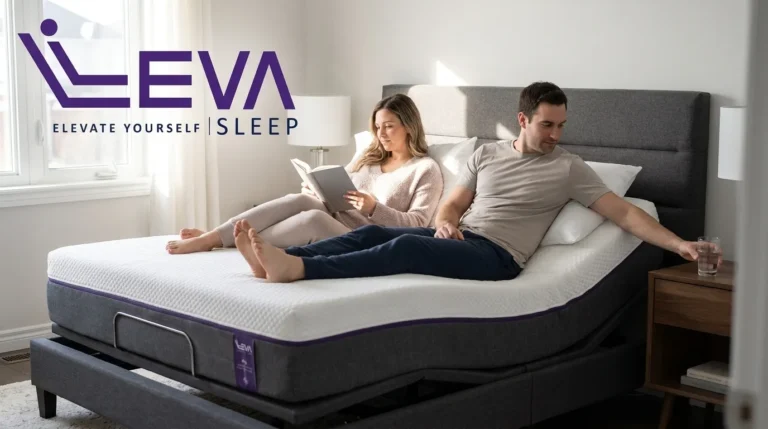
Many couples struggle to get restful sleep on an adjustable bed due to temperature differences, partner movement, and mismatched mattresses. This guide helps you choose a cooling memory foam mattress that works well with adjustable beds, offering personalized comfort and undisturbed rest for both partners. Let’s explore how modern mattress features and adjustable bases can create a peaceful sleep space for two.
Why Cooling Memory Foam Works Well with Adjustable Beds for Couples
Common Sleep Challenges for Couples
Canadian couples often deal with sleep issues that affect both health and relationships. A frequent problem is differing temperature needs, where one partner feels too hot while the other feels too cold, leading to disagreements over bedding or room temperature.
Another issue is partner disturbance. Movements like tossing, turning, or snoring can easily wake the other person. On traditional mattresses, these motions spread across the bed, making it harder to sleep. Medical conditions, such as sleep apnea or chronic pain, also complicate matters since standard beds rarely support the necessary sleeping positions.
Finally, typical mattresses often fail on adjustable bases. They aren’t built for frequent position changes, causing bunching, sliding, or uneven wear. This can lead to discomfort and pressure points, reducing the benefits of an adjustable bed.
How Cooling Memory Foam Improves Sleep for Two
Cooling memory foam, when paired with an adjustable base, directly tackles these sleep struggles. Its flexible structure adapts to different bed angles, providing tailored support for each partner without losing shape.
One key advantage is motion isolation. Memory foam absorbs movement, so if one partner shifts or adjusts their side of the bed, the other won’t feel it. This is especially helpful on split adjustable bases where each side moves independently.
Modern cooling features in memory foam also manage heat effectively. They help maintain a comfortable temperature for both partners, addressing overheating issues that often disrupt sleep.
Check out Leva Sleep’s range of adjustable bed options at our adjustable bed collection.
Understanding Cooling Memory Foam Mattresses for Adjustable Beds
Cooling Features: Gel Infusions and Phase-Change Materials
Recent advancements in cooling memory foam include gel-infused foam and phase-change materials that regulate temperature effectively. Gel spreads body heat away from the surface, while phase-change materials absorb heat when you’re warm and release coolness when you’re not.
This active cooling adjusts to your body’s needs throughout the night. For couples on adjustable beds, it ensures consistent comfort even if each partner produces different levels of heat.
These technologies are especially useful on adjustable bases, where changing positions can trap heat. Gel and phase-change materials keep you comfortable no matter the bed angle.
Breathable Design: Open-Cell and Perforated Foam
Open-cell designs and perforated foam improve airflow to prevent heat buildup. These features allow air to move through the mattress, releasing warm air and pulling in cooler air.
This breathability is crucial on adjustable beds, where angles can create pockets of trapped heat. A well-ventilated mattress keeps the sleep surface comfortable for both partners, even during position changes.
For couples, this means each person’s warmth won’t affect the other, maintaining a balanced temperature across the bed.
Cool-Touch Fabrics: Copper, Graphite, and Eucalyptus
Many cooling mattresses now use surface fabrics infused with copper, graphite, or eucalyptus for immediate and lasting cooling. Copper pulls heat away from the body and offers antimicrobial benefits. Graphite conducts heat well and resists odors. Eucalyptus wicks moisture to keep the surface dry.
For couples with different temperature needs, these fabrics provide quick relief for hot sleepers and steady cooling to prevent heat buildup that could disturb the other partner.
Edge Support and Durability for Adjustable Beds
Strong edge support is vital for mattresses on adjustable beds. Reinforced edges keep the mattress stable during position changes. Without it, sagging can occur, leading to discomfort and wear.
High-density foam along the sides ensures the mattress holds up to frequent adjustments. This is key for couples who change positions often. Solid edges also make getting in and out of bed easier and safer.
A durable design with strong edges and a robust core extends the mattress lifespan, which matters since adjustable bed mattresses endure more stress than traditional ones.
How Leva Sleep Enhances Your Adjustable Bed Experience
Adjustable Beds Built for Couples’ Comfort
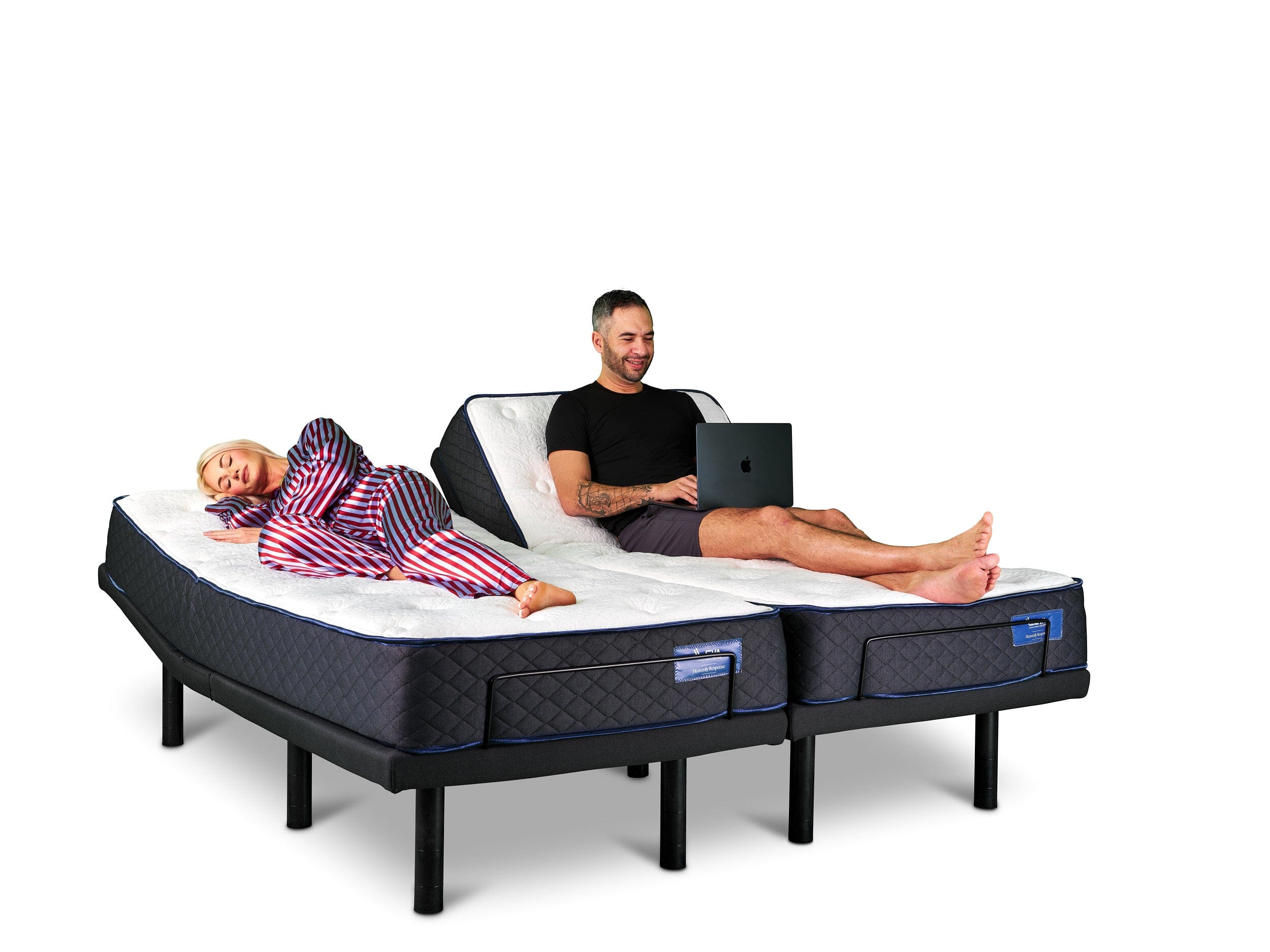
Leva Sleep designs adjustable beds to meet the specific needs of Canadian couples. Our Split Queen and Split King options let each partner control their side independently, accommodating personal comfort or health requirements.
We include quiet motors and app-controlled settings for tailored positions or snoring adjustments. Optional heating and cooling pads allow each person to set their preferred temperature, ensuring a customized sleep setup for both.
Benefits of Split King and Queen Configurations
With Leva Sleep’s split configurations, each partner adjusts their side of the bed for elevation or firmness without affecting the other. This setup works well for snoring, medical conditions, or simply different comfort preferences.
Movement stays isolated to each side, so one partner’s adjustments won’t disturb the other. Couples can sleep closely while still benefiting from individual settings tailored to their needs.
Extra Comfort with Specialized Accessories
Leva Sleep offers bedding and accessories made for adjustable beds. Our fitted sheets have deep pockets and strong elastic to stay in place during adjustments. Duvet clips prevent shifting when bed positions vary.
We also provide heating and cooling pads for personalized temperature control, helping couples with different thermal needs. These additions create a complete sleep system focused on comfort and practicality.
Affordable Quality with Direct-to-Consumer Pricing
Leva Sleep offers adjustable beds at 30 to 50 percent lower costs than many competitors by selling directly to customers. We manage production ourselves, cutting out middlemen to keep prices accessible for Canadian couples.
This model maintains high quality through direct oversight of design and assembly. It also lets us quickly adapt to feedback while keeping costs down, making advanced sleep options available to more people.
Your Guide to Picking a Mattress for Adjustable Beds
Focus on Motion Isolation for Peaceful Sleep
Motion isolation should be a top concern when choosing a mattress for an adjustable bed, especially for couples. Look for models with layered foam that absorbs movement effectively. The density and depth of these layers impact how well they limit motion transfer.
Quality mattresses often have zoned designs to reduce movement in high-activity areas. Test this by having one partner move while the other stays still. A good mattress keeps disturbances minimal, so adjustments or getting in and out of bed won’t wake anyone up.
Evaluating Cooling Features for Your Needs
Cooling technologies vary, so consider your specific temperature challenges. Hot sleepers benefit from active cooling like gel infusions or phase-change materials that manage heat continuously.
If temperature differences are mild, breathable designs or cool-touch fabrics might suffice. For significant disparities or night sweats, opt for mattresses with multiple cooling systems. Also, think about your local climate. Warmer areas or poorly ventilated rooms may need stronger cooling than cooler environments.
Checking Flexibility and Edge Support
A mattress must flex without losing support on an adjustable base. It should hold its shape and comfort at any angle. Edge support matters too, offering stability when sitting or sleeping near the sides.
Test edge strength by sitting along the mattress perimeter. Good models feel firm and don’t compress excessively, preventing gaps or bunching during adjustments.
Matching Comfort to Health Requirements
Your mattress should enhance the health benefits of an adjustable base. Features like lumbar support or zero gravity positioning pair with mattresses to ease pain and boost sleep quality. Cooling elements can add comfort during long periods in raised positions.
For conditions like sleep apnea, a supportive mattress and adjustable settings offer relief. Think about how your health needs align with mattress features for the best results.
Comparing Mattress Options for Adjustable Beds
What Sets Mattresses Apart for Couples
|
Feature |
Specialized Memory Foam |
Standard Memory Foam |
Hybrid Foam |
|
Primary Cooling Tech |
Gel-Infused, Breathable Structure (varies by model) |
Limited |
Vented Layers, Coil Airflow |
|
Temperature Regulation |
Excellent, Active (varies by model) |
Moderate |
Good |
|
Motion Isolation |
Superior |
Excellent |
Good |
|
Flexibility for Adjustment |
Excellent |
Excellent |
Very Good |
Specialized memory foam stands out for adjustable beds with better cooling and motion isolation, ideal for couples with temperature differences. Standard memory foam handles movement well but often lacks heat management. Hybrids offer airflow through coils but may not block motion as effectively. Leva Sleep pairs adjustable beds with various mattress types for tailored comfort. Explore more at our adjustable bed systems.
Setting Up Your New Sleep System with Ease
Simple Delivery and Installation with Leva Sleep
Leva Sleep provides white-glove delivery for a stress-free setup of your adjustable bed. For a fee, our team manages everything, from removing your old bed to assembling the new one and explaining how it works.
Our staff brings the right tools to install the base properly, position it in your room, secure electrical components, and ensure split systems function independently. They also adjust the height for comfort and guide both partners on using controls and app features.
Fine-Tuning Adjustable Bed Settings for Comfort
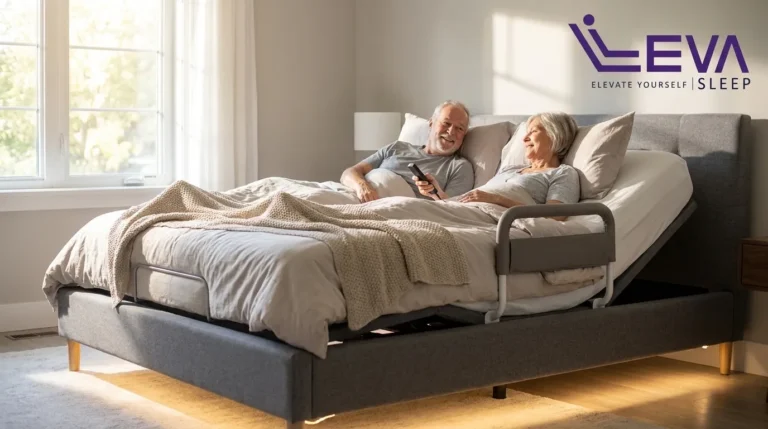
Settings like head elevation, foot elevation, and zero gravity mode complement mattresses for better sleep. Zero gravity raises both ends to reduce pressure and improve circulation, with each partner able to adjust separately.
An anti-snore option slightly lifts the head to open airways, helping reduce snoring without disturbing the other person, especially on Leva Sleep beds with strong motion isolation.
Common Mistakes Couples Make with Adjustable Bed Systems
Skipping Key Features in Basic Models
Choosing a mattress or bed without adjustable-specific features can lead to problems. Basic models might provide support but often lack cooling or other necessities, especially in raised positions where airflow diminishes.
This can cause hot sleepers to wake up uncomfortable, disrupting their partner too. Such issues reduce the value of an adjustable bed, defeating its purpose.
Underestimating Motion Isolation Needs
Poor motion isolation on adjustable beds heightens disturbances. Unlike flat beds, adjustable bases involve unique movements from adjustments or features like massage. Without good isolation, these motions ripple across the bed.
This can create a noticeable shake, waking even sound sleepers. Couples may avoid using adjustments to prevent bothering each other, missing out on the bed’s full potential.
Neglecting Edge Support and Longevity
Weak edge support shows issues over time on adjustable beds. Without reinforcement, mattress edges sag, making the surface uneven and unsafe for sitting or sleeping near the sides.
This instability also causes mattresses to shift during adjustments. On adjustable beds, constant flexing wears out weaker materials faster, leading to early replacement needs.
Buying from Non-Specialized Retailers
General retailers often lack expertise in adjustable bed systems, leading to incompatible recommendations. Mattresses or bases may not perform well together during position changes or flexing.
Without specialized support, resolving issues becomes frustrating as different parties pass responsibility. Opting for a focused provider ensures better compatibility and service.
Frequently Asked Questions
Are All Memory Foam Mattresses Suitable for Adjustable Beds?
Not every memory foam mattress is ideal for adjustable beds. While the material is flexible, standard versions may lack the edge support or design needed for repeated adjustments. Mattresses built for adjustable bases maintain shape and comfort through changes, offering consistent support for couples.
How Do Cooling Features Help Couples with Different Temperature Needs?
Cooling mattresses balance temperature across the bed using technologies that manage heat. They draw warmth away from hotter sleepers while keeping a comfortable level for the other partner, reducing conflicts over bedding or room temperature.
Can Adjustable Beds Reduce Snoring?
Adjustable beds from Leva Sleep can help lessen snoring with features like anti-snore mode. A slight head elevation opens airways for better breathing. Motion isolation ensures these adjustments don’t disturb the other partner, encouraging regular use.
Does Leva Sleep’s Split Queen Work with Different Mattresses?
Leva Sleep’s Split Queen and other bases are compatible with various mattresses, including our foam and hybrid options, as well as some partner brands. Each side operates independently for personalized control and performance.
What Care Do Mattresses on Adjustable Beds Need?
These mattresses need little upkeep but benefit from routine care. Rotate them every three to six months if possible, use breathable protectors, and keep the area ventilated. Vacuum the surface monthly for cleanliness, and follow manufacturer care tips to maintain quality.
Final Thoughts: Achieving Better Sleep Together
Adjustable beds paired with the right mattresses offer a practical way for couples to enjoy personalized comfort in a shared space. With features like cooling technology, motion isolation, and flexible designs, these setups address common sleep disruptions faced by many Canadians.
Leva Sleep focuses on complete sleep systems that cater to individual needs without compromise. Our direct pricing makes quality solutions affordable, while dedicated service ensures you get the most from your adjustable bed.
Finding restful sleep as a couple is possible. The right system lets both partners enjoy tailored comfort and uninterrupted rest side by side.
Ready to improve your sleep? Visit Leva Sleep’s adjustable bed packages to see how Canadian couples are sleeping better together.