
Written by: Matthew Timmins, Founder and Managing Director, Leva Sleep | Last updated: June 27, 2026
Key Takeaways for Hot-Sleeping Couples
- Overheating often wakes couples who share an adjustable bed, and pillow choice becomes critical once the head section elevates.
- Cooling memory foam pillows use gel infusion, shredded foam, or phase-change covers. Shredded designs usually deliver the most consistent airflow.
- Loft and firmness must match sleep position. Side sleepers need 4–6 inches, back sleepers 3–4 inches, and stomach sleepers under 3 inches. Shredded pillows make customization easier for partners.
- Key buying criteria include non-slip bases for split adjustable frames, machine-washable covers, and Canadian price bands between $60 and $150 CAD.
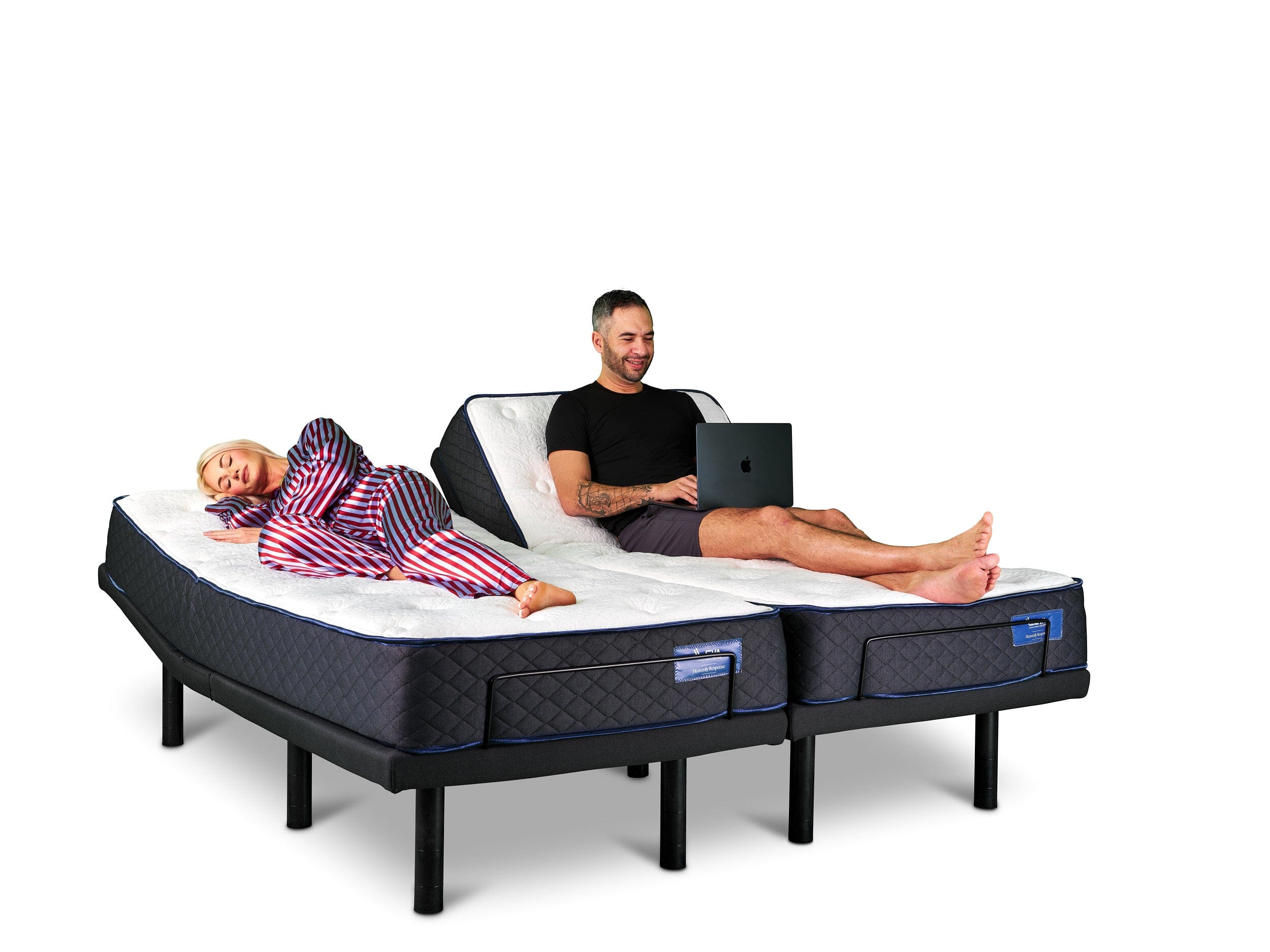
- Leva Sleep offers adjustable bed packages with integrated temperature control and compatible accessories. Shop Leva Sleep’s adjustable beds to complete your sleep system.
How Cooling Memory Foam Pillow Technologies Actually Work
The term “cooling pillow” covers several distinct technologies. Knowing how each one works helps you look past marketing language and focus on real performance.
Gel-infused memory foam incorporates gel beads or a gel layer into the foam. The gel has higher thermal conductivity than plain foam, so it draws heat away from the skin faster on initial contact. The limitation is that gel-infused solid foam still restricts airflow through the pillow body, so heat eventually re-accumulates instead of escaping.
Shredded memory foam replaces a solid block with loose foam pieces. The gaps between pieces create air channels that allow warm air to rise and cooler air to move in. Shredded constructions usually maintain lower surface temperatures over longer sleep periods than solid gel-infused foam. Actual results depend on pillow density and how breathable the cover is.
Phase-change material (PCM) covers use fabric infused with microencapsulated compounds that absorb heat as they shift from solid to liquid at a set temperature, usually near skin temperature. PCM covers feel distinctly cool to the touch and delay heat build-up. Their capacity is finite, so once the material absorbs its maximum heat load, the cooling effect fades until the pillow cools again, such as when you flip it.
Loft categories describe pillow height: low loft (under 3 inches), mid loft (3–5 inches), and high loft (over 5 inches). Loft affects spinal alignment and airflow. A denser, taller pillow traps more heat than a flatter, more breathable one.
How Pillow Construction Shapes Cooling and Adjustability
Beyond the cooling technologies, the physical construction of a pillow strongly influences how it manages heat and works on an adjustable base.
Solid memory foam pillows, whether gel-infused or plain, offer consistent, predictable support. The foam contours to the head and neck and spreads pressure evenly. The trade-off is limited airflow through the pillow body. Even with a PCM cover, heat eventually saturates the foam core, especially during sleep periods longer than four to five hours.
Shredded foam pillows allow air to move through the fill, which supports more sustained cooling. They are also adjustable. You can remove or add fill to change loft and firmness for different sleepers. The downside is that shredded fill can migrate and clump over time, which creates uneven support zones. Periodic fluffing and redistribution keeps loft consistent, which matters for couples who prefer low-maintenance bedding.
On an adjustable base, shredded pillows usually conform better to changing head angles because the loose fill redistributes as the base moves. Solid foam pillows keep their shape regardless of base angle. That stability can help sleepers who need consistent cervical support, but it can also create a gap between the pillow and the neck when the head section rises sharply.
Matching Loft and Firmness to Your Sleep Position
Spinal alignment should guide loft selection, and sleep position sets the loft range you need.
Side sleepers need the highest loft, usually 4–6 inches, to fill the space between the shoulder and head and keep the cervical spine level. A pillow that sits too low lets the head drop toward the mattress and strains the neck. On an adjustable base with the head elevated, side sleepers should confirm that the pillow keeps enough height even when the base angle compresses the pillow against the headboard or mattress.
Back sleepers do best with a mid-loft pillow of roughly 3–4 inches that supports the natural cervical curve without pushing the chin toward the chest. When the head section of an adjustable base rises, back sleepers gain extra elevation from the base itself. A slightly lower-loft pillow than they use on a flat mattress can feel more comfortable.
Stomach sleepers need the lowest loft, under 3 inches, or a very soft, compressible fill to avoid neck hyperextension. Stomach sleeping on an elevated adjustable base generally does not support spinal health. Most sleep specialists encourage stomach sleepers to transition to a side or back position when using an adjustable base.
For couples with different sleep positions, a shredded foam pillow with adjustable fill lets each partner fine-tune loft without buying two completely different models.
Key Buying Factors for Canadian Adjustable-Bed Owners
This framework highlights the criteria that matter most for hot-sleeping Canadian couples who use adjustable bases.
Fill type: Choose gel-infused solid foam if you want consistent contouring and a cool initial feel. Choose shredded foam if you prioritize sustained airflow and loft adjustability. Some mid-to-upper price options combine a shredded foam core with a gel-infused base layer.
Cover technology: Look for covers with PCM treatment, Tencel, or bamboo-derived fabric, since these materials wick moisture better than polyester. A knit construction with open-weave ventilation also improves breathability. These materials work best when the cover is removable and machine-washable, because even advanced cooling fabrics collect sweat and allergens over time, and non-removable covers cannot be cleaned properly.
Loft range: Confirm the stated loft measurement and whether you can adjust it. For couples with different shoulder widths or sleep positions, adjustable fill offers a clear advantage.
Washability: Aim for a pillow where the cover is removable and machine-washable, and the core is at least spot-cleanable. Most memory foam cores cannot be submerged, so always check care instructions before you buy.
Price bands in Canada: Entry-level cooling memory foam pillows in Canada start around $29 CAD, with many options between $49 and $99 CAD. Mid-range models with PCM covers or adjustable shredded fill usually fall between $90 and $130 CAD. Premium constructions with hybrid fill and certified covers cost more. Options above $150 CAD exist but usually sit outside the value range most couples need for pillow-level purchases.
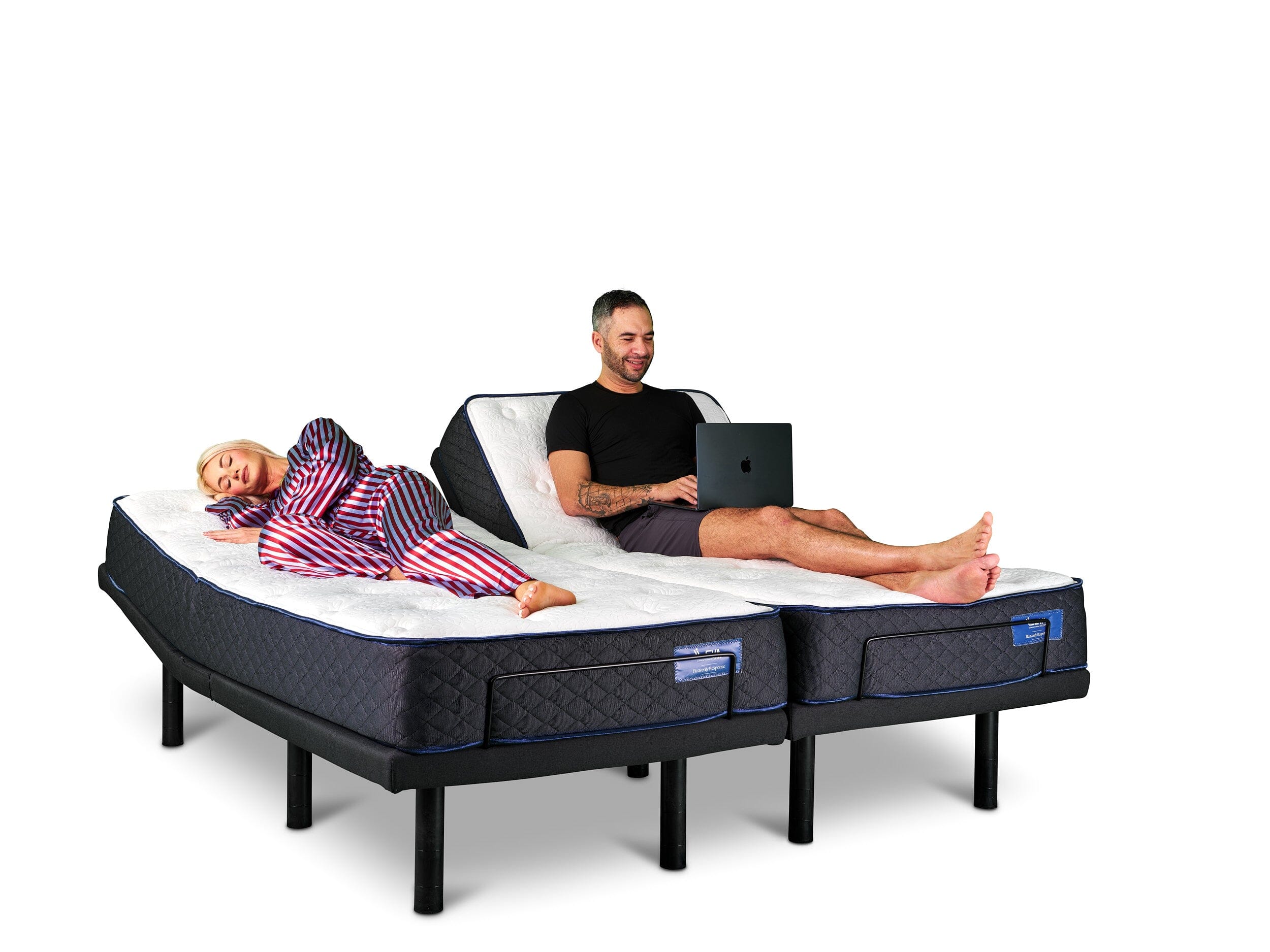
Adjustable-base compatibility: Confirm that the pillow has a non-slip base fabric or a textured cover that resists sliding when the head section elevates. Check that the pillow width fits within the narrower sections of a split base, such as split queen or split king. A pillow that overhangs the mattress edge on a split base will shift during elevation cycles.
Realistic Trade-Offs Between Cooling Technologies
Gel-infused solid foam delivers reliable contouring and a cool initial feel, but as noted earlier, the sealed structure limits sustained cooling. Sleepers who move often or sleep more than six hours may notice the surface temperature rising later in the night. Gel foam pillows keep their shape without maintenance, which suits sleepers who want predictable support.
Shredded foam offers better long-term cooling through convective airflow but needs occasional redistribution to prevent clumping. The fill can compress unevenly under heavier heads, which reduces effective loft over time. As mentioned earlier, shredded constructions adapt better to base angle changes, though they require periodic maintenance to keep support even.
PCM covers create the strongest immediate cooling sensation but have limited absorption capacity per sleep cycle. They work best for sleepers who run hot during the first two or three hours and then cool down, or for people who flip their pillow during the night. PCM covers add cost and need careful laundering to protect the microencapsulation.
No single technology removes heat completely. Hot sleepers on an adjustable base usually get the best results from a combination: a shredded or hybrid foam core for airflow, a PCM or moisture-wicking cover for surface cooling, and a temperature regulation system at the base level for the mattress surface.
Leva Sleep’s adjustable bases integrate a heating and cooling pad that regulates mattress surface temperature independently for each partner. This setup addresses the root cause of shared-bed overheating at the system level instead of relying only on pillow technology. Explore how Leva’s temperature-controlled bases work with cooling pillows to create a more stable sleep climate.
What Happens After You Bring a New Pillow Home
Memory foam pillows, whether solid or shredded, usually need a short break-in period before the foam fully adapts to your head and neck. A mild off-gassing odour from new foam is common and typically fades within 24 to 72 hours in a ventilated room.
On an adjustable base, check pillow placement after the first week of use at your usual elevated angles. Pillows that slide toward the headboard during elevation may need a non-slip pillow protector or a quick repositioning after each adjustment. Leva Sleep designs fitted sheets and accessories with deep pockets and extra elastic to stabilise bedding during base movement, which reduces how often you need to reposition pillows.
Wash pillow covers regularly. Both shredded and solid memory foam fills should be air-dried flat after washing, not placed in a dryer. Replace cooling pillows when the foam stops returning to its original loft after compression, usually every two to three years under normal use.
Common Cooling Pillow Mistakes to Avoid
Buying on price alone often results in a pillow that fails both cooling and adjustable-base compatibility needs. A $60 CAD pillow with no non-slip base and a non-washable cover will usually underperform a $110 CAD option with better construction within the first month.
Many couples overlook partner height differences. Two people sharing a split adjustable base often have different shoulder widths and head sizes, so one pillow loft rarely suits both. Each side of a split base should be evaluated separately.
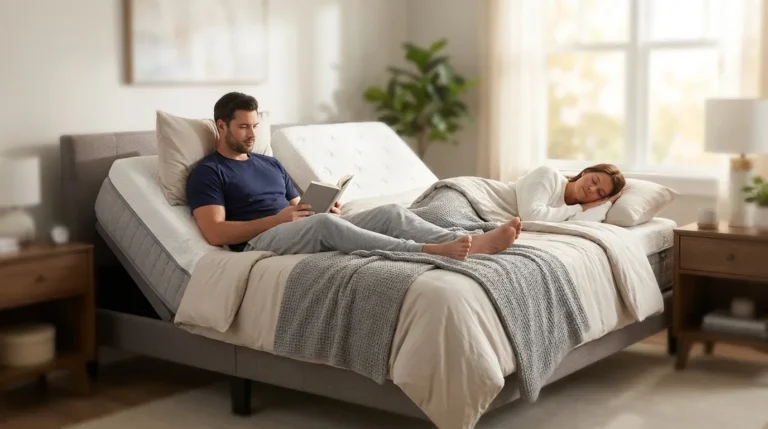
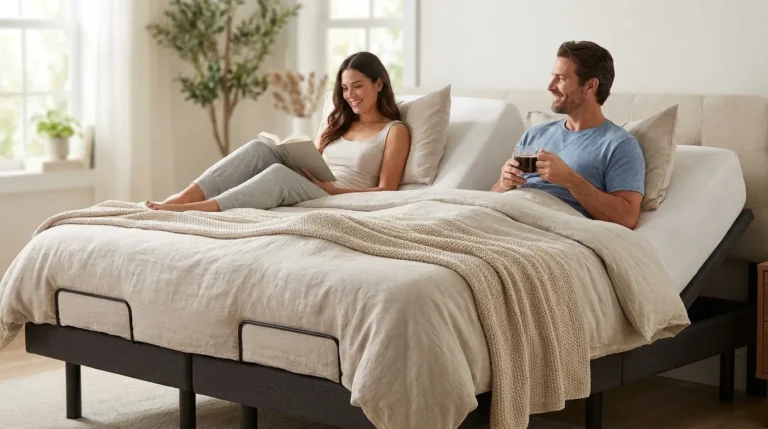
Adjustable-bed owners sometimes ignore how pillows behave during elevation. A pillow that feels fine on a flat surface may compress against the headboard, slide off the mattress edge, or create a neck support gap when the head section rises to 30–45 degrees. Test pillow stability at the angles you use most often before you commit to a model.
Frequently Asked Questions About Cooling Pillows
Do cooling memory foam pillows actually work?
Cooling memory foam pillows reduce surface temperature compared to standard memory foam, but effectiveness depends on the specific technology. Gel-infused foam and PCM covers create a noticeable cool-to-touch feel, especially during the first few hours of sleep. Shredded foam designs improve airflow, which helps prevent heat build-up over a full night. No pillow technology removes heat entirely on its own. Pillows perform best as part of a broader setup that includes breathable bedding and, ideally, a temperature-regulated sleep surface. For couples sharing an adjustable base, pairing a cooling pillow with a base-integrated cooling system usually delivers the most consistent results.
What loft works best for side sleepers?
Side sleepers generally need a loft of 4–6 inches to keep the spine horizontal between the shoulder and head. The exact loft depends on shoulder width, since broader shoulders require higher loft to bridge the gap between mattress and head. On an adjustable base, side sleepers should test their pillow at the head elevation angle they use most often, because raising the head section changes the pillow-to-neck geometry. A shredded foam pillow with adjustable fill lets you fine-tune loft to match both shoulder width and base angle without buying a new pillow.
Are shredded or solid foam pillows cooler?
Shredded foam pillows usually feel cooler over a full night because the gaps between foam pieces let air circulate through the fill. Solid foam, even gel-infused, restricts airflow through the pillow body, which allows heat to accumulate after the initial cool sensation fades. Solid foam with a PCM cover can match or beat shredded foam during the first two or three hours of sleep. Over longer sleep periods, shredded constructions tend to maintain lower temperatures. For hot sleepers who rest six hours or more, shredded or hybrid designs are typically the more reliable choice.
Can I use any cooling pillow with a split adjustable base?
Not every cooling pillow works well with a split adjustable base. Key compatibility factors include pillow width relative to the narrower sections of a split base, the presence of a non-slip cover or base fabric to prevent sliding, and loft stability when the head section rises. Standard queen-size pillows may overhang the edge of a split queen base, which creates instability during position changes. Check pillow dimensions against your specific base width before you buy, and favour pillows with textured or grippy base fabrics.
How to Compare Canadian Cooling Pillow Options in 2026
When you evaluate cooling memory foam pillows available in Canada in 2026, apply the criteria from this guide in order. Start with fill type and construction, then cover technology, then loft range and adjustability, followed by washability. Consider price relative to the typical value range last. Adjustable-base compatibility, including non-slip base, correct dimensions for split setups, and loft stability at elevation, should act as a firm requirement rather than a secondary bonus.
Ontario and Alberta shoppers can choose from national retailers and direct-to-consumer brands. When comparing options, request specific loft measurements, fill weight for shredded designs, and cover material certifications such as OEKO-TEX or CertiPUR-US for foam. These details provide more reliable guidance than broad brand-level cooling claims.
Leva Sleep designs pillows and bedding accessories to integrate with its split adjustable bases, which helps close compatibility gaps that standard retail pillows often leave. For couples already using or considering a Leva Sleep adjustable system, choosing pillows from the same ecosystem supports dimensional fit, non-slip stability, and coordinated temperature management across the entire sleep surface. Browse Leva Sleep’s full ecosystem of compatible accessories available for delivery across Ontario and Alberta.