Written by: Matthew Timmins, Founder and Managing Director, Leva Sleep | Last updated: June 20, 2026
Key Takeaways
- Up to 50% of CPAP users discontinue therapy because of mask discomfort, noise, and partner sleep disruption, which increases interest in non-CPAP options in Canada.
- Lifestyle changes, positional therapy, oral appliances, hypoglossal nerve stimulation, and medications each offer evidence-based options tailored to specific OSA severities and patient profiles.
- Adjustable-bed head elevation provides passive airway support without noise or wearable devices, which suits couples who want independent control.
- Leva Sleep’s split-queen and split-king bases provide whisper-quiet, app-controlled elevation with anti-snore features and bedding solutions designed for Canadian bedrooms.
- For couples ready to explore a comfortable, partner-friendly solution, explore Leva Sleep’s adjustable bed packages today.
Featured Snippet: What Are Non-CPAP Treatment Options for Sleep Apnea?
Non-CPAP treatment options for sleep apnea include lifestyle modifications such as weight loss, alcohol reduction, and positional changes, positional therapy devices, oral appliances such as mandibular advancement devices, upper-airway surgery, hypoglossal nerve stimulation, emerging pharmacological agents, and adjustable-bed head elevation. Each option suits different OSA severities, anatomical profiles, and lifestyle needs, and most are recommended for mild-to-moderate obstructive sleep apnea (OSA) or for patients who cannot tolerate CPAP.
Solution 1: Lifestyle Changes That Support Airway Health
Lifestyle modifications offer the lowest-cost, zero-device starting point for managing mild OSA. Reducing alcohol consumption, losing excess weight, and avoiding the supine (back) sleeping position are the three most consistently recommended behavioural changes. Combining weight loss with changes in sleeping position can produce greater reductions in OSA severity compared with weight loss alone, which shows the additive benefit of stacking interventions.
Among these stackable changes, alcohol reduction deserves particular attention because alcohol relaxes the upper-airway musculature and worsens apnea frequency, especially in the hours immediately after consumption. Positional avoidance, specifically staying off the back, addresses the anatomical root of supine-dependent OSA. Over half of people with obstructive sleep apnea have supine-predominant OSA, so these changes alone can create meaningful AHI reductions for many patients. Lifestyle changes work best as an adjunct to device-based therapy in moderate cases rather than as a full replacement.
Solution 2: Positional Therapy for Supine-Predominant OSA
Positional therapy targets supine-dependent OSA by keeping the sleeper off their back throughout the night. Modern approaches use vibrotactile feedback devices worn at the neck or chest that detect supine positioning and emit a gentle vibration to prompt a position change without fully waking the user.
Users considering positional therapy can review published clinical studies on adherence rates and AHI reduction for purely positional OSA. The FDA-cleared NightShift device, worn around the neck, generates Bluetooth sleep position reports and was among the devices evaluated in available research. Medical-grade positional devices such as NightShift and Philips NightBalance typically carry an out-of-pocket cost of $450–$750 USD.
Clinical literature identifies positional therapy as a key component of phenotype-guided care, especially for positional OSA, with newer vibratory-feedback devices improving adherence compared with older mechanical methods. Recent meta-analyses suggest sleep positional therapy can produce a greater reduction in supine AHI than placebo, with similar overall AHI effects to oral appliance therapy, which highlights the value of careful patient phenotyping before choosing this approach.
For couples, positional devices remain silent and non-intrusive to the partner, which creates a meaningful advantage over CPAP.
Solution 3: Oral Appliances for Mild and Moderate OSA
Oral appliances, primarily mandibular advancement devices (MADs) and tongue-retaining devices (TRDs), reposition the jaw or tongue to maintain airway patency during sleep. MADs can effectively treat mild and moderate OSA and may improve symptoms in some patients with severe OSA.
Studies show higher adherence to oral appliances compared with CPAP for some users. Oral appliances do not generate noise during use, which reduces sleep disruption for bed partners.
Oral appliances are generally less effective than CPAP at fully eliminating OSA events, and some users experience limited symptom improvement. Side effects such as jaw pain, tooth movement, and dry mouth occur most often in the first two months and usually resolve. In Canada, custom-fitted MADs require a referral to a dentist with OSA training, who calibrates the device to the patient’s tolerance over several appointments.
Solution 4: Surgery, Nerve Stimulation, and Medications
Surgical and device-based interventions address structural or neuromuscular contributors to OSA when conservative measures are not enough. Upper-airway surgery focuses on anatomical obstructions such as enlarged tonsils, a deviated septum, or excess palatal tissue and is typically reserved for patients who have not responded to less invasive therapy. Outcomes vary by procedure type and patient anatomy.
Hypoglossal nerve stimulation (HNS) provides a well-established second-line option for suitable candidates with moderate-to-severe OSA who are intolerant to CPAP. In August 2025, the FDA approved a bilateral HNS device that uses an external rechargeable activation chip worn under the chin with an adhesive patch, requires only one small incision, and removes the need for the implanted chest generator used in the original 2014-approved device. Eligibility for these devices usually includes specific AHI and BMI criteria.
Medications represent a newer category that targets metabolic and ventilatory factors linked to OSA. On the pharmacological front, Lilly submitted tirzepatide for FDA review for moderate-to-severe OSA with obesity; in the phase 3 SURMOUNT-OSA trials, tirzepatide achieved the AHI reductions noted earlier, with absolute reductions of up to ~30 events/hour. The investigational compound AD109 has been evaluated in the MARIPOSA phase II trial, though it has not yet received regulatory approval in Canada.
Solution 5: Adjustable Beds for Nightly Airway Support
Head elevation between 7° and 30° reduces gravitational collapse of soft-tissue structures in the upper airway, which is the primary mechanical driver of supine OSA. An adjustable bed base maintains this elevation continuously and passively, with no device to wear, no noise, and no mask.
For couples who want this passive elevation approach, the choice of adjustable base affects long-term comfort and adherence. Split configurations, motor noise, and bedding compatibility all influence whether both partners sleep well. See how Leva Sleep’s adjustable bases support couples who need airway-friendly elevation.
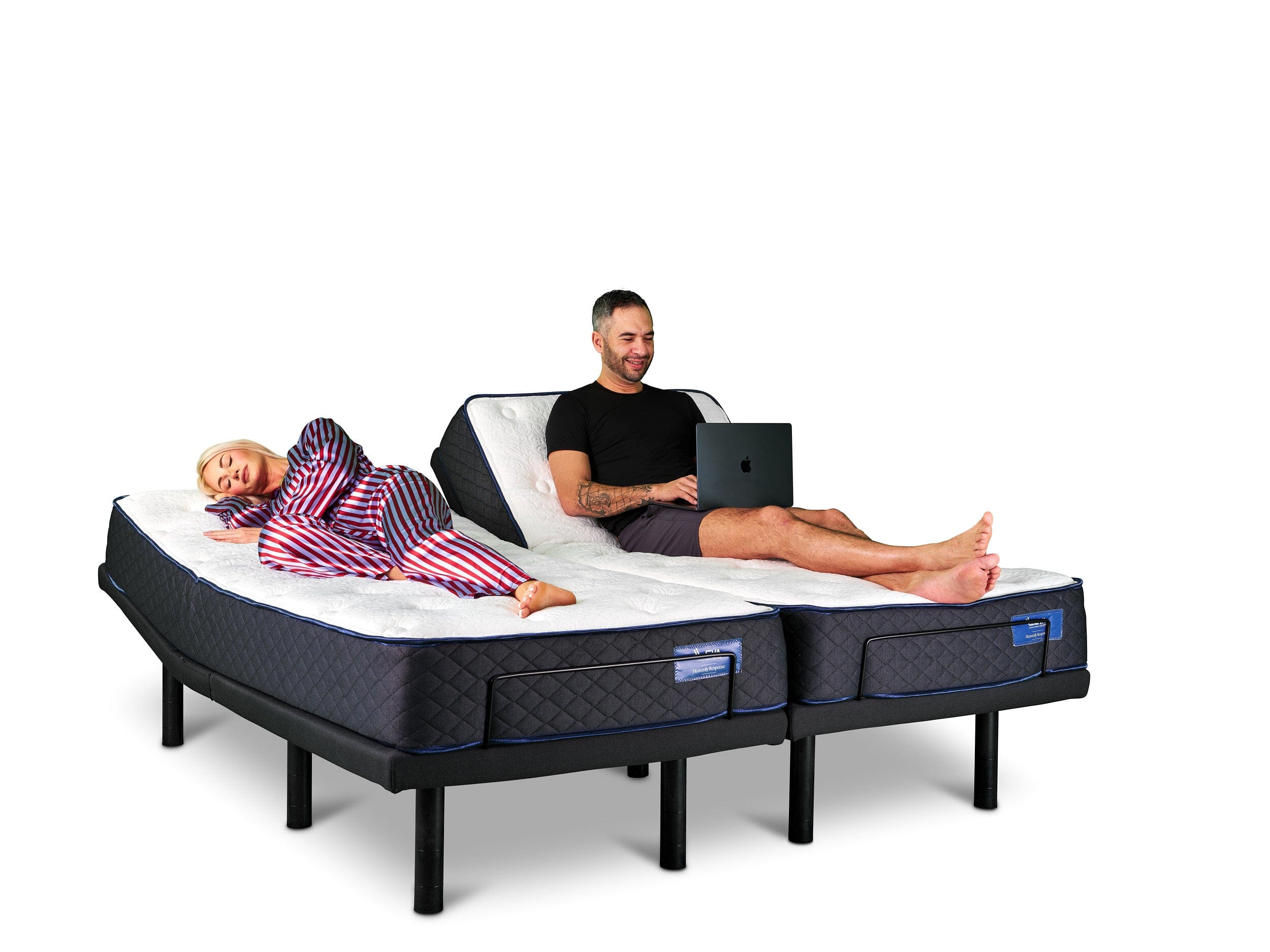
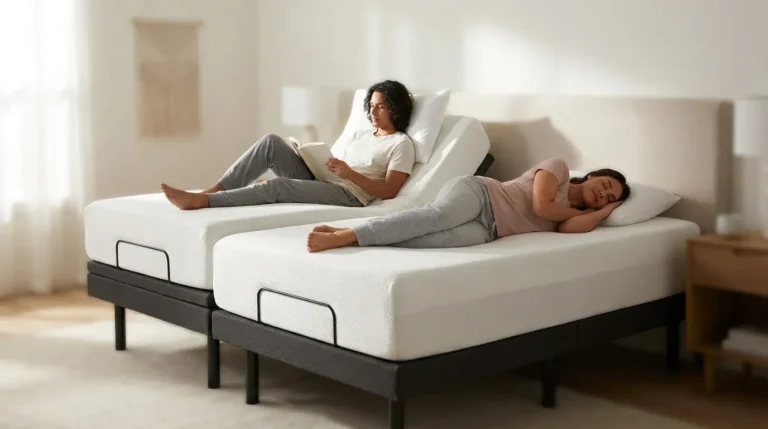
Leva Sleep’s split-queen and split-king adjustable bases give each partner independent elevation control through the Leva Sleep app, so one partner can elevate their head for airway support while the other remains flat. This independence extends to the adjustment process itself because whisper-quiet German motors make position changes inaudible, which removes the ambient noise that often disturbs the non-OSA partner with CPAP. For couples where snoring continues even with elevation, the anti-snore mode, arriving spring 2026, detects snoring acoustically and makes micro-adjustments to the head of the bed automatically, which adds a second layer of passive intervention.
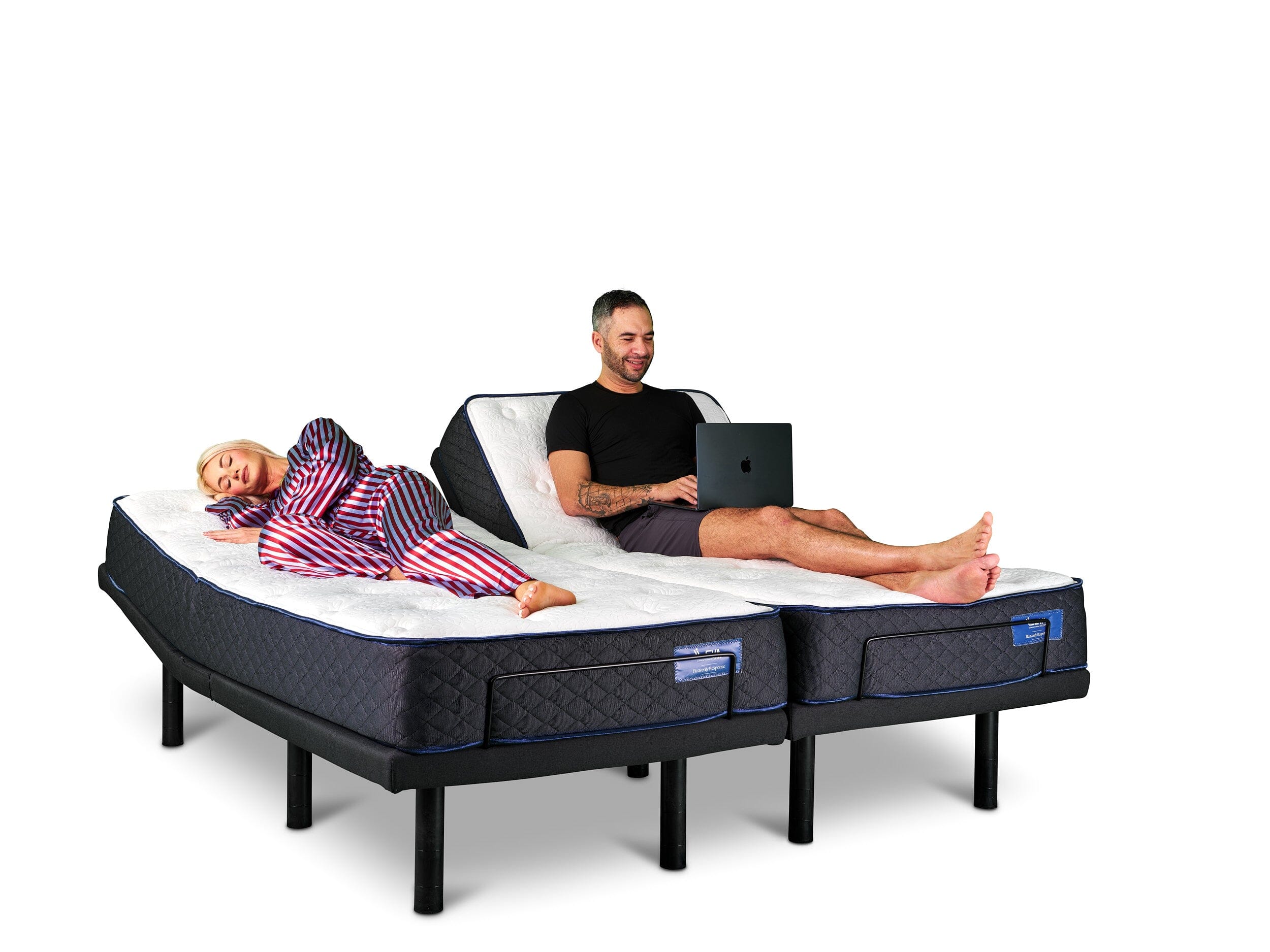
Bedding compatibility often becomes a practical concern with elevated positions. Leva designs deep-pocket fitted sheets with reinforced elastic and duvet clips that maintain separation when bed positions differ, which solves the common frustration of sheets pulling loose at elevation. For Ontario and Alberta buyers, Leva’s in-house white-glove delivery includes bedroom setup, leg-height adjustment, app tutorial, and removal of the old bed, which removes the logistical burden that deters many couples from upgrading.
Quick Comparison of Non-CPAP Options
The table below summarizes effectiveness, cost, and ideal use cases for each non-CPAP option so you can see which treatments match your OSA severity, anatomy, and budget before your next physician visit.
| Treatment | Effectiveness for Mild–Moderate OSA | Cost Range (CAD) | Best For | Key Limitation |
|---|---|---|---|---|
| Positional Therapy Device | Can be effective for purely positional OSA with good adherence in studies | Varies, typically several hundred to over one thousand dollars | Supine-predominant OSA | Similar overall AHI effects to oral appliances in some analyses, some insurers classify as unproven |
| Oral Appliance (MAD/TRD) | Higher adherence rates than CPAP in some studies, some users see no significant improvement | $1,800–$3,500 (custom-fitted, varies by province) | Mild–moderate OSA, CPAP-intolerant patients | Generally less effective than CPAP at fully eliminating OSA events, jaw and tooth side effects common early |
| Hypoglossal Nerve Stimulation | Sustained AHI and symptom improvement in selected patients | $30,000–$50,000+ (surgical, limited provincial coverage) | Moderate–severe OSA, CPAP-intolerant | Requires surgical implant, has eligibility criteria |
| Tirzepatide (Pharmacological) | Up to 63% AHI reduction in non-PAP users at 52 weeks vs. placebo (SURMOUNT-OSA) | $400–$700/month (estimated, coverage varies) | Moderate–severe OSA with comorbid obesity | Requires obesity comorbidity, not yet widely covered by Canadian provincial formularies |
| Adjustable Bed Head Elevation | Passive airway support, used as adjunct therapy | $2,500–$6,000 (split-system, Leva Sleep pricing) | Couples with mild OSA or snoring, CPAP-intolerant patients seeking adjunct support | Not a standalone clinical treatment for moderate–severe OSA, effectiveness as sole intervention not established in RCT literature |
Ready to explore a couple-friendly option that fits your bedroom and budget? Compare Leva Sleep’s split-queen and split-king adjustable systems to see which configuration matches your space.
How to Talk to Your Doctor About Non-CPAP Options
Before you select any non-CPAP approach, plan a structured conversation with a sleep physician or respirologist. The questions below help frame that discussion.
- Is my OSA positional (supine-predominant), and would a positional device or elevated sleeping position address most of my apnea events?
- What is my AHI, and does it fall within the mild-to-moderate range where oral appliances or positional therapy have the strongest evidence?
- Am I a candidate for hypoglossal nerve stimulation based on my BMI, AHI, and airway anatomy?
- Would a combination approach, such as positional therapy plus head elevation, be appropriate for my phenotype?
- What follow-up testing, such as a home sleep test or in-lab polysomnography, is needed to confirm treatment response after switching from CPAP?
- Are there provincial programs or extended health benefits in Ontario or Alberta that cover oral appliances or positional devices?
Frequently Asked Questions
Are adjustable beds suitable for couples with differing sleep positions?
Split-queen and split-king adjustable bases suit couples with different sleep positions because each partner has fully independent control of head and foot elevation, massage intensity, and, on higher-end models, lumbar support and temperature. One partner can elevate their head to 30° for airway support while the other remains completely flat. Leva Sleep’s split-queen configuration works well for couples in smaller bedrooms who want independent adjustability without the footprint of a split-king. Leva-designed deep-pocket sheets and duvet clips stay in place even when the two sides of the bed sit at different angles, which solves a common practical problem with standard bedding on elevated bases.
How does positional therapy compare with oral appliances for mild OSA?
Both positional therapy and oral appliances provide evidence-based options for mild-to-moderate OSA, and the better choice depends on whether the patient’s OSA is predominantly positional. Meta-analyses suggest no significant difference between positional therapy and oral appliance therapy in overall AHI reduction, while positional therapy can produce a greater reduction in supine-specific AHI. Oral appliances have a larger body of long-term evidence and are recommended by the American Academy of Sleep Medicine for mild-to-moderate OSA. Positional devices cost considerably less than a custom MAD but require confirmation that the patient’s OSA is supine-dependent. A sleep physician can determine which approach, or which combination, fits best based on a full sleep study.
What maintenance is required for non-CPAP devices in Canada?
Oral appliances require daily cleaning with a soft toothbrush and non-abrasive cleaner, periodic soaking in a dental cleaning solution, and follow-up appointments with the fitting dentist every six to twelve months to check for jaw alignment changes and device wear. Positional therapy devices such as NightShift need regular charging, typically via USB, and occasional firmware updates through a companion app. Adjustable bed bases require minimal maintenance, such as periodic tightening of frame connections, keeping the motor area clear of debris, and software updates through the manufacturer’s app. Leva Sleep’s in-house service model gives Ontario and Alberta customers direct access to support without routing through a third-party retailer.
Can head elevation replace CPAP for moderate sleep apnea?
Head elevation via an adjustable bed does not function as a clinically validated standalone replacement for CPAP in moderate OSA. It works as an adjunct that reduces the gravitational contribution to airway collapse and shows the greatest benefit when combined with other positional or behavioural strategies. For patients with mild, supine-predominant OSA, head elevation may contribute meaningfully to symptom reduction, but this effect should be confirmed with a follow-up home sleep test rather than assumed. Patients with moderate-to-severe OSA who discontinue CPAP should work with a sleep physician to identify an evidence-based alternative before relying solely on positional support. Leva Sleep’s adjustable beds are designed to complement a broader sleep health strategy, not to replace medical treatment.
Decision-Support Takeaway for Canadian Couples
The non-CPAP landscape in 2026 offers more options and stronger evidence than it did even two years ago. Positional therapy, oral appliances, hypoglossal nerve stimulation, and emerging pharmacological agents each address distinct OSA phenotypes. For couples in Ontario and Alberta who face CPAP intolerance, the most practical starting point is a sleep study that identifies whether OSA is positional, followed by a physician-guided selection among the options above.
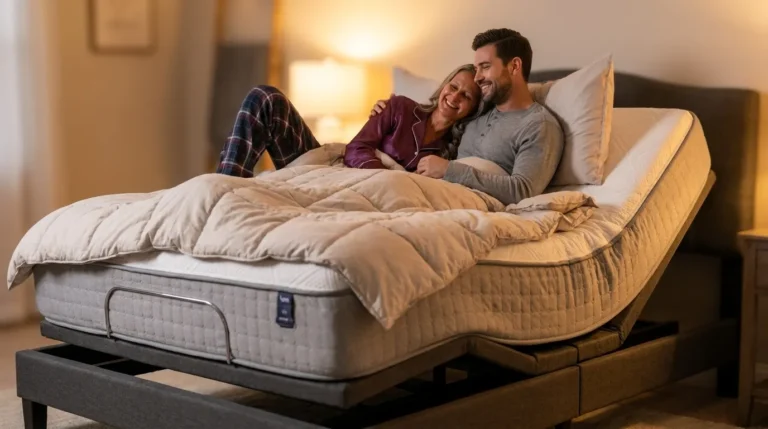
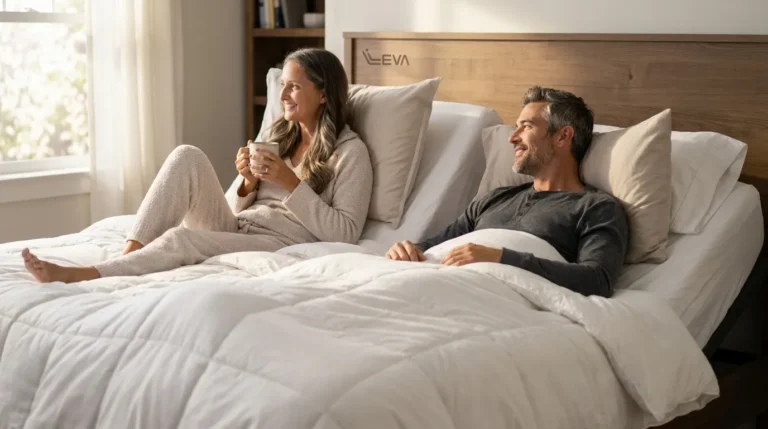
Adjustable-bed head elevation sits at the intersection of comfort, couple compatibility, and passive airway support. It reduces the partner-disruption problem that CPAP creates, requires no nightly device fitting, and integrates into a complete sleep system that both partners benefit from, even when only one partner has OSA. With Leva Sleep’s split configurations, whisper-quiet motors, and white-glove delivery across Ontario and Alberta, the shift from a flat bed to an elevated, independently controlled sleep system becomes straightforward.
Evaluate your options with your doctor, confirm your OSA phenotype, and choose a solution that you and your partner can sustain long-term. Find your ideal split-system configuration at Leva Sleep so your bedroom, budget, and sleep health goals stay aligned.