
Written by: Matthew Timmins, Founder and Managing Director, Leva Sleep | Last updated: June 26, 2026
Key Takeaways for Couples
- Elevating the head 15–30° reduces airway collapse and snoring by using gravity to keep soft tissues open.
- Common elevation methods like wedge pillows and stacked pillows create inconsistent angles, pressure points, and couple-compatibility issues.
- Split adjustable bases solve these problems by giving each partner independent, quiet, and precise head elevation control.
- Leva Sleep’s app-controlled anti-snore automation and purpose-built mattresses deliver consistent results without waking a partner.
- Explore Leva Sleep’s split adjustable bed packages to enjoy quieter nights and stay together in the same bed.
The Problem: How Snoring and Reflux Respond to Elevation
Snoring starts when relaxed throat tissues such as the soft palate, uvula, and tongue base partially block the upper airway during sleep. Air then pushes through a narrowed space, those tissues vibrate, and the familiar snoring sound follows. The obstruction usually worsens when you lie flat on your back because gravity pulls soft tissue directly onto the airway. Elevating the head and upper torso between 15 and 30 degrees shifts that gravitational load, reduces tissue collapse, and widens the airway.
The same elevation helps many people with gastroesophageal reflux disease (GERD), which often appears alongside snoring and obstructive sleep apnea. Sleep medicine physician Dustin Cotliar, MD, MPH, describes head-of-bed elevation as a tried-and-true medical recommendation for GERD sufferers because it positions the esophagus above the stomach. Gravity then helps keep stomach contents where they belong. Raising the upper body by 6 to 8 inches uses gravity to reduce the backflow of stomach contents toward the esophagus, whether you use an adjustable base or wedge pillows. For couples where one partner snores and the other struggles with reflux, positional therapy can ease both issues at once.
Mild obstructive sleep apnea, which involves repeated partial airway collapses, can also respond to positional changes. Many GERD patients purchase adjustable beds to raise the head of the bed, which may also help with related issues like snoring and sleep apnea. For people who find CPAP masks uncomfortable or disruptive to a partner, controlled head elevation offers a non-invasive first-line option to discuss with a physician.
Explore adjustable beds with anti-snore technology designed for couples across Ontario and Alberta.
The Problem: Why Common Elevation Methods Fall Short for Couples
Head elevation can meaningfully reduce snoring and reflux, so the challenge becomes keeping that elevation stable all night. Three common methods dominate the consumer market, and each has real drawbacks for couples.
Wedge pillows use a fixed triangular foam shape, typically 7 to 12 inches in height, corresponding to a 30- to 45-degree incline, to raise the upper body. Wedge pillows are constructed from solid blocks of memory foam or polyfoam that maintain a consistent shape throughout the night, which improves on standard pillows. However, the angle stays fixed and often sits outside the 15–30° therapeutic range unless you buy multiple wedges. Many users report that wedges slide across the mattress, and the rigid shape can create pressure points at the neck and shoulders. In a shared bed, only one partner benefits, and the height difference can make shared bedding awkward.
Stacked standard pillows flatten, shift, and separate during the night. They rarely hold a consistent angle and often bend the neck sideways instead of keeping the cervical spine neutral. Many people wake with neck stiffness and then abandon the setup.
Basic single-side adjustable bases improve angle consistency but introduce new friction for couples. Entry-level motors in many budget bases create noticeable noise during adjustment, which can wake a light sleeper. A single-side base also elevates only one partner and leaves the other flat, which creates a height mismatch that affects shared bedding, closeness, and comfort.
Compare Leva’s luxury split adjustable systems, priced 30–50% below many competitors.
The Solution: Split Adjustable Sleep Systems for Two
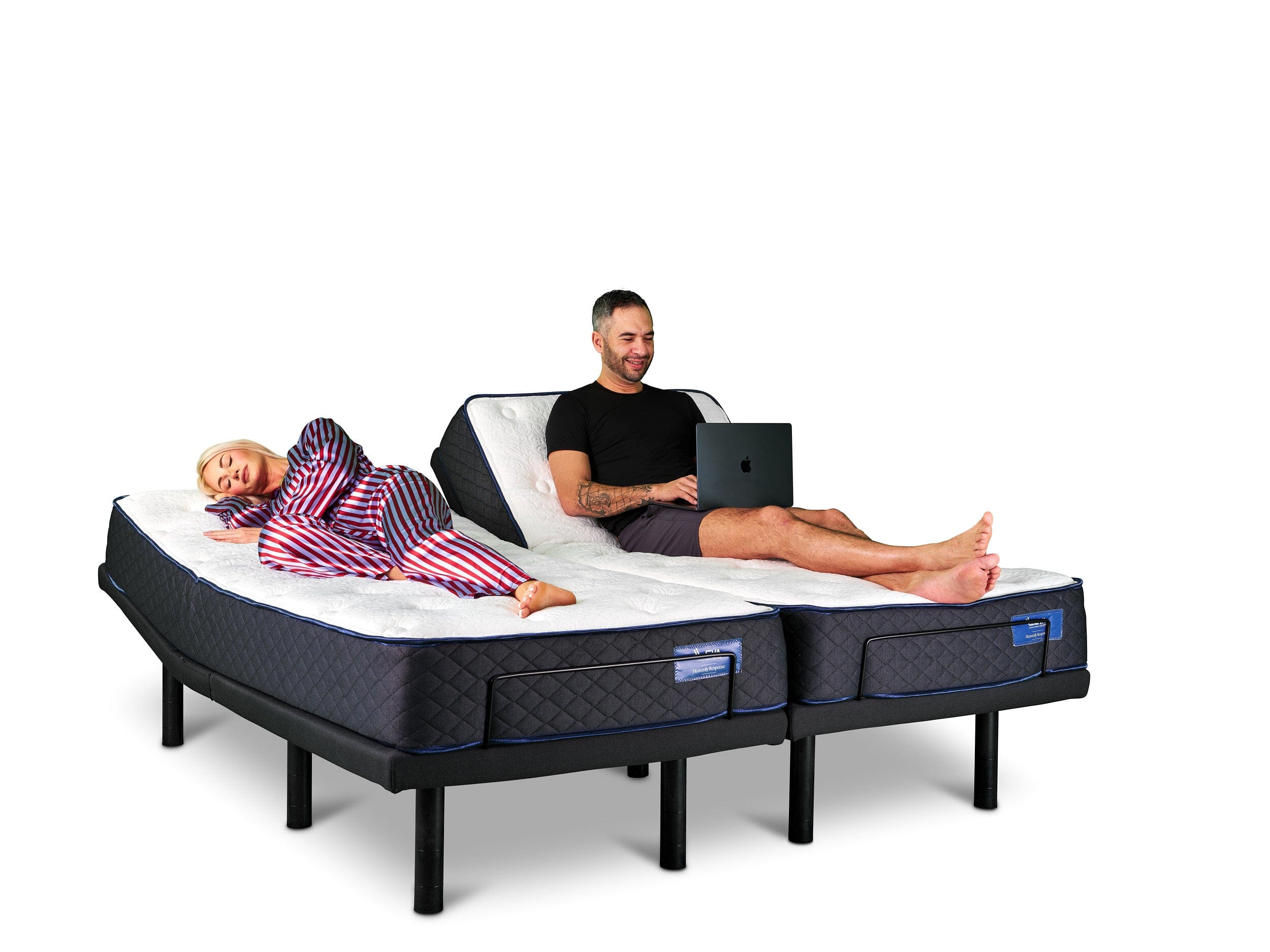
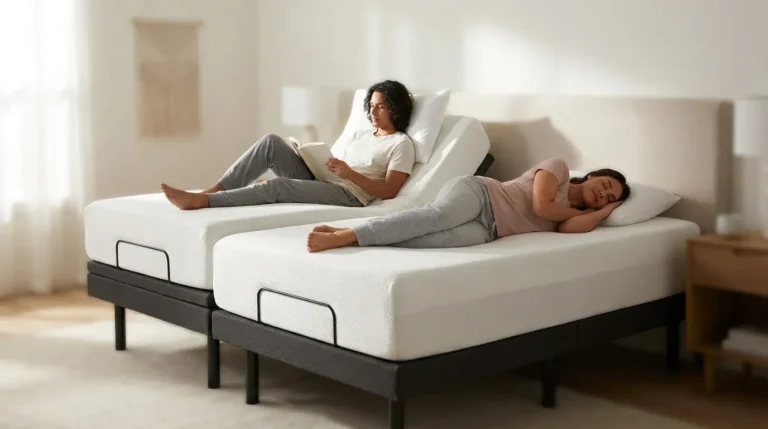
A purpose-built split adjustable sleep system solves the three main problems of other methods: inconsistent angle, disruptive noise, and lack of independent control for couples. Each partner controls their own side of the bed, including elevation angle, massage, and in advanced models, temperature. One partner can adjust freely without affecting the other. Whisper-quiet motors support mid-night changes without waking a sleeping partner. Mattresses and bedding designed for adjustable bases prevent sheet slippage and reduce pressure points that often occur with wedges.
Leva Sleep focuses on this category for Canadian couples. The company offers 15–20 adjustable bed models, far more than the 3–5 usually found at general mattress retailers, and is one of the few providers in Canada with a Split Queen option alongside Split King. This flexibility helps couples in both large and small bedrooms. White-glove delivery and setup across Ontario and Alberta include old bed removal, assembly, and a walkthrough of the features.
Why Leva Sleep Split Adjustable Beds Work Better in Real Bedrooms
Independent Head Elevation for Each Partner
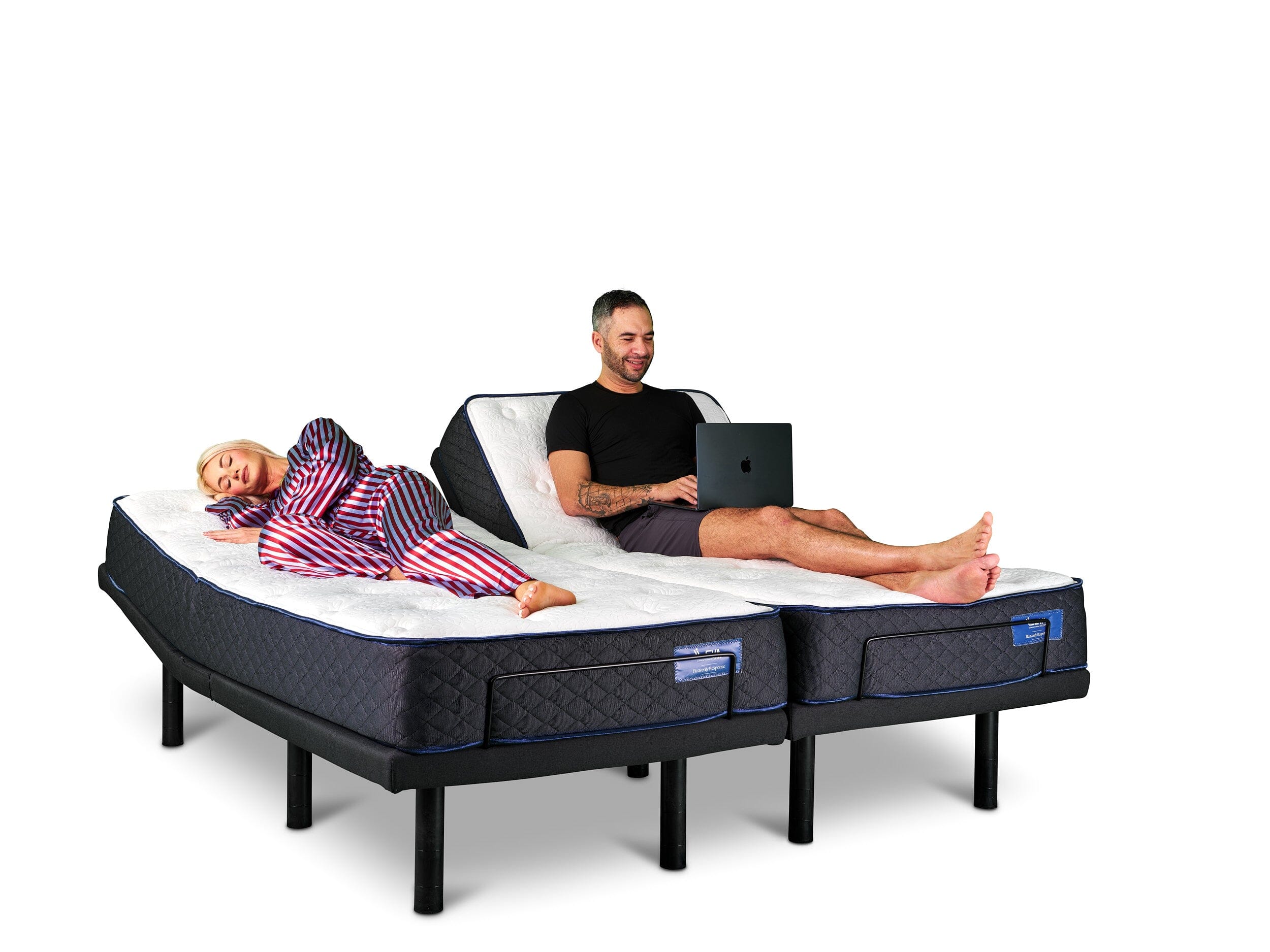
Leva’s Split King and Split Queen bases give each partner a fully independent head and foot elevation zone. One partner can sleep at a therapeutic 20° incline for snoring relief while the other remains flat, with no mechanical or comfort compromise on either side.
15–30° Angle Guidance That Builds on That Independence
That independence matters most when each partner can fine-tune their own angle. Leva’s app-controlled bases allow precise degree-level positioning so you can match the incline recommended for airway or reflux relief instead of accepting a fixed wedge angle.
Anti-Snore Automation That Adjusts While You Sleep
Leva Sleep’s anti-snore mode detects snoring acoustically and makes small automatic head adjustments to reduce or remove the obstruction. The snoring partner does not need to wake up, reach for a remote, or change position manually.
Mattresses and Bedding Built for Elevated Positions
Leva designs its all-foam and hybrid pocket-coil mattresses to flex smoothly with adjustable bases. Proprietary fitted sheets with deep pockets and extra elastic, duvet clips, and mattress protectors stay in place at angles that would dislodge standard bedding. This design keeps both partners comfortable and avoids nightly sheet battles.
Quiet Motors That Protect Light Sleepers
Whisper-quiet German motors power Leva’s bases and allow position changes at any hour without disturbing a sleeping partner. This quiet operation separates Leva from many basic adjustable bases that use louder motors.
White-Glove Delivery and Setup in Ontario and Alberta
Leva’s in-house delivery team manages scheduling, bedroom delivery, full assembly, leg-height adjustment, a product tutorial, and removal of the old bed. Couples avoid heavy lifting and complex self-assembly for a product that can weigh several hundred kilograms.
Real Outcomes for Canadian Couples Using Split Adjustable Beds
Consider a couple in Toronto where one partner snores and the other wakes easily. With a Leva Split King, the snoring partner elevates their head to 20° using the app, while the other sleeps flat. The anti-snore mode manages any remaining snoring automatically. Both partners share the same bed and duvet and wake without neck stiffness because the mattress supports the elevated position. Relationship tension that grew over months of disrupted sleep eases as both partners finally rest.
In Calgary, a couple faces a similar challenge when one partner receives medical advice to sleep elevated for mild sleep apnea and the other does not. Independent control again solves the problem. The white-glove team installs a Split Queen in their smaller bedroom, adjusts the leg height to match their existing frame, and walks both partners through the app before leaving.
Couples report reduced snoring severity, better airway openness, reflux relief, uninterrupted partner sleep, and preserved physical closeness. These outcomes appear consistently in feedback from Leva customers, including those referred by sleep apnea clinics.
Quick Comparison: Wedge Pillows vs Full Adjustable Bases vs Split Adjustable Systems
| Method | Angle Control | Noise During Adjustment | Couple Compatibility |
|---|---|---|---|
| Wedge Pillow | Fixed, typically 30–45° based on 7–12 inch height, no mid-night adjustment | None (passive) | Single-user only, height differential disrupts shared bedding |
| Single-Side Adjustable Base | Variable, motorized, one side only | Audible on many budget models, can wake partner | One partner elevated, one flat, no independent dual control |
| Split Adjustable System (Leva Sleep) | Precise degree-level control per side via app, 15–30° therapeutic range available | Whisper-quiet German motors, minimal sleep disruption | Full independent control per partner, purpose-built split bedding included |
Frequently Asked Questions
Is sleeping with your head elevated good for snoring?
Yes. As discussed earlier, the 15–30° elevation range reduces airway obstruction by shifting gravitational load on throat tissues. The benefit stays strongest when you maintain a stable angle all night, which is why motorized adjustable bases usually outperform wedge pillows or stacked pillows that move during sleep.
What are the side effects of sleeping with your head elevated?
The most common side effect is neck or shoulder discomfort. This usually comes from methods that fail to keep the cervical spine neutral, such as stacked pillows or a wedge that does not contour to the shoulder. A mattress and base designed for adjustable use spread body weight across the elevated surface instead of concentrating pressure at the neck. Many people start at a modest 15° incline and increase gradually over several nights so the body can adapt. Anyone with existing cervical spine conditions should speak with a physician before changing sleep position.
Does head elevation reduce snoring severity?
Head elevation can reduce snoring severity by addressing the positional part of airway obstruction. Snoring that worsens when you lie flat, known as positional snoring, usually responds best to elevation. Snoring that occurs in every position may involve other anatomical factors, such as nasal polyps or large tonsils, that elevation alone cannot fix. For many couples, a 15–30° elevation offers a practical, non-invasive starting point that can pair with other treatments if needed.
Is head elevation suitable for mild sleep apnea?
Positional therapy, including head elevation, is recognized as a complementary option for mild to moderate obstructive sleep apnea, especially when events occur mainly in the supine position. It does not replace a physician-directed treatment plan. Anyone with diagnosed sleep apnea should discuss positional therapy with a sleep specialist before changing or stopping prescribed treatments such as CPAP. Leva Sleep’s adjustable bases are often used as one part of a broader sleep management strategy.
Conclusion: Keeping Couples in the Same Bed
Snoring disrupts couples because a flat, shared mattress offers no reliable way to adjust position and relieve airway obstruction. Wedge pillows and stacked pillows provide partial, inconsistent help. Basic adjustable bases fix the angle issue but introduce noise and remove independent control. A split adjustable sleep system with quiet motors, app-controlled elevation, anti-snore automation, and purpose-built bedding addresses every part of the problem for both partners at once.
Leva Sleep has built this type of system for Canadian couples, with a broad range of adjustable bases and in-house white-glove delivery across Ontario and Alberta. The result is a bedroom where both partners stay in the same bed, sleep through the night, and wake without compromise.
Find the split adjustable system that keeps your relationship, and your sleep, intact.