Written by: Matthew Timmins, Founder and Managing Director, Leva Sleep | Last updated: July 8, 2026
Key Takeaways
- Clinical insomnia and sleep apnea rates are rising in Canada, so independent sleep solutions matter for couples sharing a bed.
- Ergonomic adjustable mattress systems with split configurations let each partner control elevation, firmness, and temperature on their own side.
- Split queen and split king setups support different comfort needs while fitting a range of Canadian bedroom sizes and layouts.
- Key health benefits include reduced snoring, better acid reflux management, and improved support for pain or post-surgery recovery.
- Explore premium split adjustable bed packages designed for Canadian couples at Leva Sleep.
Ergonomic Adjustable Mattress Systems in Plain Language
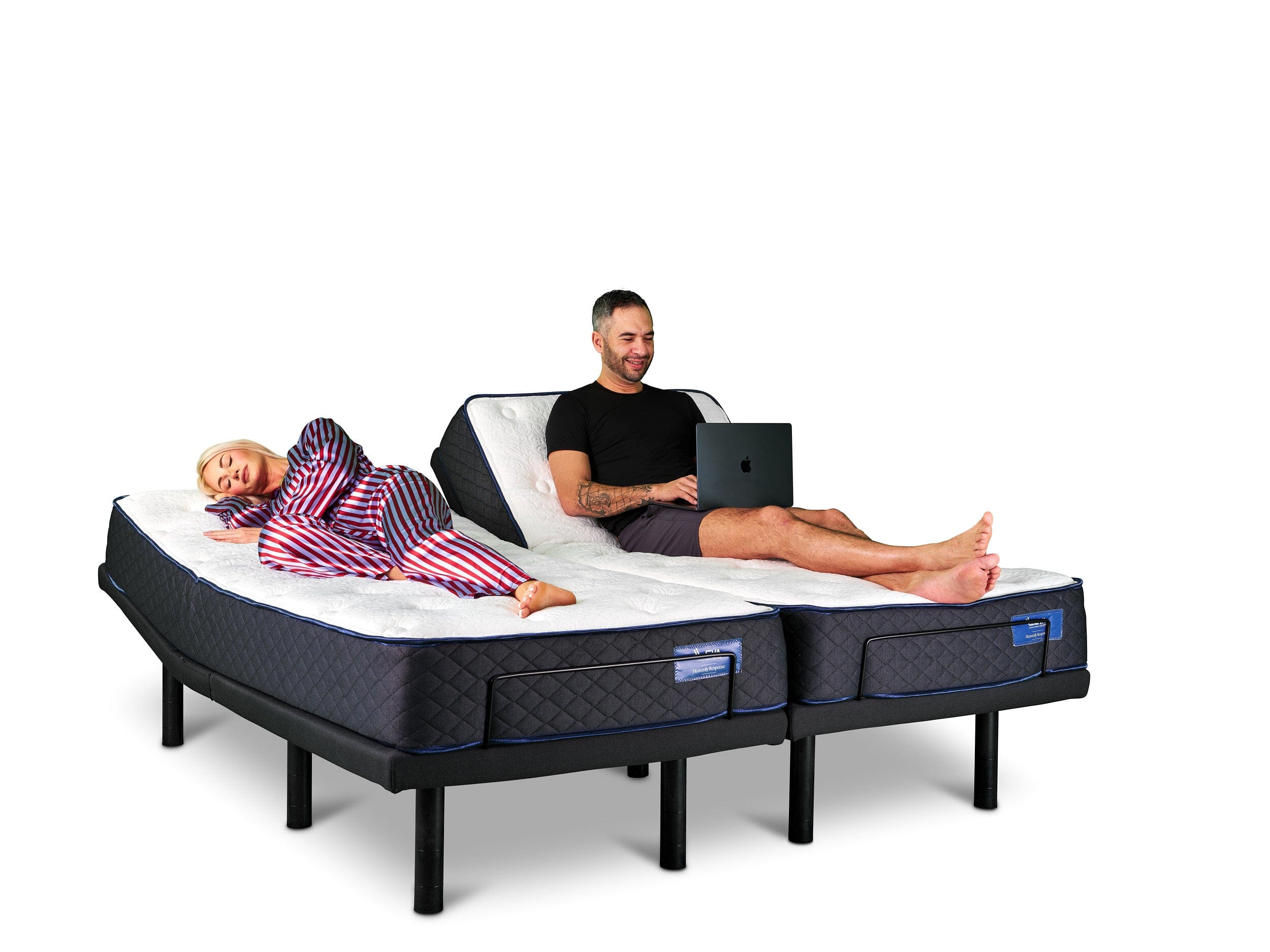
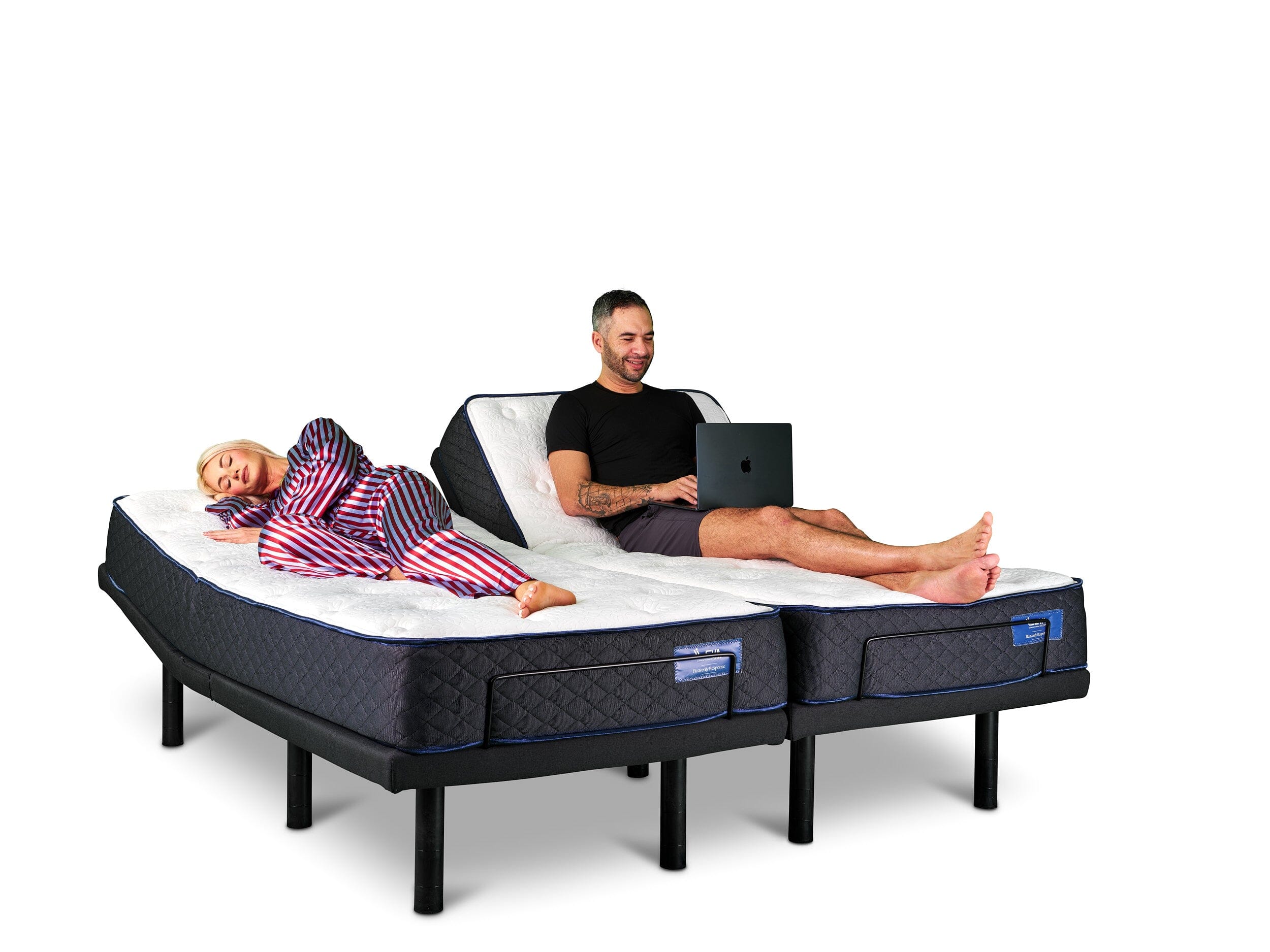
An ergonomic adjustable mattress system pairs a motorized base with a compatible mattress, typically all-foam or hybrid pocket-coil. This setup allows head and foot elevation, lumbar support adjustment, and, in advanced models, temperature control and anti-snore response. Split configurations divide the base into two independently controlled halves, so each partner can set a preferred position without affecting the other side.
The relevance for Canadian couples is significant. Over a quarter of Canadian adults report symptoms associated with obstructive sleep apnea, and women are 1.5 to 2 times more likely than men to experience chronic insomnia. When two people with different sleep disorders share a flat, static bed, compromise becomes structurally unavoidable. A split ergonomic system removes that constraint and lets each person follow their own treatment plan.
Explore split configurations designed to address mismatched sleep needs without moving to separate bedrooms.
Choosing a Bed Setup That Works for Both Partners
The right configuration depends on bedroom size, individual health needs, and how much physical closeness the couple wants. The two primary split formats are split queen and split king.
A split king uses two Twin XL mattresses placed side by side on two independent motorized bases, creating a total footprint identical to a standard king. A split queen divides a queen-sized surface into two narrower halves, so it is the only split format that fits in rooms too narrow for a king. This detail matters in older Ontario and Alberta homes with standard-sized master bedrooms.
Mattress compatibility acts as a practical filter. Memory foam and latex mattresses flex easily, and most modern hybrids with pocketed coils also work well, while traditional innerspring mattresses with interconnected coils are too rigid for adjustable bases. Accessories such as fitted sheets with deep pockets and extra elastic, duvet clips, and remote pockets are purpose-designed for adjustable systems and prevent bedding from shifting during elevation.
How Adjustable Bases and Mattresses Work Together
These accessories work in tandem with the base’s mechanical systems to keep the sleep surface stable. Motorized bases use electric actuators to raise and lower the head and foot sections independently. Entry-level models offer basic head and foot lift with a wired remote. Mid-range and premium systems add Bluetooth app control, preset positions such as zero-gravity and anti-snore, lumbar support bars, and massage zones.
Zero-gravity positioning elevates the head and feet at the same time to simulate weightlessness and relieve back pressure, while anti-snore presets usually raise the head section by 20–30 degrees to open the airway. AI-driven systems now analyze breathing patterns, heart rate, and body movement in real time and make micro-adjustments during sleep, a capability that existed only in clinics a decade ago.
Leva Sleep’s systems use whisper-quiet German motors and full app control, including custom sleep positions, vibrating alarms, and an anti-snore mode that detects snoring and makes subtle head adjustments. The vertical integration model, where design, assembly, and delivery stay in-house, means the base and mattress are engineered to work together instead of being sourced separately from different manufacturers.
Who Gains the Most from Split Adjustable Systems?
Split adjustable systems offer clear benefits for several specific situations backed by clinical evidence.
- Snoring and sleep apnea: A 2017 study in Sleep and Breathing found that 7.5-degree head-of-bed elevation reduced OSA severity by an average of 31.8% in patients with obstructive sleep apnea.
- Acid reflux and GERD: A randomized controlled trial in the Journal of Gastroenterology and Hepatology found that head-of-bed elevation modestly reduced supine reflux time and acid clearance time while significantly reducing reflux symptoms. Bed elevation often appears as a recommended lifestyle change for GERD management.
- Hip, knee, and back pain: Leg elevation above heart level supports venous and lymphatic drainage, and zero-gravity positioning opens the spinal canal and reduces nerve compression for patients with spinal stenosis.
- Post-surgery recovery: Controlled elevation reduces swelling and lets patients reposition without manual effort, which matters after hip or knee replacement.
- Differing firmness preferences: Many couples disagree about mattress comfort, and split configurations turn firmness into an independent decision on each side.
- Temperature regulation: Integrated heating and cooling pads let each partner set a personal thermal environment, which helps when one partner sleeps hot and the other cold.
Trade-offs and Disadvantages of Adjustable Beds
Adjustable systems offer real benefits, but they also involve trade-offs that buyers should weigh carefully.
- Space requirements: A split king needs a room large enough for a king-sized footprint plus clearance for the base to move. A split queen is usually more practical for standard Canadian master bedrooms.
- The gap issue: Split king configurations produce the gap mentioned earlier, which affects physical closeness for many couples. Connector straps and non-skid surfaces reduce movement but do not remove the gap entirely.
- Specialized bedding: Standard king sheets do not fit split king bases. Specialized Twin XL sheet sets cost roughly $48–$299 per set. Leva Sleep designs bedding accessories specifically for adjustable bases, including fitted sheets with extra elastic and duvet clips.
- Price range: Split king setups commonly cost $2,000–$6,000 when you include two mattresses and two adjustable bases. Leva Sleep’s direct-to-consumer model offers comparable systems at 30–50% less than many top-tier competitors.
- Delivery logistics: White-glove delivery to Ontario and Alberta addresses the assembly complexity that makes standard “bed in a box” delivery unrealistic for motorized bases.
- Motor noise: Basic adjustable bases can produce disruptive motor noise. Whisper-quiet engineering becomes a meaningful advantage for light sleepers.
Split Queen vs Split King: Side-by-Side Comparison
| Configuration | Space Efficiency | Partner Independence | Typical Canadian Household Fit |
|---|---|---|---|
| Split Queen | 60″ × 80″ total; fits standard master bedrooms in older Ontario and Alberta homes | Independent head and foot elevation and firmness per side; many couples disagree on mattress comfort, so per-side control becomes a practical solution | Couples in smaller bedrooms or those prioritizing closeness over maximum personal width; unique offering from Leva Sleep |
| Split King | 76″ × 80″ total (two Twin XL at 38″ × 80″ each); requires a larger room footprint | Motion isolation 74–82% better than traditional kings; fully independent bases; gap affects many couples | Couples in newer builds with larger master bedrooms who prioritize maximum personal space and independent adjustment |
Key Buying Factors for Canadian Households
Several core factors shape long-term satisfaction with an ergonomic adjustable system.
- Size and configuration: Measure your bedroom before committing to a split format, because a split king’s width will not fit many standard Canadian master bedrooms. Even if the dimensions work, confirm that both partners accept the gap trade-off in split king designs, since that gap affects physical closeness and often drives buyer regret.
- App features and controls: Check whether Bluetooth app control, preset positions, anti-snore detection, and sleep tracking come standard or require an upgrade. Smart adjustable systems account for 42.7% of the market in 2026, which reflects strong demand for connected features.
- Warranty length: Warranty coverage varies significantly by manufacturer and model, so treat it as a key comparison point. Confirm what is covered, including parts, labour, and the mattress, and whether specific uses can void coverage.
- Total cost of ownership: Base price, specialized bedding, delivery fees, and future mattress replacement all contribute to the real cost. Split configurations allow replacing only the worn side instead of the entire mattress, which lowers long-term replacement spending.
- Delivery zones: Confirm that white-glove delivery is available in your exact Ontario or Alberta location, not just the province in general.
- Mattress compatibility: Verify that the mattress is rated for adjustable base use before you buy. Interconnected innerspring coils do not flex correctly and are not compatible.
Compare 15–20 adjustable models with the features outlined above, including split queen configurations and white-glove delivery to Ontario and Alberta addresses.
Setup, Ownership, and Common Pitfalls
Adjustable base setup involves more steps than standard mattress delivery. Motors, wiring, and split-configuration connector straps all need correct installation to work safely and quietly. Professional setup removes the risk of improper assembly that can void warranties or cause premature motor wear.
Most purchasing and ownership errors come from treating adjustable systems like standard mattresses. Common mistakes include:
- Purchasing a mattress from a general retailer without confirming adjustable-base compatibility, then discovering the mattress is too rigid to flex.
- Focusing on the advertised base price without accounting for compatible mattress cost, specialized bedding, and delivery fees, which often leads to sticker shock when the full bill arrives.
- Overlooking split-configuration compatibility, since not all adjustable bases support split queen formats, which form a narrower product category than split king.
- Skipping old-bed removal service, which complicates setup in rooms with tight hallways or staircases.
- Neglecting periodic maintenance such as checking connector straps and motor connections, which helps preserve quiet operation over time.
Leva Sleep’s white-glove delivery service includes bedroom delivery, full assembly, leg-height adjustment, a product tutorial, and removal of the old bed for donation or recycling. This end-to-end process matters especially for couples buying a split system for the first time, because setup complexity is higher than a standard mattress swap.
Frequently Asked Questions
What is the best bed setup for couples?
The best setup depends on the specific sleep challenges each partner faces. For couples with mismatched firmness preferences, snoring, or medical conditions that require elevation, a split adjustable system in either split queen or split king format provides independent control without separate beds. Split queen works well for standard-sized Canadian master bedrooms, while split king suits larger rooms and couples who want maximum personal space. Both configurations need compatible mattresses, purpose-designed bedding, and a base with independent motor control per side. Accessories such as duvet clips and extra-elastic fitted sheets help maintain comfort during elevation.
What are the disadvantages of an adjustable bed?
The main disadvantages involve cost, space, and bedding complexity. A full split king system with two mattresses and two bases can cost significantly more than a traditional king setup, and specialized bedding adds ongoing expense. Split configurations create a gap between the two mattresses that many couples find uncomfortable for physical closeness. Adjustable bases also require compatible mattresses, since traditional innerspring models will not flex correctly. Basic models can produce motor noise that disturbs light sleepers, so whisper-quiet engineering becomes an important feature to review. Finally, white-glove delivery and professional setup are effectively necessary for motorized bases, which increases upfront cost but helps prevent installation errors.
Is an adjustable bed good after hip surgery?
Adjustable beds are frequently recommended after hip surgery because controlled elevation reduces swelling in the lower extremities, and motorized repositioning lets patients change position without manual effort or assistance. Leg elevation above heart level supports venous and lymphatic drainage, which directly affects post-surgical recovery. The zero-gravity preset, which elevates both head and feet at the same time, distributes body weight evenly and reduces pressure on the surgical site. Patients should confirm the specific elevation angles their surgeon recommends, since optimal positioning varies by procedure and recovery progress. Sleep apnea clinics in Canada also refer patients to adjustable bed specialists when positional therapy forms part of the treatment plan.
What is the best mattress for couples in Canada?
For couples using an adjustable base, the mattress must be rated for adjustable-base use. All-foam mattresses, including memory foam and latex, offer strong flexibility and conform well to articulating bases. Hybrid mattresses with individually wrapped pocket coils also perform well and provide more bounce and edge support than all-foam options. The firmness decision becomes independent on a split system, so each partner can choose the feel that suits their body type and sleep position. Side sleepers often prefer softer surfaces, while back and stomach sleepers usually benefit from firmer support. Couples in Canada should also check whether the mattress is designed specifically for adjustable bases, because purpose-built options from adjustable-bed specialists tend to perform more consistently over time than general-market mattresses adapted for base use.
Conclusion: Matching an Adjustable System to Your Home
The decision framework for ergonomic adjustable mattress systems rests on four variables. These include the sleep challenges each partner faces, the bedroom’s physical dimensions, the features required to address those challenges, and the total cost of ownership over the warranty period. With many couples sharing a bed and reporting sleep issues that affect their relationship, and 30% of couples citing sleep habits as the reason for sleeping separately, a purpose-built split system offers a data-backed alternative to separate rooms.
Canadian couples in Ontario and Alberta face a narrower set of specialist retailers than those in larger markets. Evaluating providers on depth of model selection, split-configuration availability, warranty terms, and delivery capability, instead of advertised price alone, leads to better long-term outcomes. Leva Sleep offers 15 to 20 adjustable models, including the split queen configuration unavailable from most general retailers, with in-house white-glove delivery and a direct-to-consumer pricing structure that positions premium systems at 30–50% below many comparable competitors.
Review the full range of split configurations to find the system that fits your household’s specific sleep challenges and bedroom dimensions.