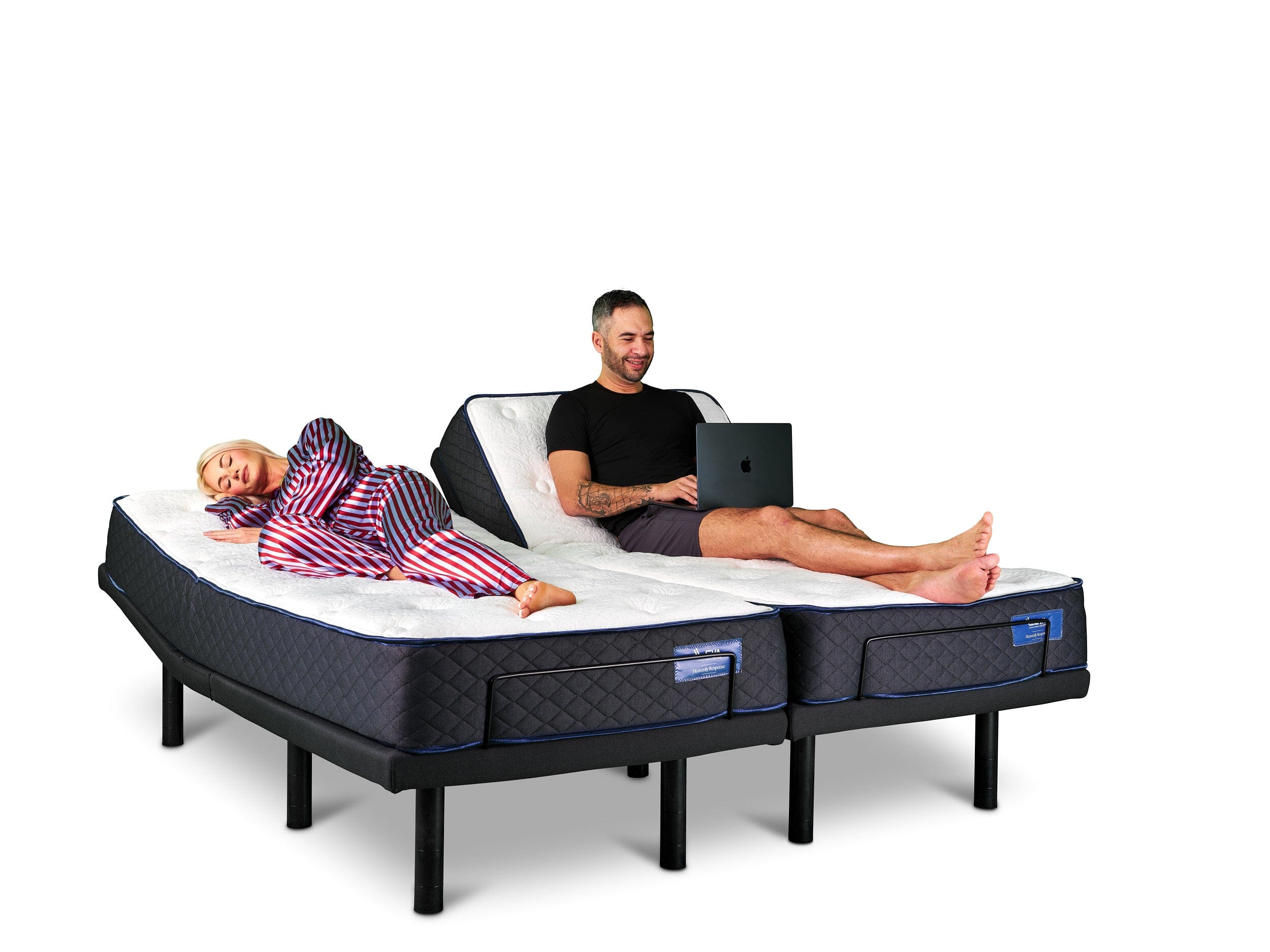

Written by: Matthew Timmins, Founder and Managing Director, Leva Sleep
Key Takeaways for Adjustable Bed Sheets
- Split adjustable beds pull standard fitted sheets out of place because the gap between independently moving mattresses widens as the base moves.
- Shallow pockets and corner-only elastic are the main reasons sheets fail on adjustable bases, while deep pockets with full-perimeter elastic keep them anchored.
- Putting sheets on while the base is fully raised builds in slack that prevents corners from popping when the bed returns to flat.
- Split Queen and split King setups need two fitted sheets sized to each mattress half, not one oversized sheet stretched across both.
- Leva Sleep offers split-specific fitted sheets with extra elastic and remote pockets that stay put on articulating bases. Explore Leva Sleep’s adjustable bed packages for a complete Canadian setup.
How to Put Sheets on an Adjustable Bed: 7 Proven Steps
-
Diagnose why your sheets are failing. Start by identifying whether the problem is corner pop-off, mid-sheet bunching, or gap-related slippage between split mattresses. Each failure mode points to a different fix. Corner pop-off usually signals insufficient pocket depth, because the sheet is not deep enough to stay anchored when the mattress bends. Bunching in the centre of a split configuration usually means a single sheet is stretched across two independent mattresses that move at different angles. Gap slippage between those mattresses indicates the sheet lacks perimeter elastic to hold tension from multiple directions as the halves separate.
Choose deep-pocket or full-elastic sheets sized to your mattress height. Select fitted sheets with a pocket depth 3–5 inches deeper than the mattress height, such as 17–18 inch pockets for a 14 inch mattress. This extra depth helps the sheet wrap fully around all four sides without stretching out or popping off corners when the base moves. As a simple rule, choose a pocket depth about 5 inches deeper than the mattress height to allow for shrinkage after washing.
Common mistake: Many people measure mattress height while the base is flat and then buy sheets that match that exact number. Always add articulation allowance, because the sheet must fit the mattress at its tallest articulated point, not just at its resting height.
Use the raised-bed technique for tighter, more secure corners. Before you put the sheet on, raise the head and foot sections to their maximum elevation. Fit the sheet while the base is fully articulated so the pockets sit at the deepest point on each corner. When you return the base to flat, the sheet gains slack instead of tension, which prevents the usual corner pop-off. This method works best with deep-pocket sheets that already have enough extra depth.
Expert tip: Interior designer Will Taylor recommends choosing a sheet set slightly deeper than the mattress so you have more room to secure the fitted sheet. On an adjustable base, this extra room becomes especially valuable because tension shifts constantly as the bed moves.
Add sheet straps or suspenders as a temporary backup. Sheet straps or fasteners can support deep-pocket fitted sheets that already have strong continuous elastic. These straps clip diagonally across the underside of the mattress and create a secondary anchor point at each corner. They help during the transition to better sheets but do not solve underlying fit issues forever. Elastic fatigue and pocket-depth mismatch eventually overpower strap tension, so treat straps as a backup rather than a permanent fix.
Use split-specific sheets that allow each side to move independently. Split King adjustable beds work best with either a split-top fitted sheet that divides down the middle for about 30–34 inches from the top, or with two separate Twin XL fitted sheets. Two fitted sheets, each sized to a Twin XL half, prevent bunching and slippage that occur when one oversized sheet tries to cover both moving halves. Split Queen configurations in Leva Sleep’s Canadian lineup follow the same rule and need two fitted sheets sized to each individual mattress half.
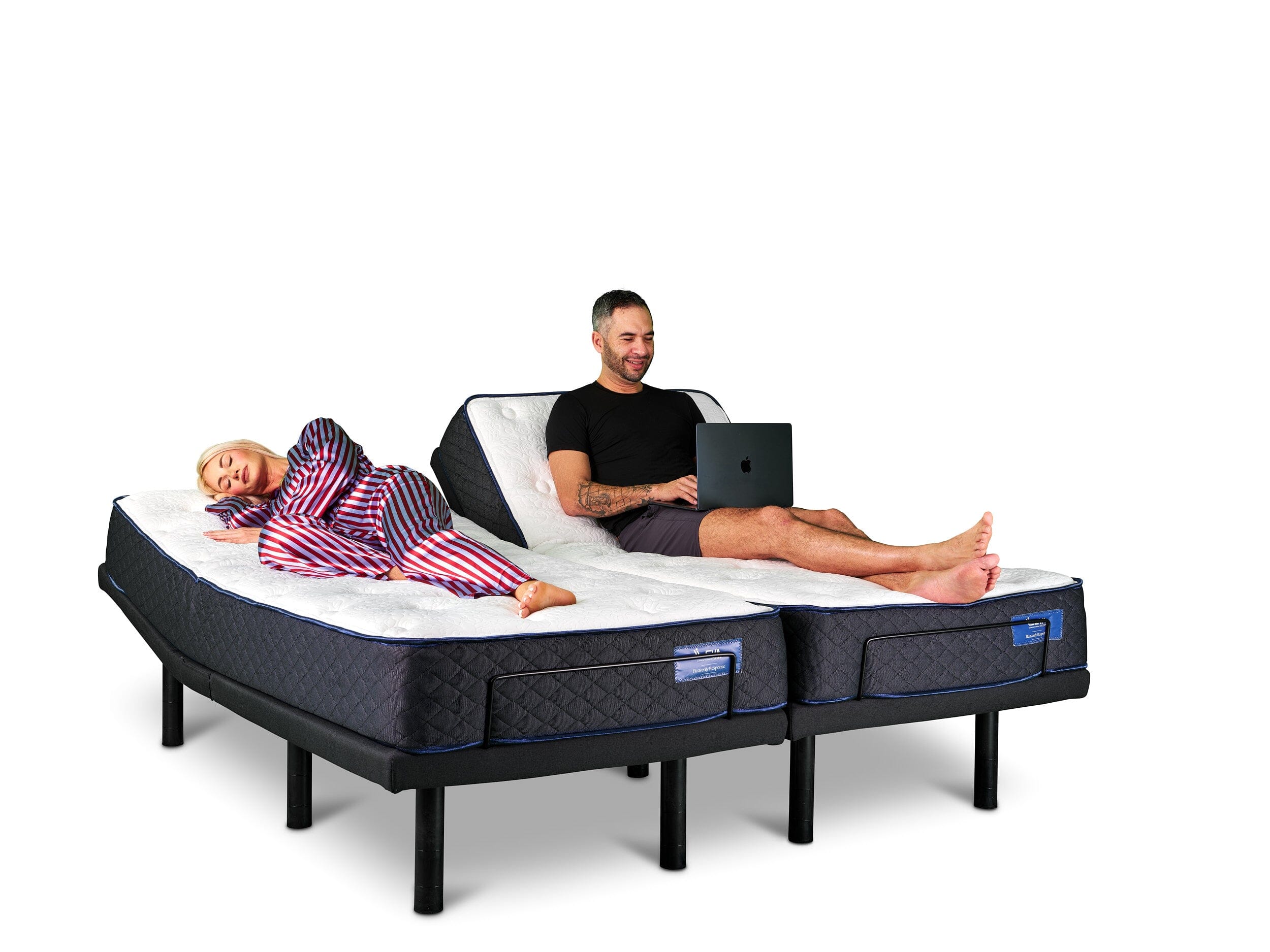
Leva Sleep Split Queen Bed Keep these key factors in mind when you compare split-specific sheets:
- Pocket depth compared with mattress height at full articulation
- Fabric stretch, such as 2–4% elastane or spandex, balanced with long-term durability
- Full-perimeter elastic compared with corner-only elastic designs
- Whether one or both sides of the bed move independently
- Fabric breathability for temperature control, such as bamboo, Tencel, or lyocell blends
Consider Leva Sleep’s fitted sheets with extra elastic and remote pockets. Leva Sleep designs fitted sheets specifically for articulating bases, with deep pockets and full-perimeter elastic that stay anchored through repeated adjustments. These sheets are developed alongside Leva’s adjustable bases, so pocket depth, elastic strength, and fabric stretch match the actual movement range of Leva frames. Some styles include integrated remote pockets that keep the controller within reach without extra accessories. At 30–50% lower pricing than comparable luxury competitors and with white-glove delivery across Ontario and Alberta, Leva’s bedding line offers a coordinated solution instead of a patchwork of workarounds.
Browse Leva’s adjustable bases and bedding collection designed for Canadian split-bed couples.
Maintain and refresh your sheet setup regularly. Dry sheets on low heat or air-dry to reduce shrinkage that can ruin the fit on adjustable beds. Higher-quality deep-pocket sheets often use wider elastic bands, sometimes called power bands, which spread tension evenly and hold better through many wash cycles and position changes. Check elastic every three to six months. Elastic that no longer snaps back firmly will not recover, so replacing worn sheets works better than trying to tighten them.
What a Stable Sheet Setup Feels Like
With the right sheet configuration, both partners can raise and lower their sides all night without pulling the fitted sheet loose. The sheet stays smooth against the mattress at every angle, with no bunching in the gap between mattress halves and no corner pop-off when the foot section lifts. You no longer need to re-tuck sheets every morning. The top sheet or duvet moves freely because it is not fighting against a slipping fitted sheet underneath, and sleep is no longer interrupted by mechanical failures.
Advanced Upgrades for Split Adjustable Beds
After you solve fitted sheet issues, three additional upgrades complete a comfortable split adjustable bed system.
Duvet clips and separate coverage. When partners sleep at different elevations, a shared duvet often causes a tug-of-war. Leva Sleep’s duvet clips anchor each side of the duvet separately so the cover stays balanced even when the bases move to different positions.
Temperature-regulation pads. The residential smart bed segment, which includes temperature-regulation features, led the global market with a 71.7% revenue share in 2025, showing how central thermal comfort has become. A temperature pad sits between the mattress and fitted sheet, so sheet stability directly affects how well the pad works. A slipping sheet drags the pad out of place, so fixing sheet fit first keeps the pad correctly positioned.
Planning for future mattress changes. Memory-foam mattresses often need more pocket depth than latex or hybrid models because foam compresses under weight and then rebounds as the base articulates. When you upgrade mattresses, reassess pocket depth instead of assuming your current sheets still fit. Leva Sleep’s mattresses and bedding are designed together, which removes the guesswork of mixing brands.
Frequently Asked Questions
Will standard queen or king sheets ever work on a split adjustable base?
Standard queen or king fitted sheets are not built for split adjustable bases and usually fail. They lack both the pocket depth for articulation and the split-specific construction needed for two independently moving halves. A single oversized sheet almost always bunches in the centre or pops off corners. The only reliable approach is two separate fitted sheets, one for each mattress half, with deep pockets and full-perimeter elastic. Leva Sleep’s split-specific fitted sheets follow this two-sheet design.
How do I know what pocket depth I need for my Leva Sleep mattress?
Measure mattress height from the sleeping surface straight down to the bottom of the mattress, without including the adjustable base. Add 3–5 inches to that number to find the minimum pocket depth you need. A 14 inch mattress, for example, calls for at least a 17–19 inch pocket. For all-foam mattresses, add another half inch to allow for compression and rebound as the bed moves. Leva Sleep’s customer service team can confirm mattress height for any Leva model and match it to the correct sheet specification in the Leva bedding line.
Does Leva Sleep offer white-glove delivery and setup in Ontario and Alberta?
Yes. Leva Sleep provides in-house white-glove delivery for a fee across Ontario and Alberta. The team delivers to the bedroom, assembles the adjustable base and mattress, adjusts leg height, and walks you through app controls and preset positions. They also remove the old bed through donation or recycling. This service uses Leva’s own trained delivery staff, who can confirm that bedding accessories are installed correctly before they leave. Customers in other provinces can contact Leva directly to review delivery options.
How often should I replace fitted sheets on an adjustable base?
Fitted sheets on adjustable bases face more mechanical stress than sheets on flat beds because the elastic stretches and relaxes with every position change. Elastic quality usually fails before the fabric itself. Check the elastic band every three to six months by stretching it and seeing whether it snaps back firmly. Sheets that need daily re-tucking have already lost enough tension to count as worn out. Air-drying or using low heat extends elastic life. Leva Sleep’s fitted sheets use wide-band perimeter elastic designed to grip through many wash and articulation cycles, though replacement timing still depends on how often you use and launder them.
Can I use a split Queen sheet set on a split King base, or the reverse?
No. Split Queen and split King setups use different mattress dimensions and require different sheet sizes. A split King uses two Twin XL mattresses, each about 38 inches wide by 80 inches long. A split Queen in Leva Sleep’s Canadian lineup uses two narrower halves. Using the wrong size creates the same pocket-depth and tension problems described earlier. Leva Sleep’s bedding line includes size-specific options for both layouts, and the team can confirm the right sheet size for any Leva base.
Conclusion
Sheets that slip or pop off an adjustable base usually fail for predictable mechanical reasons. Split gaps, shallow pockets, and corner-only elastic each have direct fixes, which include split-specific fitted sheets, pockets sized 3–5 inches deeper than mattress height, and full-perimeter elastic. The raised-bed installation method and optional sheet straps add security but work best as support for properly chosen sheets, not as substitutes.
For Canadian couples in Ontario and Alberta, Leva Sleep offers a straightforward way to solve these issues long term. With more than eight years of adjustable bed focus, $50M in lifetime sales, and a vertically integrated model that delivers luxury sleep systems at a clear price advantage over traditional retailers, Leva supplies fitted sheets with extra elastic, split-specific sizing, and remote pockets that match its bases. White-glove delivery and setup ensure the entire system, including bedding, works correctly from the first night.