Written by: Matthew Timmins, Founder and Managing Director, Leva Sleep
Key Takeaways
-
GhostBed uses passive surface treatments like gel-infused foam and phase-change covers that cool at first touch but do not sustain cooling through the night.
-
Passive foam mattresses trap body heat in dense layers, so temperature rises over time and can disrupt deep sleep for hot sleepers and couples.
-
Active two-stage cooling systems sense and regulate temperature continuously through water or air circulation, keeping a chosen temperature steady on each side of the bed.
-
Adjustable bases with dual-zone temperature control reduce partner conflicts by letting each sleeper set their own temperature without compromise.
-
Couples who want reliable overnight cooling and personalized comfort can explore Leva Sleep’s adjustable bed packages with active temperature regulation.
How Active Two-Stage Cooling Works
Active two-stage cooling uses sensors to read the sleep surface temperature, then adds or removes heat through integrated regulation to hold a set level. These systems typically circulate cooled or heated water or air through an external hub that connects to a pad or layer on the bed. Unlike passive materials that only react to body heat, active systems maintain a programmed temperature independently on each side of the mattress.
Why Passive Cooling Struggles for Hot-Sleeping Couples
Cooling additives such as gel infusions, graphite strips, and phase-change covers reduce surface temperature only at initial contact and do not alter the heat retention properties of the underlying foam layers where heat accumulates over the night. This limitation sits at the core of GhostBed’s design and most competing foam mattresses.
NapLab’s objective cooling tests on the GhostBed Classic scored 8.0 out of 10, below the average across all mattresses tested.
Dense closed-cell foam traps body heat structurally because its lack of airflow allows the foam to absorb and hold heat generated by the sleeper, causing the sleep surface temperature to rise progressively through the night. For couples sharing a bed in Ontario or Alberta, with winter heating and summer humidity, this progressive warming appears often in real-world use, not just in rare cases.
When you evaluate GhostBed or similar mattresses, look at user reports from forums such as Reddit. Many describe a cool-to-touch cover that feels pleasant at first, then fades within the first hour of sleep. Users often notice clear warmth buildup by the second half of the night, which is when restorative deep sleep matters most.
Evidence: Active vs Passive Cooling Performance
Passive cooling mattress pads use breathable materials such as cotton, wool, bamboo-derived viscose, or Tencel, along with conductive materials like gel and phase-change materials, to draw heat away from the body and wick moisture, but they do not allow users to customize the bed’s temperature.
Active cooling systems circulate air or water through embedded tubes or hoses to cool or heat the sleep surface and can be set to a specific temperature using a control unit, remote, or smartphone app. This circulation provides sustained overnight temperature regulation by constantly moving cooled or heated water or air through external hubs. Passive pads rely only on material properties that release heat and cannot hold a set temperature over time.
Active cooling systems with dual-zone controls allow each side of the bed to be programmed independently to different temperatures, making them suitable for couples with differing temperature preferences without disturbing one another. This capability highlights the functional gap that no passive foam mattress, including GhostBed, Casper, or Tempur-Pedic, can close through materials alone.
Real Temperature Differences and Sink Behaviour
When you compare cooling mattresses, focus on measurable criteria. These include surface temperature at first contact, rate of temperature rise over 15 to 30 minutes, speed of heat dissipation after you move, and total contact area between your body and the mattress surface.
Among these factors, contact area plays a central role because it directly shapes heat exchange. Softer mattress surfaces increase body sink and contact area, which increases heat transfer, while firmer surfaces reduce contact area and improve air circulation around the sleeper. All-foam GhostBed models, including the Luxe, use dense foam layers that create noticeable sink. That feel can help with pressure relief but often becomes a thermal drawback for hot sleepers.
Pocketed coil support systems maintain continuous airflow through the mattress core, in contrast to all-foam constructions that create a sealed block trapping air and heat. Hybrid models from GhostBed and competitors improve airflow somewhat, yet the comfort layers above the coils remain foam-based. Those top layers still retain heat at the surface where your body touches the mattress.
When you review GhostBed models, note that some testers report feeling slightly warm during use. Naturally hot sleepers or those over 250 lbs often find these models warmer than alternatives such as the GhostBed Luxe or hybrid designs. Side sleepers who need plush pressure relief face a direct trade-off, because the softness that cushions hips and shoulders also increases sink and heat retention.
GhostBed Luxe and Flex in Canadian Heating Conditions
Forum reports on the GhostBed Luxe often describe progressive warming after the first 60 to 90 minutes of sleep. Users attribute this pattern to reduced airflow from the dense foam stack beneath the Ghost Ice cover. In Canadian homes that rely on forced-air heating through long winters, bedroom air stays warm, so the mattress has less cool ambient air to draw from. That smaller temperature difference speeds up the heat-buildup cycle.
Foam structure can remain durable while cooling performance fades. Phase-change materials and gel infusions sit near the surface, not deep in the core. As the cover compresses and the foam softens over two to five years, the initial cool sensation weakens even if the mattress still feels supportive.
Couples planning a seven-to-ten-year mattress purchase should recognize that the most heavily marketed cooling feature is often the first comfort feature to decline.
Couple Temperature Conflicts and Adjustable Bed Solutions
A single-zone passive mattress creates one shared thermal environment for both partners, which sets up a built-in conflict when one sleeper runs hot and the other runs cold. Any passive material compromise leaves both slightly unsatisfied. The hot sleeper wakes overheated, while the cold sleeper wakes chilled and uncomfortable. This pattern reflects a structural design issue that a different foam recipe cannot fix, because the problem lies in the single-zone layout, not only in the foam itself.
As noted earlier, dual-zone controls solve this conflict by letting each partner program a preferred temperature independently, which passive foam cannot achieve.
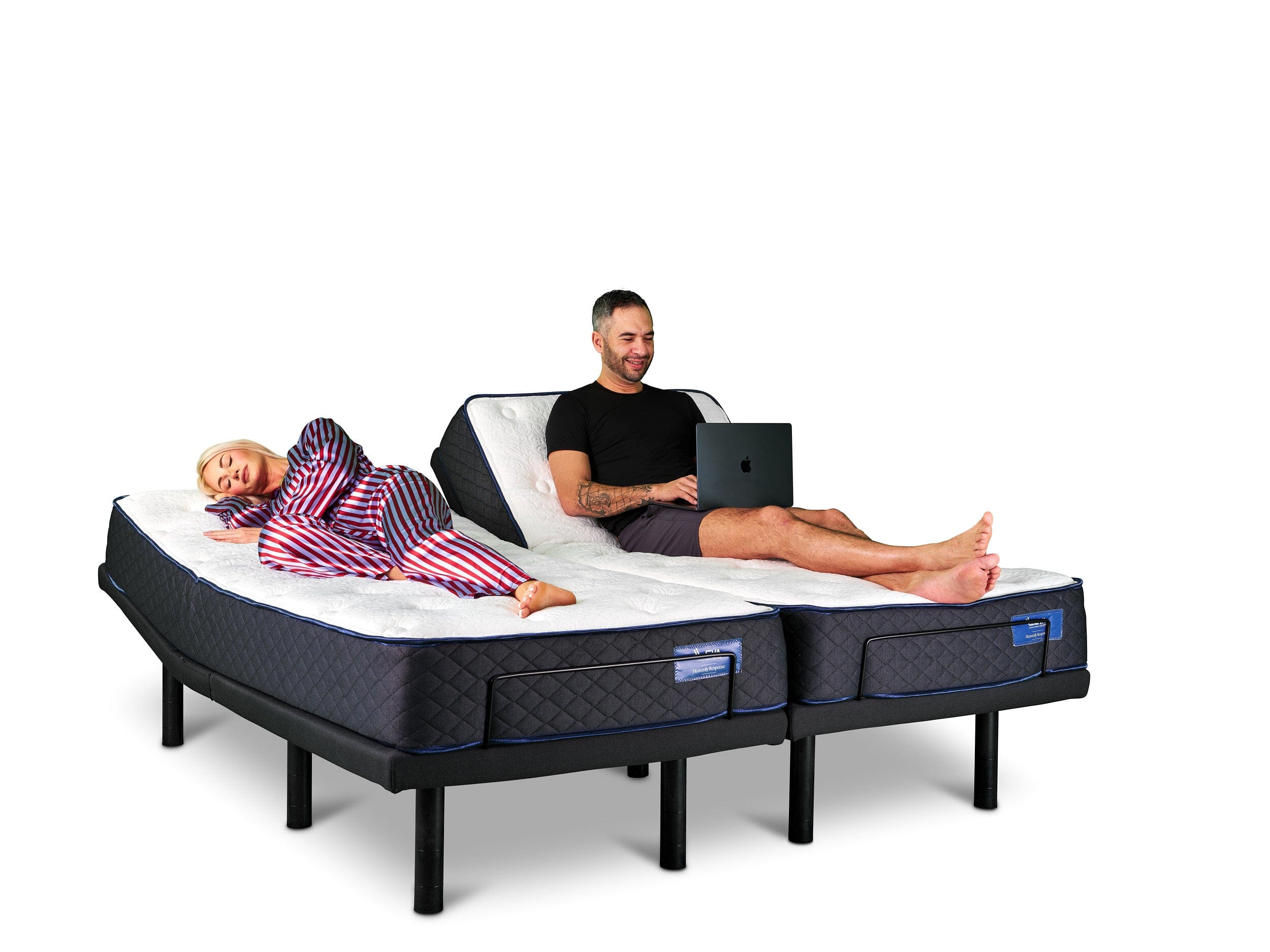
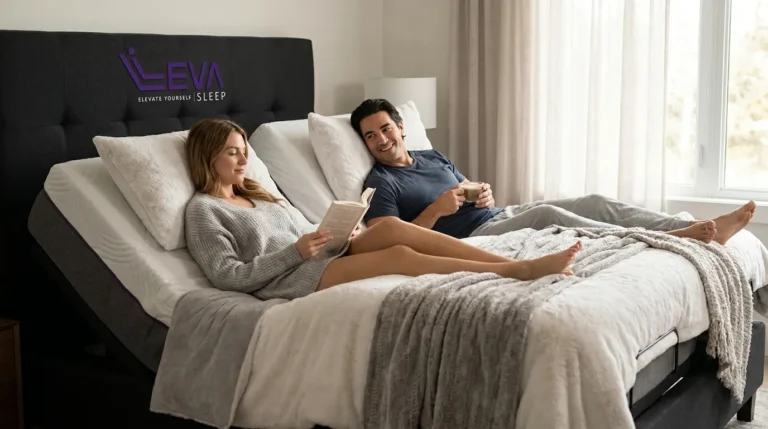
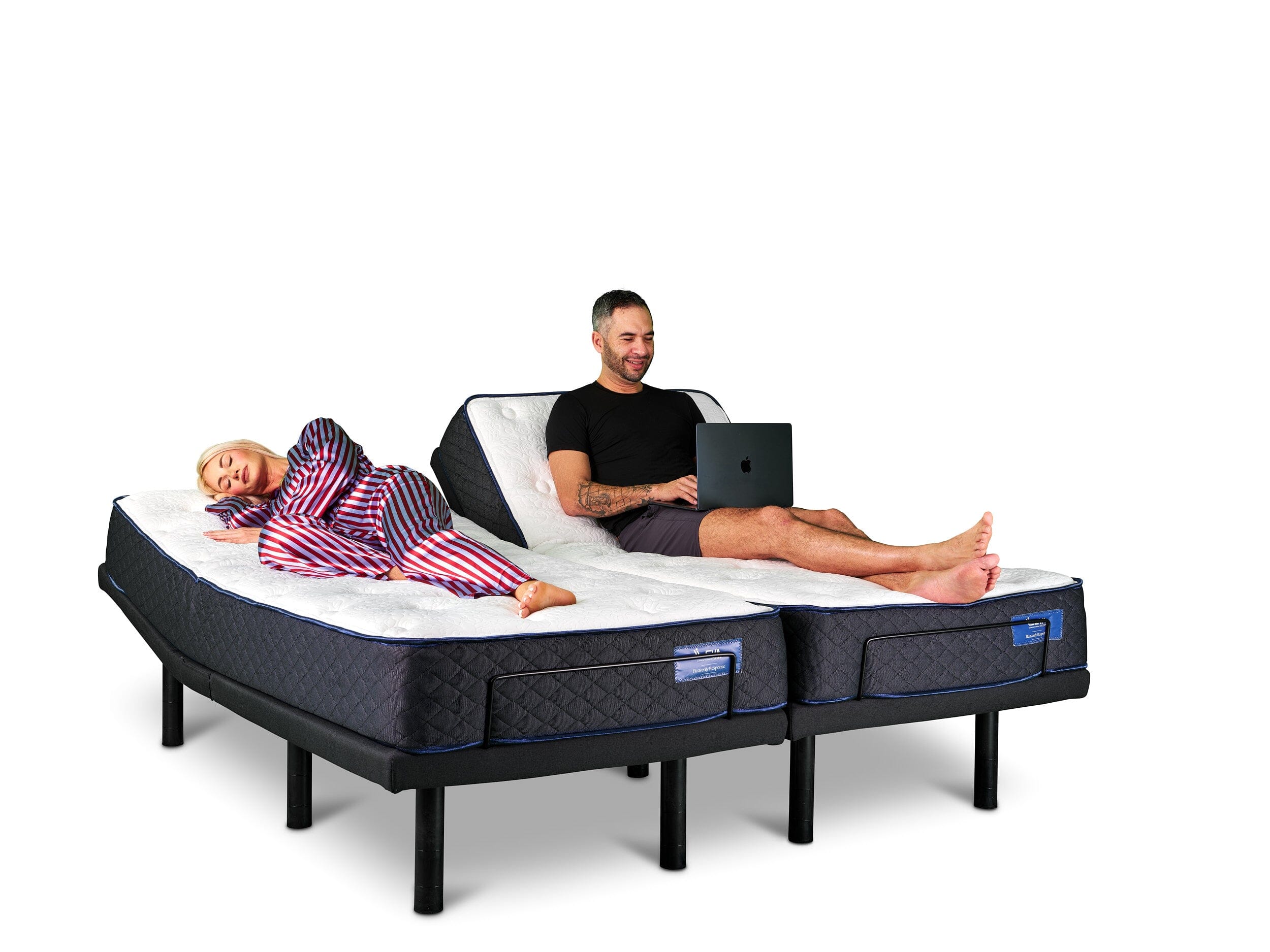
Leva Sleep’s adjustable sleep systems pair an adjustable base with a Heating & Cooling Pad that offers independent controls for each side of a Split King or Split Queen. Each partner sets a preferred temperature through the Leva Sleep app, and the system actively maintains that level throughout the night, not just at first contact. This difference separates a passive foam mattress from a full active regulation system.
Value Comparison: Passive Foam vs Active Regulation Systems
The table below compares key criteria across passive foam cooling, represented by GhostBed’s approach, and active regulation systems, represented by adjustable bases with integrated temperature pads. All data points come from cited sources or verifiable product specifications. Metrics that do not share a common scale appear in the earlier explanatory sections.
|
Criterion |
GhostBed Passive Foam |
Active Cooling (Adjustable Base + Pad) |
Notes |
|---|---|---|---|
|
Sustained overnight cooling |
No, surface treatment only |
Yes, continuous circulation |
Sleep Foundation; Avocado |
|
Independent partner temperature zones |
No, single zone |
Yes, dual-zone programmable |
Sleep Foundation |
|
Cooling performance score (NapLab) |
8.0 / 10 (below average) |
Not applicable, active system |
NapLab |
|
Structural durability |
Several years (foam structure) |
Varies by base model and pad |
Mattress Clarity |
Leva Sleep’s direct-to-consumer model offers active regulation systems at roughly 30 to 50 percent below comparable luxury competitors by removing retail markups through vertical integration and local assembly. White-glove delivery and setup is available for a fee and includes old bed removal, full assembly, and a product tutorial. Bed-in-a-box brands typically do not match this service level.
Frequently Asked Questions
How long does GhostBed cooling last overnight?
As explained in the article, GhostBed’s surface treatments cool at initial contact but cannot actively regulate heat, so their effect fades as body heat saturates the foam layers over the first one to two hours. Hot sleepers and those over 250 lbs usually notice the most warmth buildup in the second half of the night. This pattern reflects how passive foam cooling works rather than a specific defect in GhostBed.
Is an adjustable base with temperature regulation suitable for sleep apnea or hip-pain users?
Yes. Adjustable bases can raise the head of the bed, which opens the airway and may reduce mild sleep apnea symptoms without a mask. Leva Sleep’s adjustable bases also provide lumbar support and foot elevation settings that ease pressure on hips and knees by shifting body weight. Sleep apnea clinics have referred patients to Leva Sleep for these elevation benefits. Temperature regulation runs as a separate comfort layer that works alongside elevation, so users managing medical conditions can use both features at the same time.
Can Leva Sleep warranties be transferred within Canada?
Leva Sleep’s warranty and transfer terms can vary by product model and purchase date, so the most reliable approach is to confirm details directly with the Leva Sleep team. The company operates exclusively in Canada, with delivery in Ontario and Alberta, and handles warranty support in-house instead of through third-party retailers. Direct contact ensures you receive current information tailored to your specific setup.
What is involved in Leva Sleep setup and delivery?
Leva Sleep offers in-house white-glove delivery for a fee. The service includes a scheduled appointment, bringing the bed into the bedroom, full assembly of the adjustable base and mattress, and adjustment of leg heights to your preference. The team also provides a complete product tutorial that covers app setup and key features, then removes the old bed through donation or recycling. Trained professionals handle the process so the system is fully operational and personalized before they leave.
Conclusion: Choosing Sustained Cooling for Shared Sleep
When you compare cooling mattresses, focus on sustained overnight performance, independent zone control for each partner, airflow through the mattress core, and how sink behaviour affects heat retention for side sleepers. GhostBed’s passive foam design performs reasonably well at first contact but cannot hold a set temperature through the night, cannot create independent thermal zones for couples, and tends to accumulate heat as foam layers saturate. Casper, Tempur-Pedic foam models, and other gel-infused constructions share these structural limits.
Active two-stage regulation on an adjustable base addresses each of these issues directly. Continuous circulation maintains temperature, dual-zone controls remove partner compromises, and the adjustable base adds elevation benefits for sleep apnea, hip pain, and anti-snore positioning that passive mattresses cannot match. For Ontario and Alberta couples investing in a seven-to-ten-year sleep system, the staying power of the cooling mechanism, not only the foam, becomes the key decision factor.