Written by: Matthew Timmins, Founder and Managing Director, Leva Sleep | Last updated: July 9, 2026
How GhostBed Stacks Up at a Glance
- Independent testing places GhostBed mattresses in the mid-tier, with an 8.48 overall score that ranks in the bottom 36% of mattresses evaluated.
- GhostBed uses lower-density foams and aerated latex that recover quickly but fall short of Tempur-Pedic’s high-density TEMPUR material for motion isolation and long-term durability.
- All-foam GhostBed models show documented weaknesses in edge support, while hybrids perform better because of perimeter reinforcement.
- Repeated articulation on adjustable bases can cause compression fatigue in GhostBed’s memory-foam layers over time, unlike purpose-built adjustable systems.
- For Canadian couples seeking split-configuration adjustable beds with white-glove delivery and stronger long-term value, explore Leva Sleep’s adjustable bed packages.
GhostBed vs Tempur-Pedic Foam Quality
The core material difference between GhostBed and Tempur-Pedic lies in foam density and recovery behaviour. GhostBed’s all-foam construction uses 1.5 inches of aerated latex over 2 inches of gel memory foam and a 7.5-inch high-density poly foam base, which creates a buoyant, faster-recovery feel. The GhostBed Luxe adds gel memory foam and bounce foam layers for extra contouring.
Tempur-Pedic’s proprietary TEMPUR material uses higher-density viscoelastic foam engineered for pressure mapping and motion dampening. Mattress Clarity’s testing by Certified Sleep Science Coaches awarded the Tempur-Pedic TEMPUR-Adapt Topper flawless 5/5 scores in support, motion isolation, durability, and cooling. One tester reported, “I could not feel any motion from my partner from this topper. It isolated the motion completely from my partner, and I could not feel even large movements on my side of the bed.”
By comparison, NapLab gave the GhostBed Signature Hybrid a motion transfer score of 8.0/10 and an overall score of 8.48, placing it in the bottom 36% of mattresses evaluated. GhostBed delivers competitive pressure relief, with a pressure relief score of 9.0/10 from NapLab, but Tempur-Pedic’s denser foam construction maintains a clear advantage in motion isolation for couples.
GhostBed Luxe Durability and Warranty in Practice
Independent reviews describe the GhostBed Luxe foam layers as reasonably stable, with no major red flags for early cracking or misshaping. GhostBed mattresses come with 20- to 25-year limited warranties against manufacturing defects such as sagging greater than 1.5 inches.
Foam density is the most reliable predictor of comfort lifespan. High-density memory foam at 5 PCF or above often lasts 8–10 years, while budget low-density foams at 3–4 PCF develop body impressions within 1–3 years. GhostBed Luxe’s foam layers sit in the mid-density range, which typically supports a moderate lifespan rather than true luxury longevity.
GhostBed’s 25-year warranty on the Luxe, Signature, and Flex models covers manufacturing defects including tears, sags, and impressions greater than 1.5 inches. However, the warranty’s practical value drops after year 10, when a prorated replacement fee applies and you pay an increasing share of the replacement cost as the mattress ages.
GhostBed Edge Support Problems
Edge support remains a consistent weakness across GhostBed’s all-foam lineup. GoodBed noted that the GhostBed Luxe edge support felt okay but not among the strongest options available. The GhostBed Classic has also been tested for edge support in independent reviews, with similar mid-range results.
The GhostBed Signature Hybrid performs better for edge stability because of its perimeter foam band. This gap between GhostBed’s all-foam and hybrid models matters for couples who use the full mattress surface or sit on the edge regularly.
Mattress Clarity requires all anti-sag mattress recommendations to achieve at least 3 stars for edge support, because reinforced perimeters reduce the likelihood of edge sagging over repeated use. Hybrids with high-gauge coil systems and reinforced edges consistently outperform all-foam models on this measure.
GhostBed Cooling Compared to Saatva and Other Alternatives
NapLab’s objective cooling tests recorded the GhostBed Classic reaching a maximum surface temperature of 92.7°F. The GhostBed Signature Hybrid has also undergone cooling performance testing, with results that place it in a competitive but not category-leading range.
GhostBed Luxe uses patented Ghost Ice technology along with graphite and gel-infused memory foam to deliver cooling performance comparable to Tempur-Pedic’s LuxeBreeze at a significantly lower price point. GoodBed noted that phase-change and gel features effectively prevented the GhostBed Luxe from feeling hot during testing despite its memory-foam construction.
In Canada’s variable climate, with humid Ontario summers and dry Alberta winters, all-foam mattresses without active temperature regulation eventually warm to body temperature. GhostBed’s aerated latex top layer and phase-change cover on the Luxe model help slow this warming, but neither model includes active heating or cooling. In humid summers without air conditioning, GhostBed’s all-foam construction will eventually reach body temperature, though the aerated latex top layer and breathable cover allow it to sleep cooler than generic foam mattresses.
Is GhostBed Worth It for Canadians in 2026?
GhostBed’s queen size Comfort Foam mattress is listed at $1,099 USD as of June 2026. Canadian buyers face additional cross-border pricing considerations. US tariffs effective early 2026 are projected to push foam and Chinese-sourced mattresses up another 10–25%, narrowing the price gap between imports and Canadian-made alternatives.
GhostBed is sold through Costco Canada, which introduces return-policy complexity. While Costco’s standard return policy applies to mattresses, GhostBed return policies require customers to keep the mattress for a 30-day break-in period before initiating a return, and pickup must be coordinated with a charity or recycling service since the bed cannot be repackaged. This logistical burden is compounded by the absence of white-glove delivery and in-home setup in standard GhostBed purchases. GhostBed does not offer a sleep trial on its adjustable base, which adds risk if you want the full system.
For Canadian couples evaluating total cost of ownership, the absence of split-configuration options, white-glove setup, and active temperature regulation creates a noticeable gap compared with vertically integrated Canadian alternatives.
Performance on Adjustable Bases
GhostBed mattresses are compatible with adjustable bases, platform beds, and slat foundations with slats spaced no more than 3–4 inches apart. GoodBed tested the GhostBed Luxe mattress on their adjustable base and found that it performed acceptably under basic articulation.
Repeated articulation over years of use places stress on foam layers that all-foam mattresses are not specifically engineered to withstand. The memory foam in the Luxe, while excellent for pressure relief, can develop compression fatigue at flex points over time. GhostBed’s adjustable base is offered only in Twin XL, queen, and split king sizes, with no split queen option available.
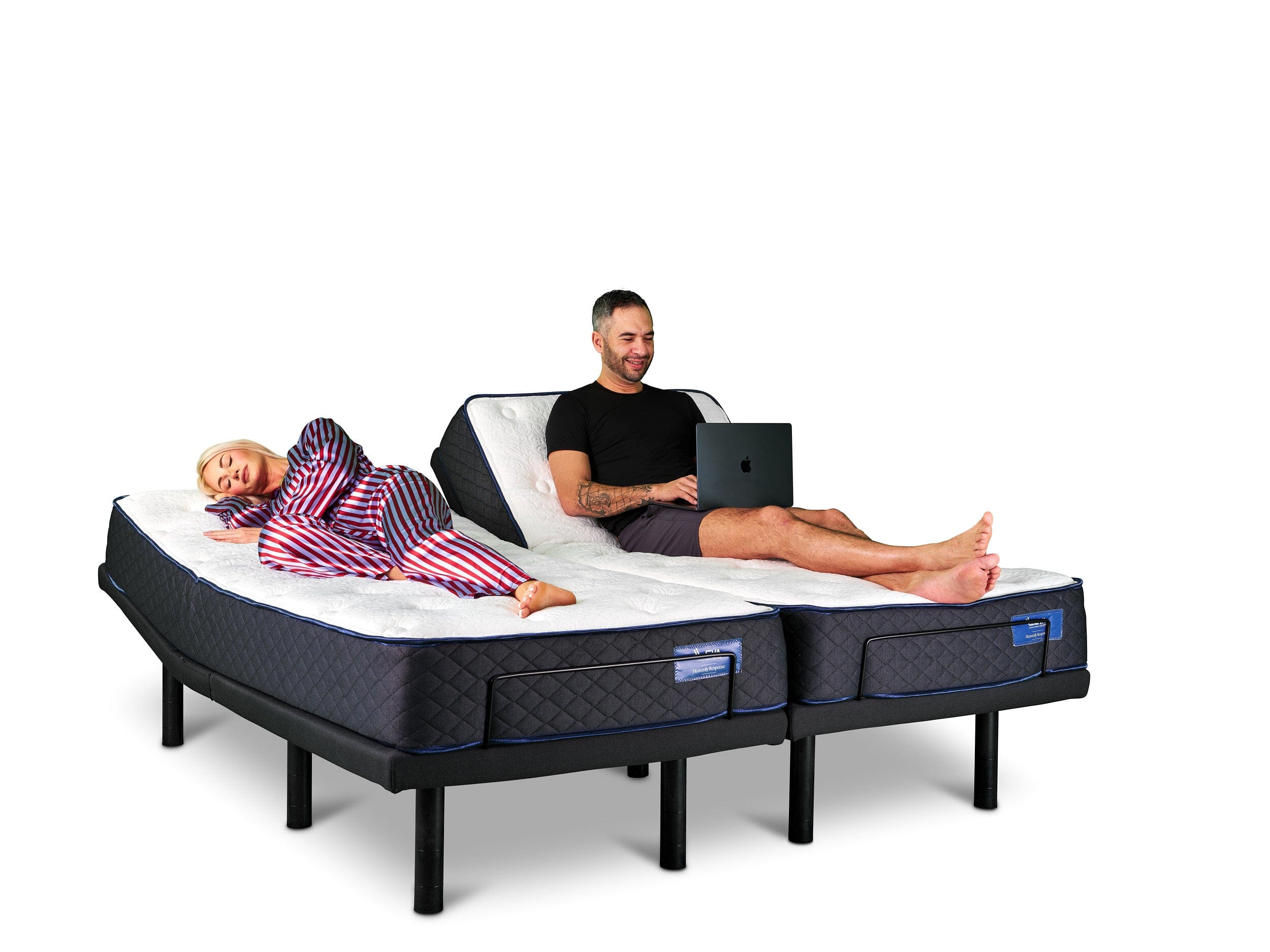
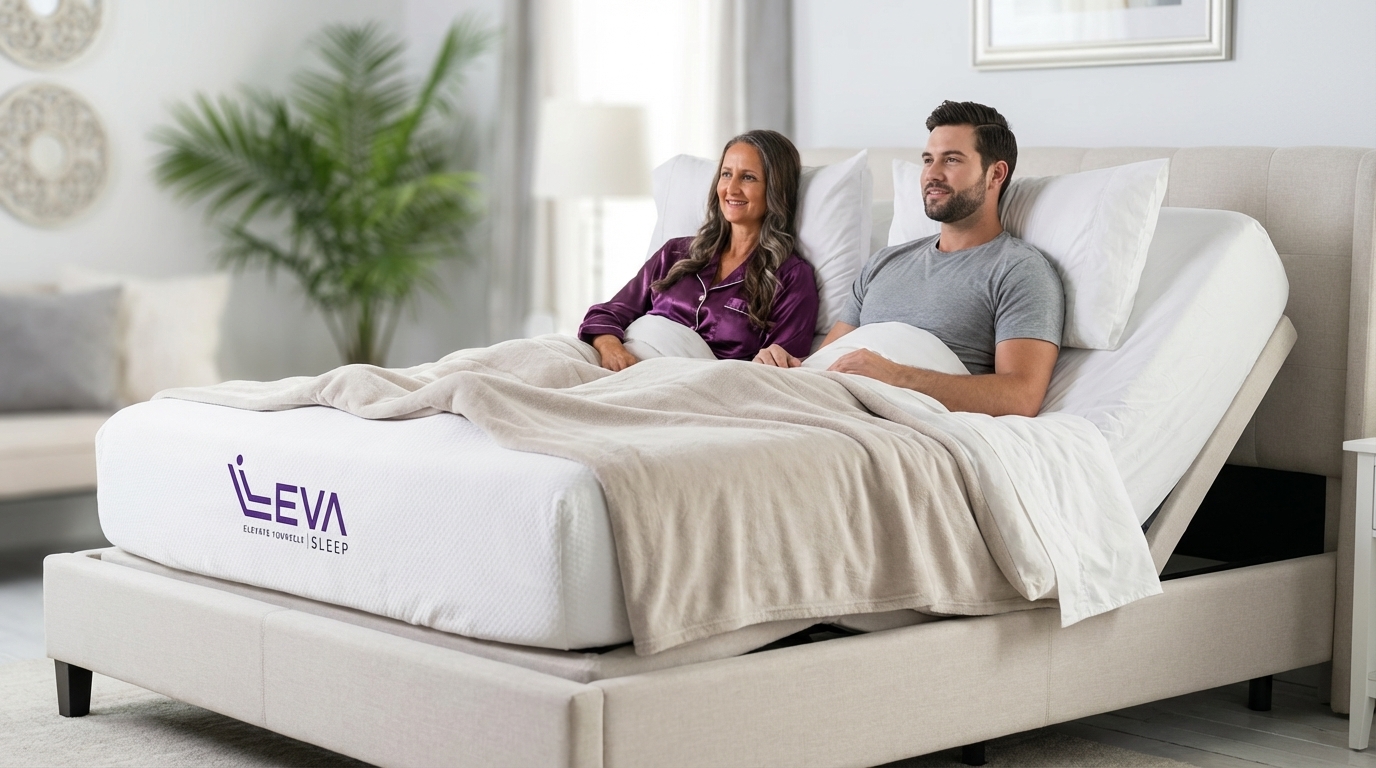
This compression-fatigue limitation highlights the difference between mattresses that are simply compatible with adjustable bases and those that are purpose-built for them. Leva Sleep’s adjustable systems are designed from the ground up for articulation compatibility, using whisper-quiet German motors and mattresses, both all-foam and hybrid pocket coil, engineered specifically for repeated elevation cycles. Split Queen and Split King configurations allow each partner to independently control head and foot elevation, anti-snore mode, massage, and temperature without affecting the other side of the bed.
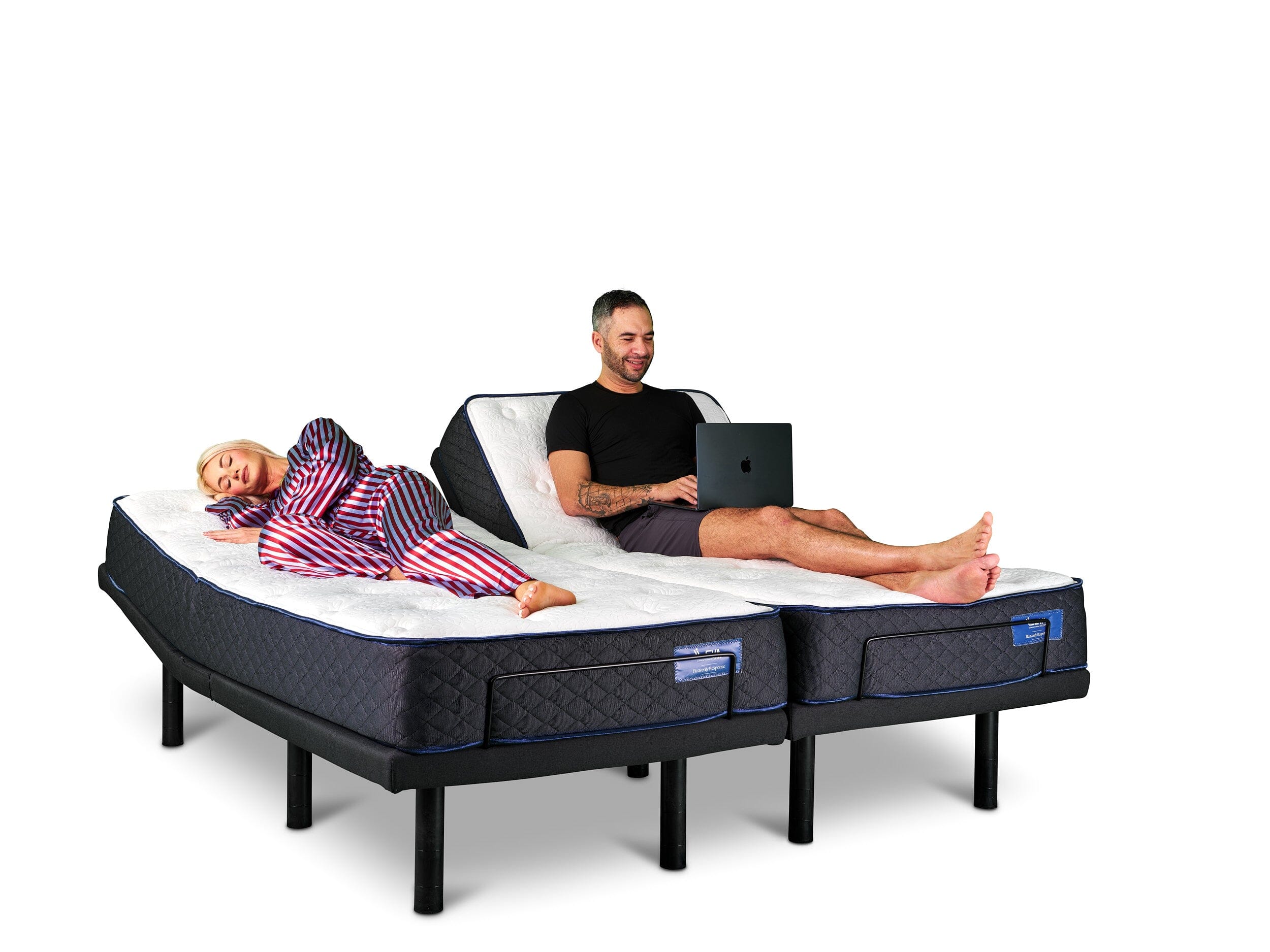
Compare Leva Sleep’s Split Queen and Split King pricing and delivery options for your region.
Data Comparison Table
| Mattress | Foam Density (Comfort Layer) | Cooling Score | Edge Support Score | 5-Year Durability Expectation |
|---|---|---|---|---|
| GhostBed Classic | 1.5″ aerated latex + 2″ gel memory foam | Maximum surface temperature of 92.7°F (NapLab) | Average per independent tests | Projected 7–10 years (Mattress Clarity) |
| GhostBed Luxe | Gel memory foam and bounce foam layers | Phase-change material and gel features help mitigate heat | Okay but not the very best per GoodBed | 20- to 25-year limited warranty against sagging >1.5 inches |
| GhostBed Signature Hybrid | 5.5″ comfort layer over 6″ pocketed coils | Tested for cooling performance | Performs better due to perimeter foam band | Overall score of 8.48, bottom 36% of mattresses (NapLab) |
| Tempur-Pedic (TEMPUR material) | Proprietary high-density TEMPUR viscoelastic foam (Mattress Clarity) | LuxeBreeze claims up to 10°F cooler; premium price tier (Forbes) | 5/5 support score on TEMPUR-Adapt Topper (Mattress Clarity) | 5/5 durability score on TEMPUR-Adapt Topper (Mattress Clarity) |
How Leva Sleep Addresses GhostBed’s Limitations
Leva Sleep’s vertically integrated model directly tackles three of GhostBed’s most documented shortfalls: edge support on all-foam models, adjustable-base longevity, and couple-specific adjustability. The focus sits on purpose-built engineering rather than retrofitted compatibility.
Leva’s mattresses, both all-foam and hybrid pocket coil, are designed specifically for repeated articulation on adjustable bases. This design approach helps avoid the flex-point compression fatigue that affects standard foam mattresses over time. Whisper-quiet German motors power independent head and foot elevation on each side of Split Queen and Split King configurations, so partners with different firmness preferences, snoring issues, or medical needs can customize their side without disturbing the other.
The Leva Sleep app provides full control over elevation presets, anti-snore mode, vibrating alarms, and temperature regulation through an integrated heating and cooling pad. For Canadian couples in Ontario and Alberta, in-house white-glove delivery includes bedroom setup, old bed removal, leg-height adjustment, and a product tutorial, which GhostBed’s standard purchase or Costco distribution model does not include.
With Canadian mattress prices up 8–12% from 2022–2025 and US tariffs projected to add another 10–25% to imported foam products in 2026, Leva Sleep’s direct-to-consumer, locally assembled model offers 30–50% lower pricing than comparable luxury competitors. This structure avoids the cross-border pricing exposure that affects US-manufactured GhostBed products.
Review Leva Sleep’s Split Queen and Split King packages with current Canadian pricing.
Decision Framework for Canadian Couples
Canadian couples evaluating GhostBed against adjustable hybrid alternatives can use four criteria to guide their decision.
- Durability data: Confirm the foam density of the comfort layer. Foams below 4 PCF develop body impressions within 1–3 years, while high-density foams at 5 PCF or above regularly reach 8–10 years. Request the warranty sagging threshold; GhostBed Luxe covers impressions greater than 1.5 inches.
- Adjustable-base compatibility: Verify whether the mattress is engineered for repeated articulation or simply listed as compatible. Ask whether the base is available in a split configuration for independent partner control. GhostBed’s adjustable base offers no sleep trial and no split queen option.
- Delivery and setup experience: Determine whether white-glove delivery, in-room setup, and old bed removal are included or available. Online mattress trials are real, but customers have reported waiting months to return a mattress they knew was wrong because the process felt too difficult.
- Total cost of ownership: Factor in Canadian import pricing, tariff exposure on US-manufactured products, warranty proration schedules, and the cost of replacing a mattress that underperforms at the 5-year mark versus one engineered to last 8–10 years with a vertically integrated service model.
GhostBed suits single sleepers who prioritize cooling and pressure relief at a mid-range price point. For Canadian couples with differing sleep needs, snoring concerns, or medical requirements for elevated sleeping positions, a purpose-built adjustable system with split configurations and in-house service usually delivers stronger long-term value.
Frequently Asked Questions
Are GhostBed mattresses good for couples with different sleep preferences?
GhostBed mattresses come in a limited range of firmness options and do not include split configurations that allow each partner to independently control their side of the bed. The all-foam models provide solid motion isolation and pressure relief, but the lack of split adjustability means one partner’s firmness or elevation preference will usually compromise the other’s comfort. Couples with significantly different needs, such as one partner who sleeps hot and another who requires head elevation for snoring or sleep apnea, often find that a standard GhostBed mattress does not resolve those conflicts. Split Queen and Split King adjustable systems, such as those offered by Leva Sleep, are designed to address this by giving each partner independent control over elevation, firmness, temperature, and massage settings without affecting the other side.
How does GhostBed foam quality compare to Tempur-Pedic for long-term durability?
GhostBed uses gel memory foam in its Luxe model, which sits in the mid-density range. Tempur-Pedic uses proprietary high-density TEMPUR viscoelastic foam that has earned top durability scores in independent testing and is generally projected to last 10 years or more with proper care. The practical difference for Canadian buyers is that Tempur-Pedic’s denser foam resists body impressions and compression fatigue more effectively over time, although it carries a significantly higher price tag. GhostBed’s 25-year warranty on select models covers impressions greater than 1.5 inches, but the prorated replacement fee structure after year 10 reduces the warranty’s real-world value in the second decade of ownership.
Is GhostBed compatible with adjustable bases?
GhostBed mattresses are listed as compatible with adjustable bases and have performed well in initial testing on articulating frames. As mentioned, GhostBed’s base lacks a split queen option, which limits flexibility for couples who want independent control in a smaller footprint. The base also does not include a sleep trial. For couples seeking a fully integrated adjustable sleep system, where the mattress, base, and accessories are engineered to work together under repeated articulation, a specialist provider offers a more purpose-built solution than a mattress brand that treats adjustable-base compatibility as a secondary feature.
What are the main weaknesses of GhostBed mattresses for Canadian buyers in 2026?
Canadian buyers evaluating GhostBed in 2026 face several practical considerations beyond the mattress itself. US tariffs effective early 2026 are projected to increase the cost of imported foam products by 10–25%, which affects the price competitiveness of US-manufactured GhostBed models relative to Canadian-assembled alternatives. GhostBed’s return process requires a 30-day break-in period before a return can begin, and pickup must be coordinated with a charity or recycling service. White-glove delivery and in-home setup are not included in standard purchases. On the product side, all-foam GhostBed models show weaker edge support than hybrid alternatives, and the 101-night trial period is 68 nights shorter than the average trial period across mattress brands tested by independent labs. Couples specifically seeking split configurations, in-home setup, or active temperature regulation will find GhostBed’s offering limited in those areas.
How does Leva Sleep’s pricing compare to GhostBed and Tempur-Pedic for Canadian couples?
Leva Sleep’s direct-to-consumer, vertically integrated model is priced 30–50% below comparable luxury competitors, including Tempur-Pedic, by eliminating retail markup and assembling systems locally in the regions it serves. As noted earlier, GhostBed’s queen model starts at $1,099 USD before Canadian import costs and applicable tariffs, while Tempur-Pedic’s premium models carry some of the highest price points in the category. Leva Sleep’s adjustable bed packages include the base, a purpose-built mattress, and optional white-glove delivery, so buyers receive a complete system rather than individual components purchased separately. For Canadian couples in Ontario and Alberta comparing total cost of ownership across a 10-year horizon, Leva Sleep’s integrated pricing, local assembly, and specialist expertise in split-configuration adjustable beds represent a meaningfully different value proposition than either GhostBed or Tempur-Pedic.