Written by: Matthew Timmins, Founder and Managing Director, Leva Sleep | Last updated: July 9, 2026
Key Takeaways for Canadian Couples
- Static mattresses cannot independently adjust for two partners with different weights, positions, or pressure needs, so side-sleeping couples often wake up sore and unrested.
- Real pressure relief depends on contouring depth, zoned support, body weight, temperature regulation, and the ability to change position, and flat mattresses cannot fully cover all of these needs at once.
- Basic adjustable bases move as a single unit, so one partner’s elevation change affects the other; split adjustable systems solve this with fully independent control on each side.
- Leva Sleep’s split systems add zoned lumbar support, pillow-tilt motors, and independent temperature control, features that static Canadian mattress brands like GhostBed, Endy, Douglas, Silk & Snow, and Logan & Cove do not provide.
- Discover split configurations from Leva Sleep that deliver personalized pressure relief and help Canadian couples share a bed comfortably again.
How Real-World Pressure Relief Actually Works
Pressure relief comes from several interacting factors, not foam thickness alone. For couples sharing a bed, these factors matter even more because each partner’s body weight, sleep position, and temperature preferences often conflict. A single flat surface rarely satisfies both people at the same time, especially when one or both sleep on their side. The five variables below shape how well a mattress can support both partners.
- Contouring depth: NapLab sinkage measurements show that deeper sinkage in inches correlates with greater envelopment at the hip and shoulder for side sleepers.
- Support zone design: Zoned coil or foam layers reinforce the torso while allowing the shoulder and hip to sink, which maintains spinal alignment. Sleep Foundation testing confirms that side sleepers experience greater pressure buildup at the shoulders and hips than back or stomach sleepers, so they need thick adaptive comfort layers plus strong zoned support.
- Body weight: Sleep Foundation weight-specific evaluations show that sleepers above 230 lbs perceive medium-firm mattresses as softer and need high-density foam or zoned coils to avoid excessive sinkage.
- Temperature regulation: Heat retention in dense foam layers raises discomfort and disrupts sleep continuity.
- Adjustability: Static mattresses keep every sleeper in the same horizontal plane regardless of medical or positional needs.
These five factors interact to determine pressure relief. When two partners differ in weight, position, or temperature preference, a single static surface cannot tune all five variables for both sleepers at once. That structural limit sets up the problems couples face with conventional flat mattresses.
Why Flat Mattresses and Basic Adjustable Bases Fail Couples
A static mattress is engineered for one body or an average of two. When partners differ significantly in weight, preferred firmness, or sleep position, one person’s ideal surface often becomes the other’s source of pain. A Good Housekeeping Institute survey of 10,000 mattress owners found that over 75% sleep on their side, and many report difficulty finding a mattress that provides enough give and support at both hips and shoulders at the same time.
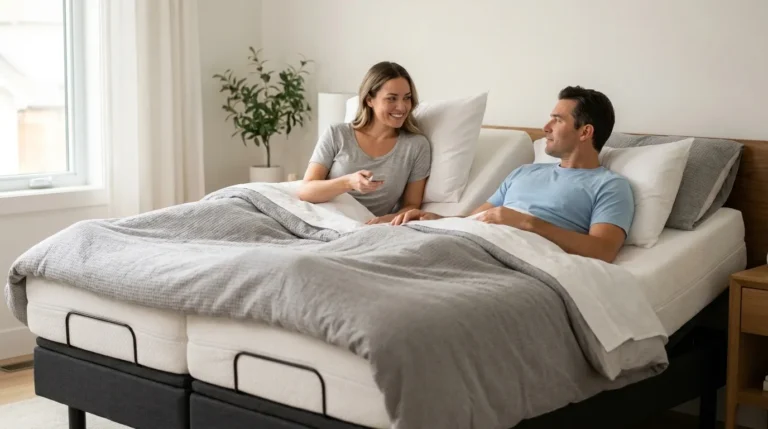
Basic adjustable bases sold as add-ons at general furniture retailers help a little with head and foot elevation, yet they usually move as a single unit. One partner raising their head to reduce snoring forces the other into the same incline. Loud motors and jerky movements add further disruption, so couples trade one type of disturbance for another instead of solving the underlying mismatch.
Split Adjustable Sleep Systems for Independent Relief
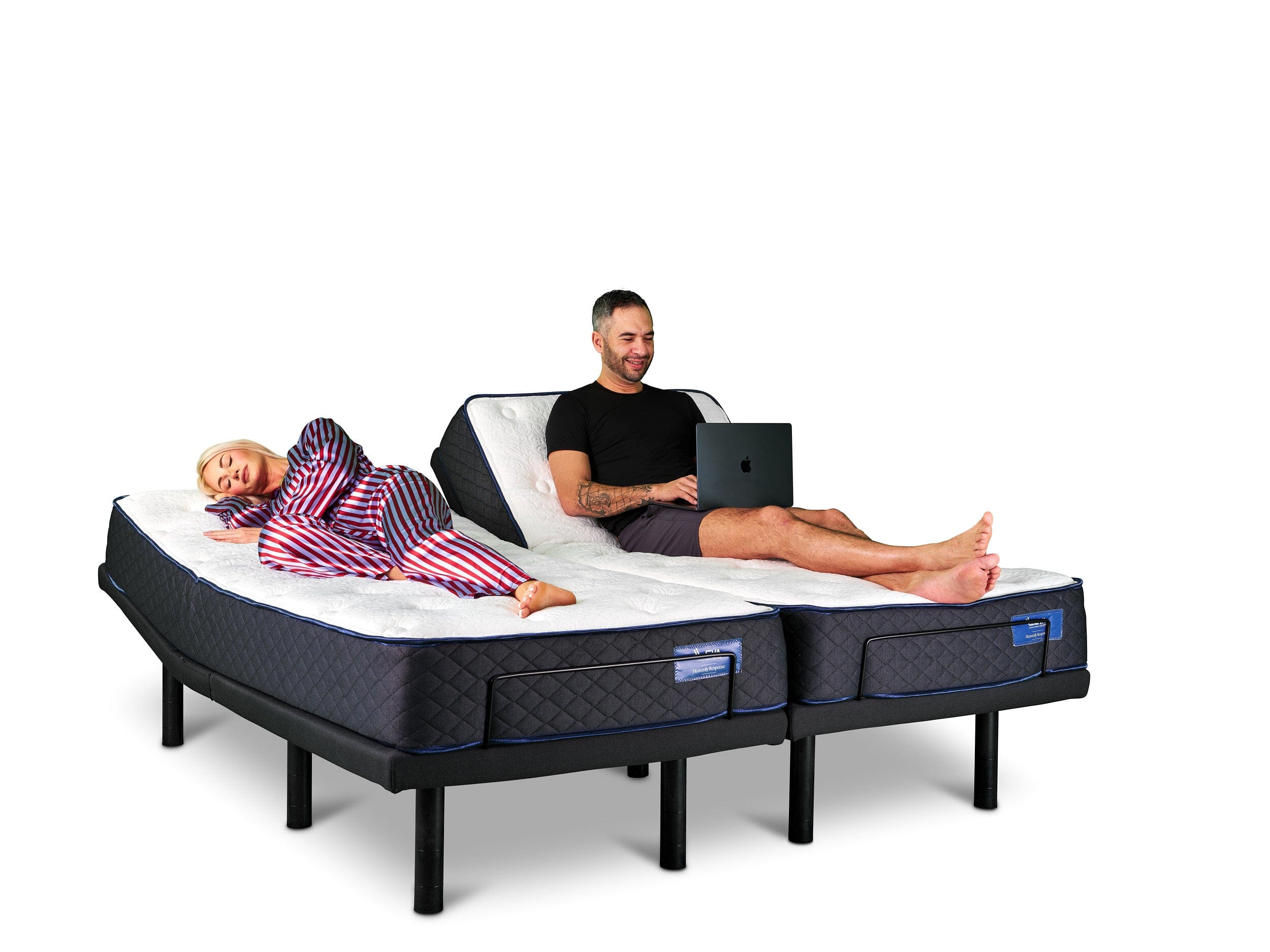
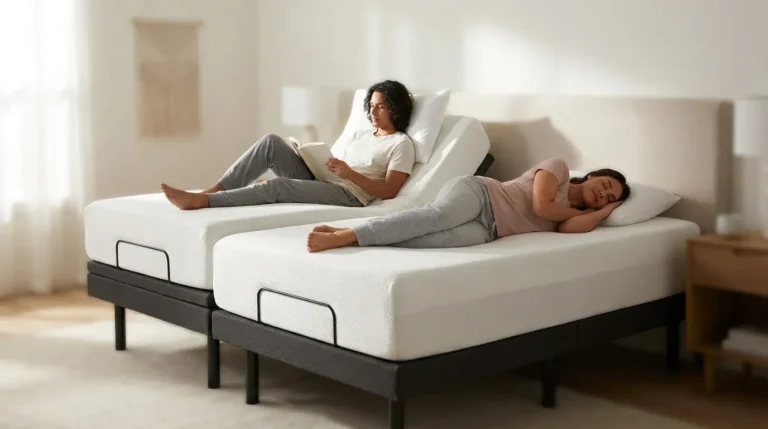
A split adjustable system places two independently controlled bases side by side under a shared mattress or two separate mattresses. Each partner adjusts head elevation, lumbar support, foot position, and pillow tilt without affecting the other side. This structural difference creates a level of personalization that static foam and hybrid mattresses, regardless of their pressure scores, cannot match.
Leva Sleep has operated in Canada for over eight years and has served more than 25,000 customers across Ontario and Alberta with a vertically integrated model that covers design, assembly, and in-house white-glove delivery. With 15 to 20 adjustable models available, compared with the three to five typically found at general retailers, Leva Sleep acts as a specialist rather than a generalist. Its Split Queen configuration extends independent adjustability to couples in smaller rooms who previously had no option beyond a standard Split King.
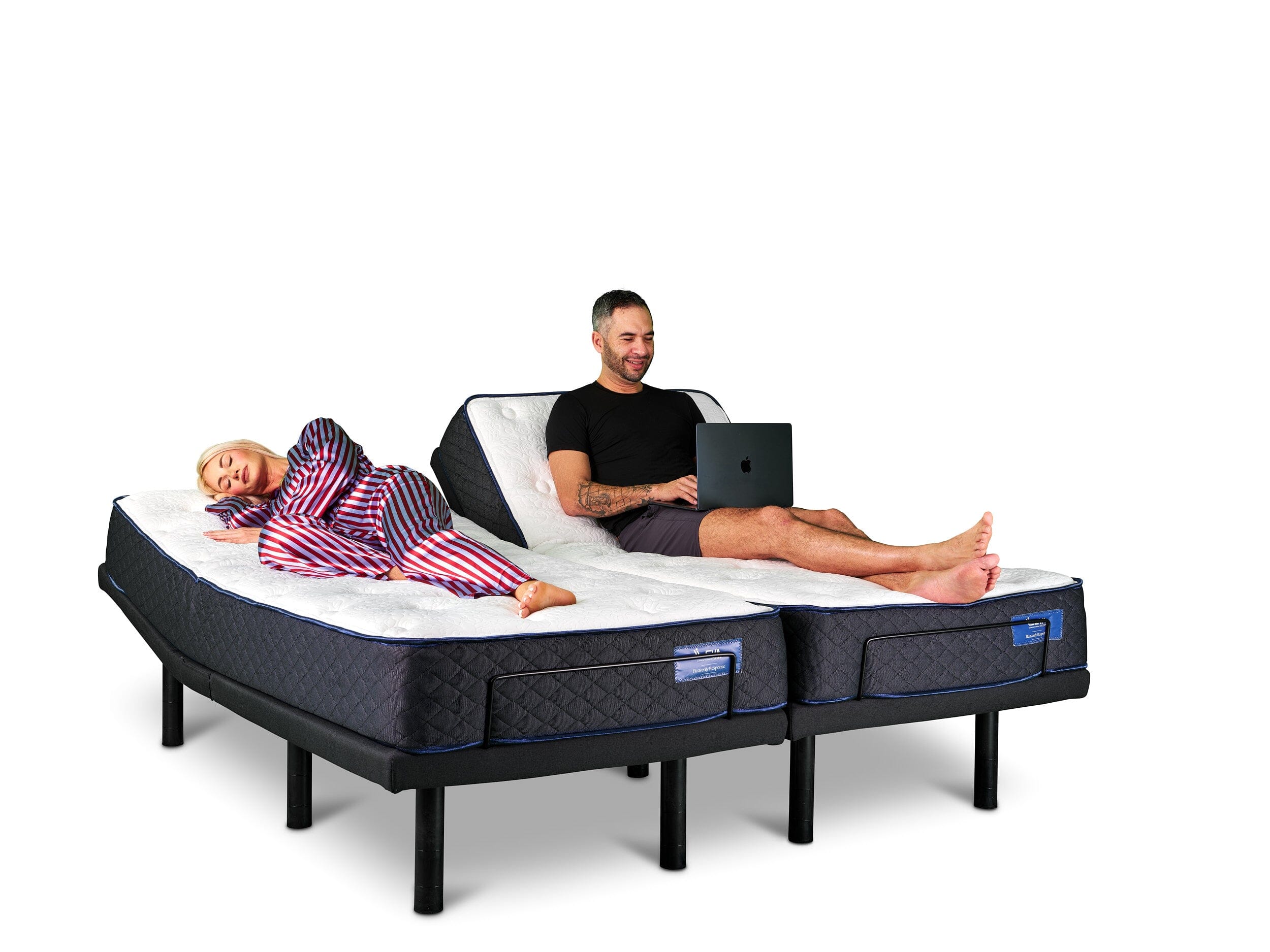
Compare Split Queen and Split King options from Leva Sleep and see how the pricing stacks up against luxury competitors.
Independent Adjustability for Each Partner
Leva Sleep’s bases use whisper-quiet German motors controlled through a dedicated app, so each partner can save custom positions, set vibrating alarms, and make subtle head-elevation adjustments to counter snoring without waking the other person. GhostBed, Endy, Douglas, Silk & Snow, and Logan & Cove are sold as static mattresses, and none include motorized elevation as a standard feature. Pairing any of those mattresses with a basic single-zone adjustable base still leaves couples sharing one elevation profile.
Targeted Lumbar Support and Pillow-Tilt Control
Side sleepers with hip or lower-back pain benefit from lumbar support that adjusts independently of head and foot elevation. Raising the foot section of an adjustable bed creates a cradle for the hips that prevents the top leg from sliding forward and twisting the lower spine. No static mattress can provide that effect, regardless of its foam construction. Leva Sleep’s higher-end bases include a dedicated lumbar control and a pillow-tilt motor that adjusts the head section separately from the main head elevation, which allows precise neck and shoulder positioning that foam contouring alone cannot achieve.
Mattress Types That Work with Adjustable Bases
Leva Sleep offers both all-foam and hybrid pocket-coil mattresses engineered to flex with adjustable bases without bridging or damage. Memory foam and hybrid mattresses with individually wrapped pocket coils flex and contour to adjustable bases, while traditional innerspring mattresses with Bonnell coils or continuous wire frames stay rigid and unsuitable.
The information below summarizes NapLab pressure relief scores and sinkage measurements for the most-compared Canadian mattress brands. These figures come from NapLab’s objective laboratory testing where available and help you judge contouring depth when you choose a mattress to pair with an adjustable base.
GhostBed Luxe earned a NapLab overall score of 8.85 (foam) or 9.15 (hybrid) with measured sinkage of 2.49 inches on the hybrid, which places it in the mid-range for contouring depth among these brands, although no pressure relief score of 10 out of 10 is reported. Douglas Summit shows 1.89 inches of sinkage, which feels noticeably shallower and may leave some side sleepers’ hips and shoulders under-supported. Silk & Snow Hybrid holds a NapLab Pressure Relief Score of 9, and its sinkage is described qualitatively as deep, though no exact measurement appears for direct comparison. Logan & Cove Choice also scores 9 for pressure relief and records edge sinkage of 2.5 inches, suggesting contouring similar to GhostBed’s hybrid. Endy measures 1.47 inches of sinkage, so it offers the least envelopment of the group and may feel firm for lighter side sleepers.
Higher sinkage figures indicate deeper envelopment, which often benefits lighter side sleepers at the hip and shoulder. For heavier sleepers in this weight range, softer all-foam layers may compress excessively, so hybrid constructions with zoned pocket coils usually provide more durable support and pair better with adjustable bases.
Temperature Control for Two Different Sleepers
The Silk & Snow Hybrid uses a breathable base and gel-infused memory foam layer, which can limit nighttime overheating compared with many all-foam models. Dense all-foam constructions like the GhostBed Luxe, despite strong cooling features for an all-foam mattress per NapLab’s evaluation, still trap more heat than open-coil hybrids. Leva Sleep’s higher-end systems integrate a heating and cooling pad that regulates each side’s temperature independently, a feature no static mattress brand in this comparison offers. Independent temperature control is one of several practical considerations when you move from a static mattress to an adjustable system; bedding compatibility is another.
Bedding That Fits and White-Glove Delivery
Adjustable bases require bedding that moves with them. Standard fitted sheets often pop off when a base elevates, and standard duvets bunch when two sides sit at different angles. Leva Sleep designs its own fitted sheets with deep pockets and reinforced elastic, duvet clips for split configurations, and mattress protectors built for repeated flexion. Delivery across its Canadian service regions is handled by Leva Sleep’s own trained team, who set up the base, adjust leg heights, provide a product tutorial, and remove the old bed, donating or recycling it when possible.
Long-Term Value and Clinical Credibility
Leva Sleep’s direct-to-consumer, vertically integrated model, which covers design, local assembly, and delivery, removes the retail markup that inflates pricing at general furniture stores. That cost advantage translates to luxury-grade adjustable systems at the same pricing edge mentioned earlier, supported by over $50 million in lifetime Canadian sales and a customer base exceeding 25,000. The brand’s clinical credibility extends beyond consumer sales, as sleep apnea clinics in Canada refer patients to Leva Sleep as an alternative to CPAP masks for mild cases, a referral pattern built over many years of outcomes in medical contexts.
What Couples Actually Experience After Switching
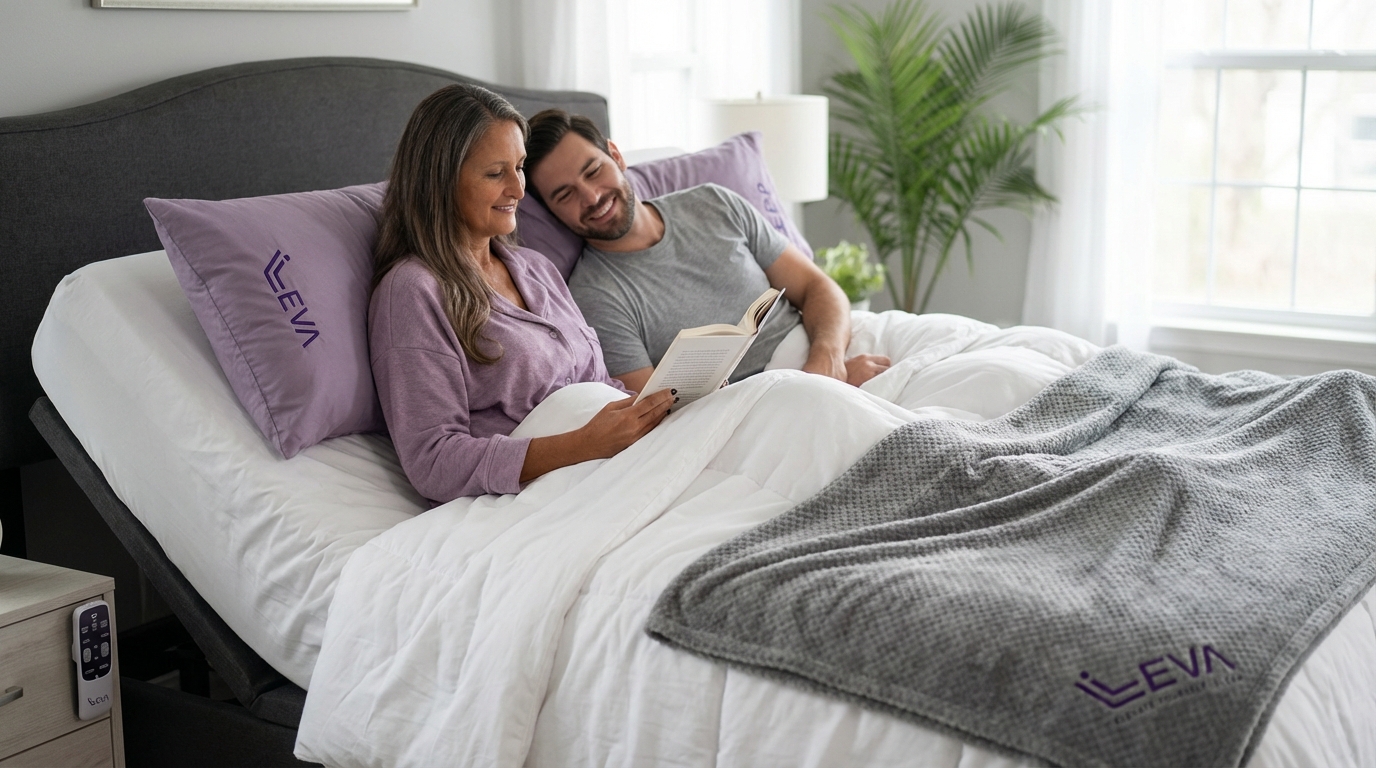
Couples who move from static mattresses to split adjustable systems consistently report fewer overnight wake-ups, less morning hip and shoulder stiffness, and the ability to share a bed again after periods of sleeping separately. The Zero Gravity position, with the head raised 10 to 15 degrees and the knees elevated slightly above heart level, decompresses the spine and improves oxygenation to muscles. No static mattress, regardless of its pressure score, can reproduce those positional benefits.
Find the split configuration from Leva Sleep that fits your bedroom size, body weight, and medical needs.
Decision Checklist: Static Mattresses versus Split Adjustable Systems
The table below summarizes the functional differences between static mattresses, basic single-zone adjustable bases, and Leva Sleep’s split systems. Use it to match features to your specific sleep challenges, such as independent elevation for couples with different needs, lumbar control for back pain, or white-glove delivery for easy setup.
| Criteria | Static Mattress (GhostBed, Endy, Douglas, Silk & Snow, Logan & Cove) | Basic Single-Zone Adjustable Base | Leva Sleep Split Adjustable System |
|---|---|---|---|
| Independent partner elevation | No | No | Yes, each side fully independent |
| Lumbar and pillow-tilt control | No | Rarely | Yes, dedicated motors on higher-end models |
| Pressure relief (NapLab scores available) | 8–10 out of 10 depending on model | Depends on paired mattress | Depends on paired mattress, with elevation adding positional relief |
| White-glove Canadian delivery | Varies by retailer | Varies by retailer | Yes, in-house service across Leva Sleep’s coverage area |
Frequently Asked Questions
How long does it take to set up a Leva Sleep split adjustable bed?
Leva Sleep’s white-glove delivery team handles the full setup in your bedroom, including base assembly, mattress placement, leg-height adjustment, and a product tutorial. Most installations finish within a single appointment. You do not need to assemble anything yourself, and the team removes your old bed at the same time.
Can a split adjustable bed help with sleep apnea?
Elevating the head of the bed gently opens the airway, which can reduce the frequency and intensity of snoring and mild obstructive sleep apnea episodes. Leva Sleep’s higher-end bases include an anti-snore mode that detects snoring and makes subtle micro-adjustments to the head section automatically. For diagnosed moderate-to-severe sleep apnea, consult your physician, as a CPAP device may still be required alongside positional therapy.
Will standard mattresses work on a Leva Sleep adjustable base?
Memory foam and hybrid mattresses with individually wrapped pocket coils are compatible with adjustable bases because they flex without damage. Traditional innerspring mattresses that use Bonnell coils or continuous wire frames stay rigid and will not articulate properly. Leva Sleep sells both all-foam and hybrid pocket-coil mattresses engineered specifically for its bases, and also carries Tempur-Pedic, Simmons, Beautyrest, Serta, and Kingsdown mattresses that work with adjustable systems.
What is a Split Queen adjustable bed and who is it for?
A Split Queen places two independently controlled twin XL-equivalent bases side by side within a queen-sized footprint. It suits couples who want independent elevation and firmness control but have a bedroom too small for a Split King. Leva Sleep is one of the only Canadian providers offering this configuration, built to customer specifications.
What return or trial policy does Leva Sleep offer?
Leva Sleep offers a sleep trial period on its adjustable systems. Specific trial lengths and return conditions vary by model and are confirmed at the time of purchase. Because Leva Sleep handles delivery and setup in-house, the same team manages the return process, which avoids the logistical complications common to bed-in-a-box brands that rely on third-party couriers.
Matching Your Sleep System to Your Body and Health
Choosing the right sleep system starts with an honest look at four variables: your body weight, your partner’s body weight, your primary sleep position, and any medical conditions that affect how you need to lie during the night. Heavier sleepers over 250 lbs require firmer mattress constructions, at least 6.5 out of 10 on the firmness scale, to prevent sagging and maintain neutral spinal alignment. Lighter side sleepers usually benefit from softer surfaces that let the hip and shoulder sink enough for horizontal spinal alignment.
After you identify the mattress construction that suits your body weight and position, consider whether a static surface can meet both partners’ needs at the same time. For most couples with differing weights, positions, or medical conditions, a single flat mattress cannot do that reliably, so independent elevation becomes the deciding factor rather than a luxury upgrade.
Leva Sleep’s Canadian track record, broad range of adjustable models, in-house white-glove delivery, and the pricing advantage discussed above make it a practical entry point into split adjustable sleep systems for Canadian couples.
Explore Leva Sleep’s adjustable bed lineup to find the model matched to your body weight, sleep position, and budget.