Written by: Matthew Timmins, Founder and Managing Director, Leva Sleep | Last updated: July 22, 2026
Key Takeaways
- High thread count sheets stay secure on adjustable beds only when they use single-ply long-staple cotton, sateen weave, and deep pockets with full-perimeter elastic.
- Thread counts above 600 are often inflated by multi-ply construction and do not improve performance or durability.
- Adjustable beds create unique mechanical stress that standard corner-elastic sheets cannot handle, so they need purpose-built deep-pocket designs.
- Canadian buyers should prioritize 300–600 TC single-ply sateen sheets for breathability in Ontario and Alberta climates, plus Split Queen or Split King sizing compatibility.
- Shop Leva Sleep’s adjustable bed packages to get purpose-built systems and bedding engineered to stay in place through every adjustment.
The Problem: Why Sheets Slip at 3 a.m. on Adjustable Beds
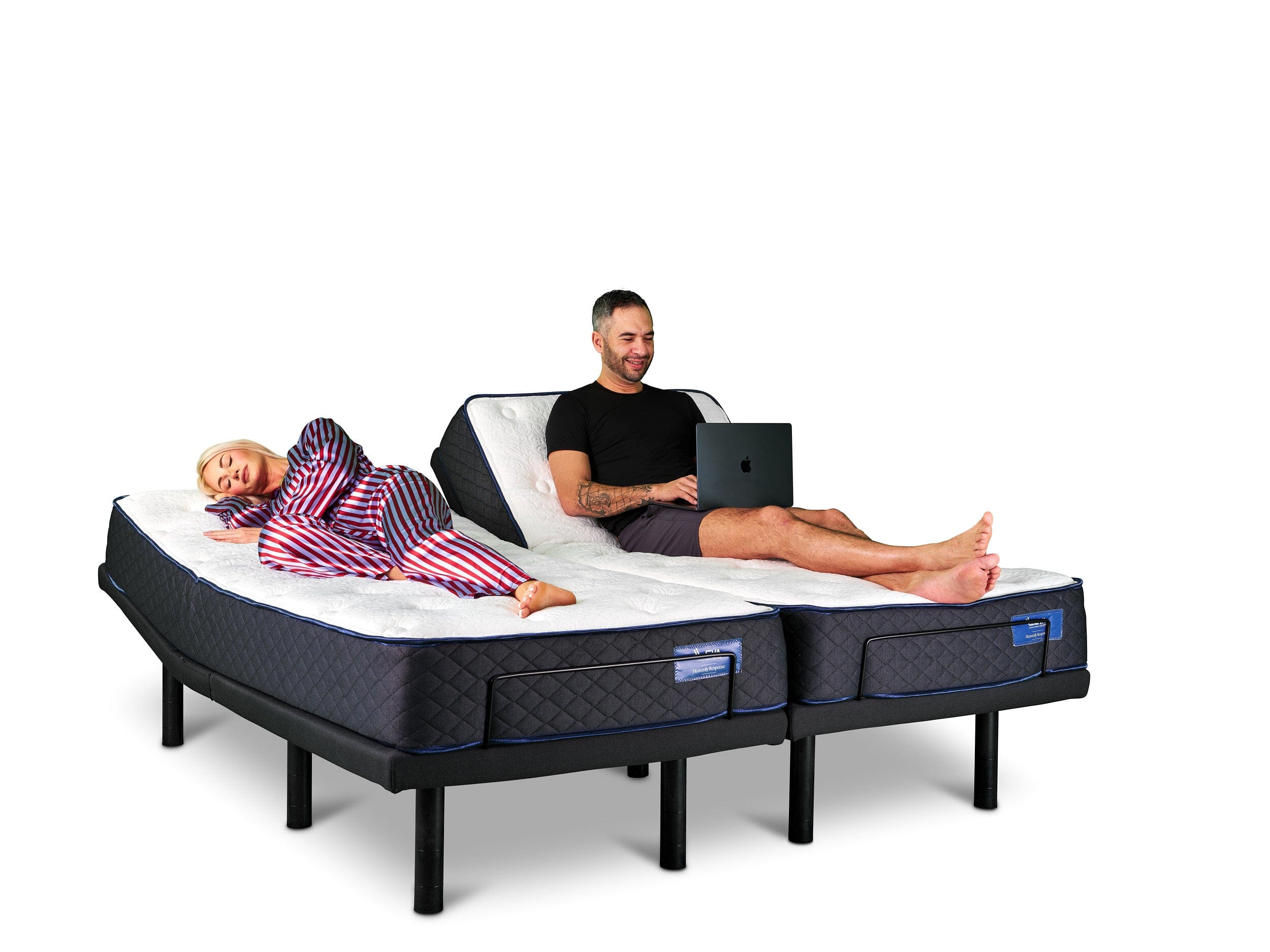
Adjustable bases pull fitted sheets inward at the corners when the head or foot section rises, which strains the fabric and elastic. Foot corners experience the greatest stress from leg movement, and standard flat-bed sheets, designed for a static surface, lack both the pocket depth and continuous elastic needed to absorb that tension. The result is a sheet that pops off at the corner right when the bed moves.
Standard fitted sheets with elastic only at corners fail on adjustable beds because the elastic cannot accommodate the effective shortening of the mattress’s flat dimension when the head or foot section is raised. This mechanical reality requires a different sheet design that traditional flat-bed sheets cannot provide. That is why adjustable-bed-specific bedding with verified pocket depth, full-perimeter elastic, and compatible fabric construction is a distinct product category, not a marketing label.
Leva Sleep designs its fitted sheets with extra elastic and deep pockets specifically for adjustable bases, which directly addresses the slippage problem that generic bedding cannot solve.
Choosing a Practical High Thread Count for Everyday Sheets
Good Housekeeping Institute Textiles Lab testing of 353 sheet sets found that higher thread count did not correlate with improved performance or a softer feel, with the best cotton sheets typically falling between 300 and 500 TC. Thread count is a meaningful metric only for 100% cotton sheets with single-ply construction. For other fabric types or multi-ply yarns, the number becomes misleading.
For adjustable beds, the priority order is clear. First, choose single-ply long-staple cotton in a sateen weave. Second, confirm deep pockets with full-perimeter elastic. Third, stay within a 300–600 thread count range that balances softness, strength, and breathability. Anything over 600 TC should be viewed skeptically unless the sheets use verified single-ply construction with premium long-staple materials.
Long-staple cotton (1–1.25 inches) or extra-long-staple cotton (1.5+ inches, such as Egyptian, Pima, or Supima) produces stronger, smoother yarns with less pilling and greater durability than short-staple cotton at the same or lower thread count. Sateen weave, a satin-style construction, creates a silkier, draping feel with better wrinkle resistance and performs best in the 300–600 TC range.
Why 1500 Thread Count Sheets Disappoint in Real Use
Very high thread count labels often describe marketing tactics rather than real fabric quality. The gap between the label and the fabric you feel in your hands usually comes from how manufacturers count the threads.
Extremely high thread counts (800+) frequently result from multi-ply yarn tricks in which multiple low-quality strands are twisted together and counted separately. This practice produces heavier, hotter, less breathable sheets rather than higher-quality ones. For hot sleepers in Ontario’s humid summers or Alberta’s dry winters, that extra density becomes a performance liability instead of a luxury feature.
Sleep Foundation Senior Product Editor Danny Noyed states: “If you see anything above 600, it’s not going to launder itself, make you dinner, or do anything extra special for you. The quality just isn’t going to improve past that point.” As noted earlier, counts above 600 typically signal multi-ply construction, which creates heavier, less breathable fabric. A 1,500 TC sheet made from multi-ply short-staple cotton will underperform a genuine 400 TC single-ply long-staple sateen sheet on breathability, durability, and fit stability on an adjustable base.
Hotel-Level Thread Counts and What They Mean at Home
Four- and five-star hotels most commonly specify 300 to 400 TC sheets, a range chosen because it balances softness, durability, breathability, and commercial laundering performance. Luxury hotels typically specify 300 to 400 TC sheets made from long-staple cotton.
The practical upper limit for genuine single-ply thread count using standard cotton yarn is approximately 300 to 600. Counts of 600–1,000 usually come from multi-ply yarn counting that inflates the number without improving fabric quality. Hotels that launder sheets 200–300 times over a two-to-three-year service life choose construction quality over marketing numbers, and that same standard works well for home adjustable-bed use. This focus on durability and construction quality should guide your sheet selection for adjustable beds, where nightly movement creates mechanical stress similar to commercial laundering cycles.
High Thread Count Sheets That Stay on Adjustable Beds
Fabric construction determines whether sheets stay put on an adjustable base. High-quality fitted sheets maintain secure fit on adjustable beds through deep pockets (15+ inches), strong elastic running all the way around the perimeter rather than only at corners, and reinforced seams. Fitted sheets used on adjustable beds require fully encased elastic running the entire perimeter rather than corner-only elastic to maintain even tension and prevent shifting or popping off during head or foot adjustments.
Consider the following specifications when evaluating sheet options for adjustable-base performance.
| Specification | 800 TC (Single-Ply Long-Staple Sateen) | 1000 TC (Typical Multi-Ply Construction) | Adjustable-Base Impact |
|---|---|---|---|
| Ply construction | Single-ply construction | Multi-ply; count is inflated by twisting multiple strands | Single-ply fabric flexes more naturally with mattress bending |
| Breathability | Sateen at moderate counts retains airflow; 800 TC single-ply approaches the upper comfort limit | Counts above 600 trap heat; multi-ply construction reduces breathability | Overheating disrupts sleep during nightly adjustments |
| Durability under repeated washing | Long-staple fibers resist wear through repeated washing | Inflated-count sheets made from weak yarn can wear out faster | Elastic degrades faster on heavier multi-ply fabric under nightly flex |
| Pocket depth requirement | Both require 15+ inch deep pockets for adjustable bases; choose one pocket-depth category above flat measurement | Pocket depth must exceed mattress depth by about 2 inches minimum | |
| Elastic requirement | Full-perimeter elastic required for both; corner-only elastic fails on adjustable bases | Wide elastic bands recommended; thin elastic wears out faster from repeated stretching | |
When choosing between options, compare an 800 TC single-ply long-staple sateen sheet with 15+ inch deep pockets and full-perimeter elastic against a 1000 TC multi-ply sheet on every dimension relevant to adjustable-bed use. Beyond these universal specifications, Canadian buyers face region-specific considerations that further narrow the optimal thread count range.
Canadian Climate and Sizing Tips for High Thread Count Sheets
Very high thread counts above 600 can make sheets less breathable and trap heat, an issue especially noticeable for hot sleepers in humid climates such as Ontario. Alberta’s dry climate creates a different challenge, with static buildup and moisture loss that favour natural long-staple cotton over synthetic blends. In both provinces, single-ply long-staple cotton sateen in the 300–600 TC range provides climate adaptability that inflated-count sheets cannot match.
Split Queen and Split King sizing add a Canadian-specific complexity. For split-king adjustable beds, two Twin XL fitted sheets with the required pocket depth plus one king flat sheet are needed, as each side moves independently. Split Queen configurations present an even greater challenge because purpose-built fitted sheets for this size are not widely available from standard retailers, which is why Leva Sleep includes compatible bedding options specifically designed for their Split Queen adjustable beds.
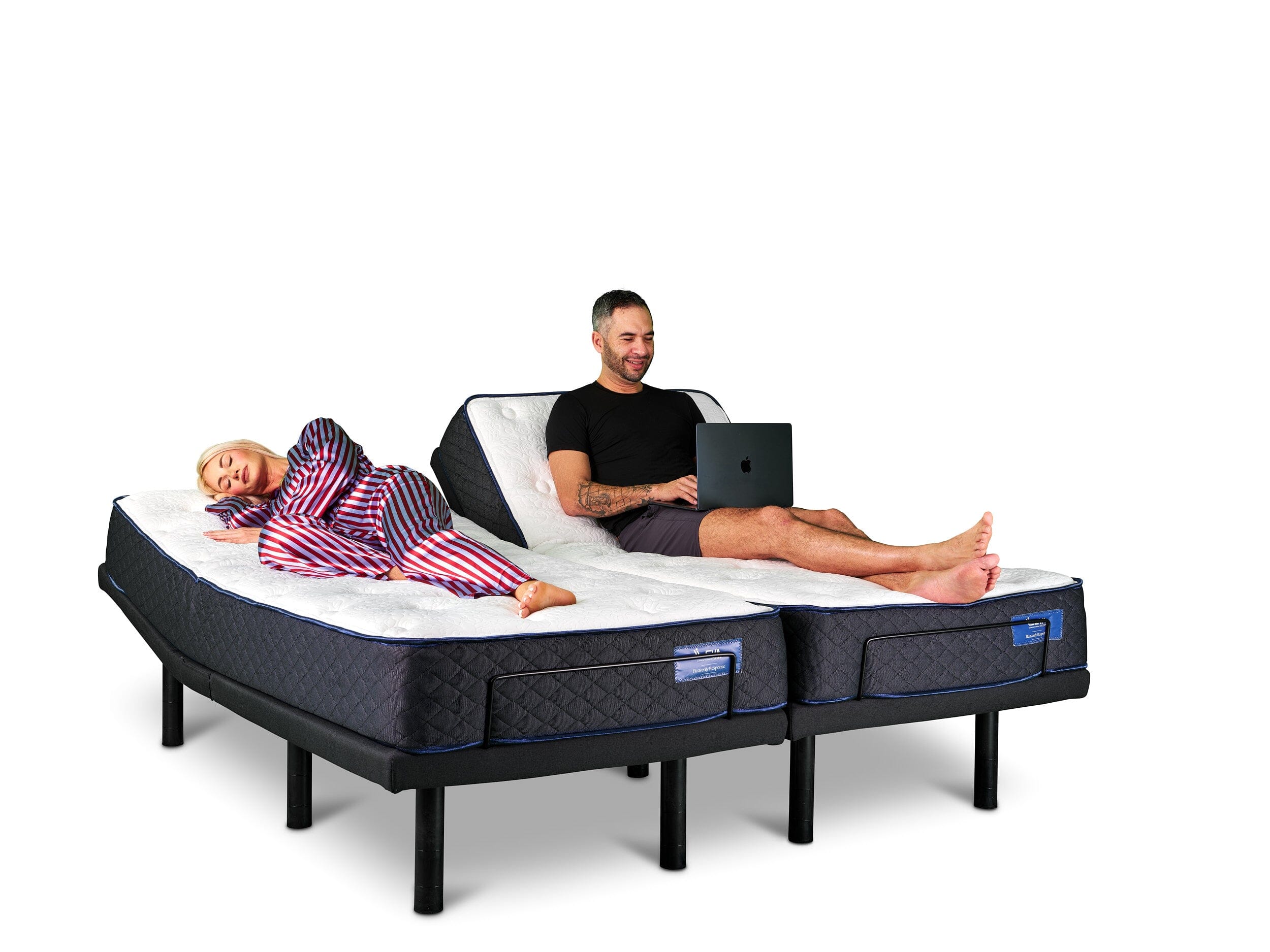
White-glove delivery and in-house setup, available from Leva Sleep in Ontario and Alberta, ensure that pocket depth, elastic tension, and sheet sizing are verified at installation rather than discovered at 3 a.m. during the first adjustment.
Shop Leva Sleep’s adjustable beds with Split Queen and Split King configurations and white-glove delivery across Ontario and Alberta.
Neutral Decision Checklist for Adjustable-Bed Sheets
Use the following criteria to evaluate any high thread count sheet set for adjustable-bed compatibility before purchasing.
- Material: Confirm 100% single-ply long-staple cotton (Egyptian, Pima, or Supima) or extra-long-staple (ELS) cotton. Reject multi-ply constructions and synthetic blends for adjustable-base use.
- Thread count range: Target 300–600 TC for sateen weave and 200–400 TC for percale. Treat any count above 600 as a marketing claim that requires verification of ply construction.
- Weave: Choose sateen for drape, grip, and wrinkle resistance on adjustable bases, or percale for maximum breathability in warmer climates or for hot sleepers.
- Pocket depth: Measure total mattress height including any topper or protector. Select a pocket depth that exceeds total mattress height by at least two inches. For most adjustable-bed mattresses (14–18 inches), this means 16–21 inch pockets.
- Elastic design: Verify full-perimeter elastic with wide bands, not corner-only or thin cord elastic. Continuous elastic outperforms four-corner elastic on adjustable beds.
- Sizing for split configurations: Split King requires two Twin XL fitted sheets. Split Queen requires purpose-built sheets, so confirm availability before purchasing.
- Compatibility with heating/cooling pads: Confirm pocket depth accommodates the combined height of mattress, protector, and any temperature-regulation pad. Natural cotton construction works with most heating and cooling pad systems.
Frequently Asked Questions
How do I wash high thread count sheets without damaging the elastic on adjustable-bed fitted sheets?
Wash fitted sheets in cold or warm water on a gentle cycle to protect the elastic. Hot water degrades elastic faster and shortens the lifespan of full-perimeter elastic bands. Tumble dry on low heat or air dry, because high heat shrinks long-staple cotton and weakens elastic, which often causes sheets to lose their grip on adjustable bases over time. Avoid fabric softeners, which coat cotton fibres and reduce the natural grip that keeps sheets anchored to the mattress surface.
What pocket depth do I need for a Leva Sleep adjustable bed mattress?
Measure the total height of your mattress plus any mattress protector or topper before you shop. Leva Sleep mattresses are designed specifically for adjustable bases and are available in all-foam and hybrid pocket-coil configurations. Add at least two inches to your total measured height to determine the minimum pocket depth. For most Leva Sleep setups, a deep-pocket sheet in the 16–21 inch range provides enough fabric slack to absorb the tension created when the head or foot section elevates. When uncertain, size up one pocket-depth category, because a sheet that is slightly too deep will stay on while one that is slightly too shallow will not.
Are high thread count sheets compatible with Leva Sleep’s heating and cooling pad?
High thread count sheets work with Leva Sleep’s heating and cooling pad when you choose the correct pocket depth and fabric. Leva Sleep’s heating and cooling pad adds height to the total mattress stack, so measure the combined height of the mattress, any protector, and the pad, then select a fitted sheet with a pocket depth at least two inches greater than that combined measurement. Single-ply long-staple cotton sateen is the preferred fabric because it does not trap heat against the pad surface and allows temperature regulation to function as intended. Avoid multi-ply high-count sheets above 600 TC, because their denser weave can impede airflow between the pad and the sleeper.
Do I need different sheets for a Split Queen versus a Split King adjustable bed?
Split King adjustable beds require two Twin XL fitted sheets, one per side, because each base moves independently and a standard King fitted sheet cannot accommodate the split. Split Queen is a less common configuration, and purpose-built Split Queen fitted sheets are not widely available at standard retailers. Leva Sleep offers bedding accessories designed specifically for Split Queen adjustable beds. Confirm sheet sizing with your retailer before purchasing, and verify that pocket depth and elastic specifications match the requirements outlined in the checklist above.
What is the best thread count for hot sleepers using an adjustable bed in Ontario or Alberta?
Hot sleepers should prioritize breathability ahead of chasing the highest thread count. A 300–400 TC single-ply long-staple cotton percale sheet provides strong airflow and cooling performance. If you prefer a sateen weave for its drape and grip on adjustable bases, stay within the 300–500 TC range. Counts above 600 TC, regardless of weave, create denser fabric that traps heat, which becomes a particular concern in Ontario’s humid summers. In Alberta’s drier climate, the same principle applies, because natural long-staple cotton at moderate thread counts outperforms high-count multi-ply constructions for temperature regulation year-round.
Conclusion: Your Next Set of Sheets for an Adjustable Bed
Three specifications determine whether high thread count sheets perform on an adjustable bed: single-ply long-staple cotton construction, sateen weave in the 300–600 TC range, and deep pockets (15+ inches) with full-perimeter wide elastic. Thread counts above 600 TC function mainly as a marketing construct rather than a reliable quality indicator. The mechanical demands of an adjustable base, including nightly elevation changes, mattress flex, and corner tension, require bedding engineered for movement instead of bedding chosen only for a label number.
Canadian couples in Ontario and Alberta face additional considerations such as climate-specific breathability needs, Split Queen and Split King sizing complexity, and the practical advantage of white-glove delivery that verifies fit at setup. Leva Sleep’s adjustable bed systems address these realities from the base engineering through to the purpose-built bedding accessories.
Shop Leva Sleep’s adjustable beds for complete sleep systems with adjustable bases, compatible mattresses, and bedding accessories built to stay on through every adjustment, delivered and set up by Leva’s in-house team across Ontario and Alberta.