Written by: Matthew Timmins, Founder and Managing Director, Leva Sleep | Last updated: July 2, 2026
Key Takeaways
- A hospital bed for home use is a height-adjustable, motorised sleep surface that supports medical positioning, mobility assistance, and caregiver access in Canadian homes.
- Provincial funding through programs like Ontario’s ADP or Alberta’s ADL may cover part of an approved hospital-style bed when a physician documents medical necessity.
- Modern adjustable bases with quiet motors and independent head and foot elevation provide a practical alternative to institutional frames for COPD and sleep apnea management.
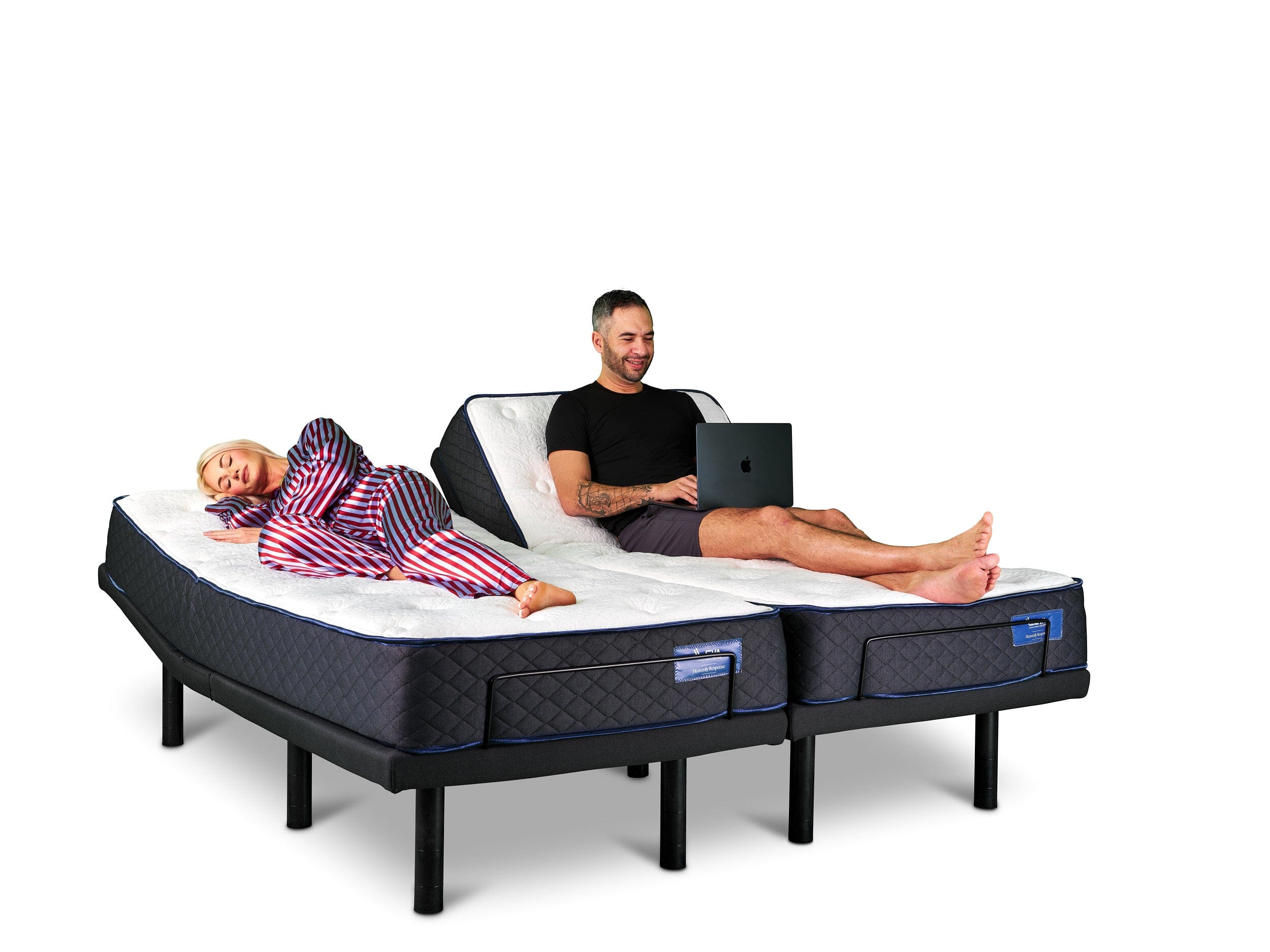
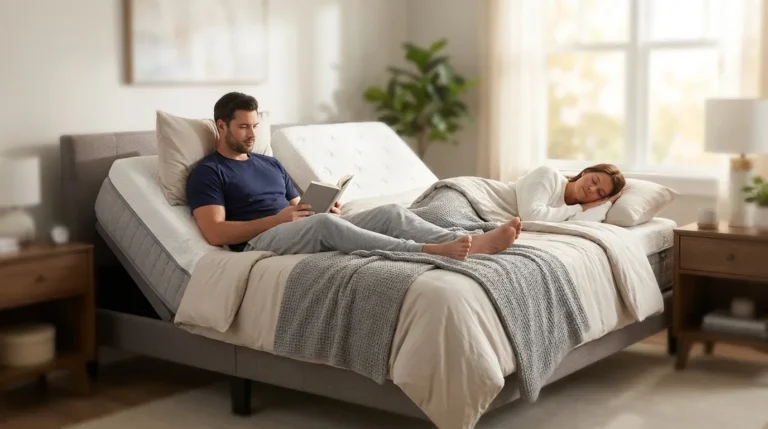
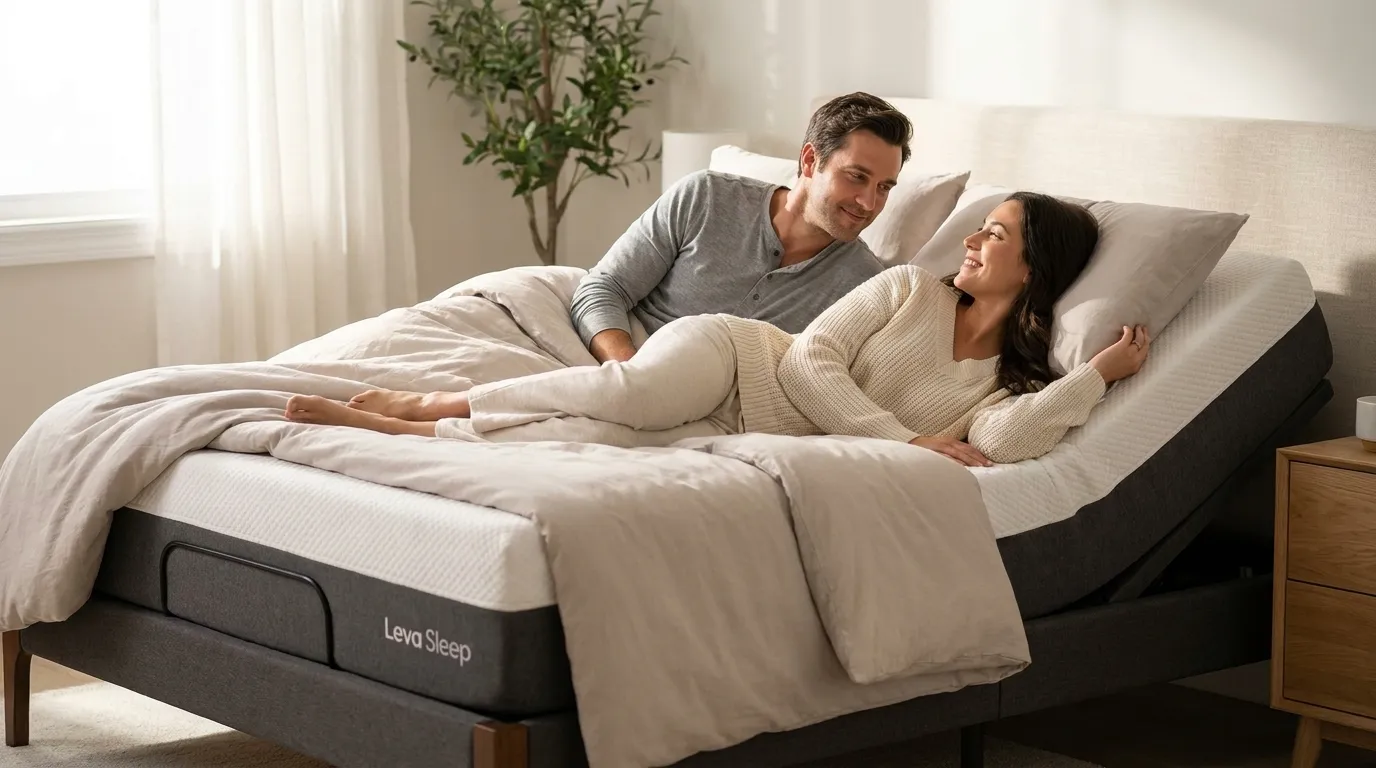
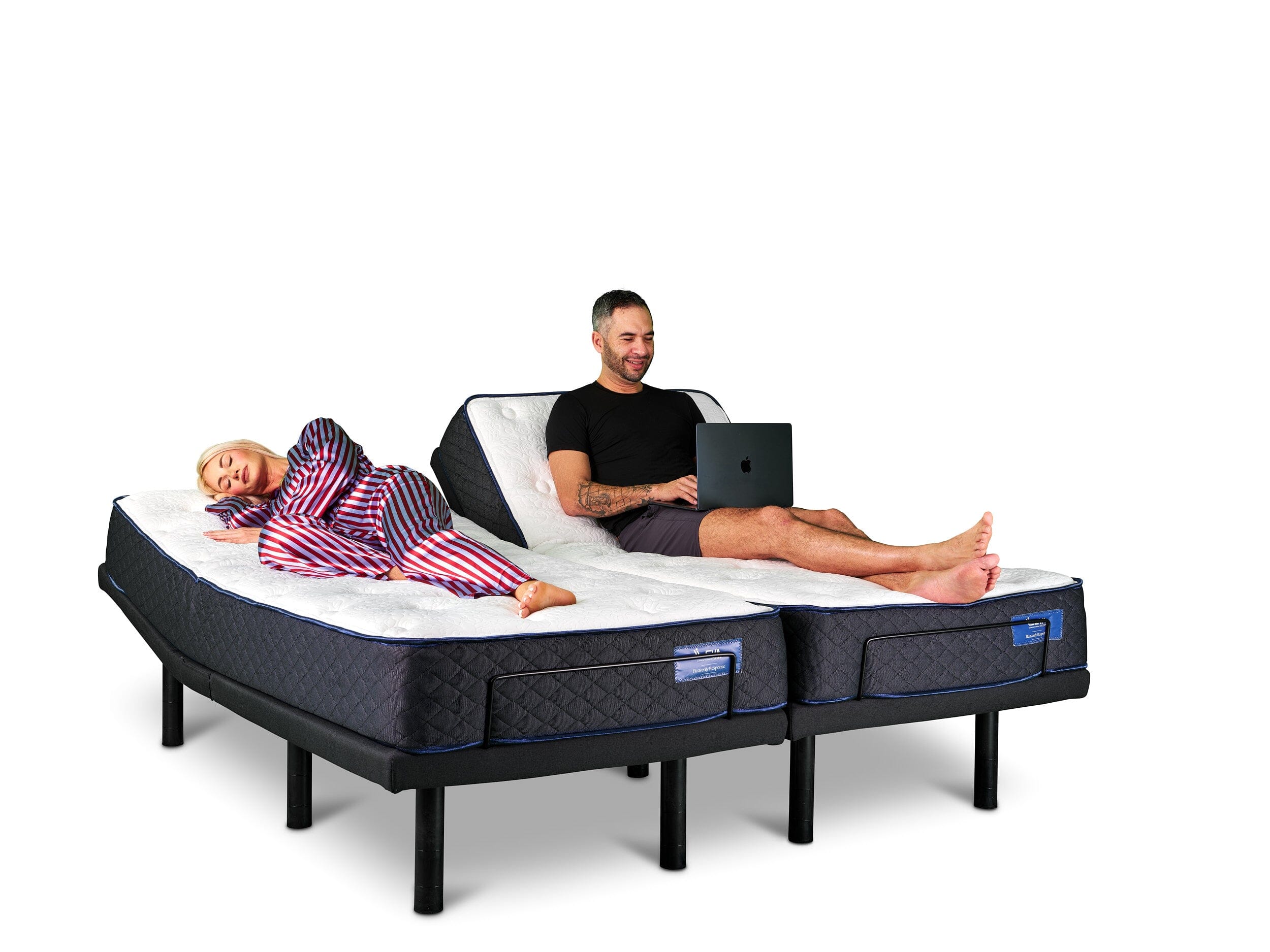
- Split adjustable configurations let couples stay in the same bed while each partner adjusts their side independently, so shared sleep remains possible.
- Couples who want medical-grade positioning without institutional equipment can explore Leva Sleep’s adjustable bed packages at Leva Sleep.
Quick OHIP Qualification Checklist for Home Hospital-Style Beds
- A licensed Ontario physician or nurse practitioner has issued a written prescription or letter of medical necessity.
- The prescribed equipment appears under the Ontario Assistive Devices Program (ADP) or a comparable provincial schedule.
- The applicant holds a valid Ontario Health Card (OHIP).
- The equipment will be used in a primary private residence, not in a long-term care facility.
- The applicant has not received ADP funding for the same category of equipment within the program replacement cycle.
- A registered ADP vendor has been identified to process the application and supply the equipment.
How OHIP and Provincial Programs Handle Home Hospital Beds in 2026
OHIP itself does not directly fund home medical equipment. Funding in Ontario flows through the Assistive Devices Program (ADP), administered by the Ministry of Health. ADP covers a defined list of equipment categories. Hospital-style beds may qualify under the “positioning aids” or “mobility” schedules when a physician documents a specific medical necessity such as severe COPD, post-surgical recovery, or a neurological condition that affects positioning.
ADP typically covers a percentage of an approved vendor price, and the recipient pays the remainder. Rental equipment supplied through Home and Community Care Support Services (formerly CCAC) may be available for short-term use after a hospital discharge. Availability depends on regional capacity and assessed need.
In Alberta, the Aids to Daily Living (ADL) program under Alberta Health Services can fund part of approved equipment from registered suppliers when a physician or occupational therapist submits a justification. Coverage percentages and eligible product lists change over time. Confirm current schedules directly with ADP in Ontario or ADL in Alberta before you set a budget.
Modern adjustable bases sold by consumer retailers usually do not appear on ADP or ADL schedules, so provincial funding does not apply to them. Their out-of-pocket purchase cost is often similar to, or lower than, the uncovered portion of a funded institutional bed once rental fees build up over 12 to 24 months.
Bed Features That Support COPD and Sleep Apnea Management
Head elevation reduces the effort required to breathe by letting gravity assist lung expansion and reduce diaphragm compression. For many COPD patients, a head elevation of 30 to 45 degrees is a commonly referenced clinical target. For obstructive sleep apnea, even modest elevation of 15 to 30 degrees can reduce airway collapse. Confirm the appropriate angle with the treating physician or respiratory therapist before you select equipment.
When you evaluate any motorised bed for these conditions, focus on the following criteria.
- Elevation range: Confirm the head section reaches the prescribed angle without extra wedge pillows.
- Motor noise: Loud actuators can wake or disturb a partner. Request a live demonstration or ask the supplier for decibel specifications before you buy.
- Mattress compatibility: Not all mattresses flex well with an adjustable base. Foam and individually wrapped pocket-coil mattresses usually perform better than traditional innerspring designs.
- Adjustment speed: Slow, smooth movement works better for patients with respiratory distress or post-surgical sensitivity.
- Remote accessibility: Patients with limited hand mobility benefit from large-button remotes or app-based controls.
Adjustable Base vs Traditional Hospital Bed: Side-by-Side Comparison
The following table compares key features across three bed types so you can match medical positioning needs with how you want your bedroom to look and feel.
| Feature | Traditional Hospital Bed | Modern Adjustable Base | Split Adjustable Base (e.g., Leva Sleep) |
|---|---|---|---|
| Aesthetics | Institutional metal frame, visible rails | Furniture-style, bedroom-compatible | Furniture-style, matches standard bed frames |
| Motor noise | Moderate to loud actuators | Varies, quieter in premium models | Whisper-quiet German motors (Leva Sleep) |
| Independent partner controls | No, single surface | No, single surface | Yes, each side adjusts independently |
| Couple compatibility | Not designed for two occupants | Limited, one position affects both | Full, each partner sets their own position |
Caregivers and patients often raise similar questions when they compare these options.
- Are there alternatives to a hospital bed? A full-electric adjustable base with head and foot articulation can replicate the core positioning function of a hospital bed without institutional hardware.
- Will the motor wake my partner? Motor quality determines this. Evaluate noise level before purchase. Premium bases with German-engineered actuators usually operate at a much lower decibel level than entry-level models.
- Does a hospital bed look out of place in a home bedroom? Traditional hospital frames usually do. Modern adjustable bases use standard bedroom dimensions and accept headboards, so they look similar to conventional beds.
- Do couples have to sleep apart? A split configuration lets couples stay together. Split Queen and Split King bases allow each partner to adjust their side independently while remaining in the same bed.
Rental vs Purchase Costs in Ontario and Alberta
Rental of a basic institutional hospital bed through a private medical supplier in Ontario or Alberta typically ranges from 150 to 350 dollars per month. Prices depend on the model, included accessories such as side rails or a trapeze bar, and delivery region. Over 18 to 24 months, total rental costs often exceed the purchase price of a comparable or superior adjustable base.
Purchase prices for full-electric hospital beds from medical suppliers usually range from about 1,500 to 4,500 dollars for standard models. Premium consumer adjustable bases with independent split controls fall in a similar or overlapping price range. Leva Sleep’s vertically integrated model is often priced 30 to 50 percent below comparable luxury competitors because of its direct-to-consumer structure.
Rental contracts typically include maintenance and repair coverage, which matters for equipment used daily by patients with high needs. Purchase agreements shift maintenance responsibility to the owner. Confirm warranty terms and local service availability before you commit.
Size, Weight Capacity, and Safety Details to Review
Standard hospital beds are 36 inches wide, similar to a single or twin, which limits use to one occupant. Full-electric adjustable bases come in Twin XL, Full, Queen, Split Queen, King, and Split King configurations. For adults with mobility limitations, review the following points before you choose a size.
- Weight capacity: Confirm the base and mattress together support the user weight with a safety margin. Most quality adjustable bases are rated for 600 to 850 pounds of combined occupant weight.
- Bed height: Adjustable leg height affects how easy transfers feel for users with hip or knee limitations. A higher base can reduce the effort required to stand.
- Side rail compatibility: Traditional hospital beds include integrated rails. Adjustable bases do not. Decide whether bed rails are medically necessary and source them separately if needed.
- Mattress thickness: Thicker mattresses reduce the effective elevation angle. A mattress between 10 and 13 inches usually balances comfort with good articulation.
Choosing the Right Adjustable Configuration for Couples
When one partner has a medical positioning need and the other does not, a single adjustable surface forces a compromise. Both partners either sleep elevated or both sleep flat. A split configuration removes that trade-off.
Leva Sleep’s Split Queen adjustable base, a configuration that many general retailers do not offer, places two separate Twin XL-equivalent surfaces within a Queen footprint. Each side has independent head and foot elevation, massage settings, and app-based controls. A partner managing sleep apnea can elevate their head to the prescribed angle while the other sleeps flat, with no mechanical disturbance between sides.
Accessories designed for split bases also matter. Standard fitted sheets often pull off when one side elevates. Leva Sleep designs bedding with deep pockets, extra elastic, and duvet clips to maintain coverage and separation regardless of each side position.
5 Practical Steps to Get a Hospital-Style Bed at Home
- Obtain a medical assessment. Ask the treating physician or an occupational therapist to document the specific positioning need and recommend an elevation range. This documentation forms the foundation for any provincial funding application and supports later equipment comparisons.
- Check provincial funding eligibility. Use the documentation from step one when you contact ADP in Ontario at 1-800-268-6021 or ADL in Alberta at 780-427-0731. Confirm whether the prescribed equipment category is currently funded and identify registered vendors before you look at pricing.
- Compare rental and purchase costs over 24 months. Request itemised quotes from at least two medical suppliers and at least one consumer adjustable-base retailer. Include delivery, setup, and maintenance so you can see the true 24-month cost before you decide.
- Evaluate couple compatibility. If a partner shares the bed, assess whether a split adjustable base meets both occupants’ needs. Complete this review before you default to an institutional single-occupant frame that may separate partners.
- Confirm delivery and setup support. Large adjustable bases usually require professional installation. Confirm whether the supplier provides in-home setup, height adjustment, and removal of the existing bed so the transition feels manageable.
Conclusion: Matching Medical Needs with Comfortable Shared Sleep
The choice between a traditional hospital bed and a modern adjustable base depends on medical severity, provincial funding eligibility, available space, and whether a partner shares the bed. Institutional hospital beds still suit high-acuity home-care situations that require side rails, caregiver-height adjustment, and ADP-funded rental. For couples managing COPD, sleep apnea, or post-surgical recovery in a shared bedroom, a split adjustable base can deliver equivalent head and foot elevation with better aesthetics, quieter operation, and independent controls that preserve shared sleeping.
Before you contact any supplier, document the prescribed elevation requirements, confirm current ADP or ADL funding schedules, and calculate total cost of ownership over 18 to 24 months. These steps clarify which solution fits both the medical need and the household budget.
For couples who want the medical-grade positioning described in this guide without institutional equipment, Leva Sleep’s adjustable bed packages include white-glove delivery, Split Queen availability, and whisper-quiet German motors that address the noise concerns raised earlier.
Frequently Asked Questions
Does OHIP pay for a hospital bed at home?
No. Funding for hospital beds comes through Ontario’s Assistive Devices Program, not OHIP directly. See the section “How OHIP and Provincial Programs Handle Home Hospital Beds in 2026” above for full eligibility details and contact information.
What is the difference between a hospital bed and an adjustable bed for home use?
A traditional hospital bed is a single-occupant, institutional-grade frame with integrated side rails, caregiver-height adjustment, and a narrow 36-inch width. It focuses on clinical functionality rather than bedroom aesthetics or couple use. A modern adjustable base is a consumer-grade motorised platform available in standard bedroom sizes, including Split Queen and Split King configurations. It provides equivalent head and foot elevation, usually operates more quietly, and integrates with standard bedroom furniture. It does not include integrated side rails and is not typically covered by provincial funding programs.
Can a couple share an adjustable bed when one partner has a medical positioning need?
Yes, when you choose a split configuration. A Split Queen or Split King adjustable base places two independently controlled surfaces within a standard bed footprint. Each partner adjusts their side elevation, massage intensity, and position without affecting the other side. This setup allows one partner to maintain a prescribed head elevation for sleep apnea or COPD management while the other sleeps flat. Standard bedding rarely fits split bases well, so purpose-designed fitted sheets with deep pockets and extra elastic help prevent slippage during elevation.
Is renting or buying a hospital-style bed more cost-effective in Canada?
Rental usually works better for short-term needs of three to six months, especially when provincial funding or Home and Community Care coverage applies. For ongoing or permanent use, purchase typically becomes more economical beyond the 18 to 24 month threshold discussed in the cost comparison section above. A consumer adjustable base with equivalent positioning functionality often costs less over a two-year period than accumulated rental fees for an institutional hospital bed, particularly when the rental contract does not receive provincial subsidy. Always compare itemised 24-month total costs, including delivery, setup, and maintenance, before you decide.
What should I look for when evaluating an adjustable bed for sleep apnea management?
Start with the elevation angle prescribed by your physician, typically 15 to 45 degrees as discussed earlier. Beyond that, prioritise the motor noise and mattress compatibility factors covered in the “Bed Features That Support COPD and Sleep Apnea Management” section above. For couples, confirm that a split configuration is available so the partner without a positioning need is not forced into the same elevation. App-based or large-button remote controls are also worth prioritising for patients with limited hand mobility.