Written by: Matthew Timmins, Founder and Managing Director, Leva Sleep | Last updated: July 6, 2026
Key Takeaways for Couples
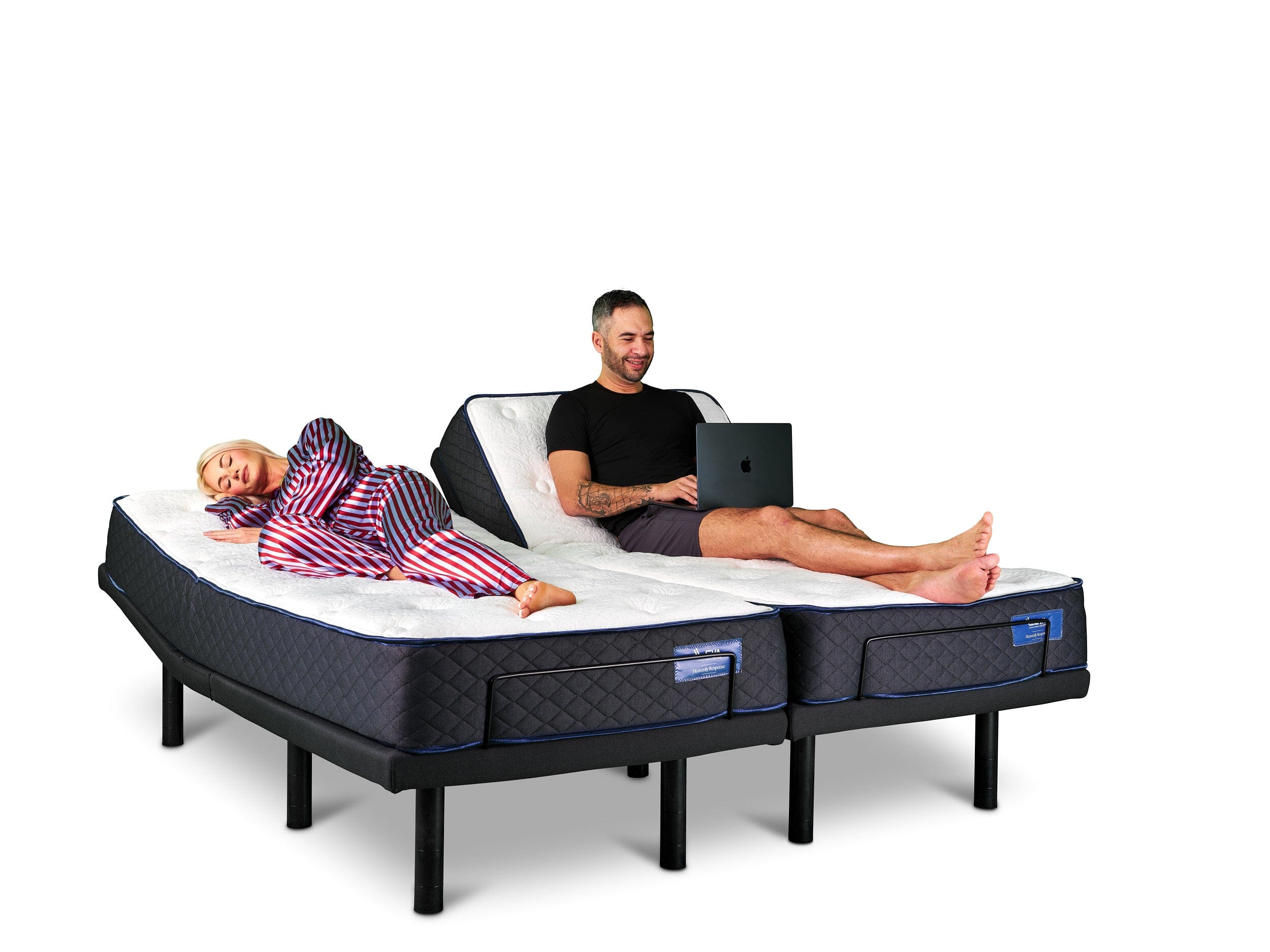
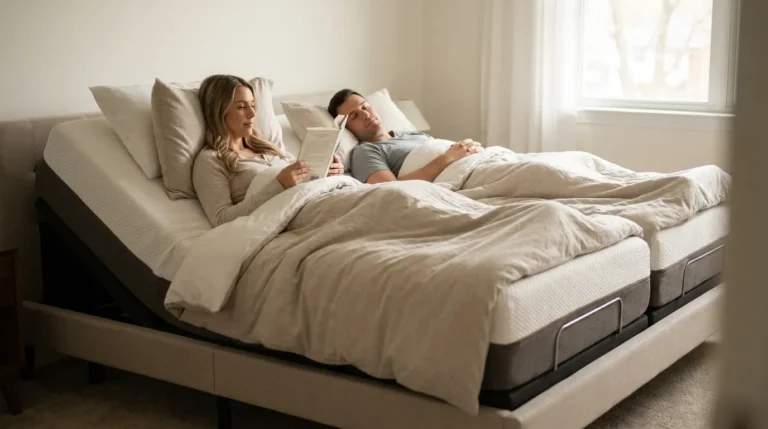
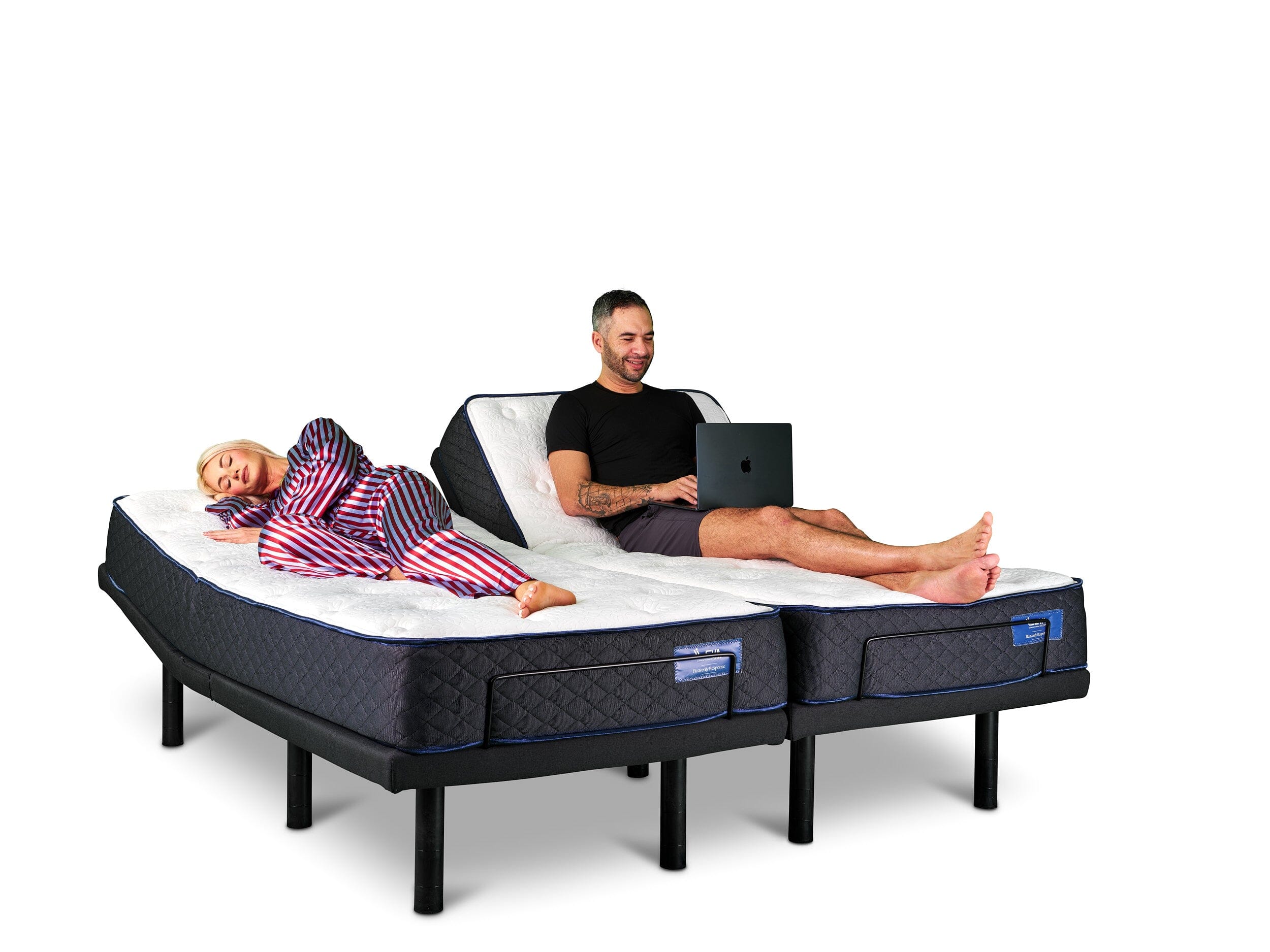
- Split adjustable bases let each partner control head and foot elevation, lumbar support, and anti-snore positioning without disturbing the other sleeper.
- Features like head elevation, lumbar support, pillow tilt, and anti-snore mode target snoring, motion transfer, and different medical or comfort needs.
- Modern split bases use quiet motor operation and independent remotes to limit noise and motion transfer, so both partners stay asleep during adjustments.
- Leva Sleep offers Split Queen and Split King options in Canada at 30–50% below comparable brands, with white-glove delivery and specialized bedding for adjustable beds.
- Experience better sleep together and shop Leva Sleep’s adjustable bed packages to find your ideal setup.
Phase 1: Pinpoint Your Shared Sleep Problems
Most couples experience at least one of the following conflicts before considering an adjustable base. These issues often overlap and compound each other, especially when snoring and movement occur together.
- Snoring: One partner’s airway collapses during sleep, producing noise that wakes the other.
- Tossing and motion transfer: Movement on one side of a flat bed travels across the mattress and disrupts the other sleeper.
- Medical elevation needs: Conditions such as mild obstructive sleep apnea (OSA), acid reflux, or post-surgical recovery require one partner to sleep at an incline while the other prefers flat.
- Temperature mismatch: One partner sleeps hot, while the other sleeps cold.
- Firmness disagreement: Differing body weights and pressure-point sensitivities mean no single mattress firmness satisfies both partners.
Many couples avoid adjustable bases because of a persistent myth that all motors are loud and disruptive. In reality, modern low-noise motors run briefly during position changes and are quiet enough that many users adjust their base at night without waking a partner.
Phase 2: See How Key Adjustable Features Help Each Partner
Each feature on a split adjustable base supports a specific physical need for one or both partners.
- Head elevation: Research has shown that head-of-bed elevation can reduce the apnea-hypopnea index and improve oxygen saturation in patients with positional OSA, without negatively affecting sleep architecture. Most sleep specialists recommend 10–30 degrees of head elevation for snoring relief, with 10–15 degrees sufficient for light snoring and 20–30 degrees for moderate-to-heavy snoring.
- Lumbar support: A dedicated lumbar motor raises the mid-section of the base to fill the natural curve of the lower back. This support reduces pressure on lumbar discs for side and back sleepers.
- Pillow tilt: A secondary motor at the very top of the base adjusts the angle of the head zone independently of the main head section. This adjustment fine-tunes cervical alignment without requiring a thicker pillow.
- Anti-snore mode: Anti-snore presets slightly elevate only the head to relieve airway pressure by reducing the effect of gravity and moving the tongue forward. On split designs, this adjustment applies to one side only.
- Independent foot elevation: Raising the foot section reduces lower-limb oedema and takes pressure off the knees and hips. This setting is particularly relevant for partners recovering from joint surgery.
Expert tip: When evaluating any adjustable base in a showroom or at home, test remote reach from both sides of the bed. A remote that requires sitting up to operate undermines the goal of effortless overnight adjustments.
Phase 3: Check Motion Isolation and Noise in Real Life
Once you understand which features match your needs, the next step is confirming that adjustments will not wake your partner. Two observable criteria show whether a split base will actually keep both partners asleep during movement.
- Motor decibel level: Ask the retailer for the motor’s rated decibel output, or place a smartphone decibel meter app beside the base during a full head-raise cycle. A quiet motor should register below 45 dB, which is similar to the ambient noise of a quiet library.
- Independent remote response: On a split adjustable base, each side operates autonomously so that movement on one partner’s side does not transfer to the other. This setup differs from a standard king adjustable base where the entire mattress moves as one unit. Verify this by having one partner operate their remote while the other rests a hand flat on their own mattress surface. There should be no perceptible vibration.
Phase 4: Compare Bed Types for Motion and Snoring Relief
| Feature | Flat Bed | Single Adjustable Base | Split Adjustable Base | Leva Sleep Split Queen / Split King |
|---|---|---|---|---|
| Independent head elevation per partner | None | None, both sides move together | Yes, each side adjusts autonomously | Yes, quiet German motors with app control per side |
| Snoring / OSA support | None | Elevation possible but affects both partners | Elevation can reduce AHI in mild-to-moderate OSA | Same clinical elevation range plus anti-snore mode |
| Motion transfer between partners | High, shared mattress transmits movement | High, single base moves as one unit | Minimal, independent bases prevent cross-transfer | Minimal, two independent bases with compatible split mattresses |
| Split Queen availability in Canada | N/A | N/A | Rare | Yes, built to specification and a unique Canadian offering |
Phase 5: Protect Intimacy While Solving Sleep Conflicts
An analysis of 238,000 nights of sleep data from 4,043 adults found that co-sleeping increased heart rate variability by 8% on average compared to sleeping alone. Women experienced a 10% increase and men a 6% increase, which indicates measurable cardiovascular recovery benefits from sharing a bed. Separate sleeping arrangements remove those benefits along with the relational ones.
Couples who resolve their sleep conflicts with a split adjustable base often describe a major shift in their relationship. Many say things like: “We were about to move into separate rooms. Now we both sleep through the night and actually wake up at the same time.” The goal of a split base is not to divide the bed. The goal is to remove the physical compromises that make sharing it unsustainable.
Phase 6: Review Canadian Pricing and Delivery Services
Comparable split adjustable base packages from brands such as Tempur-Pedic are available in Canada. Leva Sleep’s direct-to-consumer, vertically integrated model, which involves designing and assembling systems locally without retail markups, positions its packages at 30–50% below those equivalents. That price gap is structural, not promotional, because Leva controls manufacturing, logistics, and delivery under one roof.
White-glove delivery, available for a fee in Ontario and Alberta, includes bedroom-level placement, full assembly, leg-height adjustment, old-bed removal, and a product tutorial. Customers do not receive flat-pack boxes or leftover assembly tasks.
Phase 7: Plan for Long-Term Use with the Right Bedding
Standard fitted sheets are not engineered for the repeated flexion of an adjustable base and often pull free at the corners within weeks. To avoid this frustration and keep your setup working smoothly over time, confirm that the following specialized bedding and accessories are included or available before finalizing a purchase.
- Extra-elastic fitted sheets: Deep-pocket sheets with reinforced elastic bands on all four sides stay anchored through full head and foot elevation cycles.
- Duvet clips: When partners use different elevation angles, a standard duvet migrates to one side. Clips anchor each half independently.
- Remote pockets: Side-mounted pockets keep wireless remotes within reach without requiring changes to your bedside tables.
Before delivery day: Measure every doorway and hallway between your front entrance and bedroom. Split base frames are narrower than a standard king, but the delivery path still needs to accommodate the base length. Leva Sleep’s delivery team confirms clearance measurements in advance.
What Success Looks Like for Your Sleep
Observable outcomes within the first two to four weeks of using a split adjustable base typically include clear changes in comfort and routine.
- Both partners remain in the same bed through the entire night without one relocating to a sofa or spare room.
- Morning lower-back and hip pain decreases, as each partner maintains their preferred elevation instead of compromising on a flat surface.
- Fitted sheets stay in place overnight, which signals that the bedding system is working correctly with the base.
- The snoring partner hears fewer complaints, and the non-snoring partner reports fewer overnight awakenings.
Advanced Features for Tech-Friendly Couples
Couples who want to extend the functionality of their split base over time can explore several technology layers that build on the core system.
- App-driven micro-adjustments: Bluetooth-connected bases allow custom position presets, vibrating wake alarms, and subtle overnight corrections without manual remote operation.
- AI sleep tracking: Integrated sensors can monitor sleep stages, heart rate, and movement. The system then feeds data back to the app to suggest or automate position changes that improve sleep continuity.
- Heating and cooling pads: Individual temperature regulation per side addresses the thermal mismatch that a single adjustable base cannot solve.
- Future-proofing for medical needs: A split base purchased today for snoring can later accommodate post-surgical elevation requirements, progressive joint conditions, or changing CPAP therapy protocols without requiring a new bed frame.
Frequently Asked Questions
Can an adjustable bed replace a CPAP machine for sleep apnea?
An adjustable bed is not a replacement for CPAP therapy in cases of moderate-to-severe obstructive sleep apnea. Head-of-bed elevation is a positional intervention that can help manage symptoms in patients with mild-to-moderate or positional OSA, as discussed in Phase 2, but it does not deliver the continuous positive airway pressure that a CPAP machine provides. For anyone with a formal OSA diagnosis, an adjustable base works best as a complementary strategy alongside, not instead of, prescribed therapy. Leva Sleep’s adjustable beds are also referred by sleep apnea clinics as a supportive tool for patients managing positional sleep apnea.
What is a Split Queen adjustable bed and how much space does it require?
A Split Queen adjustable bed consists of two narrow twin-equivalent mattresses and two independent adjustable bases placed side by side within a standard queen-size footprint, approximately 60 inches wide by 80 inches long. It delivers the same independent-control benefits as a Split King in a smaller room footprint. This configuration makes it a practical choice for master bedrooms that cannot accommodate a king-size frame. Leva Sleep is one of the few Canadian retailers that builds Split Queen configurations to customer specification, while most competitors offer only Split King.
What are the delivery timelines for Ontario and Alberta?
Leva Sleep’s in-house white-glove delivery operates in both Ontario and Alberta. Delivery timelines vary by location and current scheduling, so the most accurate lead time is confirmed at the time of purchase. Because Leva controls its own delivery logistics rather than outsourcing to third-party carriers, scheduling is coordinated directly with the customer, including a pre-delivery doorway clearance check and a post-setup product tutorial.
What warranty coverage applies to Leva Sleep adjustable bases?
Warranty terms vary by model. Leva Sleep’s direct-to-consumer structure means warranty claims are handled by the same team that built and delivered the product, without routing through a third-party retailer. Specific warranty durations and coverage details are available on each product page at levasleep.com or by contacting Leva Sleep directly before purchase.
How can I evaluate motor noise before committing to a purchase?
The most reliable method is to operate the base through a full head-raise and lower cycle in a quiet room and note whether the motor sound is audible from the opposite side of the bed. A near-silent motor should be barely perceptible at normal sleeping distance. If evaluating in a showroom, bring a free smartphone decibel meter app and measure during the cycle. Readings below 45 dB are generally considered non-disruptive for a sleeping partner. Ask the retailer for the motor’s rated decibel specification in writing before purchasing.
Conclusion
Split adjustable bases solve the core mechanical problem that drives sleep divorce. A single flat surface cannot simultaneously meet two people’s elevation, firmness, and motion requirements. Independent head and foot control, quiet motor operation, lumbar support, and automated anti-snore positioning each address a specific physiological mechanism. Clinical data on head-of-bed elevation confirms measurable improvements in airway events and oxygen saturation for partners managing mild-to-moderate OSA. The practical test for success is simple: both partners stay in the same bed, wake with less pain, and stop negotiating over who has to sleep on the sofa.
Leva Sleep’s Split Queen and Split King packages deliver these capabilities at the pricing advantage detailed in Phase 6, with in-house white-glove delivery across Ontario and Alberta and specialized bedding engineered to stay in place through every adjustment.