Visit One Of Our 6 Showrooms Located Across Canada!
No Payments, No Interest Until 2027
Free Delivery & In-Home Set Up
How Anti-Snore Adjustable Beds Actually Work: A Guide
Content
Written by: Matthew Timmins, Founder and Managing Director, Leva Sleep | Last updated: July 2, 2026
Key Takeaways
Anti-snore adjustable beds use motorized torso elevation, usually between 10 and 20 degrees, to shift gravity away from the airway and reduce tissue collapse that causes snoring.
Preset manual positions and upcoming 2026 sensor and AI modes both allow precise incline control, while Leva Sleep’s quiet German motors keep adjustments unobtrusive.
A simple at-home pillow trial can confirm whether your snoring is positional before you invest in an adjustable base.
Split-base designs give each partner independent control, which reduces sleep disruption for couples and can help prevent “sleep divorce.”
Explore Leva Sleep’s full range of adjustable bed packages with split options and anti-snore compatibility at Leva Sleep.
Phase 1: How Elevation Changes Airway Physics
When you lie flat, gravity pulls the tongue, soft palate, and surrounding throat tissue downward and backward. That displacement narrows the upper airway. As air moves through a smaller opening, the surrounding tissue vibrates and produces the sound recognized as snoring.
Raising the torso changes this geometry. At this therapeutic incline, gravity shifts from pulling tissue directly onto the airway to pulling it toward the chest wall instead. The tongue base moves forward relative to the back of the throat, and the soft palate is less likely to flutter against it. Sinus drainage also improves at incline because mucus flows toward the throat rather than pooling in the nasal passages, which reduces congestion that can further restrict the airway.
To achieve these benefits reliably, the distinction between torso elevation and head-only elevation matters. Propping only the head with a pillow can flex the neck forward, which compresses the throat instead of opening it. A motorized adjustable base lifts from the lumbar region upward and keeps the spine in a neutral arc while reaching the airway angle you need. A static pillow cannot replicate that position consistently through the night.
Phase 2: Manual Presets vs Sensor Modes on Adjustable Bases
Adjustable bases use two main control styles. One relies on preset positions that you select manually. The other uses sensor-driven modes that detect snoring and respond automatically.
Feature
Preset Mode
Sensor / AI Mode
Leva Sleep 2026 Status
Trigger
Manual button or app tap
Acoustic snore detection
Anti-snore detection launching spring 2026
Adjustment type
Fixed saved angle
Incremental micro-adjustments
Subtle head-of-bed micro-adjustments
Partner disruption risk
Moderate (user must wake or tap)
Low (automatic, gradual)
Low, with whisper-quiet German motors
Customization
User-defined saved positions
Algorithm-driven per session
App-controlled with custom position memory
Leva Sleep’s forthcoming anti-snore mode uses acoustic detection to identify snoring events, then instructs the motor to raise the head in small increments until the snoring subsides. The sleeper and their partner do not need to intervene. Because Leva’s motors are engineered for near-silent operation, the adjustment itself does not create a new disturbance.
Phase 3: Simple Home Test to Find Your Ideal Angle
Test whether torso elevation reduces your snoring before you buy an adjustable bed. Stack firm pillows or folded blankets under the upper third of your current mattress, from the lumbar region to the shoulders, to simulate roughly a 10 degree incline. Ask a partner to listen or use a free snore-recording app on a phone placed on the nightstand.
If snoring decreases noticeably at that height, that confirms you respond to elevation. Increase the stack to approximate 15 degrees and repeat the test to see whether further improvement occurs and to find your most effective angle. If snoring remains unchanged even at about 20 degrees of simulated incline, positional elevation may not be the main driver of your snoring. In that case, a medical assessment is wise before you invest in an adjustable base. The goal of this trial is to confirm that your snoring follows a positional pattern, meaning it worsens when flat and improves with incline, before you choose a bed configuration.
Phase 4: Situations Where Elevation Has Limits
Honest Limitations: Read Before Buying
Torso elevation addresses positional, gravity-driven snoring. It does not treat central sleep apnea, where the brain fails to send proper signals to breathing muscles. It is also less effective for individuals with significant obesity, where excess soft tissue around the neck narrows the airway regardless of body angle. Confirmed side-sleepers may find that lateral positioning already reduces their snoring, which can make head elevation redundant. Anyone with a diagnosed sleep disorder should consult a physician before relying on an adjustable bed as a primary intervention. An adjustable base functions as a comfort and positional aid, not as a medical device.
Phase 5: How Split Bases Help Couples Sleep Better
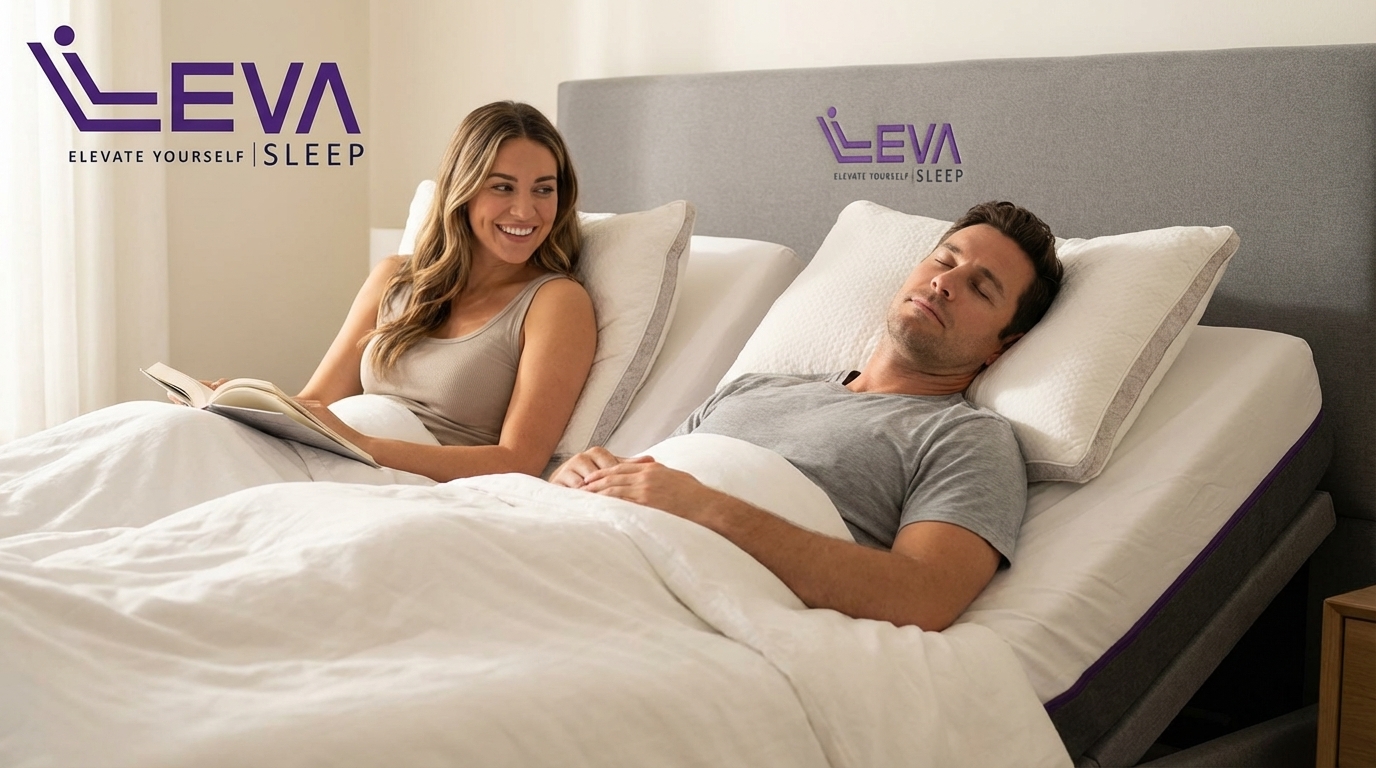
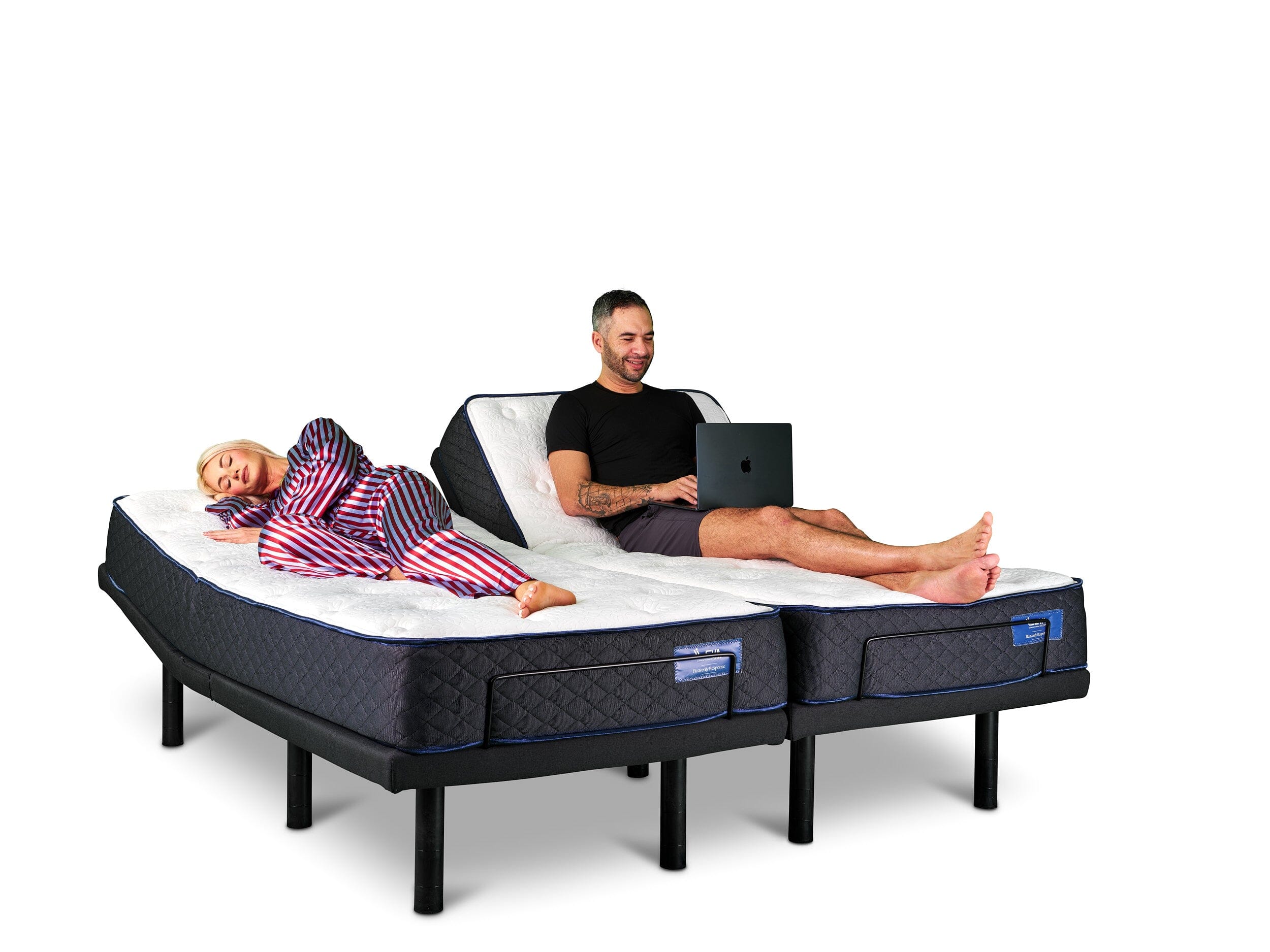
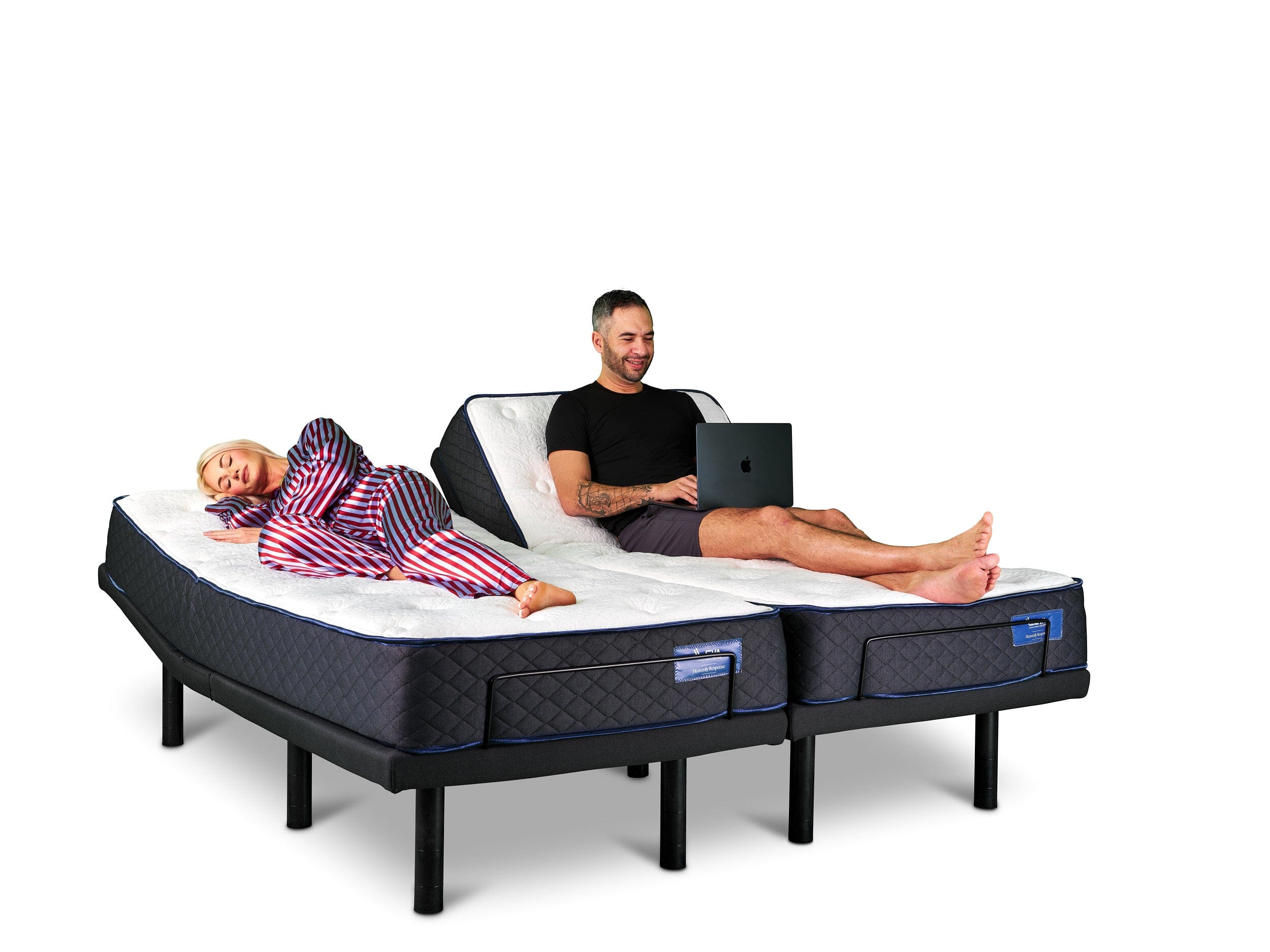
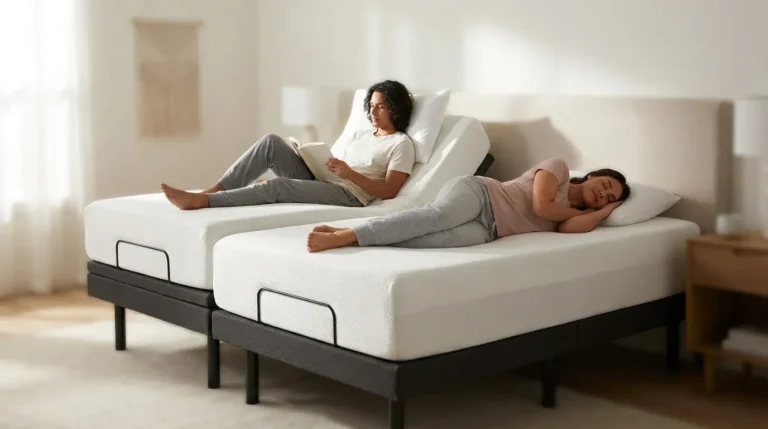
In a standard one-piece adjustable bed, raising one side raises both. The non-snoring partner then elevates unnecessarily, which can cause discomfort or disturb their sleep. A split base solves this by giving each side of the bed its own motor, controller, and hinge system.
Leva Sleep offers Split King and Split Queen configurations, with Split Queen remaining a rare format in the Canadian market. Each side operates through the Leva Sleep app via Bluetooth, so the snoring partner can activate anti-snore elevation while the other side stays flat. Massage settings, lumbar support, and pillow tilt are also controlled independently. This independence is a key reason split bases reduce what sleep specialists call “sleep divorce,” where one partner moves to a separate room to escape disruption.
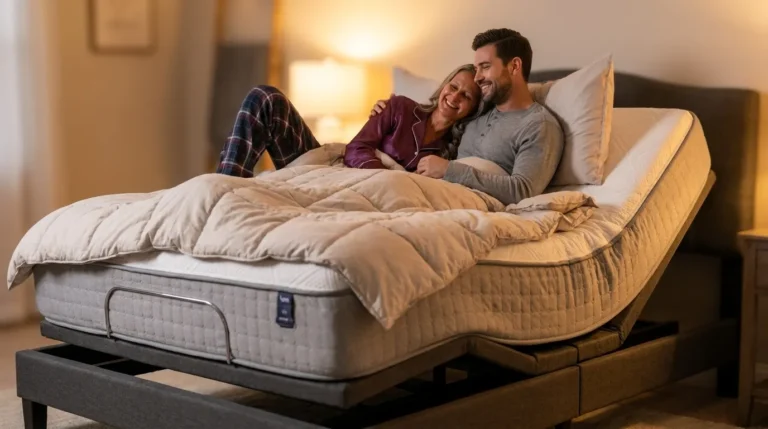
Leva Sleep Split Queen Bed
Because Leva designs, assembles, and delivers its systems in-house across Ontario and Alberta, the split configuration arrives as a single integrated unit with white-glove setup. You avoid the fit and function issues that can occur with two mismatched components from different suppliers.
The table below compares static pillow stacking with a wedge pillow and a motorized adjustable base across four practical criteria. No third-party test data is cited here because no independently verified comparative study was available at time of publication. The comparisons reflect mechanical and ergonomic principles.
Criterion
Stacked Pillows
Wedge Pillow
Motorized Adjustable Base
Achievable incline range
Inconsistent, shifts during sleep
Fixed 30–45° (often too steep)
Adjustable 0–70°, with an anti-snore zone around 10–20°
Spinal alignment
Poor, neck flexion common
Moderate, depends on wedge shape
Supported, lifts from lumbar upward
Partner independence
None
None
Full, with split base configurations
Automatic adjustment
None
None
Available via sensor and AI mode in 2026
Common Misconception
A wedge pillow does not match the function of an adjustable base. Wedge pillows use fixed angles that often exceed the therapeutic range and cannot be changed without removing and replacing the pillow. They also apply pressure only from the shoulder blades upward, which leaves the lumbar spine unsupported and often causes lower back discomfort by morning.
Success Checklist and FAQ for Anti-Snore Adjustable Beds
Use this checklist to decide whether an anti-snore adjustable bed fits your situation:
Snoring worsens when lying flat and improves when propped up, which confirms a positional pattern.
No diagnosis of central sleep apnea or severe obstructive sleep apnea that requires CPAP.
Your partner’s sleep is disrupted and you are considering separate rooms.
Pillow stacking has provided partial relief but feels inconsistent or uncomfortable.
You live in Ontario or Alberta, which are Leva Sleep’s current white-glove delivery zones.
FAQ
Is an anti-snore adjustable bed a replacement for a CPAP machine?
No. A CPAP machine is a prescribed medical device for diagnosed obstructive sleep apnea and delivers continuous positive airway pressure to keep the airway open in any position. An adjustable bed addresses positional snoring by using gravity to reduce airway obstruction. For individuals with mild positional snoring who have not been diagnosed with sleep apnea, an adjustable base may reduce or eliminate snoring events. For anyone with a confirmed sleep apnea diagnosis, a physician should be consulted before changing any treatment plan. Some Leva Sleep customers have been referred by sleep apnea clinics specifically for positional management as a complement to other therapies.
Does Leva Sleep deliver and set up adjustable beds in Ontario and Alberta?
Yes. Leva Sleep provides in-house white-glove delivery in Ontario and Alberta for a fee. This service includes delivery to the bedroom, full assembly, leg height adjustment, a product tutorial, and removal of the old bed through donation or recycling. Because Leva designs and assembles its systems locally, the delivery team has direct product knowledge instead of being a third-party logistics contractor unfamiliar with the equipment.
How much maintenance does an adjustable base require?
Motorized adjustable bases require minimal maintenance. The main tasks involve keeping the underside of the base clear of debris that could obstruct the motor mechanism and checking that the power cable and remote or app connection remain secure. Leva Sleep’s German motors are engineered for long-cycle durability. If a motor or controller issue occurs, Leva’s in-house expertise means service inquiries go directly to the manufacturer rather than through a third-party retailer chain.
Should I consult a doctor before buying an anti-snore adjustable bed?
A medical consultation is advisable if snoring occurs with gasping, choking, observed breathing pauses, or excessive daytime sleepiness. These signs can indicate obstructive sleep apnea. A physician or sleep specialist can determine whether positional therapy is appropriate or whether a diagnostic sleep study should come first. For straightforward positional snoring without those symptoms, an adjustable bed offers a non-invasive option that carries no medical risk.
Conclusion: Bringing Anti-Snore Technology Into Your Bedroom
Anti-snore adjustable beds rely on a straightforward mechanical principle. Motorized incline changes the geometry of the upper airway so that gravity supports tissue instead of collapsing it. Effectiveness depends on the snoring being positional, the incline lifting from the torso rather than the neck alone, and, for couples, each partner having independent control over their side of the bed. Sensor-driven modes arriving in 2026 remove the need for manual intervention and make uninterrupted sleep more realistic.
Leva Sleep delivers this technology in Split Queen and Split King configurations across Ontario and Alberta at 30 to 50 percent below comparable luxury competitors, with the white-glove service described earlier. Shop Leva Sleep’s adjustable beds and choose the split-base package that fits your bedroom size and sleep needs.