Written by: Matthew Timmins, Founder and Managing Director, Leva Sleep
Hey there, couples across Canada! Are you finding that a traditional flat bed just doesn’t cut it for your health and sleep needs anymore? Let’s talk about how leg elevation and adjustable bed technology can make a real difference in your sleep quality, health, and relationship. This guide is here to help you understand the specific benefits of leg elevation and how adjustable beds can work for both partners, meeting your unique needs with ease.
Why Leg Elevation Matters for Your Health as a Couple
Leg elevation can play a big role in improving your health, especially if you’re dealing with long days at a desk or on your feet. It helps with blood flow, cuts down on swelling, and supports your overall well-being. For couples, it’s a practical way to address personal health concerns while sharing a bed comfortably.
Many of us face challenges like poor circulation, back pain, or swelling in the legs as we age or sit for long hours. Elevating your legs offers a simple, effective way to tackle these issues, improving how you feel day to day. It’s a step towards better rest and vitality for both of you.
With different health needs and sleep preferences in a relationship, finding a solution that works for both partners can be tough. Leg elevation, supported by the right bed, lets you customize your comfort without hassle.
Want to see the difference for yourself? Check out Leva Sleep’s adjustable beds designed to help couples enjoy the benefits of leg elevation.
Key Benefits of Leg Elevation for Better Health
Leg elevation isn’t just about comfort, it’s a practical approach to better health. Here’s a breakdown of how it can help you and your partner live better and sleep deeper.
Less Swelling in Your Legs
Raising your legs above heart level helps prevent blood from pooling and reduces fluid buildup. This is a game-changer if you’re on your feet all day or sit for long stretches. It effectively cuts down on swelling in your lower legs by draining excess fluid, which can be especially helpful during pregnancy or after an injury.
Managing swelling isn’t just about feeling better in the moment. Ongoing swelling can lead to bigger issues like skin problems or limited movement. Adding leg elevation to your nightly routine can help avoid these concerns and support your body’s natural recovery.
Better Blood Flow and Heart Health
Elevating your legs stops blood from pooling in the lower body and boosts overall circulation. This can be a key benefit if you deal with varicose veins or just want to feel more energized.
The way it works is straightforward. By lifting your legs, you ease the pressure on veins and give gravity a break. This reduces strain on your veins and helps blood flow back to your heart more easily, especially after a day of sitting or standing. Over time, this means more oxygen to your tissues and less stress on your heart, keeping you feeling active and alert.
Relief from Pain and Muscle Tension
Lifting your legs can ease tension in your legs, hips, and feet, while possibly helping with back pain tied to swelling or poor blood flow. It’s a natural way to address discomfort that might keep you up at night.
Better circulation and less swelling also mean your body holds a more natural position, cutting stress on joints and muscles. This can reduce pain in your lower body and lead to more restful sleep, helping you wake up feeling refreshed instead of sore.
Lower Risk of Blood Clots
Raising your legs may decrease the chance of deep vein thrombosis by promoting blood flow. This is a vital precaution if you’re at risk for blood clots. It supports better blood return to the heart, reducing clot risk, which is crucial for frequent travelers or those with desk jobs.
Preventing blood clots is serious business since they can lead to severe health issues. Making leg elevation part of your routine acts as a safeguard, supporting your vascular health over the long term.
Improved Sleep for Both of You
When you combine better circulation, less pain, and reduced swelling, you set the stage for deeper, more restorative sleep. Your body can cycle through sleep stages more effectively, aiding recovery and boosting your mood, immunity, and energy levels.
This also benefits your relationship. Better sleep means fewer wake-ups from discomfort, creating a more peaceful night for both of you. It’s a small change that can strengthen your connection and overall comfort together.
How Adjustable Beds Meet Couples’ Sleep Challenges
Flat beds often fall short when it comes to meeting modern sleep needs. Adjustable beds offer a way for couples to personalize their sleep setup, balancing individual health requirements with shared comfort.
Addressing Different Health Needs
Every couple has unique health concerns. Maybe one of you needs head elevation for snoring or sleep apnea, while the other benefits from leg elevation for circulation or pain relief. A standard bed forces you to pick one over the other, which isn’t ideal for either of you.
Factors like age, ongoing health conditions, or daily routines only add to the mix. What works for one partner might not for the other, and a shared bed needs to handle these differences without creating tension or poor sleep.
Finding Comfort That Fits Both Partners
Comfort isn’t just about health, it’s also personal preference. One of you might like a firm mattress for back support, while the other wants something softer. Add in differences like sleeping hot or cold, or sensitivity to movement, and a flat bed often can’t keep up.
Over time, as your bodies and needs change, these small differences can become bigger issues. A bed that doesn’t adapt means one or both of you ends up uncomfortable, affecting your rest and your relationship.
Staying Together in One Bed
When sleep issues persist, some couples opt for separate beds or rooms, often called a “sleep divorce.” While this might solve comfort problems short-term, it can impact closeness and connection, not to mention the extra cost and space needed.
This split isn’t usually about not getting along, it’s about lacking a bed that works for both. A better option is finding technology that lets you stay together while meeting each other’s needs. See how Leva Sleep’s adjustable beds support couples’ sleep needs without sacrificing togetherness.
Why Leva Sleep Adjustable Beds Work for Couples and Leg Elevation
Leva Sleep focuses on creating beds that let couples prioritize health and comfort together. With features built for leg elevation and individual customization, our beds help you both get the rest you need.
Separate Controls for Leg Elevation
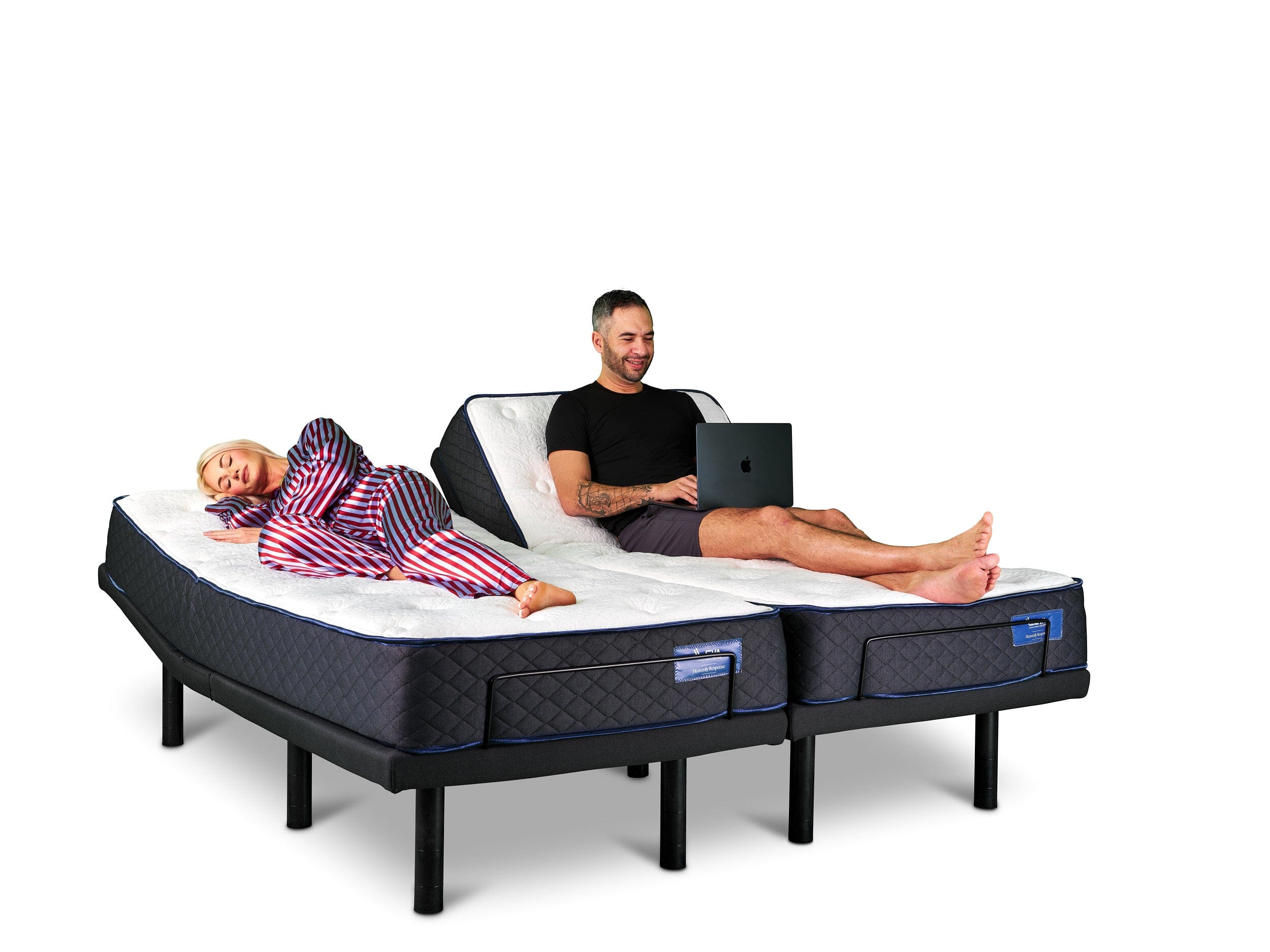
Our Split King and Split Queen beds offer independent controls, so each of you can adjust leg elevation without affecting the other. For the best effect, raise legs above heart level with a slight knee bend, and our beds make this easy for both partners at the same time.
This means one of you can lift your legs for better circulation while the other keeps a flat position or adjusts differently for comfort. Even in smaller spaces, our Split Queen option provides this flexibility without needing extra room.
Quiet Adjustments and Added Features
Our beds use silent German motors, so adjusting positions won’t wake your partner. No loud noises or sudden jolts, just smooth changes to keep your sleep undisturbed.
Extra options like pillow tilt for neck support, lumbar adjustments for your lower back, and an anti-snore mode that gently shifts to reduce snoring add even more value. You can also use app controls to save your favorite positions and adjust settings effortlessly.
A Complete Setup for Elevated Sleep
We’ve thought of everything to make elevated sleep comfortable. Our mattresses, whether all-foam or hybrid, are made to stay supportive even when raised. Regular mattresses often sag or create pressure points, but ours are designed for adjustability.
Our bedding, like fitted sheets with deep pockets and duvet clips, stays in place during adjustments. Remote pockets keep controls handy without discomfort. Every piece works together to make leg elevation practical and cozy night after night.
Great Features at a Fair Price
By selling directly to you, Leva Sleep cuts out extra costs, offering high-quality adjustable beds at 30-50% less than similar brands. We focus on durable Canadian-made parts and solid engineering, ensuring your bed lasts for years.
This pricing means more couples can access a bed that supports leg elevation and personalized comfort without breaking the bank. It’s about getting real value for a product that improves your daily life.
Easy Delivery and Expert Help
Our white-glove delivery team handles everything, from bringing the bed to your room to setting it up and showing you how to use it. They’ll adjust the legs for your comfort and take away your old setup, so there’s no stress on your end.
They’re also there to explain how to get the most from leg elevation, like finding the right angles for your needs. Plus, our ongoing support means you’ve got help whenever you need it, making sure you’re always set for better sleep.
How to Pick the Right Leva Sleep Adjustable Bed for You
Choosing an adjustable bed means looking at your health, space, and long-term goals as a couple. Here’s how to make a decision that fits your life.
Understand Your Own Needs
Start by noting each partner’s health issues, sleep problems, and comfort preferences. Look at things like circulation concerns, pain, or disruptions during the night. Think about how these might change over time too.
Consider your routines, like work hours or travel, that affect sleep. If one of you has a high-stress job, quick adjustments might be key. If another deals with chronic pain, focus on features for relief.
Benefits of Split Bed Options
Our Split King and Split Queen beds let each partner adjust their side independently. The King offers more space for personal comfort zones, while the Queen fits smaller rooms while still allowing separate settings for leg elevation or other positions.
This setup adapts as your needs grow, whether due to aging or new health conditions. It’s a flexible choice that keeps working for you down the road.
Look at Important Features
Think about which features matter most for your budget and priorities. Basic elevation helps with leg benefits, while extras like lumbar support or anti-snore modes offer more tailored comfort.
Decide between app or remote control based on what’s easier for you. Also, look at added options like massage or sleep tracking if they fit into your broader health goals.
Fit It Into Your Daily Life
See how an adjustable bed works with your current habits. Features like quiet alarms or saved positions can make mornings and evenings smoother. Being able to adjust throughout the day also supports recovery or health routines.
Ready to make sleep personal? Shop Leva Sleep adjustable beds today for tailored leg elevation and couple-friendly design.
Common Mistakes to Avoid When Buying Adjustable Beds
It’s easy to hit bumps when picking an adjustable bed. Let’s go over some pitfalls and how Leva Sleep helps you steer clear of them.
Not Considering Each Partner’s Needs
Buying a single-unit adjustable bed that moves together often means one partner misses out on their ideal position. Leva Sleep’s split designs let each of you set your elevation or angle without affecting the other, keeping everyone comfortable.
Choosing Cheap Over Quality
Going for the lowest price can mean noisy motors or weak frames that break down fast. Our quiet, durable German motors and sturdy builds ensure lasting use, backed by a direct-to-consumer price that doesn’t skimp on quality.
Forgetting the Whole Setup
Regular bedding or mattresses often don’t work well with adjustable beds, leading to slipping sheets or uneven support. Leva Sleep provides mattresses and accessories made for elevation, so everything stays in place and feels right.
Ignoring Expert Knowledge
General retailers might not know the ins and outs of adjustable beds. At Leva Sleep, we specialize in these products, offering guidance on leg elevation and tailoring solutions to your health needs, from purchase to long-term use.
Common Questions About Leg Elevation and Adjustable Beds
Got questions? Here are clear answers about how leg elevation and adjustable beds can help you as a couple.
How does elevating legs improve circulation and swelling?
Raising your legs helps blood flow back to your heart, easing vein pressure and preventing pooling. This cuts down on swelling and can ease issues from varicose veins or long sitting periods. It also supports better spinal alignment and may reduce back pain tied to circulation problems.
What’s the best height to raise my legs on an adjustable bed?
Aim to lift your legs to or just above heart level for the most benefit. This helps blood return while keeping you comfortable. Leva Sleep beds let you tweak this precisely, often with a slight knee bend, and save your setting for consistent use.
Can one bed help with snoring and back pain for different partners?
Yes, with a Leva Sleep Split bed, each side adjusts on its own. One can raise their head to lessen snoring, while the other sets their position for back pain relief. Features like anti-snore mode can even make small shifts automatically without waking anyone.
Are adjustable beds loud when adjusting?
Not with Leva Sleep. Our German motors are designed to be very quiet, so changes happen smoothly without disturbing your partner. This is key for keeping a calm sleep space, especially with frequent adjustments.
Do I need special bedding for an adjustable bed?
Standard sheets often slip off during adjustments. Leva Sleep offers bedding made for these beds, with deep pockets and clips to keep everything secure. This ensures comfort and ease when using leg elevation features.
Wrap Up: Better Sleep Awaits with Leva Sleep Adjustable Beds
Making leg elevation a priority can improve your circulation, reduce pain, and help you sleep better, benefiting both your health and your relationship. It’s a practical step toward feeling your best every day.
Leva Sleep adjustable beds are built for couples who want comfort and health without compromise. With split designs, quiet operation, tailored accessories, and hands-on setup support, we make sure both of you get the rest you deserve.
This isn’t just about a better night’s sleep today, it’s about supporting your long-term well-being and connection as a couple. Our direct pricing keeps these high-quality features within reach for more people.
Investing in the right bed means better health, more energy, and a stronger partnership. As sleep needs become more personal, choosing a solution like this sets you up for lasting benefits.
Ready for better sleep and well-being? Shop Leva Sleep adjustable beds for couples now! Turn your bedroom into a place of comfort and health where both of you thrive.