Written by: Matthew Timmins, Founder and Managing Director, Leva Sleep | Last updated: June 27, 2026
Key Takeaways
- Adjustable bases with active lumbar support keep the natural lumbar curve during sleep. Flat beds and basic adjustable frames flatten the lower back and increase disc pressure.
- Zero-gravity positioning combined with independent lumbar support is associated with meaningful reductions in lower-back pain in ergonomic and clinical research.
- Split configurations with independent lumbar controls let couples with different pain needs adjust each side separately without disturbing their partner.
- Mattress flexibility, thickness, and foam density determine how well lumbar support reaches your body and whether the mattress buckles.
- Leva Sleep offers adjustable bed packages with active lumbar support, whisper-quiet motors, and split options. Shop Leva Sleep’s adjustable beds to find a setup that matches your back and sleep needs.
The Problem: Why Flat and Basic Bases Keep Your Back Under Stress
A flat sleeping surface holds the lumbar spine in a neutral-to-flexed position all night. Adults with disc degeneration, facet joint irritation, or muscular imbalance experience higher intradiscal pressure and less overnight recovery in this posture. Basic adjustable bases add head and foot elevation but still miss the feature most relevant to lower-back pain: a dedicated lumbar support zone that moves independently from the rest of the frame.
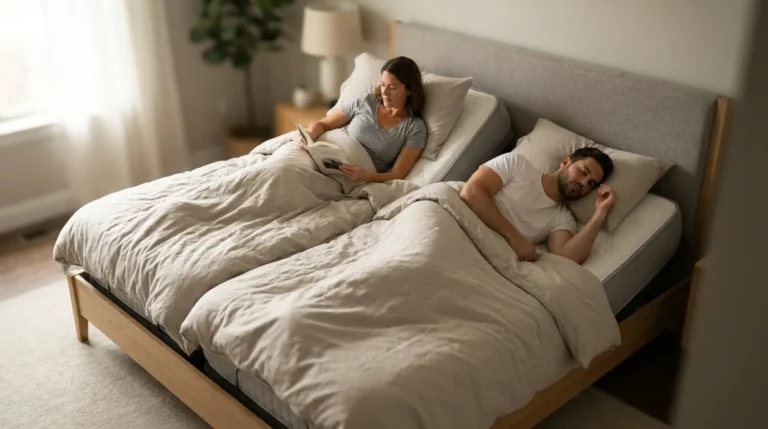
Couples often feel this limitation more intensely. One partner may need firm lumbar reinforcement while the other prefers a softer, flatter surface. Without independent controls, one person’s ideal setting becomes the other’s source of discomfort. This mismatch can push partners toward sleep divorce, where one moves to a separate room to get enough rest. Noisy motors on older or budget bases add another problem, waking light sleepers whenever their partner changes position.
How Adjustable Lumbar Support Works With Your Spine
The lumbar spine has a natural inward curve, called lordosis, that helps distribute load across the vertebral discs. When you lie flat, gravity and mattress compression can flatten this curve and increase pressure on the back of the discs. An active lumbar support mechanism, usually a motorized pad or zone in the base, pushes gently upward beneath the L1–L5 region. This action restores the lordotic curve without forcing you to shift or brace your muscles.
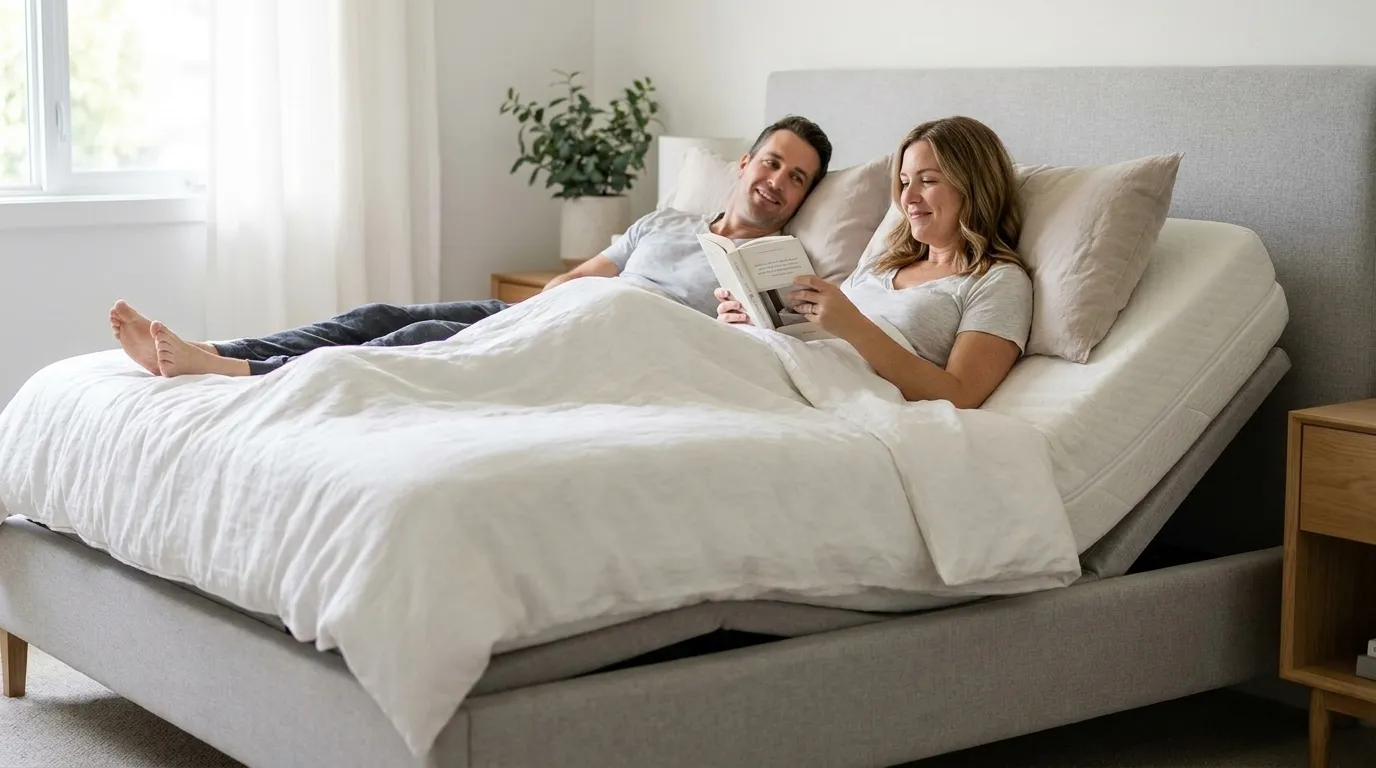
Head and foot elevation enhance this effect. Raising the head between 30° and 45° and the knees to about 30° creates the zero-gravity position, which NASA identified as the posture that minimizes compressive forces on the spine. Adding lumbar support in this position fills the gap between the mattress and the lower back that zero-gravity alone can leave. This combination produces more complete offloading of the lumbar segment.
What Recent Studies Show About Pain Reduction
Peer-reviewed sleep ergonomics research consistently links adjustable positioning to lower-back pain relief. A study published in the Journal of Chiropractic Medicine found that new medium-firm mattresses improved perceived back pain, stiffness, and sleep quality compared to participants’ prior mattresses. The study focused on mattress firmness rather than adjustability, yet it supports the broader principle that targeted changes to the sleep surface can reduce pain and improve function.
Recommended Zero-Gravity + Lumbar Settings You Can Try
- Head elevation: Use the zero-gravity range explained above, between 30° and 45°, to decompress the cervical and thoracic spine and reduce acid reflux that can disrupt sleep.
- Knee/foot elevation: Raise the knees to about 25°–30° to ease tension on the hip flexors and sacroiliac joint.
- Lumbar pad height: Raise the pad until you feel light, even contact across the L1–L5 region. The pad should support the lower back without pushing it forward.
- Pillow tilt: Add a small upward tilt of 5°–10° at the head to keep the chin from dropping toward the chest at higher head elevations.
- Micro-adjustment protocol: Start at the lowest lumbar setting to create a conservative baseline. Increase by one increment per night and track morning stiffness as your guide. This gradual approach prevents over-correction, which can create new pressure points and discomfort that feels similar to your original pain.
Mattress Requirements for Effective Lumbar Support
- Flexibility: The mattress must bend at the head and foot zones without cracking or delaminating. All-foam and pocket-coil hybrid designs usually flex well, while traditional innerspring mattresses often do not.
- Thickness: Mattresses between 25 cm and 35 cm, or 10–14 inches, allow lumbar pads to transmit support through the mattress to your body. Thicker mattresses can mute the effect.
- Foam density: Medium-density foam, around 1.5–1.8 lb/ft³ in the lumbar zone, lets the support pad create a noticeable contour change without bottoming out.
- Zoning: Mattresses with softer shoulder zones and firmer hip zones work well with lumbar support. This design reduces pressure shifts when the lumbar pad rises.
- Fitted sheet depth: Standard sheets often pull free when the base moves. Deep-pocket sheets with strong elastic stay in place during position changes and prevent sleep disruption.
Split Adjustable Setups for Couples With Different Pain Profiles
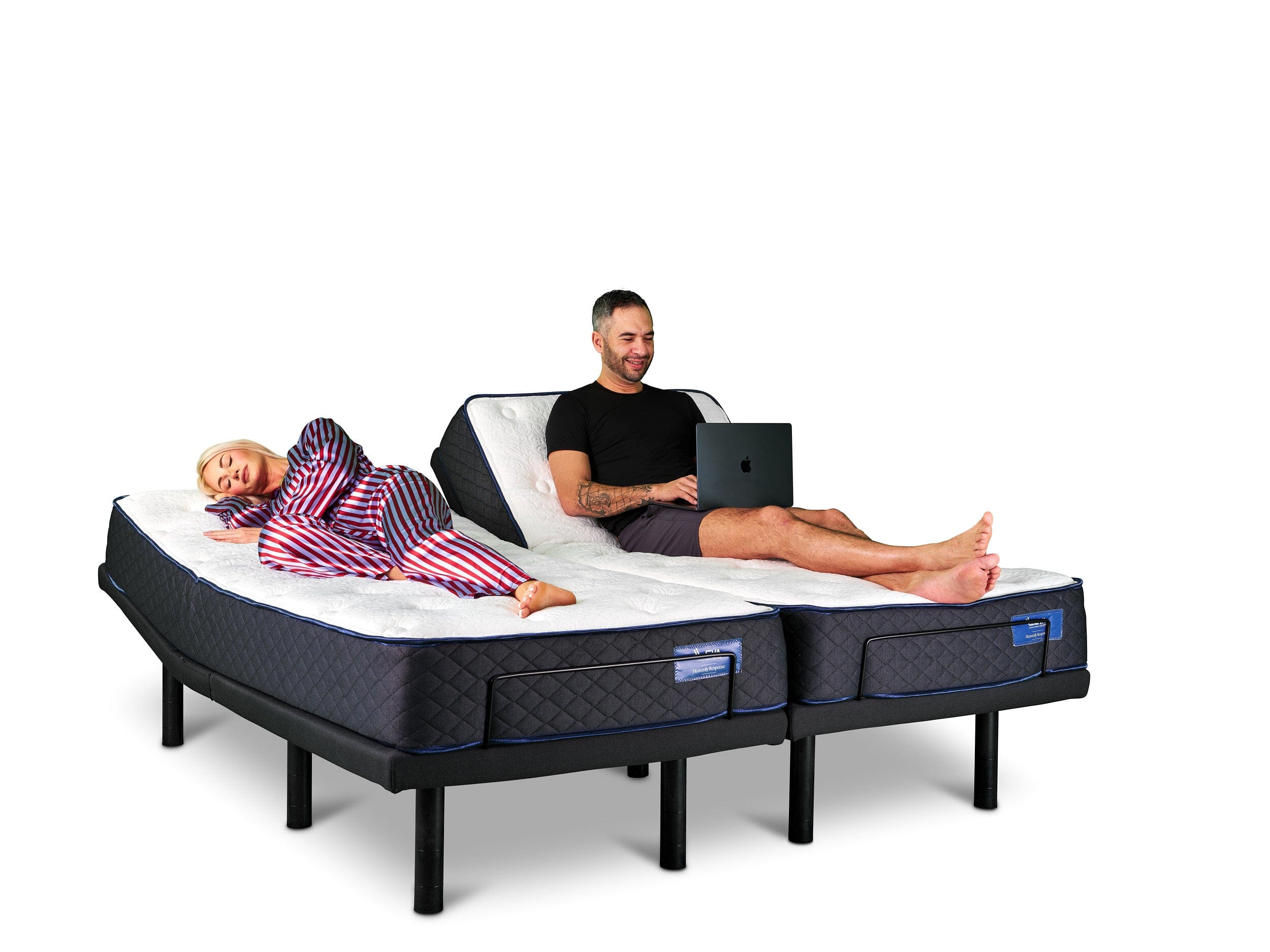
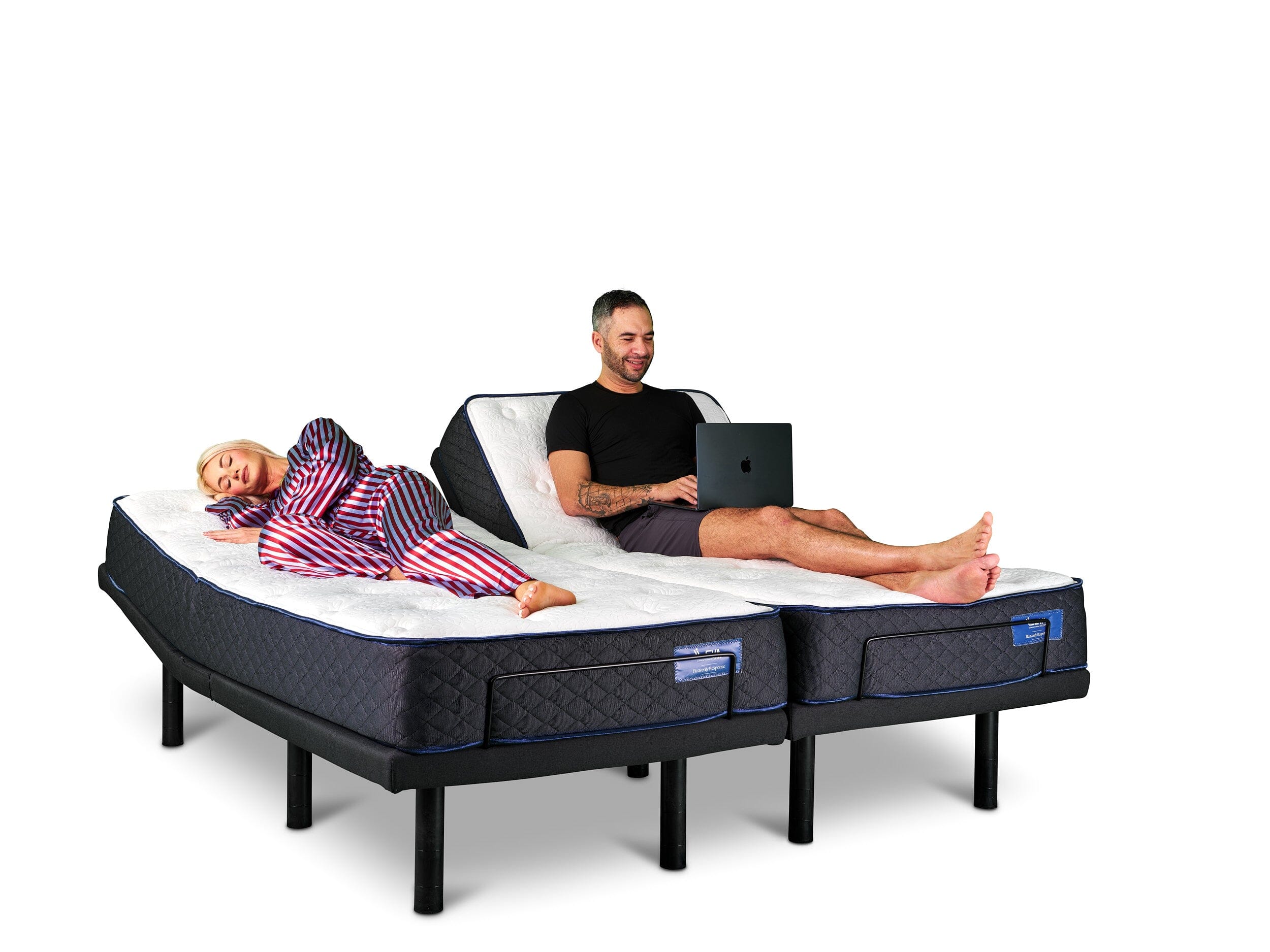
Split queen and split king adjustable bases divide the bed into two independently controlled halves. Each side has its own motor set, lumbar pad, and elevation range. One partner can sleep in zero-gravity with lumbar support engaged while the other lies flatter or uses a different setting.
App-based controls allow micro-adjustments of about 1°–2° at a time, which helps you fine-tune comfort without sudden movements. Premium systems pair these controls with whisper-quiet motors that operate at roughly 30–45 decibels, quieter than a typical refrigerator and below the level of normal conversation.
For Canadian couples in smaller bedrooms, a split queen configuration offers the same independent control as a split king while keeping a standard queen footprint. This size remains relatively rare in general mattress stores, so brands that stock split queens provide a practical option for couples who cannot fit a king frame.
Potential Drawbacks and Who Should Be Cautious
Active lumbar support does not help every condition. People with spinal stenosis or certain post-surgical hardware may feel worse when any pressure is applied to the lumbar area. A physician or physiotherapist should review these cases before you use a lumbar pad.
Lumbar pads also add moving parts, which increases the number of components that may need service over time. Correct calibration matters as well. A pad set too high can act like a fulcrum and increase lumbar pressure instead of relieving it.
Cost-Benefit Tradeoffs for Canadian Buyers
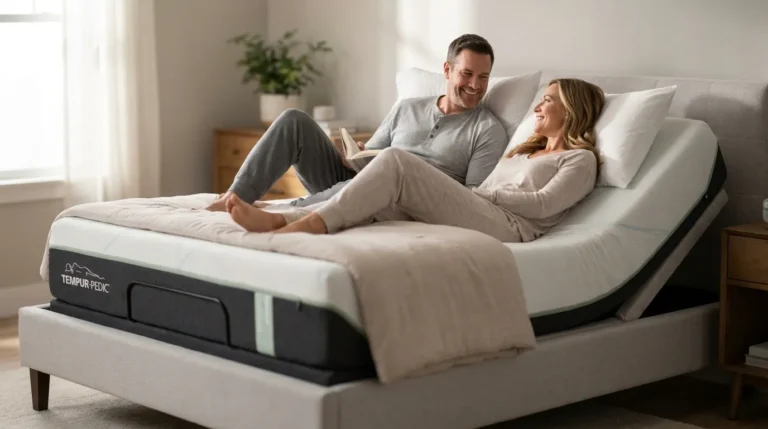
Luxury adjustable bases with active lumbar support from brands such as Tempur-Pedic often carry a steep premium in Canada. Direct-to-consumer manufacturers that design, assemble, and deliver their own systems can offer similar features at lower prices by removing retail markup and extra logistics costs. For buyers in Ontario and Alberta, in-house white-glove delivery, where trained staff bring the base to the bedroom, assemble it, set leg height, walk through controls, and remove the old bed, removes most of the setup burden.
| Metric | Flat Beds | Basic Adjustable Bases | Advanced Lumbar-Equipped Systems |
|---|---|---|---|
| Lumbar curve maintenance | None | Partial (elevation only) | Active (independent lumbar pad) |
| Pain reduction evidence | Not supported | Limited (head and foot elevation only) | Supported in ergonomic intervention literature |
| Couple compatibility | Single shared surface | Split options limited, split queens less common | Independent split queen and king controls available |
| Motor noise | N/A | Variable, older models often audible | Whisper-quiet operation (see Split Configurations section) |
| Price relative to luxury brands | Lowest | Mid-range | Lower when purchased direct-to-consumer |
Frequently Asked Questions
Do doctors and chiropractors recommend adjustable beds for back pain?
Many chiropractors and family physicians recommend adjustable bases as a complementary tool for chronic lower-back pain. These recommendations often focus on zero-gravity positioning combined with lumbar support rather than elevation alone. Patients with specific diagnoses such as herniated discs, spinal stenosis, or recent surgery should confirm exact settings with their treating practitioner, because spinal conditions differ widely.
How loud are the motors on modern adjustable bases?
Motor noise varies by manufacturer and model tier. Budget and mid-range bases from general retailers often use motors that hum or click during movement, which can wake a light sleeper. Premium adjustable bases use the whisper-quiet motors described earlier, which operate below the noise level of a normal conversation. When you compare bases, ask for the motor’s decibel rating at full load and request a live demonstration whenever possible.
Can mattresses buckle on adjustable bases with lumbar support?
Mattress buckling occurs when the mattress cannot flex at the base’s articulation points, including the lumbar pad zone. Traditional innerspring mattresses with rigid coil systems face the highest risk. All-foam mattresses and hybrid pocket-coil mattresses built for adjustable bases flex more easily and resist structural damage.
To avoid buckling, confirm that the mattress is rated as adjustable-base compatible by the manufacturer. Also check that the mattress thickness falls within the range recommended for your base model, usually 25 to 35 centimetres.
Are adjustable bases with lumbar support suitable for sleep apnea patients?
Head elevation between 30° and 45° is widely used as positional therapy for mild to moderate obstructive sleep apnea because it reduces soft tissue collapse into the airway. Lumbar support does not directly change airway openness but improves overall comfort. Better comfort helps patients maintain the elevated head position through the night instead of sliding flat.
Patients using CPAP therapy can pair it with an adjustable base. The elevated head position can improve mask seal in some setups. People with moderate to severe sleep apnea should treat positional therapy as a complement to prescribed medical care, not a replacement.
Conclusion
Flat beds and basic adjustable bases share a key limitation. Neither maintains the lumbar curve that the lower spine needs during sleep. Adjustable bases with active lumbar support, used with zero-gravity positioning, address this problem directly and are associated with reductions in lower-back pain in ergonomic research. For Canadian couples managing different pain levels and sleep preferences, split configurations with independent lumbar controls solve many compatibility issues without separate bedrooms.
Leva Sleep’s adjustable bed systems combine active lumbar control, the whisper-quiet motors detailed above, split queen and king configurations, and app-based micro-adjustment in a direct-to-consumer model that can deliver 30–50% lower pricing than comparable luxury brands. In-house white-glove delivery across Ontario and Alberta further simplifies setup for larger adjustable bases.