
Written by: Matthew Timmins, Founder and Managing Director, Leva Sleep | Last updated: July 18, 2026
Key Takeaways
- Magnesium glycinate and magnesium L-threonate are the two best-supported forms for sleep, with evidence from a 2025 RCT showing glycinate reduces insomnia severity.
- The evidence-based dose is 250–350 mg elemental magnesium taken 30–60 minutes before bed, staying within the NIH upper limit of 350 mg supplemental magnesium daily.
- Benefits usually appear after two to four weeks of consistent use and are most pronounced in people with low baseline magnesium intake.
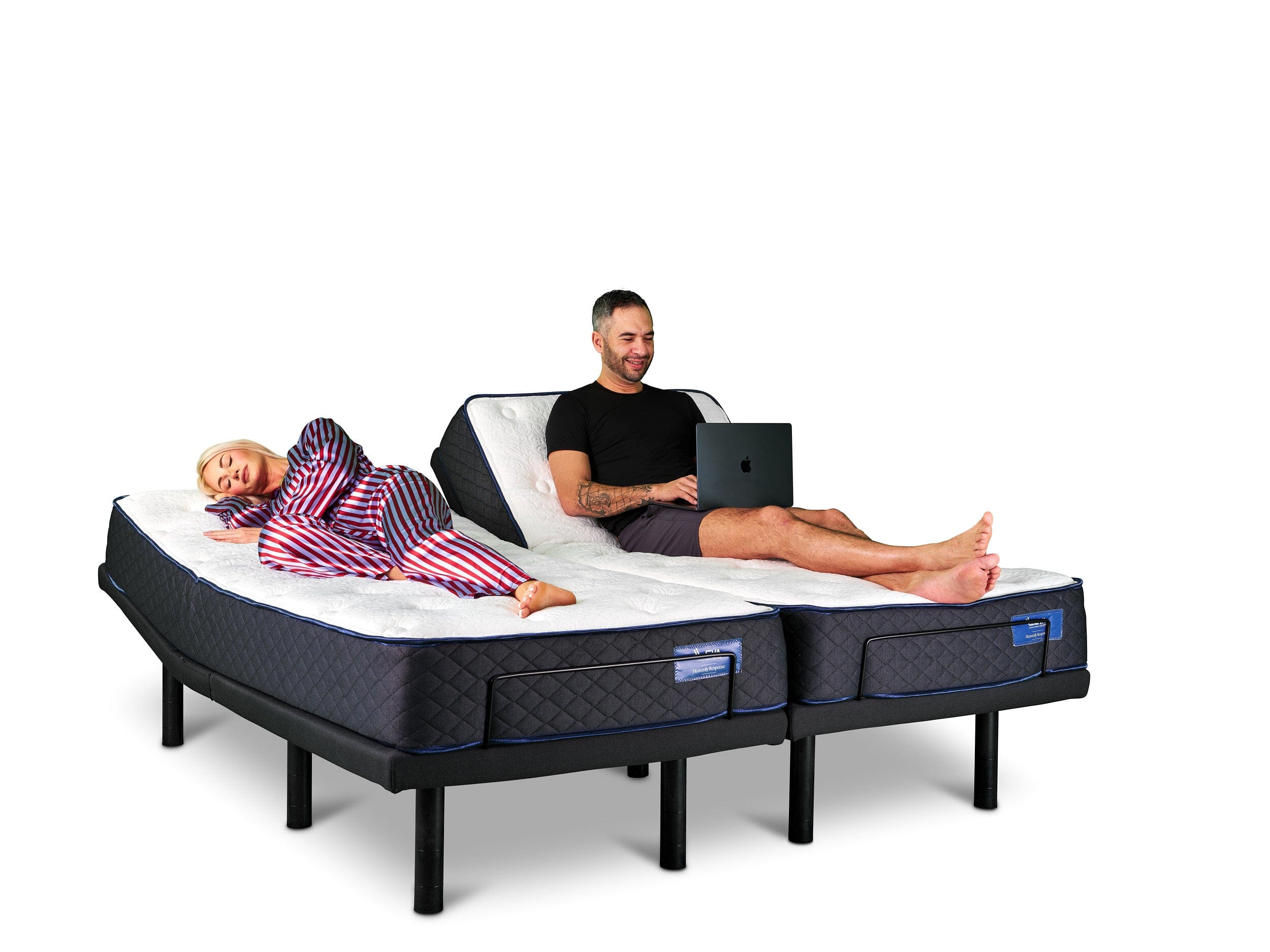
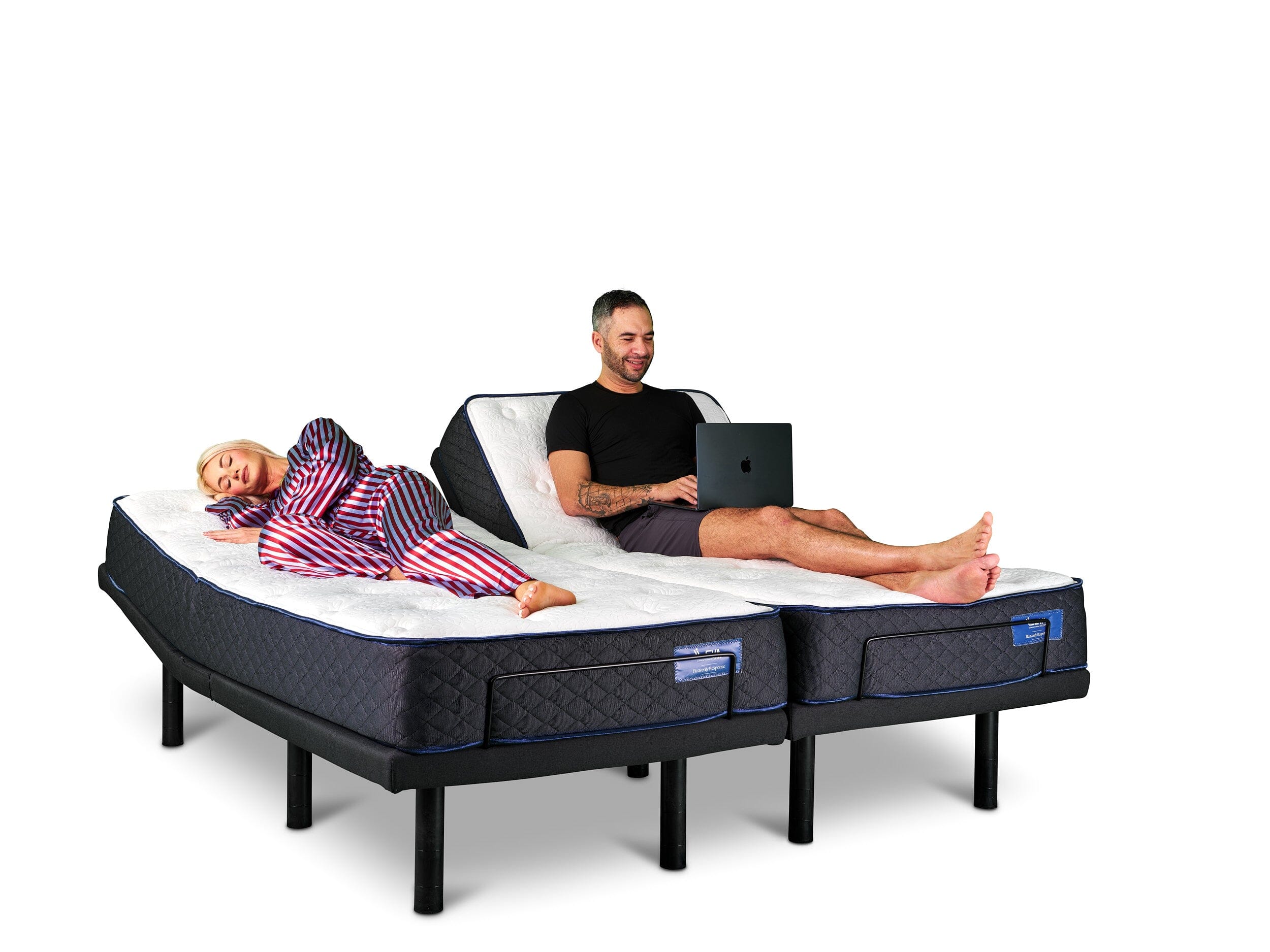
- Magnesium supports the brain chemistry of sleep, while snoring, firmness, and temperature differences need a structural solution such as an adjustable bed.
- Leva Sleep’s split adjustable systems provide that structural solution, with independent control for each partner; shop Leva Sleep’s adjustable bed packages to complete your sleep environment.
Best Magnesium Forms for Sleep: Glycinate vs L‑Threonate vs Oxide
Not all magnesium supplements work the same way. The form determines how much elemental magnesium reaches your bloodstream and, ultimately, your brain. Three forms dominate the sleep conversation in 2026: glycinate, L-threonate, and oxide. The table below compares them on the criteria that matter most for sleep.
| Form | Elemental Mg per typical dose | Absorption notes | Sleep-specific benefits |
|---|---|---|---|
| Magnesium glycinate (bisglycinate) | ~250 mg elemental per 1,786 mg bisglycinate | Well-tolerated with minimal GI side effects | Dual mechanism: magnesium potentiates GABA-A receptors, and the glycine component acts as an inhibitory neurotransmitter and lowers core body temperature |
| Magnesium L-threonate (Magtein) | Magnesium L-threonate (Magtein) provides approximately 144 mg elemental magnesium per 2 g | Crosses the blood-brain barrier more effectively than other forms, developed specifically to elevate cerebrospinal fluid magnesium | A 2024 RCT (n=80) reported benefits in objective and subjective sleep metrics versus placebo over 21 days |
| Magnesium oxide | High elemental content per tablet (~60%) | ~4% bioavailability, most passes through the GI tract unabsorbed | Weak evidence for sleep outcomes, primarily acts as a laxative and is not recommended for sleep support |
Magnesium glycinate is the only form with an independently funded positive RCT specifically designed for sleep outcomes (Schuster 2025). This trial is why glycinate ranks highest on evidence-based rubrics that weigh RCT quality, bioavailability, safety, and mechanistic plausibility. L-threonate is a reasonable second choice for couples who care most about deep sleep architecture and daytime cognitive functioning. It costs more and delivers less elemental magnesium per dose. Oxide is available at every Canadian drugstore but does not provide meaningful sleep support.
In Ontario and Alberta, magnesium glycinate and L-threonate are widely available at retailers such as Costco, Shoppers Drug Mart, and Natural Food Pantry, as well as through Canadian online supplement retailers. Look for products bearing NSF, USP, or CL third-party certification to confirm that label claims match actual contents.
Magnesium Dosage for Adults and How It Supports Sleep
Magnesium supports sleep by calming the nervous system through several connected pathways. First, it potentiates GABA-A receptors and blocks NMDA receptors, which together reduce neural excitability and excitatory glutamate signalling. This calmer state supports the next step, where magnesium serves as a cofactor in the enzymatic conversion of serotonin to melatonin. Magnesium also suppresses cortisol secretion via the hypothalamic-pituitary-adrenal axis. The net effect is a nervous system that is biochemically better positioned to transition into slow-wave sleep.
Research on dosing shows a consistent pattern:
- The Schuster et al. 2025 RCT used 250 mg elemental magnesium as bisglycinate daily and produced a statistically significant greater reduction in Insomnia Severity Index scores versus placebo.
- A 2021 systematic review and meta-analysis in BMC Complementary Medicine and Therapies of three RCTs (151 older adults) found magnesium supplementation reduced sleep onset latency by approximately 17 minutes.
- A 2024 RCT found that magnesium L-threonate at 1 g/day for 21 days produced objective improvements in sleep measured by Oura Ring.
- In a placebo-controlled crossover study of older adults, three weeks of magnesium supplementation increased slow-wave sleep and lowered cortisol output during sleep.
The practical recommendation supported by the Schuster 2025 trial and the NIH supplemental upper limit is 200–350 mg elemental magnesium as glycinate or bisglycinate taken 30–60 minutes before bed. Effects on sleep architecture usually appear over two to four weeks rather than overnight. Starting at 200 mg and increasing to 350 mg if needed is a conservative approach that reduces GI side effects.
Sleep-Related Signs You May Need More Magnesium
Many Canadians fall short of recommended magnesium intake. Soil depletion and diets that rely less on leafy greens, nuts, and whole grains both contribute to this gap.
For couples aged 35–70, the sleep-relevant signs of suboptimal magnesium status include:
- Difficulty entering deep sleep, frequent waking between 2 a.m. and 5 a.m., and waking unrefreshed despite adequate hours in bed
- Muscle twitching, restless legs, or nocturnal cramps that fragment sleep
- Elevated nervous system arousal, the “wired but tired” state, driven by reduced GABA signalling and elevated evening cortisol
- A partner’s snoring that wakes you repeatedly, compounding the physiological disruption
The last point matters for couples specifically. When one partner snores and the other lies awake, both accumulate sleep debt regardless of magnesium status. Supplementation can support the neurochemical component, but it cannot reposition an airway or silence the noise. Leva Sleep’s split adjustable systems provide that complementary structural layer.
Shop Leva Sleep’s adjustable beds, independently controlled for each partner, with anti-snore mode and temperature regulation built in.
Nightly Magnesium Use and Safety Considerations
Daily use of magnesium glycinate is considered safe for most healthy adults indefinitely at 200–400 mg elemental magnesium, with no pharmacological tolerance, dependence, or rebound insomnia. A few checks help you use it safely.
- Kidney function: True magnesium toxicity (hypermagnesemia) from oral supplements is rare in healthy adults but is a genuine concern for those with kidney disease or reduced renal function. Adults with eGFR below 30 should not supplement without nephrologist approval.
- Drug interactions: Clinically significant interactions exist with fluoroquinolone antibiotics, bisphosphonates, and loop diuretics, and the FDA advises separating magnesium from fluoroquinolones and tetracyclines by at least 2–4 hours.
- Proton pump inhibitors: Long-term use of PPIs such as omeprazole and pantoprazole is linked to low magnesium levels, which may increase supplemental requirements, so discuss this with a pharmacist.
- Upper limit: The Food and Nutrition Board recommends adults take no more than 350 mg of magnesium from supplements per day to avoid diarrhea, nausea, and abdominal cramps.
Ontario and Alberta sourcing tip: Choose products with NSF International or USP certification. Both marks appear on Canadian retail shelves and confirm that the elemental magnesium content matches the label. This matters because the FDA regulates supplements as food rather than drugs, which results in less standardisation of ingredients and doses.
Realistic Expectations and Limitations of Magnesium for Sleep
The evidence for magnesium as a sleep aid is real but modest. The effect size in the best-designed glycinate trial is Cohen’s d=0.2, which is statistically significant but not transformative. A 2023 systematic review by Arab et al. in Biological Trace Element Research analysed nine studies involving 7,582 participants and found that observational data linked higher magnesium status to better self-reported sleep quality, while randomised controlled trials produced contradictory results. Benefits appear strongest in people with low baseline dietary magnesium intake. Evidence for magnesium improving sleep in healthy, non-deficient younger adults is substantially weaker. Plan on two to four weeks of consistent use before deciding whether the supplement helps you.
Step-by-Step Nightly Routine: Magnesium Plus Adjustable Positioning
A simple two-layer nightly routine can address both the neurochemical and positional sides of disrupted couple sleep.
- 60 minutes before bed: Take 250–350 mg elemental magnesium glycinate with a small amount of food to reduce GI sensitivity. Dim lights and reduce screen exposure so your environment matches the supplement’s wind-down effect.
- 30 minutes before bed: Open the Leva Sleep app and set each partner’s preferred head elevation. For the snoring partner, Leva’s anti-snore mode detects snoring and makes small adjustments to head elevation to open the airway without waking either partner.
- At bedtime: Each partner adjusts their side’s temperature via Leva’s integrated heating and cooling pad. Magnesium’s muscle-relaxation effect and glycine’s core-body-temperature-lowering action work in the same direction as the bed’s temperature regulation.
How Magnesium Pairs With Leva Adjustable Beds
Magnesium glycinate at 200–400 mg elemental magnesium is well-supported for sleep partly because glycine lowers core body temperature, which is the same physiological signal that triggers sleep onset. Leva Sleep’s temperature regulation layer reinforces this effect mechanically by allowing each partner to set an independent microclimate. At the same time, magnesium’s GABA potentiation reduces muscle tension, which complements the head-elevation feature that physically opens the airway for snorers. These interventions do not duplicate each other. The supplement works at the receptor level, and the adjustable base works at the positional and thermal level. Together they address the main reasons Canadian couples aged 35–70 lose sleep.
Leva’s Split Queen and Split King configurations give each partner independent control of elevation, firmness, massage, and temperature. This is the only Canadian-assembled split adjustable system available at 30–50% below comparable luxury competitors. Shop Leva Sleep’s adjustable beds and find the configuration that fits your bedroom.
Common Magnesium Sleep Mistakes to Avoid
- Choosing magnesium oxide because it is inexpensive, even though its ~4% bioavailability makes it a poor sleep intervention.
- Taking magnesium on an empty stomach at doses above 200 mg, which increases the risk of loose stools.
- Expecting results within the first few nights, even though supplementation trials for sleep show effects after a minimum of 21–28 days.
- Exceeding 350 mg elemental magnesium from supplements without medical supervision.
- Combining magnesium glycinate and L-threonate without first consulting a doctor, as noted by neuroscientist Chelsie Rohrscheib, PhD.
- Ignoring the positional and acoustic causes of disrupted couple sleep, because supplementation alone cannot stop a partner’s snoring from waking you.
When to Talk With Your Doctor
Consult a physician before starting nightly magnesium supplementation if any of the following apply:
- Diagnosed kidney disease or eGFR below 60
- Current use of fluoroquinolone or tetracycline antibiotics, bisphosphonates, loop diuretics, or digoxin
- Long-term proton pump inhibitor use
- Cardiovascular conditions including bradycardia or irregular heart rhythms
- Diabetes or gastrointestinal disease
- Suspected chronic insomnia, because the American Academy of Sleep Medicine clinical practice guideline explicitly recommends against using magnesium or any over-the-counter preparation for chronic insomnia treatment
FAQ
What is the best magnesium for sleep in Canada?
Magnesium glycinate (bisglycinate) is the most evidence-supported form available in Canada for sleep. It combines high bioavailability with a dual mechanism, where magnesium potentiates GABA-A receptors and the glycine component acts as an inhibitory neurotransmitter that lowers core body temperature. As noted earlier, the 2025 Schuster trial provides the strongest evidence for glycinate, using 250 mg elemental magnesium daily in the only sleep-specific independent RCT. Magnesium L-threonate is a reasonable alternative for people who prioritise deep sleep architecture and daytime cognitive function, although it costs more and delivers less elemental magnesium per dose. Both forms are available at major Canadian retailers including Shoppers Drug Mart, Costco, and online supplement stores. Choose products with NSF, USP, or CL third-party certification to ensure label accuracy.
How much magnesium should I take for sleep?
The evidence-based range is 200–350 mg of elemental magnesium daily, taken 30–60 minutes before bed, as discussed in the dosing section above. The 2025 Schuster et al. trial used 250 mg elemental magnesium and produced statistically significant improvements in insomnia severity scores. This range aligns with the NIH upper limit for supplemental magnesium, which aims to minimise GI side effects. Starting at 200 mg with food and increasing gradually suits most adults aged 35–70. Elemental magnesium content differs from the total weight of the supplement compound, so a label reading “1,786 mg magnesium bisglycinate” typically provides approximately 250 mg of elemental magnesium. Always check the elemental amount on the supplement facts panel.
Is it safe to take magnesium every night for sleep?
For most healthy adults, nightly magnesium glycinate at 200–350 mg elemental magnesium is considered safe for long-term use, as long as kidney function and medications are reviewed. Clinical data show no tolerance, dependence, or rebound insomnia at these doses. The main risks involve the gut, with loose stools more likely at higher doses or with poorly absorbed forms like oxide. Adults with kidney disease or reduced renal function face a real risk of magnesium accumulation and should only supplement under medical supervision. Significant drug interactions with common medications in adults 35–70 also warrant a pharmacist or physician review.
Can magnesium supplements fix snoring or help couples share a bed?
Magnesium supplementation supports the neurochemical side of sleep disruption by reducing arousal, supporting GABA signalling, and promoting muscle relaxation. It does not correct the positional or acoustic causes of snoring. Snoring occurs when soft tissue in the airway partially obstructs airflow during sleep, which responds to head elevation rather than supplementation. For couples where one partner snores, magnesium may deepen the snorer’s sleep, but the partner being woken by noise still faces an unresolved problem. A split adjustable bed with independent head elevation and anti-snore mode addresses the structural cause directly and allows both partners to stay in the same bed with personalised settings. The most effective approach combines nightly magnesium for its neurochemical benefits with a split adjustable system for positional and temperature control.
Conclusion: Pair Magnesium With Structural Sleep Support
Evidence in 2026 supports a two-layer approach to sleep for Canadian couples. Magnesium glycinate at 250–350 mg elemental magnesium, taken 30–60 minutes before bed, is the best-supported supplement for reducing sleep onset latency and insomnia severity, especially for the many Canadian adults who fall below recommended dietary magnesium intake. Results build over two to four weeks and are most pronounced in those with low baseline intake. This supplement layer addresses the neurochemical side through GABA potentiation, cortisol suppression, melatonin synthesis, and muscle relaxation.
The structural layer, which includes snoring, mismatched temperature preferences, and differing firmness needs, calls for a different solution. Leva Sleep’s split adjustable systems are designed for Canadian couples who want to share a bed without sacrificing either partner’s sleep. With independent controls, whisper-quiet German motors, anti-snore mode, integrated temperature regulation, and white-glove delivery across Ontario and Alberta, Leva delivers a luxury sleep system at 30–50% less than comparable competitors.
Shop Leva Sleep’s adjustable beds and build the complete sleep environment your relationship deserves.