Written by: Matthew Timmins, Founder and Managing Director, Leva Sleep | Last updated: July 22, 2026
Key Takeaways for Canadian Couples
- Natural latex mattresses are made from Hevea brasiliensis rubber tree sap and offer long-term durability, often lasting 15–25 years.
- Dunlop latex provides firmer, denser support for back and stomach sleepers, while Talalay latex offers softer, more breathable comfort for side sleepers.
- GOLS and GOTS certifications verify organic content and confirm that a mattress meets strict purity and safety standards in Canada.
- Natural latex works very well on adjustable bases because it flexes easily without permanent creasing or sagging.
- Explore Leva Sleep’s split adjustable bases to pair natural latex with independent controls for each partner.
Dunlop vs Talalay Latex for Couples
Dunlop and Talalay latex both start with natural rubber, yet the manufacturing steps create noticeably different foams. Dunlop latex is poured into a mould and cured in a single pass, so heavier particles settle toward the bottom and form a denser, firmer foam. Talalay latex goes through vacuum expansion and flash-freezing before curing, which produces a lighter, more uniform, and more breathable cell structure.
The table below compares the two processes across the metrics most relevant to Canadian couples in 2026.
| Attribute | Dunlop | Talalay | Notes |
|---|---|---|---|
| Density | 4.6 lb/ft³ | Lower than Dunlop | Higher density means a firmer feel and greater compression resistance |
| Breathability | Good (pin-core ventilation) | ~30% more airflow | Both outperform memory foam for temperature neutrality |
| Expected lifespan | 20–25 years | 12–20 years | Dunlop’s density resists compression fatigue more effectively |
| GOLS organic eligibility | Yes | Possible with 95%+ natural content | Always verify the certificate number before purchasing |
| Best suited for | Back/stomach sleepers; support layers; heavier individuals over 90 kg | Side sleepers; pressure relief at hips and shoulders | Many premium mattresses combine a Dunlop core with a Talalay comfort layer |
| Typical queen price (Canada 2026) | $1,200–$3,500 | $1,800–$4,500 | Dunlop is approximately 30–40% less expensive than equivalent Talalay |
Couples with different sleep positions often do well on a mattress that combines a firm Dunlop support core with a softer Talalay comfort layer. Many premium latex mattresses use exactly this layered approach.
Discover Leva Sleep adjustable-base packages that pair well with layered natural latex designs.
Are Natural Latex Mattresses Good?
Natural latex ranks among the most durable mainstream mattress materials available today. All-latex mattresses using dense Dunlop cores often last 15–20+ years, compared to 7–10 years for memory foam and 5–8 years for traditional innerspring models. High-quality natural latex cores resist sagging and body impressions over long-term use.
From a health and allergen standpoint, natural latex foam is inherently resistant to dust mites and mould without any chemical treatment, because the material itself does not create the warm, moist conditions those organisms require. Latex foam mattresses are more resistant to dust mites than traditional standard mattresses.
Natural latex also produces no off-gassing, which suits scent-sensitive sleepers. Its open-cell structure provides pressure relief and responsive support at the same time, which helps couples managing hip or knee pain.
Disadvantages of a Latex Mattress
Natural latex mattresses come with a few trade-offs that couples should weigh against the benefits. Weight is a practical drawback. Natural latex is significantly heavier than memory foam or polyfoam, so rotation and repositioning require more effort. This matters for couples who rotate their mattress regularly to extend its lifespan.
Cost is the most common barrier. Premium GOLS organic-certified all-natural queen mattresses in Canada typically start in the $1,800–$4,000+ range and can rise higher for luxury organic brands. The per-night cost over a 15-year lifespan is competitive, yet the upfront investment remains higher than foam or innerspring alternatives.
A small percentage of the population (estimated at 1–6%) has a true latex allergy that can cause skin reactions or more severe symptoms upon contact with natural latex proteins. Anyone with a confirmed latex sensitivity or a history of reactions to rubber gloves should avoid natural latex mattresses and consider synthetic or memory foam alternatives.
Processing differences also affect value. In Canada and the United States there is no regulated definition of “natural latex,” so a mattress core can legally contain as little as 30% natural rubber and still carry that label. Without GOLS certification, buyers cannot verify the actual latex content they receive.
GOLS and GOTS Certification Checklist for Latex Mattresses
GOLS (Global Organic Latex Standard) and GOTS (Global Organic Textile Standard) work together to confirm organic integrity in natural latex mattresses. GOLS certifies the latex core, while GOTS certifies the finished textile components and, when applied to a finished mattress, verifies the organic status of the entire product.
The table below outlines what each certification requires and how it relates to adjustable-base performance.
| Criterion | GOLS | GOTS | Adjustable-Base Relevance |
|---|---|---|---|
| Minimum organic content | 95% certified organic latex by weight | 95% organic fibre (“Organic” label); 70–94% (“Made with Organic”) | Higher latex purity often correlates with better flexibility and flex-fatigue resistance on adjustable bases |
| What it covers | Latex core only; does not cover covers, fire barriers, or adhesives | Finished mattress construction including all textile components | GOTS-certified mattresses avoid chemical adhesives between layers, which helps layers stay aligned during repeated base articulation |
| Prohibited substances | Formaldehyde, heavy metals, phthalates, chlorinated compounds, synthetic polymers above 5% | Formaldehyde, toxic heavy metals, chlorine bleaching, azo dyes, chemical flame retardants, polyurethane foam | Lower chemical use reduces off-gassing risk in enclosed bedroom environments |
| Audit frequency | Annual third-party audits, with full supply-chain traceability | Annual independent audits covering the entire supply chain from farm to finished product | Ongoing audits help maintain consistent material quality across production runs |
| Synthetic latex permitted | No; blended latex containing any synthetic rubber cannot be GOLS certified | N/A (covers textiles, not latex) | 100% natural latex usually flexes more consistently than blended latex under repeated articulation cycles |
When you evaluate a mattress claim, look for a publicly searchable GOLS certificate number issued by an accredited body such as Control Union or ECOCERT. A GOLS scope certificate confirms that a brand purchased certified latex from specific facilities but does not verify the quantity used in specific products. Pairing GOLS with a GOTS finished-product certification offers stronger assurance.
Browse adjustable bed packages at Leva Sleep that are designed to work with premium materials such as natural latex.
Price Ranges in Canada 2026
Queen-size natural latex mattress pricing in Canada in 2026 spans a wide range based on latex content, processing method, and certification status. A practical breakdown for 2026 is as follows:
- $800–$1,200: Blended latex (natural/synthetic mix), often with only 2–3 inches of latex over foam or springs
- $1,200–$2,000: Quality natural latex hybrids or all-latex beds using Dunlop cores with Talalay comfort layers
- $1,800–$4,000+: Premium GOLS organic-certified all-natural construction
- $3,500+: Luxury organic brands, including Canadian manufacturers with full GOLS and GOTS certification
On a per-night basis, a $2,000 natural latex mattress lasting 15 years works out to approximately $0.37 per night, which is comparable to lower-cost foam alternatives that require replacement in 7–10 years.
Beyond the mattress price itself, delivery costs can add significantly to your total investment. Delivery realities vary by province. Retailers serving Ontario and Alberta typically offer standard threshold delivery or white-glove in-home setup for an additional fee. White-glove service, which includes bedroom placement, assembly, and removal of the old mattress, is worth factoring into the total cost comparison, especially for heavier all-latex constructions that are difficult to move without help.
How Natural Latex Performs on Adjustable Bases
Natural latex is one of the most adjustable-base-compatible mattress materials available. Its inherent elasticity allows it to flex repeatedly through head and foot elevation cycles without developing permanent creases or compression set. Because of Dunlop’s superior compression-fatigue resistance noted earlier, it makes an ideal support layer in adjustable-base configurations where repeated articulation creates long-term stress.
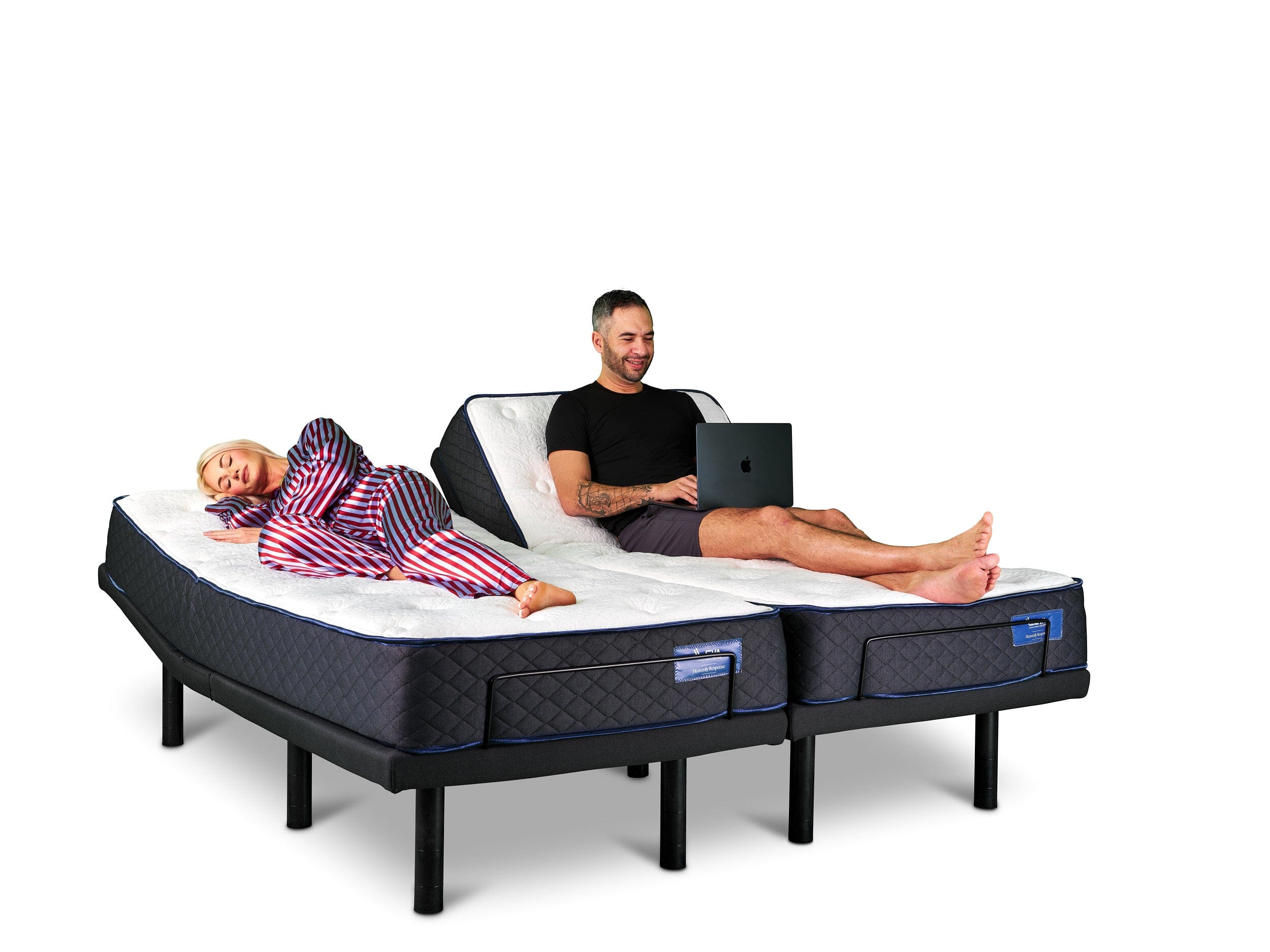
For couples using a split king or split queen configuration, natural latex provides strong motion isolation. Each side of the mattress responds independently to movement, and the material’s density absorbs rather than transfers motion across the sleep surface. This helps couples when one partner adjusts their position or elevation during the night.
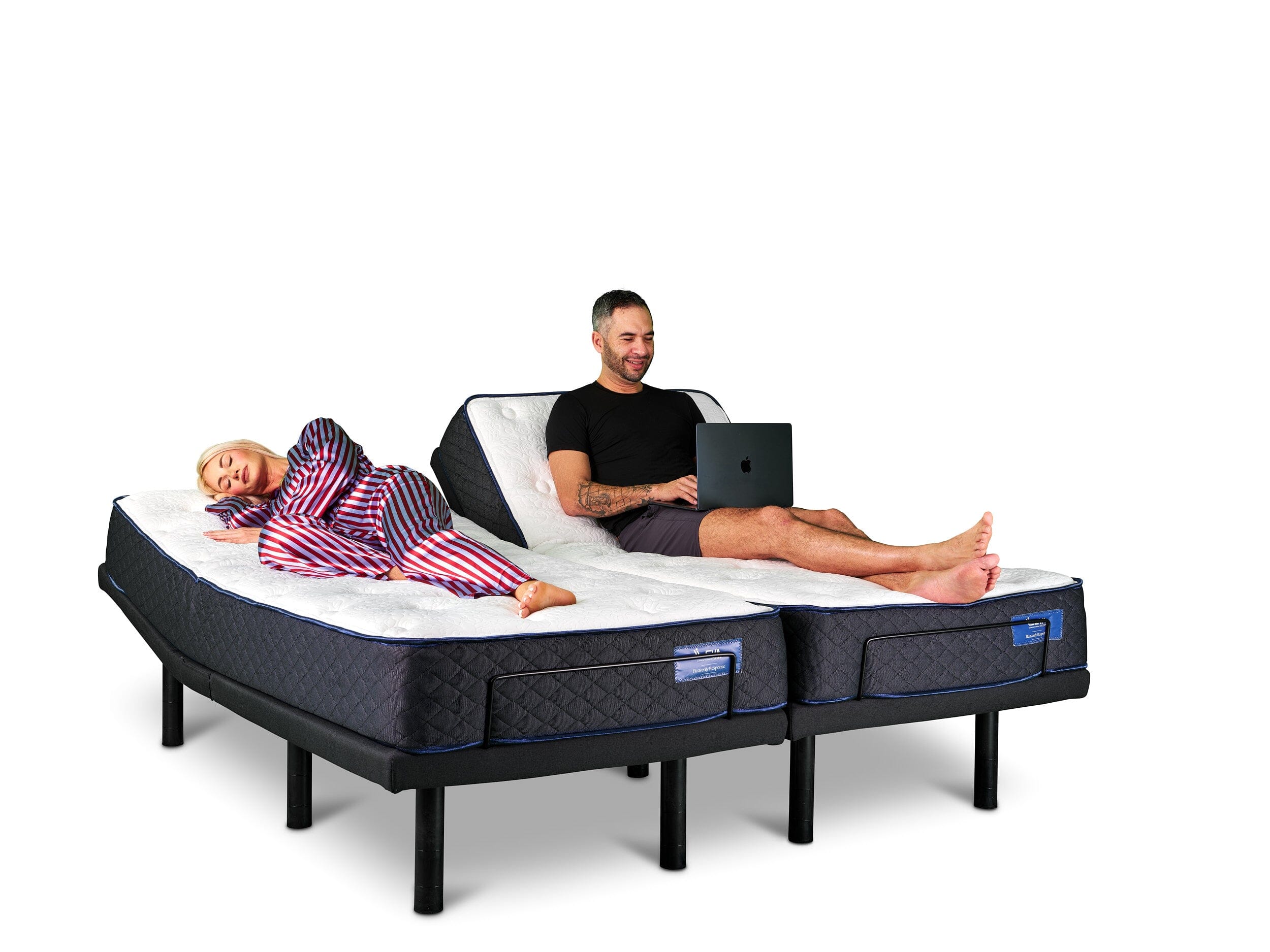
Temperature regulation on an adjustable base benefits from latex’s open-cell structure. Talalay latex allows approximately 30% more airflow than Dunlop, which helps when the head or foot of the base is elevated and airflow patterns around the mattress change. Edge support in all-latex constructions is generally firm enough to maintain sleeping surface integrity at elevated angles, though this varies by mattress thickness and ILD rating.
Couples should confirm that their chosen latex mattress is explicitly rated for adjustable base use by the manufacturer. Some thicker or multi-layer constructions include non-latex foam layers or rigid quilting that can restrict flex.
Bed Bugs and Dust Mites in Latex Mattresses
Latex foam mattresses are more resistant to dust mites than traditional standard mattresses. This resistance is intrinsic to the material: natural latex foam derived from Hevea brasiliensis sap is inherently resistant to dust mites and mould without any chemical treatment, because the material does not create the warm, moist microclimate those organisms require. Studies show that the majority of U.S. mattresses have measurable levels of dust mites, so material selection matters for allergy sufferers.
Natural latex from the Hevea brasiliensis tree contains compounds with documented antimicrobial and antifungal properties that suppress mould, bacteria, and dust mite populations compared with synthetic fills. As noted earlier, this resistance stems from latex’s intrinsic material properties rather than chemical treatments, which can degrade over time.
One important caveat remains for allergy risk. For the 1–6% of people with confirmed latex allergies mentioned earlier, synthetic latex and memory foam alternatives avoid the proteins responsible for allergic reactions. Anyone with a confirmed or suspected latex sensitivity should avoid natural latex mattresses and consult a physician before purchasing.
Who Should Consider Natural Latex
Natural latex mattresses suit couples with differing firmness preferences, especially when one partner is a side sleeper who needs pressure relief and the other is a back or stomach sleeper who needs firmer support. A mattress combining a Dunlop support core with a Talalay comfort layer can address both needs within a single construction.
Couples managing dust mite allergies, asthma, or general chemical sensitivities benefit from latex’s inherent hypoallergenic properties and the lack of off-gassing associated with GOLS-certified constructions. Those with hip or knee pain often appreciate latex’s pressure-relieving responsiveness, which adapts to body contours without the slow-recovery sink of memory foam.
Natural latex is less suitable for the following groups:
- Anyone with a confirmed latex allergy or sensitivity
- Buyers with a strict budget below $1,200 for a queen, where blended latex with limited natural content is the primary option
- Lightweight side sleepers under 70 kg who may find even softer Dunlop constructions too firm at the shoulders and hips
- Couples who prefer a slow-contouring, deeply hugging feel, since latex’s responsiveness and bounce differ from memory foam
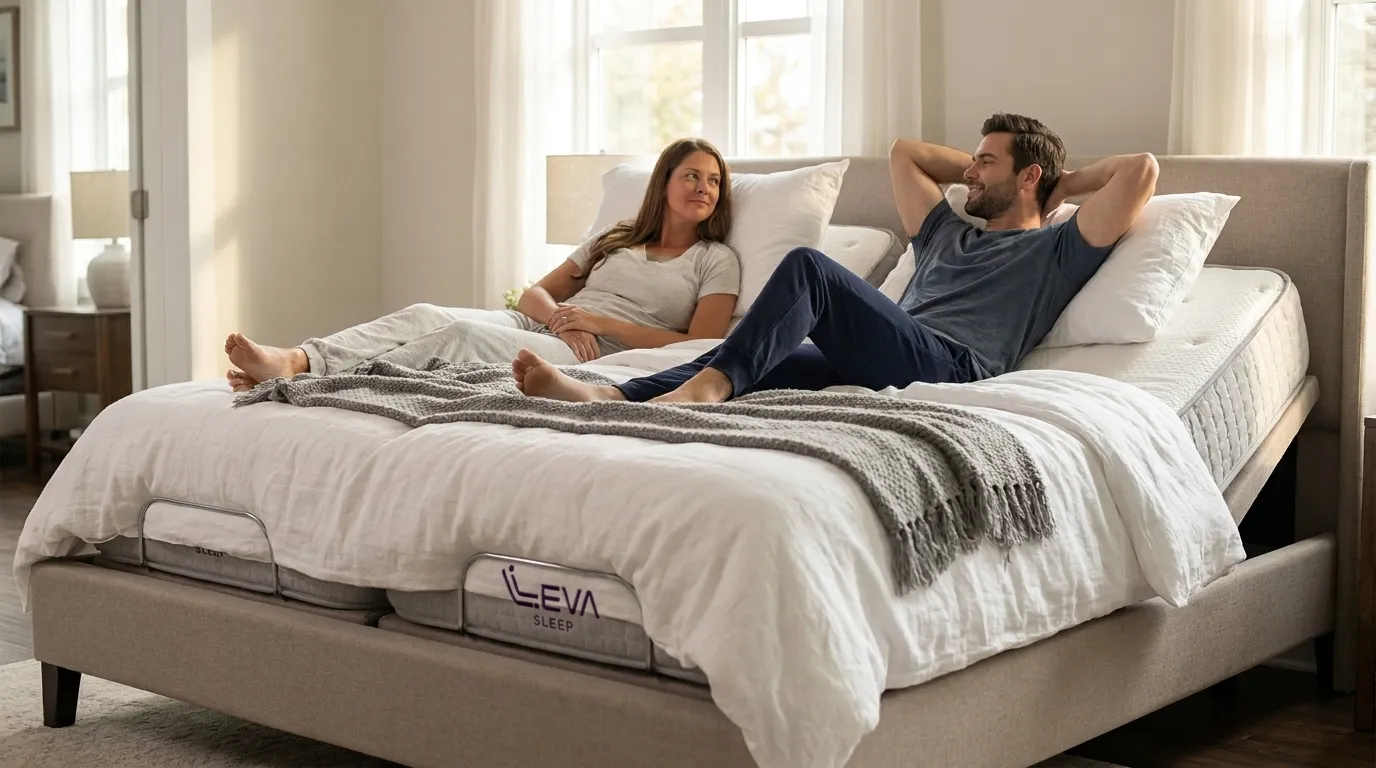
Couples in Ontario and Alberta who also need adjustable-base functionality for snoring, sleep apnea, acid reflux, or differing elevation preferences often find that a natural latex mattress paired with a split adjustable base delivers a durable and health-conscious setup in 2026.
Find your split queen or split king at Leva Sleep, with configurations tailored to couples who have different sleep needs.
FAQ
Are natural latex mattresses good for couples with different firmness preferences?
Natural latex mattresses work very well for couples with differing firmness needs. Many premium constructions combine a firm Dunlop support core with a softer Talalay comfort layer, which provides grounded support for back and stomach sleepers while easing pressure at the hips and shoulders for side sleepers. For couples who need fully independent firmness settings, a split adjustable base with individually controlled sides removes the need to compromise on a single firmness level. Natural latex’s responsiveness and motion isolation also mean that one partner’s movement is less likely to disturb the other compared with innerspring or lower-density foam alternatives.
Do bed bugs live in latex mattresses?
Bed bugs can inhabit any mattress surface because they are attracted to warmth and carbon dioxide rather than mattress material. However, natural latex’s dense, non-fibrous cellular structure provides fewer hiding spots than open-weave innerspring or fibre-filled mattresses. Natural latex is also inherently resistant to dust mites and mould due to its material properties, which differs from bed bug resistance. Using a certified mattress encasement over any mattress type remains the most effective mechanical barrier against bed bug infestation.
How do I verify that a natural latex mattress is genuinely certified?
The most reliable verification method is to request the GOLS certificate number and search it in the Control Union or ECOCERT public database. A valid GOLS certificate includes a certificate number, a defined validity period, and a precise scope indicating whether it covers only the latex material or the entire mattress. For finished-mattress organic claims, a GOTS certificate number should also be searchable in the GOTS public database. Be cautious of mattresses that reference certifications without providing verifiable certificate numbers, because the terms “natural” and “eco-friendly” are unregulated in Canada and can apply to products with minimal natural latex content.
Is a natural latex mattress compatible with an adjustable base?
Most natural latex mattresses are compatible with adjustable bases when the construction avoids rigid internal components or thick non-latex foam layers that restrict flex. All-latex constructions using Dunlop or Talalay cores are generally the most flexible and durable under repeated articulation cycles. Buyers should confirm adjustable-base compatibility directly with the mattress manufacturer and look for mattresses explicitly rated for use with adjustable frames. Thinner latex mattresses in the 8–10 inch range usually flex more easily than thicker 12–14 inch constructions, which matters for couples using significant head or foot elevation angles.
Conclusion: Natural Latex and Adjustable Bases for Canadian Couples
Natural latex mattresses provide a durable, allergen-resistant, and chemically low-impact sleep surface that supports a wide range of sleep positions and health needs. Evaluating a natural latex mattress in 2026 means looking closely at four core factors: processing method (Dunlop vs Talalay), certification status (GOLS for the latex core, GOTS for the finished mattress), Canadian pricing relative to latex content and construction, and adjustable-base compatibility for couples with differing elevation or firmness requirements.
Couples in Ontario and Alberta who want to share a bed while addressing snoring, differing firmness preferences, temperature regulation, or medical conditions such as sleep apnea often achieve strong results with a natural latex mattress paired with a split adjustable base. Leva Sleep focuses on this combination, offering split queen and split king adjustable bases with independent controls for each partner, quiet motors, and mattresses designed to flex and perform through years of adjustable-base use. With over 8 years of expertise, $50M in lifetime sales, and in-house white-glove delivery across Ontario and Alberta, Leva Sleep delivers a luxury-grade adjustable sleep system at 30–50% less than many comparable competitors.