
Written by: Matthew Timmins, Founder and Managing Director, Leva Sleep | Last updated: June 22, 2026
Key Takeaways for Sleeping with Neck Pain Tonight
- Neck pain from poor sleep alignment builds night after night, so quick position changes tonight help break the cycle.
- Targeted heat or ice, simple stretches, and the right pillow loft can ease neck pain quickly for back and side sleepers.
- Stomach sleeping twists the neck and should be phased out over several weeks with body pillows or the tennis-ball method.
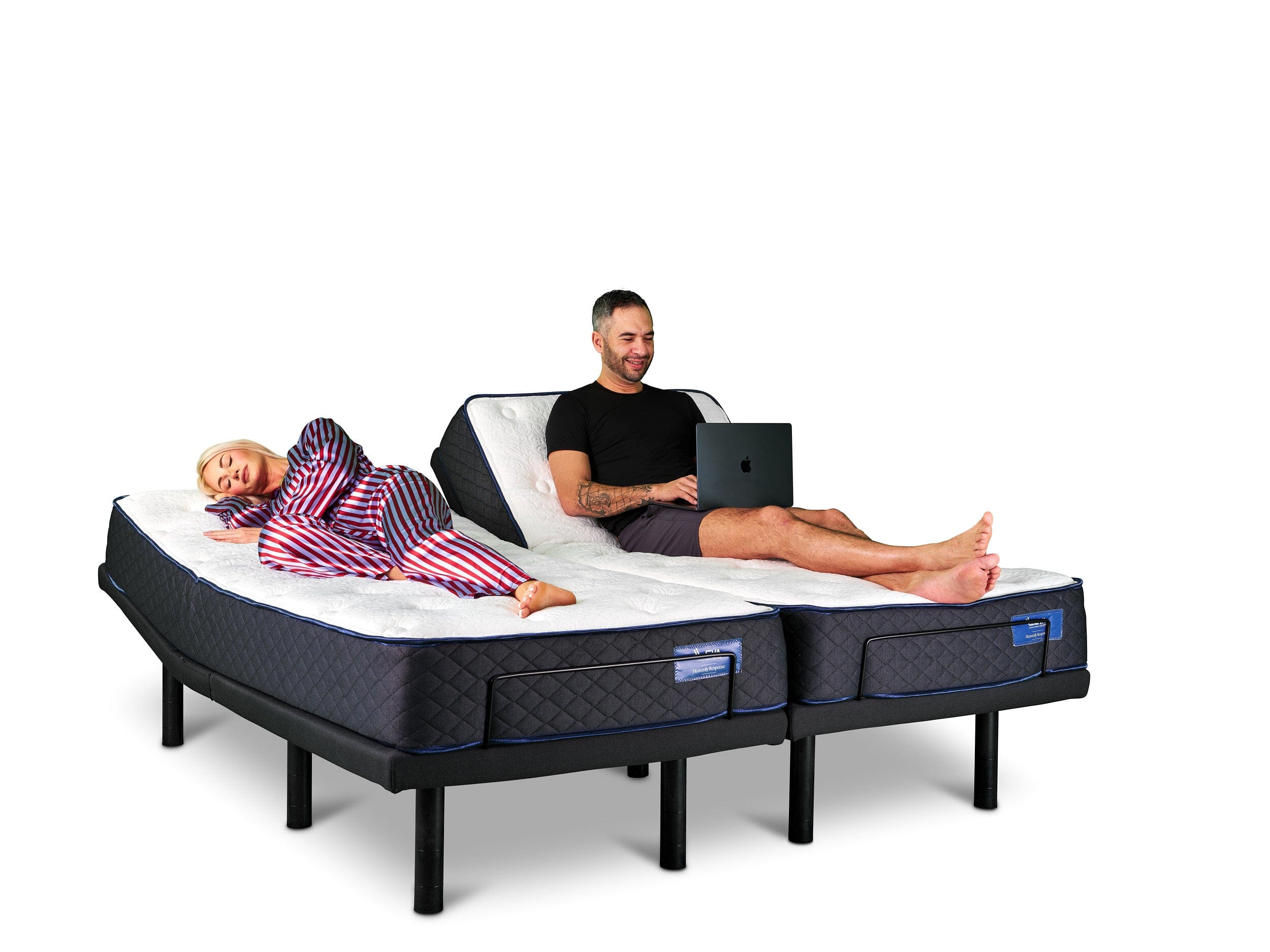
- A split adjustable base gives each partner independent head elevation, which creates the only lasting fix without compromise.
- Ready to reduce neck pain and stay in the same bed? Explore Leva Sleep adjustable bed packages for Canadian couples.
The Nightly Neck-Pain Cycle for Couples
Neck pain from sleeping compounds over time. Each night of poor alignment increases muscle tension, disc pressure, and nerve irritation, which makes the following night harder to manage. Consider how your sleep position affects neck comfort: stomach sleepers often report the highest daily neck pain because the position forces constant head rotation. Back sleepers typically experience less discomfort because the position allows a more neutral spinal alignment. These position-based differences explain why the same flat mattress can feel tolerable for one partner and painful for the other. For couples, the problem doubles: two people with different body types, sleep positions, and pain thresholds share one flat surface with no independent control. The seven steps below address both the immediate and structural causes of that cycle.
Step 1: Fast Tonight Relief with Heat, Ice, and Stretches
Reduce existing inflammation before you adjust your sleep position. Apply ice for the first 48 hours after acute pain onset to limit swelling. Once inflammation settles, heat becomes more effective because it increases blood flow and relaxes tight muscles. Applying high heat directly to a cold, tense neck can trigger muscle spasm instead of relief, so prepare the muscles first. Begin with slow chin-to-chest and ear-to-shoulder stretches, five repetitions on each side, before lying down with a low-heat pack. Gentle morning stretches can also help realign the spine and relieve tension accumulated overnight.
Common mistake: Placing a heat pad on maximum temperature immediately after waking with acute stiffness. Start at low heat for ten minutes, then increase gradually if needed.
Step 2: Back-Sleeping Alignment for Neck Relief
Back sleeping works well for many people with neck pain because it lets the head, neck, and spine settle into a neutral line and distributes weight evenly. Place a medium-loft contour pillow, about 3–5 inches thick, under the neck to support its natural curve without pushing the head forward. Add a small rolled towel under the neck if the pillow contour does not fully fill the cervical gap. Place a second pillow under the knees to gently flatten the lumbar curve and reduce lower-back strain. Avoid stacking multiple pillows, because that pushes the head into flexion and increases disc pressure.
Step 3: Side-Sleeping Alignment for Natural Side Sleepers
Many adults sleep on their side naturally, and with correct pillow support this position can maintain the natural curve of the neck. Aim for a straight line from ear to shoulder to hip when viewed from behind. Use a firm, high-loft pillow, about 4–6 inches thick, to fill the shoulder-to-head gap. Place a pillow between the knees to prevent the pelvis from rotating and pulling the lumbar spine out of alignment. For couples, a partner’s movement during the night often disrupts this posture. A split adjustable base with independent zones removes motion transfer so each person can maintain stable side alignment.
Step 4: Choosing the Right Pillow for Your Sleep Position
The pillow’s job is to keep the head aligned with the shoulders without bending the neck in any direction. Loft and material work together. A high-loft down pillow compresses under the weight of the head and loses its alignment benefit within minutes. A high-loft latex or memory foam pillow holds its shape and keeps support consistent. Pillow shape and height influence neck alignment more than material alone, and contoured memory foam or cervical pillows can reduce neck pain and improve sleep quality. The table below shows which loft range and material type work best for each sleep position so you can select a pillow that supports your neck tonight.
| Loft | Best For | Material |
|---|---|---|
| 3–5 inches (medium) | Back sleepers; combination back/side sleepers | Contoured memory foam or cervical latex |
| 4–6 inches (high) | Side sleepers; broader-shouldered individuals | Shredded memory foam or latex (adjustable fill) |
| Very thin or flat | Stomach sleepers transitioning away from the position | Soft, compressible foam or no pillow |
Adjustable pillows with removable shredded memory foam or latex fill let side sleepers customize loft and firmness so the neck and spine stay aligned without the pillow collapsing overnight. Leva Sleep’s accessory range includes pillows designed for adjustable base users, where head elevation changes how much loft you actually need.
See which Leva Sleep mattress and base combinations pair well with adjustable-fill pillows.
Step 5: How Stomach Sleeping Fuels Neck Pain
Stomach sleeping requires turning the head to one side to breathe, which twists the neck out of alignment with the spine and increases the risk of neck pain, headaches, and shoulder or arm pain. This position also flattens the spine’s natural curve, increases pressure on discs and joints, and can worsen chronic neck pain, herniated discs, or spinal stenosis.
Changing this habit takes consistency. Place firm pillows or a long body pillow on either side of the body to block rolling onto the stomach during the night. The tennis ball method, sewing a tennis ball to the back of a shirt between the shoulder blades, creates physical resistance that discourages rolling prone. Switching from stomach sleeping to another position may take up to four weeks, so plan for an adjustment period and track your progress.
Step 6: Pre-Bed Routine Checklist for Neck-Friendly Sleep
- Apply ice or a low-heat pack to the neck for 10 minutes before lying down.
- Complete five repetitions of chin-to-chest and ear-to-shoulder stretches.
- Confirm pillow loft matches your sleep position using the table in Step 4.
- Position a second pillow under the knees for back sleeping or between the knees for side sleeping.
- Place a body pillow alongside you if you are transitioning away from stomach sleeping.
- Set your side of the bed to your preferred elevation if you use an adjustable base.
- Confirm your partner’s side is independently set, so neither person has to compromise.
If you follow this checklist for two weeks and still wake with neck pain, or if your partner’s needs conflict with yours on a flat mattress, the problem likely comes from the surface itself rather than your technique.
Step 7: Moving from Pillows to a Split Adjustable Base
Pillows improve alignment on a flat plane, but they cannot change the angle of the sleeping surface. Slightly elevating the head section on an adjustable base relaxes the shoulder blades and reduces upper back and neck tension that flat sleeping cannot resolve. For upper back and neck pain, elevate the head section by about 30 degrees while keeping the feet relatively flat, and stop before the chin is pushed toward the chest.
Orthopedic physical therapist Karena Wu, P.T., D.P.T., notes that adjustable beds help people with chronic back and neck pain, respiratory issues, digestive issues, and circulatory issues. For couples, the key feature is independent control. A split adjustable base lets each partner adjust head and foot angles separately, which suits couples with different neck or back pain needs.
Leva Sleep’s split Queen and King adjustable bases are built for this scenario. Each side operates independently through whisper-quiet German motors and the Leva Sleep app. One partner can elevate to about 30 degrees for neck relief while the other sleeps flat, with zero motion transfer and no negotiation. Leva Sleep’s direct-to-consumer model prices these systems 30–50% below comparable luxury competitors and keeps support in-house from purchase through setup.
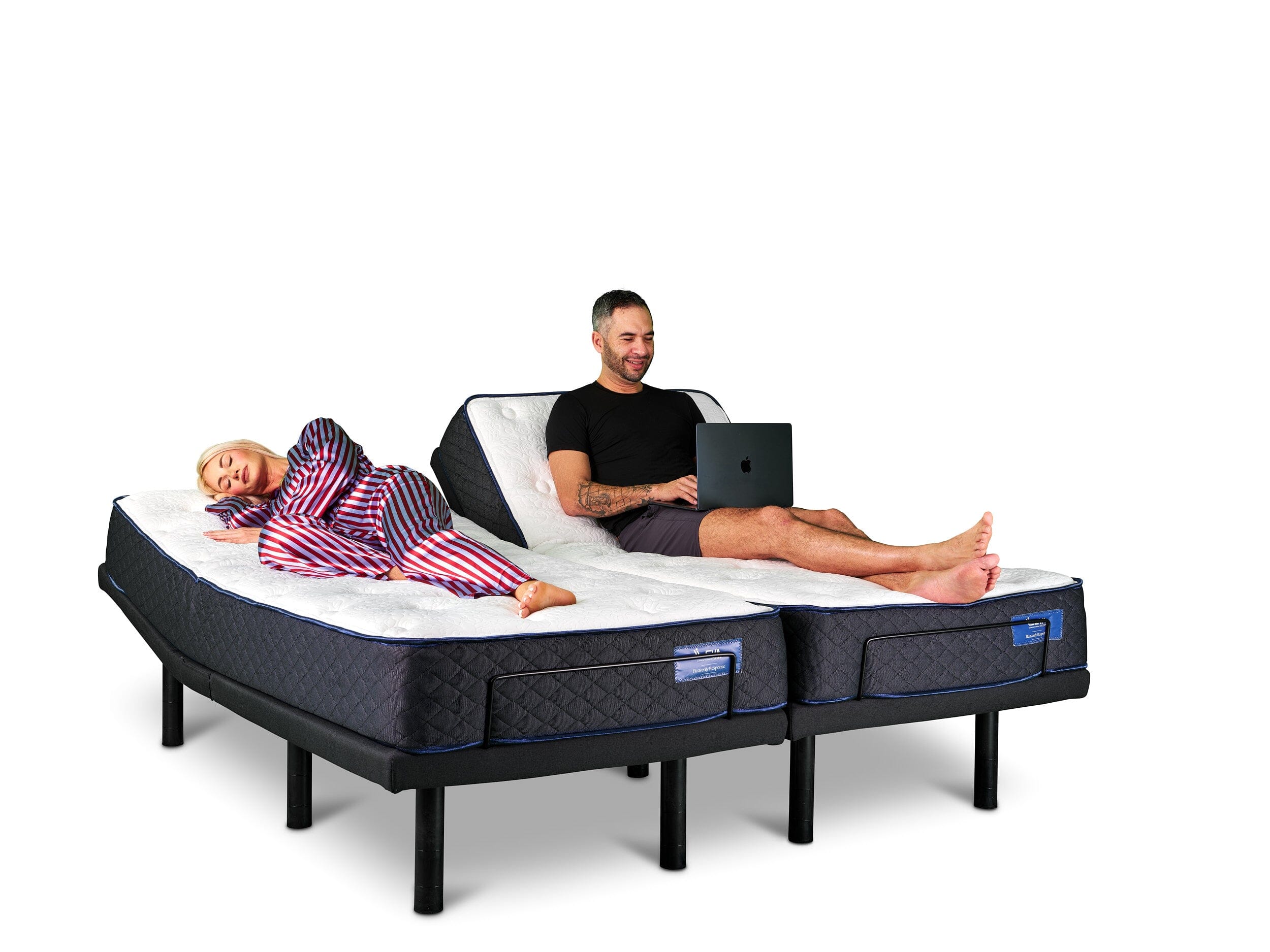
Compare Leva Sleep split Queen and King bases with independent controls.
What Success Looks Like After Applying All Seven Steps
Consistent position correction, combined with an adjustable base when needed, usually changes outcomes within two to four weeks. Typical results include waking without cervical stiffness, regaining full range of head rotation by mid-morning, and both partners remaining in the same bed through the night. The absence of “sleep divorce,” where one partner moves to the couch or a spare room, becomes a clear health and relationship gain.
Advanced Features for Complex Sleep Needs
Leva Sleep’s higher-tier bases add tools for more complex situations. These models include lumbar control for precise lower-back support that works independently of head elevation. A pillow tilt motor adjusts only the uppermost section of the head zone for fine cervical tuning. Anti-snore mode detects snoring and makes small head-of-bed adjustments without waking either partner. A heating and cooling pad helps couples with different temperature preferences, and AI-powered sleep tracking enables real-time micro-adjustments throughout the night. These features turn the sleep system from a passive surface into an active health tool for adults in the 35–60 age range managing several sleep concerns at once.
Frequently Asked Questions
Can a split adjustable base work for couples with very different sleep needs?
Yes. As explained in Step 7, each side of a split Queen or split King base operates independently, so the partner with neck pain can find their ideal elevation while the other sleeps flat. Both sides run through the Leva Sleep app with zero motion transfer. Leva Sleep designs every product for couples with differing needs, and this configuration sits at the centre of their lineup.
Does Leva Sleep deliver and set up adjustable beds in both Ontario and Alberta?
Leva Sleep’s white-glove delivery service covers both Ontario and Alberta. The service includes delivery to the bedroom, full assembly of the adjustable base and mattress, leg height adjustment, a complete product tutorial, and removal of the old bed through donation or recycling. This work is handled by trained Leva Sleep professionals rather than a third-party courier, and a fee applies for white-glove delivery.
What type of mattress works best with a Leva Sleep adjustable base for neck pain?
Leva Sleep offers both all-foam and hybrid pocket-coil mattresses designed to flex with adjustable bases without damaging the core or losing support. For neck pain, spine specialists usually recommend a medium-firm mattress because it supports spinal alignment without creating pressure points. Leva Sleep also carries mattresses from partner brands including Tempur-Pedic, Simmons, Beautyrest, Serta, and Kingsdown, all compatible with Leva’s adjustable bases. A Leva Sleep specialist can match the right mattress to your sleep position, body type, and preferred elevation range.
How do I maintain a Leva Sleep adjustable base over time?
Leva Sleep’s bases use whisper-quiet German motors engineered for long-term durability. Routine maintenance involves keeping the area under the frame clear of objects that could block movement, checking cable connections periodically, and updating the Leva Sleep app when firmware updates appear for features such as anti-snore mode and sleep tracking. Leva Sleep’s direct-to-consumer model gives customers direct access to the support team instead of routing issues through a retailer.
Conclusion: From Tonight’s Fixes to a Long-Term Solution
Pillow selection and position correction give fast, low-cost relief for neck pain and can start tonight. These steps work within the limits of a flat, static surface. When those limits become the main barrier, such as when one partner’s ideal elevation conflicts with the other’s or when a flat mattress cannot hold the cervical angle a physio recommends, a split adjustable base becomes the practical long-term answer. Leva Sleep has spent over eight years and served more than 25,000 Canadian customers building that system: independent, app-controlled, whisper-quiet, and priced well below many luxury competitors while delivering the pricing advantage mentioned earlier without sacrificing performance. Both partners stay in the same bed. Both sleep in neutral alignment. Neither has to compromise.
Find your split-base solution and end neck pain compromise tonight.