Written by: Matthew Timmins, Founder and Managing Director, Leva Sleep | Last updated: July 15, 2026
Key Takeaways for Canadian Couples
- Shared beds often disrupt Canadian couples’ sleep through snoring, temperature differences, and mismatched schedules, which can push partners into separate rooms.
- A daily schedule split into morning, midday, afternoon, and evening blocks helps anchor circadian rhythms, build sleep pressure, and support deep, restorative sleep.
- Consistent wake times, morning light, timed exercise, and an evening wind-down routine are evidence-based habits that improve sleep quality for partners aged 35–70.
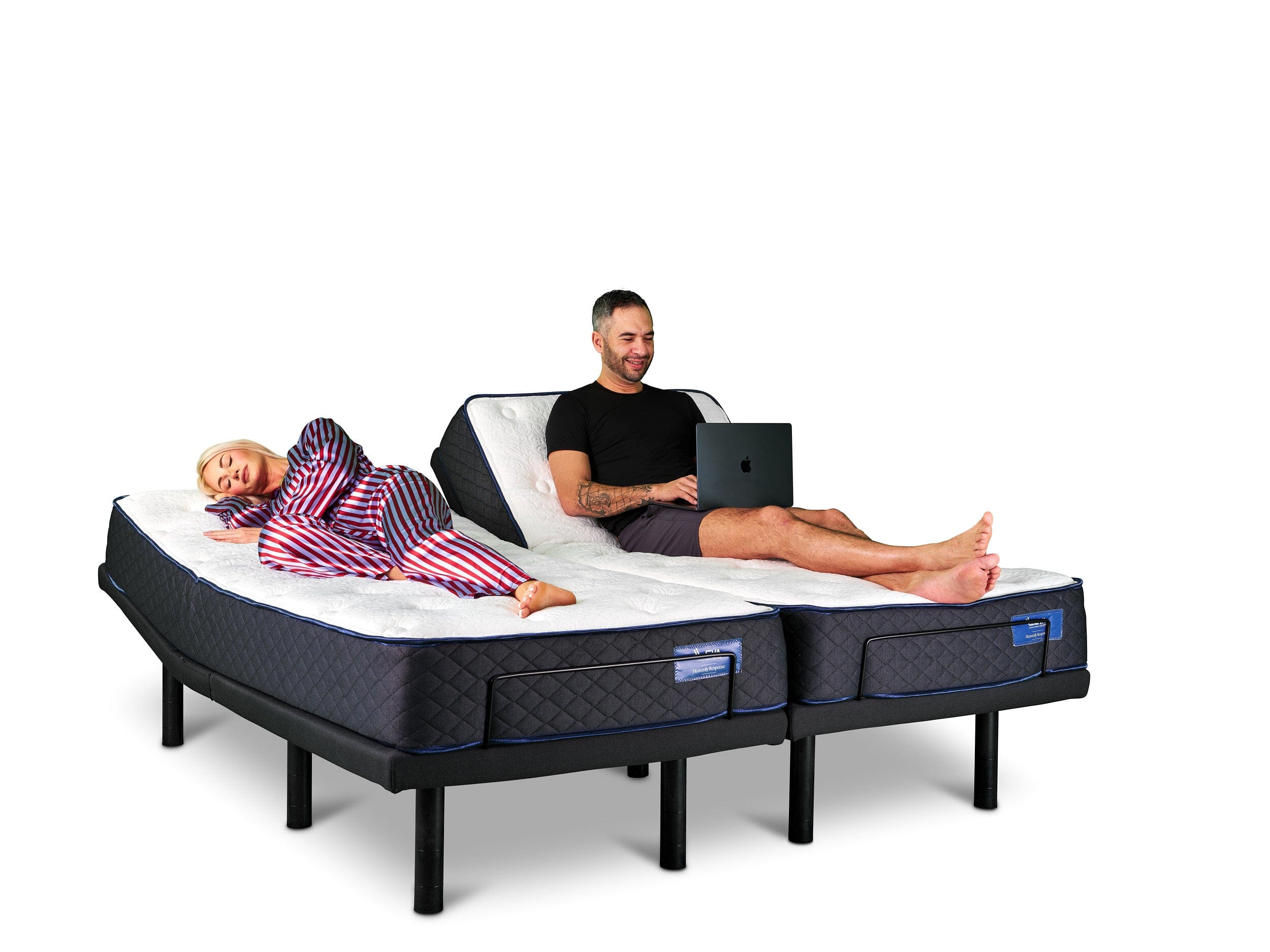
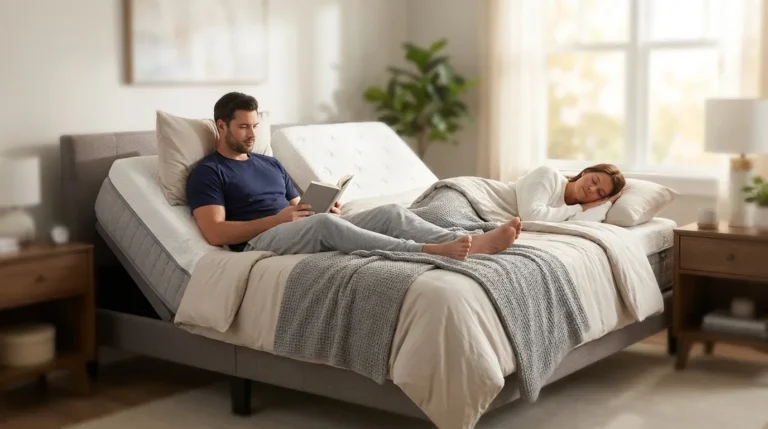
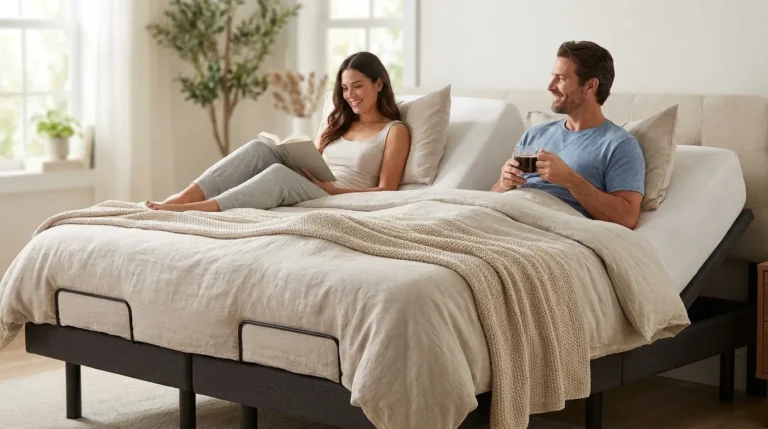
- Adjustable bases with independent controls on each side remove the need to compromise on position, temperature, or elevation so both partners can follow the same schedule.
- Leva Sleep offers split adjustable bed packages designed for couples with different needs. Explore split-base options that keep both partners in the same bed.
Morning Block: Lock In Your Wake Time and Light (6:00–10:00 AM)
Consistent wake time, at the same time every day including weekends, stabilizes your circadian rhythm more effectively than changing bedtime alone.
- Set one fixed wake time and hold it seven days a week. A steady wake time helps your internal clock run on schedule and supports deeper, more predictable sleep.
- Get outdoor light soon after waking. Outdoor light within the first hour after waking can help with circadian realignment, and window glass blocks some of the relevant short-wavelength spectrum, making outdoor exposure substantially stronger than indoor light. In Canadian winters, a 10,000-lux light therapy lamp used within the first hour after waking is a well-researched alternative.
- Pair light with light movement. Morning light works best when bundled with physical movement such as walking and eating breakfast within roughly one hour of waking; this combination reinforces peripheral clocks in liver, gut, and muscle and reduces social jet lag.
- Avoid varying wake time by more than 30 minutes. Shifting wake time by no more than 30 minutes per day allows the circadian system to adjust without discomfort, as it shifts slowly.
Troubleshooting: inconsistent wake times. If one partner’s schedule varies due to shift work or travel, irregular wake times disrupt circadian rhythm and impair melatonin production efficiency in a manner comparable to jet lag. Each partner maintaining a personally consistent schedule works better than syncing to a shared but irregular time.
Leva Sleep’s app-controlled adjustable bases let each partner program a preferred morning position, such as gentle head elevation to ease into waking, without disturbing the other side of the bed. Explore split-base packages designed for couples with different morning routines.
Midday Block: Use Aerobic Movement to Build Sleep Pressure (11:00 AM–2:00 PM)
Morning or early afternoon aerobic exercise helps many people fall asleep faster by building sleep pressure at the right time of day.
- Complete 30–45 minutes of moderate aerobic activity such as brisk walking, cycling, or swimming between 11:00 AM and 2:00 PM. The American Academy of Sleep Medicine states that even small amounts of routine physical activity may improve sleep, so consistency matters more than intensity.
Leva Sleep’s integrated heating and cooling pad allows each side of the bed to be regulated independently, which removes the need to compromise on a single thermostat setting when partners run at different temperatures.
Afternoon Block: Time Resistance Training for Deeper Sleep (2:00–6:00 PM)
Resistance training in the afternoon can support beneficial hormonal responses during sleep and deepen slow-wave sleep.
- Schedule 30–45 minutes of resistance training several times per week in the afternoon, using moderate-to-vigorous intensity. Compound movements such as squats, rows, and presses produce the greatest metabolic demand and overnight recovery signal, which drives deeper slow-wave sleep during the night.
- Finish all vigorous exercise several hours before bed. A WHOOP study published in Nature Communications analysing data from over 14,000 members and more than 4 million nights of sleep found that high-strain workouts completed close to bedtime can delay sleep onset, reduce total sleep duration, elevate nocturnal resting heart rate, and lower overnight HRV.
- Allow adequate recovery between sessions. Chronic resistance training improves multiple aspects of sleep, including gains in sleep quality, according to a clinical review in Sleep Medicine Reviews.
Troubleshooting: late caffeine. For most adults with a 10–11 PM bedtime and average caffeine metabolism, the last caffeine intake should occur around 2–3 PM to keep residual levels below the threshold that meaningfully disrupts sleep. Pre-workout supplements often contain 150–400 mg of caffeine. For a 217.5 mg pre-workout dose, the cutoff where detectable sleep impact drops to near zero is about 13.2 hours before bed.
After afternoon resistance sessions, lumbar and lower-back tension is common. The adjustable lumbar support and pillow-tilt motor on Leva Sleep bases allow precise post-exercise positioning to decompress the spine. Find a split-base model with independent lumbar control to decompress your spine after afternoon resistance sessions.
Evening Block: Create a Calm, Cool Wind-Down (6:00–10:00 PM)
The evening block turns the day’s habits into restorative sleep by lowering stress responses and preparing the body for deep slow-wave sleep.
- Complete 20–30 minutes of gentle yoga or stretching between 7:00–8:30 PM. Yoga nidra interventions can reduce insomnia severity and improve sleep efficiency and total sleep time.
- Finish dinner at least 2–3 hours before bed. Late meals raise core body temperature and delay the natural temperature drop required for sleep onset.
- Set the bedroom to the 16–19°C range discussed earlier. Aim to reach this temperature before 9:00 PM so your core body temperature can drop smoothly through the night.
- Avoid alcohol within 3 hours of bedtime. Alcohol before bed can reduce sleep quality, and avoiding alcohol within three hours of sleep can help maintain sleep quality.
- Dim lights and avoid screens in the 60 minutes before bed. Harvard Medical School research has found that e-reader use before bed can delay melatonin onset compared with reading a printed book.
- Follow a 3-part pre-sleep sequence. Use gentle restorative yoga, then 5–10 minutes of breathwork such as 4-7-8 breathing, then 20 minutes of yoga nidra or a body scan in bed. A 2025 systematic review and network meta-analysis published in BMJ Evidence-Based Medicine found that yoga produced a large increase in total sleep time of approximately 110 minutes per night compared to active controls like usual care and lifestyle modifications.
Troubleshooting: alcohol timing for older adults. Age-related changes in metabolism, sleep architecture, and increased nocturia intensify late-night rebound effects of alcohol, resulting in more fragmented sleep and awakenings in older adults. For adults over 50, the same amount of alcohol that felt harmless at 30 may significantly reduce deep sleep because of slower liver metabolism and lighter baseline sleep.
For couples, the evening block is often when partner disruptions peak. Leva Sleep’s anti-snore mode detects snoring and makes whisper-quiet micro-adjustments to the head of the bed to open airways. Whisper-quiet German motors keep position changes from waking the other partner. The split base means one partner can elevate for reflux or apnea management while the other lies flat, and both stay in the same bed. Keep the sleep divorce conversation off the table with a split base that lets both partners stay in the same bed.
Success Metrics: Check If Your Four-Block Routine Is Working
Once you have followed the four-block schedule consistently for two to four weeks, you should start to notice measurable changes in your sleep. Track these markers using a simple journal, a sleep tracker, or a quick morning check-in with your partner.
- Faster sleep onset. You fall asleep more quickly after lights out. Morning light exposure has been studied for improvements in sleep onset latency and sleep efficiency.
- Fewer nighttime awakenings. You wake up less often or return to sleep more easily. No 2019 meta-analysis of 29 studies reports these specific effects of regular exercise on slow-wave sleep or sleep-onset latency, yet regular movement still supports more consolidated nights.
- Reduced separate-room nights. You and your partner spend more nights in the same bed as snoring and temperature conflicts ease with independent base positioning.
- Improved morning energy. You feel more refreshed and less exhausted on waking. Higher sleep consistency is associated with reduced exhaustion.
- Reduced insomnia severity. Trouble falling or staying asleep eases over time. No research published in Mental Health and Physical Activity on aerobic exercise and insomnia appears among the evidence; related studies exist in other journals such as Sleep Medicine and the Journal of Sleep Research, yet aerobic exercise still shows benefits for many people with insomnia.
Advanced Adjustments: Fine-Tune Your Setup With Tech and Bedding
After the four-block schedule feels automatic, you can refine comfort and convenience with app-controlled features. Leva Sleep’s Bluetooth app lets each partner save custom sleep positions, set vibrating alarms that do not disturb the other side, and make real-time elevation changes without getting out of bed. AI-powered sleep tracking supports ongoing tweaks based on overnight data instead of guesswork.
Specialized bedding also supports an adjustable base. Standard fitted sheets often pop off when the head or foot section elevates. Leva Sleep designs all bedding accessories, including fitted sheets with deep pockets and extra elastic, duvet clips, mattress protectors, and remote pockets, specifically for adjustable bases so the sleep environment stays in place through position changes at night.
Frequently Asked Questions
Is an adjustable base suitable for sleep apnea?
Elevating the head of the bed between 30 and 45 degrees reduces the gravitational collapse of soft tissue in the airway that contributes to obstructive sleep apnea and snoring. Leva Sleep’s adjustable bases allow precise head elevation for the partner who needs it while the other side remains flat. Leva’s anti-snore mode adds an automated layer, detecting snoring and making subtle positional micro-adjustments to reduce airway obstruction. For moderate-to-severe sleep apnea, positional therapy through an adjustable base is typically used alongside, not instead of, physician-directed treatment. Sleep apnea clinics in Ontario and Alberta have referred patients to Leva Sleep because adjustable elevation addresses positional components of the condition in a way a flat bed cannot.
How long does white-glove delivery take in Ontario and Alberta?
Leva Sleep offers in-house white-glove delivery to Ontario and Alberta. Delivery timelines vary by location and current scheduling, so the most accurate lead time is confirmed at the time of purchase. The white-glove service includes delivery to the bedroom, full assembly, leg-height adjustment, removal of the old bed (donated or recycled where possible), a product tutorial, and real-time adjustments. There is no assembly burden left to the customer. Contact Leva Sleep at the time of order to confirm the current delivery window for your specific postal code.
Can both partners control their side independently on a Split Queen?
Yes. Leva Sleep’s Split Queen adjustable base gives each partner fully independent control over head elevation, foot elevation, lumbar support, pillow tilt, massage settings, and, where the heating and cooling pad is included, temperature. Controls are available via the Leva Sleep app on each partner’s phone or via individual remotes. One partner can raise their head to read or manage reflux while the other lies completely flat. Position changes on one side do not affect the other. The Split Queen is a unique offering from Leva Sleep, built to customer specifications, and is not widely available from general mattress retailers.
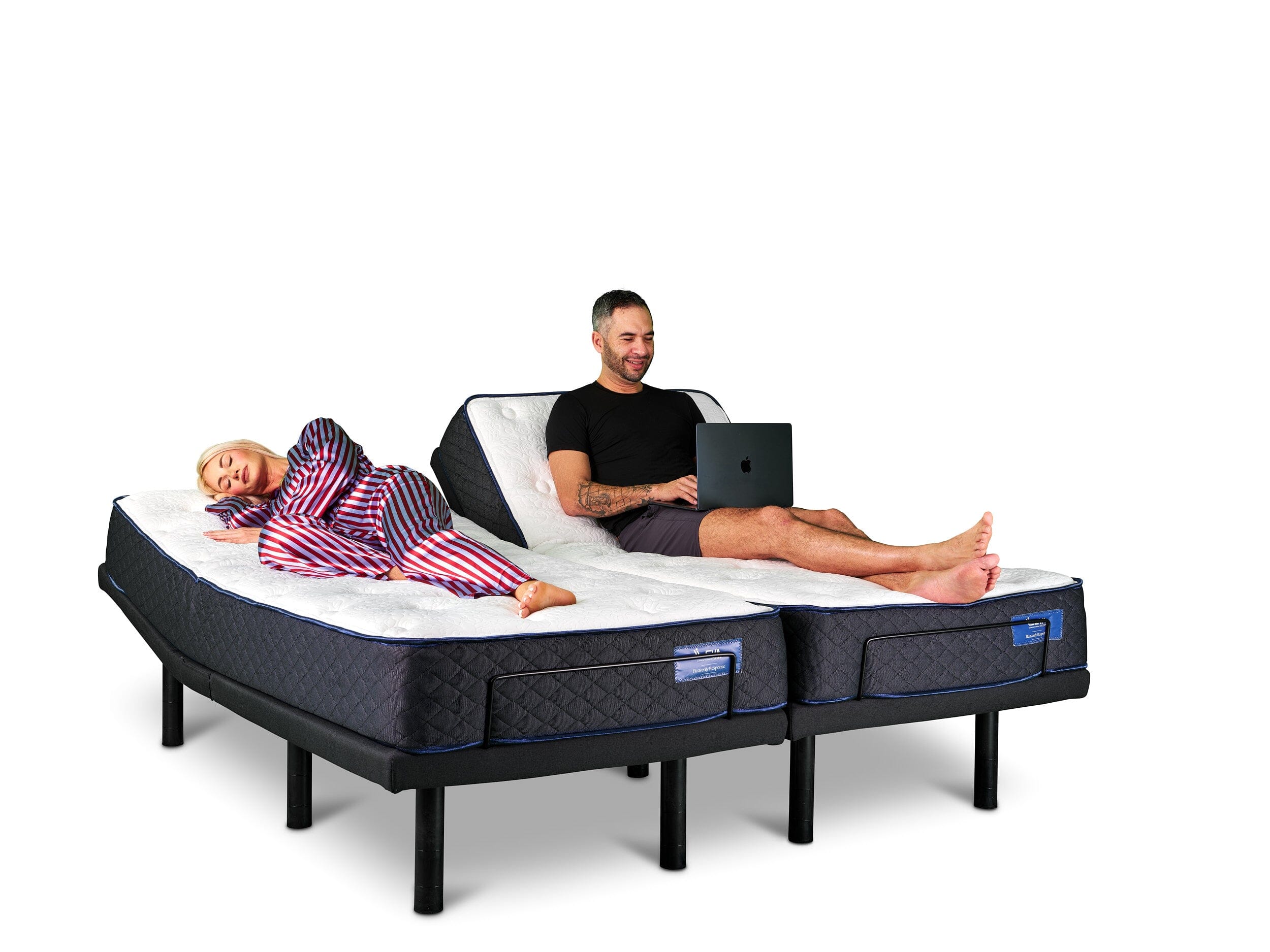
Will the motors disturb my partner?
Leva Sleep’s adjustable bases use whisper-quiet German motors engineered to minimize noise during position changes. The motors operate at a sound level that is not disruptive to a sleeping partner in normal conditions. This is a deliberate engineering priority because the core use case is one partner adjusting their position while the other is asleep. Older or entry-level adjustable bases from general retailers often use louder motors with less precise movement. Leva’s vertical integration and specialist focus on adjustable beds make motor quality a primary design criterion rather than an afterthought.
Putting It All Together for Better Couple Sleep
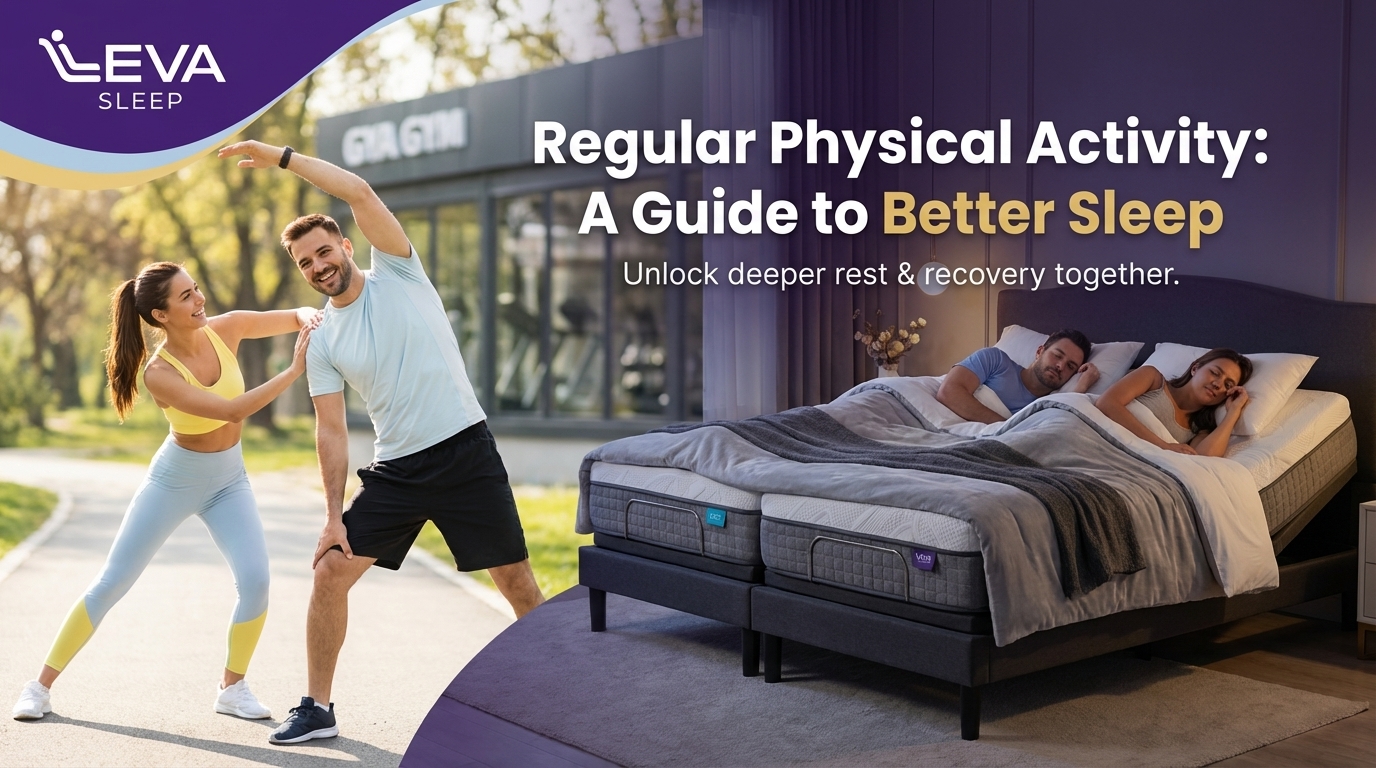
Deeper, higher-quality sleep for Canadian couples rests on four compounding blocks. A fixed morning wake time paired with outdoor light exposure anchors the circadian rhythm. Midday aerobic movement builds sleep pressure. Afternoon resistance training, timed to the body’s natural temperature peak, supports a stronger growth hormone pulse during slow-wave sleep. An evening wind-down sequence of gentle yoga, controlled breathing, and a cool, dark bedroom prepares the brain and body for the night. Each block reinforces the next.
The habits address the physiology, and the bed supports the partnership. When one partner snores, runs hot, or needs head elevation for a medical reason, a flat bed forces a compromise that erodes sleep for both. A Leva Sleep split adjustable base removes that compromise entirely, so each partner controls their own positioning, temperature, and settings independently, and both can follow the same schedule while sharing one bed.
Shop premium split adjustable base packages delivered and set up by Leva’s in-house white-glove team across Ontario and Alberta, at 30–50% less than comparable luxury competitors.