
Written by: Matthew Timmins, Founder and Managing Director, Leva Sleep | Last updated: June 30, 2026
Key Takeaways for Quieter Nights
- Partner snoring often leads to sleep divorce. Addressing it starts with simple positional changes like side-sleeping.
- Clearing nasal passages and limiting alcohol before bed are effective low-cost steps that reduce snoring intensity.
- Weight loss and consistent sleep hygiene habits provide longer-term improvements when free fixes are applied consistently.
- Head elevation technology, especially split adjustable bases with automatic anti-snore mode, offers a reliable solution once basic tactics plateau.
- Canadian couples ready for independent, quiet elevation can explore Leva Sleep’s adjustable bed packages at Leva Sleep to sleep together again without compromise.
Step 1: Switch to Side-Sleeping Tonight
Back-sleeping allows the tongue and soft palate to collapse toward the throat, narrowing the airway and intensifying snoring. Shifting to a side-sleeping position is the fastest zero-cost intervention available.
Tennis-ball method: Sew or safety-pin a tennis ball to the back of a sleep shirt. The mild discomfort discourages rolling onto the back without waking the sleeper fully. Most people adapt within two to three weeks and no longer need the ball.
Body-pillow method: A full-length body pillow placed behind the back creates a passive barrier that maintains the side position throughout the night. This approach suits couples who find the tennis-ball method too disruptive.
Decision factors to evaluate: Track how consistently the snorer stays on their side by morning. This shows whether the positioning method works mechanically. Next, monitor whether morning neck or shoulder stiffness increases, because discomfort will undermine long-term use. Finally, ask the partner whether they notice any audible improvement, since this is the real measure of success. If snoring persists at the same volume after two weeks of consistent side-sleeping with good positional compliance, move to Step 2.
Step 2: Clear Your Nasal Passages and Time Alcohol Wisely
Nasal congestion forces mouth-breathing, which dramatically increases snoring intensity. Several low-cost interventions address this directly.
- Nasal strips: Adhesive strips applied across the bridge of the nose mechanically widen the nasal passages. They work best when congestion, not throat anatomy, is the primary cause.
- Saline rinse: A nightly saline nasal rinse clears allergens, dust, and mucus that accumulate during the day. Use a neti pot or squeeze bottle with pre-made saline solution.
- Bedroom humidifier: Dry air irritates nasal and throat membranes, worsening vibration. A cool-mist humidifier set to 40–50% relative humidity reduces this irritation.
- Alcohol cutoff: Alcohol relaxes throat muscles, increasing airway collapse. Stopping alcohol consumption at least two hours before bed often reduces snoring intensity for many adults.
Common pitfalls: Nasal strips lose adhesion in humid bathrooms, so store them in a dry location. Saline rinses lose impact if performed more than 30 minutes before bed, because mucus can re-accumulate. If nasal interventions produce no improvement after two weeks, the obstruction likely sits in the throat rather than the nasal passage. At that point, proceed to Steps 3 and 4.
Step 3: Build Weight-Loss and Sleep-Hygiene Habits
Excess weight, particularly around the neck, compresses the upper airway and is one of the most modifiable risk factors for snoring. Even modest reductions in neck circumference can meaningfully reduce airway resistance during sleep.
Sleep deprivation itself worsens snoring by causing deeper, less controlled sleep states in which muscle tone drops further. Maintaining a consistent sleep and wake schedule, even on weekends, stabilizes sleep architecture and reduces the severity of snoring episodes.
Beyond timing your sleep, review the timing of any medications that might interfere with muscle tone during sleep. Sedative medications, including some antihistamines and sleep aids, carry the same muscle-relaxing effect as alcohol. Reviewing medication timing with a pharmacist or physician is advisable for anyone whose snoring worsened after starting a new prescription.
These habits produce meaningful results over weeks to months, not overnight. Couples who implement Steps 1 through 3 consistently and still experience disruptive snoring have exhausted the free-fix tier and are ready for positional technology.
Step 4: Elevate Your Head with Pillows, Wedges, or Leva’s Anti-Snore Mode
Elevating the head of the bed reduces the gravitational pull on throat tissues, keeping the airway more open during sleep. This intervention scales from simple tools to advanced technology.
Extra pillows: Stacking pillows raises the head but often creates neck flexion that compresses the airway instead of opening it. This approach can help mild cases but often feels inconsistent.
Wedge cushion: A foam wedge placed under the upper torso provides a more stable incline than pillows and maintains the angle throughout the night. It offers a meaningful upgrade for a modest cost, though you cannot adjust it without physically repositioning the wedge.
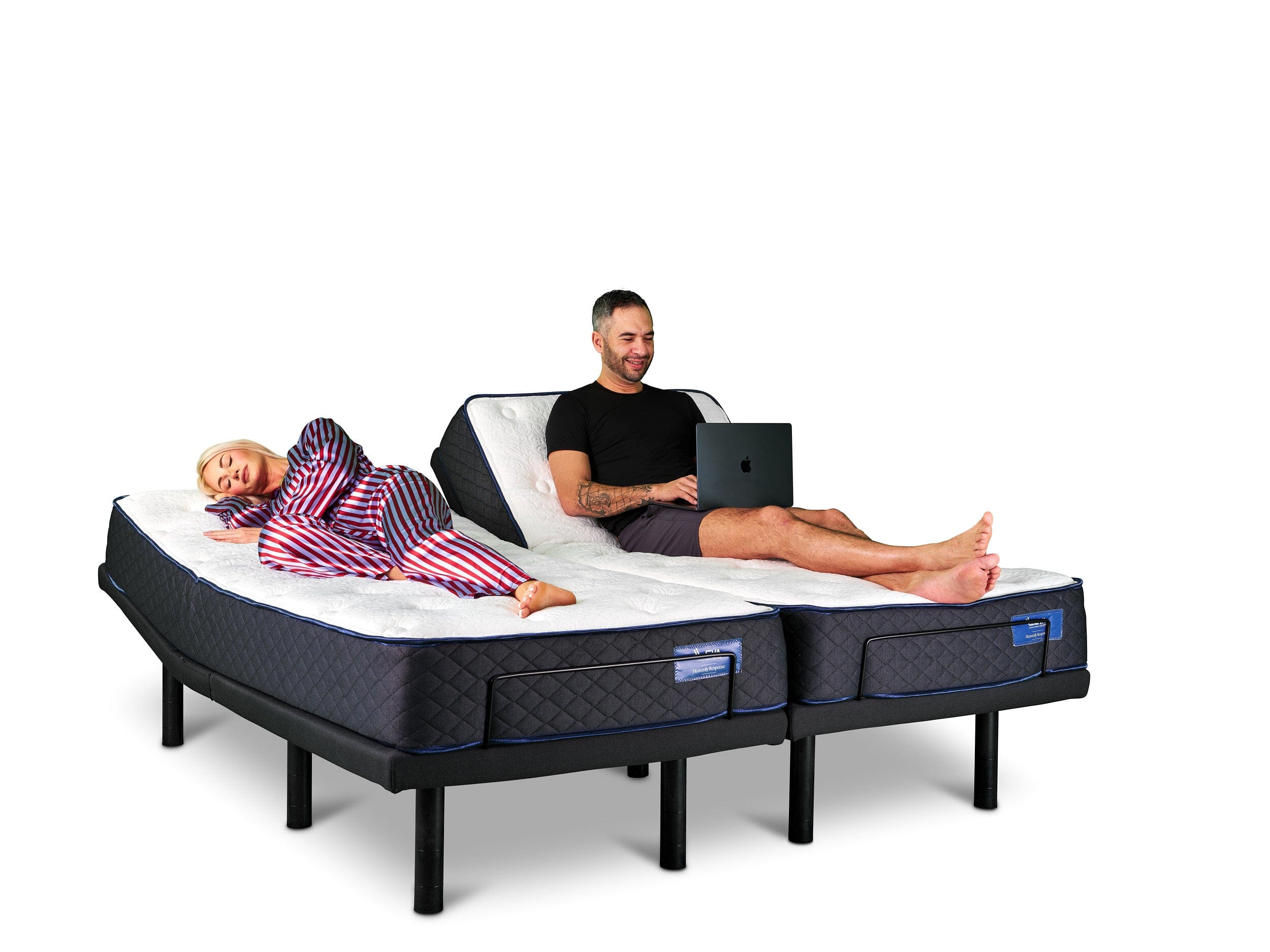
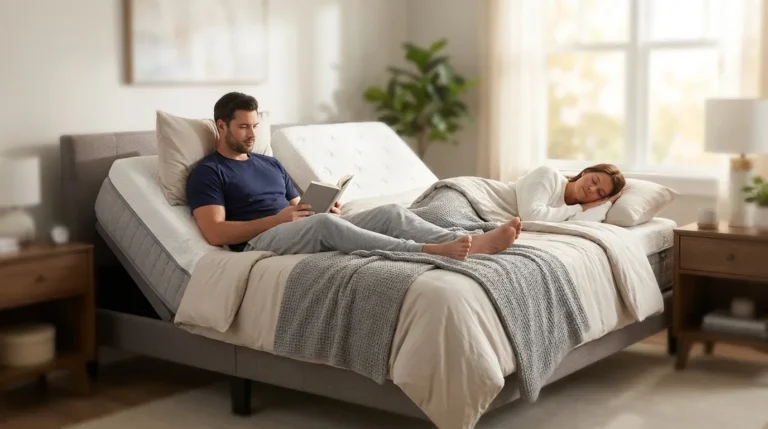
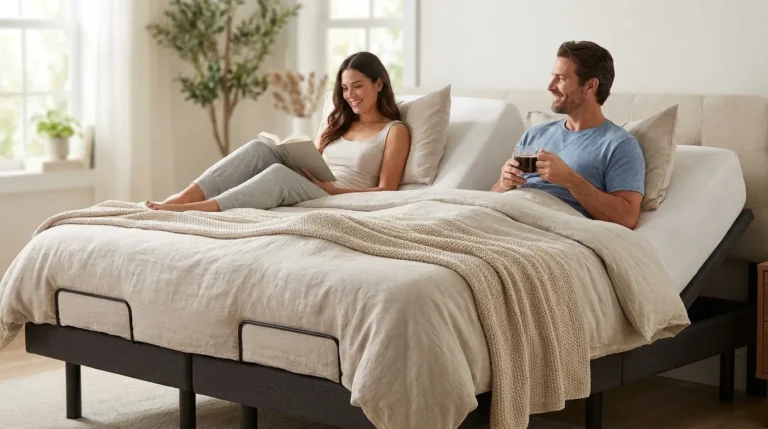
Split adjustable base with anti-snore mode: Leva Sleep’s split adjustable bases provide an effective positional solution for couples. Each side of the bed operates independently, so one partner can elevate their head without affecting the other. Leva’s anti-snore mode detects snoring through the base and initiates quiet micro-adjustments to the head elevation without waking either sleeper. The system is controlled through the Leva Sleep app, which also stores custom sleep positions and runs a vibrating alarm that wakes one partner without disturbing the other.
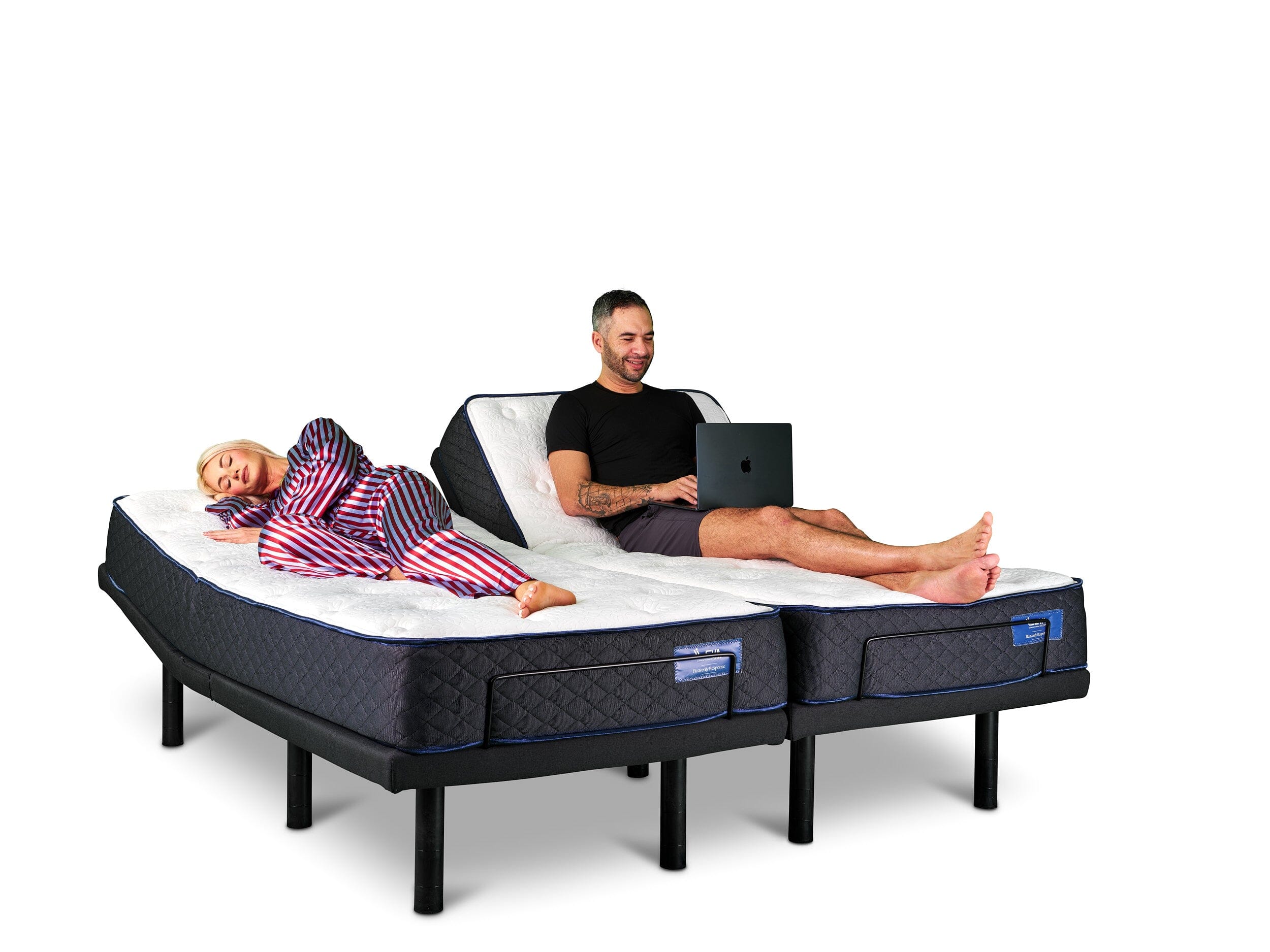
Accessory tips for adjustable bases: Standard fitted sheets often pull off when the base articulates. Leva’s deep-pocket sheets with reinforced elastic are designed specifically for this movement. Duvet clips keep the comforter aligned when both sides sit at different angles. A remote pocket attached to the side rail prevents the controller from sliding under the mattress. For couples where one partner sleeps hot, Leva’s integrated heating and cooling pad regulates temperature independently on each side.
Troubleshooting: If sheets continue to slip, confirm the sheet’s pocket depth matches the mattress height plus base profile. Leva’s sleep specialists can advise on the correct specification. If any motor sound is audible, the base may need re-levelling. Leva’s white-glove delivery team adjusts leg heights at setup and remains available for follow-up service.
Shop Leva Sleep’s adjustable beds
When Elevation Works Better Than Face or Mouth Devices
CPAP machines are the clinical gold standard for moderate-to-severe obstructive sleep apnea. Compliance rates are low, because many users find the mask uncomfortable, claustrophobic, or socially awkward in a shared bed. Oral appliances reposition the jaw and can reduce mild snoring, but they require custom fitting by a dentist, take weeks to adjust to, and do not address positional factors.
For adults with mild-to-moderate positional snoring, where the airway narrows primarily due to gravity and muscle relaxation rather than a structural obstruction, head elevation addresses the root mechanical cause without any device worn on the face or in the mouth. The independent elevation described earlier means no compromise is required, because one partner addresses snoring while the other sleeps at their preferred angle. Couples who have been referred to sleep apnea clinics should note that those clinics actively refer patients to Leva Sleep when positional elevation is part of the recommended management plan.
What Success Looks Like for Real Couples
Couples who work through all four steps consistently often fall asleep faster, wake fewer times during the night, and arrive at morning without the fatigue and irritability that chronic sleep disruption produces. The conversation about separate bedrooms fades. Both partners wake in the same bed, having slept through the night at their own preferred elevation and temperature settings. Over weeks, the cumulative effect of uninterrupted sleep compounds, and cognitive sharpness, mood stability, and physical recovery all improve.
Advanced Comfort Features for Ages 35–70
Head elevation addresses snoring, but many couples aged 35–70 also manage ongoing physical issues. Leva’s lumbar control motor provides adjustable lower-back support that reduces morning stiffness for those with lumbar pain. The pillow tilt motor makes fine adjustments to the head and neck angle independently of the main head elevation, which helps people with cervical spine issues or partners who prefer different pillow heights.
Leva’s roadmap includes app-based AI sleep tracking that will enable real-time micro-adjustments based on detected sleep stages, breathing patterns, and movement. This approach extends the anti-snore logic into a broader sleep-improvement system. For couples investing in a long-term sleep solution, this positions a Leva base as a platform that grows with their needs rather than a static piece of furniture.
Frequently Asked Questions
Is a Leva adjustable base appropriate if my partner has been diagnosed with sleep apnea?
Head elevation can reduce the frequency and severity of apnea events for some individuals with mild-to-moderate obstructive sleep apnea, and sleep apnea clinics do refer patients to Leva Sleep as part of positional management plans. However, a formal sleep apnea diagnosis requires evaluation by a physician or sleep specialist, and moderate-to-severe cases typically require CPAP therapy. Leva’s bases are not a medical device and are not a substitute for prescribed treatment. If your partner has been diagnosed, discuss positional elevation with their care team before relying on it as a primary intervention.
How long does delivery and setup take in Ontario and Alberta?
Leva Sleep delivers to both Ontario and Alberta. Delivery timelines vary by location and current order volume, so contacting Leva directly at the time of purchase provides the most accurate estimate. White-glove delivery is available for a fee and includes in-home setup, leg-height adjustment, a full product tutorial, and removal of your existing bed through donation or recycling.
What does white-glove setup actually include?
As mentioned in Step 4, Leva’s white-glove service handles all setup and adjustments. The team also walks through all app and remote functions, ensures features like anti-snore mode are configured before they leave, and removes your old bed responsibly. This service removes the assembly burden that comes with most large furniture purchases.
What is Leva Sleep’s return policy and what happens if the base does not reduce snoring?
Return and trial policies are confirmed at the time of purchase and may vary by product configuration. Contacting Leva Sleep directly before purchasing provides the most current terms. Given that snoring has multiple causes, Leva’s sleep specialists can also advise on whether a specific base configuration, including the 2026 anti-snore mode, is the right fit for your situation before you commit.
Will my existing mattress work with a Leva adjustable base?
Most all-foam and hybrid pocket-coil mattresses are compatible with adjustable bases. Innerspring mattresses with a rigid border wire are generally not compatible, as they cannot flex with the base. Leva also designs and sells its own mattresses, both all-foam and hybrid, that are built specifically to work with its bases. If you are uncertain about your current mattress, Leva’s team can assess compatibility before purchase.
Conclusion: A Clear Path to Shared Sleep
Reducing snoring at night follows a clear progression. You switch sleep position, clear the airway, build sustainable lifestyle habits, and then apply elevation technology when the free fixes reach their limit. For Canadian couples who have worked through the first three steps and still face nightly disruption, Leva Sleep’s split adjustable bases with 2026 anti-snore mode provide a direct mechanical solution that runs independently and quietly, controlled through an app without any device worn on the face.
Leva Sleep has over 8 years in business, 25,000+ customers, $50M in lifetime sales, and prices 30–50% below comparable luxury competitors. These credentials show why couples in Ontario and Alberta turn to Leva when basic tactics are no longer enough. Both partners stay in the same bed, sleeping at their own settings and waking rested.