Written by: Matthew Timmins, Founder and Managing Director, Leva Sleep
If stress or mismatched sleep habits are keeping you and your partner awake, finding ways to relax together can improve both your rest and your relationship. About 25% of Canadian couples sleep apart due to issues like snoring, temperature differences, or medical needs. A practical solution combines effective relaxation methods with adjustable split beds that meet both partners’ needs without forcing compromises.
This guide offers clear steps to help couples build a calming bedtime routine. You’ll learn how adjustable split beds can enhance proven relaxation techniques, helping you sleep better, feel more connected, and tackle individual sleep challenges together.
How Shared Relaxation Improves Sleep for Couples
Sleep problems affect more than just rest; they can strain relationships and daily life. When one partner needs an elevated position for sleep apnea and the other prefers a flat surface for back pain, a standard bed often means someone sacrifices comfort or health. This can lead to tension or sleeping in separate rooms.
Relaxation techniques offer a way to address these issues before they grow. Controlled breathing calms the nervous system, lowers heart rate, and helps you fall asleep faster. When practiced together, these methods create a shared wind-down routine that builds emotional closeness and prepares both of you for rest.
The benefits go beyond bedtime. Couples who relax together often notice better communication and less stress at home. Relaxation practices cut stress hormones, easing physical tension and emotional strain. This sets a foundation for handling conflicts more calmly.
Your sleep environment plays a big role in how well these techniques work. A bed that adjusts to each partner’s needs boosts the impact of relaxation exercises, while a rigid setup can hinder progress. Combining these methods with the right sleep technology is key for couples aiming to improve their rest.
Want to build a better foundation for relaxation? Check out Leva Sleep’s adjustable beds made for couples.
Effective Relaxation Methods for Better Couple Sleep
Relaxation techniques work best when adapted for two people sharing a bed. By practicing together, you create a smooth shift from daily stress to restful sleep. Here are practical methods to try as a couple.
Synchronized Breathing for a Calmer Bedtime
Breathing exercises are a simple starting point for couples. They require no tools and can be done in sync to build connection. Three useful techniques for bedtime are the 4-7-8 method, belly breathing, and alternate nostril breathing.
- The 4-7-8 method means inhaling for 4 seconds, holding for 7, and exhaling for 8. This slows your heart rate and eases you into relaxation. Practice it together in bed, focusing on matching your rhythm.
- Belly breathing uses the diaphragm for deeper breaths. It lowers heart rate and boosts sleep hormones like melatonin. Place a hand on your belly to ensure it rises more than your chest.
- For couples where one partner has snoring or sleep apnea, breathing exercises can improve airflow and reduce disruptions.
Stick to a nightly habit in a quiet space for the best results over time. Set aside 20 to 30 minutes before bed to focus on breathing without distractions like phones.
Progressive Muscle Relaxation to Ease Tension Together
This method helps release physical stress built up during the day. It’s especially useful if work, anxiety, or pain keeps you awake. You tense and relax muscle groups one by one to notice the difference between stress and calm.
It works well for managing chronic pain or restless legs that disrupt sleep. Start with your toes, tense for 5 to 10 seconds, then release. Move up through legs, arms, and face. Guide each other or go at your own pace if pain or mobility differs.
Regular practice leads to less stress, better sleep, and improved mood over time. Couples often feel less stiff in the morning and more satisfied in their relationship with consistent use.
Visualization for a Shared Sense of Peace
Visualization uses mental imagery to create a calming space in your mind, helping you shift away from daily worries. It includes simple body scans or guided journeys to quiet your thoughts.
Body scans focus on each body part to release tension and promote rest. Yoga nidra, a guided lying-down practice, combines imagery and breath work for deeper calm. It supports better sleep quality with positive focus.
Imagine a shared peaceful place, like a quiet beach or cozy cabin. Take turns guiding the imagery to strengthen your bond. These flexible exercises fit any schedule and enhance bedtime harmony.
Why Adjustable Split Beds Boost Relaxation for Couples
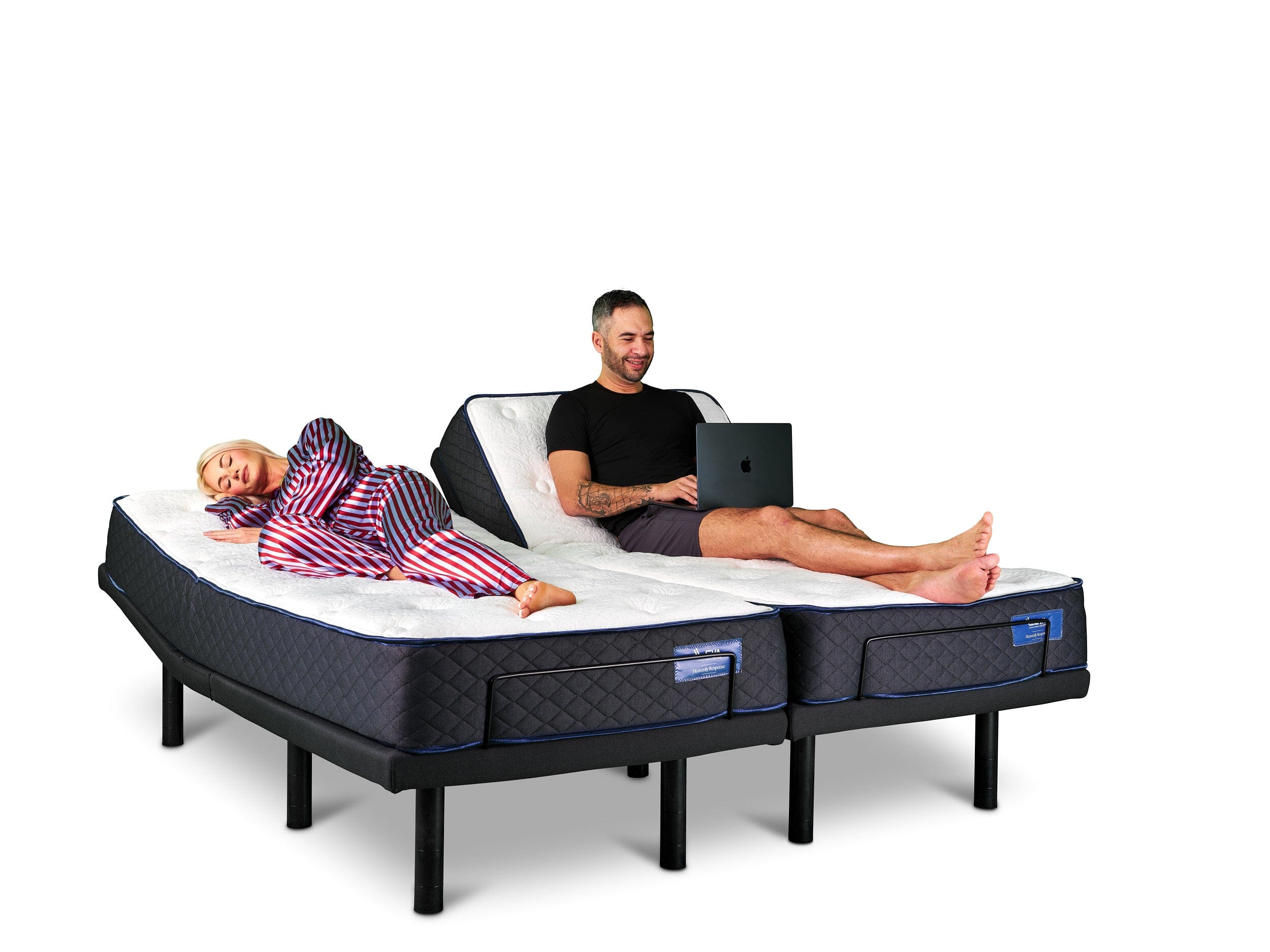
Pairing relaxation techniques with the right sleep setup can make a big difference. Standard beds often force partners to compromise on comfort. Adjustable split beds, however, let each person customize their side while sharing the same space, supporting both relaxation and closeness.
Leva Sleep’s adjustable split beds tackle differing needs head-on. They allow individual adjustments without disturbing the other person, making relaxation exercises more effective for both partners.
Custom Positions for Personal Comfort
Independent head and foot adjustments change how you relax together. A slight head lift can ease breathing for sleep apnea or snoring, while foot elevation improves circulation during muscle relaxation exercises.
Features like lumbar support and pillow tilt in Leva Sleep beds fine-tune spinal alignment for longer, comfortable relaxation sessions. One partner can adjust for breathing exercises while the other sets up for meditation, with no disruption.
The split design means personal needs, like elevation for acid reflux, don’t affect the other side. Temperature zones on each half also help, as cooling supports the body’s natural drop during relaxation, avoiding sleep interruptions from mismatched preferences.
Quiet Design to Keep the Peace
A calm space is vital for relaxation. Leva Sleep beds use quiet German motors, so position changes don’t break your focus during breathing or meditation.
Unlike older adjustable beds with noisy motors, these ensure smooth, silent shifts. Motion isolation stops movement from transferring across the bed, so one person’s adjustments won’t disturb the other’s calm state. Stable construction adds to a distraction-free environment for effective relaxation.
Smart Features to Support Serenity
Leva Sleep beds include thoughtful extras to enhance relaxation. An anti-snore mode detects snoring and adjusts head position subtly, so both partners stay relaxed. Massage settings support muscle relaxation with customizable vibrations.
App control lets you save preferred positions for different techniques, avoiding manual tweaks that interrupt focus. A gentle vibrating alarm wakes one partner without startling the other, maintaining sleep cycles and extending relaxation benefits into the morning.
|
Feature |
Traditional Flat Bed |
Basic Adjustable Bed |
Leva Adjustable Split Bed |
|
Independent Positioning |
No |
Limited |
Full (Split Queen/King) |
|
Snoring Management |
No |
Manual adjustment only |
Automatic anti-snore mode |
|
Partner Disturbance |
High |
Moderate |
Minimal (Quiet motors) |
|
Relaxation Support |
None |
Basic positioning |
Integrated massage & positioning |
Ready to enhance your relaxation routine? Discover Leva Sleep’s adjustable split beds for couples.
Setting Up Your Ideal Relaxation Space
Blending relaxation methods with an adjustable split bed takes a bit of planning around timing, environment, and habits. A tailored setup helps maximize the benefits of both techniques and technology.
A regular pre-sleep relaxation routine improves sleep habits and deeper rest. This works even better with a bed that adjusts to personal needs instead of limiting them.
Adjust your bedroom beyond the bed. Dim lights 30 to 60 minutes before relaxing to signal your body to unwind. Keep the room at 65 to 68°F for optimal sleep conditions. Add calming sounds like nature tracks to boost breathing exercises.
Clear distractions by removing devices 30 minutes before starting. Use blackout curtains and treat relaxation time as a priority for both of you. Leva Sleep accessories, like secure fitted sheets and cooling bedding, ensure the setup supports your routine. Even with different schedules, the bed’s flexibility lets one partner start later without disturbing the other.
Common Challenges and Tips for Couple Sleep Wellness
Couples often face hurdles when starting relaxation routines or changing their sleep setup. Knowing these challenges helps you plan ahead for better results.
- Forcing the same relaxation style on both partners can create stress. Recognize that timing or comfort needs may differ, and focus on shared calm over identical actions.
- Waiting until sleep issues worsen to upgrade your bed misses chances to prevent problems. An adjustable bed supports long-term health and relationship balance.
- Overusing tech features without basic relaxation skills, or avoiding them due to complexity, can limit benefits. Use bed settings to support, not replace, techniques.
- Inconsistent routines due to busy schedules can derail progress. Build flexible plans that adapt to life while keeping relaxation a focus.
- Choosing cheaper beds often leads to ongoing noise or comfort issues. Quality materials and quiet design ensure lasting support for relaxation.
- If one partner is less interested, find methods that feel genuine to both. Avoid turning relaxation into a chore that causes tension.
Want to sidestep these issues and build your sleep haven? Explore Leva Sleep’s adjustable beds for better relaxation and rest.
Common Questions About Relaxation and Adjustable Split Beds
How Do Adjustable Split Beds Help with Snoring During Relaxation?
Leva Sleep’s Split Queen and King beds allow separate head adjustments to reduce snoring. An anti-snore mode senses snoring and gently lifts the head to open airways, ensuring both partners stay focused on relaxation without interruptions.
Do Relaxation Techniques Actually Improve Sleep for Couples?
Yes, evidence shows relaxation methods enhance sleep quality. Breathing exercises calm the body for quicker sleep, while muscle relaxation and imagery ease stress for better rest. Practicing as a couple adds emotional closeness and synced sleep patterns, improving both rest and connection.
Can Adjustable Beds Work with Different Comfort Needs?
Definitely. Leva Sleep’s beds have separate controls for each side, so one partner can recline for meditation while the other raises legs for circulation. Quiet motors and personal temperature zones ensure adjustments don’t disturb, making relaxation routines effective for both.
What’s the Benefit of Leva Sleep’s White-Glove Delivery?
Leva Sleep’s delivery service handles setup, height adjustments, and tutorials, removing setup stress. They also take away your old bed. This lets you start relaxation practices right away on a properly set bed, with tips on positioning for best results.
Why Choose Adjustable Split Beds Over Standard Ones?
Unlike flat beds that force compromises, adjustable split beds support individual health and couple harmony. Custom positions for relaxation, solutions for medical needs, and minimal disturbance create lasting sleep improvement. Considering the impact of poor sleep on health and relationships, these beds are a valuable choice for shared well-being.
Wrap-Up: Strengthen Your Nights and Bond with Leva Sleep
Better sleep as a couple needs both effective methods and the right tools. This guide shows how breathing, muscle relaxation, and visualization paired with adjustable split beds can deepen rest and connection.
With Leva Sleep’s beds, you practice relaxation in positions that suit you without affecting your partner. Features like quiet motors and anti-snore settings maintain calm, supporting your journey to improved sleep.
Sleep should be a time of renewal, not conflict over differing needs. These techniques lay the groundwork, but the right bed multiplies their impact.
Stop letting sleep differences steal your peace. Shop Leva Sleep’s adjustable beds now to improve your relaxation and reclaim restful nights together.