Written by: Matthew Timmins, Founder and Managing Director, Leva Sleep | Last updated: June 19, 2026
Key Takeaways on Serta and Firmness
-
Serta’s 2026 lineup spans Plush to Firm, roughly 4–8 on the universal 1–10 scale, across its Perfect Sleeper and iSeries NXG families.
-
Sealy, Beautyrest, Saatva, and Tempur-Pedic use proprietary feel descriptors that do not line up cleanly, so the universal 1–10 scale is the only reliable comparison tool.
-
Side sleepers generally fall in the 4–6 range, back sleepers in 5–7, and stomach sleepers in 7–8, with body weight shifting these targets.
-
When partners disagree on firmness, a single mattress forces compromise, while a split adjustable base lets each sleeper customize elevation, lumbar support, and overall feel independently.
-
Leva Sleep’s split adjustable bed packages provide this personalized setup at 30–50% less than comparable luxury competitors, with white-glove delivery in Ontario and Alberta.
Quick-Read Firmness Overview
-
Serta’s 2026 Perfect Sleeper and iSeries NXG lines cover Plush through Firm, roughly 4–8 on the universal scale.
-
Sealy Posturepedic Plus Hybrid models range from Plush to Firm; Beautyrest Black Hybrid XCS offers Firm, Medium, and Plush options starting from $2,849 USD.
-
Many Canadian sleepers gravitate toward firmness levels between 5 and 7.
-
A split adjustable base lets each partner dial in independent elevation, lumbar support, and firmness feel, which removes the need to compromise.
|
Brand / Model |
Advertised Feel |
Universal 1–10 Rating |
Source |
|---|---|---|---|
|
Serta Perfect Sleeper Innerspring – Cascade Range Medium |
Medium |
Not specified |
Mattress Clarity, June 2026 |
|
Serta Perfect Sleeper – Standard Plush |
Plush |
Not specified |
|
|
Serta iSeries NXG 1500 (all-foam) |
Firm |
Not specified |
Serta.com / GoodBed data, 2025–2026 |
|
Sealy Posturepedic Plus Hybrid – High Point |
Firm |
Not specified |
|
|
Sealy Posturepedic Plus – Zion |
Plush |
Not specified |
|
|
Beautyrest Black Hybrid XCS – Series Three (Firm) |
Firm |
Not specified |
|
|
Beautyrest Black Hybrid XCS – Series Five (Plush) |
Plush |
Not specified |
Explore Leva’s split adjustable base packages, with split King and split Queen bases compatible with Serta, Beautyrest, Sealy, and more.
How Major Brands Describe Firmness
Serta’s 2026 Perfect Sleeper X Hybrid uses four named feels: Plush, Medium, Medium Firm, and Firm. The newly launched Perfect Sleeper line adds the Q4 Support System with 4‑in‑1 linked coils and zoned comfort, with entry pricing from $699 USD. The iSeries NXG, introduced in July 2025, spans Firm through Ultra Plush across 10 models and works with adjustable bases.
Sealy’s Posturepedic Plus Hybrid line relies on Firm and Plush as its primary descriptors. The High Point Firm uses densely packed fabric-encased coils and SealyCool Gel Foam. The Zion Plush uses a Soft Tight Top with 1,072 coils and gel memory foam layers.
The Beautyrest Black Hybrid XCS offers Firm, Medium, and Plush across three series at price points from $2,849 to $5,049 USD, with advanced cooling technology.
Like Beautyrest, Saatva and Tempur-Pedic also use proprietary language. Saatva Classic Luxury Firm rates 5–7 on a 1–10 firmness scale (10 firmest). Tempur-Pedic’s TEMPUR-Medium Hybrid uses slow-response viscoelastic foam that contours deeply. The universal 1–10 scale gives you the only consistent way to compare these brands side by side.
How Sleep Position and Weight Affect Firmness
Side sleepers need 4–6 on the universal scale because shoulders and hips carry concentrated pressure. Extra cushioning eases that load while keeping the spine aligned. Back sleepers match best to 5–7, which preserves the spine’s natural S-curve without letting the hips sink. Stomach sleepers do better at 7–8, which keeps the pelvis from dropping and creating an exaggerated lumbar arch.
Body weight shifts these ranges in predictable ways. Sleepers under 65 kg should target 3–5. Those between 65–100 kg usually sleep well at 5–7. Sleepers over 100 kg often need 6–8 to avoid a hammock effect. A 2021 systematic review in PMC linked medium-firm mattresses to better sleep quality and less lower back pain than softer or very firm options.
For spinal stenosis, the Canadian Chiropractic Association focuses on neutral spinal alignment rather than maximum firmness. A medium-firm surface in the 5–7 range, combined with adjustable head and foot elevation, often reduces nerve compression more effectively than a flat, very firm surface.
Matching Serta Firmness to Sleeper Types
Serta Firmness for Side Sleepers vs. Saatva
Serta recommends Plush to Medium for side sleepers. That 5–7 Saatva rating sits at the upper edge of the side-sleeper comfort zone and suits heavier side sleepers over 90 kg who need more pushback.
Tempur-Pedic Medium Compared to Serta Medium
Tempur-Pedic’s TEMPUR-Medium Hybrid uses slow-response viscoelastic foam that hugs the body and contours deeply. Serta’s Medium options, such as the iComfortECO Hybrid S50UHD, use a 5-Zone Quad Coil system that responds faster and transfers less motion. Couples who value ease of movement and low motion transfer often prefer Serta’s feel.
Serta Perfect Sleeper Firmness Choices in 2026
The 2026 Perfect Sleeper Cascade Bluff Hybrid comes in Plush (14.5″), Medium (13.5″), and Firm (14.5″). Firm targets back and stomach sleepers. Plush suits side sleepers. Medium works as an all-position compromise. The full Perfect Sleeper range spans 12 firmness options from Standard Firm to Ultimate Plush Pillow Top, although Serta does not publish numerical ratings.
Serta vs. Beautyrest Firmness for Couples
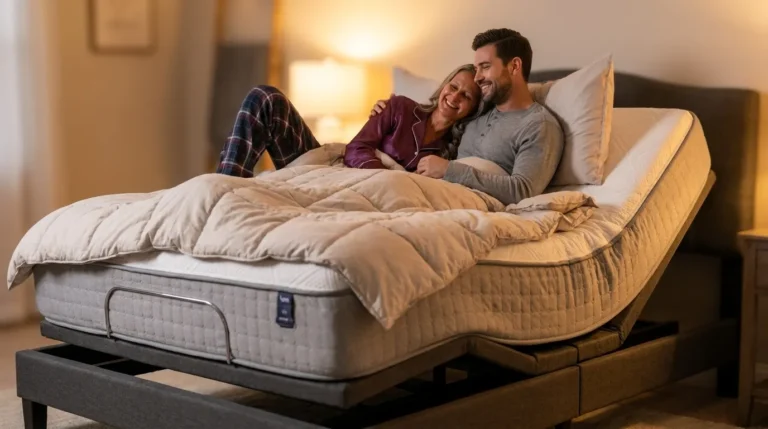
The Beautyrest Black Hybrid XCS Series Three now ships in split-head Queen and King configurations, and the Serta iSeries NXG does as well. Both options allow independent head adjustment on compatible adjustable bases, which helps couples with different elevation needs share one bed more comfortably.
Serta Firmness Picks for Spinal Stenosis
A 2008 study by Jacobson et al. in the Journal of Chiropractic Medicine reported significant back-pain reductions within 28 days when participants switched to medium-firm mattresses. For spinal stenosis, the Serta Perfect Sleeper Medium or iSeries NXG Medium aligns with that research.
Couples Who Disagree on Firmness
When partners have conflicting firmness needs, a standard compromise mattress usually disappoints both people. Sleep specialists sometimes call the result “sleep divorce,” where one partner moves to a separate bed or room to get enough rest. Couples with differing firmness preferences due to body weight, sleep position, or health issues benefit from split-firmness designs such as split-King configurations.
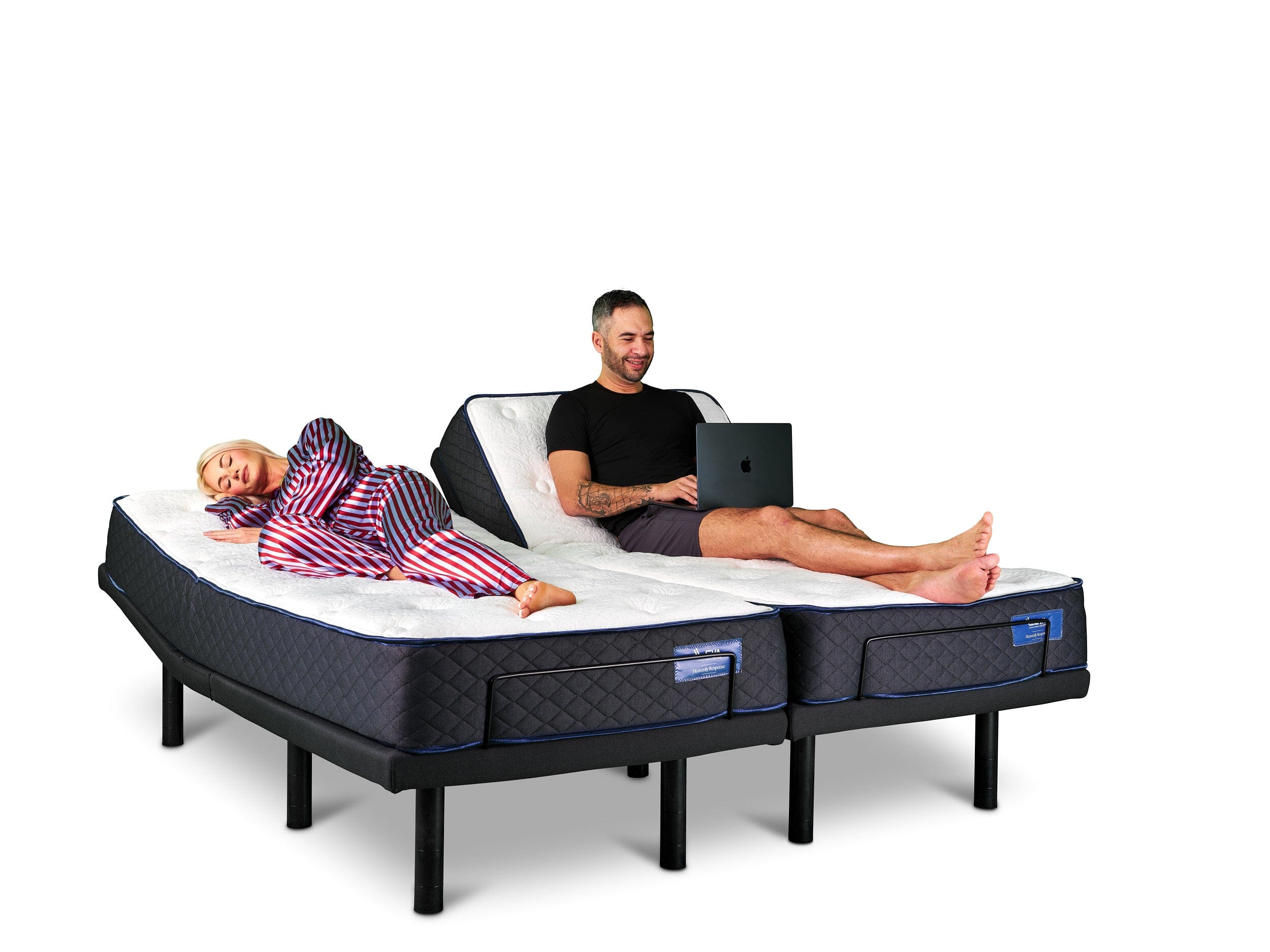
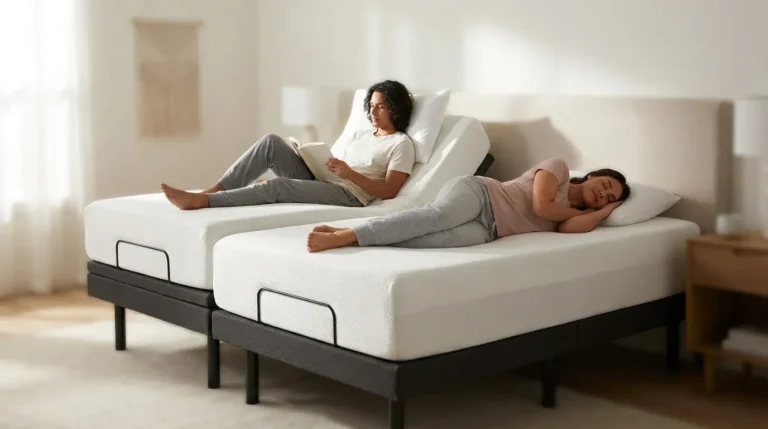
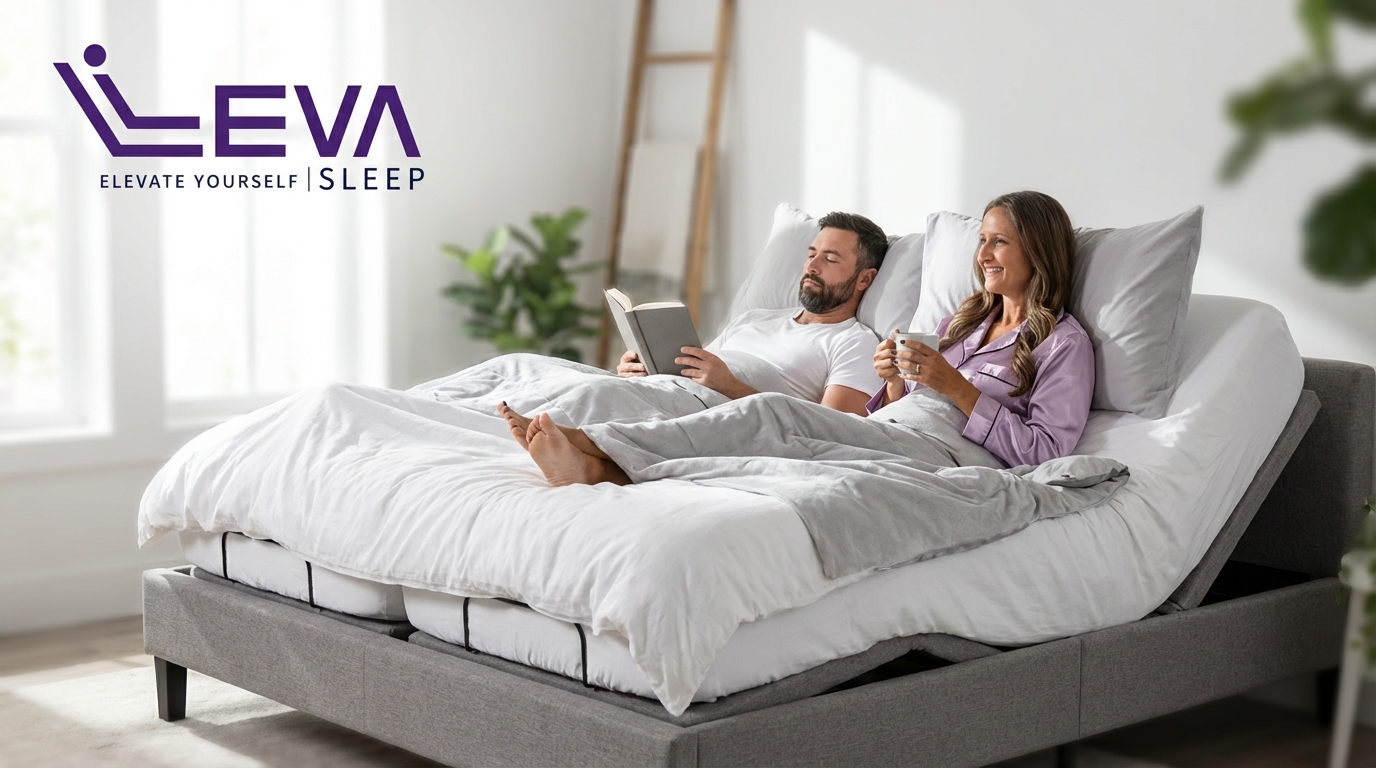
A split adjustable base goes further than a split mattress alone by letting each partner control more than just firmness. Leva Sleep’s split King and split Queen bases give each partner independent control over head and foot elevation, lumbar support, massage zones, and temperature, all through the Leva Sleep app. Because these adjustments use whisper-quiet German motors, one partner can change position without waking the other. White-glove delivery in Ontario and Alberta removes the setup burden that often deters buyers from adjustable bases. Leva’s direct-to-consumer pricing keeps these systems about 30–50% below comparable luxury competitors, which lowers both the logistical and financial barriers.
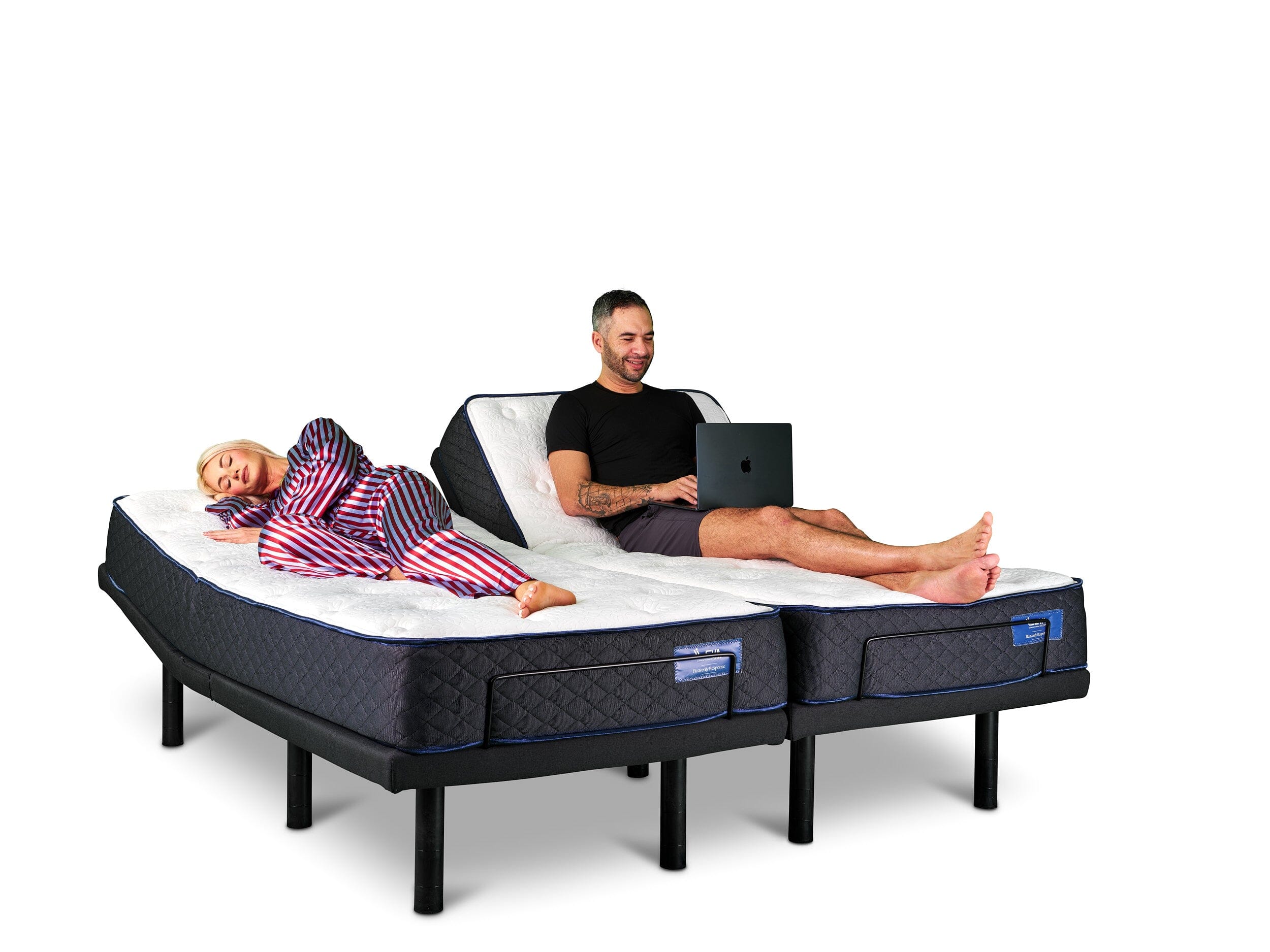
See how Leva’s split bases solve firmness conflicts, with split Queen and split King bases that give each partner independent controls.
Key Factors to Weigh Before You Choose
-
Body weight: Lightweight sleepers perceive a mattress as firmer than heavier sleepers because of different pressure distribution, so testing firmness in person helps.
-
Pain points: Hip and shoulder pain often signal a need for a softer surface in the 3–5 range. Lower back pain usually responds better to medium-firm support in the 5–7 range.
-
Adjustable-base compatibility: Not every mattress flexes safely on an adjustable base. Serta’s iSeries NXG and Perfect Sleeper Hybrid lines are confirmed adjustable-base compatible. Always verify compatibility before pairing any mattress with a split base.
Trade-offs Between Static and Adjustable Setups
Static mattresses, regardless of brand, lock both partners into one firmness level. Split-head configurations improve elevation control but do not change the underlying foam or coil feel. Premium brands like Beautyrest Black Hybrid XCS and Tempur-Pedic often cost $3,999–$8,000+ CAD for a King, which limits trial-and-error buying. A split adjustable base paired with a mid-range compatible mattress frequently delivers more real-world customization at a lower combined cost than a single ultra-premium static mattress.
Common Mattress Shopping Mistakes
-
Choosing a mattress based only on brand name or hotel association. For example, Mattress Clarity reviews the Serta Perfect Sleeper Cascade Range Medium and highlights differences from hotel models.
-
Assuming “medium” means the same thing across brands. It does not, so always request or look up a universal 1–10 rating from an independent reviewer.
-
Ignoring adjustable-base compatibility when buying a premium mattress. Split-head and fully flexible bases require mattresses with enough flex tolerance to avoid damage.
FAQ
What is the best mattress firmness for spinal stenosis?
Medium-firm mattresses in the 5–7 range on the universal 1–10 scale most often correlate with reduced back pain and better spinal alignment. The Canadian Chiropractic Association stresses neutral spinal alignment over maximum firmness. For spinal stenosis, pairing a medium-firm mattress with an adjustable base that allows slight head and knee elevation can further reduce nerve compression compared with lying flat on a static surface.
Do Serta hotel mattresses use the same firmness scale as retail models?
Serta supplies hotel-specific models under names like the Serta Hotel Signature, which differ from retail Perfect Sleeper or iSeries products. Hotel models prioritize durability and a neutral medium feel that suits many guests. Retail models offer a wider firmness range and more advanced comfort technologies. If you slept well on a Serta hotel mattress, a retail Medium or Medium Firm in the Perfect Sleeper or iSeries NXG line gives you the closest starting point.
How does Serta’s firmness compare to Tempur-Pedic’s medium?
Tempur-Pedic’s TEMPUR-Medium Hybrid uses slow-response viscoelastic foam that contours deeply and cradles pressure points. Serta’s Medium options, such as the iComfortECO Hybrid S50UHD, use a faster-response pocketed coil system that feels bouncier and transfers less motion. Tempur-Pedic’s medium works better for deep pressure relief, while Serta’s medium suits sleepers who value easier movement and lower motion transfer.
Can couples with different firmness preferences share one bed without compromising?
Couples with different firmness needs can share one bed successfully with the right configuration. A split King or split Queen adjustable base pairs two separate mattress halves, each with its own firmness, on a shared frame with independent controls. Each partner adjusts the features described earlier, including elevation, lumbar support, and temperature, through the app. This setup removes the need to settle on a single firmness level and explains why sleep specialists and adjustable-base retailers often recommend split configurations for couples. Leva Sleep’s split Queen offers this functionality in a smaller footprint than a split King.
Find your split adjustable base solution from Canada’s split Queen and split King specialists, with white-glove delivery in Ontario and Alberta.
Conclusion: Choosing the Right Firmness and Setup
Serta’s 2026 lineup, which includes the new Perfect Sleeper with Q4 Support and the iSeries NXG, covers the 4–8 range on the universal firmness scale and offers adjustable-base-compatible options across all feels. Sealy, Beautyrest, Saatva, and Tempur-Pedic rely on different descriptors, so converting each model to the universal 1–10 scale gives you the clearest comparison. Sleep position, body weight, and pain points should guide firmness selection more than brand name or marketing labels.
For couples with different needs, no static mattress fully resolves the conflict. A split adjustable base with independent controls on each side provides a structural fix. Assess firmness needs for each partner, confirm adjustable-base compatibility for any mattress you consider, and prioritize a base that offers independent elevation and lumbar control along with your chosen firmness.