Written by: Matthew Timmins, Founder and Managing Director, Leva Sleep | Last updated: July 11, 2026
Key Takeaways for Canadian Couples
- Canadian couples aged 35–70 often face snoring, motion transfer, temperature mismatches, and firmness disagreements that flat beds and unified adjustable bases cannot solve for each partner independently.
- Premium independent-control adjustable sleep systems let each partner adjust head and foot elevation, firmness, temperature, and massage without affecting the other side.
- Serta unified bases sold through chain retailers adjust both sides together, which limits personalization and leaves core couple sleep issues unresolved.
- Split King and Split Queen configurations provide strong motion isolation, quieter adjustments with whisper-quiet motors, and bedding designed for adjustable use.
- Leva Sleep offers premium independent-control adjustable bed packages at 30–50% below luxury brands with white-glove delivery across Ontario and Alberta. Shop Leva Sleep’s adjustable beds today.
The Problem: How Disrupted Sleep Affects Canadian Couples Daily
Chronic snoring affects roughly 40% of adult men and 20% of adult women, and the rate increases with age. The ResMed 2025 Global Sleep Survey of 30,026 respondents across 13 markets found that 18% of couples reported sleeping in separate rooms because of snoring and restlessness. A Mayo Clinic study found that bed partners of people with sleep apnea lose roughly one hour of sleep per night; when the snorer was treated, the partner gained back 62 minutes of sleep and saw a 13% improvement in sleep efficiency.
The relationship impact shows up clearly in surveys. A Naturepedic survey found that over 40% of people sharing a bed said sleep issues caused them to question their relationship. An American Academy of Sleep Medicine survey found that 31% of U.S. adults have chosen “sleep divorce” by sleeping separately to accommodate a bed partner, and many couples cite their sleep habits as the reason. These strains often trace back to specific, fixable sleep mismatches.
Explore independent-control adjustable beds for couples
Four Core Sleep Problems That Push Couples Apart
Four distinct physiological and comfort mismatches explain why many couples struggle on shared flat beds or unified adjustable bases.
- Snoring and sleep apnea: Positional obstructive sleep apnea is common among people with obstructive sleep apnea. Noise from snoring may increase production of adrenaline and cortisol and elevate heart rate and blood pressure, which affects both the snorer and their partner.
- Motion transfer: Research suggests that couples sleeping in a shared bed can experience more movement arousals than when using independent sleep surfaces. A single mattress and unified base spread every turn and adjustment across the entire bed.
- Temperature regulation: A sleeping environment that is too warm can interfere with the body’s thermoregulation and affect the time spent in different sleep stages. 41% of primary care patients report experiencing night sweats at least once a month, and partners often prefer different sleep temperatures.
- Differing firmness preferences: Many couples disagree about mattress comfort. A 2008 study in the Journal of Chiropractic Medicine found that matching mattress firmness to individual body weight and sleep position reduces back pain, which is difficult on a single shared surface.
Why Flat Beds and Basic Adjustable Bases Do Not Solve Couple Sleep Issues
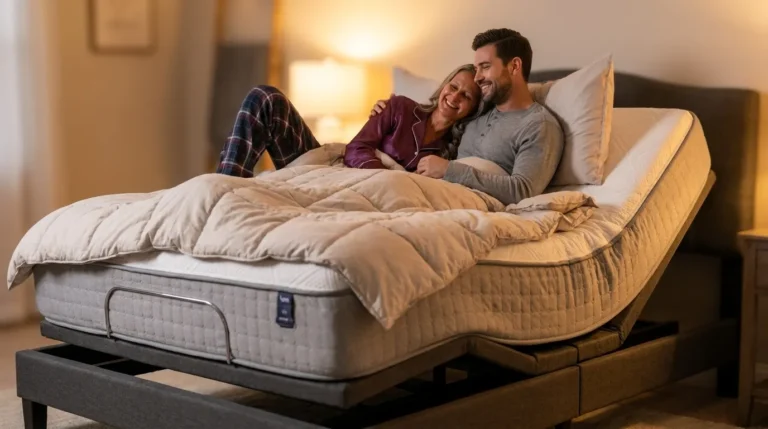
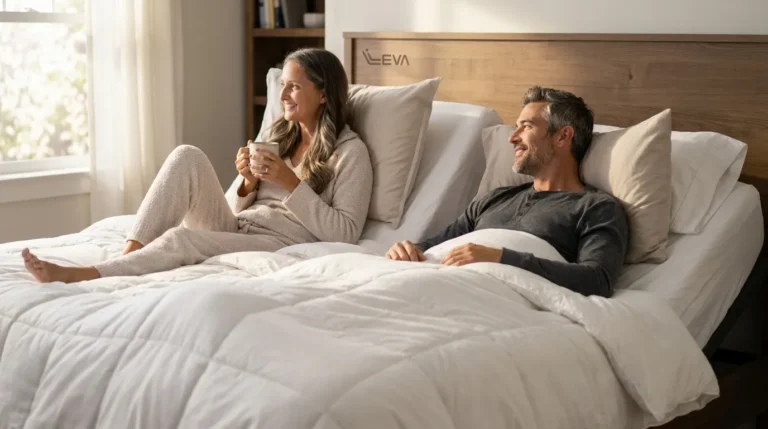
Flat beds provide no positional adjustment, so they cannot address snoring, acid reflux, or post-surgical elevation needs. Basic unified adjustable bases move both sides of the bed at once. When one partner raises the head section to reduce snoring, the other is lifted too, even if they prefer to stay flat.
Budget adjustable bed frames can produce noise, vibration, and faster wear under combined body weight, which particularly affects couples and light sleepers. Mattress compatibility creates another limit. Traditional innersprings with interconnected Bonnell coils resist bending and risk damage on adjustable bases, which narrows mattress choices for buyers of basic systems.
Premium Adjustable Sleep Systems That Target Couple Sleep Mismatches
Premium independent-control adjustable sleep systems tackle each of the four core problems with coordinated hardware and software. Typical features in this category include:
- Split bases with independent head and foot elevation of roughly 15–30 degrees per side
- Whisper-quiet motors that avoid waking a sleeping partner during adjustments
- Anti-snore modes that detect snoring and make small head-elevation changes automatically
- Integrated heating and cooling pads for per-side temperature control
- App-based control with programmable positions, vibrating alarms, and sleep tracking
- Lumbar support and pillow tilt motors for more precise spinal positioning
- Specialized bedding that stays in place during elevation changes
Leva Sleep has operated in this space for over eight years, with $50M in lifetime sales and more than 25,000 customers across Ontario and Alberta. Its vertically integrated model, which covers in-house design, local assembly, and white-glove delivery, allows pricing that sits 30–50% below comparable luxury brands.
View Leva Sleep’s Split King and Split Queen packages
Independent Adjustability for Couples: Split King and Split Queen
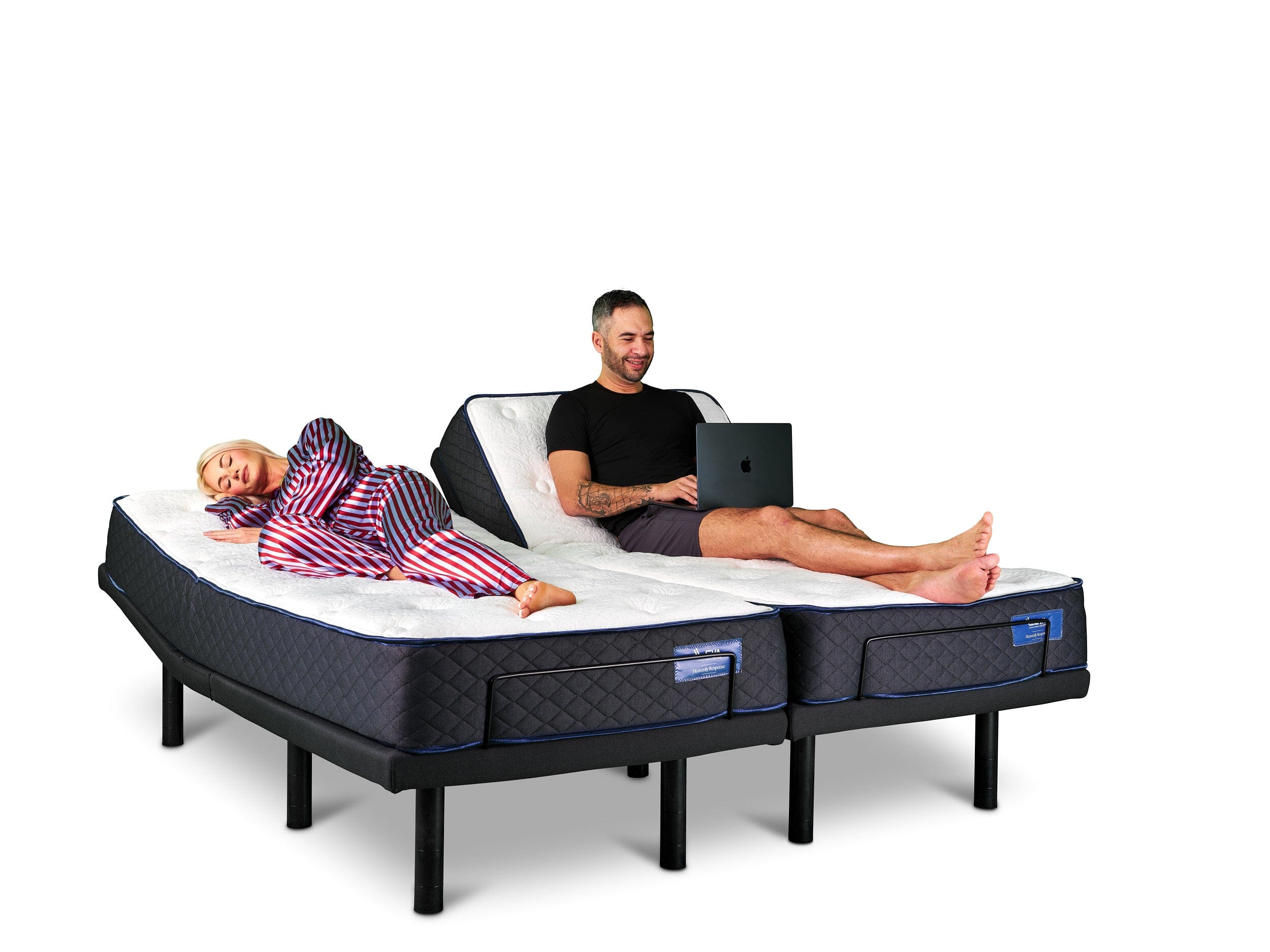
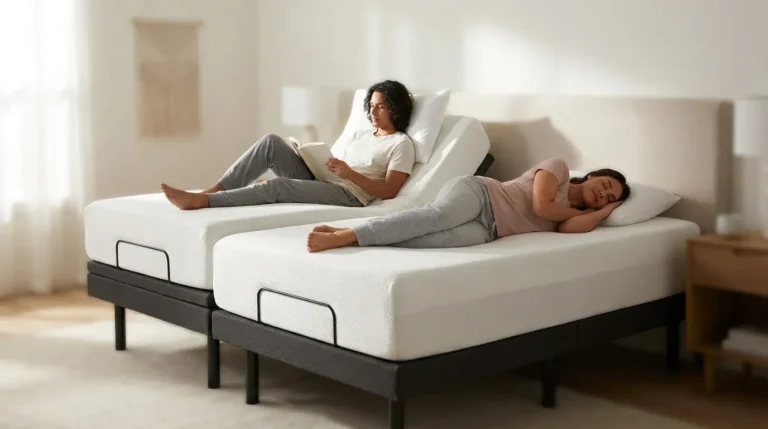
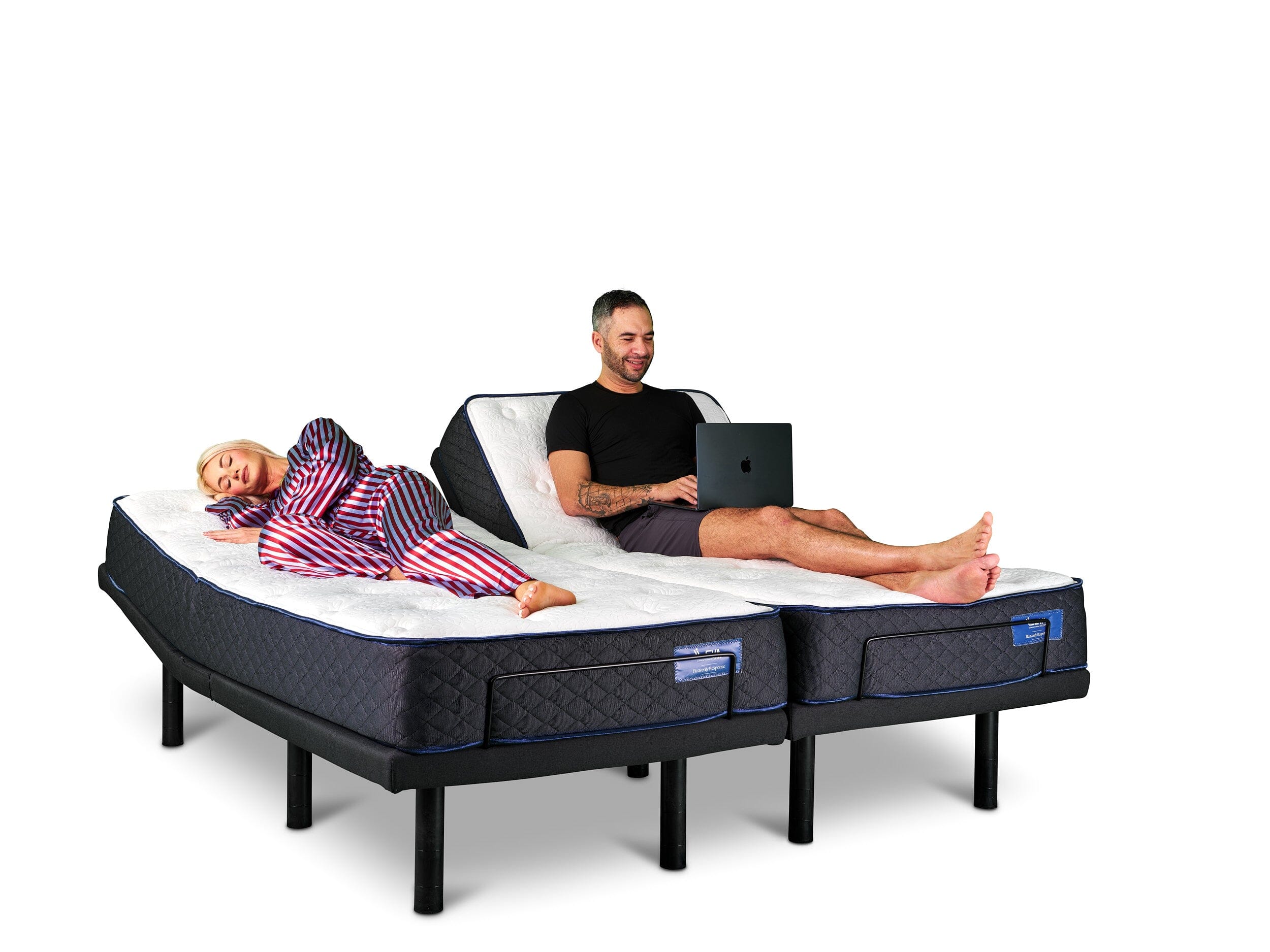
A split king bed uses two separate Twin XL mattresses on two independent adjustable bases, so each partner controls head and foot elevation separately, unlike a unified base where adjustments affect both sleepers. Because each mattress and base operates separately, split king setups with independent adjustable bases provide near-zero motion transfer.
Leva Sleep also offers Split Queen configurations that use two independent 30″ × 80″ halves to create a standard 60″ × 80″ queen footprint. A split queen works on standard queen platform or slatted bed frames without an adjustable base, providing independent firmness on each side; an adjustable base adds independent head and foot positioning. This format suits couples in smaller bedrooms who cannot fit a full Split King. Leva Sleep is one of the few Canadian retailers that builds Split Queen configurations to customer specifications.
Noise and Motion Isolation for Light-Sleeping Partners
Split king setups using two independent adjustable bases deliver better motion isolation than traditional single-king mattresses according to Sleep Foundation lab tests, because each partner sleeps on a physically separate Twin XL mattress. The physical gap between the sleep surfaces means that turning, sitting up, or changing base position on one side does not send force across to the other side.
Motor noise also matters within the adjustable base category. Build quality including motor durability, stability, quiet operation, and a sturdy frame with adequate combined weight capacity is essential to prevent vibration, noise, or premature wear during daily long-term use. Leva Sleep uses whisper-quiet German motors across its base lineup, which separates its products from budget bases that rely on louder, less precise motor assemblies.
Mattress and Bedding Compatibility on Adjustable Bases
Mattresses with individually wrapped pocket coils, hybrids, all-foam, memory foam, or latex flex properly on adjustable bases, while traditional innersprings with interconnected Bonnell coils resist bending and risk damage. Leva Sleep designs its own all-foam and hybrid pocket-coil mattresses for adjustable use and also pairs bases with mattresses from Tempur-Pedic, Serta, Simmons, Beautyrest, and Kingsdown.
Bedding compatibility often gets overlooked. Standard queen fitted sheets fit the combined 60″ × 80″ dimensions but may slip into the center gap; practical solutions include mattress connector straps, two separate 30″ × 80″ fitted sheets with a shared flat sheet or duvet on top, or specialty split-queen sheets. Leva Sleep addresses this with fitted sheets that have deep pockets and extra elastic, duvets with clips to keep sides separated during elevation, and mattress protectors built for adjustable movement.
Temperature Control and Medical Positioning Benefits
Raising the upper body by 6 to 8 inches uses gravity to help reduce the backflow of stomach contents toward the esophagus during sleep and is a long-standing medical recommendation for GERD sufferers. Head elevation of 15–30 degrees on an adjustable base opens airways to reduce snoring and ease acid reflux, which benefits people with GERD, sleep apnea, and sinus congestion.
For post-surgical recovery, foot elevation of 10–20 degrees improves circulation and reduces leg swelling, which is critical for post-hip surgery recovery, edema, and varicose veins. A seated position of 45 or more degrees facilitates easier transfers for patients with mobility issues or post-surgery needs, which reduces fall risk. Leva Sleep’s heating and cooling pad integration lets each partner set an independent sleep temperature, so couples can solve thermal mismatches without separate duvets or constant thermostat changes.
Delivery, Setup, and Warranty Details That Matter
White-glove delivery is recommended for heavy or complex adjustable beds in Canada because it includes installation, assembly, and removal of the old bed or box spring, which adds significant value for split configurations. Adjustable base shipping boxes in Canada are large, and doorways narrower than 75 centimetres require special delivery planning by the retailer.
Leva Sleep’s in-house white-glove delivery service, available for a fee, covers bedroom delivery, full assembly, leg-height adjustment, a product tutorial, and removal of the old bed through donation or recycling. This end-to-end support contrasts with direct-to-consumer “bed in a box” brands that require self-assembly and separate arrangements for return shipping during warranty claims. This pricing advantage, discussed earlier, stems from eliminating retailer markup through direct-to-consumer distribution.
Serta Unified Bases Versus Split Configurations: Key Differences
The table below compares unified adjustable bases, which is the category where Serta bases sold through chain retailers typically sit, against premium independent split configurations on four dimensions. All figures come from the cited sources.
| Dimension | Unified Base (e.g., standard Serta via chain retailer) | Premium Split Configuration (e.g., Leva Sleep Split King/Queen) | Key Source |
|---|---|---|---|
| Controls | Single remote adjusts both sides together, so one partner’s preference overrides the other’s | Independent app and remote control per side, so each partner sets their own elevation, massage, and temperature | Mattress Miracle |
| Motion Isolation | Shared surface transmits movement with no physical separation between partners | 74–82% better motion isolation than a traditional single-king mattress because of physically separate surfaces | Sleep Foundation lab tests via Bryte |
| Features | Typically head and foot elevation with basic massage, with limited anti-snore, temperature, or lumbar options at chain retail price points | Anti-snore mode, lumbar control, pillow tilt, heating and cooling pad, AI sleep tracking, and programmable zero-gravity positions | Mattress Miracle Ontario Guide |
| Value (CAD, Queen/comparable) | Chain retailers offer Queen adjustable bases starting around $500, with listed models up to about $1,700 | Leva Sleep prices systems 30–50% below comparable luxury brands, with Split King bundles including installation at a range of price points | Mattress Miracle Bundle Guide |
Five Common Sleep Problems with Serta Unified Bases
Serta mattresses and bases appear widely through chain retailers in Canada. Couples evaluating Serta should understand five structural limitations common to unified-base configurations at this tier and how they relate to the core problems described earlier.
- Unified control: Standard Serta bases adjust both sides of the bed together. When one partner raises the head section for snoring, the other is forced into the same elevated position, which prevents true personalization.
- Limited anti-snore technology: Entry- and mid-range Serta bases do not include automatic snore detection or micro-adjustment capability. Managing snoring requires manual intervention, which usually wakes both partners and interrupts sleep.
- No independent temperature regulation: Serta bases at standard retail price points do not integrate per-side heating and cooling. Couples with different thermal preferences must rely on separate duvets or room-level changes, which rarely match each person’s ideal temperature.
- Motion transfer on shared surfaces: Serta bases paired with a single shared mattress transmit movement across the sleep surface. Partners who move frequently during the night disturb each other, even when the mattress feels comfortable.
- Mattress and bedding ecosystem gaps: Serta bases sold through general retailers are not usually paired with bedding designed for adjustable use. Standard fitted sheets can slip during elevation, and accessories such as duvet clips or remote pockets are often missing.
Best Adjustable Beds for Couples in Canada 2026: What to Prioritize
Couples comparing adjustable beds in Canada in 2026 can focus on a short list of criteria that directly affect nightly comfort and long-term value.
- Independent split controls: Confirm that each side of the base operates fully independently for head elevation, foot elevation, massage, and temperature. Some bases use a “split” label while still sharing a motor or control system.
- Split Queen availability: For smaller bedrooms, a Split Queen with two 30″ × 80″ halves in a standard queen footprint provides independent adjustability without the width of a Split King. Leva Sleep is one of the few Canadian specialists offering this configuration built to order.
- Motor noise level: Test or request motor decibel ratings. Whisper-quiet German motors, as used by Leva Sleep, allow adjustments without waking a sleeping partner.
- Mattress compatibility: Verify that the mattress is foam, latex, or individually wrapped pocket coil. Interconnected innerspring coils do not suit adjustable bases and can wear prematurely.
- White-glove delivery: For split configurations, professional assembly is strongly recommended. Confirm whether delivery includes bedroom setup, old-bed removal, and a product tutorial.
- Warranty and trial period: Compare trial lengths and warranty terms across brands. Longer trials give couples time to see whether independent positioning solves their specific sleep issues.
Is an Adjustable Bed Good After Hip Surgery?
Adjustable beds provide clinically relevant positioning benefits for post-hip surgery recovery. The key mechanisms are foot elevation and seated positioning that reduce strain during movement.
As described earlier, foot elevation in the 10–20 degree range supports circulation and helps manage leg swelling, which matters during hip surgery recovery. A seated position of 45 degrees or more reduces the effort required to transfer in and out of bed and lowers fall risk when mobility is limited. The hi-low height adjustment feature on premium bases lets the bed surface match the patient’s knee height, which simplifies entry and exit.
On value, Leva Sleep’s direct-to-consumer model keeps pricing roughly 30–50% below comparable luxury brands. For context, Split King bundles in Canada with professional installation range from $2,199 at the entry level to $3,999+ for premium hybrid configurations, compared to chain retailers where premium adjustable models reach $4,000+ without installation. For a couple where one partner is recovering from hip surgery and the other has different sleep preferences, a Split King or Split Queen with independent controls delivers medical positioning on one side without disrupting the other.
Conclusion: How to Choose Between Unified and Split Systems
Couples evaluating sleep systems in Canada in 2026 face a clear structural choice. Unified-control bases force positional compromise, while independent-control split systems let each partner shape their own sleep environment. Evidence on snoring prevalence, motion transfer, temperature regulation, and firmness mismatch consistently supports independent split configurations for couples with differing needs.
When comparing options, the most useful criteria are independent per-side controls, motor noise level, mattress and bedding compatibility, white-glove delivery capability, and total system cost including installation. Leva Sleep’s vertically integrated model, which covers design, local assembly, specialized bedding, and in-house delivery across Ontario and Alberta, addresses each of these points within a price range 30–50% below comparable luxury brands. Split Queen availability further sets it apart from major chain retailers.
| Evaluation Criterion | What to Look For |
|---|---|
| Independent controls | Fully separate head, foot, massage, and temperature settings per side |
| Split Queen option | Two 30″ × 80″ halves in a standard queen footprint with specialist availability |
| Motor noise | Whisper-quiet specification, with a tested or documented decibel rating |
| Mattress compatibility | Foam, latex, or individually wrapped pocket coil construction only |
| Delivery and setup | White-glove service that includes bedroom assembly and old-bed removal |
| Price (CAD, installed) | Split King bundles from about $2,199, with Leva Sleep typically 30–50% below the luxury tier |
Shop Leva Sleep’s adjustable beds
Frequently Asked Questions
What is the difference between a Split Queen and a Split King adjustable bed?
A Split Queen uses two independent 30-inch by 80-inch mattress halves that form a standard 60-inch by 80-inch queen footprint. Each half sits on its own adjustable base, which allows independent head and foot elevation, firmness selection, and feature control for each partner. A Split King uses two Twin XL mattresses, each 38 inches by 80 inches, on two independent bases to create a 76-inch by 80-inch footprint that is wider than a standard queen. The Split Queen suits couples in smaller bedrooms or rooms that cannot accommodate the wider Split King. Leva Sleep is one of the few Canadian retailers that builds Split Queen configurations to customer specifications, which matters for couples who need independent adjustability in a queen-sized space.
Can an adjustable bed help with snoring without a CPAP machine?
Head elevation of 15 to 30 degrees on an adjustable base repositions the head and neck to open the airway, which can reduce the frequency and severity of snoring and mild obstructive sleep apnea. This positional approach is especially relevant because positional obstructive sleep apnea affects approximately 75% of people with obstructive sleep apnea, so sleep position drives many symptoms. Leva Sleep’s anti-snore mode, arriving in spring 2026, will detect snoring through the base and make micro-adjustments to head elevation automatically. For couples where one partner snores and the other does not, a Split King or Split Queen base lets the snoring partner elevate their head independently while the other sleeps flat. Head elevation does not replace medical evaluation when symptoms include gasping, frequent waking, or diagnosed moderate-to-severe sleep apnea.
What should couples look for when evaluating adjustable bed delivery and setup in Canada?
Split adjustable base configurations rank among the most complex large-item deliveries in home furnishings. Couples can confirm the following points before purchasing:
- Whether delivery includes in-bedroom placement or only curbside or threshold drop-off
- Whether trained professionals handle assembly or the customer must assemble the base
- Whether old bed removal is included and whether the retailer donates or recycles the old mattress
- Whether a product tutorial explains app control, preset positions, and feature activation
- Whether the delivery team can adjust leg height on-site to match the preferred bed height
Leva Sleep’s in-house white-glove delivery service, available for a fee, covers all of these elements for customers in Ontario and Alberta. This approach contrasts with direct-to-consumer brands that ship bases in boxes for self-assembly and manage warranty returns through separate shipping arrangements.
How does Leva Sleep price its adjustable beds compared to Tempur-Pedic and other luxury brands?
Leva Sleep’s direct-to-consumer, vertically integrated model removes the retailer markup that luxury brands pass on through traditional distribution. Pricing typically sits about 30–50% below comparable luxury competitors. For reference, Split King bundles with professional installation in Canada range from $2,199 at the entry level to $3,999 or more for premium hybrid configurations. Tempur-Pedic Split King bundles sit near the top of the Canadian price range. Leva Sleep reaches its lower price point by designing systems in-house, assembling locally, and delivering through its own team while maintaining the feature set and material quality that couples aged 35–70 expect from a premium sleep investment.
Is an adjustable bed worth it for couples where only one partner has a medical need?
A split adjustable base suits couples where one partner has a medical positioning need, such as sleep apnea, acid reflux, post-hip surgery recovery, or chronic back pain, and the other does not. On a unified base, the partner with the medical need cannot elevate their side without also elevating the other partner. On a split base, each side operates independently. The partner who needs head elevation for acid reflux or foot elevation for circulation can set their position precisely, while the other partner sleeps flat or at a preferred angle. The non-medical partner also benefits from reduced motion transfer, so nighttime adjustments by the recovering or symptomatic partner cause less disturbance. For many couples in this situation, the split configuration becomes the practical requirement that keeps shared sleeping workable.