Visit One Of Our 6 Showrooms Located Across Canada!
No Payments, No Interest Until 2027
Free Delivery & In-Home Set Up
How to Improve Sleep Hygiene for Couples: 12 Tips
Content
Written by: Matthew Timmins, Founder and Managing Director, Leva Sleep | Last updated: July 26, 2026
Key Takeaways
Sleep hygiene for couples means coordinated habits that address shared-bed challenges like temperature conflicts, snoring, and partner movement.
Waking after five hours often signals sleep fragmentation caused by micro-arousals from a partner’s motion, snoring, or temperature shifts.
The 20-minute rule helps couples break the association between bed and wakefulness by leaving the bedroom after 20 minutes of sleeplessness.
Simple behavioural changes such as separate duvets, consistent wake times, and motion-isolating mattresses reduce most shared-bed disruptions without extra cost.
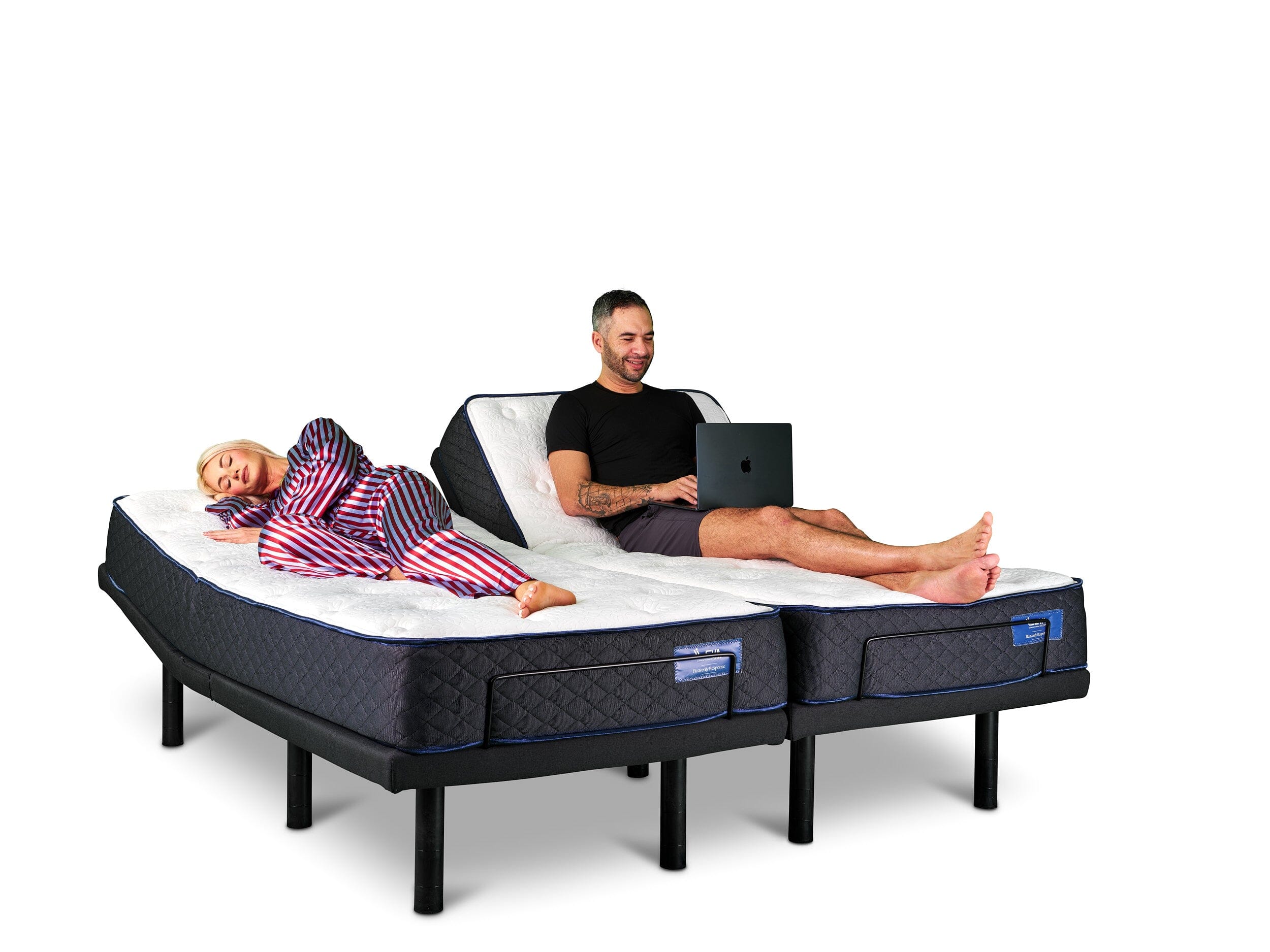
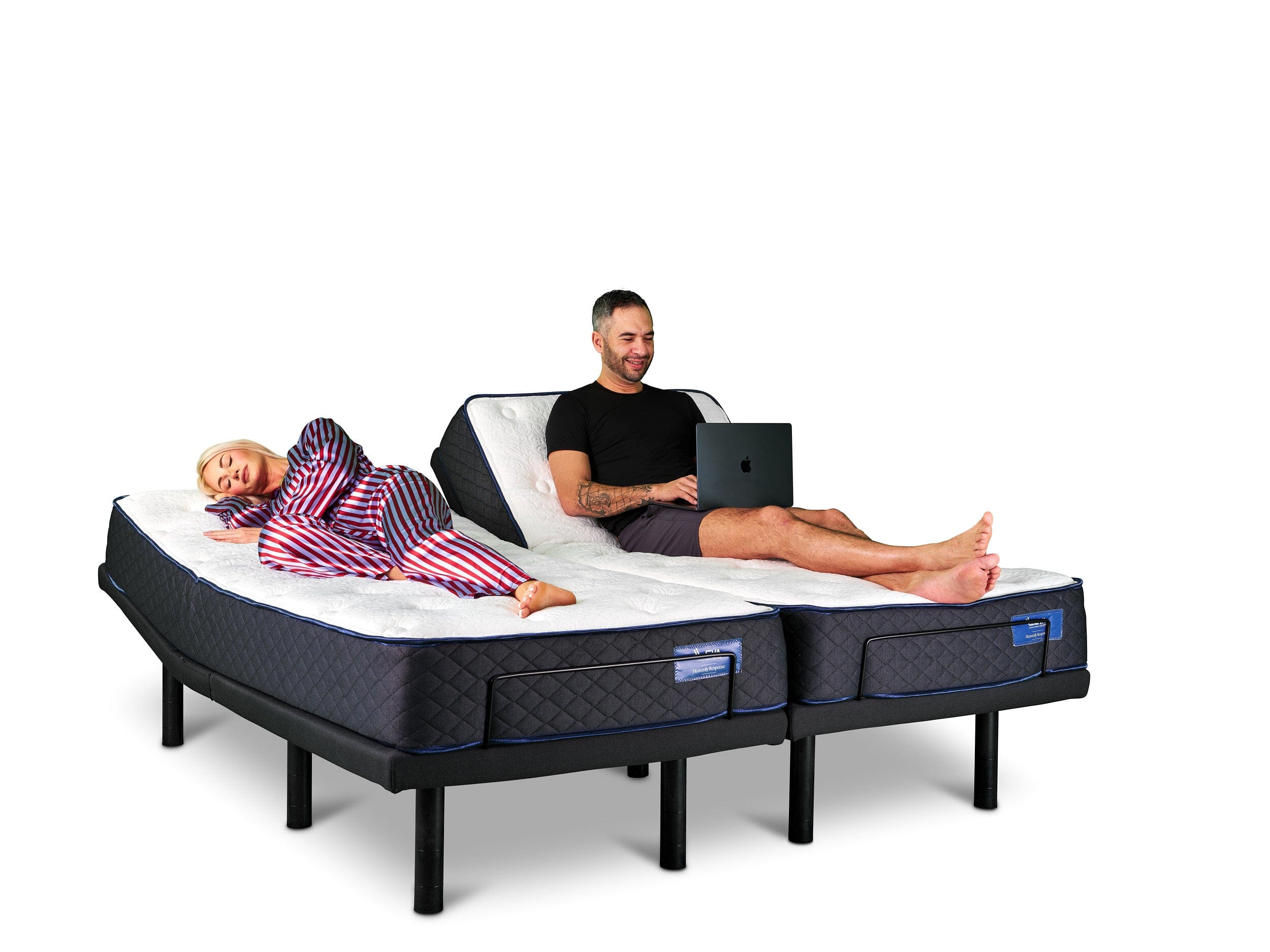
When habits reach their limit, Leva Sleep’s split adjustable bases deliver independent elevation and temperature control so both partners sleep better together. Browse Leva Sleep’s adjustable bed packages.
Why You Keep Waking Up After 5 Hours
Waking after roughly five hours usually signals sleep fragmentation rather than a naturally short sleep need. A 2003 paper in the journal Sleep discussed the AASM 3-second rule for scoring arousals and noted that recurrent sleep disruption impairs attention, mood, memory, and performance. In a shared bed, those micro-arousals are frequently triggered by a partner’s movement, snoring, or a temperature shift. Chronic sleep fragmentation is also linked to elevated cortisol, impaired immune function, and mood changes. Addressing the specific disruption source, rather than simply going to bed earlier, gives you the most direct path to sleeping through the night.
How to Reduce Partner Snoring Without Separate Beds
A Mayo Clinic study found that bed partners of people with sleep apnea lose roughly one hour of sleep per night due to snoring and that treating the snorer can improve the partner’s sleep. Several approaches reduce snoring without requiring separate rooms:
Medical evaluation: Obstructive sleep apnea affects an estimated 32.4% of adults in the United States and should be ruled out by a doctor before you treat snoring as a minor annoyance.
When habits are not enough: Positional pillows and white noise address symptoms. Leva Sleep’s split adjustable bases target the source by independently elevating each partner’s head to keep airways open, with an anti-snore mode (spring 2026) that detects snoring and makes automatic micro-adjustments. Both partners stay in the same bed. Explore Leva Sleep’s split adjustable bases with anti-snore technology.
Return only when sleepy. Do something calm, such as reading or gentle stretching, until genuine sleepiness returns. Then re-enter the bedroom without disturbing the sleeping partner.
The 20-minute rule works best as part of a broader sleep-hygiene routine, which you can build together with the practical tips below.
12 Practical Sleep-Hygiene Tips You Can Start Tonight
Target a Canadian-friendly bedroom temperature.Most people sleep best when their room is between 16°C and 19°C. In Alberta winters, set the thermostat to 17–18°C and run a humidifier to maintain 40–50% relative humidity. In Ontario summers, a counterclockwise ceiling fan and cotton percale sheets support the same target range without air conditioning running all night.
Use separate duvets. The Scandinavian sleep method, which uses separate duvets for each partner, eliminates blanket tug-of-war and allows independent temperature regulation while sharing a bed. In Canadian winters, one partner can use a heavier wool duvet while the other uses a lighter down alternative.
Choose a motion-isolating mattress. Research has shown that mattress motion transfer can disrupt the sleep of the undisturbed partner. Mattresses with individually wrapped coils or all-foam layers absorb movement locally rather than transmitting it across the surface.
Agree on a core sleep window. Research suggests that couples benefit when they share a significant portion of their sleep simultaneously. Agree on a core sleep window, such as 11 PM to 5 AM, when both partners are in bed and the bedroom is protected from work and distractions. This approach maintains sleep concordance without requiring identical schedules.
Adjust for daylight saving and seasonal light shifts. Canada’s long summer evenings and short winter days shift circadian cues significantly. Morning light exposure and a consistent wake time help anchor the earlier schedule after the spring clock change. Blackout curtains are a practical tool for Alberta summers, where sunset can extend past 10 PM.
When habits are not enough: When temperature conflicts, snoring, and motion transfer persist despite consistent habits, behavioural changes alone have reached their ceiling. Leva Sleep’s split adjustable bases provide independent head and foot elevation, temperature control, and whisper-quiet engineering that behavioural changes cannot match. Browse Leva Sleep’s adjustable bed packages.
Download Your Free Canadian Sleep-Hygiene Checklist
The 12 tips above appear in a printable Canadian Sleep-Hygiene Checklist you can post on your nightstand or share with your partner. The checklist includes seasonal temperature targets for Ontario and Alberta, the five-step 20-minute rule, and a decision guide for when to move from behavioural habits to a split adjustable base. Download it free and start tonight.
Frequently Asked Questions
Is a split adjustable base suitable for couples in Ontario and Alberta?
Yes. Leva Sleep delivers and installs split adjustable bases across Ontario and Alberta, the two provinces where its white-glove service operates. A Split Queen or Split King base gives each partner independent control over head elevation, foot elevation, massage settings, and temperature, without requiring a king-sized room. The split configuration fits Canadian climate realities well, because each side can run its own heating and cooling pad. One partner can sleep warm during an Alberta winter while the other sleeps cool, all in the same bed. Leva Sleep is one of the only Canadian retailers offering a Split Queen configuration, which makes it a practical option for couples in smaller bedrooms who still want full independent adjustability.
How long does white-glove delivery and setup take?
Leva Sleep’s in-house white-glove delivery team schedules a specific appointment window, delivers the base and mattress directly to the bedroom, assembles the full system, adjusts leg heights to the couple’s preference, provides a complete product tutorial including app setup, and removes the old bed for donation or recycling. The in-room setup portion typically takes one to two hours depending on the configuration. Because Leva Sleep handles delivery in-house rather than outsourcing to a third-party carrier, scheduling and real-time adjustments are managed directly. There is no “bed in a box” assembly burden left to the customer.
What maintenance do Leva Sleep bases require?
Leva Sleep adjustable bases are engineered for long-term, low-maintenance use. The whisper-quiet German motors are sealed units that do not require lubrication or regular servicing under normal residential use. The Leva Sleep app receives firmware updates that can add features or refine existing ones, including the anti-snore mode launching spring 2026, without requiring a technician visit. Routine care involves keeping the base clear of obstructions that could strain the motor during articulation and using Leva’s purpose-designed fitted sheets with deep pockets and extra elastic, which prevent sheet slippage and reduce wear on the mattress surface during elevation cycles.
Can I keep my existing mattress with a Leva base?
Compatibility depends on mattress construction. Memory foam, latex, and pocketed-coil hybrid mattresses flex cleanly with adjustable bases and are fully compatible. Traditional innerspring mattresses with connected Bonnell coils or rigid border wires resist articulation and are not suitable. Waterbeds are also incompatible. If your current mattress falls into an incompatible category, Leva Sleep designs its own all-foam and hybrid pocket-coil mattresses specifically to work with its bases, and also carries mattresses from Tempur-Pedic, Simmons, Beautyrest, Serta, and Kingsdown. A Leva Sleep specialist can confirm compatibility with your existing mattress before purchase.
Conclusion: Protect Your Sleep and Your Relationship
When those habits reach their limit, Leva Sleep’s split adjustable bases provide the independent elevation, temperature control, and whisper-quiet engineering that behavioural changes cannot. Shop Leva Sleep’s adjustable beds.