Written by: Matthew Timmins, Founder and Managing Director, Leva Sleep
Key Takeaways for Canadian Couples Dealing with Snoring
- Adjustable beds reduce chronic snoring more reliably than anti-snore pillows by lifting the torso instead of only propping up the head.
- Pillows shift during the night, lack independent control for each partner, and have limited clinical evidence for long-term snoring relief.
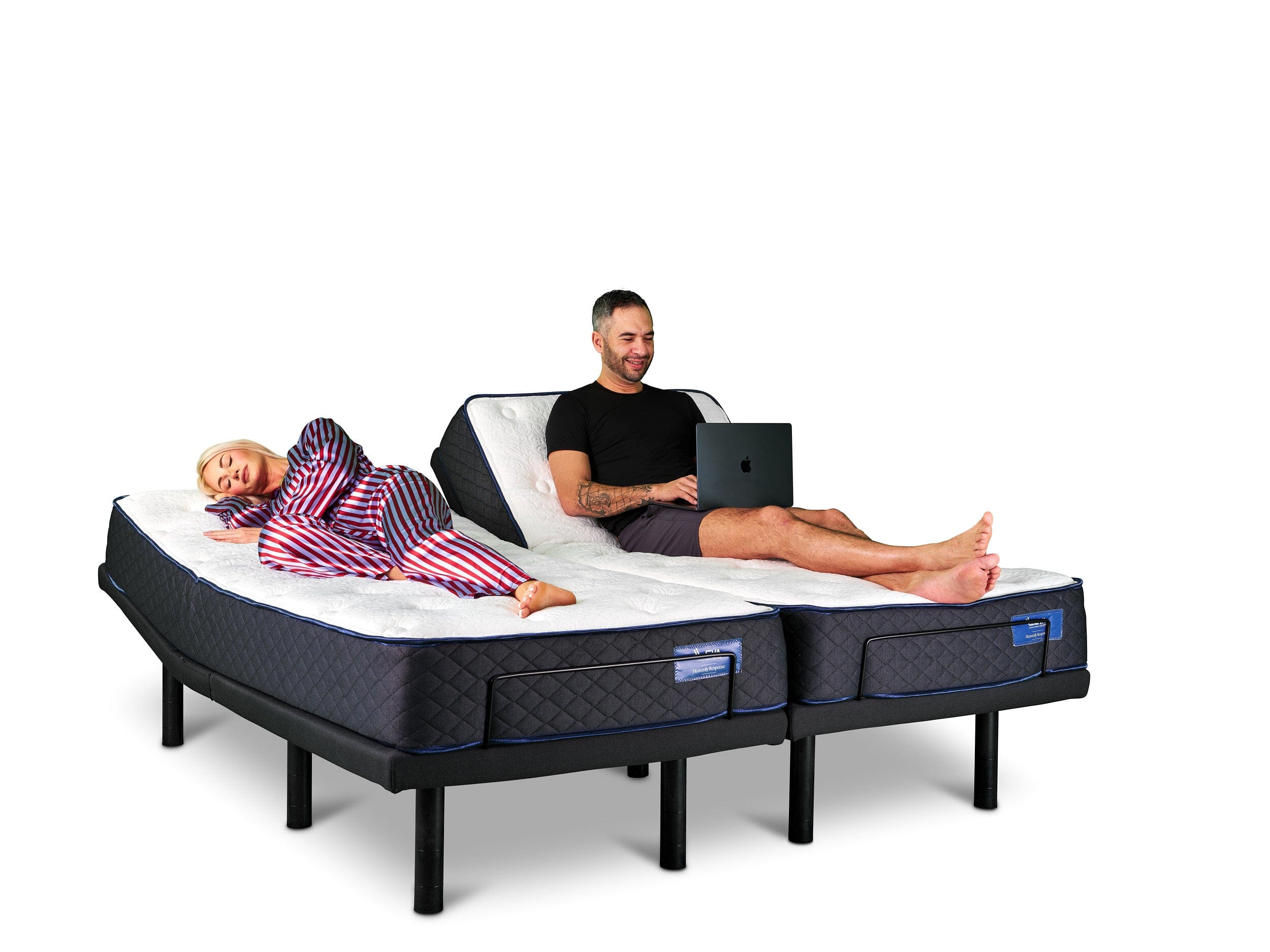
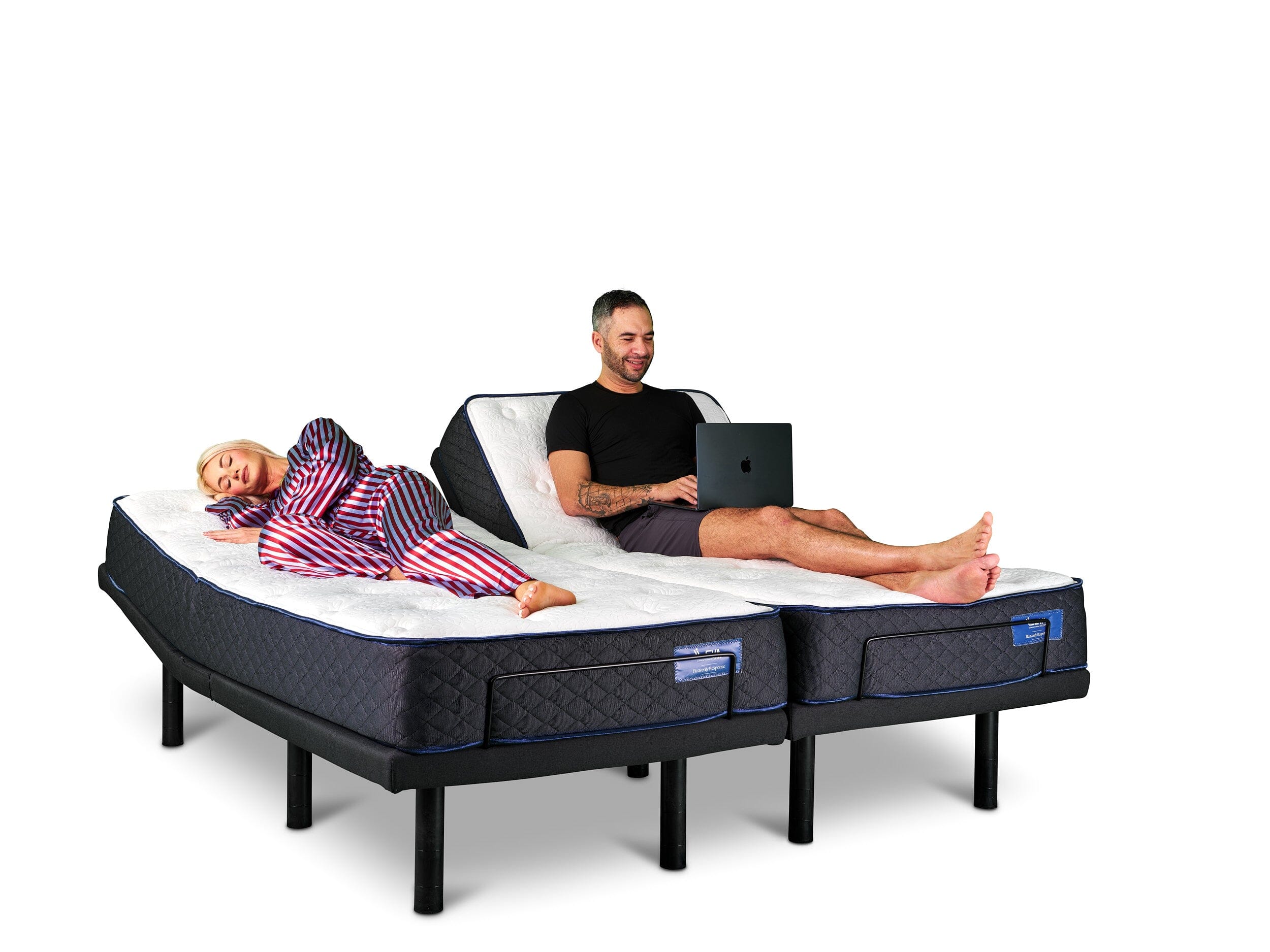
- Adjustable beds offer split configurations so each partner can fine-tune elevation without waking or disturbing the other sleeper.
- Clinical research shows that mild head-of-bed elevation around 7.5° reduces obstructive sleep apnea severity, and motorized bases keep that angle stable and comfortable.
- For Canadian couples who want consistent snoring relief, explore Leva Sleep’s adjustable bed packages to experience steady torso elevation and independent controls.
Verdict: Torso Elevation Beats Pillows for Ongoing Snoring
For couples living with chronic snoring, adjustable beds provide more dependable relief than anti-snore pillows. Souza et al. (2017) in Sleep & Breathing tested mild head-of-bed elevation at 7.5° and found reduced obstructive sleep apnea severity in general OSA patients. Pillows, by comparison, offer only temporary head support and do not maintain consistent torso elevation through the night.
This clinical backing for gentle elevation, combined with the stability of a motorized base, explains why many couples move beyond pillow-only solutions when snoring persists.
The Problem for Couples: Why Anti-Snore Pillows Fall Short
Snoring often strains relationships long before couples talk about it openly. When one partner’s snoring disrupts the other’s sleep night after night, both partners can end up exhausted, irritable, and sleeping in separate rooms. Sleep specialists call this pattern “sleep divorce,” and it occurs more often than many couples realize.
Anti-snore pillows try to help by changing head position. This approach has a core limitation. Head-only elevation can push the neck forward, which can actually worsen snoring in some people instead of improving it. Opening the airway properly usually requires lifting the upper body from the base of the mattress, not just stacking the head higher.
Several other drawbacks make pillow-based solutions less effective for couples:
- Pillows move during the night, so their effect often disappears by the time snoring peaks in deeper sleep stages.
- One pillow height cannot be adjusted separately for two people, so both partners must compromise on a single setup.
- Anti-snore and wedge pillows lack strong randomized controlled trial evidence that proves long-term snoring reduction.
- Replacement cycles are short, since pillows compress and lose loft within a few years, which adds recurring cost without better results.
Why Adjustable Beds Provide More Reliable Torso Elevation
The table below shows why adjustable beds usually justify their higher upfront cost. Pillows cost less at first, but they lack clinical support, shift during sleep, and need frequent replacement. Adjustable bases provide clinically studied torso elevation that stays stable all night and typically lasts 10 to 15 years.
| Dimension | Anti-Snore Pillow | Adjustable Bed Base | Notes |
|---|---|---|---|
| Effectiveness (AHI reduction) | Minimal; no strong RCT evidence for pillows specifically | Mild (7.5°) head-of-bed elevation reduces OSA severity | Applies mainly to positional snorers; not a stand-alone treatment for diagnosed sleep apnea |
| Cost (CAD, approximate) | $50–$200; replacement every 1–3 years | Mid-range adjustable bed bases typically cost $900–$1,500 USD, with an average lifespan of 10–15 years | Higher upfront cost, but lower cost per year of use over time |
| Comfort | Shifts during sleep; risk of neck flexion | Motorized gradual elevation is usually more comfortable than a fixed wedge and stays stable all night | Adjustable bases allow fine-tuning; pillows remain fixed once purchased |
| Couple Compatibility | Designed for one sleeper; no independent control | Split King adjustable bases typically give each partner independent head and foot control, while many split-head Queen bases offer independent head control with shared foot articulation | Split setups let one partner elevate without affecting the other side |
How Adjustable Beds Help Reduce Snoring
Clinical data supports torso elevation as a useful approach for positional snorers. Researchers have tested several angles and setups to understand how elevation affects breathing during sleep.
- Souza et al. (2017) in Sleep & Breathing evaluated mild 7.5° head-of-bed elevation and found reduced obstructive sleep apnea severity in general OSA patients.
- Other studies have examined 30° elevation of the head and trunk and measured its effect on apnea–hypopnea index (AHI).
- A multicenter observational study assessed head-of-bed elevation and its impact on AHI across different patient groups.
- Researchers have compared several elevation angles to balance snoring reduction with long-term comfort and nightly use.
A motorized adjustable base provides gradual, stable elevation that many patients tolerate better than a rigid wedge pillow, which can create a sensation of sliding or falling and often gets abandoned. For couples, split adjustable bases let the snoring partner elevate their side independently without waking the other sleeper, which no pillow can match.
While adjustable beds offer clear benefits for most couples dealing with snoring, certain medical situations require extra caution before relying on elevation therapy.
Who Should Be Cautious with Adjustable Beds
Adjustable beds work well for most healthy adults, yet some people should speak with a healthcare professional before using elevation as a primary snoring solution.
Medical situations that call for professional guidance include:
- Diagnosed moderate-to-severe sleep apnea: Anti-snore presets that raise the head section 7–12° help positional snoring but do not replace prescribed CPAP therapy, which should continue as directed.
- Heart or circulatory conditions: Position changes influence blood flow and airway dynamics, so people with cardiac or vascular issues should consult a physician before using elevation features.
- Post-surgical recovery: Anyone recovering from surgery or injury should ask their doctor about safe elevation angles, since position affects both circulation and breathing.
- Undiagnosed persistent snoring: Ongoing snoring needs medical evaluation, because causes such as congestion, alcohol use, weight, or nasal structure may be involved.
A sleep specialist’s view reinforces this point. “I always ask customers with snoring concerns whether they have had a sleep study. Snoring can be a sign of obstructive sleep apnea, which has serious cardiovascular implications. An adjustable bed can help with the symptom, but if there is an underlying condition, it needs proper medical attention first.”
Best Adjustable Bed Features for Snoring and Mild Sleep Apnea in Canada
For Canadians comparing adjustable beds for positional snoring or mild sleep apnea symptoms, start by confirming that the base offers a useful range of anti-snore preset angles. The ability to fine-tune elevation separates effective bases from basic models with limited positions.
Once you confirm preset flexibility, look at motor quality. For most Canadians, mid-range adjustable bases priced between $1,000 and $2,000 provide quiet operation, reliable manual presets, and 5–10 year warranties. These models usually deliver about 90 percent of the benefit of premium systems at roughly half the price.
If you share a bed, consider split configurations next. As noted in the comparison above, split King bases give both partners full independent head and foot control, while many split Queen designs offer independent head control with shared foot articulation. This setup works well for couples who need separate head positions but have a smaller bedroom.
Finally, review warranty and longevity. Quality adjustable bed bases last 8 to 15 years with proper care. The steel frame can last much longer, while motors and electronics usually carry 5- to 10-year coverage.
Leva Sleep’s split Queen and King adjustable bases are built for Canadian couples with different sleep needs. The split Queen, which is rare in Canada, offers independent elevation in a footprint smaller than a split King. Leva’s direct-to-consumer model keeps pricing about 30–50 percent below many luxury brands, while still using whisper-quiet German motors and preparing a 2026 anti-snore mode that detects snoring and makes small automatic head adjustments. Sleep apnea clinics across Canada already refer patients to Leva Sleep for elevation-based support.
Canadian Buying Checklist for Adjustable Beds
Buying an adjustable bed in Ontario or Alberta involves more than comparing sticker prices. Use this checklist to evaluate each option clearly.
- Delivery scope: Confirm whether delivery includes in-room setup or only curbside drop-off. Leva Sleep offers in-house white-glove delivery that covers bedroom setup, leg height adjustment, a product walkthrough, and removal of the old bed.
- Provincial sales tax: Account for HST in Ontario or GST in Alberta when comparing final costs across retailers.
- Mattress compatibility: Adjustable bases work best with flexible mattresses such as all-foam or hybrid pocket coil designs. Confirm that your current mattress can bend safely before buying a base alone.
- Bedding fit: Standard fitted sheets often pop off during elevation. Look for deep-pocket sheets with strong elastic that are designed for adjustable systems.
- Warranty terms: Check what the warranty covers, since frames, motors, and electronics may have different periods. Make sure service is available in Canada without cross-border shipping.
- Split configuration availability: Not every retailer offers split Queen bases. If your bedroom cannot fit a full King, confirm split Queen availability early in your search.
Frequently Asked Questions
Can I use an adjustable bed if I sleep on my side?
Yes. Adjustable beds work for side sleepers. Head elevation matters most for back sleepers, because positional snoring tends to worsen when lying flat on the back. Side sleepers can still benefit from foot elevation, zero-gravity presets, and lumbar support. If you switch between back and side during the night, a motorized base lets you change positions without fully waking up.
Are there medical conditions that make adjustable beds unsafe?
For most adults, adjustable beds are safe and helpful. People with moderate-to-severe diagnosed sleep apnea should not replace CPAP therapy with elevation alone. They can use both together, but CPAP remains the primary treatment. Anyone with heart or circulatory problems, or those recovering from surgery, should talk to a physician before using elevation features, because position changes influence blood flow. People who suspect undiagnosed sleep apnea, signaled by loud snoring, gasping, or daytime fatigue, should arrange a sleep study before relying on positional tools.
When should I see a doctor about snoring instead of trying a pillow or adjustable bed?
See a physician or sleep specialist if snoring comes with gasping or choking sounds, pauses in breathing, heavy daytime sleepiness, morning headaches, or trouble concentrating. These signs may indicate obstructive sleep apnea, which carries serious cardiovascular risks and needs medical diagnosis and treatment. An adjustable bed can ease positional snoring, but it does not cure the underlying disorder. A sleep study is the right first step when these symptoms appear.
How long does an adjustable bed base typically last compared to an anti-snore pillow?
As mentioned in the buying criteria above, quality adjustable bases usually last 8 to 15 years, which far exceeds the lifespan of most anti-snore pillows. Pillows compress and lose support within a few years and must be replaced repeatedly. Over a decade, the total cost of new pillows can match or exceed the upfront price of a mid-range adjustable base, while the base continues to provide consistent elevation throughout its life.
Is a split Queen adjustable bed available in Canada?
Split Queen adjustable beds remain uncommon among general mattress retailers in Canada. Leva Sleep is one of the few Canadian providers that offer split Queen configurations built to order. This size delivers the independent elevation and firmness control of a split King in a smaller footprint, which suits bedrooms where a full King frame will not fit. Leva delivers to Ontario and Alberta and offers optional in-house white-glove setup.
Decision Framework: When to Move from Pillows to an Adjustable Bed
A quality contoured or wedge pillow can serve as a reasonable low-cost first step for couples new to snoring solutions. If snoring is mild, occasional, and responds quickly to simple position changes, a pillow may provide short-term relief.
Consider upgrading to an adjustable base when any of the following apply:
- You have tried pillow-based elevation for 4 to 8 weeks without clear improvement in snoring or sleep quality.
- The snoring partner changes position during the night and the pillow no longer keeps the airway open.
- The non-snoring partner still wakes up frequently, even with a specialized pillow in place.
- A physician has recommended sleeping elevated for sleep apnea, acid reflux, or another health condition.
- Partners have different firmness or elevation preferences that a single flat mattress cannot satisfy.
When pillows no longer solve the problem, Leva Sleep’s split Queen and King adjustable systems address the core limitations directly. They provide consistent motorized torso elevation, independent controls for each side, whisper-quiet operation, and white-glove delivery across Ontario and Alberta, at roughly 30–50 percent less than many comparable luxury brands.