Written by: Matthew Timmins, Founder and Managing Director, Leva Sleep | Last updated: July 24, 2026
Key Takeaways
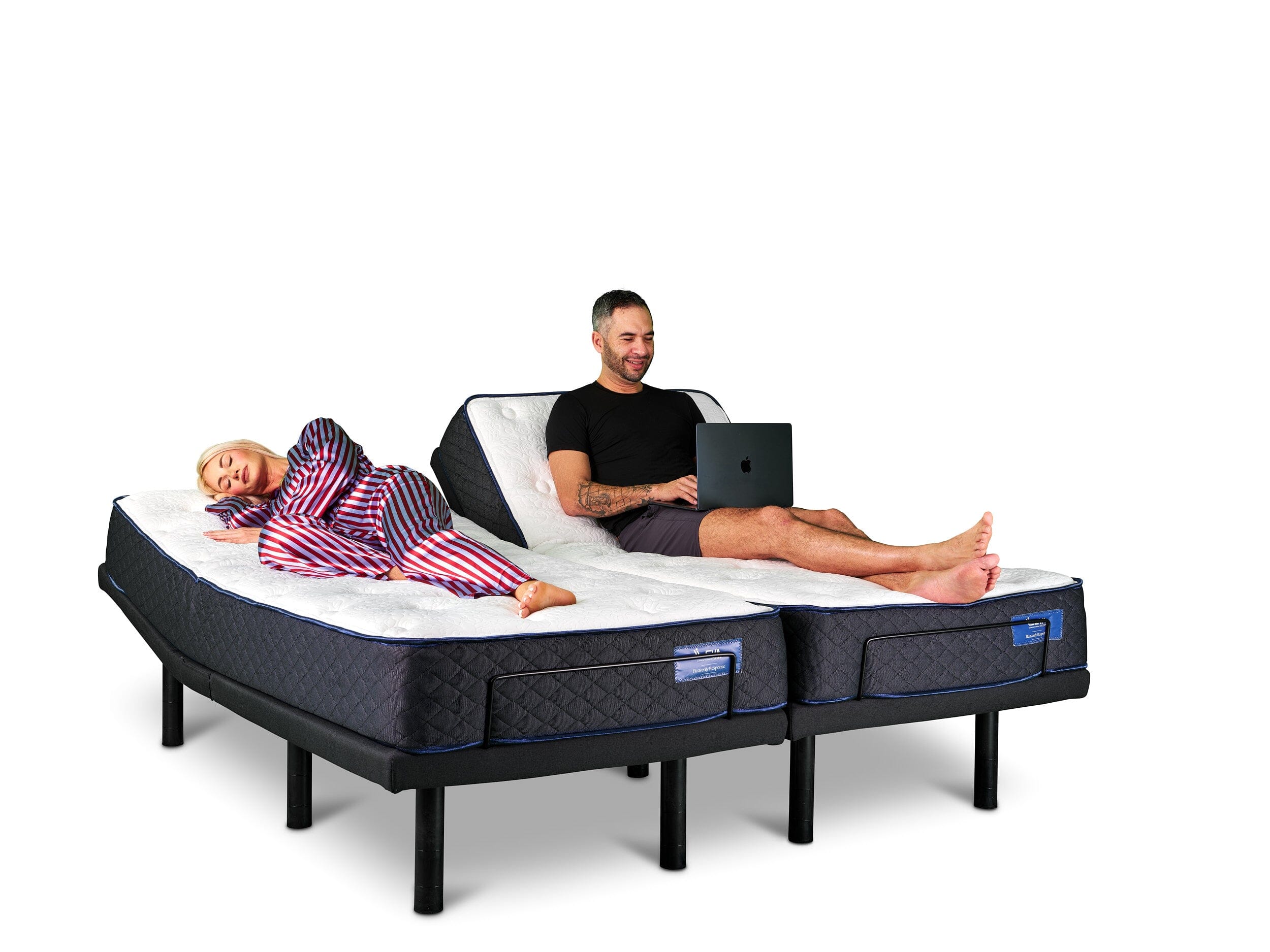
- A split queen mattress uses two independent 30″ × 80″ halves that sit inside a standard queen frame. Couples get motion isolation and individual firmness without needing a larger bedroom.
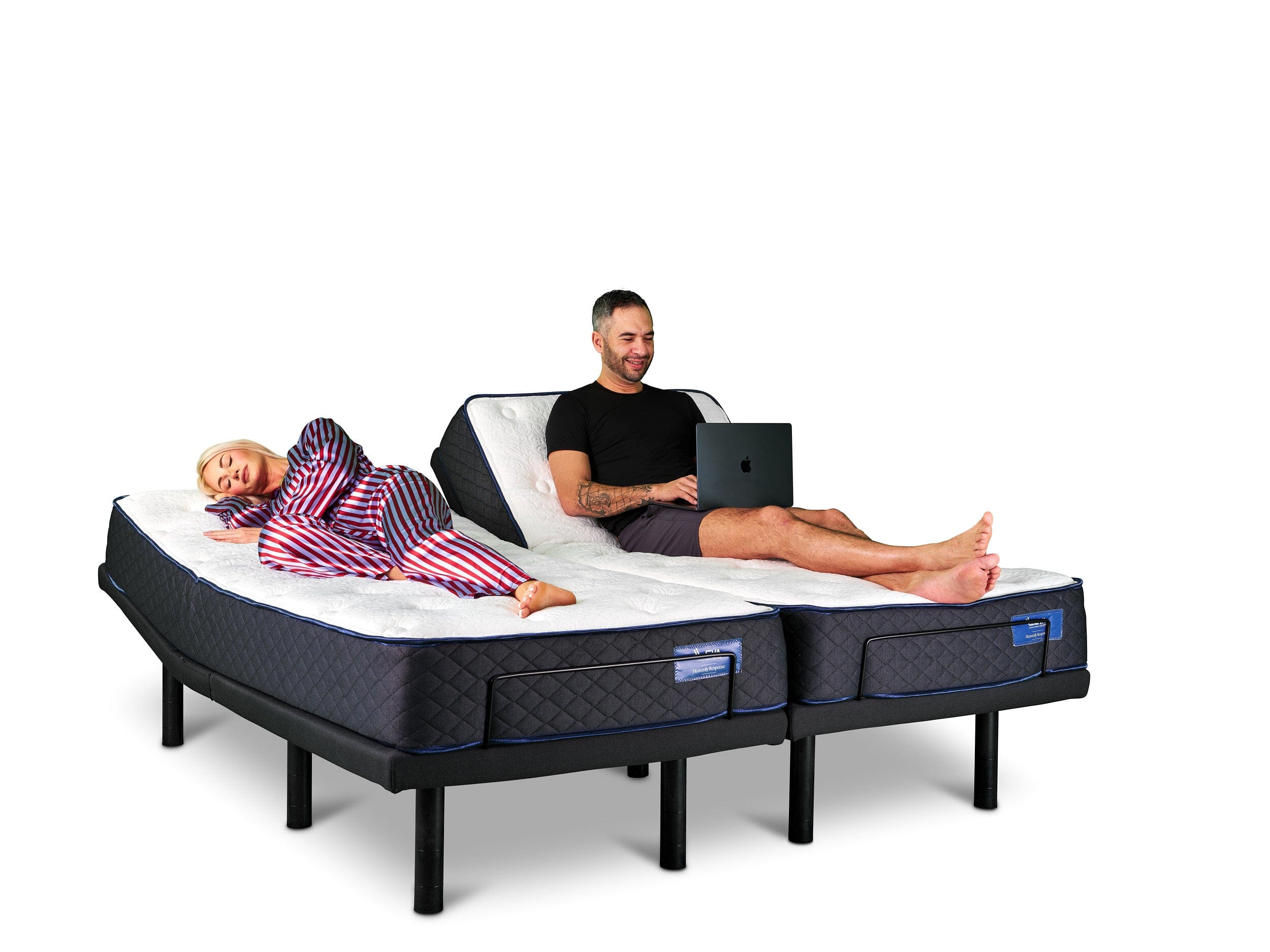
- Key advantages include strong motion isolation, independent firmness selection, and full compatibility with dual adjustable bases for separate head and foot elevation.
- Primary drawbacks are the centre seam gap that can disrupt cuddling, limited mattress selection, and the need for specialized bedding to prevent sheet slippage.
- Split queen adjustable systems are especially helpful for couples managing snoring, sleep apnea, acid reflux, or back pain. Independent elevation can improve sleep quality without moving to separate rooms.
- Leva Sleep offers split queen adjustable packages with white-glove delivery in Ontario and Alberta at 30–50% below comparable luxury brands. Shop Leva Sleep’s adjustable beds to find a configuration that fits your bedroom and sleep needs.
Split Queen Mattress Pros and Cons
The table below summarizes the six core trade-offs couples in Ontario and Alberta should weigh before purchasing.
| Pro | Con |
|---|---|
| Strong motion isolation: each half is a physically separate mattress, so movement on one side does not transfer to the other. | Centre gap: a seam runs down the middle of the bed and can be felt when sleeping near the centre or cuddling. |
| Independent firmness: each partner selects the support level that suits their body weight, sleep position, or medical need. | Reduced cuddling: some couples find the centre gap intolerable for maintaining physical closeness. |
| Space savings: maintains the standard queen footprint, making it viable for smaller Ontario and Alberta bedrooms where a split king will not fit. | Limited options: split queen mattresses are less common than standard sizes, so selection of mattresses and accessories is narrower. |
| Adjustable-base compatibility: foam and hybrid pocket-coil halves flex smoothly over adjustable-base hinge points for independent head and foot elevation. | Sheet slippage: standard queen fitted sheets can slip at the seam, so deep-pocket sheets or connector straps are needed to keep bedding secure. |
| Canadian availability: specialty retailers and direct-to-consumer brands like Leva Sleep offer split queen adjustable systems with delivery to Ontario and Alberta. | Higher per-piece pricing: split queen mattresses range from less than $500 to over $2,500, and costs rise further when paired with a dual adjustable base. |
| Easier delivery: two 30″-wide halves navigate narrow doorways, stairwells, and hallway turns more easily than a single one-piece mattress. | DIY hassle: without white-glove setup, assembling two bases inside a queen frame and calibrating independent controls is time-consuming. |
Key Drawbacks of a Split Queen Mattress
The 30-inch-per-side width is the most significant physical constraint. Each partner has noticeably less personal space than in a split king, where each half measures 38″ × 80″. For couples who move around during sleep, that eight-inch difference per side matters.
Sheet management often becomes a recurring frustration. Standard queen fitted sheets can cover a split queen, but the centre seam creates a gap that allows sheets to slip. Practical fixes include mattress connector straps, two separate 30″ × 80″ fitted sheets under a shared duvet, or specialty split-queen sheets. Leva Sleep designs its fitted sheets with deep pockets and extra elastic specifically for adjustable bases, which tackles this issue at the source.
Availability in Canadian chain retailers remains limited. Split queen mattresses are less commonly stocked at Canadian chain retailers than standard queens because the product is niche. Leva Sleep’s direct-to-consumer model bypasses this gap, with split queen adjustable systems designed and assembled in Canada and delivered to Ontario and Alberta with in-house white-glove service.
On the base side, adjustable bases require an all-foam, latex, or hybrid mattress rated to flex. Traditional innerspring mattresses with connected coils resist bending and are not compatible. Leva’s whisper-quiet German motors and precision-fabricated frames are engineered to work with the foam and hybrid pocket-coil mattresses in their split queen packages, which removes compatibility guesswork.
Is a Split Mattress Worth It for Couples?
Research shows that couples sleeping on a single shared surface experience more movement-related awakenings than couples using independent sleep surfaces. For a light sleeper or a restless mover, that difference directly affects nightly rest.
The sleep-divorce trend adds further context. Surveys indicate that nearly one in three adults has tried sleeping separately to avoid disrupting a partner, with the rate reaching 39% among adults aged 35–44. That group is also the most likely to consider a split queen. A split queen adjustable system offers a middle path: independent comfort without separate rooms.
For couples managing snoring, acid reflux, sleep apnea, or hip and knee pain, independent head and foot elevation can be clinically meaningful. Leva Sleep’s anti-snore mode detects snoring and makes micro-adjustments to the head of the bed automatically. Standard flat beds and basic adjustable bases do not offer this feature. Lumbar support and pillow-tilt controls add further precision for partners with back or neck issues.
On price, Leva Sleep’s direct-to-consumer model delivers split queen adjustable packages at 30–50% less than comparable U.S. luxury brands. For Ontario and Alberta couples comparing Leva to brands like Tempur-Pedic, that gap is substantial over the life of the product.
Compare Leva’s split queen pricing against luxury brands and see the 30–50% savings with in-house white-glove delivery across Ontario and Alberta.
While the benefits are compelling, the most frequently cited concern about split queen mattresses deserves a closer look: the centre gap between the two halves.
Can You Feel the Crack in a Split Queen?
The centre seam is real and noticeable under certain conditions. Centre gap formation is the number-one consumer complaint about split mattress configurations. Temporary fixes such as foam bridges, connectors, and straps rarely resolve seam separation permanently because the halves shift under body weight over time.
For couples who sleep near the centre or who cuddle, the gap creates a tangible intimacy barrier. This concern is legitimate, not a minor inconvenience.
Practical mitigation steps that reduce, though do not eliminate, the gap experience include the following:
- Mattress connector straps that hold the two halves together at the base
- Deep-pocket fitted sheets (at least 12 inches) that grip both halves simultaneously
- Duvet clips that prevent the top layer from separating when partners adjust their bases to different angles
- A shared flat sheet or duvet over two separate fitted sheets to create a unified top surface
Leva Sleep’s specialized bedding, designed specifically for adjustable bases, addresses sheet slippage with extra-elastic deep-pocket fitted sheets and duvet clips engineered to stay in place through elevation changes. The gap itself remains a physical reality of any split configuration. The right bedding system minimizes its impact on nightly comfort.
Once you have weighed the gap trade-off against the benefits of independent adjustability, the next decision point is whether your bedroom can comfortably accommodate a split queen or if another configuration fits better.
Small Bedroom Decision Guide
Use the following criteria to determine whether a split queen, split king, or standard queen is the right configuration for your bedroom and relationship.
- Choose a split queen if your bedroom accommodates a standard queen frame (60″ × 80″) but not a king, you already own a queen frame you want to keep, and at least one partner has a medical or comfort need for independent elevation.
- Choose a split king if your bedroom is large enough for a king frame (76″ × 80″), budget allows for two adjustable bases, and each partner wants more individual width (38″ per side versus 30″).
- Stay with a standard queen if neither partner has significant motion sensitivity, firmness differences are minor, and no medical elevation need exists. In that case, a quality flat mattress remains the simpler solution.
- Measure first: Canadian homes with narrow doorways (28–36 inches), 90-degree hallway turns, or tight stairwells benefit from split configurations because each 30″-wide half navigates tight passages that a one-piece mattress cannot.
Split Queen Bedding and Accessories Checklist
A split queen adjustable system performs best when every component is designed for adjustable-base use. Standard bedding can bunch at hinge points or slip when the base elevates, which undermines the comfort benefits of independent positioning. Leva Sleep addresses this by offering accessories built specifically for their systems:
- Deep-pocket fitted sheets with extra elastic that grip both halves and stay secure through head and foot elevation changes
- Duvet clips that keep the top layer unified when partners set different incline angles
- Remote pockets that attach to the side of the base for easy access to individual controls without fumbling in the dark
- Mattress protectors designed to flex with the base without bunching at hinge points
- Connector straps that hold the two 30″ halves together at the foundation level to reduce seam separation
Decision Checklist for Couples
Review each item honestly before committing to a split queen adjustable system. The more items that apply, the stronger the case for this configuration.
- One or both partners wake regularly due to the other’s movement during the night
- Partners have meaningfully different firmness preferences, such as one preferring firm support and the other softer
- A doctor has recommended elevated sleeping for snoring, sleep apnea, acid reflux, or post-surgery recovery
- Hip, knee, or lower-back pain makes a flat sleeping surface uncomfortable for at least one partner
- The bedroom fits a standard queen frame but not a king
- The couple wants to stay in the same bed rather than move to separate rooms
- Budget favours a Canadian direct-to-consumer option over U.S. luxury brands at full retail price
Find the right split queen package for your bedroom size and budget, maintaining the direct-to-consumer pricing advantage discussed earlier.
Next Step: Leva Sleep’s White-Glove Delivery
Leva Sleep has served over 25,000 Canadian customers across more than eight years, with $50M in lifetime sales built on a direct-to-consumer model that cuts out retail markups. Every split queen adjustable system is designed in-house and assembled in Canada, which keeps quality control local and pricing accessible.
White-glove delivery, available in Ontario and Alberta, includes bedroom-level setup, leg-height adjustment, a full product tutorial, and removal of the old bed. There is no flat-pack assembly, no figuring out motor calibration alone, and no guessing whether the bases are positioned correctly inside the queen frame.
For couples weighing split queen versus split king, or comparing Leva’s anti-snore mode and lumbar controls against basic adjustable bases at general mattress retailers, the product depth is meaningfully different. Leva carries 15–20 adjustable models. Most general retailers stock three to five.
Explore Leva’s 15–20 adjustable models and find the split queen package that fits your bedroom, your budget, and both partners’ sleep needs.
Frequently Asked Questions
Does a split queen mattress fit a standard queen bed frame?
Yes. A split queen consists of two 30″ × 80″ halves that together form the standard 60″ × 80″ queen footprint, so it fits inside any standard queen bed frame without modification. The frame itself does not need to change. When paired with a dual adjustable base, two independent 30″ × 80″ platforms sit side by side inside the same queen frame, allowing each partner to control head and foot elevation separately. Couples in Ontario and Alberta who already own a queen frame can upgrade to a split queen adjustable system without replacing the frame or moving to a larger bedroom.
What bedding works on a split queen adjustable base?
Standard queen fitted sheets technically fit the 60″ × 80″ overall footprint, but the centre seam between the two halves causes slippage, particularly when the bases are elevated to different angles. The most reliable solutions are deep-pocket fitted sheets with extra elastic that grip both halves simultaneously, or two separate 30″ × 80″ fitted sheets under a shared flat sheet or duvet. Duvet clips prevent the top layer from separating when partners use different incline settings. Leva Sleep designs its entire bedding line, including sheets, duvets, mattress protectors, and remote pockets, specifically for adjustable bases, which eliminates the trial-and-error that comes with standard bedding on a split configuration.
Is a split queen better than a split king for a smaller bedroom?
For bedrooms that fit a queen but not a king, a split queen is the only split-adjustable option. A split king uses two 38″ × 80″ twin XL halves to create a 76″ × 80″ surface, which requires a king-size frame and a larger room. A split queen maintains the standard 60″ × 80″ queen footprint, making it the practical choice when bedroom dimensions are the limiting factor. The trade-off is personal width. Each partner has 30 inches per side in a split queen versus 38 inches in a split king. For couples prioritizing independent adjustability and motion isolation within a space-constrained bedroom, the split queen delivers the core benefits without requiring a room renovation.
Can a split queen adjustable base help with snoring and sleep apnea?
Elevating the head of the bed opens the airway and can reduce snoring and mild sleep apnea symptoms without requiring a CPAP mask. A split queen adjustable base allows the partner who snores to elevate their head independently, while the other partner remains flat or at a different angle entirely. Leva Sleep’s spring-2026 anti-snore mode takes this further by detecting snoring automatically and making micro-adjustments to the head position without the snoring partner needing to wake up or manually change settings. Lumbar support and pillow-tilt controls add further customization for partners managing back pain or neck stiffness alongside airway issues. Sleep apnea clinics have referred patients to Leva Sleep specifically because of these elevation and positioning capabilities.
How does Leva Sleep’s pricing compare to other adjustable bed brands in Canada?
Leva Sleep’s direct-to-consumer model eliminates retail markups by designing, assembling, and delivering its systems in-house. The result is pricing that runs 30–50% below comparable luxury adjustable bed brands. For context, a split king setup with two adjustable bases from a premium U.S. brand typically costs $2,000 to $6,000 CAD in Canada, while Leva’s split queen packages deliver independent adjustability, whisper-quiet German motors, and specialized bedding at a significantly lower entry point. Leva also carries 15–20 adjustable models, compared to the three to five typically found at general mattress retailers, so the lower price does not come with a reduced selection. White-glove delivery is available for a fee in Ontario and Alberta and includes full setup, height adjustment, and a product tutorial.